When to Plant Pumpkins for Halloween in Your Climate
Learn when to plant pumpkins for Halloween using frost dates, soil temperature, days to maturity, and a simple countdown for seeds or transplants.
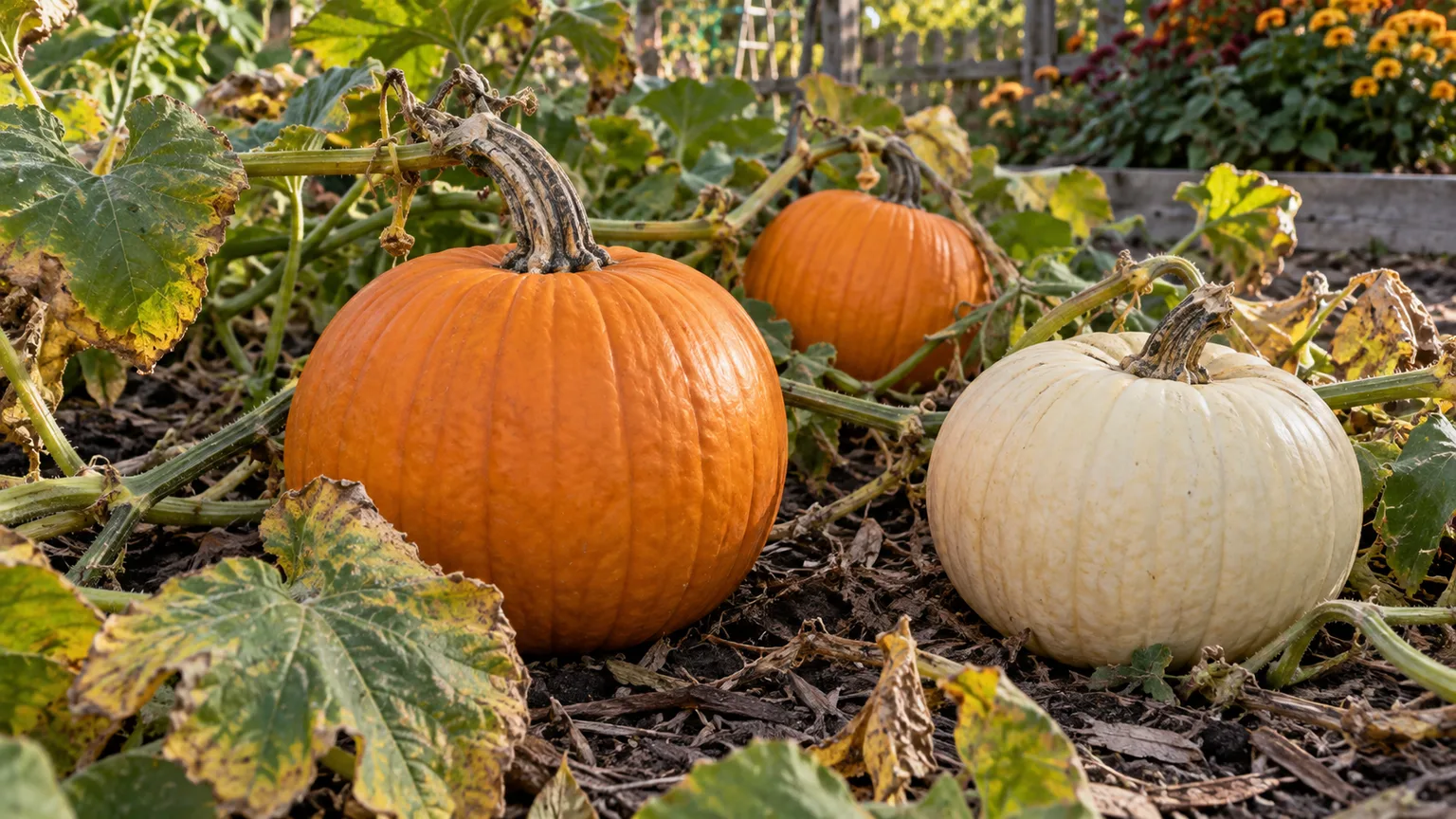
For a Halloween pumpkin, plant when the soil is warm and the danger of spring frost has passed, then count backward from the date you want ripe fruit. In much of the United States, that puts direct sowing in late spring or early summer, but the right week depends on the variety’s days to maturity and your first fall frost. A medium carving pumpkin that needs 100 days cannot be scheduled the same way as an 80-day miniature or a 120-day giant.
The short rule is: choose a ripe-by date, subtract the variety’s days to maturity, add about one to two weeks of cushion, and check that the result is still after your safe outdoor planting window. If those dates do not fit, use a faster variety or a young transplant rather than sowing into cold ground. The Penn State Extension guide to pumpkins and winter squash notes that these warm-season crops need a long growing season and should be planted after frost danger has passed.
Work Backward From the Pumpkin You Want
Halloween is October 31, but it is not always the right date to use as your harvest deadline. If frost usually arrives in October, the vine may be damaged before the holiday, and fruit that is not mature will not have time to finish safely outdoors. Mid-October is a useful target for display pumpkins; if your average first frost comes sooner, plan to have ripe fruit about one to two weeks ahead of it.
Decide what “ready” means for your garden. A carved jack-o’-lantern needs to be sound and mature before carving day; a whole porch pumpkin should be harvested before frost and kept dry. For food, prioritize full maturity and storage quality over matching Halloween week.
What “days to maturity” actually tells you
The number on a seed packet is a planning estimate for that cultivar, not a promise that every fruit will be ripe on that exact day. Pumpkin and winter-squash cultivars vary widely: many take roughly 80 to 120 days, while some giant types need longer, and cool spells, poor pollination, drought, disease, or weak light can extend the wait. The Savvy Gardening guide to pumpkin planting dates describes varieties spanning about 80 to 110 days and recommends adding time to account for late fruit and slowing autumn growth.
Check the packet or breeder’s description instead of borrowing a maturity figure from a similar-looking pumpkin. The same name can appear across different seed lines, and small fruit size alone does not prove that the vine is compact or early. The RHS pumpkin growing guide describes pumpkins as tender, long-season plants.
“Days to maturity” can be counted from direct sowing or from another point in the crop’s life cycle, depending on the seller. Read the fine print, especially if you compare a seed packet with a nursery plant; if the definition is unclear, plan conservatively and use the seller’s planting notes. A one-week difference in counting convention can matter when you are working with a short summer.
Build time for ripening, not just fruit set
A pumpkin needs to mature beyond the point where a small fruit first appears. It still has to reach its cultivar’s full size and color, develop a hard rind, and form a dry, firm stem; a fruit that is merely growing quickly is not ready for harvest. Late flowers can set fruit too late to mature before cold weather, so use the first healthy fruits as your main Halloween crop rather than counting on every blossom.
Add a practical cushion because garden conditions rarely match the ideal growing days printed on a packet. A 7-to-14-day buffer is a sensible starting allowance for variable weather and the time between a fruit setting and becoming harvest-ready; it is not a guarantee or a replacement for the local frost date. Savvy Gardening specifically recommends allowing roughly two extra weeks when timing pumpkins for a particular harvest date.
The buffer matters most in cool summers and wet springs. Cold, saturated soil can delay germination, so if fall frost comes early, choose a faster cultivar and plan the cushion before buying seed.
Use This Planting-Date Formula
Use this sequence for direct-sown pumpkins:
- Set a harvest-ready date about two weeks before Halloween, or about two weeks before the expected first fall frost if that comes sooner.
- Subtract the cultivar’s listed days to maturity.
- Subtract another 7 to 14 days as a planning cushion.
- Check that the resulting sowing date falls after frost risk has passed and the soil is warm enough.
Think of the result as a latest comfortable sowing date, not a command to plant in cold ground. If the arithmetic says “May 20” but the soil is still cold and soggy or a frost is forecast, wait and reassess; the crop will need a faster variety or a protected transplant to make up the lost time. Penn State Extension gives a regional example for Pennsylvania, recommending late May to early June after frost danger and when soil has reached at least 65°F for germination.
| Listed maturity | Approximate sowing deadline for an Oct. 15 harvest-ready target, with a 14-day cushion |
|---|---|
| 80 days | July 13 |
| 90 days | July 3 |
| 100 days | June 23 |
| 110 days | June 13 |
| 120 days | June 3 |
These dates are calendar arithmetic for direct sowing, not universal recommendations. If frost normally arrives before late October, move the harvest-ready date earlier and redo the subtraction. If the result falls before your safe planting window, change the variety or method.
A worked example for an October 31 display
Suppose a gardener wants a mature carving pumpkin by October 17, the variety lists 100 days to maturity, and the gardener is sowing seed outdoors. Count back 100 days from October 17, then another 14 days for a planning cushion: the approximate target sowing date is June 25. This is the arithmetic deadline for that hypothetical, not a promise that June 25 works in every town.
Now compare June 25 with the local season. If frost danger has passed and the soil is consistently around 65°F or warmer, direct sowing may fit; if the garden’s first fall frost often arrives in late September, there may not be enough safe time for that 100-day cultivar. In that case, choose a variety with a shorter listed maturity, start with a healthy young transplant, or accept that the pumpkin may be late.
The Epic Gardening article on when to plant pumpkins for Halloween gives a broad maturity range of about 80 to 150 days and emphasizes climate and soil warmth. That span explains why a single nationwide calendar date is unreliable: a short-season variety can fit a much later sowing than a giant pumpkin with a long maturity period.
Count transplant time the way the seed packet defines it
A transplant gives a pumpkin a head start only if it is young, healthy, and planted without major root disturbance. First check whether the packet’s maturity estimate is calculated from sowing or from transplanting; if it starts at sowing, include the weeks the seedling spent indoors in your count. If the seller measures from transplanting, do not add that same indoor period a second time.
Pumpkins dislike cramped root systems, and a large, tangled transplant can stall after it goes into the garden. Start seeds in individual pots and move them outdoors while they are still compact; handle the root ball gently, harden the plants gradually, and wait for warm soil and frost-safe nights. The BBC Gardeners’ World pumpkin and squash guide recommends sowing indoors in spring and planting outside only after all risk of frost has passed.
Let Frost and Soil Temperature Set the Safe Window
A last spring frost date and a warm soil reading answer different questions. The frost date estimates when freezing weather becomes less likely; soil temperature tells you whether pumpkin seed can start reliably. A warm forecast for one afternoon does not make a cold bed ready, so measure the soil where the seed will sit rather than relying only on air temperature.
Penn State Extension and Utah State University Extension’s squash guidance both use 65°F soil as a practical minimum for planting cucurbits such as pumpkins. Aiming closer to 70°F can produce quicker, more even germination, but the seed packet and local conditions still matter. The Epic Gardening planting guide likewise advises checking soil warmth and cautions against sowing into soil below about 65°F.
Use a soil thermometer at seed depth, taking the reading in the morning for several days. If the bed is shaded, heavy, or wet, it may warm slowly even when nearby garden beds feel warm; do not confuse one sunny afternoon with a sustained planting window. Wait until the bed drains well and feels warm, then plant after frost danger has passed.
When direct sowing is safer than starting early
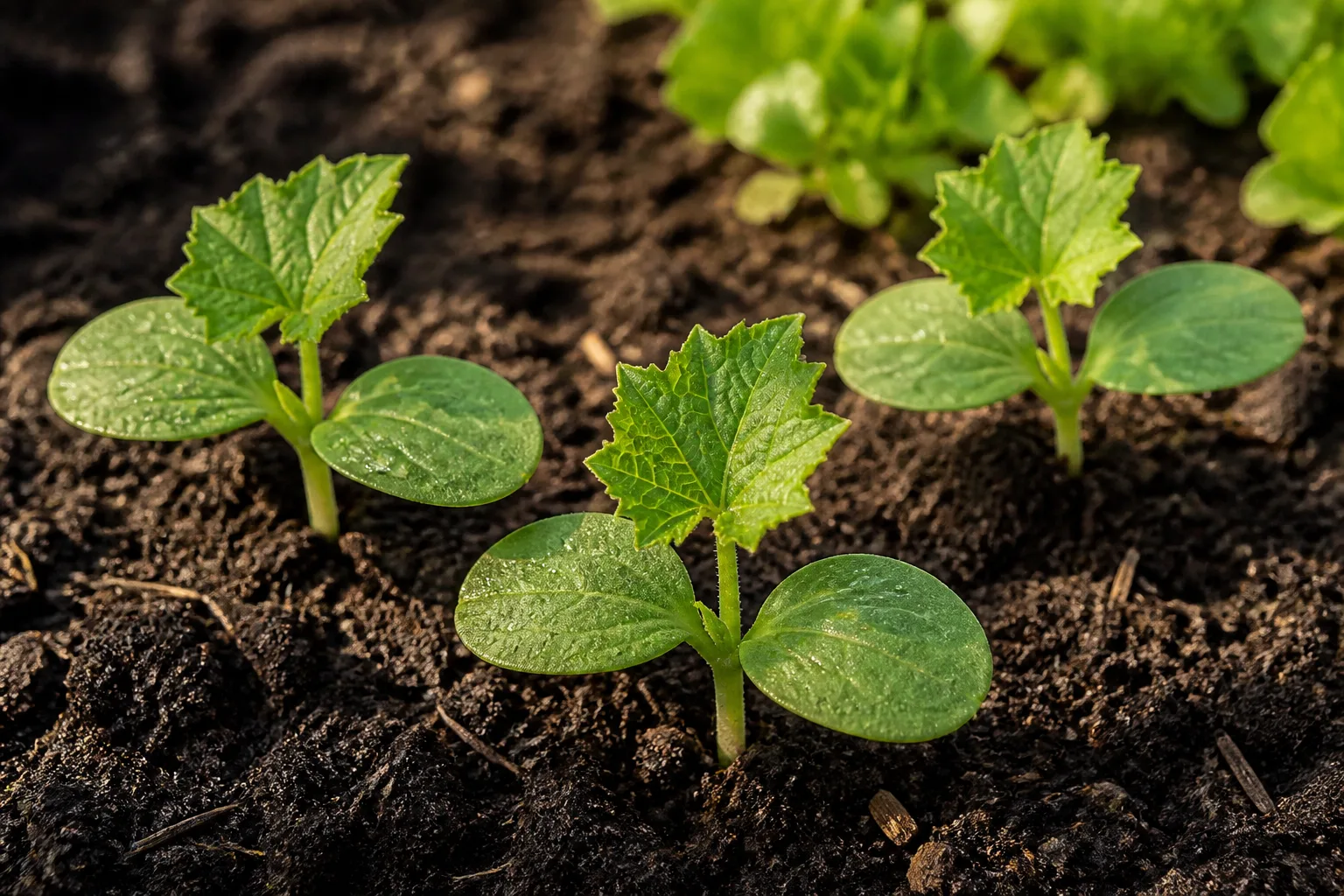
Direct sowing is often the simplest choice when summer is long enough and you can wait for frost-free, warm soil. Roots grow in their permanent location, avoiding transplant shock and the need to keep a fast-growing vine indoors. Sow at the packet depth, keep the seedbed evenly moist rather than waterlogged, and thin seedlings as directed.
Starting a seed in cold soil can cost more time than it saves. Germination may be slow or uneven, and seed can rot before it sprouts; then a late frost can kill the seedling after it finally appears. Savvy Gardening’s timing guide also warns that cold or saturated soil can undermine germination, so a calendar date should never overrule the condition of the bed.
A low tunnel, cloche, or row cover may protect young plants from brief cool spells, but it does not erase a long-term frost risk. Remove covers when flowers open if pollinators need access, and avoid leaving plastic in contact with tender foliage on warm sunny days. Use protection as a small extension to a safe planting window, not as permission to sow weeks too early.
How to use a transplant without losing the root ball
If you have a short season, start seed indoors about two to three weeks before the safe outdoor planting date rather than a month or two ahead. Use a pot large enough to hold the seedling until planting, provide strong light, and avoid letting roots circle tightly around the pot. A young pumpkin tends to establish more smoothly than a rootbound plant already sprawling across the windowsill.
Harden the seedling off by gradually exposing it to outdoor sun, wind, and temperature for several days. Plant on a mild, cloudy day if possible; water it in, keep the soil evenly moist during establishment, and shield it from wind or abrupt cold. Epic Gardening’s Halloween timing guide suggests starting indoors roughly three weeks before planting outdoors, while the RHS notes that pumpkin seedlings should remain bright and warm indoors until frost risk has passed.
Do not push a transplant into cold, soggy soil just because it has outgrown its pot. At that point, a larger temporary pot, a faster-maturing variety, or accepting a later harvest may be safer than stressing the plant. When you buy nursery starts, look for compact plants without flowers or circling roots rather than the largest specimen on the bench.
Adjust the Calendar to Your Climate
The broad “late May through July” range can include very different growing seasons. A gardener whose last frost is in early April may have warm soil months before someone in a mountain valley, even if they share a USDA hardiness zone. Hardiness zones describe winter lows, not when your soil warms or how many frost-free days remain.
Use your local last and first frost patterns, then check the actual spring weather and soil. In Pennsylvania, for example, Penn State Extension places direct sowing in late May through early June, with local differences across the state; that window is useful context for Pennsylvania, not a date to copy in Arizona or Maine. The RHS also gives late May or early June as an outdoor sowing window in its UK guidance, after the last frost, while noting that indoor starts are a common way to extend the growing season.
| Garden pattern | What to prioritize |
|---|---|
| Cold spring, short summer, early fall frost | A shorter-season cultivar, a young transplant, and a harvest deadline before the local frost window |
| Moderate spring and fall | Direct sow after the last frost and once soil is warm; let cultivar maturity set the date |
| Long, warm season | Use the Halloween date and cultivar maturity to avoid fruit ripening too far ahead of the display |
These are patterns, not fixed regional rules; a cool coastal garden or high-elevation yard can differ from a nearby weather station. Use frost history for your particular garden when available.
Short northern seasons and cool summers
In a cold region, the first fall frost may threaten vines before a long-season pumpkin can mature. Count backward from the earlier of your intended Halloween harvest and the time you need to bring ripe fruit in ahead of frost; then see whether the resulting date is after your safe spring planting window. If not, a seed-started transplant or shorter-duration variety is the realistic way to gain time.
For a first attempt, favor a small or medium carving type whose packet lists fewer days to maturity instead of choosing a giant that needs a long, warm run. Start indoors only briefly, keep the seedling in a bright spot, and transplant when the garden is frost-safe and warm. The RHS describes pumpkins as tender plants that need a long, hot growing season, and Penn State Extension notes that some winter squash need more than 100 days.
Do not assume a frost blanket can rescue fruit that still needs several weeks of growth. A cover may reduce damage during a light, short-lived cold snap, but it cannot replace warmth and daylight once autumn has arrived. If your harvest deadline falls before the plant can mature naturally, harvest any fruit that has begun to develop its mature color before a hard freeze and use it soon; partially ripe fruit generally does not store as well as mature fruit.
Long hot seasons and early spring warmth
Warm regions can start pumpkin seeds earlier because the frost-free season begins sooner, but early planting is not automatically better for a Halloween crop. If your cultivar matures well before October, a fruit may be ripe weeks before the display date; if you wait too long, summer heat or the later onset of fall cool may still affect growth. Use the same count-back calculation, but let the desired harvest date and local weather guide the adjustment.
A very hot site can stress a newly planted seedling and dry its root zone quickly. Plant into moist, well-drained soil, water deeply at the base, and protect young plants from abrupt heat and wind while they establish. In subtropical gardens, follow local extension guidance for the season that gives the crop warm soil and enough time to mature.
Choose a harvest date, then identify the safe planting window that gives your cultivar enough time to mature. Shift later only when the weather and packet timing support it.
Choose a pumpkin variety that fits the calendar
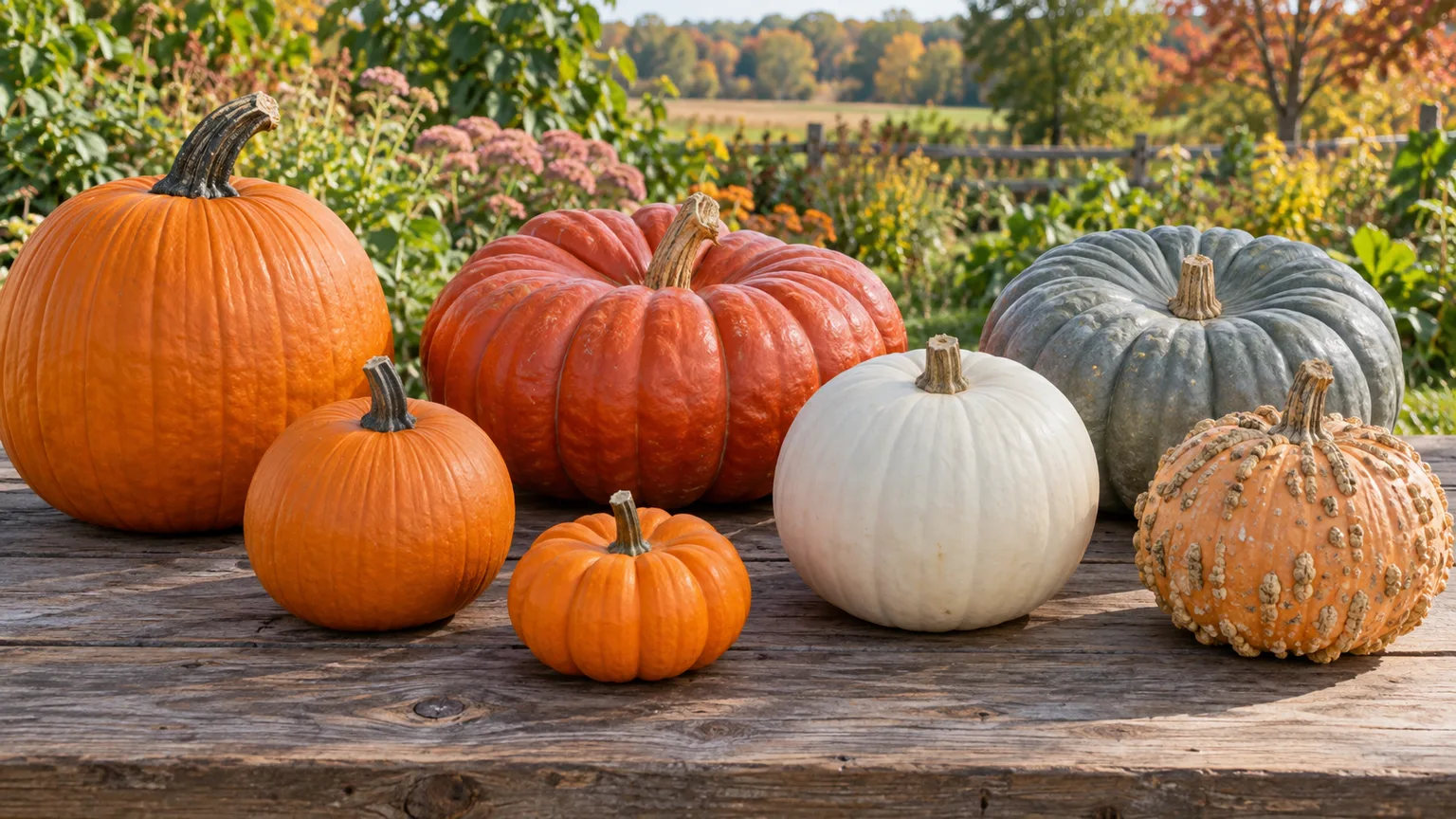
For Halloween, shop by maturity days and intended use, not just the picture on the packet. A standard carving pumpkin may take around 90 to 110 days, while small pumpkins can be quicker and giant types can take much longer; use the actual variety’s instructions because those ranges overlap. A variety described as “early” is helpful only if its listed maturity fits the remaining warm season.
The fruit’s purpose matters too. For carving, look for a medium-sized type with a suitable shape and sturdy stem; for porch décor, a small or unusual-color variety can work if its rind will be mature by fall. For eating, choose a cultivar sold for culinary use and allow the fruit to ripen fully rather than harvesting early just to meet a decorative deadline. The RHS notes that pumpkin sizes vary widely and recommends choosing varieties to suit their intended use and the space available.
If your seed catalog shows several options, compare the packet’s maturity estimate, vine habit, and expected fruit size before purchasing. A compact fruit can still grow on a long vine, and a giant pumpkin can consume a season without producing the porch-sized result you expected. For a broader comparison of carving, cooking, miniature, and specialty types, see the LeafyPixels pumpkin variety guide.
Why a mini pumpkin can beat a giant for Halloween
A mini or short-season pumpkin may be a better Halloween choice if your summer is brief. Smaller fruit often reaches harvest sooner than giant pumpkins, making it easier to fit into a frost-limited calendar; still, check the seed packet because mini fruit does not always mean a compact vine or a specific number of days. Many miniature varieties are meant for decoration, while others are suitable for cooking.
A giant pumpkin is a rewarding project when you have a long season, ample growing space, and time to manage a sprawling plant. It is a poor last-minute choice if the goal is a mature fruit by late October, because many giant types require more growing days and are selected for size rather than a quick finish. The Epic Gardening Halloween guide gives a broad 80-to-150-day range across pumpkin varieties, which is why the cultivar name and seller’s maturity details matter.
If Halloween is fixed and garden space is limited, choose a medium-sized carving pumpkin with the shortest maturity period you can find from a reliable seed seller. A single ripe, sound fruit is more useful than several immature fruits from a vine that needed a longer summer than your garden had.
If you started late, make the best remaining choice
First calculate how many warm, frost-safe days are left—not just how many days remain until October 31. Compare that number with the packet’s days to maturity plus a cushion, and use the earlier of the Halloween display target and the local frost deadline. If the crop needs 105 days and only 85 favorable days remain, you have a mismatch to solve, not a problem that extra fertilizer can reliably fix.
Look for a young transplant or a shorter-season cultivar if either can still be planted safely. A transplant may save some time, but only if its age is counted correctly and it is not rootbound; a fast variety may still fail if nights turn cold or the bed stays wet. If there is not enough season left, you can still grow pumpkins for a later harvest, but do not expect an immature fruit to ripen fully and store like one that finished on the vine.
For a pumpkin already on the vine, keep leaves healthy, water consistently at the soil line, and avoid late heavy nitrogen that promotes foliage instead of helping your deadline. Encourage pollinator access while flowers are open, and do not prune healthy leaves simply to make the plant look tidy. Record your dates and variety for next year; those notes will give you a better local calendar than a general zone chart.
Keep the crop on schedule after planting
Planting on time starts the process, but steady growth is what turns a calendar estimate into a ripe pumpkin. Choose full sun, provide adequate room for the vine, water deeply when rain is insufficient, and keep the root zone moist rather than soggy. Penn State Extension describes pumpkins and winter squash as heavy feeders and advises that excess nitrogen can delay fruit maturity, so follow soil-test guidance instead of trying to speed growth with extra fertilizer.
The flowering stage is a useful checkpoint. Pumpkins produce separate male and female flowers, and a female flower has a small swelling behind it; if pollination fails, that young fruit may shrivel and drop. Keep bees able to reach flowers by removing row covers once flowering begins, avoid broad-spectrum insecticides around open blooms, and watch whether new fruits are actually growing before assuming the expected harvest date is secure.
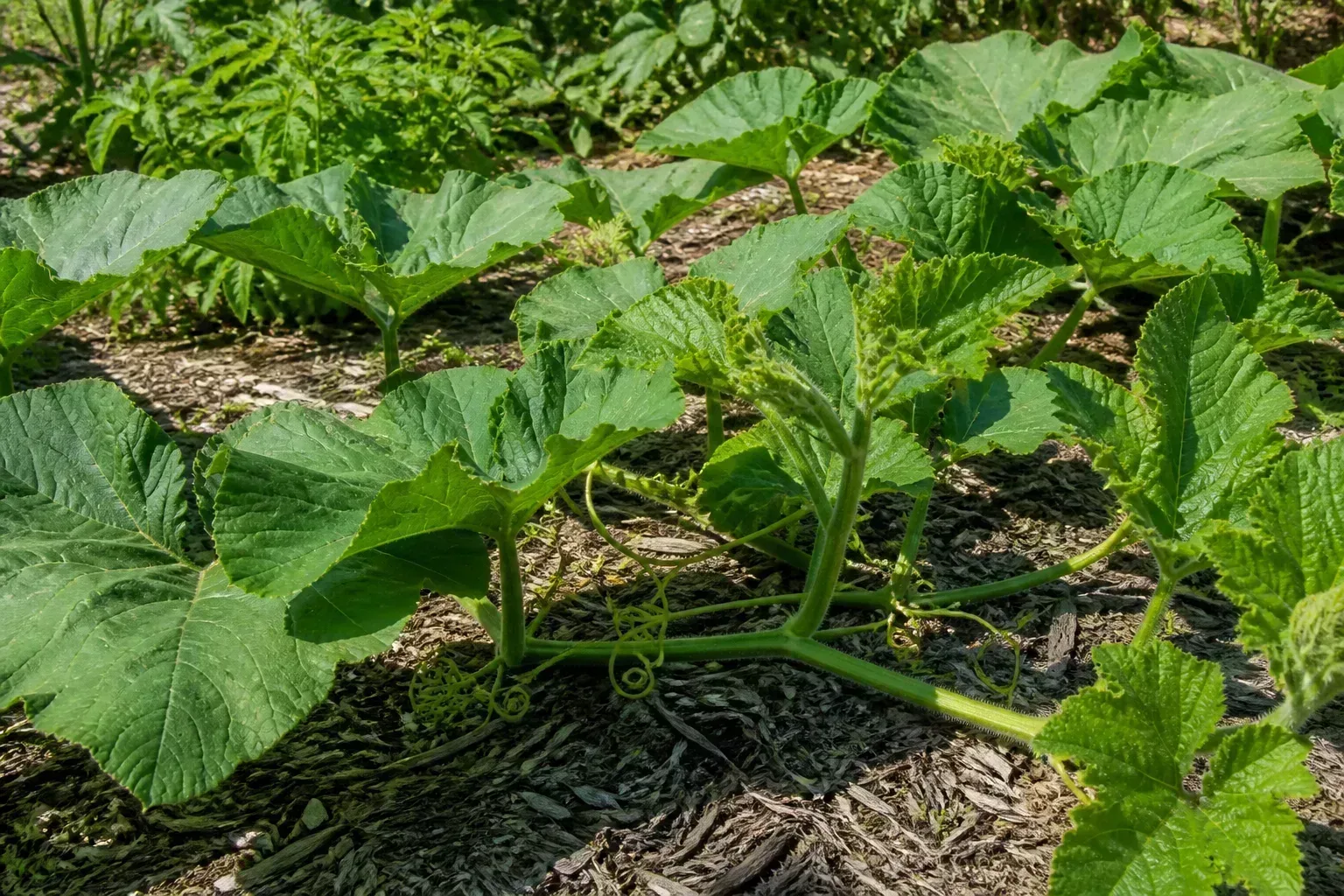
Put a board, straw, or another dry barrier under developing fruit if it rests on damp soil. This does not make the pumpkin mature faster, but it helps limit constant wet contact while the rind hardens. If a vine is badly diseased or a hard freeze is on the way, check each fruit individually rather than waiting for the entire plant to finish.
A garden log of emergence, fruit set, and harvest makes it easier to compare your cultivar with its packet estimate next year. If the first fruits are still small in autumn, do not assume late flowers can replace them in time.
Harvest early enough to protect the Halloween date
Use the plant and fruit—not Halloween’s calendar square—to decide when to pick. A ripe pumpkin has the cultivar’s mature color, a firm rind that resists a fingernail, and a stem that is drying or becoming corky; the vine may also begin to die back. Not every ripe pumpkin is orange, so compare the fruit with the color and shape described by its packet. Penn State Extension describes full color, a hard shell, and drying vines as maturity clues.
Harvest before a hard freeze. A light frost may damage leaves while leaving fruit usable, but hard freezing can weaken the rind and shorten how long the pumpkin keeps. Cut with clean, sharp pruners and leave a few inches of stem; lift from underneath instead of carrying the fruit by the stem, which can break and leave a wound. If a fruit has started to develop its mature color but frost is imminent, bring it indoors to a dry, ventilated place; partly ripe pumpkins can continue coloring, but they do not store as reliably as fully mature fruit.
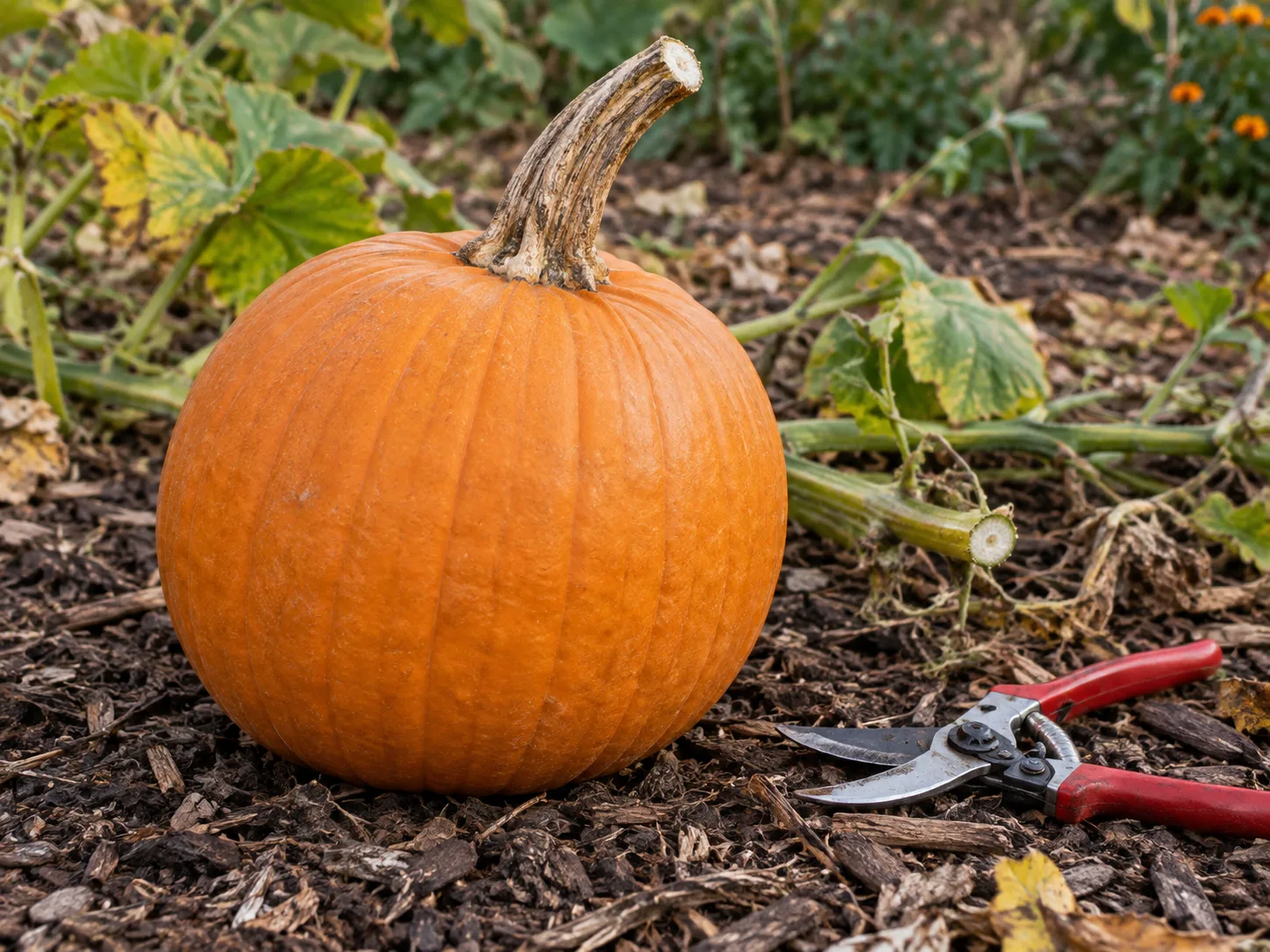
For a Halloween display, harvest mature fruit before the weather turns wet or cold, then keep it dry and out of direct sun. For pumpkins you plan to eat later, handle them gently and keep the stem intact; Penn State Extension’s storage guidance notes that storage life depends on cultivar, maturity, temperature, and damage. See the LeafyPixels pumpkin harvest guide for more detail on ripeness cues.
Conclusion
The best time to plant pumpkins for Halloween is when two clocks agree: the seedling can safely go into warm soil, and the remaining season is long enough for its variety to mature before your harvest deadline. Pick a realistic ready-by date—earlier than Halloween if frost usually arrives first—then count backward by the packet’s maturity days and add a 7-to-14-day cushion.
If the date falls before your soil is warm or your last-frost risk has passed, change the plan rather than planting into bad conditions. Choose a faster variety, use a young transplant, or reset the harvest expectation; a pumpkin that ripens on the vine before frost is more dependable than one forced to chase a calendar date.