How to Store Kohlrabi: Fridge, Cellar, or Freezer
Keep kohlrabi crisp with simple refrigerator storage, separate handling for greens, safe cut-piece timing, cellar checks, and a tested freezing method.
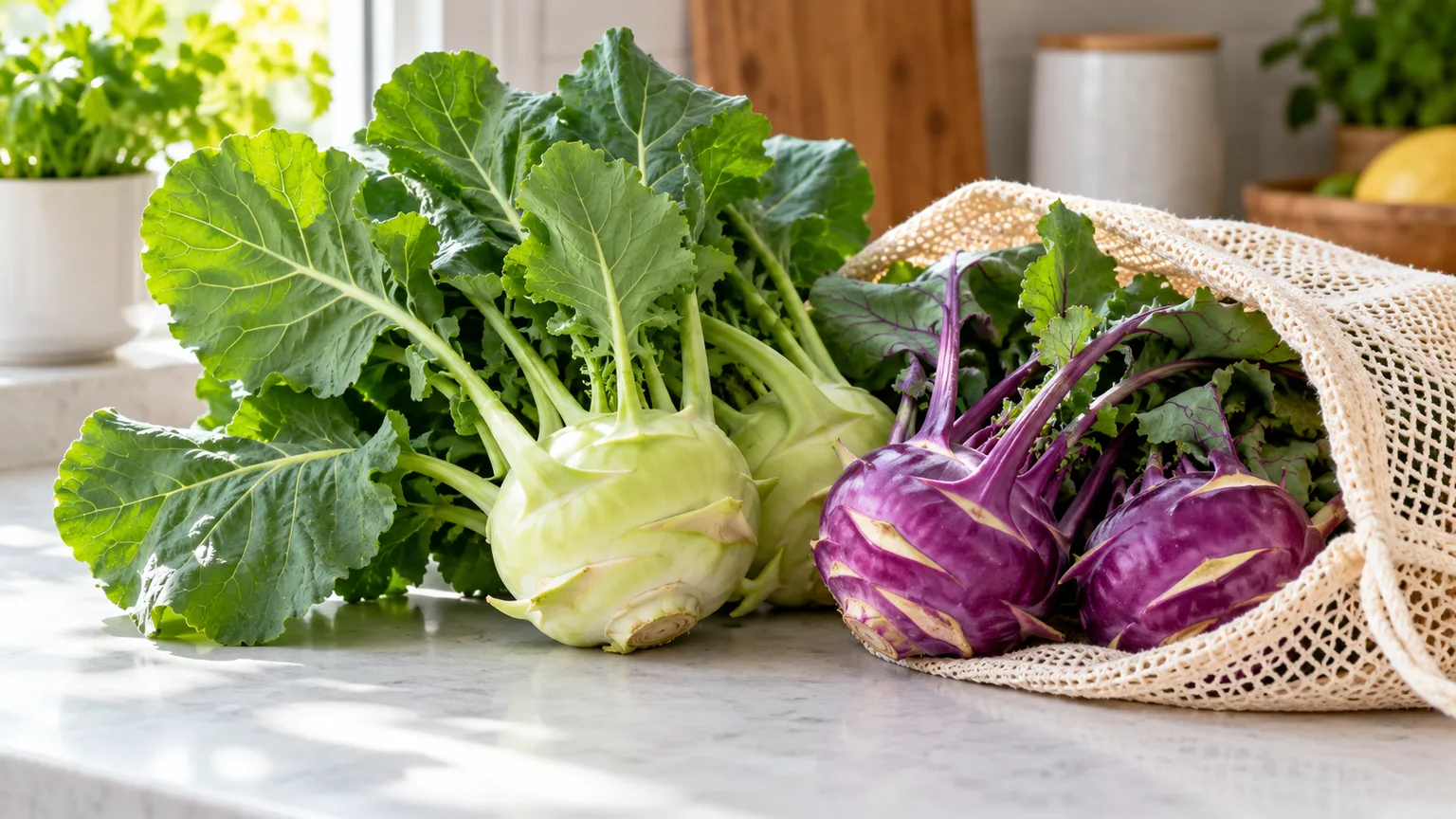
For most kitchens, store whole kohlrabi bulbs unwashed in the refrigerator crisper after removing the leaf stems. Plan to use them within about one to three weeks for good quality, and keep the greens separately because they wilt sooner. Purdue Extension suggests about two weeks for refrigerated bulbs; Wisconsin Extension says several weeks when leaf stems are removed and bulbs stay unwashed in a bag. (Purdue Extension; Wisconsin Extension)
Editorial basis: This guide synthesizes the extension and food-preservation references cited beside the recommendations. Published storage windows are presented as practical quality ranges, not guarantees. No kohlrabi storage trial or measurements of a particular refrigerator or cellar were conducted for this article. The assigned Positive Bloom article is retained only as the required coverage citation; storage instructions here are sourced from the extension and food-preservation references cited beside them.
At-a-glance storage comparison
| Form and method | Practical starting point | Best use | Key check |
|---|---|---|---|
| Whole, unwashed bulb in refrigerator | About 1–3 weeks for quality; extension estimates vary | A few bulbs for raw eating or cooking | Keep tops off; inspect for soft spots and condensation. |
| Separate greens in refrigerator | Use within a few days; Purdue gives up to 3 days | Cook leaves soon after harvest | Wrap in a damp, not dripping, towel and use a loose bag. |
| Cut, peeled, or cooked pieces | Refrigerate promptly; use within 3–4 days under general produce guidance | Meal prep and leftovers | Keep in a clean, covered container at 40°F (4°C) or below. |
| Monitored cellar or cool storage space | Potentially longer, but only with steady cold, humidity, and inspection | A larger harvest when a suitable space already exists | Measure the space; discard deteriorating bulbs. |
| Blanched and frozen | Follow the NCHFP method for whole bulbs or half-inch cubes | Surplus intended for cooked dishes | Cool promptly, drain, package, and freeze. |
The refrigerator is the simplest default. A cellar is a conditional option rather than a guaranteed upgrade, and freezing is the most practical choice when you have more bulbs than you can use fresh. The ranges above describe quality guidance; they are not dates that certify a vegetable as safe.
What you store is an enlarged stem, not a root
Kohlrabi can look like a turnip sitting above the soil, but the edible round portion is a swollen stem. Wisconsin Extension explains this distinction, and it matters because advice for mature carrots, beets, or turnips should not automatically be applied to kohlrabi. The broad principles of cold storage and regular inspection still help, but the crop-specific guidance for kohlrabi should lead your decision. See the separate root-vegetable storage guide when you are planning a mixed cellar with true roots. (Wisconsin Extension)
The bulb is also not a botanical bulb. “Bulb” is a familiar kitchen name for the swollen stem. Thinking of it as a tender stem helps explain why damaged, overmature, or drying specimens lose quality and why cellar recommendations should be treated as conditional. (Harvest to Table)
Select firm bulbs for longer keeping
Before storing a harvest, sort it once. Keep firm bulbs with intact skin for the longer storage window. Set aside any that are split, deeply bruised, punctured, or already soft so you can cook them first. A small dry surface mark does not by itself mean the entire bulb must be thrown away, but damaged tissue is a poor candidate for storage because it can dry or deteriorate faster.
If you are harvesting from the garden, choose bulbs at a tender stage for the variety rather than leaving every specimen in the ground until it is oversized. Wisconsin Extension notes that mature kohlrabi can become tough and woody, with some varieties retaining better texture than others. For comparison, the turnip harvest guide covers a true root crop with different harvest cues. Cut or lift kohlrabi carefully and place it in a basket rather than dropping it into a pile; avoiding bruises is a simple way to protect the surface before storage.
Do not wash bulbs before putting them away. Soil can be brushed off gently when dry, but rinsing right before storage leaves water in creases or on the skin. The goal is a clean storage container and a dry exterior, not a sterile vegetable. Wash the bulb under clean running water when you are ready to prepare it.
Remove tops soon after harvest
Trim the leaf stems from the bulb soon after picking, leaving a short stub and taking care not to cut into the swollen stem. The leafy tops lose moisture more quickly than the bulb, so storing them attached can shorten the useful life of the greens and make the bulb harder to keep crisp. Purdue Extension recommends removing the leaves before refrigerating kohlrabi; Wisconsin Extension also advises removing the stems before placing unwashed bulbs in a bag. (Purdue Extension; Wisconsin Extension)
Sort the greens at the same time. Keep fresh leaves that are firm and clean, and set aside those that are torn, yellowing, slimy, or badly insect-damaged. If the leaves are wet from rain, allow surface water to drain and dry before packing. Link your harvest plan to other leafy crops with these guides to harvesting spinach and harvesting collard greens; their leaves also need to be used or stored separately from the central stem.
Refrigerate whole bulbs for routine use
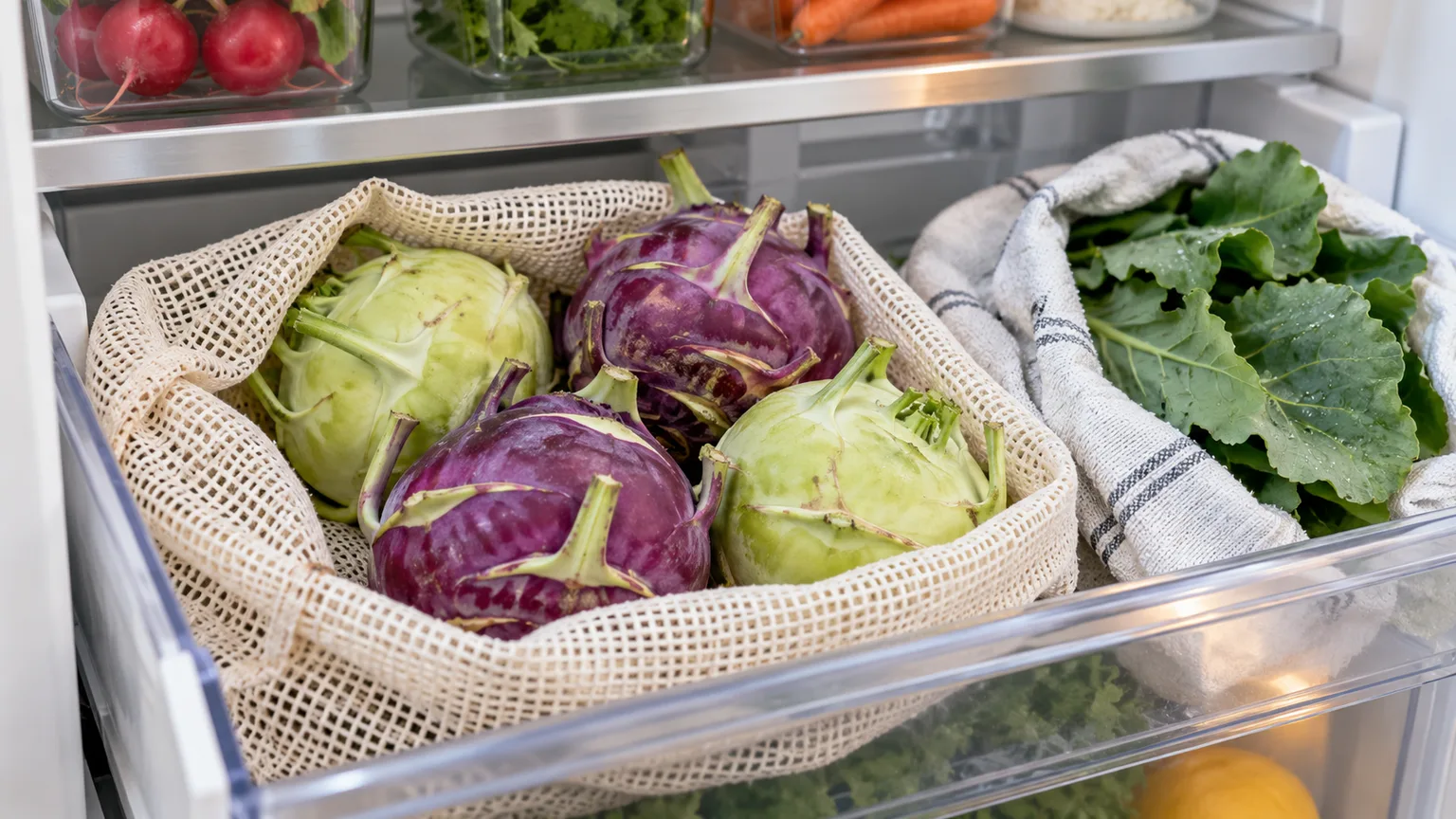
For a small household supply, put the trimmed, unwashed bulbs in the refrigerator crisper. A clean produce drawer keeps them cold and makes it easier to notice condensation or soft spots. If your refrigerator has an adjustable humidity setting, use the produce drawer as intended and avoid placing the bulbs against a vent where they might freeze. Extension recommendations commonly call for refrigeration, but the appliance itself matters: use a refrigerator thermometer if you are unsure that it stays at 40°F (4°C) or below, the general produce-storage threshold in University of Maine Cooperative Extension guidance. (University of Maine Cooperative Extension)
Keep kohlrabi away from raw meat, poultry, and fish, and do not put it where juices could drip onto it. University of Maine Cooperative Extension recommends this separation to prevent cross-contamination in a shared refrigerator. (University of Maine Cooperative Extension) If you have only one or two bulbs, a dedicated container or a clean drawer section is enough; there is no need to build a special storage system.
Set up the bag and crisper drawer
A bag slows moisture loss, but it should not trap standing water. Wisconsin Extension recommends an unwashed bulb in a sealed plastic bag in the refrigerator. Gardening Know How likewise describes bag storage in the crisper. In a refrigerator where condensation builds, loosen the closure or use a perforated bag and check the inside after a day or two; if droplets collect, dry the bag and bulb exterior and repack. (Wisconsin Extension; Gardening Know How)
Avoid packing bulbs so tightly that you cannot see or reach them. Place the oldest or most damaged one at the front, and label a container with the date if you store several harvests. A paper towel can absorb a little condensation, but it should not become wet and remain pressed against the bulb. Replace it if it feels damp. The practical target is a cold bulb with no free water collecting around it, not a specific bag brand or a completely airtight seal.
Store greens for near-term meals
Kohlrabi leaves are more perishable than the bulbs. Purdue Extension suggests wrapping greens in a damp paper towel, placing them in a loose bag, refrigerating them, and using them within up to three days. The towel should be barely damp: a wet bundle can sit in pooled water and turn limp. If leaves are dry and crisp, a slightly damp towel helps slow wilting; if they are already wet, dry them first. (Purdue Extension)
Store greens in a separate bag or clean container so they do not crush against the bulbs. Use the tenderest leaves raw or lightly cooked first, and cook older but still sound leaves in soups or sautés. Follow the same separation and prompt-use logic you would use for other greens, such as kale harvesting and spinach. The links are harvest references rather than kohlrabi-specific storage rules; the important point is to keep each crop’s leaves clean, cool, and visible so they are not forgotten in a drawer.
Handle cut kohlrabi safely
A whole, unwashed bulb and a cut, peeled, or cooked piece are different storage situations. Once you cut or peel kohlrabi, place it in a clean covered container and refrigerate it promptly. University of Maine Cooperative Extension advises that cut, peeled, or cooked fruits and vegetables go into the refrigerator within two hours and be used within three to four days. This is general produce guidance, not a kohlrabi-specific shelf-life study or a guarantee that every cut piece remains safe for that entire period. (University of Maine Cooperative Extension)
Keep the refrigerator at 40°F (4°C) or colder, use a clean knife and board, and keep the container away from raw meat and its juices. If cut kohlrabi has sat at room temperature for longer than the recommended window, do not extend its storage by putting it back in the refrigerator. When you are unsure how long it has been out, choose caution and discard it rather than tasting it to decide.
Interpret refrigerator time ranges
Published estimates for whole bulbs are not identical. Purdue Extension gives about two weeks, Wisconsin Extension says several weeks, and gardening sources vary with the conditions they assume. Gardener’s Path gives a two-to-three-week refrigerator range for crisp bulbs, while Gardening Know How suggests a shorter period. Those figures are useful as a planning band, not as competing promises. Use the lower end when bulbs are bruised, mature, or stored in a refrigerator that fluctuates. (Purdue Extension; Wisconsin Extension; Gardener’s Path; Gardening Know How)
A time estimate is not a timer that overrides what you see. Check bulbs every few days, especially after a large harvest or a change in refrigerator settings. If a bulb is beginning to lose crispness but has no signs of spoilage, cook it soon rather than planning another week of storage. That keeps the calendar useful without treating the longest reported number as a freshness guarantee.
When a root cellar is worthwhile
Cellar storage makes sense only if you already have a space that stays cold, humid, and reasonably steady and you can check it. It may help with a larger harvest that would crowd the refrigerator, but a basement, garage, or shed is not a root cellar just because it is cool on one afternoon. Measure the actual location through its warm and cold periods, and use a thermometer and humidity gauge rather than guessing from how the room feels.
Horticultural sources report longer keeping in good cellar conditions; Gardener’s Path gives up to about three months as a possible upper range. Treat that as a best-case quality estimate from a gardening source, not as a tested household promise. Your actual temperature, humidity, and ability to inspect determine whether your own space is suitable. (Gardener’s Path)
Prepare cellar space before filling it
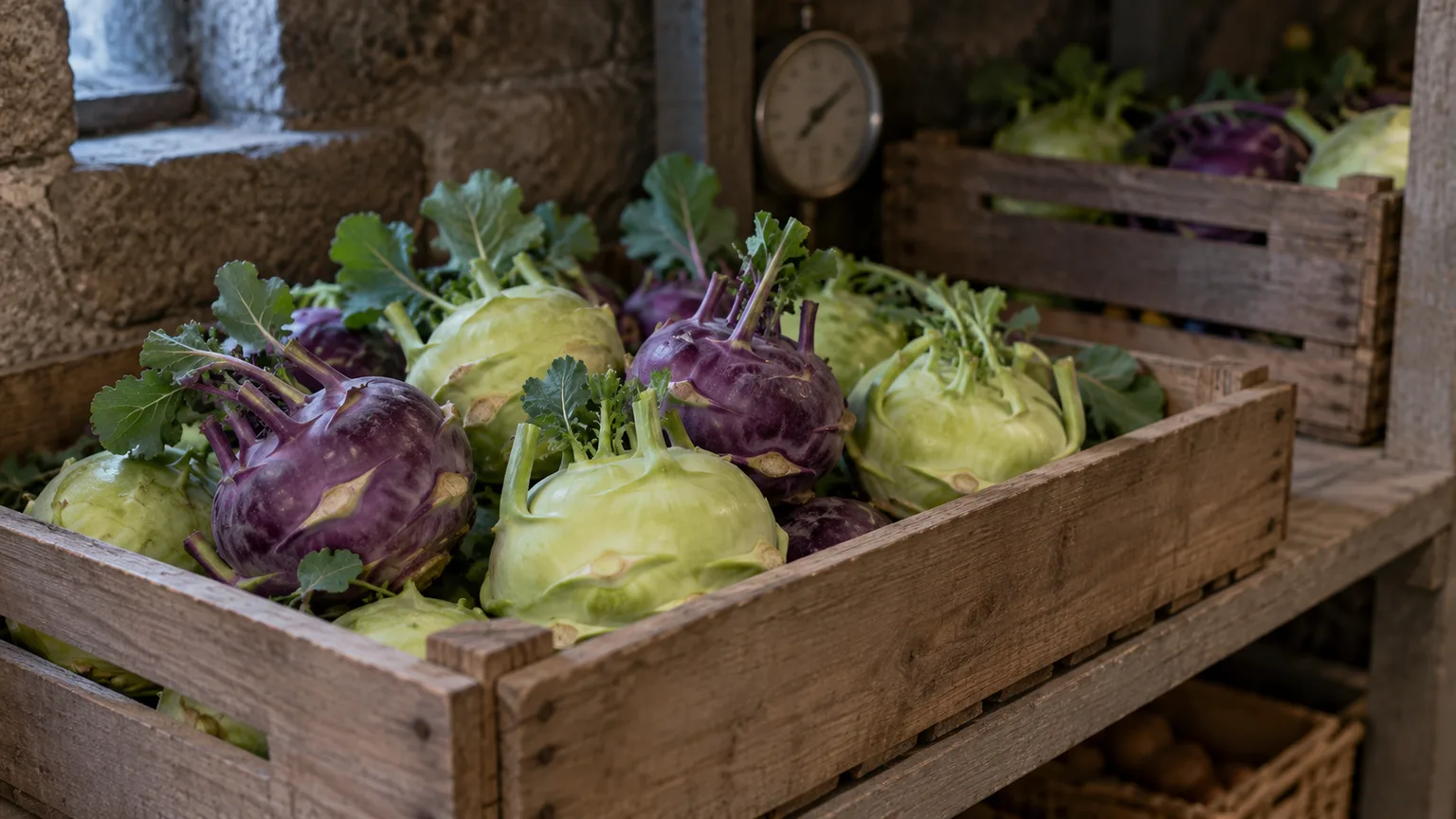
Before adding a harvest, clean the shelf, crate, or box and make sure it stays dry on the outside. Set aside bulbs with cuts, wet spots, or soft areas for quick use. Leave room around each bulb for inspection and some air movement; do not press them into a dense pile or seal them in a container that collects moisture. A cellar that freezes, warms repeatedly, or becomes damp is not suitable for extending storage.
Gardener’s Path describes keeping kohlrabi in a cool root cellar for a longer period under good conditions. Harvest to Table discusses cold, moist storage and checking bulbs frequently. These gardening sources support the general idea of a monitored cool space, but the guidance does not replace direct measurement of your own room. If your cellar cannot maintain stable conditions, use the refrigerator or freeze the surplus instead. (Gardener’s Path; Harvest to Table)
Check and rotate cellar bulbs
Inspect cellar-stored kohlrabi at least weekly. Look for softening, shriveling, wet patches, mold, or new growth. Remove any bulb that is deteriorating so it does not sit against sound produce. If an otherwise firm bulb is simply losing moisture, bring it into the kitchen and use it soon; do not assume that one inspection makes it suitable for another long storage cycle.
Keep a simple date label on the container and use the oldest sound bulbs first. If the cellar has warm and cool zones, record readings and move only sound bulbs to the more stable location. Check the storage material as well: anything that has become wet or musty should not remain in contact with the harvest. University of Maine Cooperative Extension advises checking stored produce regularly and discarding items that show spoilage; that basic routine matters whether the produce is in a refrigerator drawer or a cellar. (University of Maine Cooperative Extension)
Freeze surplus with tested blanching
Freezing is a better plan than trying to stretch a crowded refrigerator or an unsuitable cellar. The National Center for Home Food Preservation gives a tested method for kohlrabi: remove tops and roots, wash and peel the tough outer layer, then leave bulbs whole or cut them into half-inch cubes. Water-blanch whole bulbs for three minutes and cubes for one minute. Cool promptly, drain, package with about half an inch of headspace, seal, and freeze. Follow the current NCHFP directions rather than shortening the blanch because the pieces look cooked; blanching is a quality-preservation step for frozen vegetables. (National Center for Home Food Preservation)
Work in manageable batches so the blanching water returns to a boil and pieces can be cooled promptly. After cooling, drain well to reduce excess ice, then pack into freezer-safe containers or bags. Remove as much air as practical without crushing the pieces, leave the headspace specified for a rigid container, and label the package with its contents and date. NCHFP’s published procedure is the source for the blanching times and headspace; this guide does not replace it with a homemade processing schedule.
Pack freezer portions for how you cook
Choose whole bulbs or half-inch cubes according to the dishes you make. Whole blanched bulbs can be useful when you want to cut them after thawing or cooking, while cubes are convenient for soups, stews, and mixed vegetables. Smaller portions freeze and thaw more predictably than one large block, and they let you take only what a recipe needs.
Plan to use frozen kohlrabi in cooked dishes, and label each package so you know whether it contains whole bulbs or cubes. If the harvest is small, there is no need to freeze it at all: refrigerate a few sound bulbs and cook the rest within the quality window.
Why home canning is not recommended
Do not improvise a pressure-canning or water-bath process for plain kohlrabi. Purdue Extension says kohlrabi is not recommended for home canning and points readers toward proper preservation guidance. The National Center for Home Food Preservation provides a specific freezing procedure for kohlrabi; this guide does not identify a tested canning schedule. Use refrigeration for short-term storage or the published blanch-and-freeze method for longer keeping. (Purdue Extension; National Center for Home Food Preservation)
Do not assume that a canning time for another brassica or a recipe from an unverified blog can be transferred to kohlrabi. Home canning relies on a tested process matched to the food and preparation. If a trusted food-preservation authority publishes a tested recipe in the future, follow that exact recipe, including its jar size, preparation, pressure, and processing time. Until then, freezing is the supported long-term method among the sources reviewed here.
Wash and peel close to preparation
Keep bulbs unwashed in storage, then wash them before cutting or eating. Use cool, clean drinking water; do not wash produce with soap or household detergent. University of Maine Cooperative Extension also recommends clean hands, counters, cutting boards, and utensils before preparing produce. Scrub the exterior with a clean vegetable brush if soil is stuck to the skin, even if you plan to peel it. (University of Maine Cooperative Extension)
Peel away the tough outer skin when needed, then cut with a clean knife. If you are preparing both greens and bulbs, wash and dry the leaves separately and clean the board between tasks if it has contacted soil. Return any unused cut pieces to a covered container in the refrigerator promptly. Washing at the time of use keeps the storage exterior dry while still giving you a clean vegetable for preparation.
Tell quality decline from a safety decision
A soft or slightly shriveled bulb may have lost eating quality without necessarily showing the same warning signs as active spoilage. If it remains clean and has no wet decay, mold, sliminess, or unusual odor, decide whether the texture is still suitable for cooking. A bulb that is moldy, slimy, leaking, or actively rotting should be discarded; do not taste it to check. University of Maine Cooperative Extension says to inspect stored produce regularly and throw out anything that looks spoiled. (University of Maine Cooperative Extension)
Do not use the one-to-three-week whole-bulb estimate or the three-to-four-day cut-produce guidance as a substitute for inspection. The latter is a general Extension recommendation for cut, peeled, or cooked produce held cold, not a promise that every item will remain safe regardless of handling. If a cut piece has been warm for too long, if the container is contaminated, or if you cannot tell how it was stored, discard it. When in doubt about a questionable item, throwing it out is the safer choice.
Plan and use a mixed harvest
When several bulbs ripen at once, sort them into three groups: sound whole bulbs for the refrigerator, fresh greens for the next few meals, and cut or damaged bulbs to cook promptly. Freeze a portion if your household cannot use the fresh group within its quality window. If other crops compete for storage space, consult the root-vegetable storage guide rather than applying one cellar recipe to every crop. The separate spinach, collard, and kale harvest guides can help you plan which leafy crops to use first.
Conclusion
For everyday storage, trim off the leaves, keep the bulbs unwashed in a bag or clean container in the refrigerator crisper, and use them while they are still firm. Store greens separately and use them within a few days. Refrigerate cut pieces promptly and treat the general three-to-four-day guidance as a limit for quality and handling, not a guarantee. Use a cellar only when you can measure and inspect it, and choose the NCHFP blanch-and-freeze method for surplus. Those steps give you a practical plan based on storage conditions and realistic time ranges.