How to Grow Runner Beans: Planting to Harvest
Learn when to sow runner beans, build sturdy supports, keep flowers setting pods, harvest at the tender stage, and cook or store the crop safely.
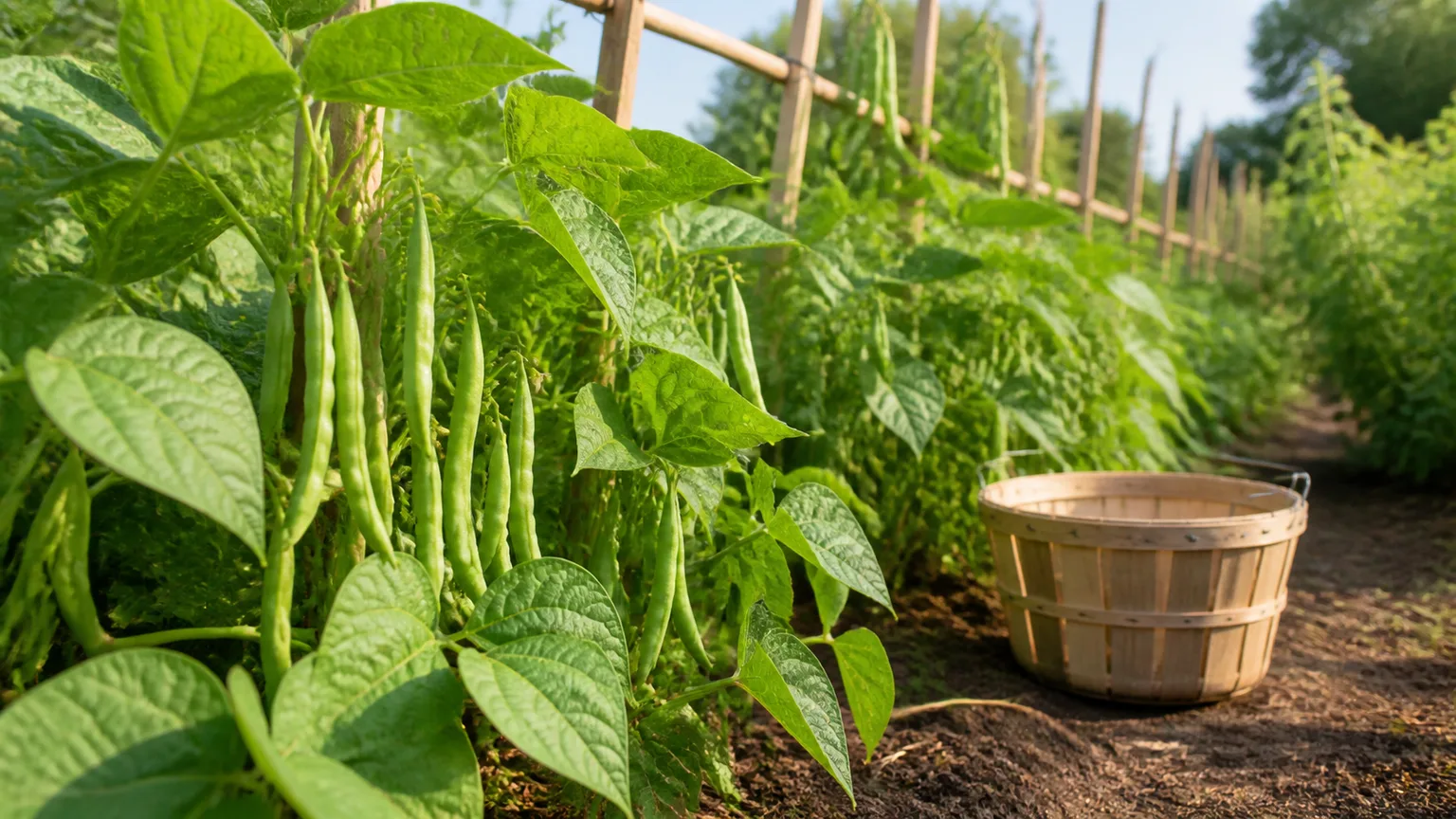
Runner beans reward a little planning with a long season of flowers and edible pods. Their quick-climbing vines can cover a trellis, fence, or wigwam, but the crop depends on a few connected decisions: plant into warm soil after frost danger passes, give the vines a stable support, keep the root zone evenly moist, and pick pods before they become tough. You can also let some pods mature for shelling or seed, so one planting can serve more than one purpose.
The botanical name is Phaseolus coccineus, and the plant is grown as a frost-tender annual in most gardens. Its long stems and broad leaves need space, sunlight, water, and a structure that will not topple when foliage is wet and full of pods.
What runner beans are and what you can harvest
Runner beans are twining legumes, commonly sold as scarlet runner beans because many cultivars have bright red flowers. Cultivars may also have white, pink, or bicolored blooms, and the plant can be grown for its flowers, young green pods, mature seeds, or a combination. NC State Extension describes the species as a vigorous vine that can reach roughly 12 feet and produce edible beans and flowers; the crop is usually planted outdoors after frost danger has passed. (NC State Extension Plant Toolbox)
The name “runner bean” can be confusing because seed packets may emphasize ornamental flowers, edible pods, or both. Read the variety description before buying: if your priority is a long picking season, choose a climbing edible cultivar and plan for its height; if you need a smaller plant for a patio, look for a dwarf or container-suited type. A flower-focused selection can still produce food, but its pod quality and harvest window may not match a variety selected for eating.
Unlike bush beans that make a compact plant, climbing runner beans keep extending along their support. This lets you grow a substantial crop in a narrow bed, but you must install the frame before planting and allow access for picking. Harvest stage matters just as much as cultivar: pick young pods for a green vegetable, allow selected pods to swell for shell beans, or leave a few until dry for seed and pantry beans. Frequent picking encourages more flowers and pods; letting pods mature shifts the vine toward seed production.
Which runner bean variety fits your space and purpose
For a first crop, make the decision around available support and the way you plan to eat the harvest. Most runner beans climb vigorously, so they suit a tall trellis, a double row of poles, or a wigwam; dwarf varieties stay lower and can be easier to reach, though they generally produce a smaller crop. Container choices should be matched to the variety rather than assuming every seed packet will do well in a small pot.
Flower color is an ornamental feature, not a reliable measure of pod flavor or yield. ‘Painted Lady’ has red-and-white flowers, ‘The Czar’ white blooms and pale seeds, and ‘Moonlight’ pale flowers with improved self-fertility. Check a seed packet for mature height, pod description, and days to maturity; NC State Extension lists cultivars including ‘Painted Lady’, ‘Purple Aztec’, ‘Sunset’, and ‘The Czar’, while the RHS describes both climbing and dwarf types. (RHS runner bean growing guide)
Climbing runner beans often do well in cool or moderate summers. In long, hot spells, afternoon shade and consistent water may help, but heat can still reduce pod production; in very hot regions, compare them with heat-adapted common beans before giving them most of a bed.
Choose the site, then install support
Choose a site with at least six hours of direct sun, fertile soil that drains freely, and a reliable way to water during dry spells. The plant needs moisture while flowering and setting pods, but roots should not sit in saturated ground. If your soil is heavy or tends to puddle, improve the bed with organic matter and use a raised bed or another well-drained location rather than trying to correct persistent waterlogging with more frequent watering.
A sheltered position protects tender shoots from wind before vines attach to their support. Avoid trees and large shrubs that compete for light and moisture, leave room to pick from both sides, and place shade-tolerant crops where the mature bean canopy will block some sun.
Build the frame before seeds go in
Put supports in place before sowing. A traditional double row uses tall poles or bamboo canes arranged in two parallel lines, with the tops tied to a horizontal ridge support; a wigwam uses several poles set in a circle and tied together at the top. The exact spacing depends on the variety and frame, but give each vine room to spread and leave a clear path for picking. RHS guidance uses supports about 8 feet tall for climbing varieties and notes that a heavy container and deep pot are important when growing them in pots. (RHS runner bean growing guide)
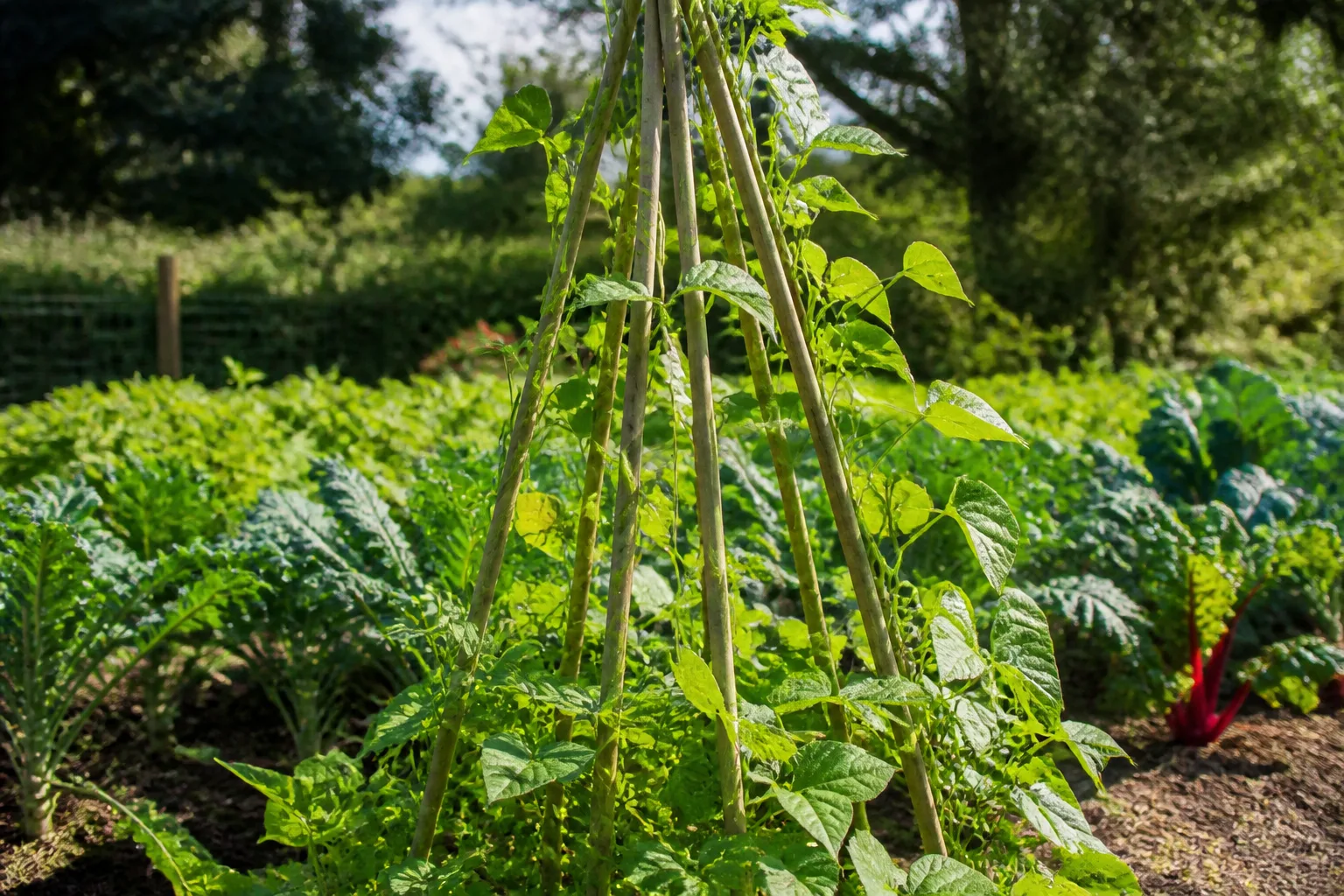
Push poles firmly into the ground and brace the structure so it cannot rock in wind. Mature vines act like a sail, and wet foliage plus pods can pull loose canes over; secure the top with a crossbar or strong cord. Young plants may need a loose tie to reach the first pole, but avoid tight ties that pinch as stems thicken; once the vine grips the frame, it can climb on its own.
When to plant runner beans
Planting dates depend on local frost risk and how quickly your soil warms. Runner beans are frost tender, and cold, wet soil can slow or damage seeds, so do not use a month on a package as the only signal. Wait until the danger of frost has passed and the soil is warm; the RHS advises sowing outdoors when soil has reached about 54°F (12°C), while GrowVeg recommends waiting for roughly 50°F (10°C) or warmer. (RHS runner bean growing guide; GrowVeg runner bean guide)
For many temperate gardens, that means late spring into early summer, but the date shifts with elevation, coastal exposure, and the year’s weather. A raised bed, black plastic soil cover, or sunny south-facing wall can warm the planting area sooner than a shaded low bed; still, do not rush seeds into soil that is cold to the touch or stays wet for days after rain. If frost is forecast after seedlings emerge, cover them overnight with a breathable horticultural fleece or another suitable temporary cover and remove it when conditions improve.
In regions with a long frost-free season, a second sowing a few weeks after the first can spread the harvest. In short-season climates, start a small number indoors, but compare their progress with a later direct sowing once the bed warms; local frost dates are planning guides, not a substitute for checking the weather and soil.
Sow seeds directly or start them indoors
Direct sowing is usually the simplest method because beans grow quickly and dislike rough handling of their roots. Sow into the final bed when soil is warm and drainage is good, placing seeds about 2 inches deep and spacing them according to the frame and variety. If you want insurance against a seed that does not germinate, sow two seeds at a support point and thin to the stronger seedling rather than leaving both to crowd one pole.
Starting seeds indoors can help gardeners with a short growing season, but use individual biodegradable pots or soil blocks and transplant before the roots become crowded. Sow only a few weeks before the outdoor planting window; a tall, rootbound seedling can be harder to establish than a younger direct-sown plant. Harden seedlings off gradually by setting them outdoors in a sheltered spot for increasing periods over about a week, then transplant on a calm, mild day and water them in.
Do not leave seeds soaking or in cold, soggy compost; sow sound seed into warm, damp—not saturated—ground and keep the surface from drying until shoots emerge. Protect new sowings from slugs and birds with a short tunnel of mesh or a temporary cloche, then remove or open the cover before it overheats or blocks pollinators.
Give young vines a steady start
Once seedlings are several inches tall, thin crowded sowings and guide each plant toward its pole. Keep the root zone evenly moist while the plants establish, but do not water shallowly every day if the soil beneath the surface is still wet. A deeper watering encourages roots to explore the bed; a light mulch can slow evaporation once the soil has warmed and seedlings are established.
Weed by hand near young stems to avoid disturbing shallow roots. Wait until the beans are growing steadily and the weather is warm before adding mulch, which can otherwise keep spring soil cold; leave space around stems for airflow.
If the plants make very leafy growth but few flowers, avoid adding a high-nitrogen fertilizer as a reflex. Beans may need fertile soil, but excessive nitrogen can favor foliage rather than flowers and pods; start with compost and follow soil-test advice if the bed is notably poor. Runner beans in garden beds often need little additional feed, while container plants may need a balanced, label-directed liquid feed once flowering begins because regular watering can leach nutrients from the potting mix. (RHS runner bean growing guide; Epic Gardening runner bean guide)
Keep flowering vines productive
Runner beans need steady moisture, especially from the first flowers through pod fill. Check the soil a few inches below the surface: if it is drying, water slowly at the base until the root zone is moist. Containers dry much faster than garden beds, so check them daily during hot or windy weather; a pot that dries completely during flowering can drop blooms or form small, misshapen pods.
Watering at soil level helps keep leaves drier and reduces the chance of spreading fungal problems from splash. Mulch conserves water and keeps soil temperatures more even, but leave a small gap around stems so they do not stay damp against the mulch. If rain is frequent and the soil stays wet, pause irrigation and improve drainage rather than continuing to water on a fixed schedule.
Keep vines trained up the support and tie loose stems with soft, adjustable ties. When the main vine reaches the top of a frame, pinch or cut the growing tip just above a leaf node if you need to keep it within reach; this limits further upward growth and can encourage side shoots. Pinching is optional if the support is tall enough and the plant remains manageable, so do not top every plant simply because it has reached a calendar date.
Runner bean flowers attract pollinators, so leave the structure open enough for airflow, avoid insecticides on blooms, and keep nearby flowers available through the season. GrowVeg notes that cold, wet weather can reduce insect activity and pod set, which is why weather and water stress deserve attention before adding fertilizer. (GrowVeg runner bean guide)
When flowers appear but pods do not
A few dropped flowers are normal, but flowers repeatedly falling without small pods forming usually signal a condition problem during bloom. Check the soil moisture first, then review the recent weather: dry roots, very hot days, and cold or rainy stretches that keep pollinators inactive can all reduce the number of flowers that become pods. The RHS identifies poor pod set as a common problem and advises growers to focus on site conditions and moisture rather than assuming one cause fits every plant. (RHS runner bean pod-set troubleshooting)
If the bed is dry, give it a deep, slow watering and mulch the surface after the soil is moist. If the root zone is already wet, improve drainage and give plants space to dry instead of adding more water. During a heat wave, consistent soil moisture and temporary afternoon shade may help, but shade should not become a permanent low-light condition because flowering and growth still need good sun.
If healthy flowers fail to set pods in cool, wet weather, wait for a warmer, drier stretch and keep moisture even at the roots. Some cultivars set with less pollinator input than others, so choose one described as self-fertile if pod production is more important than flower display. Look for tiny pods behind spent blooms; if they form and shrivel, inspect moisture, pests, and disease. Change one likely cause at a time and watch the next flush.
Harvest pods before they turn tough
Runner beans are ready for the green-pod harvest when they are firm, crisp, and snap cleanly, with small seeds that have not swollen into large bumps. The ideal length depends on cultivar, so use feel and seed development as the test rather than waiting for a single number. The RHS suggests picking young pods when tender and stringless, around 8 to 10 inches for many varieties, and harvesting every two to three days so pods do not mature unnoticed. (RHS runner bean growing guide)
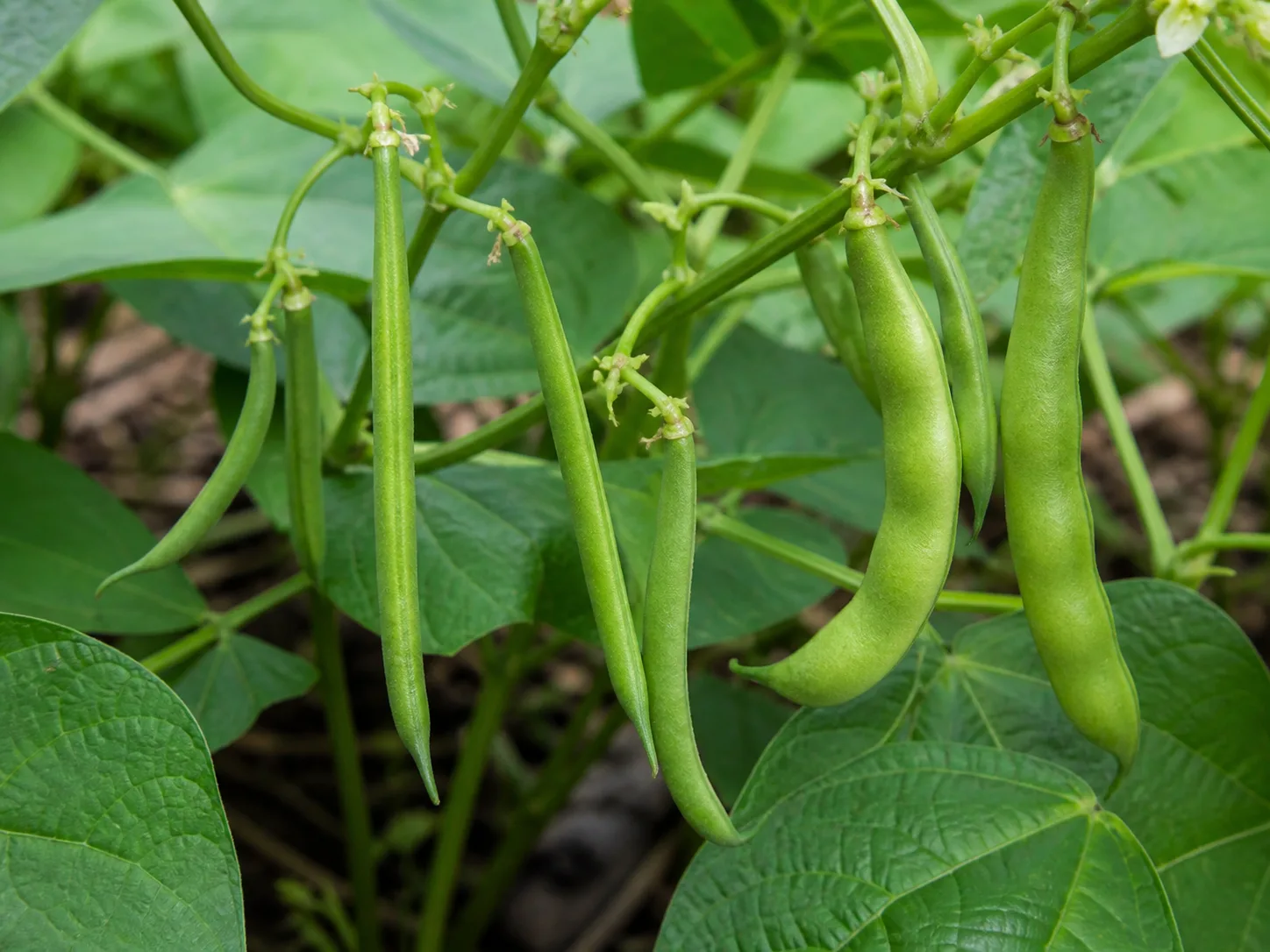
Pick in the morning after dew has dried, using clean fingers or snips and supporting the vine with your other hand so you do not pull down a stem. Check the plant from both sides, including behind leaves and near the top of the frame; pods hide easily, and one oversized pod can signal the plant to put more energy into seed rather than flowers. Frequent picking keeps a better balance between new pods and maturing seeds.
If a pod has become fibrous, do not assume the whole crop has failed. You can shell mature seeds while still fresh and cook them as a bean, or leave a few pods to dry completely for seed saving. The main trade-off is that pods left to mature reduce ongoing green-pod production, so designate only a small number for shelling or seed if you want the vine to keep cropping.
Gather pods gently and move them out of direct sun. Fresh beans lose crispness in storage, so trim and refrigerate them in a breathable bag or container, wash them just before cooking, and plan to use them within several days.
Cook runner beans safely and enjoy each stage
For the classic green vegetable, trim the ends, remove any strings if the cultivar has them, slice the pods, and cook until tender. Steaming, simmering, or sautéing after a brief blanch all work; the right method depends on whether you want a crisp bite or a softer texture for soups and stews. Season after cooking, since a simple preparation lets you taste the beans before adding stronger flavors such as garlic, lemon, herbs, or chili.
Do not eat runner bean seeds raw or undercooked. NC State Extension warns that raw or undercooked seeds can cause severe nausea, vomiting, and diarrhea; thoroughly cooking the beans is an important food-safety step, not an optional preference. Cornell’s discussion of plant lectins explains why some beans can cause illness if not prepared adequately, but it is not a runner-bean recipe or a substitute for sound cooking practices. (NC State Extension Plant Toolbox; Cornell University lectin overview)
Do not taste raw seeds while shelling, and keep them away from children and pets until cooked or disposed of. NC State Extension also lists the flowers and young leaves as edible; use only correctly identified, pesticide-free plants and introduce unfamiliar plant foods cautiously. For most home gardeners, the simplest use is to cook the young pods soon after picking.
Store fresh pods, freeze surplus, and save seed
Fresh runner beans taste best close to harvest, so use the refrigerator for short-term storage rather than treating it as a long-term solution. Keep the pods cool and dry, and do not pack them tightly while wet. If you have more than you can eat in a few days, freezing preserves the harvest more reliably than leaving a large basket in the crisper drawer.
To freeze pods, wash and trim them, cut them to the size you expect to cook, then briefly blanch them in boiling water before cooling promptly in ice water. Drain thoroughly, spread them out so they are not frozen in a solid clump, and pack them into airtight freezer containers. Blanching helps maintain texture and quality during frozen storage; follow a trusted food preservation recipe for exact processing times and storage limits.
For shell beans, pick pods once seeds are plump but still soft, then remove and cook the seeds thoroughly. For dry beans, leave selected pods until brown and papery, harvest before prolonged rain or frost, and finish drying them in a ventilated place. Shell brittle pods and store the seeds in a labeled airtight container somewhere cool and dry.
Seed saving is most dependable when you keep seeds from healthy plants and allow pods to finish drying fully. Label the variety and harvest year, discard seeds that are soft, moldy, discolored, or insect-damaged, and store the rest away from heat and moisture. If you grow more than one runner bean variety, note that cross-pollination can affect the next generation; saved seeds may not come true to type when different cultivars flower nearby.
Grow runner beans in a container
A container is useful on a patio, balcony, or small yard, but a climbing variety still needs a large, heavy pot and a tall support fixed securely before sowing. The RHS recommends a container around 30 inches wide and 18 inches deep for a climbing type, while dwarf varieties can use smaller pots; choose a pot with drainage holes and enough weight or anchoring to resist wind. (RHS runner bean growing guide)
Use a potting mix that holds moisture without becoming waterlogged, and place the container in strong sunlight. Light pots can tip or dry quickly, while heavier pots are stable but hard to move once filled; if you cannot provide secure support and regular watering, choose a dwarf variety. Sow directly into the final container, thin to the strongest seedlings, and check the mix daily in warm or windy weather. When the surface is dry and the pot feels lighter, water thoroughly rather than giving a token splash.
Container-grown vines use nutrients faster than plants in open soil, but more fertilizer is not automatically better. Follow the label and use a modest liquid feed after flowering begins if growth or production slows; fertilizer will not fix poor drainage, heat damage, or dry roots.
Spot pests and diseases early
Check the undersides of leaves and the youngest growth once or twice a week. Aphids cluster around soft tips and flower stems; beetles may chew leaves, while slugs and snails are most damaging to emerging seedlings. A few holes rarely justify a strong intervention, so first identify what is feeding, remove small numbers by hand where practical, and protect seedlings with a barrier if damage is recurring.
Runner beans can be affected by mosaic viruses, bacterial blights, anthracnose, powdery mildew, and other fungal or bacterial diseases. NC State Extension lists these among potential problems for Phaseolus coccineus and notes that bean beetles and slugs can also cause damage. (NC State Extension Plant Toolbox)
Reduce disease pressure with good spacing, watering at soil level, and avoiding work among wet vines. Remove clearly diseased leaves, clean tools after cutting suspect material, rotate beans when possible, and do not save seed from a plant with virus-like mottling or severe disease.
If pests become persistent, identify the insect or disease before choosing a product. Read and follow the label for any treatment, check whether it is allowed for edible beans, and protect pollinators by avoiding applications to open flowers. For small home gardens, improving airflow, keeping plants watered evenly, and removing the first affected leaves often solves more than a broad, unnecessary spray.
Fix common runner bean problems
Use the plant’s pattern of symptoms to choose your first check. Yellow leaves throughout the bed may indicate wet soil, drought, nutrient stress, or natural aging, while one damaged leaf with a hole is more likely to reflect feeding. Touch the soil, look at the roots only if the plant is failing, and compare several plants before changing care across the whole row.
If seedlings emerge and then collapse, check for cold, wet soil, slug damage, or stem injury before resowing. If vines grow strongly but make few flowers, check sunlight and fertilizer history; a shaded site or excessive nitrogen can favor leaves over reproductive growth. If flowers form but do not hold pods, prioritize heat, dry roots, and pollinator activity, then test one change and observe the next flush rather than applying multiple products at once.
Small or misshapen pods often follow uneven watering during flowering and pod development. Water deeply in dry spells, mulch after soil warms, and pick regularly; if pods are fibrous, harvest younger and check the vines more often. White powder, rust-colored spots, or expanding dead patches need closer inspection; remove heavily affected foliage, improve airflow, and consult a local extension diagnostic if the problem spreads.
Finish the season well
Runner beans will not survive a hard frost above ground, so harvest tender pods before frost and decide in advance whether a few plants are being kept for dry beans or seed. In frost-free climates, roots may persist and regrow, but in most regions the vine is grown as an annual; do not count on overwintering as a dependable crop strategy unless your local climate and cultivar support it. NC State Extension describes the plant as perennial in frost-free settings but frost tender in colder regions. (NC State Extension Plant Toolbox)
When the season ends, cut vines at the base and remove diseased material. Healthy roots can be left to break down in place if local garden practice allows, while above-ground vines can be composted if they are free from serious pests and disease. Clean and store reusable poles once dry, inspect ties and anchors, and note which frame held up best in wind.
Write down the sowing date, variety, first flower, first harvest, and any weeks when flowers failed to set. Those notes help reveal whether next year’s adjustment should be planting date, water, or cultivar. Save seed only from healthy, productive plants; each pod kept for seed trades some fresh harvest for next year’s stock.
Conclusion
A successful runner bean crop starts before germination: choose a variety that fits your climate and harvest goals, warm the soil before sowing, and anchor a tall support securely. Once vines are growing, keep moisture steady through flowering, use fertilizer sparingly, and investigate poor pod set by checking heat, soil moisture, and pollinator conditions before assuming the plants need a boost.
Pick green pods while they are crisp and the seeds are small, then cook them thoroughly; let only selected pods mature if you want shell beans or saved seed. With a sturdy frame, regular harvesting, and a little attention to weather, runner beans can give you a decorative vertical planting and a useful crop from the same patch.