How to Grow and Care for Nanking Cherry Bush
Learn Nanking cherry bush care: choose pollinating partners, manage hot or humid weather, prune carefully, and harvest soft fruit for quick use in your yard.
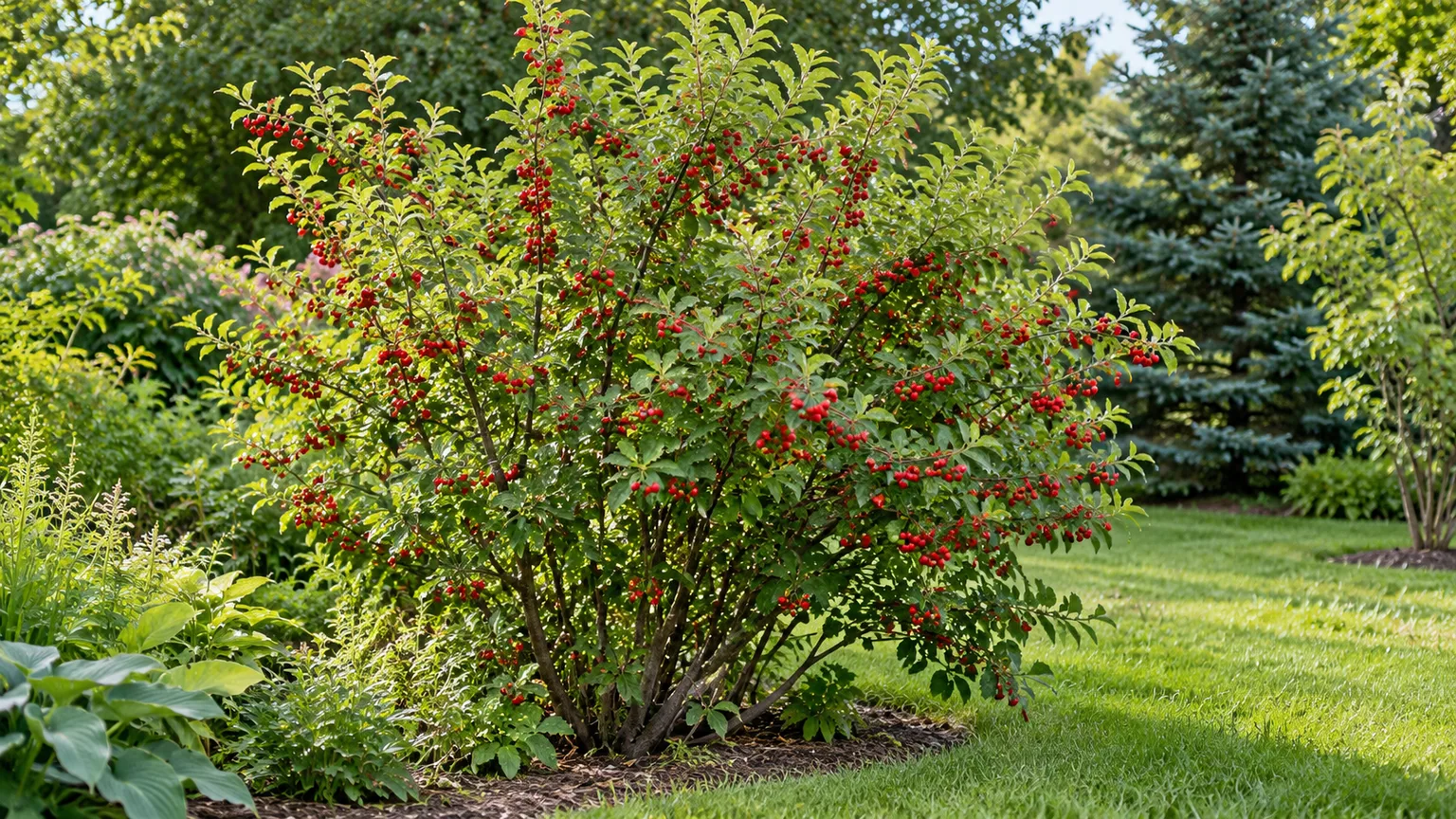
Nanking cherry (Prunus tomentosa) is a cold-hardy, multi-stemmed shrub that gives a garden spring flowers, summer fruit, and a useful screen in a footprint smaller than a conventional cherry tree. It is a good fit for gardeners who want a resilient edible hedge or an ornamental fruiting shrub, but success depends on matching the plant to the summer climate and planning for pollination before buying.
The two most consequential details are easy to miss: one bush may bloom beautifully without setting a meaningful crop, and “hardy to Zone 2” does not mean the plant thrives in every hot or humid region. Choose a sunny, well-drained site, plant two genetically distinct bushes for fruit, and treat the berries as a quick-use harvest rather than long-keeping cherries.
What a Nanking cherry bush offers
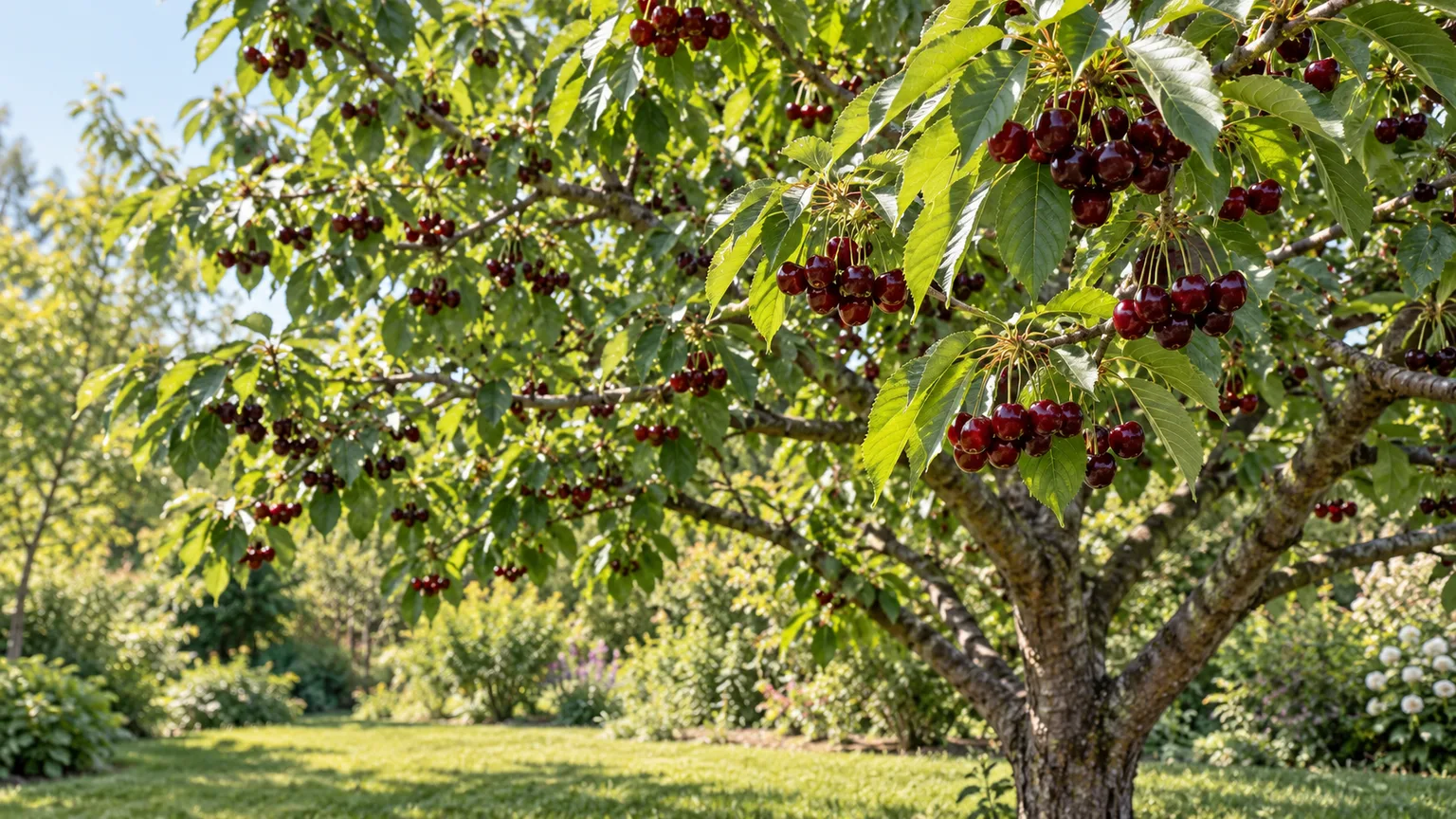
Nanking cherry is also called downy cherry because fine hairs cover its leaves, young stems, and fruit. It is a deciduous shrub or small tree in the rose family, usually multi-stemmed and irregular rather than a single-trunk orchard tree. North Carolina State Extension describes mature plants around 10 feet tall, with a spread that can reach 15 feet; Utah State University Extension reports many plants between 8 and 12 feet at maturity. Leave room for the plant you are actually buying, since seedling-grown bushes vary. (N.C. State Extension Plant Toolbox; Utah State University Extension)
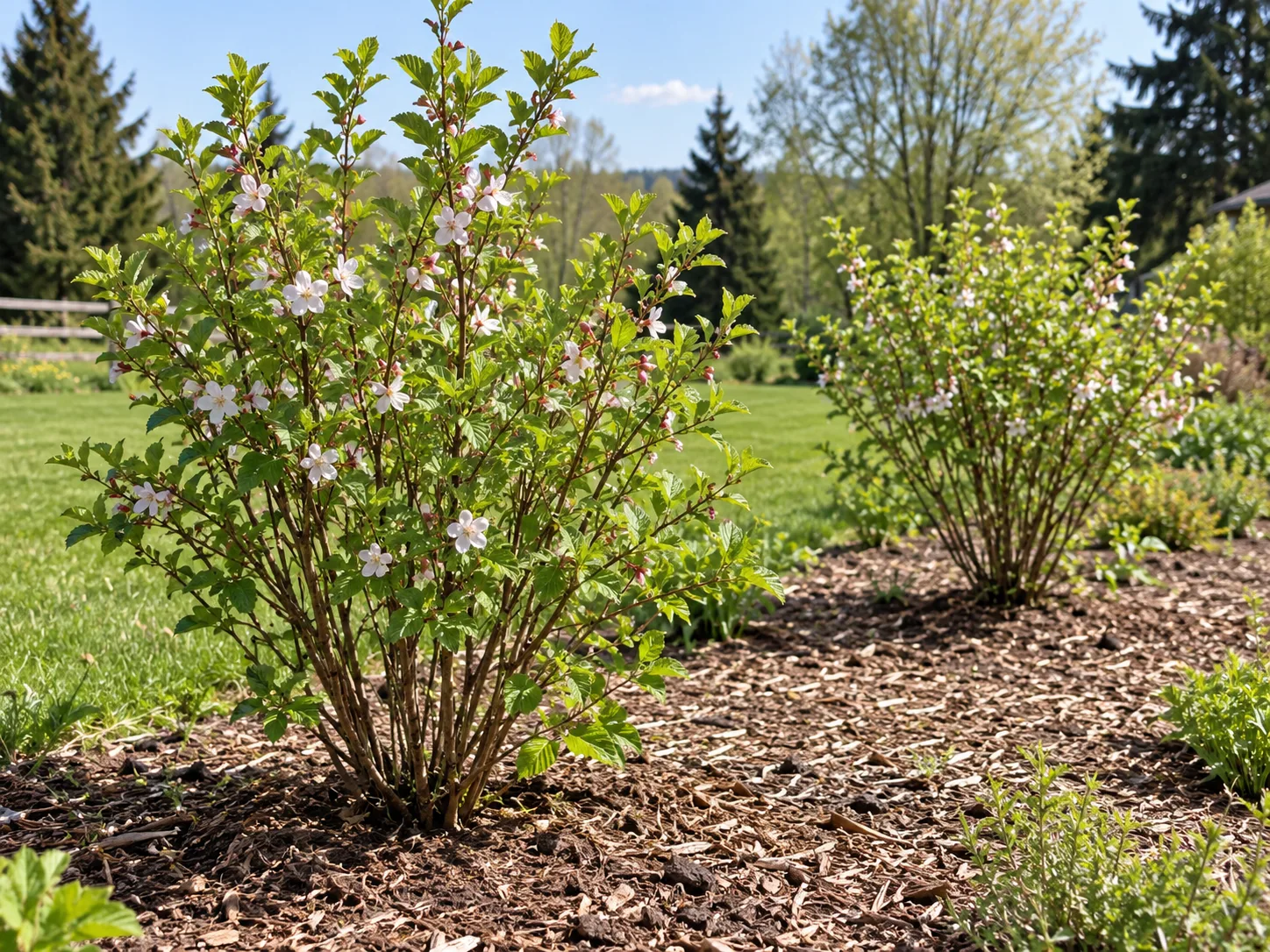
In early spring, pink buds open into short-lived white or pale-pink flowers before or as the leaves emerge. Small red fruits follow in summer; they are closer to plums botanically than to the large sweet cherries sold at grocery stores, and their flavor can range from tart to sweet. The bush earns its space as an edible border, informal hedge, windbreak, or wildlife shrub, but its flowers and fruit are brief displays rather than a season-long ornamental show.
Do not buy Nanking cherry expecting a standardized cultivar experience. Utah State reports that named cultivars are not currently in production and that plants are commonly sold as seedlings, so fruit size, taste, growth habit, and vigor vary among sources and individual bushes. If a seller offers a named selection, ask whether it is a documented cultivar, a seedling label, or a nursery trade name; that distinction matters if you are choosing for flavor or predictable size.
Check climate, not just the hardiness zone
Nanking cherry is often listed for USDA Zones 2 through 7 because it tolerates severe winter cold. That range answers a narrow question—whether a plant is likely to survive average winter lows—not whether summer humidity, rainfall, soil drainage, or spring weather will suit it. Utah State Extension describes the shrub as adaptable to a broad range of conditions, including arid, high-elevation sites, while N.C. State cautions that it performs poorly in heat and humidity and is not recommended south of Zone 7. Those statements are not a simple contradiction: dry continental heat and hot, humid summers create different growing conditions. (Utah State University Extension; N.C. State Extension Plant Toolbox)
Separate winter cold from summer heat and humidity
If you garden in a cold, dry region, the plant’s hardiness and drought tolerance after establishment are useful advantages. In a hot, humid region, winter survival may be fine while persistent summer heat, wet foliage, and fungal pressure weaken growth. Use your local extension’s regional advice and observe whether Nanking cherry is grown successfully nearby; a hardiness-zone map alone cannot account for humid nights, summer rainfall, or disease pressure.
The early flowers are notably frost tolerant, and Utah State Extension reports that they can set fruit in years when late spring freezes damage other fruit blossoms. That improves its odds in a cold-spring garden, but it does not guarantee a crop: the shrub still needs compatible pollen, active pollinators, and a healthy site. A sunny location with good air movement gives blossoms and foliage a better chance to dry after rain.
Choose pollination partners before planting
Plan on at least two Nanking cherry bushes from genetically different plants if fruit is the goal. Species-specific extension guidance describes the shrub as requiring cross-pollination, so two branches or two rooted cuttings from one plant should not be treated as a reliable pair. Two unrelated seedlings are a practical choice; if you buy named or clonal selections, ask the nursery which combination has overlapping bloom and is known to pollinate successfully. (Utah State University Extension; Lancaster Food Forest’s grower notes)
A nearby neighbor’s bush may contribute pollen if both plants bloom at the same time and pollinators can move between them. Because garden layouts, barriers, and bee activity differ, there is no useful universal distance to promise. When a crop matters, plant the pair in the same yard and close enough for bees to visit both, while leaving enough room for mature crowns and harvest access.
A single bush can still be worth growing for spring bloom and wildlife value, but set expectations accordingly. If you already have one plant, adding a different seedling nearby is usually more dependable than trying to improve fruit set with extra fertilizer or more pruning. Flowers without fruit are often a pollination-planning issue, not proof that the shrub needs a bloom-boosting feed.
Choose the site and plant for mature size
Give the shrub at least six hours of direct sun; more sun generally supports heavier flowering and fruiting. Utah State Extension reports stronger fruiting in full sun, while N.C. State lists full sun to partial shade as acceptable. In a small yard, a little afternoon shade may be a reasonable compromise, but a deeply shaded hedge is likely to flower and fruit less. Choose a spot sheltered from strong wind if possible because the delicate early blossoms can fall easily. (Utah State University Extension; N.C. State Extension Plant Toolbox)
Drainage matters more than a precise pH number. Extension descriptions show Nanking cherry tolerating a range from acidic to alkaline soils, while Utah’s regional guide notes success in alkaline soils. Do not lime or acidify an existing bed simply to reach neutral pH; test the soil first and correct a documented problem. If water stands after rain, choose a better-drained site or improve the drainage before planting rather than trying to solve persistently wet roots with fertilizer.
Plant a container or bare-root bush while it is dormant or during cool weather when the soil is workable. Fall planting can let roots settle before the next growing season in many regions; in places with harsh winters, spring planting after the soil can be worked may be safer. Avoid planting into hot, dry weather unless you can keep the root ball consistently moist while new roots establish.
Dig a hole no deeper than the root system and wide enough to spread the roots without bending them sharply. Set the root flare at soil level, backfill with the excavated soil, water slowly to settle it, then mulch broadly while leaving a clear gap around the stems. Avoid a rich fertilizer pocket in the planting hole: roots should grow outward into the site soil, not circle around a small amendment zone.
Space a hedge differently from specimen shrubs
Spacing depends on whether the bushes should merge into an edible screen or remain accessible specimens. Utah State Extension suggests roughly 6 to 10 feet between plants for a hedge or windbreak and 8 to 15 feet for individual bushes. Use the wider end of each range where you need more airflow, room to prune, or access to harvest both sides. (Utah State University Extension)
| Planting plan | Starting spacing | What the spacing prioritizes |
|---|---|---|
| Edible hedge or windbreak | About 6–10 feet apart | Eventual branch overlap and a continuous screen |
| Separate specimen shrubs | About 8–15 feet apart | Open crowns, airflow, pruning room, and fruit access |
These ranges are starting points, not guarantees of mature size. A vigorous seedling in rich soil may outgrow a compact nursery plant, so check the expected dimensions with the seller and leave a path for picking. Crowding a hedge can make the interior harder to inspect and keep dry, while excessive spacing can delay the screen you wanted.
Water through establishment, then respond to the soil
A new transplant needs regular moisture while roots expand into the surrounding soil. Utah State Extension recommends watering newly planted shrubs through establishment and notes that mature, seed-grown plants can develop deep roots and tolerate drought better. Instead of copying a weekly schedule, check the root zone: water deeply when the soil is drying several inches below the surface, then let excess drain before irrigating again. Soil texture, rainfall, wind, and temperature all change how quickly that root zone dries. (Utah State University Extension)
A light, broad mulch layer helps slow evaporation and limits grass competition, especially while the shrub is young. Keep mulch away from the base of the stems so bark does not remain damp or hidden. If the leaves wilt during heat, check soil moisture before reaching for the hose; dry soil points toward irrigation, while soil that stays saturated points toward drainage or root stress.
Once established in a suitable site, Nanking cherry is more drought tolerant than many fruit crops. That does not mean it needs no water in a long dry spell, particularly while it is flowering, setting fruit, or recovering from transplanting. Water at the base when needed rather than wetting the foliage late in the day, which can prolong leaf wetness in humid weather.
Fertilize only when evidence calls for it
A Nanking cherry bush does not need an automatic annual fertilizer dose to bloom. Start with a soil test and the shrub’s recent growth. A plant making healthy new shoots and flowering normally may need no feed; weak growth can also come from drought, shade, waterlogged soil, root damage, or competition from turf.
If a soil test shows a nutrient shortage, follow the lab’s recommendation for the site and product. Avoid heavy nitrogen applications intended to force growth: long, lush shoots do not solve missing pollination, poor drainage, or humid-climate stress. Lancaster Food Forest describes its own plants as productive in varied soils but notes better performance in well-drained, richer soil; treat this as a grower observation rather than a universal fertilizer prescription. (Lancaster Food Forest)
Prune lightly to renew canes
A mature Nanking cherry generally needs selective renewal, not the annual shearing used to keep a formal hedge square. Begin by removing dead, broken, crossing, or diseased wood, then step back and inspect whether the center is so crowded that light and air cannot move through it. Keep the framework low and open enough that you can reach fruit without climbing into the shrub.
Pruning timing deserves regional caution. Utah State Extension recommends late-winter pruning for Nanking cherry, while general cherry guidance from Gardeners’ World warns against winter pruning in its climate because wounds can be vulnerable to silver leaf disease and canker; Fine Gardening likewise notes winter-pruning risk for sweet cherries in some regions. These are not interchangeable recommendations for every cherry or every climate. Follow local extension guidance for Nanking cherry in your area, and in wet regions ask specifically about the safest pruning window for local disease pressure. (Utah State University Extension; Gardeners’ World; Fine Gardening)
Keep productive wood while opening the center
Flowers and fruit develop on older growth, so severe annual cutting can remove the wood you want to keep. On a mature, crowded bush, Utah State’s guidance is to remove about three to five of the oldest center canes per year, along with damaged branches, rather than cutting every stem back at once. That gradual renewal replaces aging wood while preserving a productive canopy. (Utah State University Extension)
Make each cut cleanly near the base of the cane without leaving a long stub, and avoid cutting into the crown. If the shrub is a hedge, thin interior canes selectively instead of clipping the outer surface into a dense shell; a sheared exterior can hide a shaded, poorly ventilated center. For a small young plant, remove only damaged or badly placed growth until the basic structure is established.
Propagate for seedlings or faithful copies
Seed is a practical way to raise Nanking cherry, but the offspring will vary. Utah State Extension recommends cleaning seeds from fully ripe fruit, drying them briefly in shade, and giving them about 100 days of moist cold stratification before sowing. You can place the seeds in moist sand, peat, or vermiculite in a refrigerator, checking periodically so the medium stays damp rather than waterlogged, or sow outdoors in fall and let winter provide the cold period. Outdoor sowing is simpler, but rodents and uneven moisture can reduce success. (Utah State University Extension)
Seedlings do not reliably reproduce the fruit size, taste, or growth habit of the parent bush. That variability is normal for a species commonly sold as seed-grown plants, not evidence that a seedling is defective. If you want a predictable clone of a particular bush, take a vegetative cutting or purchase a nursery-propagated plant, but confirm how the new plant will fit into your pollination plan.
Cloning a single bush twice does not automatically give you two genetically distinct pollination partners. Keep that in mind when propagating a fruiting pair: use seed-grown plants from different parents or ask a knowledgeable nursery whether the selections are compatible and bloom together. The goal is genetic diversity between flowering plants, not simply a higher count of stems.
Diagnose pests and disease before treating
Nanking cherry can face the same broad pest and disease groups that affect other cherries, but the exact problems vary by region. Utah State Extension lists spider mites, western cherry fruit fly, black cherry aphid, and Coryneum blight among concerns in its area. Check the symptom before acting: a pesticide is not a fix for poor drainage, and one discolored leaf does not prove that a contagious disease is present. (Utah State University Extension; N.C. State Extension Plant Toolbox)
Match leaf and fruit symptoms to the likely problem
Fine stippling on leaves can point to spider-mite feeding; heavy infestations may also leave fine webbing, often on the undersides of leaves. Curled, sticky leaves or black sooty growth are more consistent with aphids. Small purple or dark leaf spots that later drop out can fit Coryneum blight, while maggots inside ripening fruit suggest a fruit-fly problem. These clues narrow the possibilities, but a local extension office can confirm a diagnosis when the pattern is unclear.
Start with the least disruptive response. Check more than one branch, look under leaves, and see whether beneficial insects or predators are already keeping a small pest population in check. Remove fallen fruit and heavily affected debris when appropriate, improve airflow, and avoid overhead watering that keeps foliage wet. If a labeled treatment is needed, use only a product permitted for the crop and pest in your location, follow its label exactly, and protect pollinators during bloom; pesticide registrations and timing differ by region.
Root rot is more likely in persistently wet soil than in a shrub that simply missed one watering. Yellowing and slow growth in saturated ground should prompt a drainage check before you add fertilizer or irrigate again. If the planting site remains waterlogged after ordinary rain, correcting the site is more effective than repeatedly treating symptoms.
Harvest gently and use the fruit quickly
Harvest timing varies with climate and season. Utah State Extension reports fruit ripening in June in its region, while other locations may reach harvest later in summer. Watch the actual fruit: it should be fully colored, plump, and easy to pick, with a taste that matches your preference for tart or sweet. Sample a few rather than relying on a national month or assuming every bush ripens at once. (Utah State University Extension; N.C. State Extension Plant Toolbox)
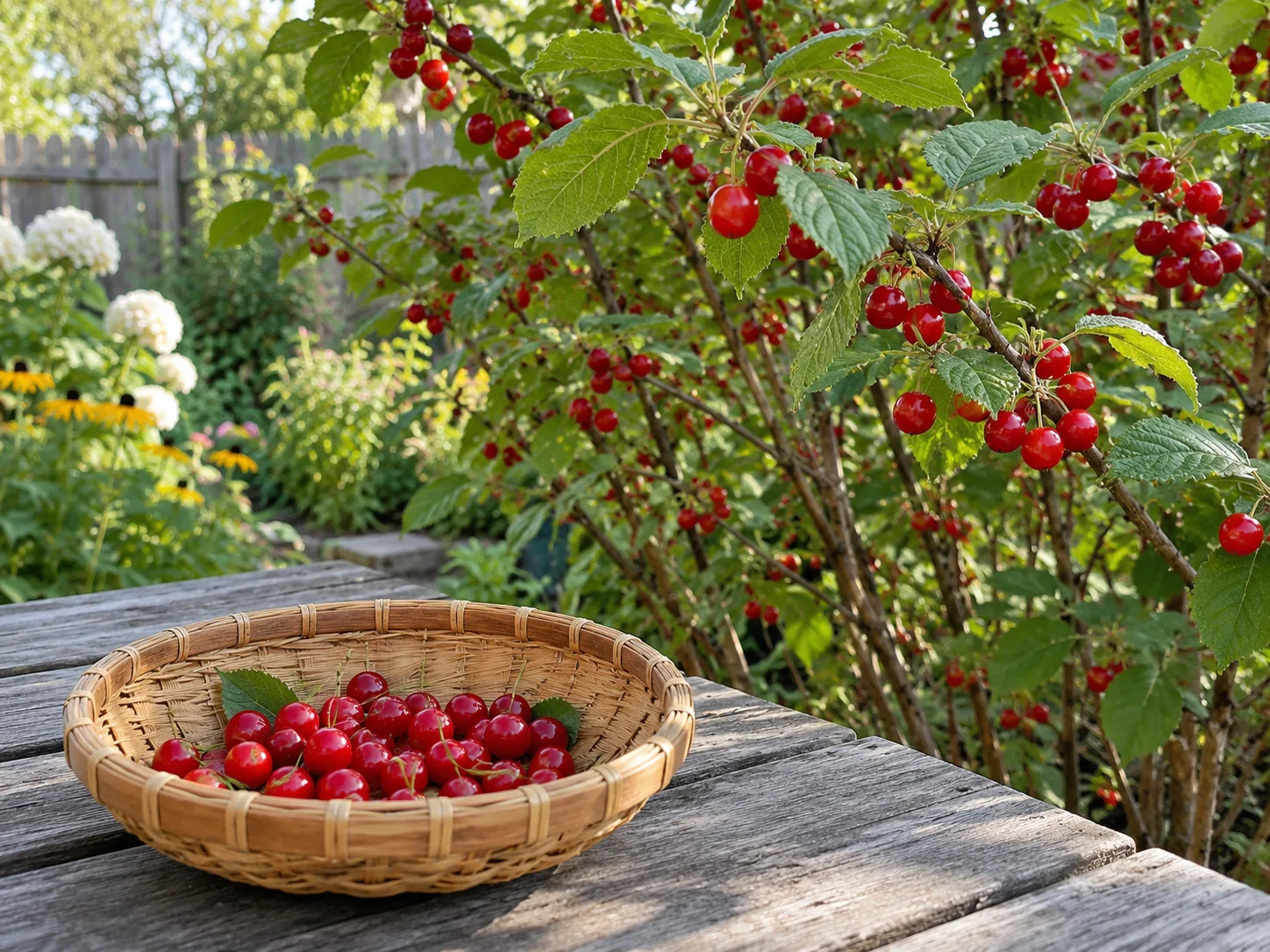
Nanking cherries are small, delicate, and soft when ripe. Utah State notes that stems can separate and leave a moist scar that speeds deterioration, so the fruit does not keep like firm supermarket cherries. Pick carefully into shallow containers, sort out damaged berries, chill them promptly, and plan to eat or process most of the crop soon after picking. Freezing or preserving the fruit is more practical than expecting a long fresh-storage window.
The flavor varies by plant, which makes a small taste test useful before you commit a whole harvest to one recipe. Tart fruit works well in jam, jelly, juice, pies, or preserves; sweeter selections can be eaten fresh. Lancaster Food Forest sells selected white-fruited forms it describes as less acidic, but that is a grower’s selection note and not a guarantee for every plant sold under a white Nanking label. (Utah State University Extension; Lancaster Food Forest)
Use it as a hedge while checking local naturalization
Nanking cherry’s dense, multi-stemmed form can work as an edible hedge, windbreak, or shrub border, especially where winter cold limits other fruiting shrubs. North Carolina State Extension notes that the plant can naturalize in landscapes but is not considered invasive in its regional assessment. Those terms are not identical: naturalizing means it can establish beyond the original planting, while invasive status depends on local ecological evidence and jurisdiction. Check your state, county, or regional invasive-plant list before planting near natural areas. (N.C. State Extension Plant Toolbox)
Leave room for birds, which eat the fruit and may move seeds beyond the bed. If volunteer seedlings appear where you do not want them, pull them while young and do not let a hedge become unmanaged at a property edge. That simple maintenance matters more if you plant a long row or live near sensitive habitat.
Conclusion
Grow Nanking cherry where it can receive good sun, drain well, and experience a climate suited to its summer conditions—not just its winter hardiness zone. For fruit, plan on two genetically distinct plants with overlapping bloom; space them for their eventual size, water them while they establish, and prune mature bushes gradually so productive wood remains.
Expect a flexible, variable shrub rather than a standardized orchard cultivar. Seedlings can differ in size and flavor, and ripe fruit softens quickly, so harvest in small rounds and chill or process it promptly. With that realistic plan, Nanking cherry can earn its place as both a cold-climate landscape shrub and a useful home fruit.