How to Support Barn Owls in a California Garden
Learn how nest boxes, safer habitat, and practical rodent management can support California barn owls without assuming they will control a garden infestation.
A barn owl flying over a garden is a welcome sight, but seeing one does not tell you whether it is nesting nearby, hunting your property, or reducing the rodents damaging your plants. Supporting the bird is a worthwhile habitat goal on a suitable site; controlling a rodent problem is a separate job that needs direct observation and management.
Prepared by Sai Ananth. The reviewer field lists the LeafyPixels Review Board, but it does not identify a raptor or wildlife specialist. This is a desk-based synthesis checked against relevant research and expert guidance, with recommendations limited by practical site and safety constraints. No site visit, box installation, nest monitoring, or pest-control trial was conducted. All three images are original LeafyPixels vector illustrations created for this guide on 2026-10-20. They explain habitat and nest-box planning; they do not document a California owl, a site visit, or an installation.
Positive Bloom’s California barn-owl article is cited for topic attribution and coverage context only; the factual recommendations below rely on the independent research and wildlife guidance linked at each claim.
Do Barn Owls Control Rodents in a Garden?
Barn owls eat small mammals, including rats, mice, and voles, according to the Cornell Lab’s life-history profile. That diet does not show how many pests an owl removes from one garden. UC IPM says predators generally cannot keep vole numbers below damaging levels around homes and gardens; nest-box networks may be more appropriate in larger open areas, but their effect on vole populations remains unproven, and remaining voles can repopulate quickly (UC IPM’s vole guidance).
A Cal Poly Humboldt California vineyard study illustrates both the promise and the limit. In one Napa Valley comparison, gopher activity declined during the period of greater owl hunting on the vineyard with occupied boxes, while activity rose slightly at the comparison vineyard. Mouse abundance declined at both sites, and that decrease was not significantly linked to the boxes; vole results were inconclusive. This was a small agricultural study, not a trial of home gardens, so it supports cautious interest rather than a forecast for a backyard.
Welcome owls where the habitat suits them, but identify and manage active damage directly.
What Barn Owls Eat and Where They Hunt
Barn owls hunt small mammals, with the mix depending on what is locally available. In vineyard research from California, mice and voles were preferred prey and gophers were taken more opportunistically. That distinction matters: barn owls may take a gopher, but a gardener should not assume they will clear a gopher burrow or choose the pest species causing the most costly damage. (SARE’s California barn owl research project)
These owls forage across open and semi-open ground, often flying low and using sound as well as sight to locate prey. Their hunting area extends beyond a lot line, so the birds using a box on your property may feed in nearby fields or grassland, while owls seen above your yard may be traveling through rather than hunting there. A thickly planted ornamental border alone is not the habitat feature that draws an owl; access to open hunting space and a suitable place to roost or nest are separate needs. (Cornell Lab)
What Makes a California Property Suitable?
Think first about the landscape around the house. A rural property, vineyard edge, pasture, park boundary, or large open lot with nearby cavities is a more plausible place to support a nesting pair than a compact urban courtyard boxed in by buildings, traffic, and dense development. That does not make city sightings impossible; it means a garden owner has little control over whether the surrounding landscape offers enough safe foraging area and prey.
Look for repeated evening flights across open ground, calls or pellets near a barn or large tree cavity, and access to open spaces beyond the garden. These are reasons to ask a regional wildlife group or Cooperative Extension office whether barn owls are being supported locally and whether a box fits the site.
Is a Nest Box Right for Your Yard?
A nest box can add a cavity where suitable natural nest sites are scarce, but it is not a bird feeder that brings a particular species on demand. Before installing one, consider the full property: open habitat nearby, safe access for maintenance, a mounting location away from frequent disturbance, and neighbors who can tolerate the calls of hungry young. If you have only a small enclosed garden with no open foraging area around it, a box may remain empty even when built well.
Do not install boxes as a neighborhood experiment without a plan for monitoring and upkeep. NestWatch lists barn owl boxes as complex nest structures and encourages people to monitor boxes responsibly; its species guidance offers a broad placement range rather than a one-size-fits-all prescription. Local advice is especially useful in California because a sound plan needs to fit the property, local nesting timing, and the owls that actually occur there. (Cornell Lab’s NestWatch barn owl guidance)
Choose a Proper Barn Owl Box and Place It Safely
Use a current barn-owl-specific plan from an established wildlife or extension organization; a small songbird box is not a substitute. NestWatch identifies buildings and freestanding poles as possible supports and gives a broad height range of 8 to 25 feet. Treat that range as a reference for local planning, not a stand-alone installation instruction.
Confirm a design and local help
Use a current barn-owl-specific plan and have a qualified wildlife or extension professional assess the site before installation. Cornell NestWatch’s barn owl box guidance identifies suitable support types and a broad 8-to-25-foot placement range; that range is not a complete construction or site-safety plan. Ask a local raptor group or Cooperative Extension office to check the design, mounting, maintenance responsibilities, and local conditions. If a qualified local assessment is not available, support suitable open habitat and manage rodent damage directly instead of installing an unsupervised box.
Choose a location that gives the owl an unobstructed approach and keeps the entrance away from routine human traffic. Do not place a box over a walkway, patio, or doorway where falling debris or young birds could create a conflict. Avoid mounting it where a ladder would have to be placed on soft, sloped, or unstable ground, and do not climb to inspect an occupied box. If a tree or building is the best support, ask a qualified person to check its condition and the installation method before work begins.
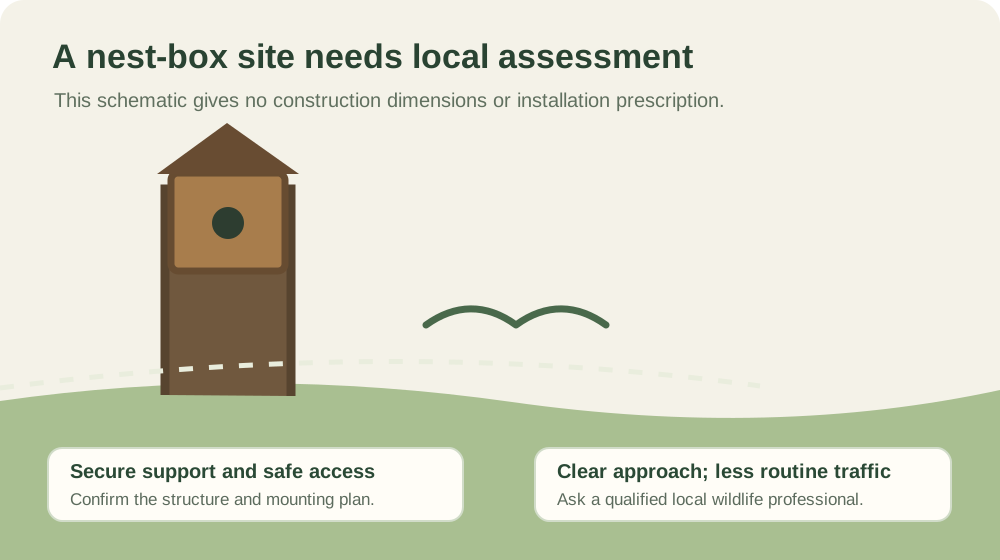
Original LeafyPixels schematic created for this guide; it is not a construction template or a site-approved installation.
Mounting height, stability, and weather
Before building, confirm the selected plan’s dimensions, entry opening, roof overhang, drainage, and mounting hardware with its source. Do not resize an owl box from generic “owl house” advice for another species. Choose a position that limits direct rain while leaving adults a clear approach; local exposure, shade, and structure vary by site.
NestWatch’s listed height range is intentionally broad. Treat it as a starting point for a local design rather than a target to hit at any cost. If the only secure mounting point is near a busy path, power line, road, or frequently used outbuilding, ask a raptor group whether the location should be moved or whether a box is not suitable there. Leave climbing and electrical work to qualified installers.
Protect Nesting Owls From Disturbance
Once a box is occupied, leave the entrance and surrounding area alone. If you choose a nest camera, plan its installation before the birds start nesting and avoid equipment that requires frequent battery changes or memory-card visits. Cornell NestWatch’s camera guidance says too much disturbance can cause a nest to be abandoned; observe from a distance, use binoculars, and never touch or physically disturb an active nest or its contents. NestWatch’s barn owl guidance notes that the species is sensitive during early nesting and gives December as a general cleaning time. California conditions vary, so confirm timing locally and never clean an occupied box.
NestWatch says barn owls create their own nesting substrate from shredded pellets, so do not add material unless a current, locally checked plan calls for it. If a box is in a barn, do not leave a door, loft opening, or electrical hazard unsecured to make owl access easier. Ask a wildlife professional familiar with the structure and species about a safe arrangement.
Build Habitat Without Encouraging Rodent Damage
A wildlife-friendly garden can be orderly. The useful idea is to make the property more varied without turning every bed, fence line, and foundation into dense cover. Better Homes & Gardens describes wildlife habitat as a combination of food, cover, and nesting places, and Fine Gardening highlights the value of layered planting and habitat edges. Those broad design ideas can support biodiversity, but they need to be balanced with the specific rodent you are managing.
Keep the house edge open and visible
If voles are damaging bulbs, young trees, vegetables, or irrigation, do not create a thick, unmown strip right beside the house or a vulnerable bed in the name of owl habitat. UC IPM notes that dense vegetation, heavy mulch, and weeds can protect voles, making them harder to detect and manage. Keep the immediate perimeter inspectable; store firewood, birdseed, compost, and pet food in ways that do not make easy shelter or meals for rodents.
On a larger site, a grass or shrub zone can sit farther from buildings and vulnerable beds. Keep that wildlife edge separate from entry points and high-value plants, and leave the house perimeter open enough to inspect.
Use layered native planting where it fits
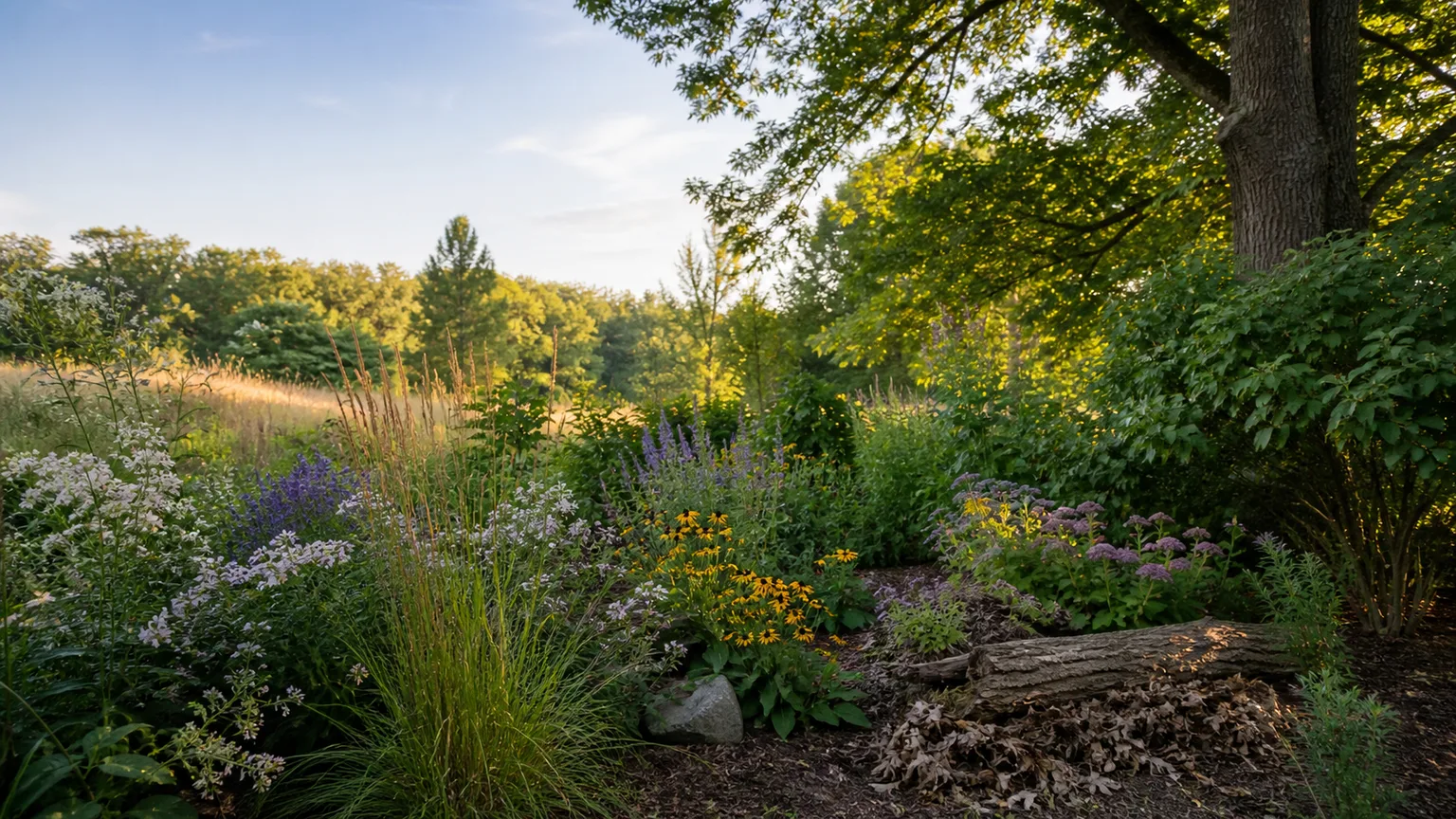
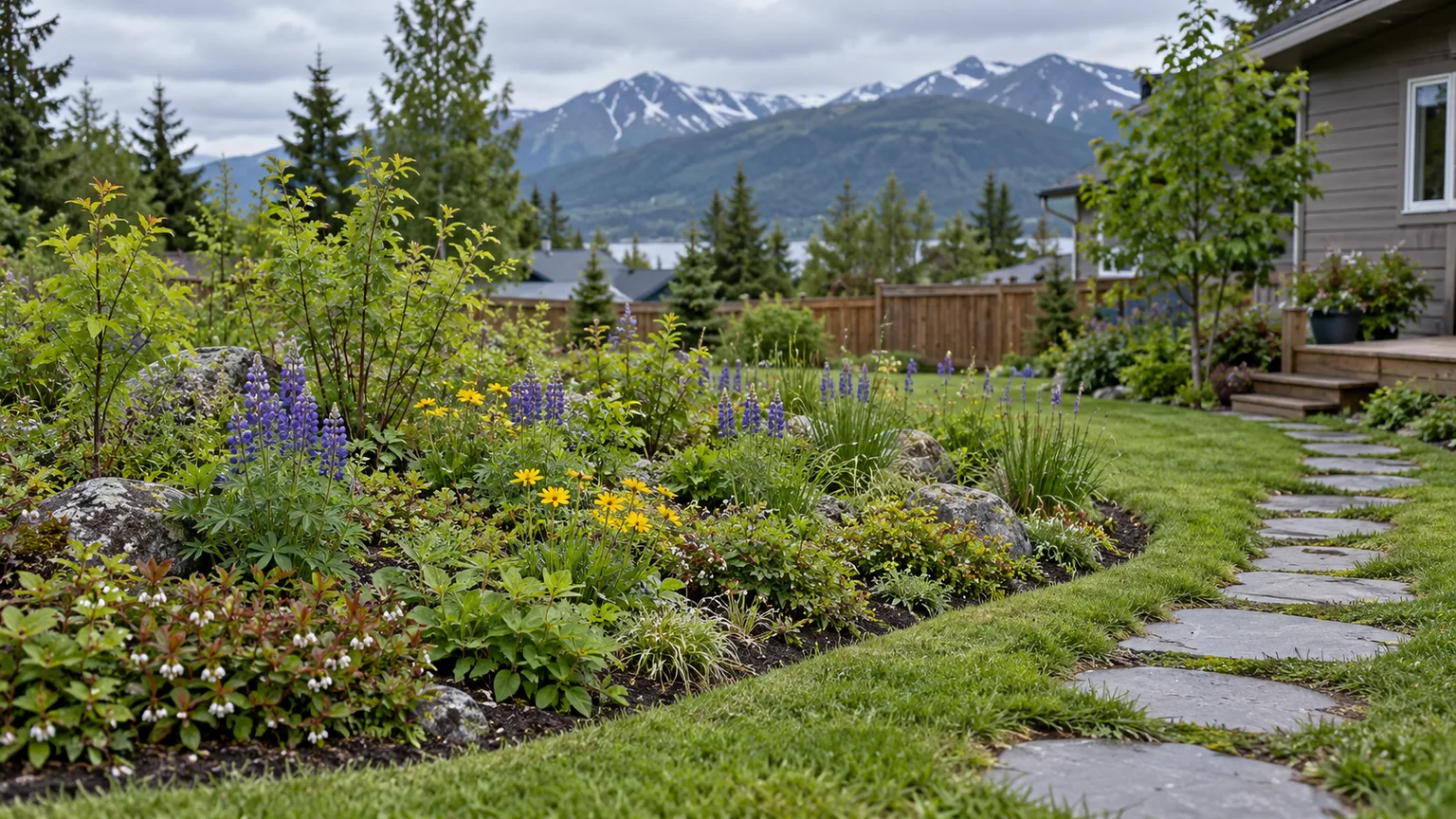
Where a larger property has room, use plants suited to your county and water budget to build a gradual edge between open ground and taller vegetation. Keep some ground visible, preserve routes for mowing or inspection, and avoid dense plants against sheds and foundations. Local native-plant societies or county programs can help you choose grasses and shrubs that fit your soil, rainfall, and fire conditions instead of copying a plant list from another region.
Use a planting-edge image only as a general design example: a border can offer cover and seasonal structure while the adjacent open area remains visible and accessible. A few thoughtfully placed patches are easier to manage than an all-or-nothing choice between a clipped lawn and an unmanaged yard.
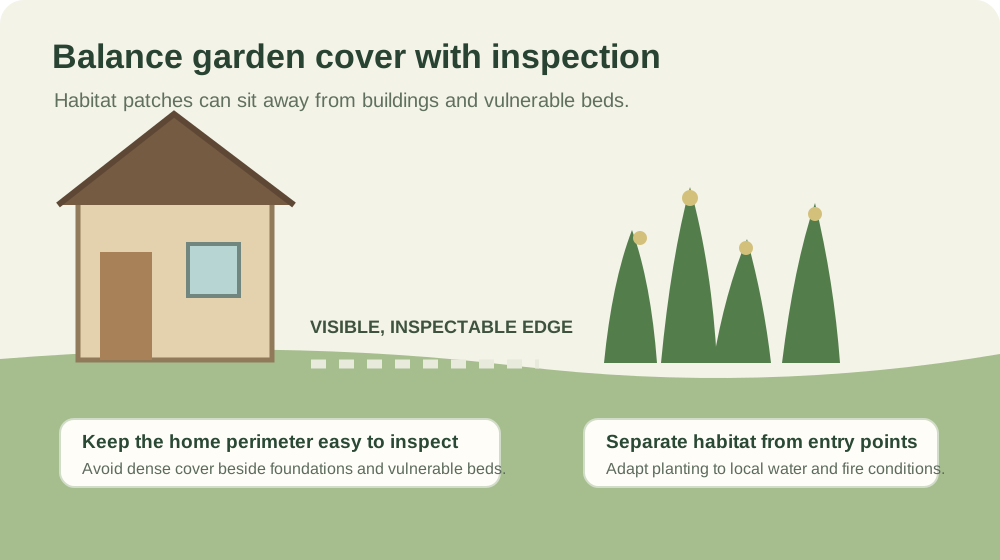
Original LeafyPixels schematic created for this guide; habitat and prey use vary by site.
Rodenticides Create a Different Kind of Risk
Rodenticides can expose predators that eat poisoned rodents, but the risk depends on the active ingredient, timing, amount, and way the product is used. A western research project that sampled barn owls found little evidence of acute anticoagulant exposure at its study sites, where reported bait use was limited; the researchers also noted that sampling did not always line up with baiting in time or place. That result is not proof that rodenticides are safe for owls. A 2024 review of barn owl pest-control programs discusses secondary poisoning as a known concern and stresses the need to fit any program to local ecology and monitoring.
If you are dealing with a serious rodent problem, do not assume an owl box offsets poison exposure or eliminates the need for other control. Start with nonchemical steps where they can work: secure food, close entry points, reduce shelter next to buildings, and use species-appropriate traps in protected locations. If a pesticide is being considered, read the current label and consult a qualified pest professional about site-specific risks to children, pets, and wildlife. Never place bait where a non-target animal could reach it, and do not use an unlabelled product or repurpose one for a different species.
Pair Owl Habitat With Direct Rodent Management
If a tree is being girdled, seedlings are disappearing, or rodents have reached a shed, identify the animal and protect the vulnerable area now. UC IPM lists monitoring, habitat modification, exclusion, and trapping for vole management; choose methods for the species and location. A nest box is a possible landscape-level addition, not a substitute for those steps.
Identify the animal before choosing a fix
“Rodent” is not a diagnosis. Surface runways and shallow burrow entrances suggest a different problem from soil mounds, gnaw marks on bark, droppings in a shed, or missing seed. Voles, pocket gophers, house mice, and rats use different spaces and respond to different methods. Use the site’s mole-versus-vole identification guide before choosing a fix; if the evidence points to vole activity, the vole control guide explains the targeted options.
For signs around a building, compare what you see with the site’s garden rat activity guide or field mouse guide. Photograph fresh damage and note where and when it appears; misidentification can make a control method ineffective and expose non-target wildlife to unnecessary risk.
Remove food and shelter near buildings
Store birdseed, pet food, and poultry feed in tight containers. Pick up fallen fruit, remove spilled seed beneath feeders, and keep garbage and compost secured. A compost pile can be useful to wildlife but should not sit against a wall or provide an easy route into a shed; the guide to keeping pests out of compost offers practical bin and placement steps.
Then inspect the foundation, shed doors, irrigation lines, and the bases of young trees. Repair access points with materials rodents cannot chew through, and protect valuable stems with properly installed guards that leave room for growth. Habitat work should be kept separate from the house exclusion line: open, inspectable ground at the structure makes new activity easier to spot and respond to.
Use exclusion and traps carefully
For a small, active problem, a species-appropriate snap trap can be more immediate than waiting for a predator, but placement and protection matter. UC IPM recommends placing vole traps along runways and covering baited traps to reduce capture of non-target birds (UC IPM’s vole guidance). Keep traps and any bait inaccessible to children, pets, and wildlife, check them at the interval recommended by the product or local extension guidance, and use a professional if you cannot place or maintain them safely.
For recurring or widespread damage, ask a local extension office or qualified pest professional to help build an integrated plan. Exclusion, sanitation, and monitoring can reduce food and access near the house; trapping may address animals already present.
What Owl Activity Does—and Does Not—Tell You
A flying owl, a call at dusk, or a pellet beneath a perch can show that an owl used an area or structure. It cannot show which garden rodent was taken or how many remain; box occupancy is not a pest-count measure.
To assess the garden, record owl sightings and box activity from a respectful distance, then separately map fresh rodent signs, plant damage, and the effects of direct control. Changes in weather, food, nearby mowing, or trapping can also alter rodent activity, so a damage trend alone does not identify its cause.
A Realistic Plan for Different Property Sizes
For a small suburban yard, the best support may be modest: keep the house edge visible, secure food and shelter near buildings, and avoid disturbing wildlife already using the area. Do not install a large box in a cramped or busy location just to create a visible feature. A nearby open parcel, school, park, or farm may be a better place for a box when a local wildlife organization is coordinating the project.
For a larger rural lot, orchard, or vineyard edge, assess the landscape beyond the nest site: open hunting ground, hazards, who will install and maintain the box, and how damage can be recorded without disturbing nesting birds. California agriculture projects show how barn owl programs can be studied as one part of integrated pest management (SARE’s project summary); use their monitoring approach as context, not their results as a prediction for a home garden.
Choose among modest habitat changes, a locally supervised box, and direct controls according to the site and the damage. Address active damage without waiting for habitat work to change owl activity.
How Long to Wait Before Changing the Plan
There is no reliable deadline for box occupancy. An empty box may reflect unsuitable habitat, access, or placement; it is not a reason by itself to add boxes or move one. Ask a local raptor group to assess the site, and avoid repeated inspections that could disturb nesting birds.
If fresh runways, mounds, or gnawing continue, strengthen the direct control plan. If the signs stop, keep monitoring before removing protective measures. Use the damage trend, not box occupancy, to assess rodent management.
Conclusion
Support barn owls by preserving suitable habitat, limiting hazards, and seeking local guidance before installing or maintaining a box. For vole damage, UC IPM describes why owl predation alone is not dependable control near homes and why open-area nest-box programs cannot yet be treated as proven vole management. Identify the pest and use direct monitoring, exclusion, sanitation, or trapping while treating owl habitat as a separate conservation goal.