Voles vs. Moles: What's the Difference?
Chewed plants mean voles; raised ridges mean moles. Compare signs, seasons, lookalikes, and control methods so you stop guessing.
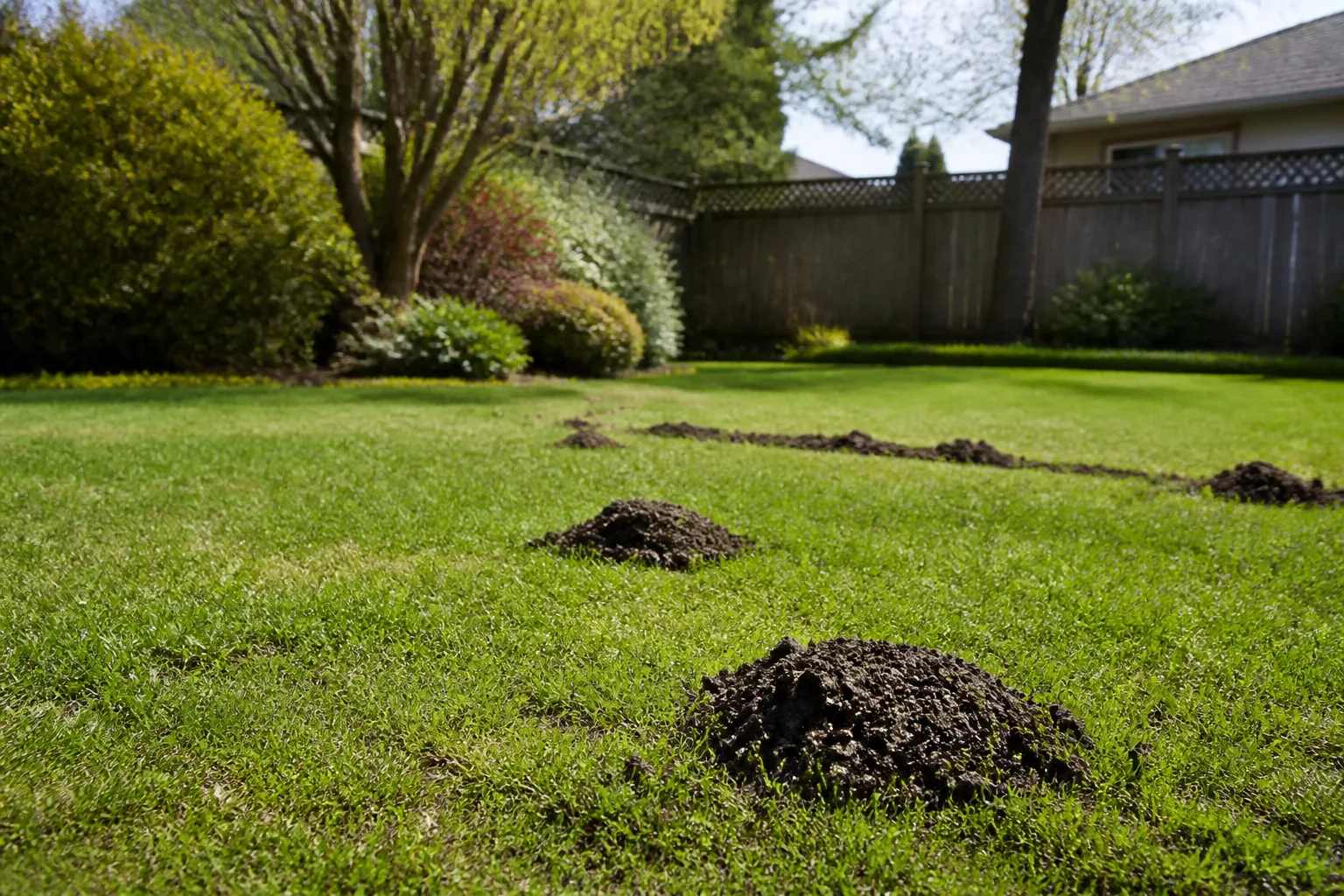
Raised dirt ridges across your lawn and chewed bark at the base of a young tree rarely come from the same animal—but homeowners mix up moles and voles constantly because the names rhyme and both leave ground-level messes. Treating the wrong one wastes time, money, and sometimes plants. The fix starts with reading what was damaged, not guessing from a photo on your phone.
Start With Yard Damage, Not a Google Image Search
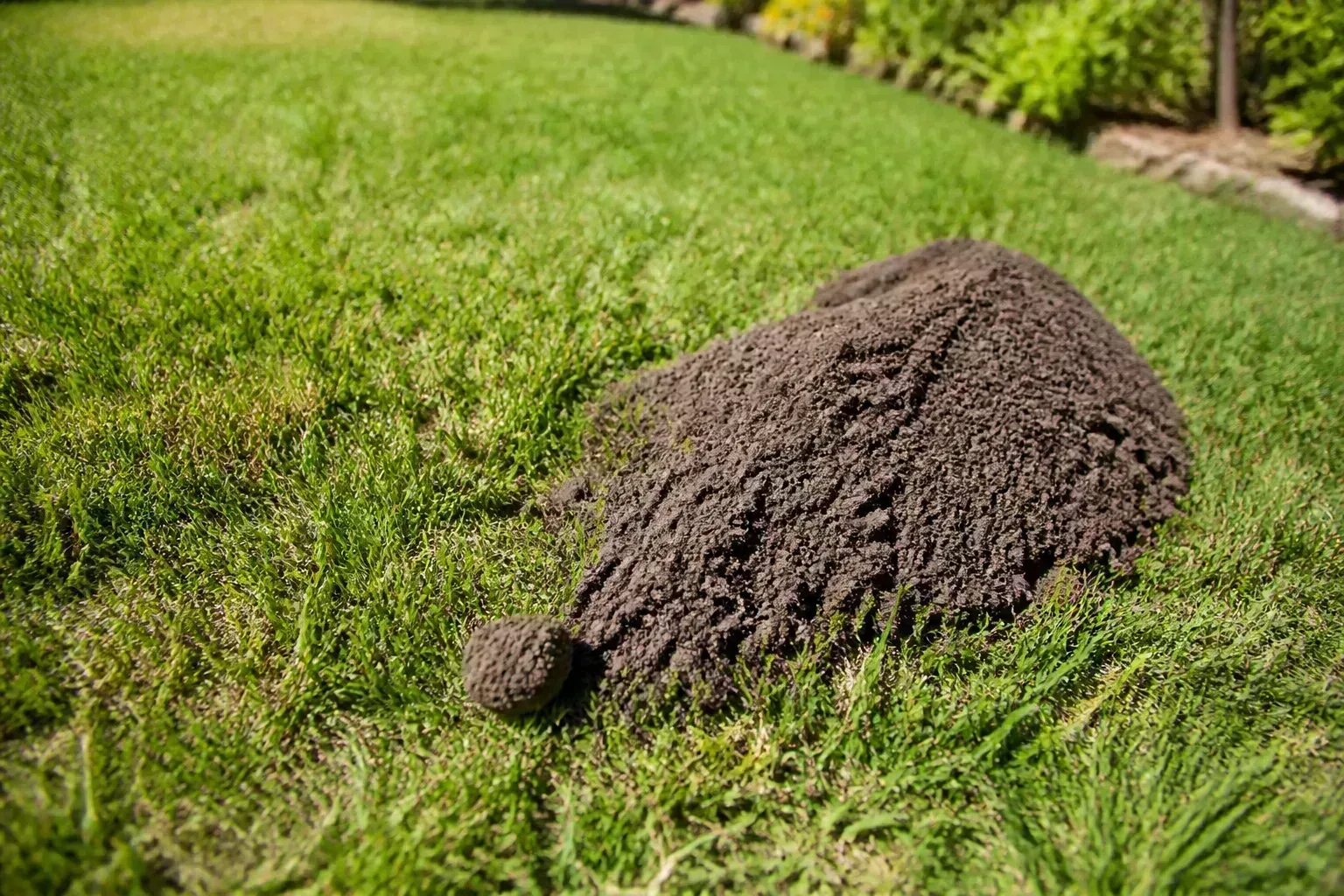
Both animals tunnel, but they want different things from your yard. Moles hunt invertebrates underground and only disturb plants indirectly. Voles eat plants—grass blades, bulbs, roots, and bark—and leave chewing evidence at ground level. If stems are clipped, bulbs vanish, or a small tree suddenly wilts, suspect voles first. If the turf heaves in long ridges and volcano-shaped soil piles appear with no bite marks on vegetation, suspect moles.
That single split saves you from buying rodent bait for an insect-eater, or setting harpoon traps over vole runways that never get repaired. Walk the damage in the morning after dew or rain, when runways and ridges show up clearly, and photograph the newest signs before you rake or mow them away.
Moles and Voles Are Not Even the Same Kind of Animal
The names sound alike; the biology does not. Moles are insectivores in the family Talpidae, related to shrews—not rodents. Voles are rodents in the family Cricetidae, often called meadow mice. Moles built their bodies for digging; voles built theirs for gnawing and short bursts of above-ground travel.
Mole Identification at a Glance
Pennsylvania moles—the pattern most eastern U.S. guides describe—run 5 to 7 inches long with a hairless, pointed snout extending about half an inch beyond the mouth (Penn State Extension). Their tiny eyes and ear openings hide under velvety fur. The giveaway is the oversized, paddle-shaped forefeet with heavy claws, turned slightly outward for shoveling soil. Moles spend nearly all their time underground and are built for that life.
They eat grubs, beetle larvae, earthworms, and other soil invertebrates—often 70 to 100 percent of their body weight per day because tunneling burns enormous energy. Three to five moles per acre already counts as a high population in most neighborhoods.
Vole Identification at a Glance
Voles look like stocky field mice: compact bodies about 4 to 6 inches long, short legs, short furry tails, small but visible black eyes, and ears partly hidden in fur. Their orange front teeth stand out for gnawing vegetation. Unlike moles, voles do not have paddle feet. They clip grass and travel through shallow surface runways rather than pushing up long raised ridges.
Several vole species occur across North America—meadow voles favor open grass; pine voles tunnel more in loamy soil under mulch and orchards (Alabama Cooperative Extension). Populations can spike every two to five years, and voles reproduce far faster than moles, with multiple litters per year.
A Side-by-Side Comparison You Can Use in the Field
Keep this table in mind when you are standing over fresh damage. It reflects what extension services consistently report across regions.
| Feature | Mole | Vole |
|---|---|---|
| Animal type | Insectivore (Talpidae) | Rodent (Cricetidae) |
| Size | 5–7 in. body | 4–6 in. body |
| Diet | Earthworms, grubs, insects | Grass, roots, bulbs, bark |
| Typical sign | Raised ridges, round molehills | Surface runways, small holes, chewed plants |
| Plant feeding | Rarely; may disturb roots while tunneling | Yes—stems, roots, bark girdling |
| Social pattern | Solitary; 3–5 per acre is high | Colonial; populations can explode |
| Best control focus | Trap active surface tunnels | Habitat + exclusion + traps/bait |
Quick rule: Chewed vegetation always points away from moles. Raised tunnels with intact grass blades above them point away from voles as the primary digger.
How Moles and Voles Damage Lawns and Gardens Differently
Damage type tells you who is responsible faster than trying to spot the animal itself. Both can make a lawn look rough, but the mechanics differ completely.
Mole Tunnels, Molehills, and Root Disruption
Moles excavate two tunnel systems. Deep runways 12 to 18 inches down connect dens to hunting grounds; the only surface clue is often a molehill—a round, volcano-shaped pile of soil around a plugged vertical shaft (Penn State Extension). Shallow hunting tunnels 1¼ to 1½ inches wide create heaved ridges you feel underfoot and see as brown traces after mowing.
Moles rarely eat plants. The harm is structural: roots get air gaps, grass crowns dry out, and irrigation lines or sprinkler heads can be undermined. Moles also aerate soil and eat pest grubs, which is why some gardeners tolerate a single mole until turf damage crosses a line.
Vole Runways, Burrows, and Plant Feeding
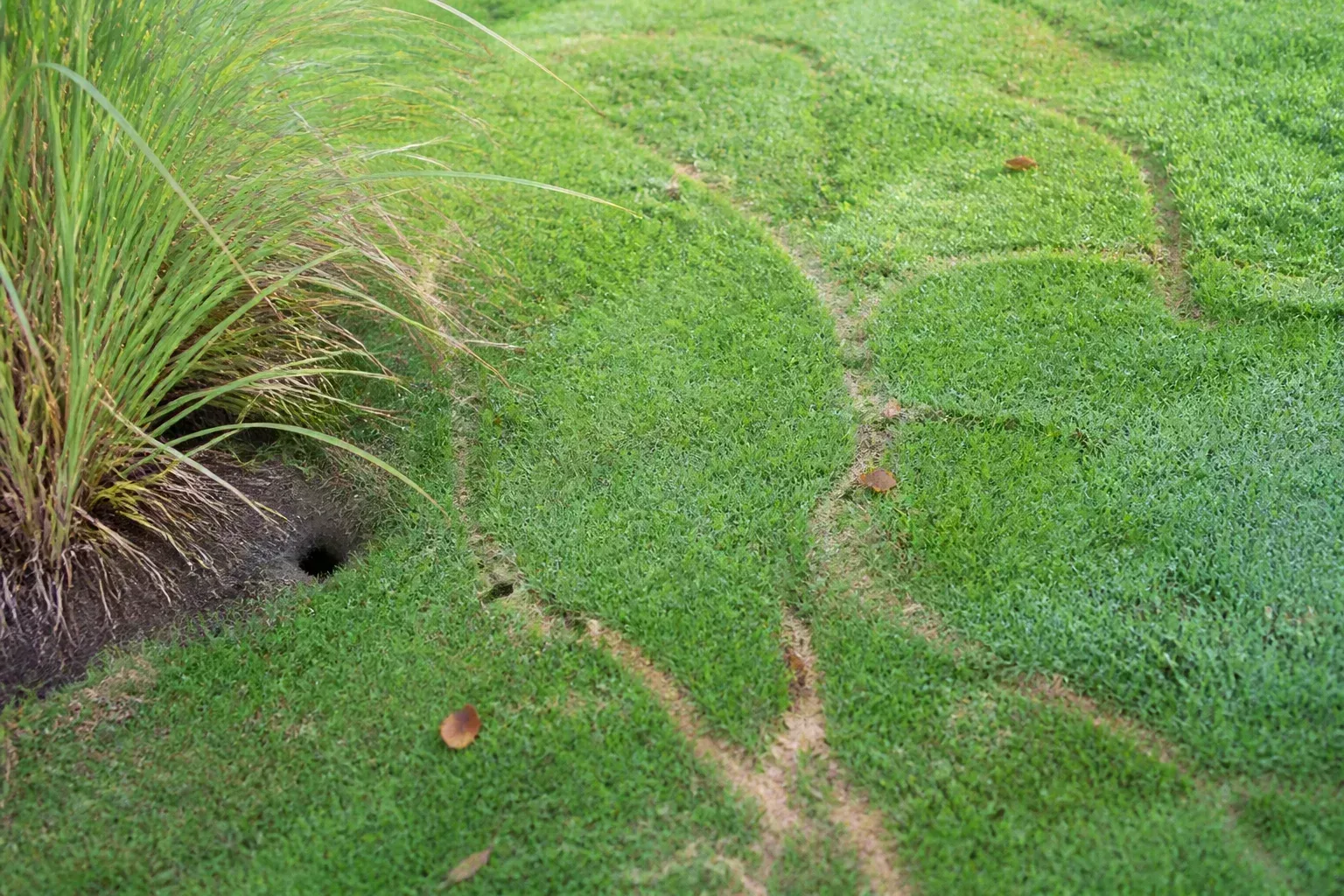
Voles create above-ground runways—cleared paths an inch or two wide through grass—especially visible after snow melt.
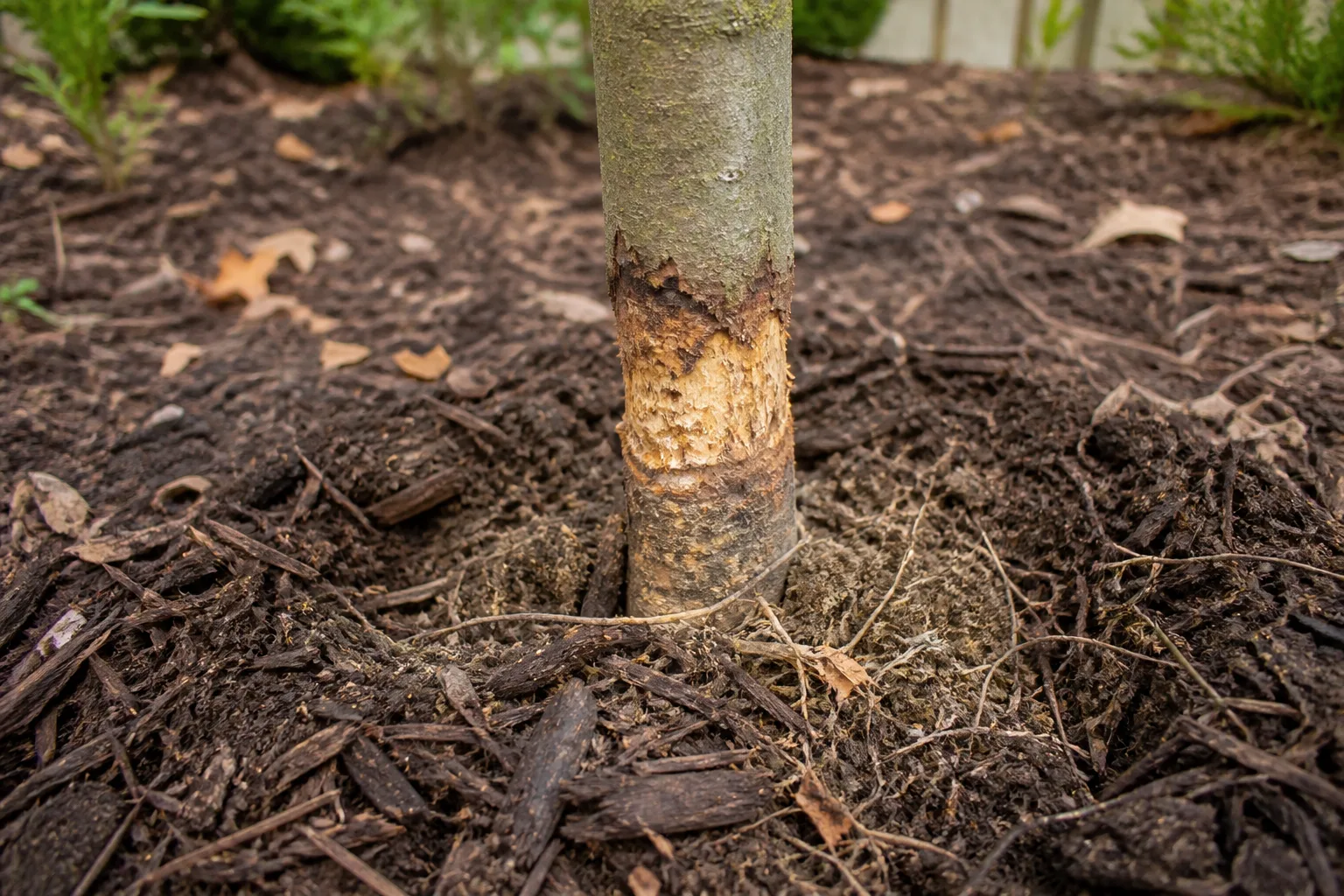
 They chew plants down to the crown, gnaw bark at the base of trees and shrubs in winter, and can strip roots until a young specimen pulls out of the ground with almost nothing attached (Alabama Cooperative Extension).
UMass Extension’s turf specialists note that vole traffic and droppings along runways add wear on top of feeding injury. Girdling—removing bark in a ring—kills trees; vole teeth marks are small and irregular compared with the wider, angled cuts rabbits leave.
 Voles also raid bulbs, potatoes, and ornamental beds. If your dirt mounds look wrong for a molehill, check for clipped grass and open holes at the base of cover—not a plugged volcano pile.
Seasonal Timing and Population Patterns Matter
Timing narrows ID when signs overlap. Moles push more fresh tunnels in spring and fall, when soil is moist and invertebrates are active near the surface. Voles do much of their visible turf damage in winter, feeding and traveling under snow on runways you only discover in March or April when grass fails to green up in strips.
Population behavior matters for control, too. Catching one mole often calms a lawn for weeks because moles are territorial and solitary outside breeding season. Voles rarely work that way—one burrow system may hold several adults and young, and peak-cycle years can turn a manageable problem into orchard-scale loss in a single season. Plan for sustained habitat work and multiple traps when voles are confirmed, not a single weekend with one harpoon trap.
Tell Them Apart From Mice, Gophers, and Shrews
Moles and voles are not the only small mammals that confuse homeowners. Ruling out lookalikes prevents a second round of wrong treatments.
Field Mice
House mice and deer mice are smaller (about 2–4 inches) with large ears, long hairy tails, and pointed snouts. They nest in structures and debris piles more than moles do, leave tiny brown droppings, and nibble stored seed—not long clipped runways through open turf. Voles look thicker and shorter-tailed than mice; moles do not resemble mice at all once you see the forefeet.
Pocket Gophers
Pocket gophers push fan- or crescent-shaped mounds with soil piled to one side and eat roots directly—more aggressive garden damage than moles.
 They are larger (4–12 inches), have visible incisors, and plug side openings after each trip to the surface. Molehills are more symmetrical and often sit along raised ridges; gopher mounds stand alone with wilting plants nearby.
Shrews
Shrews are tiny (3–4 inches), mouselike insect-eaters that may use mole runways but do not build surface tunnel systems. The northern short-tailed shrew looks like a mole–mouse hybrid with visible (though tiny) eyes and ears. If you have ridges and molehills, shrews are not your primary problem.
Your First-Action Field ID Checklist
Run this sequence before buying products. It takes less time than a return trip to the hardware store.
Step 1 — Scan for plant feeding. Any chewed stems, missing bulbs, or bark gnawing at ground line? → Vole likely. No plant bites but heaved turf? → Mole likely.
Step 2 — Read the ground pattern. Raised, spongy ridges with round molehills → mole tunnels. Cleared one- to two-inch-wide paths through grass with no mounding → vole runways.
Step 3 — Test tunnel activity. Flatten a straight ridge or runway section with your foot. Check in 24 hours. Moles repair active surface tunnels quickly; abandoned ones stay flat. Vole runways may show fresh clipping or droppings along the path rather than a raised repair.
Step 4 — Check habitat. Heavy mulch against tree trunks, unmowed edge vegetation, and wood piles favor voles. Well-watered lawn with abundant earthworms favors moles—even though grub treatments alone will not evict moles, according to Purdue’s Plant and Pest Diagnostic Lab, because earthworms remain the main food source.
Step 5 — Match control intent. Mole confirmed → trap active tunnels. Vole confirmed → hardware cloth guards, mulch clearance, snap traps at burrow mouths, and ongoing vole control tactics.
Control Methods That Match the Pest You Actually Have
Correct ID is not academic—it determines which tools actually work. Moles ignore peanut butter; voles will not spring a harpoon trap placed on a runway they never reopen.
Mole Control That Works
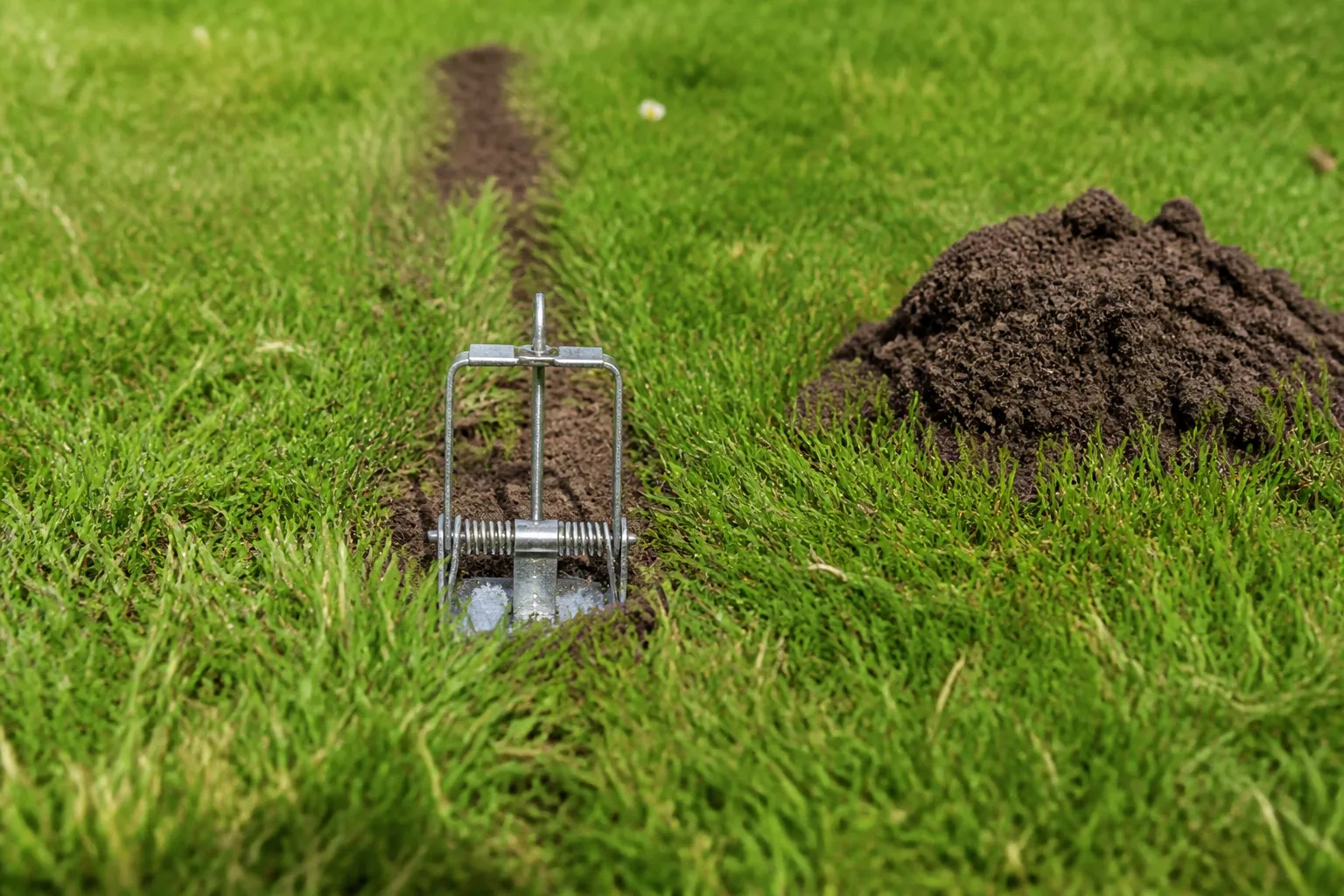
Trapping active surface tunnels is the most reliable mole method extension services recommend (Penn State Extension; Alabama Cooperative Extension). Harpoon, scissor-jaw, and choker-loop traps all work when set on straight, freshly repaired runs. Flatten several candidates, mark them, and trap the ones that rise again within a day.
Soil texture matters: harpoon traps often perform better in sandy soil; scissor-jaw and choker traps often do better in loamy or clay soil. Wear gloves to limit human scent, block all light from the runway when setting scissor or choker types, and move the trap if nothing triggers within 48 hours. Poison grain baits rarely work because moles eat live invertebrates, not seeds.
Small beds can be protected with L-shaped hardware cloth barriers buried 12 inches deep and bent outward—impractical for whole lawns but effective around high-value plantings. For smell-based nudges before tunnels proliferate, see our guide on using vinegar along mole activity zones—a early-stage supplement, not a substitute for trapping an established network.
Vole Control That Works
Vole management combines exclusion, habitat modification, and trapping. Wrap young trees with quarter-inch hardware cloth standing 18–24 inches above ground, buried slightly and flared outward—chicken wire gaps are too large (Alabama Cooperative Extension). Pull mulch at least 3 feet back from trunks so voles lose cover.
Set mouse-sized snap traps at active burrow entrances and along runways with triggers facing the hole. Bait with peanut butter mixed with oatmeal or apple slices. Check daily. In small gardens, trapping helps; in large peak populations, traps alone may not keep pace—till fallow areas, mow borders short, and remove brush piles that shelter colonies.
Rodenticides labeled for voles exist in some states but carry non-target wildlife risks; follow label law and consider professional application near water or food gardens. Habitat cleanup delivers more lasting relief for voles than it ever will for solitary moles.
What Repellents, Baits, and Myths Get Wrong
Castor oil—liquid or granular—gets recommended for both pests because the smell irritates burrowing mammals. It may nudge activity temporarily but is not a registered long-term solution for moles; Penn State Extension notes there are no EPA-registered chemical mole repellents on the market today. Castor bean plants are toxic and can become weeds—skip planting them as a fence-line fix.
Coffee grounds, marigold borders, and vinegar sprays sometimes appear in neighbor forums. They are low-cost experiments at best. Our review of natural mole repellents aligns with extension testing: sensory deterrents fade after rain and do not collapse established tunnel systems.
The grub-control myth deserves its own warning. Moles do eat white grubs, but earthworms dominate their diet. Purdue Extension is blunt: treating grubs to remove moles fails even in grub-free lawns because worms remain. Broad insecticide applications can harm beneficial soil life and birds without solving the mole.
Fumigants perform poorly on moles—they detect gas and wall off tunnels—and are generally ineffective for voles in open systems. Live-trapping moles rarely ends well; moles stress quickly and relocation may violate local wildlife rules. For voles, live traps are possible in small areas but slower than snap traps when populations are high.
When to DIY and When to Call a Pro
DIY trapping works for one or two moles on a suburban lot when you can identify active runs and check traps daily. DIY also fits isolated vole damage on a few trees or a small vegetable patch where hardware cloth and a handful of snap traps are manageable.
Call a wildlife or pest professional when damage repeats after two trap relocations, when you cannot confirm species after a week of observation, when peak-cycle vole populations overwhelm traps, or when burrowing threatens utilities, irrigation, or hardscape. Professionals can verify species, apply legal rodenticides where appropriate, and coordinate neighborhood-wide grub or mole work when tunnel systems cross property lines.
Document damage with dated photos before and after control attempts. That record helps pros diagnose faster and proves whether the problem shifted from moles to voles—or to gophers—mid-season.
Conclusion
Moles and voles share rhyming names and lawn-wrecking reputations, but they are different animals with different diets, signs, and fixes. Moles are solitary insect-eaters that raise ridges and molehills while hunting worms and grubs; voles are fast-breeding plant-eaters that clip runways through grass and girdle bark under winter cover. Read chewed plants versus heaved turf first, run the 24-hour tunnel test second, and only then choose traps, barriers, or habitat work matched to the pest you actually have. Get that sequence right and you stop paying for grub treatments that moles ignore, peanut butter on mole runs, and harpoon traps over vole paths that never reopen.



