Dishwasher Humidity for Houseplants in Winter
Winter air dries out tropical houseplants. Learn how dishwasher steam can raise local humidity, safe placement rules, and when you need a humidifier instead.
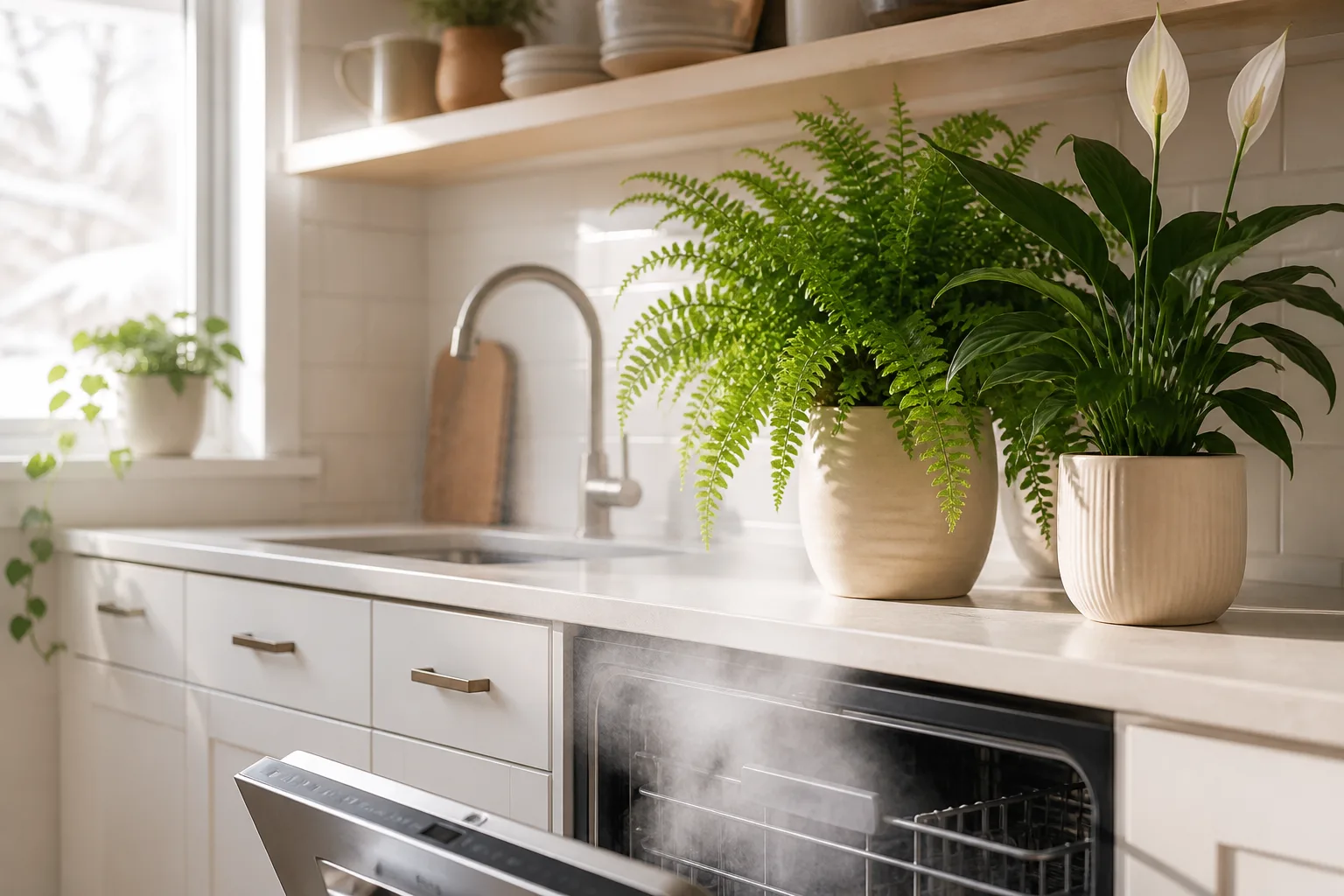
Running the dishwasher is already part of your winter kitchen routine. The dry cycle vents hot, moist air that can briefly lift humidity around nearby foliage—useful when furnaces and heaters pull indoor relative humidity below what tropical houseplants prefer. The trick is not novelty; it is placement, timing, and honest expectations. Dishwasher steam is a localized boost, not a substitute for a humidifier on a calathea collection, but it can buy time and reduce crispy leaf edges when you use it deliberately.
Winter Dry Air and Why Tropical Houseplants Struggle
Cold outdoor air carries less moisture to begin with. Once it enters your home and passes through heating, the air warms and relative humidity (RH) often falls sharply. ASHRAE recommends maintaining indoor RH between 30% and 60% for human comfort; during the heating season, levels below 30% are common. Penn State Extension notes that most houseplants benefit from humidity higher than a typical heated winter home provides, though cacti and many succulents are exceptions.
Many popular indoor plants—monsteras, anthuriums, ferns, alocasias, calatheas, and peace lilies—evolved in humid forests. Indoors, they lose water through transpiration faster when the air is dry. Winter also means shorter days and slower growth, so the plant has less capacity to replace that moisture through the roots. Humidity stress and watering mistakes often look alike, which is why guessing rarely fixes brown tips.
What Indoor Humidity Actually Drops To in Heated Homes
A comfortable room for people is not automatically comfortable for a rainforest understory plant. Epic Gardening’s winter humidity guidance frames 50–60% RH as a useful target for many tropicals, while Gardening Know How notes that average homes often sit around 25–30% in winter and that sustained readings below 20% can injure even tolerant species.
The number on a hygrometer changes by room, time of day, and distance from a heat source. A plant on a radiator-adjacent shelf may read differently from one on a kitchen counter three feet from a dishwasher vent. That is why measurement beats assumption—especially before you rearrange pots around an appliance.
Symptoms That Point to Low Humidity (Not Just Underwatering)
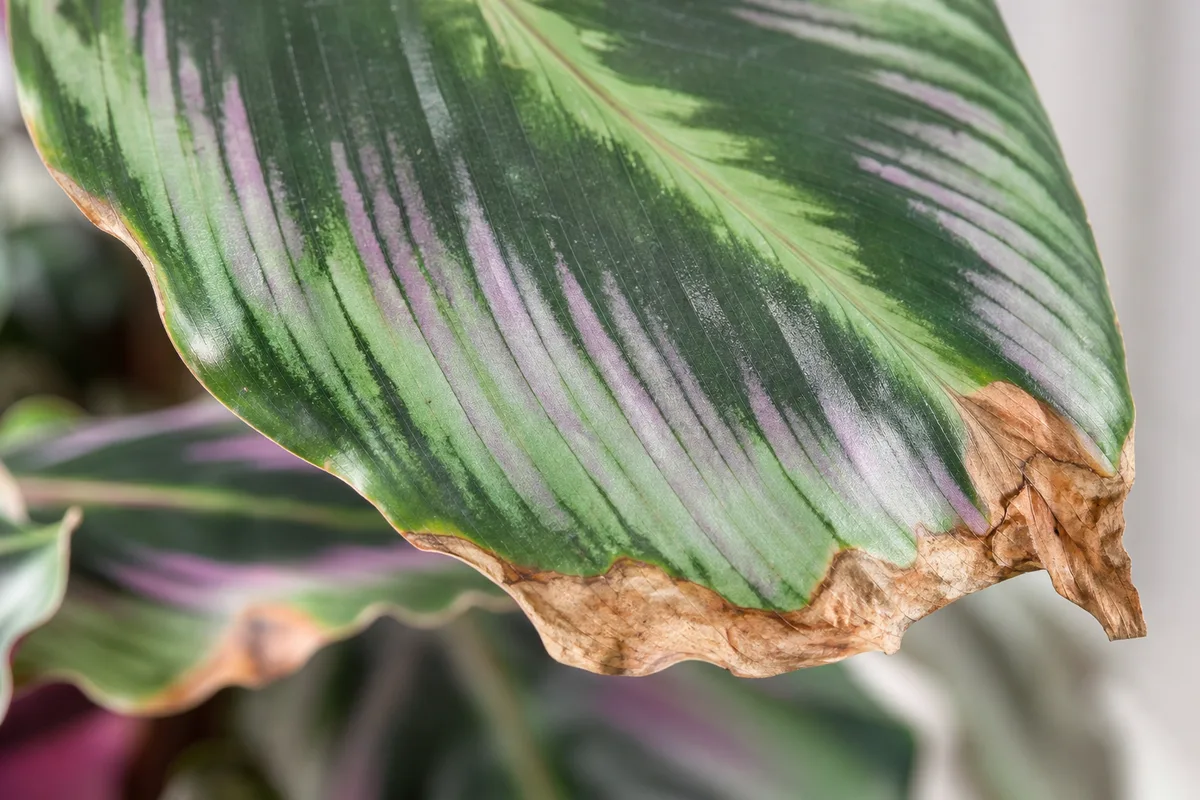
Brown, crisp leaf edges and tips are the classic winter signal, often starting on the oldest or most exposed leaves. Prayer plants and calatheas may curl or fail to unfurl new growth. Peace lilies can show smaller new leaves with dry margins. Fern fronds brown from the tips inward. Spider mites also thrive in dry, dusty air, so stippling on leaf undersides can follow humidity stress.
Before you blame humidity alone, check whether the potting mix is dry, whether the pot drains, and whether the plant sits in a heating vent’s path. Our signs your houseplants need more humidity guide walks through symptom patterns; our winter houseplant care guide covers the full seasonal checklist. If the soil is wet and the plant still crisps at the edges in a dry room, humidity is a strong suspect.
How Dishwasher Steam Can Raise Local Humidity
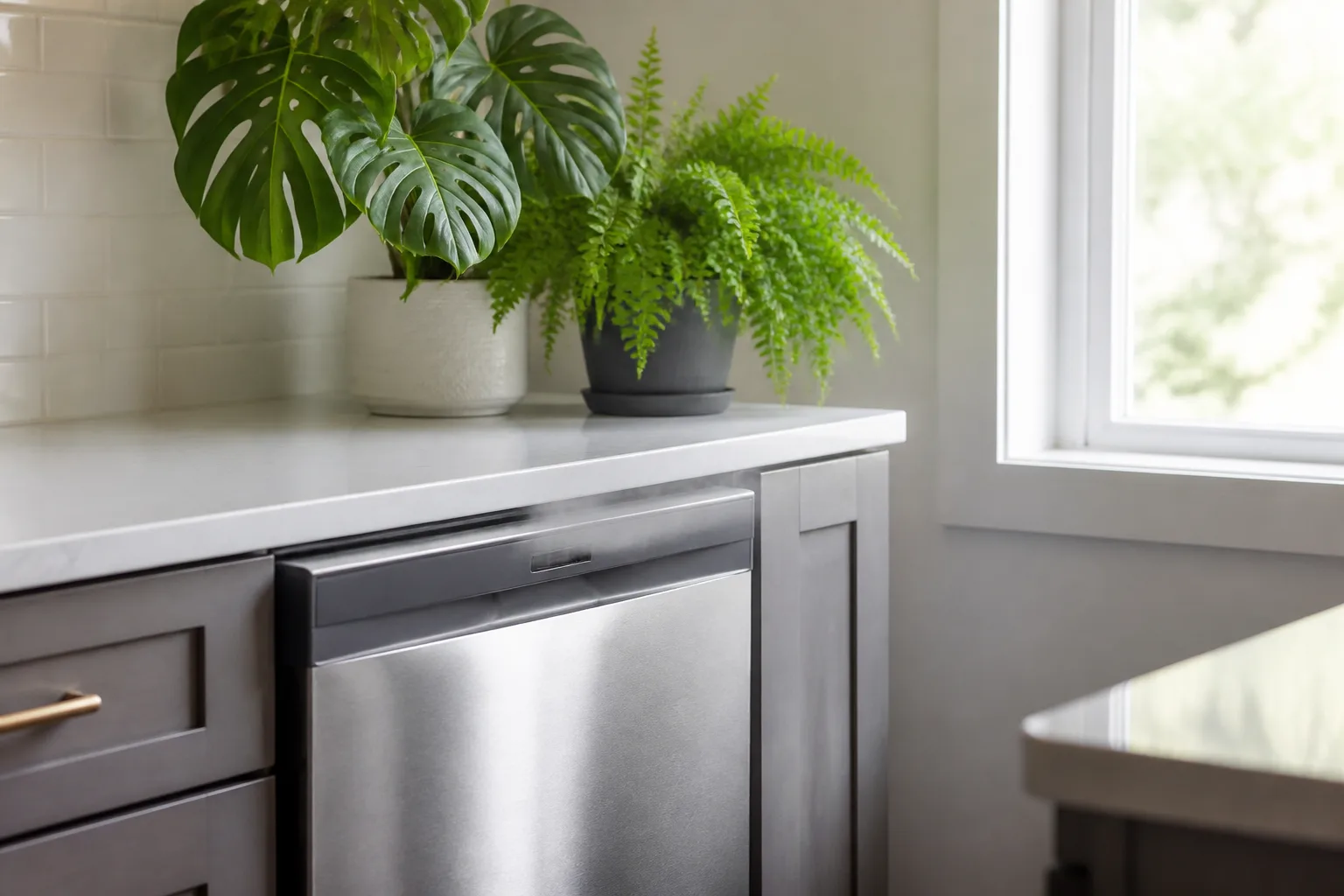
During the dry cycle, dishwashers heat residual water or use a heating element to evaporate moisture from dishes. That water exits as steam through a vent on the top or side of the door. The steam cools within seconds in most kitchens, but the air immediately around the vent carries more moisture for a short window—enough to help nearby foliage if the leaves are not in the direct hot plume.
Penn State Extension is skeptical of many folk humidity remedies because evaporated moisture diffuses through the whole room and may not move the hygrometer much. That caution still applies here: dishwasher steam is a microclimate tool, not whole-house humidification. The goal is to park humidity-loving pots where they catch gentle, cooled moisture—not to bake leaves in a steam jet.
What Happens During the Dry Cycle
Cycle names vary by brand, but the pattern is consistent: after the final rinse, the machine either heated-dries with an internal heater and fan or air-dries with less heat. Heated dry releases more steam and heat; air dry or “eco” settings vent less moisture but are gentler on nearby plants. Check your manual for whether the vent opens only during dry or also during certain rinse stages.
Steam rises and disperses quickly. Cabinets above the dishwasher can trap warm, moist air briefly; open floor space in front of the machine mixes steam with room air faster. If you run the dishwasher at night while plants are elsewhere, you gain nothing—this hack only works when pots are in position during the cycle you choose.
Two Ways to Use the Steam Without Damaging Leaves
Method 1 — Door pause at dry cycle start: When the machine enters the dry phase, open the door a few inches for several seconds to let steam escape into the kitchen, then close it so the cycle can finish if needed. This releases a pulse of moisture without leaving the door wide open through the entire dry period. Do not open mid-wash when detergent and hot water are active.
Method 2 — Passive placement during the full dry cycle: Leave the door closed and position plants within the safe zone (see below) for the duration of heated dry—typically 30 to 90 minutes depending on the model. The counter behind the dish rack zone, not directly over the vent, often works. Combine with grouping two or three humidity lovers so transpiration from neighbors adds a little shared moisture.
Neither method replaces checking the soil or adjusting winter watering. Steam addresses air moisture; roots still need appropriate water. For a broader humidity strategy, see our houseplant humidity guide.
Safe Placement: Distance, Heat, and Vent Direction
Steam cools fast, but the air leaving the vent can still be hot enough to scorch tender leaves. Distance and height matter more than enthusiasm.
The Three-Foot Rule and Why Height Matters
Keep foliage roughly three feet (about one meter) away from the vent and not directly above it. Steam tends to rise; a plant on the counter directly over the door vent receives the hottest, most concentrated plume. A pot on the back of the counter, offset to the side, catches cooled, dispersed moisture instead.
The cabinet shelf above the dishwasher is tempting because it is empty and near the action. It can work only if leaves hang behind the vent line, not over it, and if under-cabinet lighting does not add heat stress. If you feel hot, wet air on your hand at leaf height, move the pot.
Run a test cycle without plants first. Hold a hygrometer at candidate spots during dry cycle and again 30 minutes after. A bump of a few percentage points near the plant—not a room-wide jump—is a realistic win.
Plants and Spots to Avoid Near the Dishwasher
Do not place succulents, cacti, snake plants, or ZZ plants near dishwasher steam; they prefer drier air and soggy crowns invite rot. Avoid fuzzy-leaved plants like African violets unless they sit well outside the moisture plume. Skip pots with no drainage or saucers that hold standing water—extra ambient humidity plus trapped soil moisture is a root-rot setup.
Keep plants away from dishwasher door swing paths and electrical outlets where drips could occur if you open the door during steam release. If you have pets or children, a plant on the counter edge is a spill risk; a sturdy shelf offset from the vent is safer.
Heat from the dishwasher tub during dry cycle can warm the counter surface slightly. Use a coaster or felt pad under pots and confirm the counter material tolerates brief warmth. Our heater and houseplant guide covers the same principle for radiators: hot, dry, or sudden temperature swings stress leaves before you notice soil dryness.
Which Plants Benefit Most From Kitchen Humidity
Kitchens and bathrooms often hold more moisture than living rooms because of cooking, kettles, sinks, and showers. A dishwasher dry cycle adds another pulse in an already useful room.
Good Candidates for the Counter or Sink Windowsill
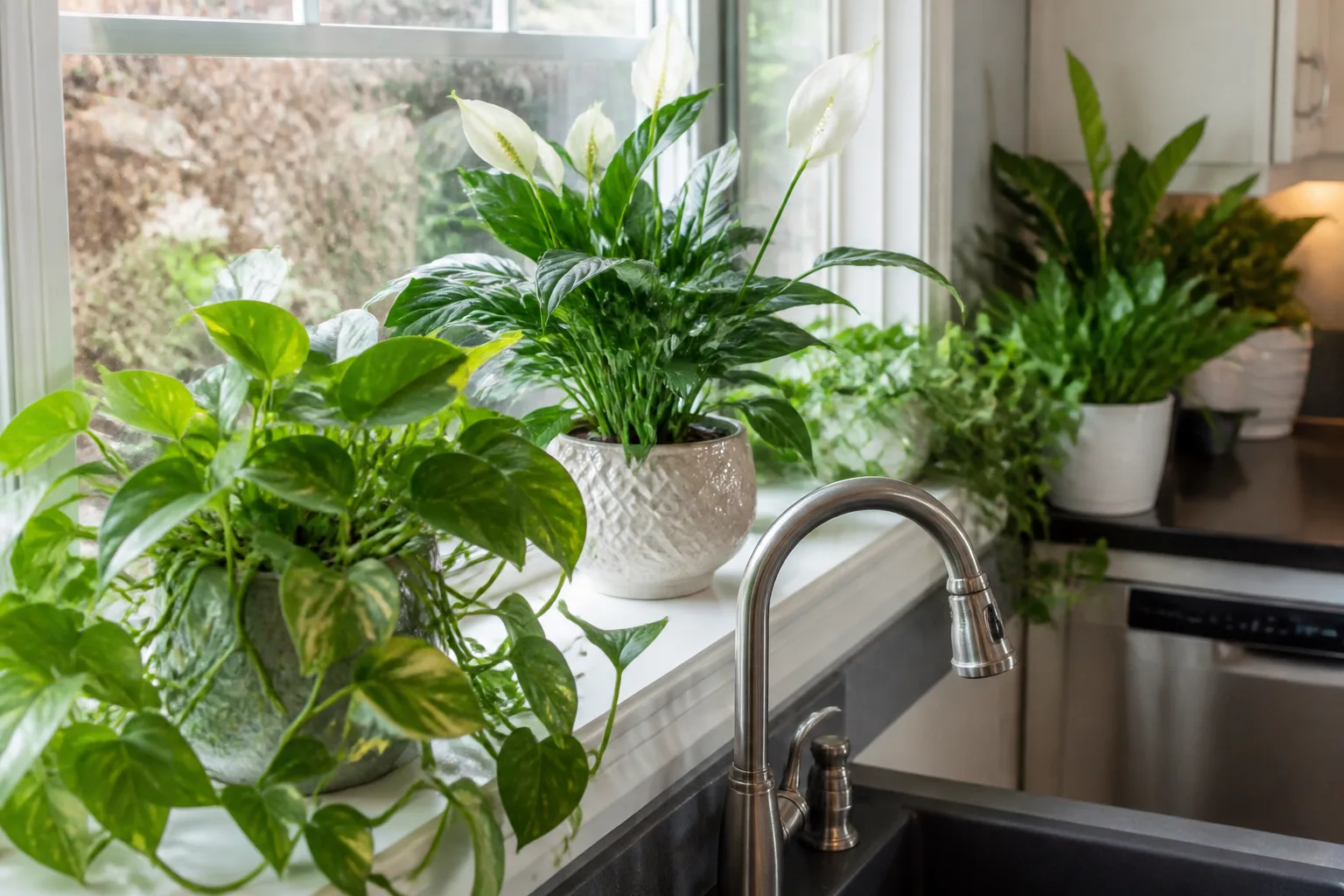
Ferns (Boston fern, bird’s nest fern), peace lilies, anthuriums, alocasias, and monsteras generally appreciate the bump in kitchen humidity when light is adequate. A bright sink windowsill combines easy watering with ambient moisture from the tap and dishwasher—provided the window does not radiate cold at night or bake the pot in afternoon sun.
Pothos and philodendrons tolerate average humidity but often show fewer brown tips with a modest boost. Calatheas and prayer plants may look better near the kitchen during dry cycles yet still need stronger tools if your hygrometer stays below 40% for days. Link to species hubs when you need care specifics: monstera, calathea, Boston fern.
Match the plant to the light. A humidity boost cannot compensate for a dark corner. If the kitchen window is north-facing or blocked, pair steam placement with a grow light on a timer, as described in our bathroom plants guide—the same light-plus-humidity logic applies.
When Dishwasher Steam Is Not Enough
Some plants treat 40% RH as a crisis. Calatheas, fittonias, and many terrarium species want steady humidity, not a 45-minute spike twice a week. If brown tips spread after you optimize placement, if new leaves emerge small and crisp, or if mites keep returning, escalate.
At that point, a humidifier is the reliable fix. Our humidifier placement guide covers distance, mineral dust, and crown wetness. An IKEA-style cabinet greenhouse or cloche creates a recycled humid pocket for one high-demand specimen; see our cabinet greenhouse hacks. Dishwasher steam remains a useful free supplement in the kitchen, not the primary life-support system for a calathea wall.
Measure First: Hygrometer Reality Check
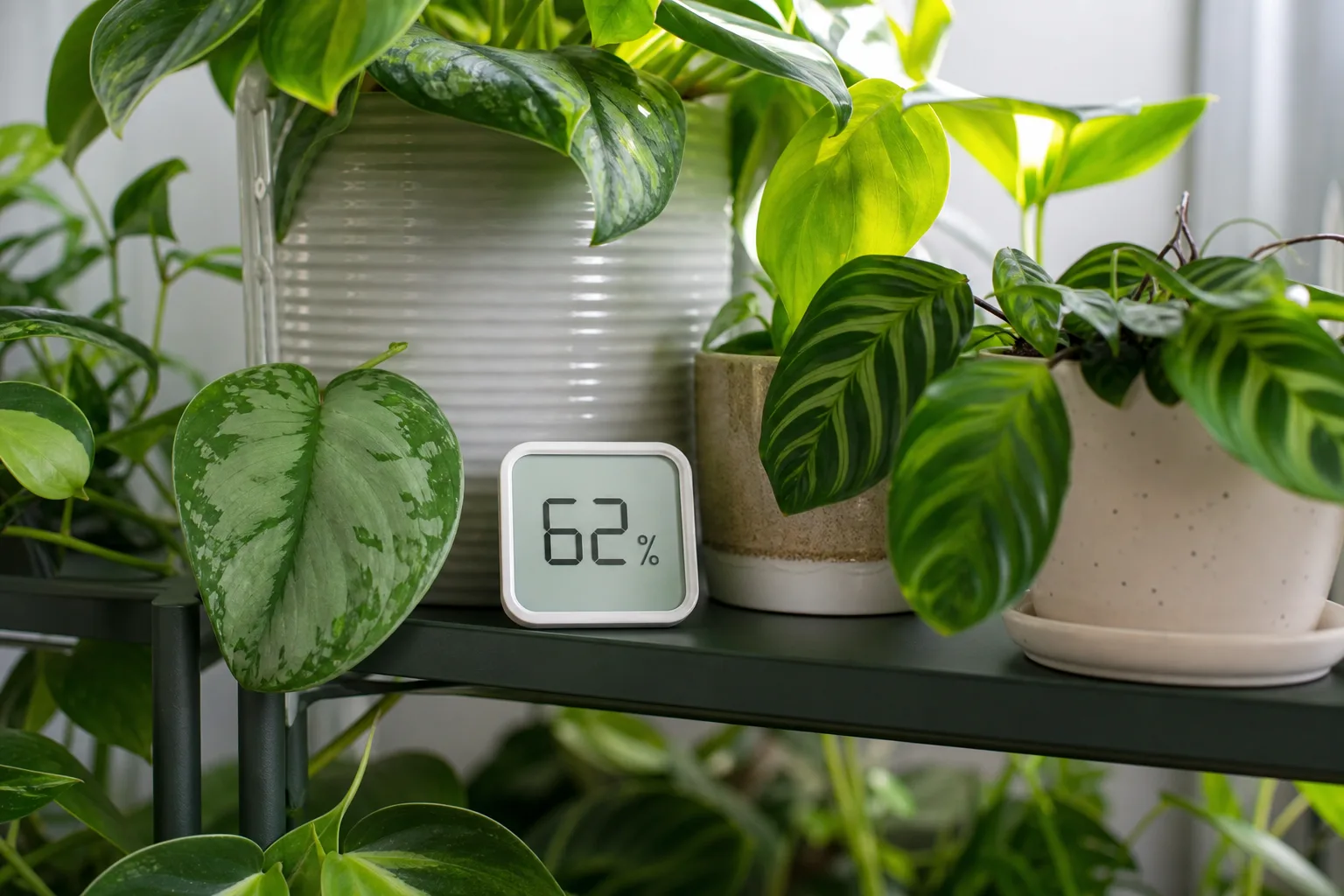
Buy a basic digital hygrometer and place it at leaf height near the plant you are trying to help—not on the other side of the room. Log readings in the morning and evening for a week during normal heating. Note dishwasher run times and whether RH spikes correlate.
If the room sits at 22% and jumps to 28% beside the counter during dry cycle, that may be enough for a pothos but not for a fern. If readings never exceed 35% anywhere, stop rearranging pots and add a humidifier or cabinet. Penn State Extension emphasizes that if humidity is comfortable for you, many plants will tolerate winter conditions when light and watering are correct—so prioritize measurable problems over chasing 70% RH for every pot.
Stronger Fixes When Steam Alone Falls Short
Think of humidity tools as an escalation ladder. Start with free, low-risk adjustments; add equipment when symptoms persist.
Pebble Trays, Grouping, and Cloches
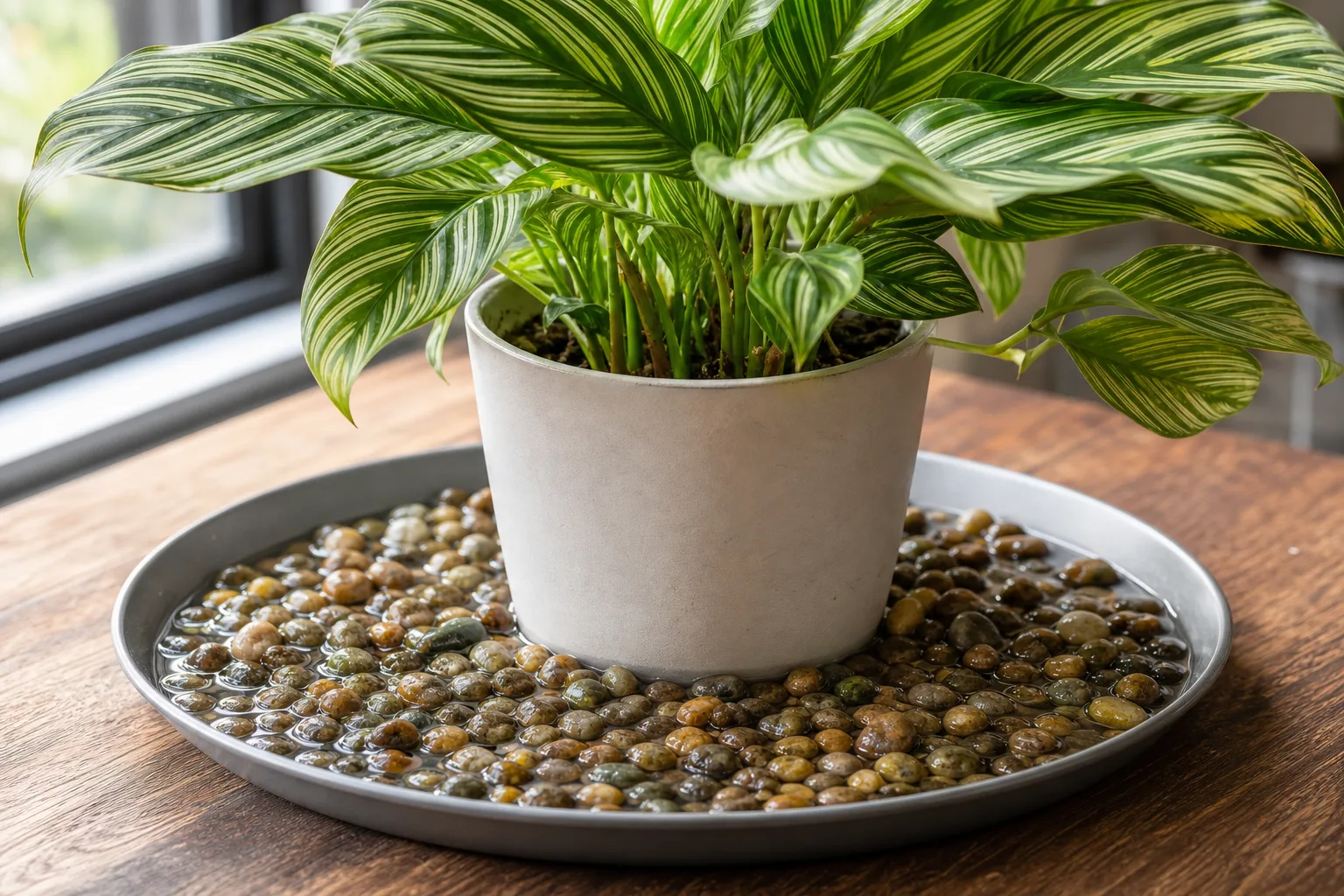
Grouping plants lets combined transpiration raise humidity in a small air pocket. It works best with several pots on one shelf or counter, especially in a smaller kitchen. Pebble trays evaporate water upward, but Penn State Extension notes the effect diffuses room-wide and may not change RH dramatically—still useful as a local complement, not a cure. Our pebble tray guide shows correct water-line setup so roots never sit submerged.
A glass cloche or clear bin over a single small plant recycles its own moisture—helpful for one fussy specimen while you decide on a humidifier. Ventilate briefly each week to prevent mold. Misting raises humidity only until droplets evaporate—often minutes—and can spread fungal issues on crowded leaves. Read should you mist your plants before making misting a daily habit.
Humidifiers and Cabinet Greenhouses
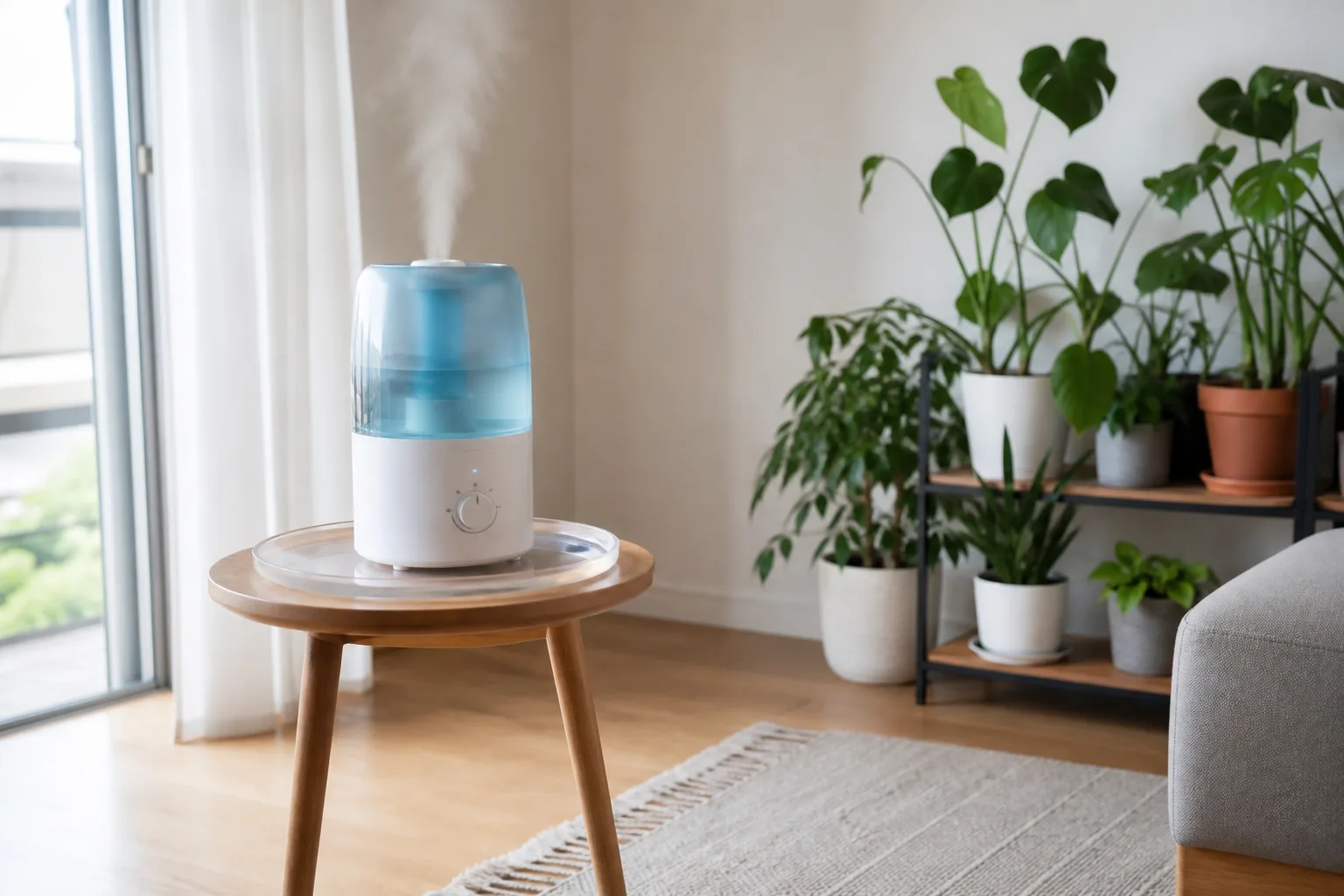
A cool-mist or ultrasonic humidifier near a plant grouping is the most dependable way to hold RH in the 50–60% band through an entire heating season. Nebraska Extension recommends humidifiers for sustained improvement, whether portable units or HVAC-integrated systems in very dry climates. Clean reservoirs on schedule to avoid mineral dust and bacteria.
Cabinet greenhouses combine humidity, stable temperature, and grow lights for collectors running calatheas, anthuriums, or propagations. They cost more than leaning a fern on the dishwasher, but they solve the “constant humidity” problem dishwasher steam cannot. Compare approaches in our pebble tray vs humidifier guide when budget is the deciding factor.
Common Mistakes That Cancel the Benefit
Placing foliage directly over the vent scorches edges within one or two cycles. Opening the door during the wash phase splashes detergent-laden water and voids the hygiene of the cycle—wait for dry. Forgetting winter watering changes leaves roots dry while you chase humidity in the air.
Running heated dry every night without monitoring can over-humidify a small enclosed kitchen and encourage mold on cabinet backs; ventilate the room periodically. Moving high-light plants to a dim kitchen just for steam trades one problem for another. Ignoring pests means mites exploit dry stress even after humidity improves—inspect undersides when you reposition pots.
Treating dishwasher steam like a greenhouse leads to disappointment. It is a recurring micro-boost in one room. Plan accordingly.
A Simple Winter Humidity Routine You Can Repeat
Run this checklist when heating season starts and repeat monthly:
- Measure RH at each plant cluster with a hygrometer.
- Relocate only plants that show humidity symptoms or score below 35% at the foliage.
- Park ferns, peace lilies, or monsteras on the back kitchen counter, three feet from the dishwasher vent, before you run heated dry.
- Group two or more tropicals on that counter to share transpiration.
- Log whether leaf tips stabilize over two to three weeks.
- Escalate to pebble trays, then a humidifier or cabinet, if symptoms persist or RH never rises.
Align dishwasher runs with when you are home so you can observe the first few cycles. Once placement is dialed in, the habit becomes automatic: load dishes, start the machine, let the dry cycle run while the kitchen plants sit in their safe zone.
Conclusion
Your dishwasher is not a replacement humidifier, but its dry cycle is a legitimate, no-cost way to raise local moisture for tropical houseplants in a winter kitchen. Keep pots about three feet from the vent, never directly above it, measure with a hygrometer, and match the method to plants that actually want more humidity—not succulents on a steam line.
When brown tips keep spreading or RH stays stubbornly low, step up to grouping, pebble trays, a humidifier, or a cabinet greenhouse without guilt. The win is combining what you already do—wash dishes—with smarter plant placement until your indoor jungle survives heating season with fewer crispy leaves.