How to Plant, Grow, and Care for Hyacinth
Grow fragrant hyacinths outdoors or in pots with practical fall timing, planting depth, chilling, post-bloom care, propagation, and problem fixes.
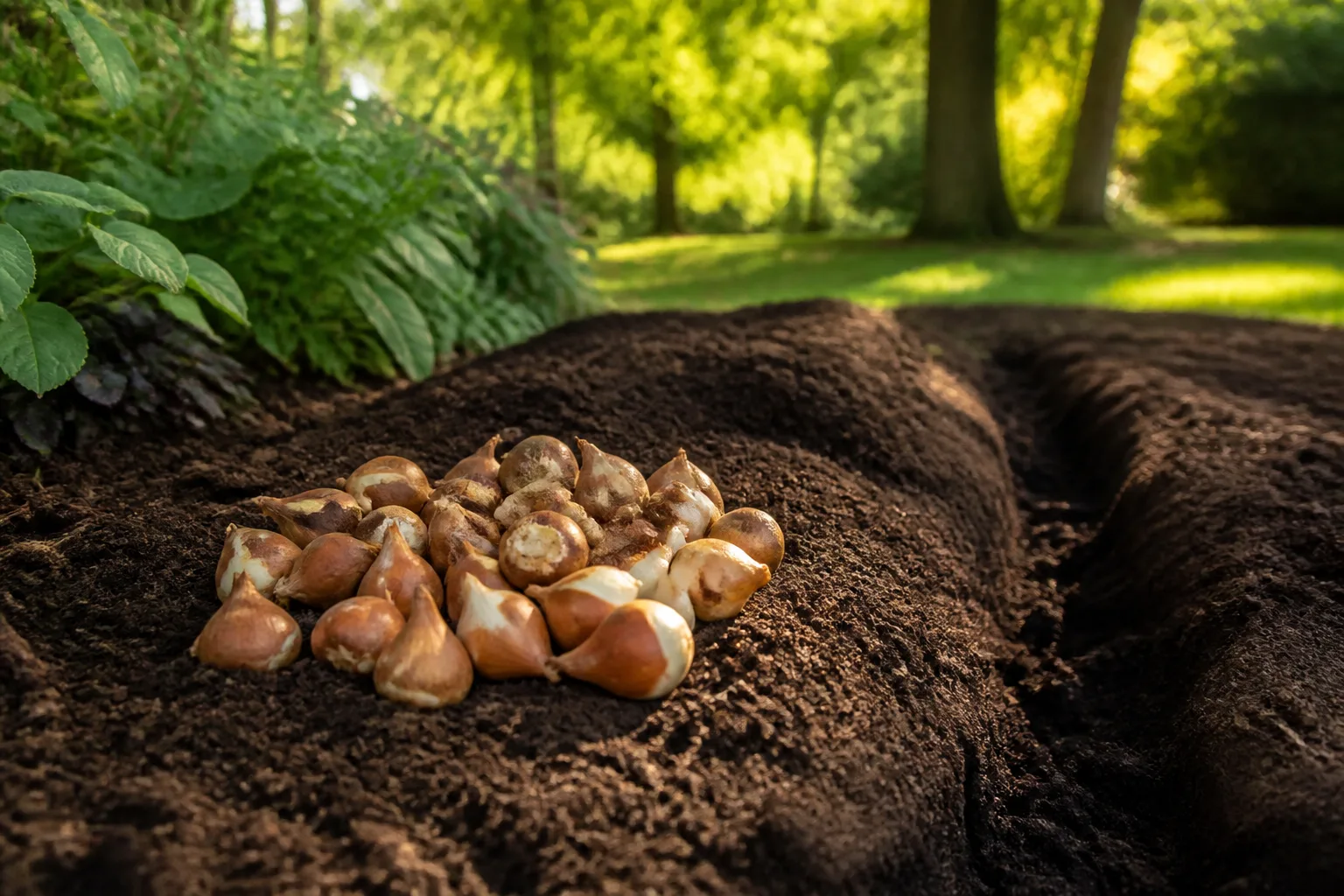
Hyacinths are spring bulbs with a simple bargain: give the bulb a cool resting period, sharp drainage, and enough light, and it will usually repay you with a dense, intensely fragrant flower spike. The common garden hyacinth is Hyacinthus orientalis, not grape hyacinth (Muscari), purple hyacinth bean, or water hyacinth. The name matters because these plants have different growth habits even when the flowers look loosely related.
The most reliable plan is to plant dormant bulbs outdoors in fall, let the foliage feed the bulb after flowering, and accept that hybrid hyacinths often decline after several seasons. You can also grow them in pots or force prepared bulbs indoors, but those options make drainage, temperature, and aftercare more important. This guide follows the plant through the whole cycle so you know what to do before the first leaf appears and after the last flower fades.
Hyacinth at a Glance
Common hyacinths are compact perennial bulbs that generally grow about 6–12 inches tall and flower in early to mid-spring. Each mature bulb usually produces one substantial flower spike surrounded by strap-shaped leaves; the payoff is a strong vertical accent and fragrance rather than a long succession of blooms.
| Need | Practical target |
|---|---|
| Planting time | Early fall, about 6–8 weeks before hard frost or once soil cools to roughly 50–55°F |
| Planting depth | About 4 inches in ordinary garden soil; use the package directions if the bulb is unusually large |
| Spacing | 3–6 inches apart; closer in a pot, but bulbs should not touch |
| Light | Full sun to partial shade; morning sun and some afternoon relief help in hot climates |
| Soil | Loose, moderately fertile, and fast-draining |
| Water | Even moisture while rooting and growing, never standing water |
| Bloom | Early to mid-spring, often for a few weeks |
| Long-term expectation | Flowers may become smaller after several years; new bulbs give the strongest display |
The cold period is part of the care, not an optional trick. Hyacinths use cool dormancy to coordinate root development and flowering, which is why a bulb planted in a warm, wet bed may produce leaves without a satisfying flower spike. The exact performance depends on cultivar, climate, bulb quality, and whether the bulb was sold as prepared for indoor forcing.
Choose Healthy Bulbs and the Right Planting Site
Buy firm, heavy bulbs with intact papery skins and no soft spots, sour smell, deep cuts, or spreading mold. A little loose outer skin is normal, but a bulb that yields under gentle pressure is already losing the race against rot. Larger bulbs generally have more stored energy for a fuller first display, while small offsets may need multiple seasons before they flower well.
Select a bed where water drains away after rain. Hyacinths can handle ordinary garden moisture, but a low pocket that stays saturated is a poor site no matter how sunny it is. If you cannot improve drainage without creating a raised, open-textured bed, use a container instead; controlling the growing medium is often more effective than repeatedly treating a rotting bulb.
Light, drainage, and placement
Aim for at least six hours of direct sun for the strongest flowering, with partial shade acceptable for a one-season display. Hyacinths bloom early, so a spot beneath a deciduous tree can work: the bulb receives spring light before the canopy fills in. In a hot climate, protection from the harshest afternoon sun can keep flowers from fading as quickly.
Plant fragrant groups where you pass them—near a path, entry, seating area, or the front of a border—but remember that the leaves remain after the flower spike is gone. Place them among later perennials that can eventually mask the fading foliage without shading the bulbs during spring. Daffodils and tulips make natural companions for the same season, while low summer perennials can take over the visual space later.
The Royal Horticultural Society recommends moderately fertile, well-drained soil and notes that partial shade is more suitable for a one-off display than for bulbs left in place for several years. Its hyacinth growing guide is also a useful reminder that a “perfect” first-year flower spike often reflects bulb production and preparation, not a promise that every later spike will be identical.
Plant Hyacinth Bulbs in Fall
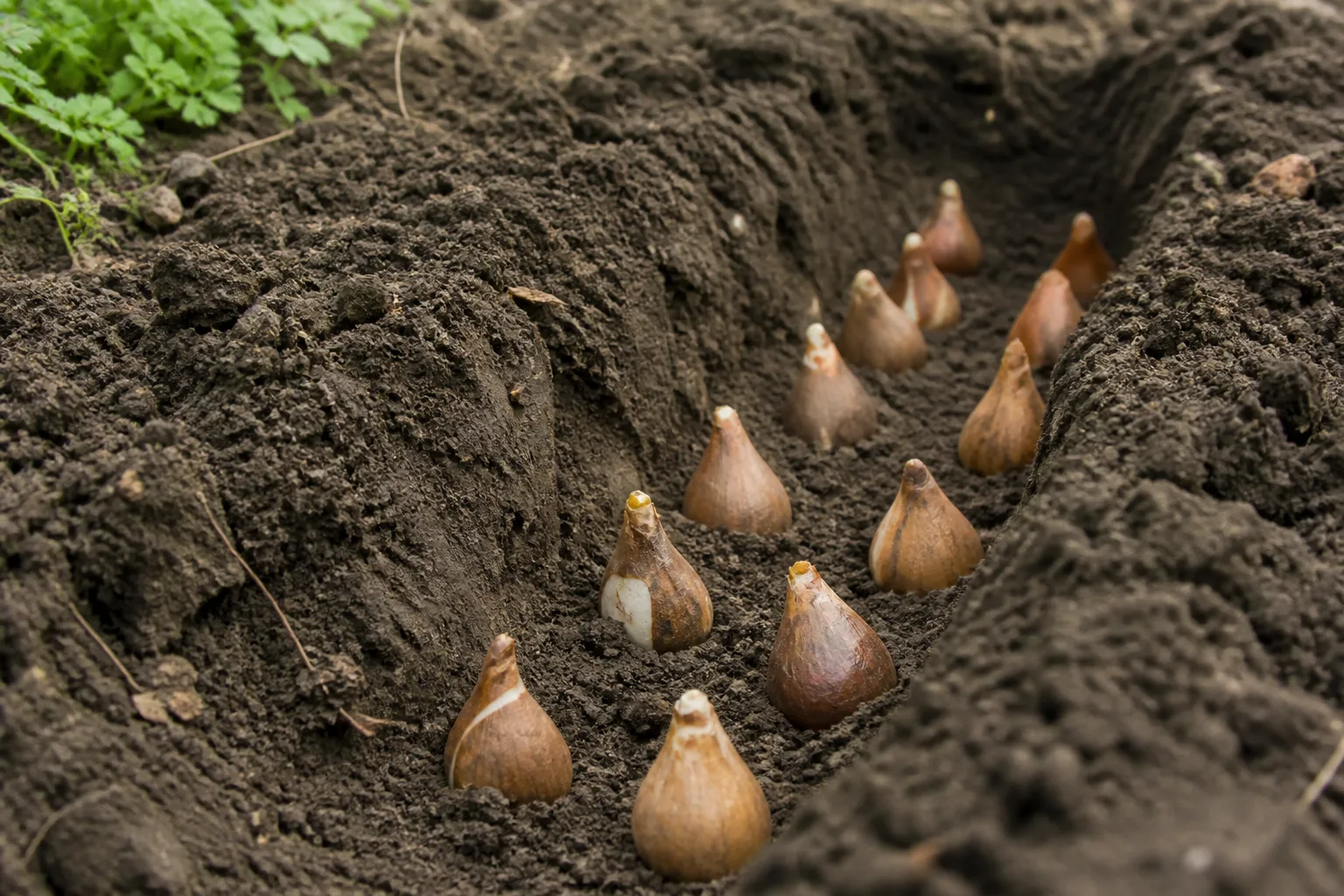
Plant outdoor bulbs in early fall, usually six to eight weeks before the ground is expected to freeze hard. A calendar date is only a rough cue: if your autumn stays warm, wait until the soil has cooled; if a severe freeze is approaching, plant promptly rather than holding bulbs in a warm room. The goal is enough time for roots to form before deep dormancy, not a particular month on the label.
Prepare the whole area rather than digging isolated holes into compacted soil. Loosen the bed to roughly 8–10 inches, remove stones that block drainage, and work in a modest amount of finished organic matter only if the soil needs structure. Avoid creating a rich, water-holding pocket around each bulb; excessively amended soil can hold moisture where the bulb needs air.
Depth, spacing, and the planting sequence
- Set the bulb with its pointed nose upward and its broad root end downward.
- Dig a hole about four inches deep, or roughly two to three times the bulb’s height when a package gives a different depth for an unusual cultivar.
- Space bulbs about 3–6 inches apart in the ground, leaving enough room for soil between them and room for air movement.
- Backfill with loose soil without pressing it into a hard cap over the nose.
- Water once slowly and deeply enough to settle the soil around the roots.
- Add a light mulch layer only after the soil is cool; keep mulch from forming a wet, thick collar directly over the bulb.
For a more natural-looking group, plant several bulbs in an irregular cluster rather than a ruler-straight row. Hyacinths usually look fuller when repeated in groups because one bulb gives one main spike. If rodents routinely dig in your beds, use a physical barrier or planting basket rather than assuming the bulb’s scent will deter every animal. Wire mesh can be useful where squirrels are persistent, as the RHS hyacinth guide notes.
Water and Feed Through the Growing Season
After planting, keep the bed evenly moist only until autumn roots are established, then let rainfall do most of the work. Water again when the soil is genuinely dry at bulb depth, not merely because the surface looks pale. A finger pushed several inches down gives better information than a fixed “once or twice per week” schedule, especially in a rainy clay bed or a fast-draining sandy bed.
In early spring, water during a prolonged dry spell and while the plant is actively growing and flowering. Direct water at the soil rather than spraying the flowers and leaves, and water in the morning when possible. Once flowering is finished, reduce supplemental water as the foliage begins to yellow; a bulb entering dormancy should not sit in a saturated bed.
Hyacinths do not need a heavy feeding program. If a soil test or a history of poor growth suggests low fertility, use a bulb fertilizer at the label rate when planting and, if the label supports it, again as growth begins. Avoid guessing with handfuls of bone meal or high-phosphorus fertilizer: more nutrient cannot repair a bulb that is rotting, under-chilled, undersized, or exhausted after several seasons.
Container bulbs have a different rhythm. They dry faster than bed-grown bulbs but also rot faster when a saucer stays full, so check the mix with a finger and empty standing water after irrigation. The RHS advises feeding container hyacinths during active growth and flowering with a liquid high-potassium feed according to the product label; bulbs grown in water do not need fertilizer added to the vase.
Keep Flower Spikes Upright and Fragrant
Hyacinth spikes can become top-heavy, particularly in a warm room or a sheltered container where stems elongate quickly. The first correction is environmental: move an indoor plant to a cooler, brighter position and keep it away from radiators and hot vents. Outdoors, adequate light and close-but-not-crowded grouping usually produce sturdier growth.
If a spike still leans, insert a slender support beside the bulb and tie the stem loosely. Do not drive a stake through the bulb to reach the stem; the RHS specifically warns that this damages the storage organ you are trying to keep. A support should steady the flower, not clamp it tightly or turn the pot into a display of hardware.
Enjoy the fragrance while it lasts, but do not assume stronger scent means a problem. Hyacinth perfume can be overwhelming in a small room, so move a flowering pot to a cooler, ventilated space if the smell is too intense. For cut flowers, harvest as the lower florets begin to open, use a clean sharp knife or shears, and keep the vase out of hot direct sun; leave the outdoor bulb and its leaves intact if you want the plant to store energy for another season.
Care for Hyacinths After Flowering
Post-bloom care determines whether the bulb has a reasonable chance of flowering again. Remove the spent flower stalk at its base once the display is finished, but leave every leaf that is still green. The leaves photosynthesize and replenish the bulb; cutting them while they are attractive but active is one of the easiest ways to trade next spring’s flower for a weak leaf-only display.
Continue ordinary moisture while the leaves are green, then taper off as they yellow naturally. When the foliage is fully yellow or brown and pulls away easily, cut it close to the ground and clear the debris. Do not braid, tie, or bend green hyacinth leaves to hide them; those shortcuts reduce the leaf area doing the recovery work.
You have two reasonable choices after the foliage dies. Leave bulbs in well-drained ground, where the soil provides insulation and the plant can follow its natural cycle, or lift them, brush off soil, and store them in a cool, dry, ventilated place until fall. Replanting new bulbs each autumn is also sensible when you want the densest flower spikes, because cultivated hyacinths commonly lose vigor after a few years even with good care.
Grow Hyacinths in Containers
Choose a pot at least six inches deep with drainage holes and a stable base. A wide, low bowl can hold a group, while individual pots make it easier to move bulbs for chilling or winter protection. Use a quality, free-draining potting mix; ordinary garden soil can compact around the bulb and stay wet against the container wall.
Plant bulbs at the same approximate depth as in the ground, with their noses up, and leave a small gap between each bulb. Container bulbs can be closer together than bed bulbs because you are designing a display rather than giving them room to naturalize, but bulbs should not touch and the pot still needs enough mix to support roots.
Keep the pot outside in a sunny, sheltered position during the growing season, or place it in a cool dark location if you are preparing it for indoor forcing. Protect outdoor containers from repeated freezing and thawing, wind, and heavy rain; roots in a pot have less insulation than roots in the ground. Raise the pot slightly on feet or bricks so its drainage hole is not blocked by a patio or saucer. Gardening Know How’s hyacinth care guide likewise recommends a container at least six inches deep with good drainage and watering only as the mix begins to dry.
After flowering, treat a potted hyacinth like a garden bulb: remove the spent stalk, preserve the green leaves, and keep the mix lightly moist until the foliage fades. A forced pot may bloom weakly the next year because forcing spends much of the bulb’s stored energy. That is not necessarily a care failure; plant it outdoors after the foliage dies and judge it over the following seasons.
Force Hyacinths to Bloom Indoors
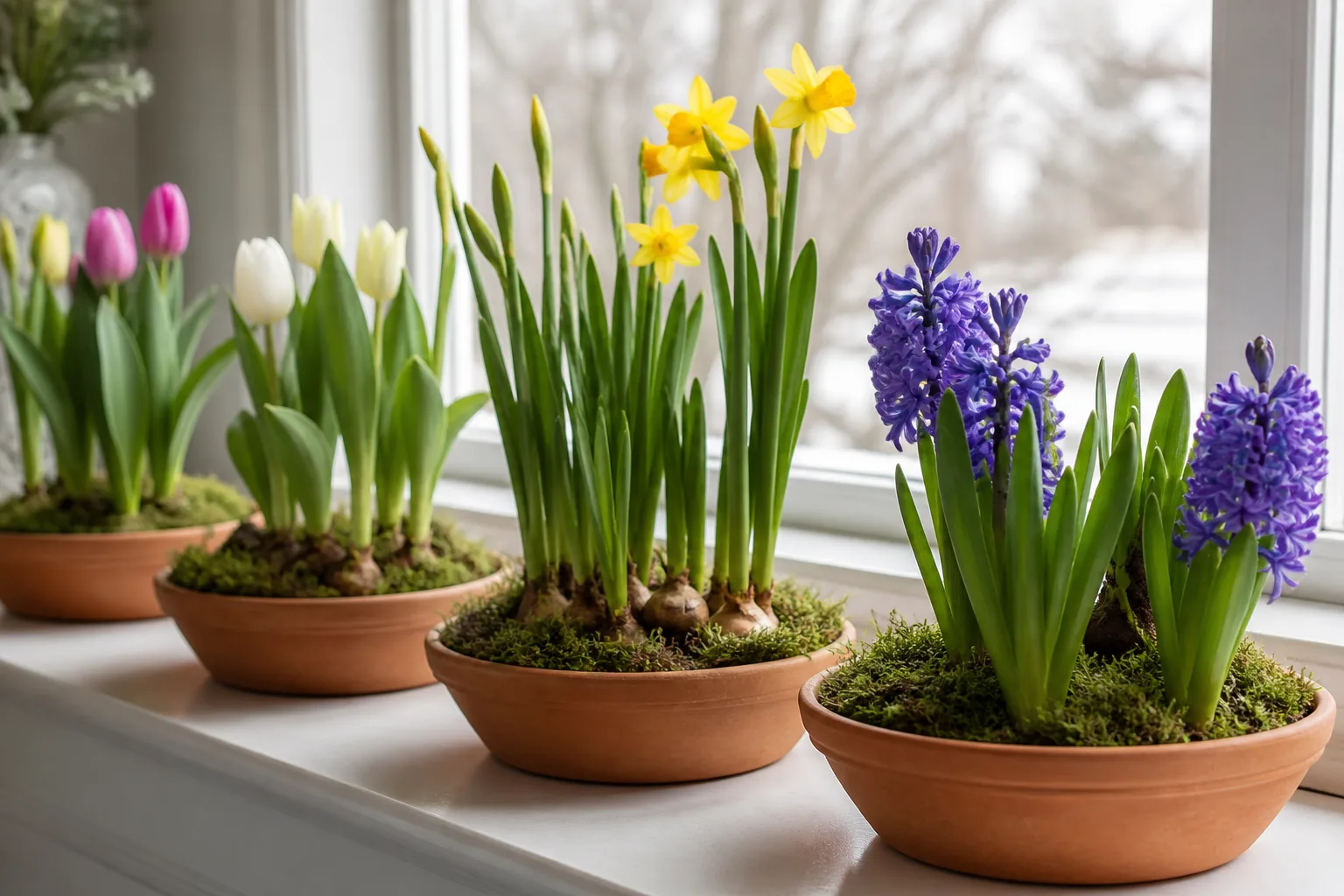
Forcing means using a cold period and then warmth and light to induce a bulb to flower indoors before the outdoor season. Buy bulbs labeled “prepared” or “pre-chilled” when you want the simplest route. Ordinary garden bulbs can also be used, but they usually need about 10–12 weeks of cool conditions before they will flower reliably.
Forcing in potting mix
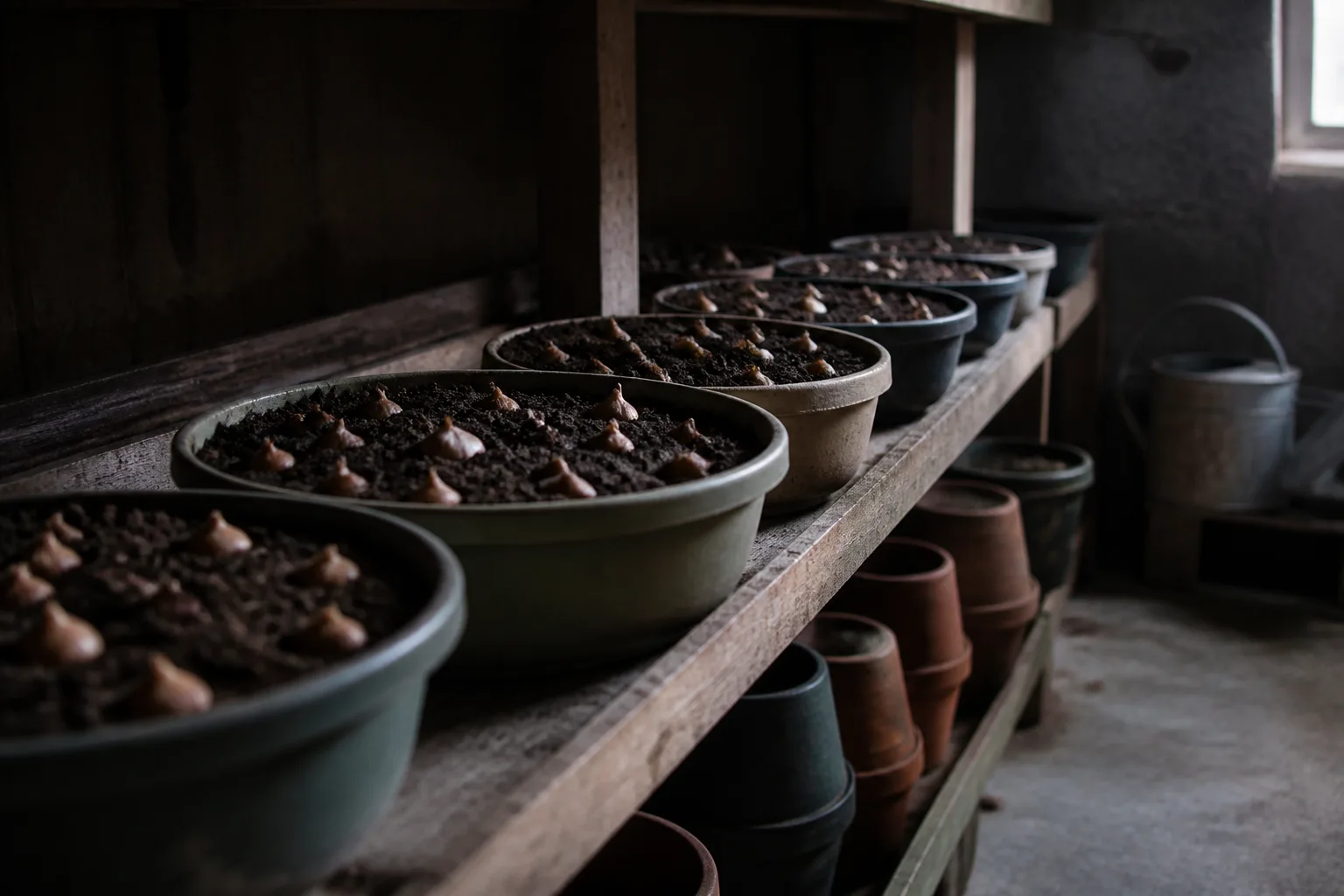
Use a pot with drainage holes and a free-draining mix. Set the bulb with the tip just above the soil line, water enough to moisten the mix, and place the pot in a dark location around 35–45°F. A basement, unheated garage, cold frame, or spare refrigerator can work if the temperature stays stable and the bulb is protected from freezing.
Check the pot about once a month. The mix should not be bone-dry, but it should never be waterlogged; add a small amount of water only when it has genuinely dried. Keep apples and other ripening fruit away from stored bulbs because ethylene can interfere with flower development, a practical warning also included in Epic Gardening’s hyacinth guidance.
After the chilling period, move the pot to a cool, dim-to-bright transition area for several days. Once shoots are growing and the flower bud is developing, give it bright light and cooler indoor temperatures, ideally around 60–65°F rather than a hot windowsill. Water when the mix begins to dry, keep water off the emerging shoot where possible, and move the pot farther from the glass if a sunny window becomes hot.
Forcing in a bulb vase
A bulb vase supports the bulb above water so roots reach downward without the bulb sitting in water. Fill the vase until the water is just below the bulb’s base, leaving a small air gap; direct contact between bulb tissue and water is an invitation to rot. Replace or top up the water carefully so the level does not rise against the bulb.
Keep the vase cool and dark until a substantial root system and shoot have developed, then gradually increase light and warmth. The display is often treated as temporary: after flowering, move the bulb to potting mix or a garden bed if you want to try saving it, but do not expect a forced bulb to match a fresh commercial bulb the following spring.
Handle Warm Winters and Overwintering
Hyacinths are naturally cold-season bulbs, so winter behavior depends on both your climate and the container. In a typical cold-winter area, bulbs in well-drained ground can remain in place with a light mulch that moderates freeze-thaw cycles. Avoid locations where winter runoff pools over the planting bed; cold and wet together are more dangerous than cold alone.
Pots are more exposed. Move outdoor containers to a sheltered, unheated space when prolonged freezing threatens, but do not put them in a warm living room if they still need dormancy. A cool garage or basement with airflow is better than a heated closet, and the mix should stay barely moist rather than wet.
In warm-winter regions, the bulbs may not receive enough sustained cool temperatures to flower well. You can purchase pre-chilled bulbs or refrigerate dry bulbs in a breathable paper bag for roughly 10–12 weeks at about 35–45°F before planting. Never store bulbs beside fruit, and do not chill them where they can freeze. Because cultivar and climate responses vary, repeated failure in a hot climate is a reason to treat hyacinths as seasonal displays rather than an endless perennial.
Propagate Hyacinths by Offsets or Seed
Offsets are the practical propagation route. After the leaves have died back, lift a mature clump, brush away loose soil, and separate firm baby bulbs from the parent by hand. Replant the offsets at normal depth in a prepared bed, label them, and expect patience: small offsets may take two or more seasons to reach flowering size.
Wear gloves when handling bulbs and wash your hands afterward. Discard any bulb that is soft, slimy, badly cut, or diseased rather than distributing the problem among new plantings. Sterilize tools between suspect bulbs, and replant the healthy parent and offsets in soil that drains as well as the original planting requires.
Seed propagation is possible but rarely efficient for a home display. Seedlings are genetically different from the parent and may take several years—sometimes up to six—to flower. Choose seed only if you want a breeding project; buy fresh bulbs when your goal is a predictable color and fragrance next spring.
Diagnose Common Hyacinth Problems
Start with the bulb and the root zone before reaching for a spray. If the whole plant is collapsing, the soil is wet, or the bulb is soft, improve drainage and inspect for rot; an insect treatment cannot rescue damaged storage tissue. If the leaves are healthy but there is no flower, think first about chilling, bulb age, early leaf removal, or a bulb that was too small to carry a bud.
Small flowers are common after the impressive first season of a cultivated bulb. Divide crowded clumps if offsets are present, feed only according to a label and growth stage, and add a few new large bulbs each fall if you want to keep the display dense. Hyacinths are not like long-lived woodland bulbs that necessarily improve forever; replacement is often the most honest solution.
Pests, rot, and spotted foliage
Soft, slimy tissue at the bulb or stem base points toward excessive moisture and bacterial or fungal rot. Remove the affected plant and surrounding wet soil, correct drainage before replanting, and avoid reusing a contaminated, poorly draining pocket. Do not keep watering because the leaves look thirsty when the bulb itself is already waterlogged.
Round reddish-brown leaf spots, gray mold, or damaged flowers are more likely during cool, humid weather and crowded conditions. Remove affected foliage and flowers, improve spacing and air movement, and water the soil in the morning. A late frost can also mark emerging leaves; those scars may look ugly without preventing the flower stalk from developing.
Aphids can distort young growth, leave sticky residue, and cluster on tender stems. Knock a small population off with a firm stream of water, then monitor new growth; if a pesticide is needed, use only a product labeled for the plant, pest, site, and local regulations. Slugs and snails leave holes and slime, while squirrels, voles, rabbits, or other animals may dig up bulbs; physical mesh or a planting basket is more predictable than relying on the plant’s scent to deter every hungry animal.
If the flower stalk opens inside the leaves or flops before it stretches, suspect excessive warmth during indoor growth. Move the plant to a cooler position and give it more light. The RHS hyacinth problem guidance identifies warmth as a common reason indoor flower stems fail to emerge cleanly.
Keep Hyacinths Safe Around Pets and Children
Treat every hyacinth bulb as a plant-care and household-safety concern, especially during planting, dividing, and indoor forcing. The ASPCA’s hyacinth listing identifies hyacinth as toxic to dogs, cats, and horses and lists possible signs including intense vomiting, diarrhea, depression, and tremors. Keep bulbs, bulb scales, and discarded plant material away from pets and children who may chew them.
Bulb sap can also irritate skin for some people. Wear gloves when handling bulbs, avoid touching your eyes or mouth, wash tools and hands, and clean up fallen bulb pieces after potting. If a pet may have eaten a bulb, contact a veterinarian or an animal poison-control service promptly rather than waiting for symptoms; do not induce vomiting unless a professional tells you to do so.
Conclusion
Successful hyacinth care is mostly about timing and restraint. Plant firm bulbs in cool fall soil, give them sun and excellent drainage, water only when the root zone needs it, and let green leaves finish their work after flowering. For pots and indoor forcing, protect the cold period, keep the bulb above standing water, and move the plant away from heat as it grows.
Expect the most dramatic spikes from fresh, well-prepared bulbs and regard smaller later flowers as a normal part of the plant’s life cycle, not automatic proof that you did something wrong. When a bulb is soft, repeatedly fails to bloom in a warm climate, or produces weaker flowers after several seasons, replacing it may be kinder to your garden—and more rewarding—than adding more fertilizer.