Humidifier Placement for Houseplants: Distance and Safety
Learn how far to place a humidifier from houseplants, how long to run it, and how to avoid mold and mineral dust with a hygrometer.
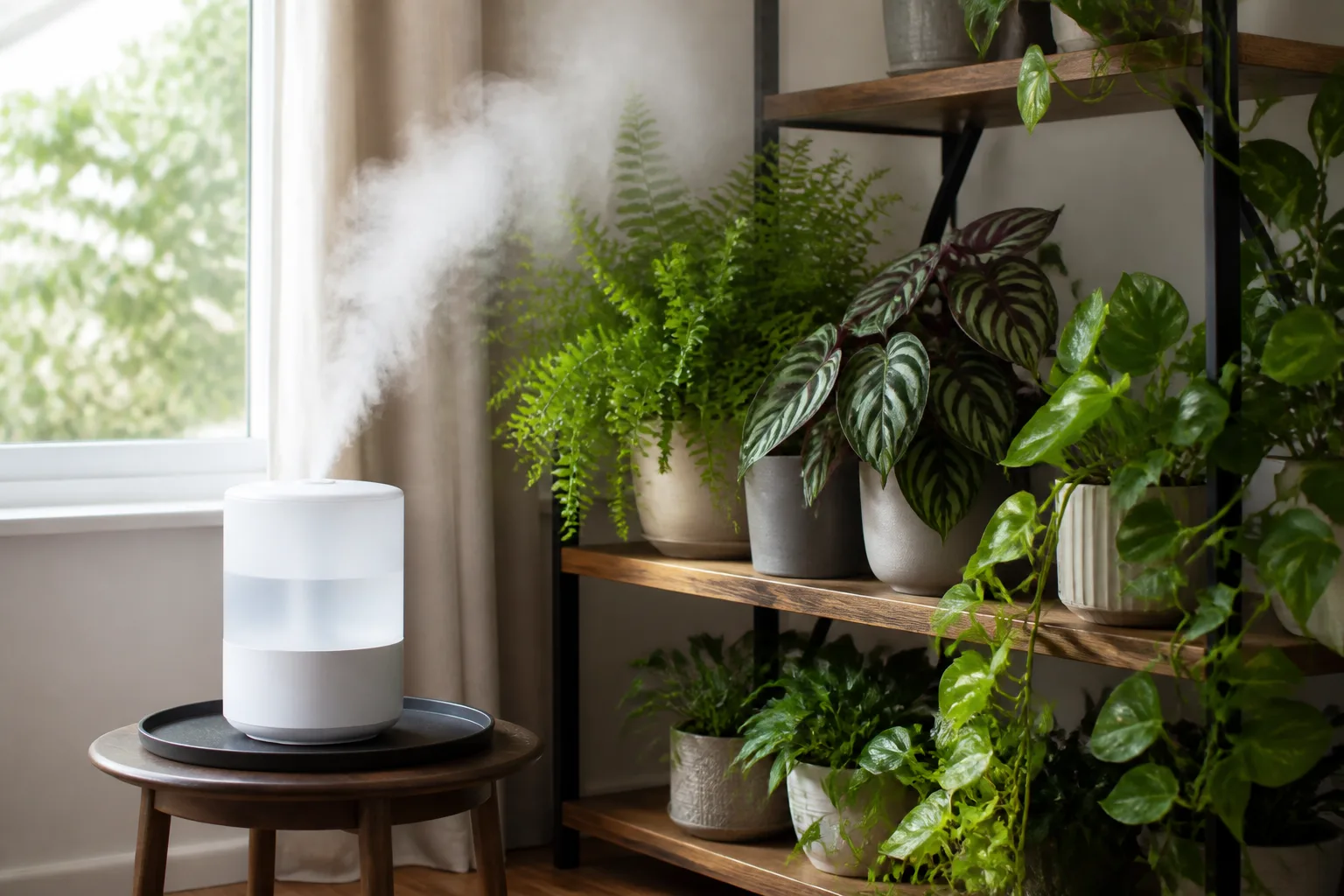
Buying a humidifier is the easy part. Placing it wrong is how you get wet calathea leaves, white mineral film on furniture, and a damp corner that smells like a basement. Distance, height, runtime, and cleaning decide whether you raise relative humidity (RH) around tropical foliage—or create a mold-friendly microclimate.
This page answers the setup questions after you already own a unit: how far to set it from plants, how long to run it, how to use a hygrometer, and how to avoid mineral dust and household mold risk. If you are still choosing between a tray and a machine, start with pebble tray vs humidifier. For meters, targets, and dry-winter strategy, use the houseplant humidity guide. If RH is already too high, use when houseplant humidity is too high.
Written by Sai Ananth; horticulture review by Dr. Priya Menon (botanist and indoor plant specialist).
Quick Placement Rules That Actually Work
Use these as starting heuristics, then verify with a meter and your eyes—there is no single lab-certified inch count for every model:
- Distance: Keep most portable units about 3–6 feet from the nearest foliage so mist disperses before it hits leaves. Small, low-output desk units can sit closer only if leaves stay dry. Large room units need more clearance.
- Aim: Point output toward open air near the plant group—not straight into crowns or soil.
- Height: Raise the unit roughly 2–4 feet off the floor on a stable table or stand so vapor mixes instead of pooling on carpet.
- Clearance: Leave open space around intakes and outlets; avoid jammed corners, curtains, and soft furnishings that stay damp.
- Target: Run to a measured RH band, not a random number of hours. For many indoor plants, University of Nebraska Extension prefers about 40–60% RH. For whole-home humidifier use, EPA guidance says not to push indoor RH above 50%.
- Stop signs: Condensation on windows or walls, wet leaves hours after mist passes, damp rugs under the unit, or a musty smell means move it, lower output, or shut it off.
- Water and cleaning: Prefer distilled or boiled-and-cooled water; empty daily; clean on a schedule. CDC and EPA both treat dirty tanks as a real exposure path for germs and minerals.
Pass / fail after one run: leaves dry at the nearest tip, plant-height RH moved toward your target, no damp carpet or wall sheen, and no musty smell. Fail any of those and fix placement before you buy a louder machine.
Why Placement Beats Buying a “Better” Humidifier
A strong humidifier in the wrong spot behaves like a fog machine aimed at one pot. A modest cool-mist unit placed for air mixing—with airflow through a plant cluster and a humidistat or hygrometer—usually outperforms a louder “plant humidifier” blasting leaves at six inches.
Penn State Extension notes that winter heating often drives indoor RH below comfort, and that ASHRAE’s indoor comfort band is roughly 30–60% RH. Portable humidifiers are one of the practical tools that can actually change room air, unlike misting that fades in minutes. Placement decides whether that moisture becomes an even humidity zone or a wet patch on one shelf.
Think in systems: unit output + distance + room volume + air movement + measured RH. Brand names do not override physics. RHS guidance also favors grouping plants so they share local moisture from foliage—your humidifier should feed that shared air volume, not one wet crown.
How Far Should a Humidifier Be From Houseplants?
What matters is the outcome: leaves dry, soil not constantly misted, room RH rises into your target. Grower and placement guides commonly land in a few feet of separation—often cited roughly 2–4 feet for mid-size units, 3–5 feet when you want full diffusion, or 4–6 feet for stronger room units—so vapor mixes before contact. Treat those numbers as consensus starting points you verify, not standards stamped on the machine.
Desk vs Medium vs High-Output Distance
| Unit class | Start distance from nearest leaf | Typical height | Runtime habit |
|---|---|---|---|
| Desk / personal cool-mist | 1.5–3 ft if plume is soft and leaves stay dry | Table height near cluster | Short cycles; watch wet spots |
| Medium room portable | 3–4 ft, centered on the group | 2–4 ft off floor | Run to plant-height RH, then idle |
| High-output / multi-room claims | 6+ ft to nearest foliage | Mid-room on a stand | Easy to overshoot overnight—use a humidistat |
Match distance to output. If you see wet spots on a desk unit, move it back a foot. If one corner is always wet and the opposite shelf never moves on the hygrometer, you do not need a bigger machine—you need a better spot or a second small unit for a second cluster.
Aim Mist at Air, Not Leaves
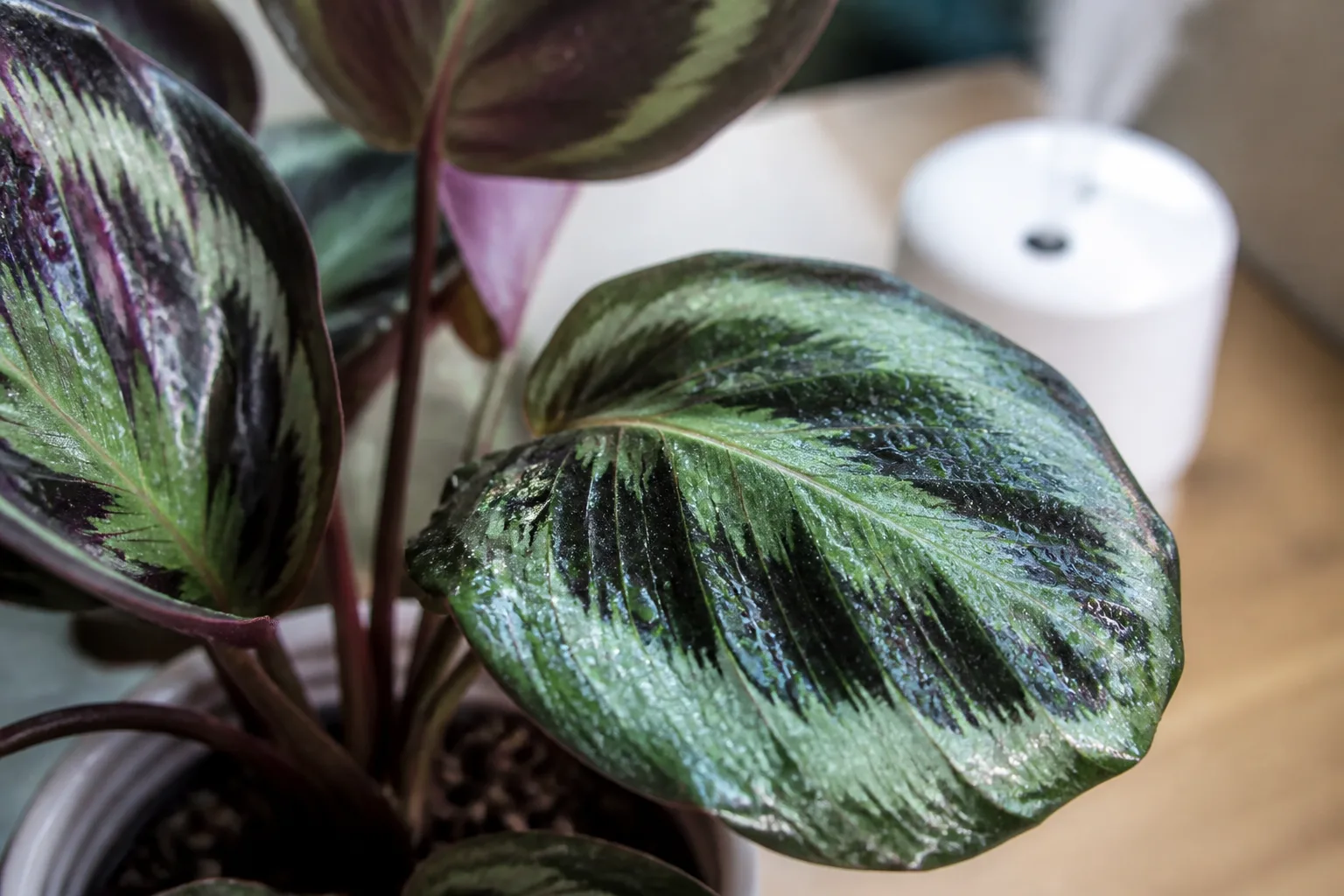
Direct mist on foliage is not “extra humidity.” It is leaf wetness, which is a different stress. Wet leaves in still air favor fungal spots and keep the pot surface damp longer than the plant needs. Fuzzy-leaf species and tight crowns (many calatheas, African violets) hate sitting in a plume. Aim across or above the group so moisture disperses into the room volume. A gentle fan on low, pointed past—not at—the plants, helps even out the zone without stripping humidity instantly.
Height, Clearance and What the Unit Sits On
Floor placement is a common fail. Cool floors encourage condensation; carpet blocks bottom intakes on some models; mist released at ankle height never reaches a mid-shelf tropical. A table, dresser, or plant stand at about 2–4 feet lets vapor rise and mix. Keep the unit below the ceiling with enough headroom that you are not staining paint or drywall with a constant plume.
EPA humidifier care guidance is blunt: do not let the area around the humidifier become damp or wet, and do not soak absorbent materials like carpeting or drapes. Put the unit on a non-porous tray or waterproof mat, not bare unfinished wood. Keep mist away from outlets, power strips, computers, and TVs. Pull the unit out of tight corners where air stagnates and mold risk rises. If you see water beading on nearby walls, frames, or window glass, relocate, lower the humidistat, or run intermittently.
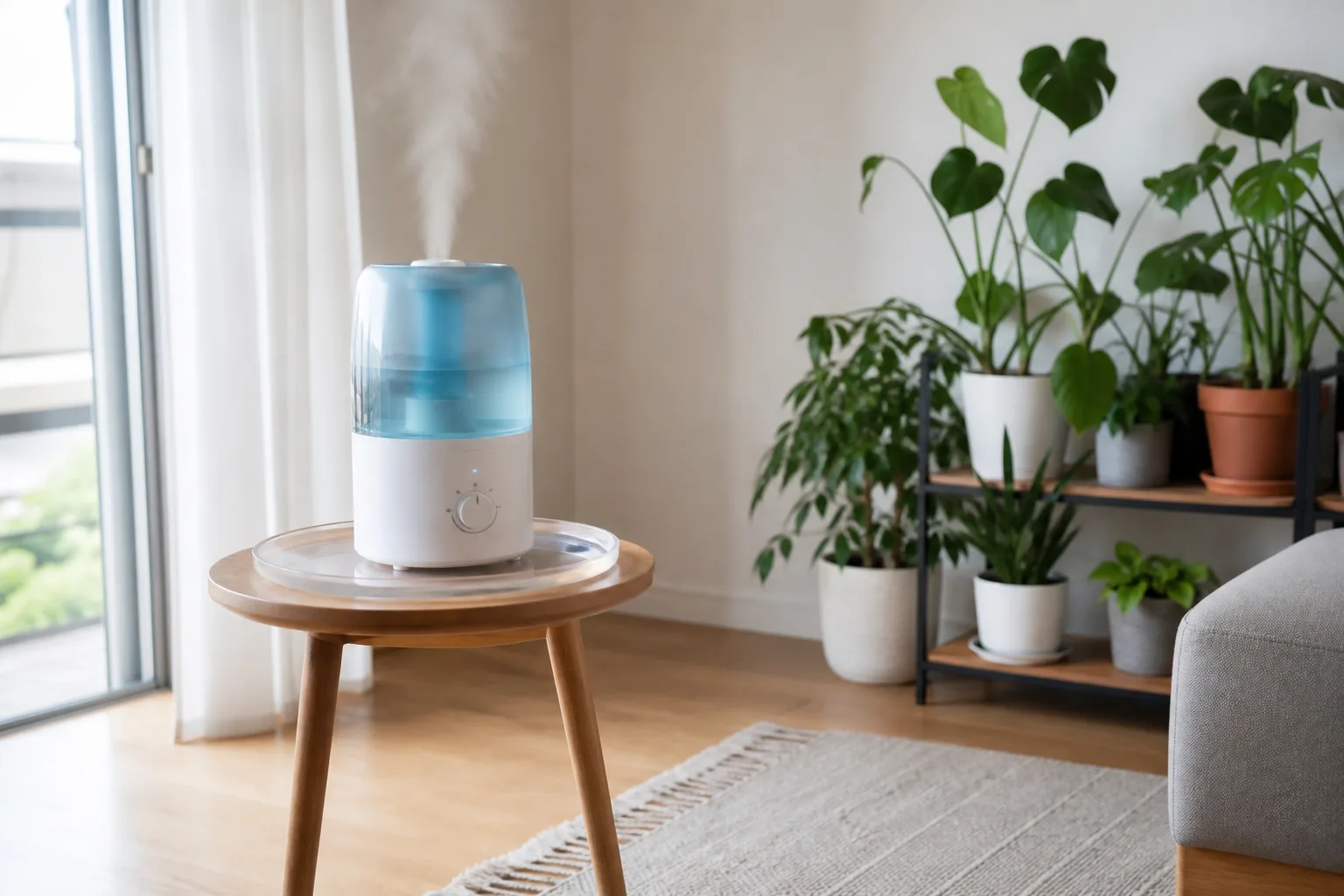
Warm-mist / steam units need extra burn and clearance caution around kids, pets, and tight plant shelves—cool-mist is usually the better neighbor for foliage clusters when you follow cleaning rules.
Runtime: Clock Hours Versus Hygrometer Targets
“Run 4–5 hours every morning” is a convenient blog default. It is not a care plan. Room size, outdoor weather, HVAC, door traffic, and plant load change the hours you need. The durable rule: measure, then run until you hit the band, then stop or idle.
Use a cheap digital hygrometer at plant height in the cluster—not only the reading on the humidifier’s built-in sensor if that sensor sits in the wet plume. Some units include a humidistat that shuts off at a setpoint; that feature is worth more than extra tank capacity for plant rooms. Size the machine to the room square footage on the label as a starting gate, then let placement and the meter finish the job.
Practical RH Bands for Plants and Homes
Hold two frames in your head at once:
- Plant preference: Nebraska Extension notes most houseplants prefer roughly 40–60% RH (succulents excepted), and that winter homes can fall under 20%, where leaf drying and curling show up. A portable humidity monitor is how you see those swings. Succulents and many desert-adapted plants do not need a dedicated plant-zone humidifier.
- Home humidifier ceiling: EPA’s use-and-care guidance for home humidifiers says not to humidify above 50% indoor RH, because higher levels can encourage biological growth in the home. Use a hygrometer; if water condenses on windows, walls, or pictures, relocate, lower the setting, or reduce use.
For tropicals that look best toward the upper plant band, prefer a localized plant zone (grouped pots + moderate output + airflow) over pushing the entire house past EPA’s caution line. When the whole room sits high and stays still, stop adding mist and diagnose overshoot instead of chasing rainforest numbers room-wide.
Start when plant-level RH is below your target (often below ~40% in heated winter rooms) and plants show dry-air stress—confirm patterns with signs your houseplants need more humidity before you blame every tip burn on dry air. Run daytime and early evening when you can watch condensation. Overnight continuous high output is where many sealed rooms overshoot because cooler night air holds less moisture before condensation appears. Stop or idle at target RH, at the first condensation, if leaves stay wet, or if soft furnishings feel damp. In already humid summers or monsoon climates, you may need the unit rarely—or not at all.
When the Built-In Sensor Lies
If the humidifier display says 60% RH while leaves are wet and a second meter at canopy height reads far lower (or higher elsewhere in the room), trust the plant-height hygrometer and your eyes. Built-in sensors often sit in or near the mist stream, so they report plume air, not the shelf your plants actually occupy. Move the unit, aim at open air, and log two meters once: canopy and opposite wall. That single comparison usually explains uneven “it never helps the far shelf” complaints.
Cool Mist, Ultrasonic Units and Mineral White Dust
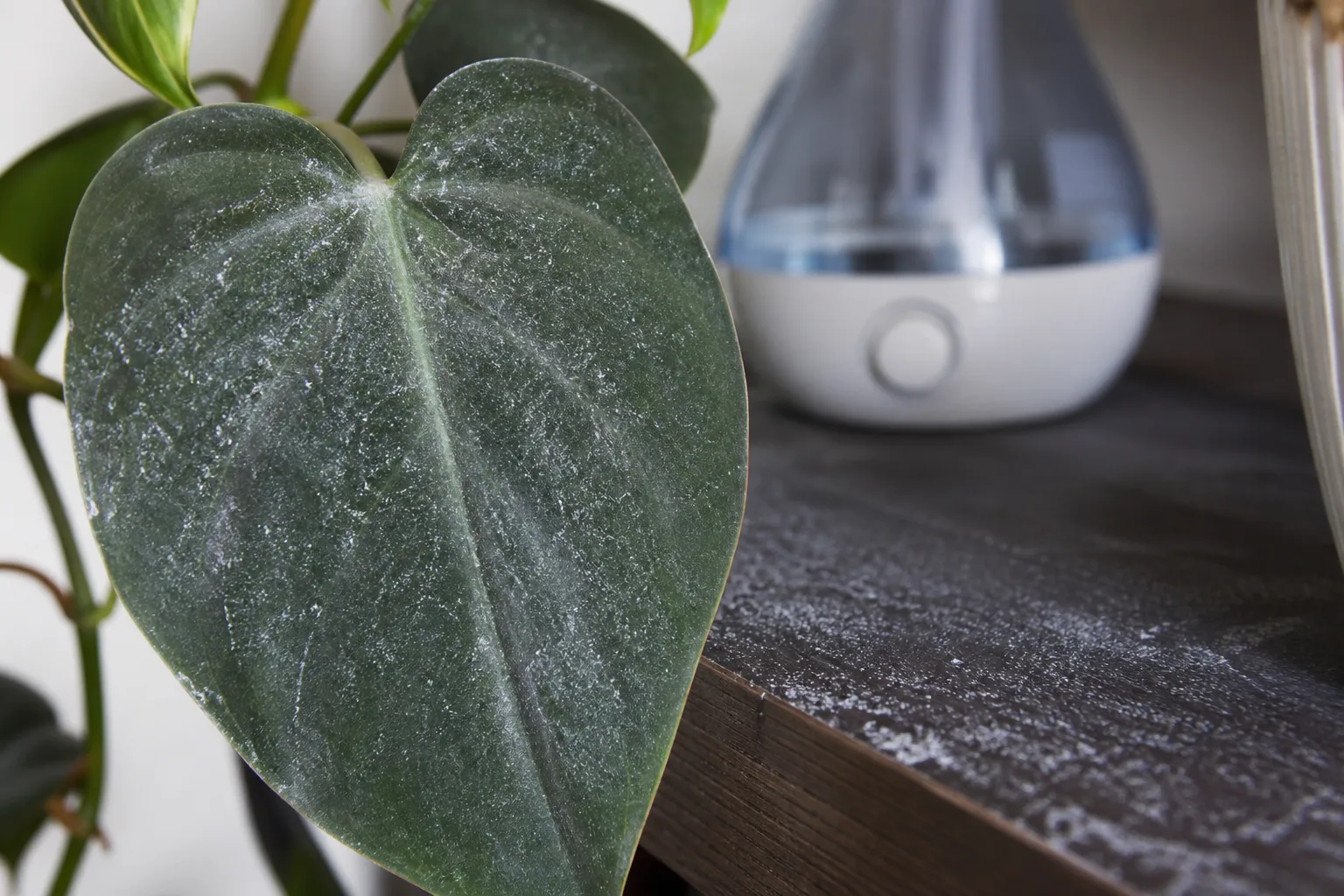
Cool-mist units (ultrasonic or impeller) are popular near plants because they do not dump hot steam on foliage. EPA’s Indoor Air Facts guidance notes that ultrasonic and impeller “cool mist” humidifiers can disperse microorganisms and minerals from tank water into indoor air. That mineral plume is the familiar white dust on leaves, shelves, and dark furniture—especially with hard tap water.
EPA has not concluded mineral dispersal is a proven serious health risk, but it does recommend low-mineral water to reduce dust and, more importantly, to slow scale that shelters microbes. Practical choices:
- Use bottled water labeled distilled (not “spring,” “mineral,” or “artesian”).
- Or use manufacturer demineralization cartridges—and watch for returning white dust as a failure signal.
- Evaporative and steam units disperse fewer minerals in EPA’s testing notes, but warm steam needs burn-safety clearance and is usually a worse neighbor for tight plant shelves.
CDC separately advises distilled or boiled-and-cooled water in portable humidifiers to reduce germ growth in the mist people and pets can breathe. That advice is about household health; it also keeps plant leaves cleaner. Do not confuse chalky mineral film with powdery mildew—film wipes off as dust; true mildew is a living patch that returns on living tissue.
Mold, Germs and Cleaning Safety Near Plants
Humidity that helps a fern can still be a problem for a wall, a carpet, or a closed bedroom. Excess moisture supports dust mites and molds in the home. Near pots, constant surface wetness plus stagnant air also invites mold on houseplant soil and foliar disease pressure. Placement and cleaning are how you keep the benefit without the basement smell. For household moisture and mold context, see the EPA mold moisture brief.
Keep cords and full tanks out of reach of curious pets and children. Never put cleaning chemicals in the tank to “run through” the unit—rinse thoroughly after any cleaner so you are not aerosolizing residues.
Daily Emptying and Regular Cleaning
CDC guidance for portable humidifiers: empty all water every day, clean per the manufacturer, and let parts air-dry. Prefer distilled or boiled-and-cooled water. EPA’s humidifier fact sheet aligns: empty and wipe dry daily; clean portable units about every third day (or follow your manual); scrub scale; rinse thoroughly after any cleaner or disinfectant.
Never store a unit with a wet tank. End-of-season: clean, dry completely, and store dry. If anyone in the home gets respiratory symptoms they link to humidifier use, stop and talk to a clinician—even if you think cleaning was adequate.
First-Hand Notes From Placement Tests
These are single-setup LeafyPixels editorial notes from a 12×14 ft (168 sq ft) bedroom in north-central Ohio during dry winter heat (door closed; forced-air on). They are not universal lab results—your room, unit, and water will differ. Baseline room RH before runs: 31% at canopy height. Device: calibrated digital hygrometer at canopy (~8 inches above the nearest pot).
Close-range fail (desk ultrasonic, ~18 inches): Aimed softly at a calathea group on low. Within 45 minutes, the nearest leaves beaded and the crown felt damp; canopy RH climbed to 49%, but leaf wetness failed the pass test. Moving the same unit back and angling across the aisle dried new mist contact within the next cycle.
Workable mid-distance (same unit, ~4 feet + low fan past the group): After 4 hours on low, canopy RH reached 46% (+15 points). A second meter on the opposite wall read 39% (+8). Leaves stayed dry. On medium for two more hours, canopy hit 52%—above EPA’s 50% whole-home caution—so we dialed back. Pattern matches the humidifier arm of our pebble tray vs humidifier log in the same room.
Mineral dust (hard tap vs distilled, five days): Same ultrasonic on a dark shelf with hard municipal tap left a wipeable white film on the shelf edge and a nearby philodendron leaf by day five. Switching to distilled for the next week stopped new dust; existing film wiped off and did not return as fuzzy patches (ruling out mildew misread).
Plume-sensor bias: With the unit’s humidistat probe in the mist path, the display sat near 58–62% while the canopy hygrometer read 44–47%. Trust the plant-height meter for runtime decisions.
Placement Setups That Work in Real Rooms
Plant Cluster Humidity Zone
Group compatible tropicals (calathea, maranta, ferns, many philodendrons) on one stand or shelf. Place the humidifier beside or slightly in front of the group, not buried behind pots, at mid-canopy height. Keep distance so no leaf sits in the plume. Add light air movement across the aisle. Read the hygrometer in the cluster and at the opposite side of the room once—you will see how local the benefit is.
This is usually smarter than humidifying an empty hallway “for the plants” two rooms away. If a machine still fails after good placement, budget options and grouping tricks live in best low-cost plant humidity solutions.
Shelves, Cabinets and Tight Corners
Open shelves work if mist can escape and dry. Closed cabinets and prop boxes need intentional venting; a full-size humidifier aimed into a sealed box is how you grow mold, not roots. Corners with poor circulation are the worst default location even if they “look tidy.” Pull the unit into the open volume of the room. Bathrooms can be humid after showers, but light and fan schedules vary—measure before you assume a bathroom replaces a humidifier.
Common Humidifier Placement Mistakes
- Aiming the nozzle into a plant crown “so it gets more.”
- Running continuous output overnight with no humidistat in a sealed room.
- Sitting the unit on carpet or a bare wood antique with no tray.
- Parking it against a wall or curtain that stays damp.
- Trusting the on-unit RH reading while the sensor sits in the mist stream.
- Using hard tap water in an ultrasonic and blaming powdery mildew for white mineral dust.
- Pushing whole-home RH well above 50% to chase rainforest numbers without airflow.
- Skipping daily empty/clean until the tank smells.
- Humidifying an empty hallway two rooms away from the plant shelf.
Related Guides
- Pebble tray vs humidifier — when a tray is enough and when a machine is the better tool
- Houseplant humidity guide — RH targets, grouping, and room strategy
- When houseplant humidity is too high — overshoot, stagnant air, and disease risk
- Mold on houseplant soil — surface mycelium after damp pots and still air
- Signs your houseplants need more humidity — dry-air symptoms before you buy hardware
- Best low-cost plant humidity solutions — budget alternatives when placement still underperforms
Conclusion: Placement Pass/Fail Checklist
Good humidifier placement for houseplants is a short checklist you can finish in one evening:
- Distance / aim: nearest leaves stay dry; mist hits open air, not crowns.
- Height / base: unit elevated ~2–4 ft on a waterproof tray; walls and rugs stay dry.
- Runtime: plant-height hygrometer drives on/off—not clock hours or a plume-biased display.
- RH band: plant zone toward mid-range preference without ignoring EPA’s caution against humidifying above 50% for the home.
- Water / cleaning: distilled or boiled-and-cooled water; empty daily; clean on schedule so you raise humidity without broadcasting tank gunk or mineral dust.
Place the machine for the air your plants share, then verify. If a pebble tray is enough for a small desk plant, stay there. If dry winter air is still winning after correct placement, fix distance and airflow before you buy a louder unit.