Bird Bath Placement Guide: Safety, Shade, and Access
Choose bird bath placement that balances shelter, open sightlines, shade, and easy cleaning. Learn how to reduce risks from cats, debris, and windows.
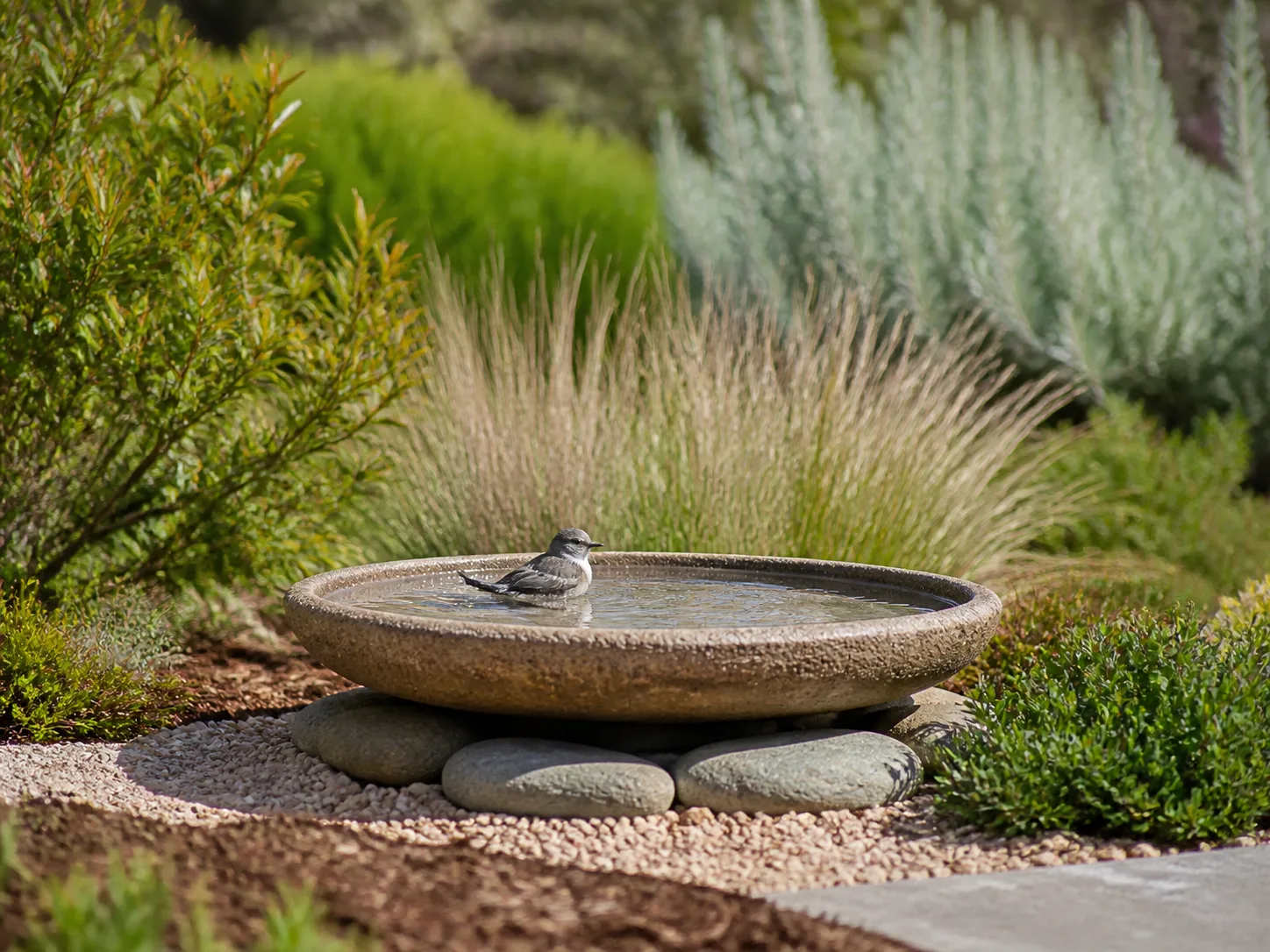
A bird bath works best when birds can spot it, approach without feeling trapped, and leave for cover after drinking or bathing. The ideal place is usually an open, stable patch with a clear view of nearby hiding places, some shade during the hottest part of the day, and enough room for you to refresh the water easily.
Start by looking at the yard from a bird’s point of view rather than choosing the prettiest corner. A bird may avoid a handsome basin tucked beneath dense shrubs, while a plain shallow dish in a safer, more visible spot can be used every day. The right placement also depends on whether the bath sits on the ground or on a pedestal, whether cats roam nearby, how much sun the yard gets, and whether a window sits in the birds’ flight path.
Start With the Bird’s Safety Needs
Think of placement as balancing four needs: a visible approach, an escape route, comfortable water, and reliable upkeep. Birds often pause to scan before entering a bath. If the basin is hidden behind a fence, thick foliage, or a large ornament, they may not discover it or may hesitate to land. Once they bathe, their feathers are wet and their movements less agile, so the route to a perch or cover matters too.
A useful starting point is a level spot where a bird can see across the bath and notice a cat approaching, with a tree or shrub close enough to offer a perch after bathing. Avoid setting the bath directly under the dense edge of that same shrub. The Cornell Lab of Ornithology recommends open ground between a bath and nearby thick shrubbery so birds can see prowling cats, while Penn State Extension notes that nearby branches can provide a quick retreat from aerial predators. Taken together, those points favor a clear approach with reachable cover, not a basin buried in foliage.
Then check the human side of the setup. Can you see the basin from a regular window or path without walking through the birds’ approach? Can you reach it with a hose, empty it safely, and keep children or pets from knocking it over? A location that is attractive but difficult to clean tends to become neglected, and stale, dirty water is less useful than a simpler bath that is maintained.
Choose Ground-Level or Raised Placement
The bath’s height changes the visitors and the risks, so choose the vessel before you settle on a final spot. A ground-level basin resembles puddles and shallow pools that birds encounter naturally. A raised pedestal or hanging bath is easier to see from parts of the yard and may be more practical where cats, dogs, or foot traffic make a ground dish difficult to protect.
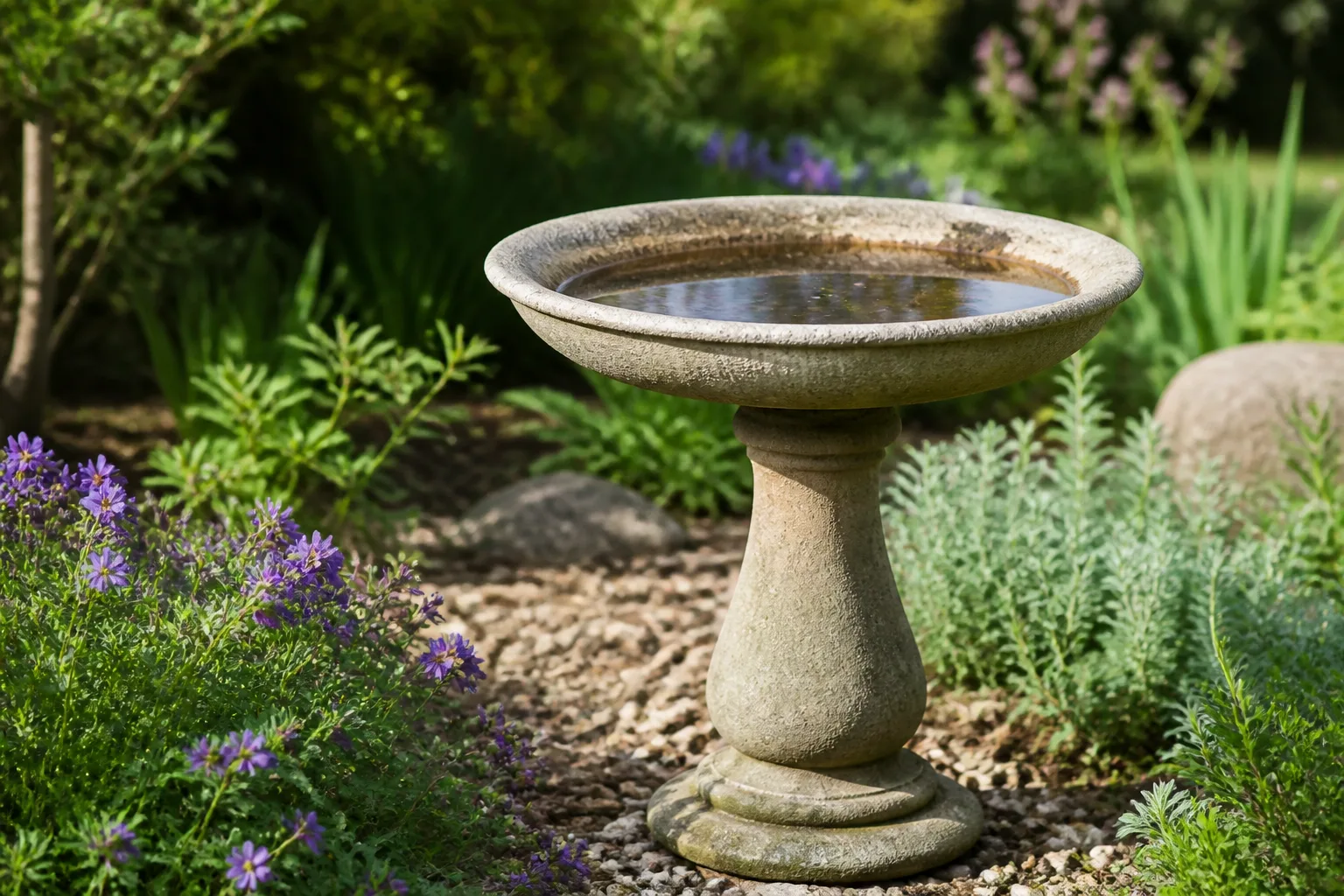
Ground-level baths
Ground baths can attract species that are less likely to use a feeder-height bath, and they may also be visited by other wildlife. The Cornell Lab’s birdbath guidance describes ground-level water as a natural fit for birds, while Penn State Extension reports that feeder-using backyard birds commonly use elevated baths and that adding a ground bath can broaden the range of visitors. These are complementary options rather than competing rules: if your goal is variety and you have room, two baths at different heights can serve different birds.
Choose a ground bath only where birds have a clear view of the surrounding lawn or paving and there is no close cat ambush point. A shallow, wide basin placed on firm, level ground is easier to use and less likely to tip than a bowl sitting in long grass or loose mulch. It is also closer to children, pets, and wildlife such as squirrels, so think about how you will keep the water clean and prevent the vessel from being disturbed. If cats regularly hunt in the yard, a raised bath or a different location with more open ground may be the safer choice.
Pedestal and hanging baths
A pedestal raises the water above some ground-level hazards and makes the bath easier for people to inspect, but height alone does not make it safe. A wobbly pedestal can spill, and a bath wedged against a shrub still gives a stalking cat a concealed route. Place a pedestal on a broad, level base such as stable paving or compacted ground; test it with a gentle push before filling it, and make sure it will not rock when a bird lands on the rim.
A hanging basin can suit a small garden when a branch or bracket offers solid support, but it may swing in wind. Birds usually need a steady landing surface, so hang it where it moves only slightly and where the water cannot spill onto a frequently used path or deck. For any elevated bath, consider the birds you hope to attract and the size of the landing rim, not just the height that looks attractive from indoors.
Set a Useful Distance From Cover
Birds need cover nearby, but “nearby” should not mean a dense shrub touching the basin. A useful arrangement gives them a perch or retreat while leaving enough open space for them to notice a predator approaching. A low branch a short flight away can be helpful for resting and preening; a thick hedge immediately behind a ground bath can hide a cat until it is too late.
There is no single safe distance for every yard because a ground bowl, a tall pedestal, an open lawn, and a narrow courtyard create different sightlines. Penn State Extension gives a practical reference for ground-level baths where cats are a concern: position the bath about 10 to 15 feet from the nearest hiding spot, so birds can see an approaching predator. Gardening Know How offers a shorter 6-to-10-foot buffer; these editorial ranges are useful starting points, not universal measurements established for every yard. In a yard with no roaming cats, dense cover farther away may be useful shelter; in a yard where cats use the border as a hunting route, more open ground or a raised bath may be wiser.
Walk the likely approach route from the shrub line toward the water. If foliage blocks the view of the basin or leaves a sheltered launch point next to it, move the bath outward or trim only enough to open the sightline. Do not remove all shrubs and trees: birds still need places to perch and hide after bathing. The goal is a visible landing zone between the water and cover, with an unobstructed escape route rather than a bare, exposed lawn.
Choose Sun and Shade for Your Climate
For many yards, partial shade is the easiest starting point. Afternoon shade slows water heating and evaporation during hot weather, while a little morning sun can make a cool basin more inviting. Penn State Extension advises a shady location to limit summer overheating and algae, and Cornell Lab suggests shade during hot months. If your garden has no naturally shaded spot, choose a location that gets morning light and shade later, or use a nearby structure to cast shade without hiding the basin.
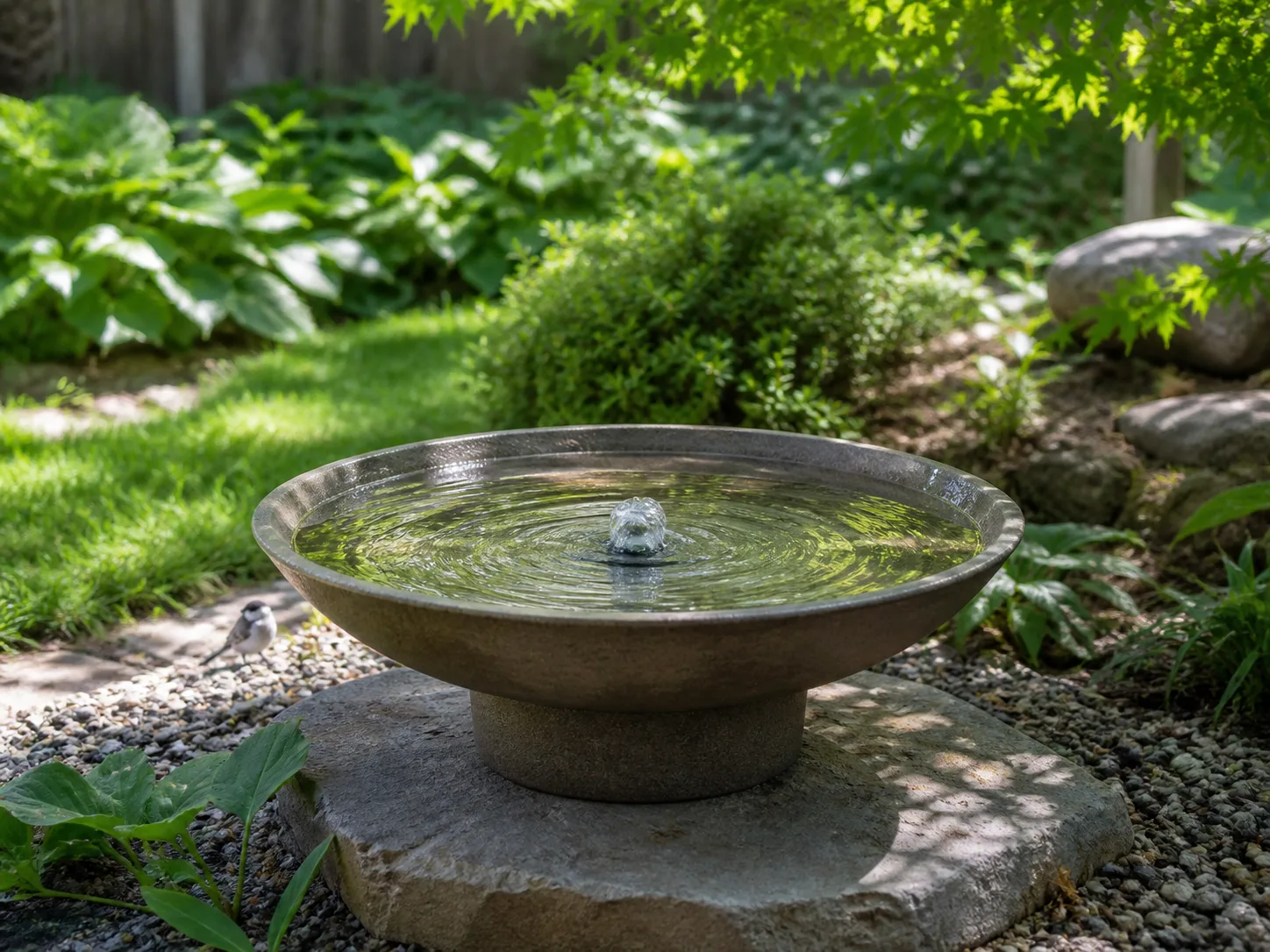
In a cool or windy region, you may prefer more sun outside the hottest season because it can reduce how quickly the bath chills or freezes. Do not assume that direct sun is always better, though. A shallow basin in full midday sun can warm and lose water quickly in hot weather, making it harder to keep fresh. Shade is especially useful in climates with long hot summers; in cooler climates, weigh the sun exposure against refilling frequency, local freezing, and how much the basin is sheltered from wind.
Watch the actual water rather than relying on the yard’s overall exposure. Note when direct sun reaches the basin, whether water disappears quickly, and whether algae or debris builds up faster than you can clean it. If water warms or evaporates too fast, shift the bath into dappled shade. If it stays cold and unused on a shaded winter patio, try a sunnier spot for the season, while keeping a clear route to safety and avoiding a place under heavy leaf fall.
Reduce Window-Collision Risk
A bird bath placed close to glass may seem ideal for watching, but the glass can reflect sky and vegetation or look like a route through to a garden beyond. A bird startled from the water can fly straight toward a reflective pane. American Bird Conservancy specifically flags windows across from bird baths as windows to treat, and Audubon describes two safer placement zones for bird attractants: within 3 feet of a window, where birds have little room to build up speed, or more than 30 feet away, where they have room to clear the building. Avoid the middle range when you can, especially if the window reflects trees or open sky.
Those distances are not a substitute for making hazardous glass visible. If the bath must sit across from a window, add an exterior screen or a closely spaced, bird-visible pattern to the outside of the pane; a lone decal is not enough. American Bird Conservancy recommends patterns with spaces no larger than about 2 inches to reduce the chance that small birds will try to fly through the gaps. Treat the window most likely to reflect the bath or surrounding greenery, and check the area below it for feathers or other signs of a collision.
Also consider the bath’s relationship to patio doors, glass railings, and corner windows, not only the nearest bedroom window. A clear reflection can appear at one time of day and disappear at another, so inspect the windows in morning and afternoon light. If you are choosing between a spot beside a window and one farther across the yard, prioritize a safe flight path and use window treatment if the glass is still reflective.
Avoid Feeders, Falling Leaves, and Runoff
Do not place a bath directly below a bird feeder. Seed hulls, spilled food, and droppings can dirty the water quickly, and Penn State Extension explicitly advises against positioning the bath under feeders. If the feeder is already established, move the bath to a separate area rather than trying to clean it constantly. Keep enough separation that wind-blown husks and the busy landing area do not spill into the water.
A tree canopy can give useful shade, but an overhanging branch may also drop leaves, berries, flower petals, or bird droppings into the basin. Choose the edge of a canopy rather than the spot directly beneath a heavy-shedding tree, and be especially cautious near fruiting branches or a tree used as a perch by large flocks. The right location depends on what falls from that particular tree and how often you can remove it.
Avoid low places where rainwater carries soil, lawn clippings, or runoff into the bath. A basin at the bottom of a slope may collect sediment after storms, while one beside a downspout may overflow or fill with roof debris. A firm, slightly raised surface beside a garden bed can be easier to keep clean than soft soil, but do not let bath water run into a spot where it creates a slippery walkway or erodes the bed.
Make the Bath Easy to Maintain and Observe
Put the bath somewhere you can reach with a hose or a bucket without crossing a muddy bed or moving heavy furniture. A nearby water source makes it easier to top up evaporation and replace dirty water; access matters even more in hot weather, when shallow water can disappear quickly. Keep a clear path for scrubbing, tipping out the basin, and carrying the brush or hose back and forth. Penn State Extension recommends daily water changes and weekly scrubbing with a brush, mild soap, and water; the RHS also advises fresh water daily and a thorough weekly clean.
A bath that can be seen from indoors is pleasant, but the viewing position should not force you to stand close to the approach route every time a bird arrives. Place the basin where you can watch from a window or a quiet seat without startling visitors. If birds scatter whenever someone uses the nearby door, shift the bath a little farther from that traffic while preserving the sightline and retreat cover.
Make sure the basin and its support stay level after rain and after you refill it. Uneven water depth can leave one side too deep, and a loose stand can wobble when a bird lands. Cornell Lab gives a useful depth benchmark: no more than about 1 inch at the edges, sloping to 2 inches in the middle; Penn State Extension allows up to 2 or 3 inches at the deepest point. When in doubt, keep the water shallower and add a few stable stones or branches as footholds, avoiding rocks that can roll or create a sharp rim.
Adjust for Cats, Dogs, and Children
If cats roam the yard, assess the ground around the bath as carefully as the bath itself. A dense shrub, fence corner, bench, or stack of pots can conceal a cat close enough to pounce. Choose a ground bath only where birds have open sightlines and enough distance from hiding cover; if the yard has no such place, use a stable raised bath or protect the area from cats rather than placing a ground dish in a concealed corner. Cornell Lab recommends keeping pet cats indoors and leaving open ground between a birdbath and thick shrubbery where neighborhood cats may hunt.
Dogs and young children create a different issue: they can disturb birds or knock the bath over, and the basin may collect dirt when paws or play equipment enter it. Set the bath outside the usual running path, away from gates and ball-play areas, and use a heavy pedestal or a secured ground basin that cannot slide. Keep it visible to supervising adults without making it so accessible that children can lean on the stand or spill the water.
If you have a small, enclosed yard, do not assume there is no safe solution. A wall-mounted or railing-mounted dish may help, provided its bracket is secure and it does not create a fall or spill hazard. You can also place a lightweight ground-level bowl only when you can supervise pets and refresh the water often. In a shared or rental space, check building rules before attaching anything to a balcony or fence.
Adapt the Spot to Your Yard and Bath Design
A bird bath can work in a lawn, a garden border, a courtyard, or a patio as long as the basin is stable and birds can approach and leave safely. A lawn gives a broad view but may be hot and exposed; a border can provide shade and nearby perches but needs a clear open pocket around the water. Think of the bath as a small open landing area connected to shelter, not as an ornament that must sit at the center of a planting bed.
Small yards, patios, and balconies
In a compact yard, one good bath may be better than trying to meet every placement ideal at once. Put it where birds can see the water from an approach perch, then avoid a corner screened by dense pots or a tall fence. If the only useful location is beside a window, follow the close-or-far window guidance and make the glass visible to birds. A shallow dish on a stable, wide stand can fit a patio; choose a position that does not send splashes onto electrical equipment, doors, or a slippery walking surface.
On a balcony, use a secure, level surface and keep the basin well inside the railing rather than balancing it on an edge. Consider wind exposure, water spilling onto neighbors below, and how you will clean and refill it. A shallow tray that can be lifted and emptied safely is often more practical than a heavy ornamental bath in a space with limited hose access.
If birds have no nearby trees or shrubs, a small perch or a potted shrub placed well away from the basin can provide a landing point without creating a hidden approach. Keep the perch stable and leave enough open space around the water for birds to see what is approaching.
Fountains, drippers, and heated baths
Moving water can help birds notice a bath by sound and motion. Cornell Lab describes a simple drip as one way to make a bath more attractive, and Penn State Extension notes that drippers and misters can encourage visits. A fountain or dripper still needs a stable basin, regular cleaning, and a placement where cords or hoses will not cross a walkway. For a solar fountain, the panel needs suitable sunlight; for a plug-in pump, use outdoor-rated equipment and a ground-fault circuit interrupter, and keep electrical connections away from splashing water.
A heated bath or immersion heater needs a safe, accessible power source and enough clearance to clean around the basin. Place it where the cord can be routed without creating a trip hazard and where you can check the unit routinely. Cornell Lab cautions against adding antifreeze or glycerin to birdbath water; both can harm birds. If heating is impractical, a bowl of fresh water offered on a regular schedule and brought in when it freezes can be a simpler winter option.
Revisit Placement as the Seasons Change
The best spot can change as foliage grows, trees lose leaves, and the sun moves lower in the sky. A bath that sits in pleasant shade in July may become cold and exposed in winter; a spot that is open in spring may be screened by dense summer growth. Check the sightline from the basin to the nearest cover at least once each season, and clear fallen leaves or branches before they accumulate in the water.
In hot weather, prioritize shade, frequent refilling, and a basin you can reach daily. During freezing weather, decide whether you will use a heated bath, set out water temporarily, or stop offering it until conditions improve. Birds can often obtain water from other sources in winter, so a frozen basin is not an emergency; if you do provide heated water, follow the heater instructions and use safe electrical protection. The RHS recommends keeping clean water available year-round, while Cornell Lab notes that keeping a birdbath ice-free is not essential for birds to survive.
After storms, check that the pedestal has not shifted, the bath has not filled with soil, and the water has not overflowed onto a path. At the start of nesting season, make sure the bath does not sit where people or pets repeatedly pass close to it. Small seasonal adjustments can preserve the same core design: a visible basin, open approach, nearby retreat, and water that is easy to maintain.
Use This Quick Placement Checklist
Before filling the bath, stand at the basin and check the site in order. This turns a general idea into a practical decision you can repeat if the first location does not work.
- Can birds see it? Check that shrubs, fences, and garden ornaments do not hide the water from the approach side.
- Can they see danger? Look for cat hiding places, especially next to a ground-level bath, and keep open ground between cover and water.
- Is shelter reachable? Identify a perch or branch nearby without placing the basin directly under dense foliage.
- Is the water comfortable? Prefer partial shade in hot climates, and avoid a location where direct afternoon sun makes the water warm or evaporate quickly.
- Is glass a hazard? Check patio doors and reflective windows; place the bath in a safer distance zone or treat the glass.
- Will debris fall in? Avoid feeder spill zones, heavy-shedding branches, and runoff paths.
- Can you maintain it? Make sure a hose or bucket can reach the basin and that you can clean it without trampling plants or creating a trip hazard.
- Is the stand stable? Test the filled basin for wobble and make sure the surface stays level after rain.
If the site fails only one check, decide whether you can fix that problem directly. A small shade adjustment or a screen on a reflective window may solve the issue; a cat ambush point or an unstable balcony edge may mean choosing another location is safer. You do not need a perfect garden to offer birds water, but the bath should not depend on luck to stay clean and secure.
What to Change if Birds Avoid the Bath
Give a new bath time to be noticed, but do not wait indefinitely if the site has obvious problems. First confirm that the water is fresh, the basin is shallow enough for birds to wade, and the surface offers secure footing. Cornell Lab recommends shallow water with a gently sloping edge; Penn State Extension notes that birds avoid slippery surfaces and use shallow baths. A few stable stones can provide footing, but do not use sharp or loose pieces that can tip.
Then observe the yard quietly at different times of day. If birds approach but turn away, the bath may be too exposed, too close to dense cover, too deep, or too active with people and pets. Move it a few feet to improve a sightline or make the approach less exposed. If birds never seem to notice it, add a safe perch in view or a gentle drip, which can make the water easier to detect without turning the bath into a noisy fountain. Gardening Know How also highlights dense shrubs, hot full sun, and window proximity as common placement problems.
Change one factor at a time and keep the rest steady for several days so you can tell what helped. A bath that is too sunny may need afternoon shade; one filled with leaves needs a better relationship to trees; one used by cats needs more open ground or a higher position. If the water stays clean and the location is safe but visits remain occasional, the surrounding habitat may offer few cover or food resources. A bath can help, but it cannot replace the shelter and natural habitat that birds need in the rest of the yard.
Conclusion
Place a bird bath where birds can see the water and notice danger, reach a perch or shelter after bathing, and leave without flying into glass or through a cat’s hiding spot. Then choose a surface and height that suit the yard, provide shade when heat is a concern, and keep the basin easy to refill and clean.
The strongest location is the one that works for birds and for the routine you can maintain. Start with an open, stable spot, use the checklist to catch hazards, and adjust based on what you observe through the seasons. A safe, fresh bath in a modest location is more useful than a decorative basin that is difficult to reach or risky to visit.