20 Houseplants Toxic to Cats: Safety Guide
Cats chew plants. Some bites cause kidney failure in days. See which 20 houseplants are toxic to cats, what to do after exposure, and what to grow instead.
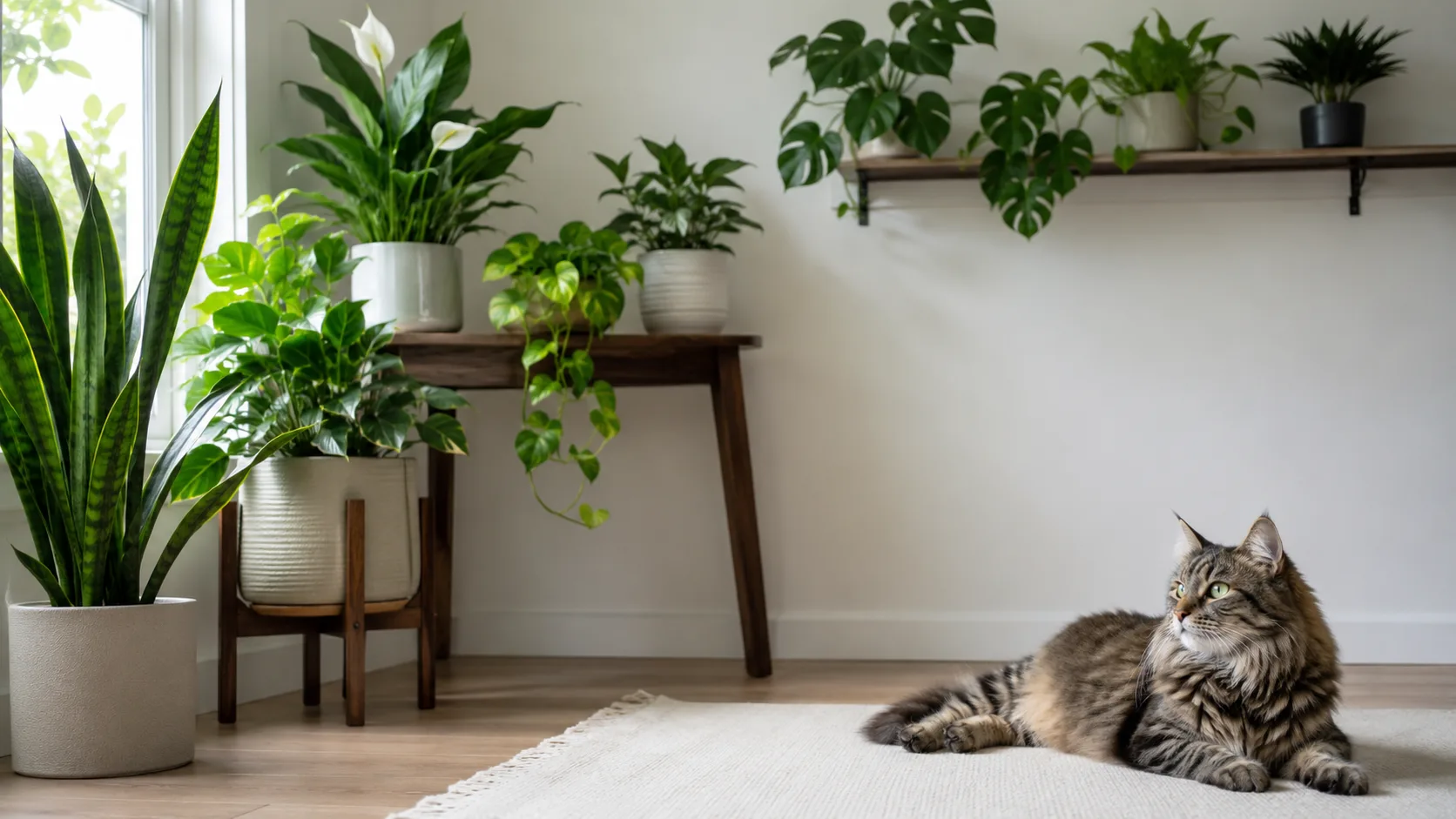
A cat who treats your fiddle-leaf fig like a salad bar is not being dramatic for sport. Cats explore with their mouths, bat dangling leaves, and—according to research published in Animals—sometimes deliberately eat greenery when they feel unwell to trigger vomiting. That behavior turns a trendy houseplant collection into a safety audit. The twenty plants below are among the most common offenders in U.S. homes, and they are not equally dangerous. Your job is not to memorize Latin names—it is to know which plants belong in a cat-free room, which ones need elevated placement, and which exposures require an emergency call before symptoms even appear.
How Cat Plant Toxicity Actually Works
When gardeners say a plant is toxic, they mean it contains naturally occurring compounds that can injure an animal if eaten, chewed, or—in some cases—if sap contacts skin or eyes. Toxicity is dose-dependent: a nibble of pothos usually causes oral pain and vomiting, while a few bites of Easter lily can destroy kidney function in a cat within days. The Merck Veterinary Manual groups houseplant poisonings by chemical class—insoluble oxalates, cardiac glycosides, saponins, and others—because the first aid and prognosis depend on the toxin, not the common name.
Cats are not small dogs. They lack certain liver enzymes that help other species process plant chemicals, and they are uniquely vulnerable to true lily nephrotoxicity. Identification matters: two plants both called “lily” can have completely different risk profiles. When in doubt, photograph the plant and check the scientific name against the ASPCA toxic plant database before assuming your bouquet is safe.
Severity Tiers — Which Plants Matter Most
Not every toxic plant deserves the same panic level. Grouping by severity helps you decide whether to rehome a plant, relocate it, or simply stop buying new ones in that category.
Tier 1: Kidney and cardiac emergencies
Treat any confirmed or suspected exposure as veterinary emergency:
- True lilies (Lilium spp.) and daylilies (Hemerocallis spp.) — kidney failure risk
- Sago palm (Cycas revoluta) — liver failure; high mortality even with treatment
- Oleander (Nerium oleander) and yellow oleander — cardiac glycosides
- Yew (Taxus spp.) — taxine; rapid collapse possible
- Lily of the valley (Convallaria majalis) — cardiotoxic cardenolides
- Kalanchoe (Kalanchoe spp.) — bufadienolides affecting heart rhythm
If you own a cat, Tier 1 plants should not live in your home, garage, or patio pot collection—period. “Out of reach” is not a plan for climbers, fallen petals, or pollen on a windowsill.
Tier 2: Painful mouth and GI upset
These plants cause immediate oral burning, drooling, vomiting, or diarrhea. Most cats recover with supportive care, but large ingestions or laryngeal swelling can become serious:
- Peace lily, pothos, monstera, dieffenbachia, bird of paradise (calcium oxalate crystals)
- Aloe vera, snake plant, English ivy, jade plant (saponins and related irritants)
- Tulips, daffodils, hyacinth (bulb alkaloids—bulbs are the worst part)
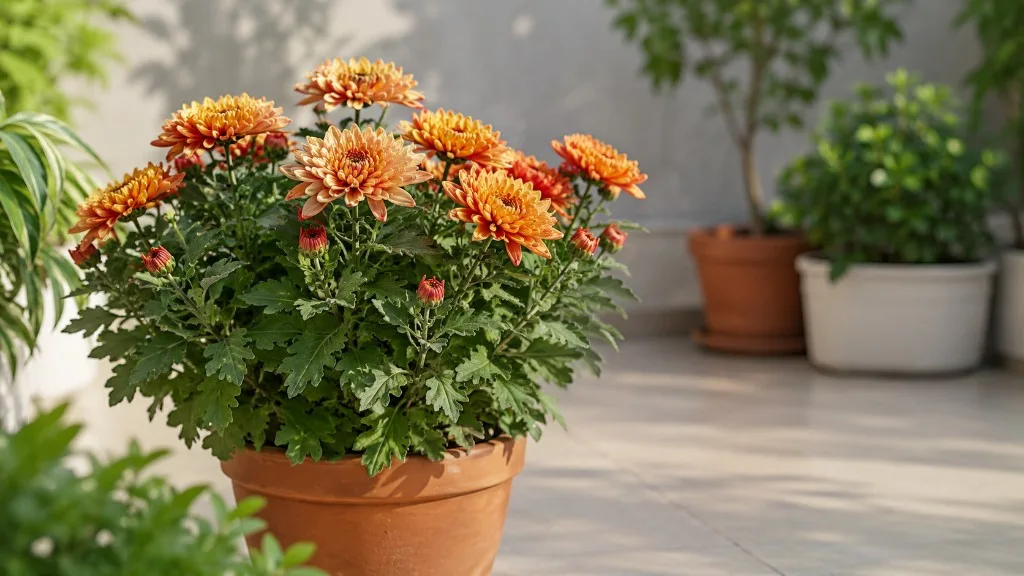
- Chrysanthemum (irritants plus pyrethrin concern)
Tier 3: Mild irritants worth knowing
Poinsettia (Euphorbia pulcherrima) causes mouth and stomach irritation but is far less dangerous than decades of holiday warnings suggested. Still worth avoiding—not because every cat will die, but because vomiting and skin sap reactions are miserable and unnecessary.
Emergency Symptoms That Need a Vet Now
Symptoms vary by plant, but call your veterinarian, an emergency clinic, or ASPCA Animal Poison Control at (888) 426-4435 (fee applies) if you see any of the following after plant contact or ingestion:
- Repeated vomiting or inability to keep water down
- Profuse drooling or pawing at the mouth with vocalizing
- Difficulty breathing or swallowing (possible airway swelling)
- Tremors, seizures, or loss of coordination
- Bloody diarrhea or extreme lethargy
- Irregular, racing, or very slow heartbeat
- Pale gums, weakness, or collapse
Kidney injury from lilies may start with vomiting and quiet withdrawal, then progress to increased thirst, decreased urination, and finally anuria within 24–72 hours. Do not wait for the late signs. The FDA warns that the entire lily plant—including pollen and vase water—is hazardous to cats, and kidney damage can develop in less than three days without prompt treatment.
First-Hour Action Plan After Plant Exposure
Do this immediately:
- Remove your cat from the plant and isolate any chewed material, vomit, and the plant itself for identification.
- Call a professional—your vet, emergency clinic, ASPCA Poison Control, or Pet Poison Helpline at (855) 764-7661. Have the plant name, amount eaten, and your cat’s weight ready.
- Follow their instructions exactly. Do not induce vomiting unless specifically directed; some caustic plants cause more damage coming back up.
Do not:
- Wait to see if your cat “seems fine” after lily, sago, oleander, yew, or lily-of-the-valley exposure.
- Give milk, oils, or home remedies unless poison control advises it. For insoluble oxalate plants, small amounts of yogurt or milk may be recommended to bind crystals in the mouth—but only after professional guidance.
- Assume indoor plants are safer than garden ones. Forced hyacinth bulbs on a kitchen counter are still bulbs.
Bring a photo or cutting of the plant to the clinic. Scientific names prevent dangerous mix-ups between look-alikes.
True Lilies and Daylilies — Zero Tolerance in Cat Homes
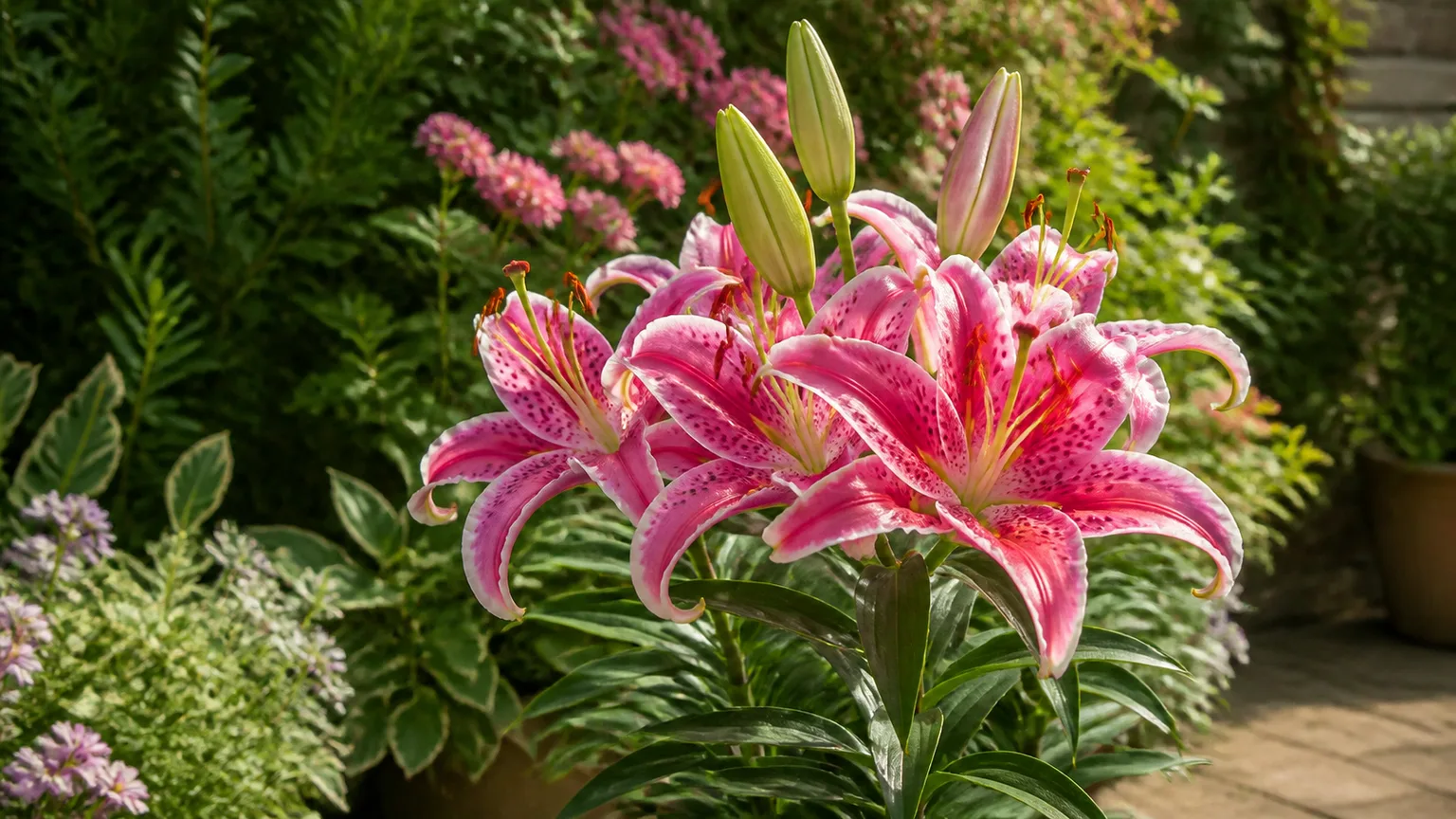
True lilies in the genera Lilium and Hemerocallis are the single most important exclusion for cat households. Easter lilies, stargazer lilies, tiger lilies, Asiatic and Oriental hybrids, and daylilies all belong here. The toxic mechanism targets renal tubular cells; untreated exposure commonly leads to acute kidney failure. Merck Veterinary Manual notes that early decontamination and 48–72 hours of aggressive IV fluids offer the best chance of recovery—delay until anuria appears sharply worsens prognosis.
This is where name confusion kills. Peace lilies (Spathiphyllum), calla lilies (Zantedeschia), and Peruvian lilies (Alstroemeria) are not true lilies and do not cause the same kidney syndrome—though peace lilies and callas still hurt mouths and stomachs. If a florist says “lily,” ask which Lilium or whether it is a different genus entirely. When a cat shares your home, refuse ambiguous bouquets.
Safer swap: Phalaenopsis orchids for elegant white blooms, or keep flowers in a closed room your cat never enters.
Sago Palm — Small Bite, High Stakes
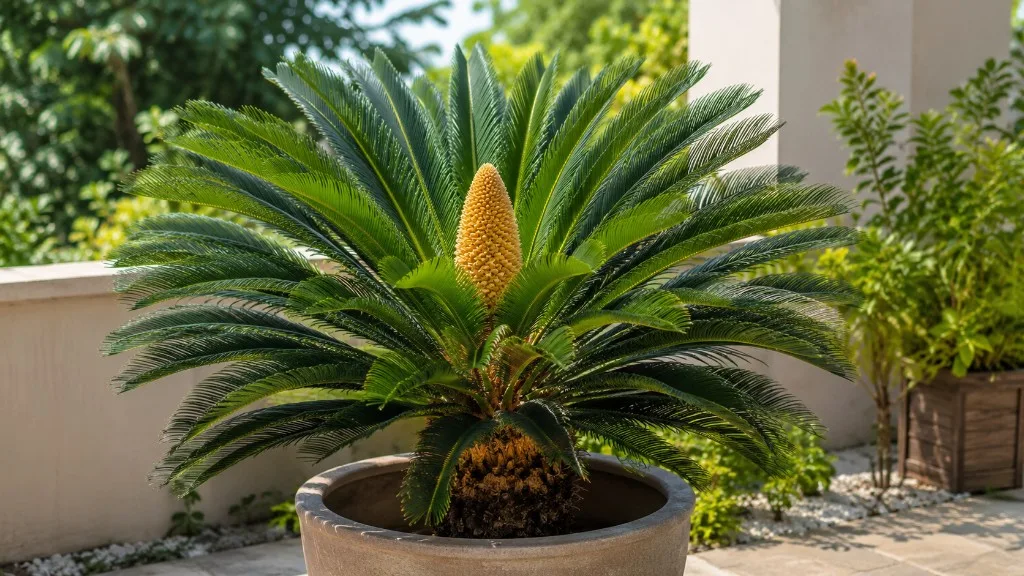
Sago palm is not a palm at all—it is a cycad (Cycas revoluta), and every part contains cycasin, which causes severe liver damage in cats and dogs. Seeds are the most concentrated, but leaves tempt chewers too. ASPCA and veterinary toxicologists classify sago as among the deadliest common ornamentals; survival often requires days of hospitalization even after small ingestions.
Mini sago “bonsai” versions sit on desks and coffee tables exactly at cat height. If you love the silhouette, swap to areca palm (Dypsis lutescens), which ASPCA lists as non-toxic to cats—verify the ID, because other palm look-alikes are not interchangeable.
Oleander, Yew, and Lily of the Valley
These outdoor ornamentals sneak indoors as potted specimens, wreath greenery, or bonsai.
Oleander contains cardiac glycosides similar to digoxin. Cats may vomit, become weak, and develop dangerous arrhythmias within hours. Yew (Taxus) needles and seeds carry taxine; sudden death without dramatic warning has been documented in multiple species. Lily of the valley is a shade groundcover with sweet bells—and cardenolides that disrupt heart rhythm.
None belong in a home with cats, on a balcony cats access, or in floral arrangements cats can reach. Juniper and rosemary give structure without glycoside risk if you need evergreen texture—confirm pet status on any substitute.
Spring Bulbs: Tulips, Daffodils, and Hyacinth
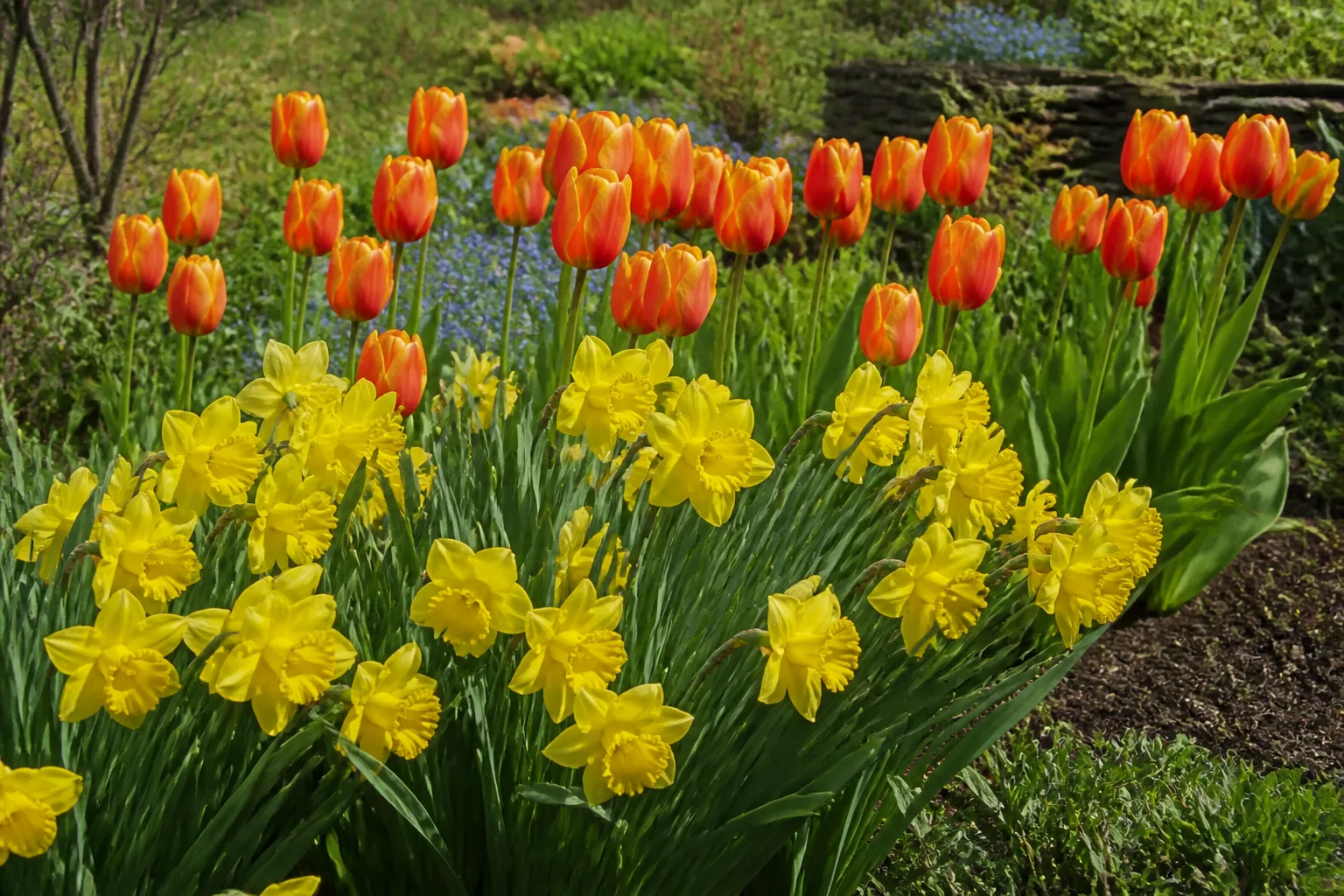
Tulips (Tulipa), daffodils (Narcissus), and hyacinths (Hyacinthus orientalis) are classic spring bulbs—and classic cat hazards when bulbs are stored in paper bags on shelves, forced in glass jars, or grown in shallow bowls on windowsills. The ASPCA notes that ornamental bulbs pose elevated risk in fall and winter when gardeners stock up for planting; cats encounter concentrated alkaloids in the bulb itself.
Chewing foliage causes drooling, vomiting, and diarrhea. Bulb ingestion adds tremors and, in large amounts, cardiac and neurologic signs from compounds like lycorine and tulipalin. After holidays, discard forced bulbs in sealed outdoor bins—not indoor trash cats can raid.
Safer swap: Nasturtiums for spring color in containers, or enjoy blooms in cat-free rooms only.
Calcium Oxalate Plants: Peace Lily, Monstera, Pothos, Dieffenbachia, Bird of Paradise
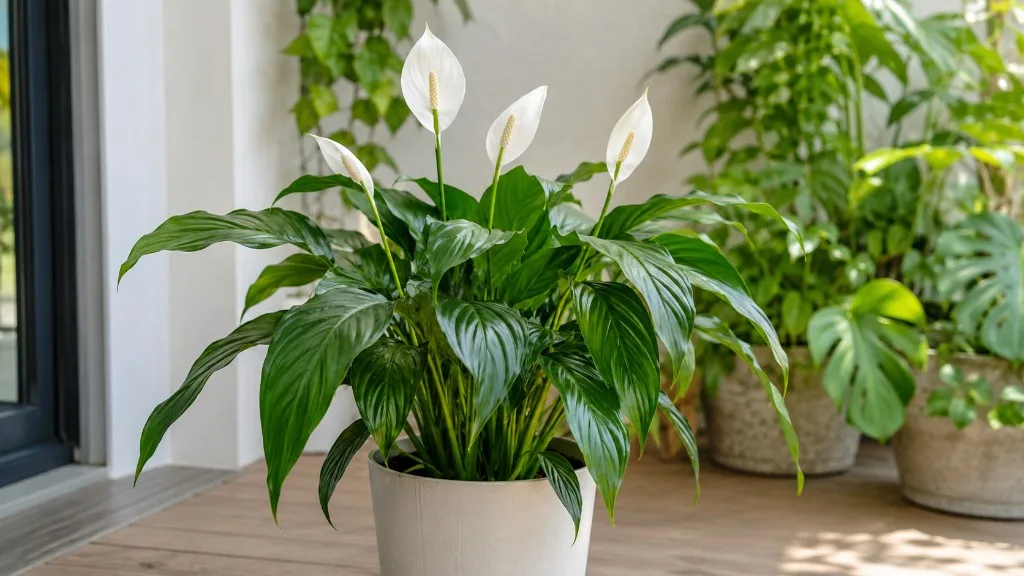
This is the largest group of trendy indoor plants. They pack insoluble calcium oxalate crystals (raphides) that embed in mouth and throat tissue when chewed. Pain is immediate—drooling, lip smacking, reduced appetite—and usually resolves, though Merck Veterinary Manual warns that laryngeal swelling can threaten breathing in rare cases.
Peace lily (Spathiphyllum) is everywhere in offices and apartments. It is not a true lily, but it is absolutely toxic to cats orally. Dark leaves and white spathes fit low light; they also fit a cat’s chew profile. See the peace lily hub for care details—and keep the plant in a cat-free zone.
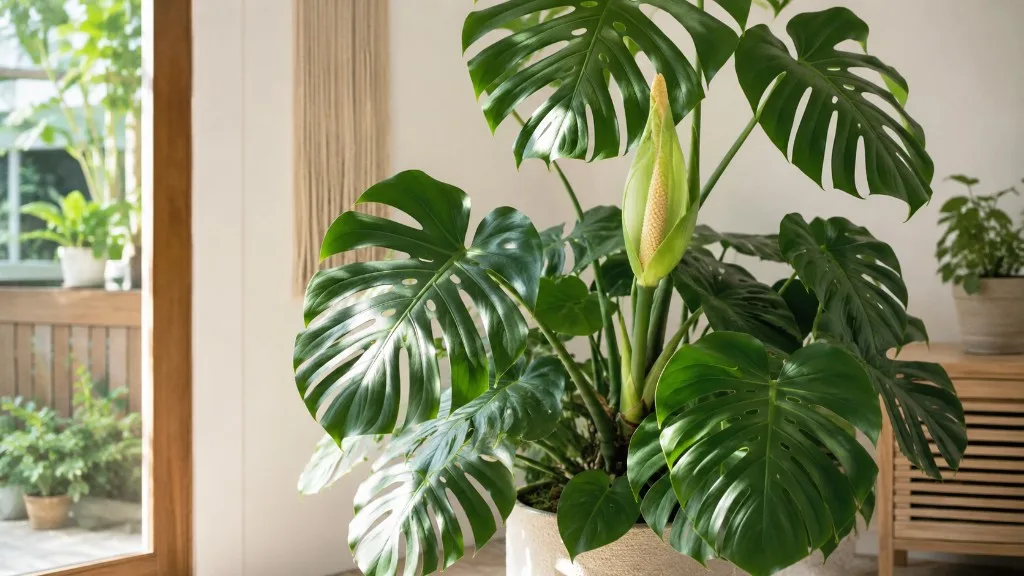
Split-leaf philodendron / monstera (Monstera deliciosa) dominates social feeds. Those fenestrated leaves are calcium oxalate delivery systems. Monstera deliciosa belongs on a tall shelf or in a room closed to cats, not on a credenza beside a cat tree.
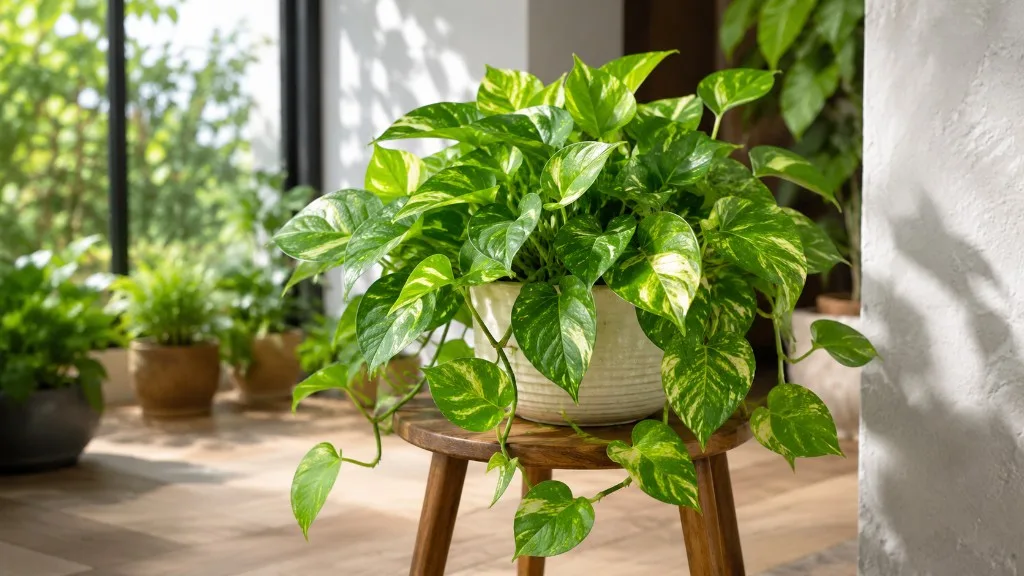
Pothos (Epipremnum aureum) trails beautifully from mantels—which is exactly where cats bat and bite. Golden, marble, and neon cultivars are all toxic. If you propagate pothos, remember cuttings in water are still toxic; see how to propagate pothos for culture tips, not safety excuses.
Dieffenbachia (“dumb cane”) adds proteolytic enzymes to the oxalate load, intensifying oral swelling. Large specimens at floor level are an accident waiting to happen.
Bird of paradise (Strelitzia spp.) causes milder GI signs than monstera in many cases, but ASPCA still lists toxicity. Do not assume “mild” means “safe for chewers.”
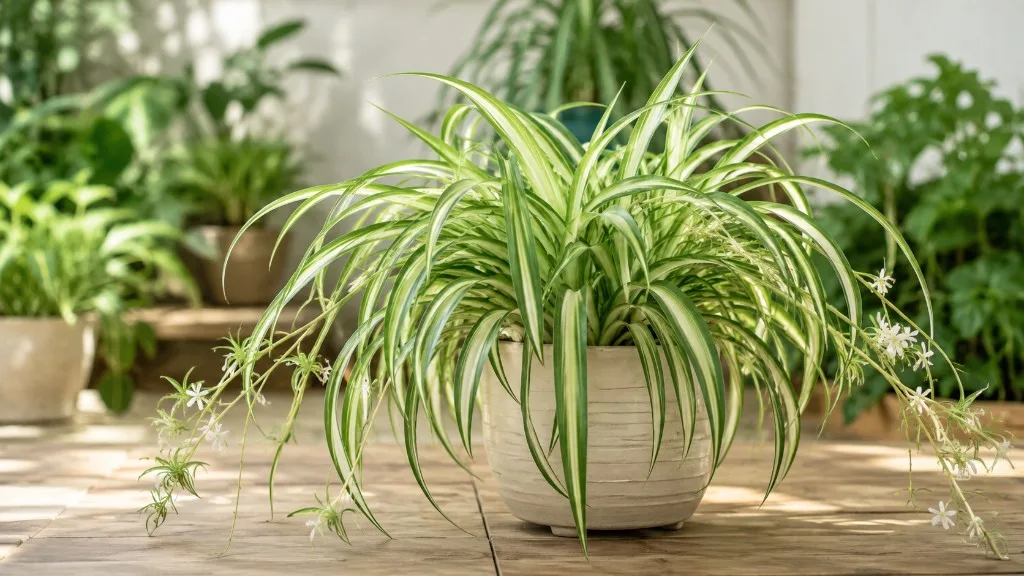
Safer swaps: Cast iron plant (Aspidistra), spider plant (Chlorophytum), prayer plant (Maranta), or bromeliads for tropical vibe without oxalate crisis.
Saponin Plants: Aloe Vera, Snake Plant, English Ivy, and Jade
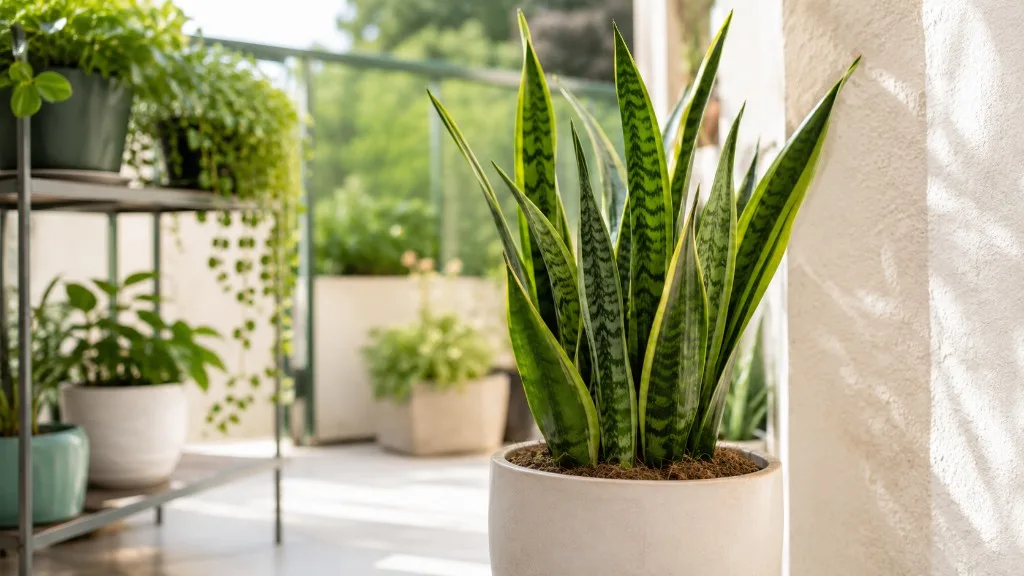
Saponins and related compounds irritate the GI tract. These plants are touch-safe for humans but not snack-safe for cats.
Aloe vera gel heals human burns; the leaf latex contains anthraquinones and saponins cats should not ingest. Keep the rosette on a kitchen sill only if the sill is cat-proof.
Snake plant (Dracaena trifasciata) is sold as indestructible low-light filler. It is also on ASPCA’s toxic list. Snake plant care is easy; keeping cats away is the hard part.
English ivy (Hedera helix) trails from hanging baskets into cat reach. Triterpenoid saponins cause vomiting and abdominal pain. Our English ivy guide covers culture—and notes pet toxicity explicitly.
Jade plant (Crassula spp.) is a succulent staple. Unknown compounds cause vomiting and depression in cats; all cultivars should be treated as toxic. Jade plant on a high ledge is still risky if leaves fall.
Safer swaps: Haworthia, peperomia, or echeveria for succulent aesthetics (always verify individual species on ASPCA).
Kalanchoe and Chrysanthemum
Kalanchoe (Kalanchoe blossfeldiana), sometimes called florist kalanchoe, contains bufadienolides—cardiac glycosides that can disrupt heart rhythm at higher doses. It sits on windowsills next to jade and gets underestimated because it is small and cheerful.
Chrysanthemum (“mums”) bring fall color indoors and out. Ingestion causes vomiting, drooling, and dermatitis. Mums also naturally contain pyrethrins, the basis of many insecticides. Never use dog flea products on cats; mum exposure is a reminder that “natural” does not mean cat-safe.
Safer swaps: Marigolds (verify species), sedum outdoors, or cat-safe indoor blooms from our low-light plants safe for cats list.
Poinsettia — Milder Than the Holiday Myth
Poinsettia (Euphorbia pulcherrima) milky sap irritates mouths and skin. Vomiting happens. Full-blown fatal poisoning is rare—ASPCA and veterinary sources have spent years correcting the poinsettia legend. That does not make it a cat toy. Skip the guilt spiral if a leaf was nibbled once, but also skip buying one if your cat shreds every new plant within hours.
Safer swap: Polka dot plant (Hypoestes) for patterned foliage without euphorbia sap.
Why Cats Eat Houseplants Anyway
Cats are obligate carnivores, yet many chew houseplants. Hart and colleagues found that plant eating is common in healthy cats and may relate to gut irritation relief—not just boredom. Sick cats may increase plant intake. That means deterrents alone fail for animals motivated by nausea or instinct.
Prickly textures, citrus peels, and aluminum foil sometimes work temporarily. They do not replace removing Tier 1 plants or offering cat grass (Dactylis glomerata or cereal grasses) as an approved chew outlet. Enrichment—window perches, play sessions, puzzle feeders—reduces exploratory chewing more reliably than pepper flakes on a peace lily.
Practical Ways to Cat-Proof Your Plant Collection
Rank strategies by reliability:
- Do not buy Tier 1 plants if a cat lives there. No hack beats elimination.
- Designate cat-free plant rooms with closed doors for high-risk collections or flower arranging.
- Elevate with purpose, not hope: ceiling hooks for pothos, wall-mounted shelves with no jump routes, not “high” dressers cats already summit daily.
- Seal bulb storage in latched bins in garages or closets cats cannot open.
- Dump vase water from true lilies immediately in sinks cats cannot drink from; rinse vases outside.
- Offer cat grass in a heavy pot that cannot tip when batted.
- Check new purchases against ASPCA before checkout—retail labels rarely say “kidney failure risk.”
If you cannot secure a plant, rehome it to a cat-free household. Sentiment is cheaper than dialysis.
Pet-Safe Alternatives That Still Look Good
You do not need a plant-free apartment—just a smarter palette. Match the design job, not only the species name:
| If you wanted… | Cat-toxic choice | Safer direction |
|---|---|---|
| White blooms | True lily, peace lily | Phalaenopsis orchid, African violet |
| Trailing vine | Pothos, English ivy | Spider plant, Swedish ivy (Plectranthus) |
| Big tropical leaf | Monstera, dieffenbachia | Calathea, cast iron plant |
| Succulent rosette | Aloe, jade, kalanchoe | Haworthia, burro’s tail (Sedum morganianum—verify) |
| Palm vibe | Sago palm | Areca palm, parlor palm (Chamaedorea) |
| Low-light tough | Snake plant | Rattlesnake plant (Calathea lancifolia), cast iron plant |
| Fall color | Chrysanthemum | Marigold (outdoor), polka dot plant (indoor) |
Cross-check every substitute on ASPCA before buying—cultivar lists change, and “generally safe” still assumes non-obstructive chewing.
Conclusion
Twenty houseplants is not an arbitrary list—it is a cross-section of what pet poison hotlines actually see: lilies on the counter, pothos trailing near a cat tree, sago palm bonsai at nose height, hyacinth bulbs curing in a paper bag. The lesson is not that plants and cats cannot coexist. It is that risk is ranked, names lie, and prevention starts at the nursery register—not after drooling begins.
Keep Tier 1 plants out of your home entirely. Treat oxalate and saponin plants with respect and placement. Stock cat grass, know ASPCA Poison Control’s number, and build your collection from verified safe species. Your cat will still knock something over. Let it be a spider plant, not a lily.



