How to Grow and Care for English Ivy
Grow English ivy indoors or outdoors with the right light, watering rhythm, soil, and pruning—plus what to check before planting this fast-spreading vine.
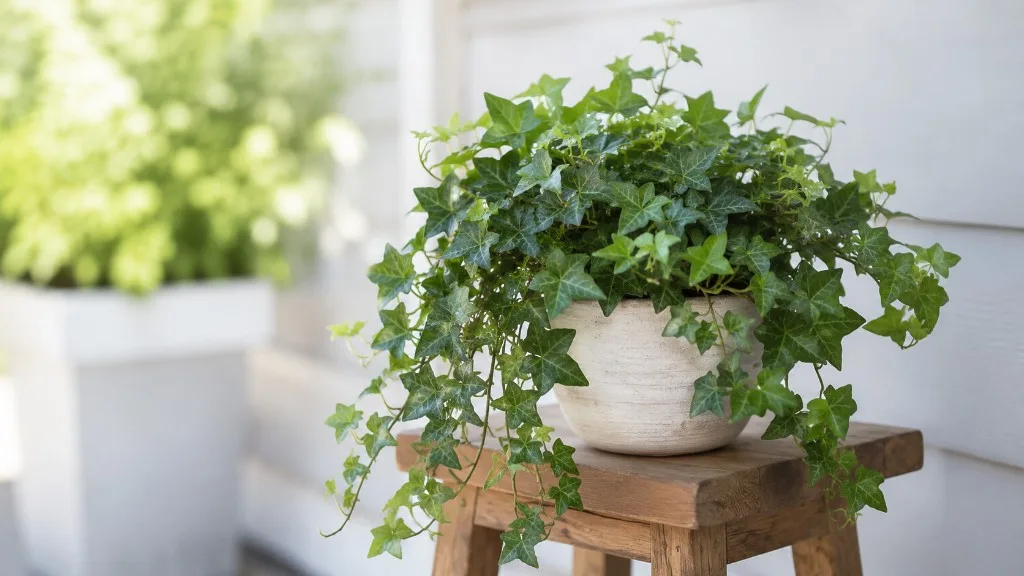
English ivy (Hedera helix) is the classic trailing vine you see spilling from hanging baskets, climbing brick walls, and carpeting shady beds under trees. It is also one of the most debated plants in home gardening: lush and low-maintenance in the right spot, aggressively invasive in others, and finicky enough indoors that many buyers toss it within a season. The difference is not luck—it is matching the plant to a controlled container or a managed outdoor site, then reading what the leaves tell you about light, water, and air moisture.
This guide covers indoor and outdoor care, the invasiveness checks extension services recommend, propagation, pest control, and safer substitutes when ivy is a bad fit for your yard or your pets. For species-specific schedules broken out by topic, the English Ivy plant hub links to dedicated light, watering, soil, fertilizer, repotting, propagation, and pruning pages.
English Ivy Quick Reference
Use this table before you change anything. If one row does not match your setup, fix that factor first instead of stacking random fixes.
| Factor | Indoor target | Outdoor target | Notes |
|---|---|---|---|
| Light | Bright indirect; some morning sun | Part shade to full shade | Variegated forms need more light |
| Water | When top inch is dry; evenly moist | Moist to dry depending on site | Never leave pot in standing water |
| Soil | Well-drained potting mix + perlite | Average loam; good drainage | Tolerates many pH levels |
| Temperature | 50–70°F (10–21°C) ideal | USDA zones 4–9 by cultivar | Heat above 90°F stresses plants |
| Humidity | 40–60%; higher in dry homes | Usually ambient | Dry air invites spider mites |
| Fertilizer | Monthly in spring/summer only | Skip outdoor fertilizer in invasive regions | Do not feed stressed plants |
| Spread | Keep in pot or hanging basket | Ground cover spreads indefinitely | Adult vines on trees set seed |
| Pets | Toxic to cats, dogs, horses | Same | Foliage more toxic than berries |
| Risk | Low in containers | High where listed invasive | Confirm with local extension |
Virginia Cooperative Extension notes English ivy is attractive and tolerant but documented as invasive, with NatureServe ranking its overall invasive impact as high/medium in many assessments. (Virginia Tech) Treat that row of the table as seriously as the watering row.
What Makes English Ivy Different
English ivy belongs to Araliaceae, the ginseng family. Native to Europe, western Asia, and North Africa, it is an evergreen woody vine that climbs with adventitious rootlets along stems and spreads horizontally as ground cover. NC State Extension describes mature vines reaching 20 to 80 feet high and 3 to 50 feet wide where conditions allow—numbers that explain both its usefulness and its reputation. (NC State Extension)
Indoors, the same species usually stays compact in a pot, but it still wants cool nights, steady moisture in the root zone, and enough light to keep leaves dense. It is not a low-light afterthought like some marketing labels suggest; it survives dim corners for a while, then sheds inner leaves and attracts spider mites.
Juvenile vs Adult Growth Stages
Understanding ivy’s two growth phases is the piece most generic care pages skip—and the piece that matters most outdoors.
In the juvenile phase, stems climb and spread, leaves are lobed and glossy, and plants usually do not flower or set seed. Horizontal ground cover often stays in this phase, spreading locally by stem elongation and rooting where stems touch soil. Virginia Tech explains that juvenile ground cover poses a vegetative invasive threat—it moves outward steadily even without seeds.
In the adult phase, growth becomes shrubby on vertical surfaces, leaves lose their lobes, and plants produce greenish-white flowers in fall followed by blue-black berries. Birds eat the berries and spread seeds long distances. Vertical vines on fences, walls, and especially tree trunks are the reproductive risk: cut them before seed forms if ivy is already on your property. (Virginia Tech)
Indoor houseplants almost always remain juvenile—you get trailing lobed foliage, not flowers. That is one reason a hanging basket in a climate where ivy is invasive is often the most responsible way to enjoy the plant’s looks.
Invasiveness: Check Before You Plant
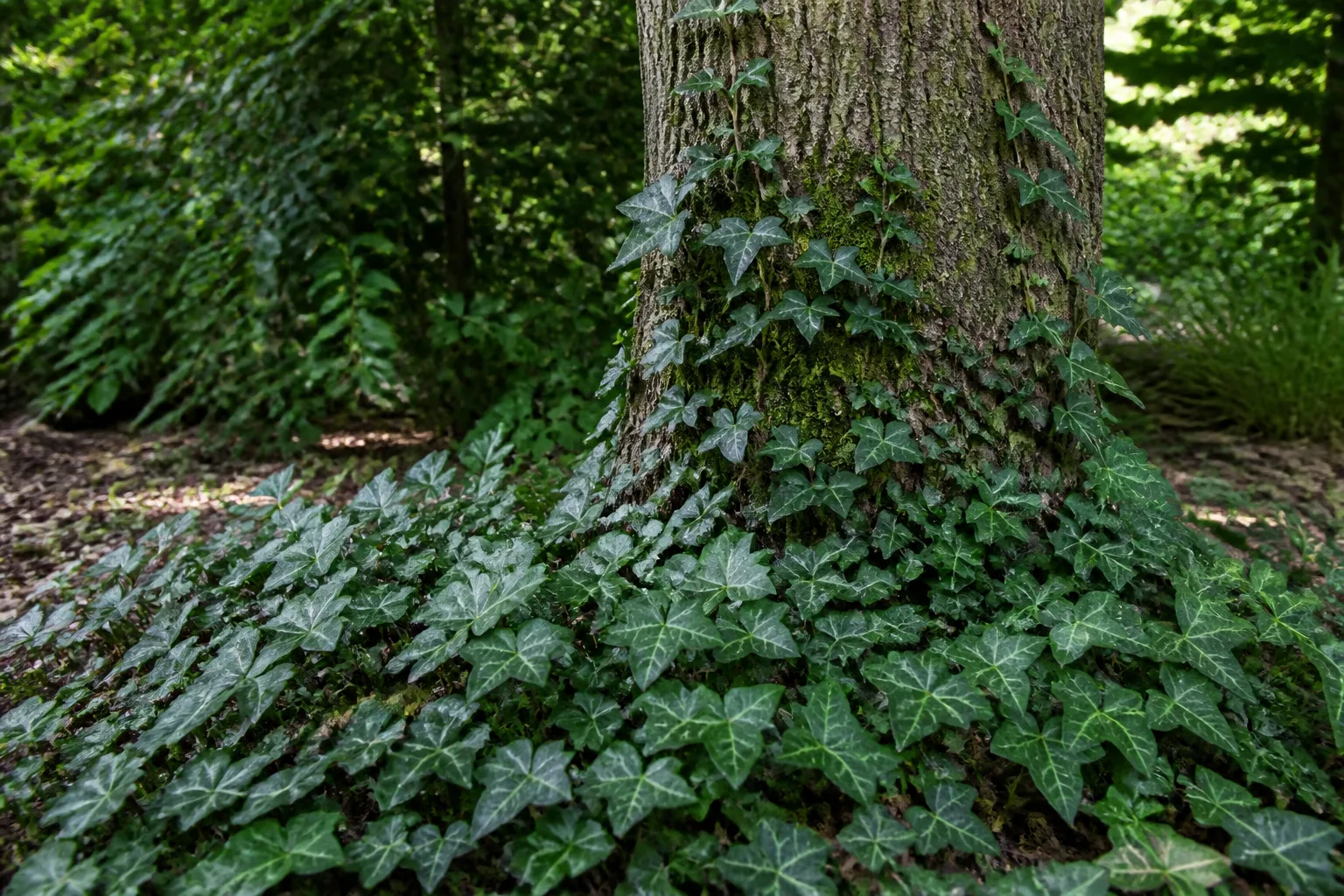
English ivy is invasive in much of the Pacific Northwest, California, parts of the Southeast, and the Midwest, among other regions. NC State lists it as an invasive species in North Carolina; WSU Extension treats it as a difficult weed in western Washington landscapes. Oregon State Landscape Plants notes it can escape cultivation, form dense mats, and reduce forest biodiversity—especially where it climbs into tree canopies and blocks light. (Oregon State)
Before you buy or plant ivy outdoors:
- Ask your local cooperative extension office or state invasive-species list whether Hedera helix is restricted in your county.
- Prefer container culture on patios if ground planting is discouraged.
- Never plant ivy at a property line expecting it to stop—it will not.
- If mature vines climb trees, cut stems at the base each year to prevent flowering and seed.
Some cultivars are marketed as less aggressive—gold-variegated forms, for example, are often slower—but “less invasive” is not “non-invasive.” UConn’s plant database warns that variegated and novelty cultivars tend to be less cold-hardy than plain green forms, so hardiness and spread risk both vary by selection. (UConn Plant Database)
Light Requirements Indoors and Out
Outdoors, English ivy grows from full sun to full shade, though Virginia Tech notes foliage may discolor in full sun during winter in cold climates. In hot regions, afternoon shade prevents summer scorch. As ground cover under trees, ivy’s shade tolerance is exactly why people plant it—and why it can outcompete native understory plants if it escapes.
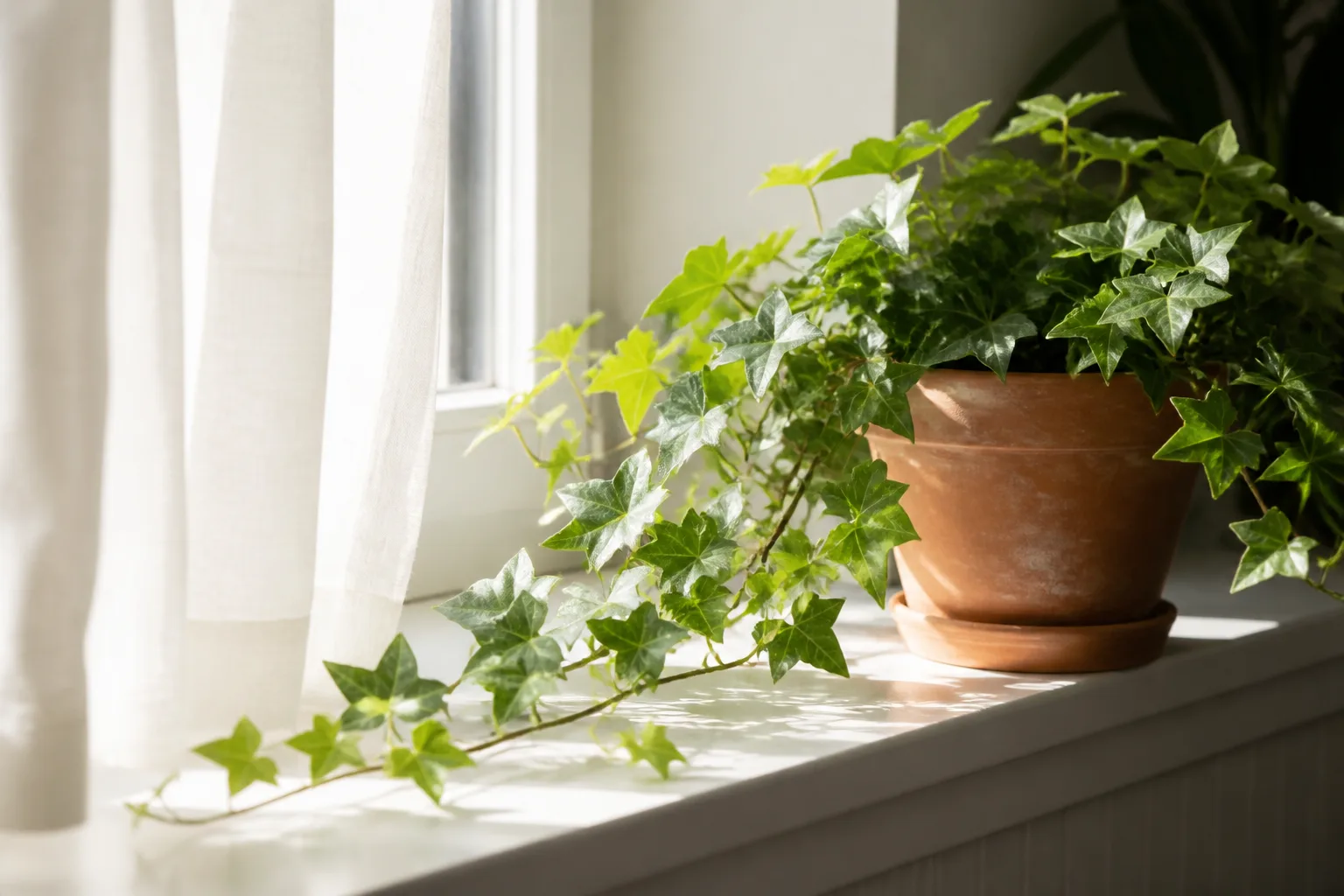
Indoors, aim for bright, indirect light most of the day. A north- or east-facing window, or a south/west window filtered by a sheer curtain, keeps lobed leaves dark green and compact. Epic Gardening recommends pulling variegated cultivars slightly closer to the light source than solid green forms so cream or gold edges do not revert to all green. (Epic Gardening)
Leggy stems with sparse leaves mean the plant wants more light—not more fertilizer. Bleached or crispy patches on leaves facing the glass mean too much direct midday sun; shift the pot or add filtering. In winter, a few hours of gentle direct sun through a window often helps when daylight is short.
Soil, Drainage, and Watering
English ivy tolerates a wide soil range outdoors—Virginia Tech lists acid to alkaline pH and moist to dry conditions—but it still rots in waterlogged clay. Indoors, use a loose, well-drained potting mix. A practical blend is standard houseplant mix amended with 20–30% perlite so water exits quickly while the root ball stays lightly moist.
The watering mistake I see most often is treating ivy like a desert plant or a peace lily. Ivy prefers evenly moist soil that never stays soggy. Check the top inch with your finger; when it feels dry, water until a little runs from the drainage hole, then empty the saucer. In bright active growth, that might be weekly; in a cool dim room in winter, it might be every ten to fourteen days.
Yellow leaves plus mushy stems usually mean overwatering or poor drainage—repot into fresher mix with perlite and reduce frequency before reaching for fertilizer. Crispy leaf margins in winter often mean dry air or underwatering; increase humidity before you double watering, or you may trigger rot.
For in-ground plantings in established landscapes, Oregon State notes mature ivy is quite drought tolerant once rooted deeply—but newly planted ivy needs steady moisture until it anchors. Avoid heavy irrigation on vigorous outdoor mats if you are trying to limit seed production on vertical stems; stressed drought cycles are sometimes used in management contexts, but home gardeners should prioritize containment over deprivation.
Temperature and Humidity
English ivy grows best at moderate temperatures. Epic Gardening lists 65–85°F (18–29°C) as ideal for active growth, with decline above 90°F (32°F). Indoors, the sweet spot aligns with what many people find comfortable: 50–70°F (10–21°C), with slightly cooler nights than days—similar to what makes ivies thrive in unheated bright porches in spring and fall.
It dislikes cold drying winds outdoors and hot dry air indoors from heating vents or radiators. In dry winter homes, raise humidity with a pebble tray (pot sitting above water, not in it), grouping plants, or a small humidifier. Spider mites appear first on ivy when humidity drops and airflow stagnates—watch leaf undersides weekly in February and March.
Fertilizing Container Plants
Feed container ivy only during active spring and summer growth—about once monthly with a balanced liquid fertilizer diluted to half label strength, or a 20-20-20 formula at quarter strength if your plant is already vigorous. Skip fertilizer in late fall and winter, and never feed a plant sitting in dry, waterlogged, or heat-stressed soil; stressed ivy sheds leaves instead of thanking you.
Do not fertilize outdoor ground cover in regions where ivy is invasive or listed as a noxious weed. Fertilizer pushes faster spread and thicker mats without adding ecological value. Epic Gardening explicitly recommends against outdoor feeding where ivy is considered invasive. (Epic Gardening)
If leaves look pale but watering and light are correct, a single spring feeding after repotting into fresh mix often fixes nutrient drift more safely than monthly heavy doses.
Pruning and Controlling Spread
Pruning is not optional with ivy—it is how you keep the plant where you chose it. Outdoors, trim ground cover edges along sidewalks and beds whenever stems advance. In spring, mow ground cover on the highest mower setting or shear by hand to refresh dense mats and improve airflow, which reduces leaf-spot pressure.
Indoors, pinch growing tips in spring to force side branches and a bushier habit. Hard cutback every few years rejuvenates tired baskets; new shoots emerge from latent buds on bare stems if light and water stay steady.
Removing Ivy From Trees Without Bark Damage
If ivy climbs a tree you want to keep, never pull living vines off the bark. Tearing rootlets damages cambium and invites decay. Instead:
- Locate each stem emerging from soil at the tree base.
- Cut every stem at ground level in one clean pass.
- Leave the attached upper vine to wither and die on the trunk over months.
- Gently brush dead material off only when it separates easily—no ripping.
- Return each spring to cut new seedlings and resprouts until strength is exhausted.
Virginia Tech advises removing/killing vines on trees to protect tree health. (Virginia Tech) This is slow organic control, but it is the method that does not trade ivy damage for bark damage.
Propagating English Ivy From Cuttings
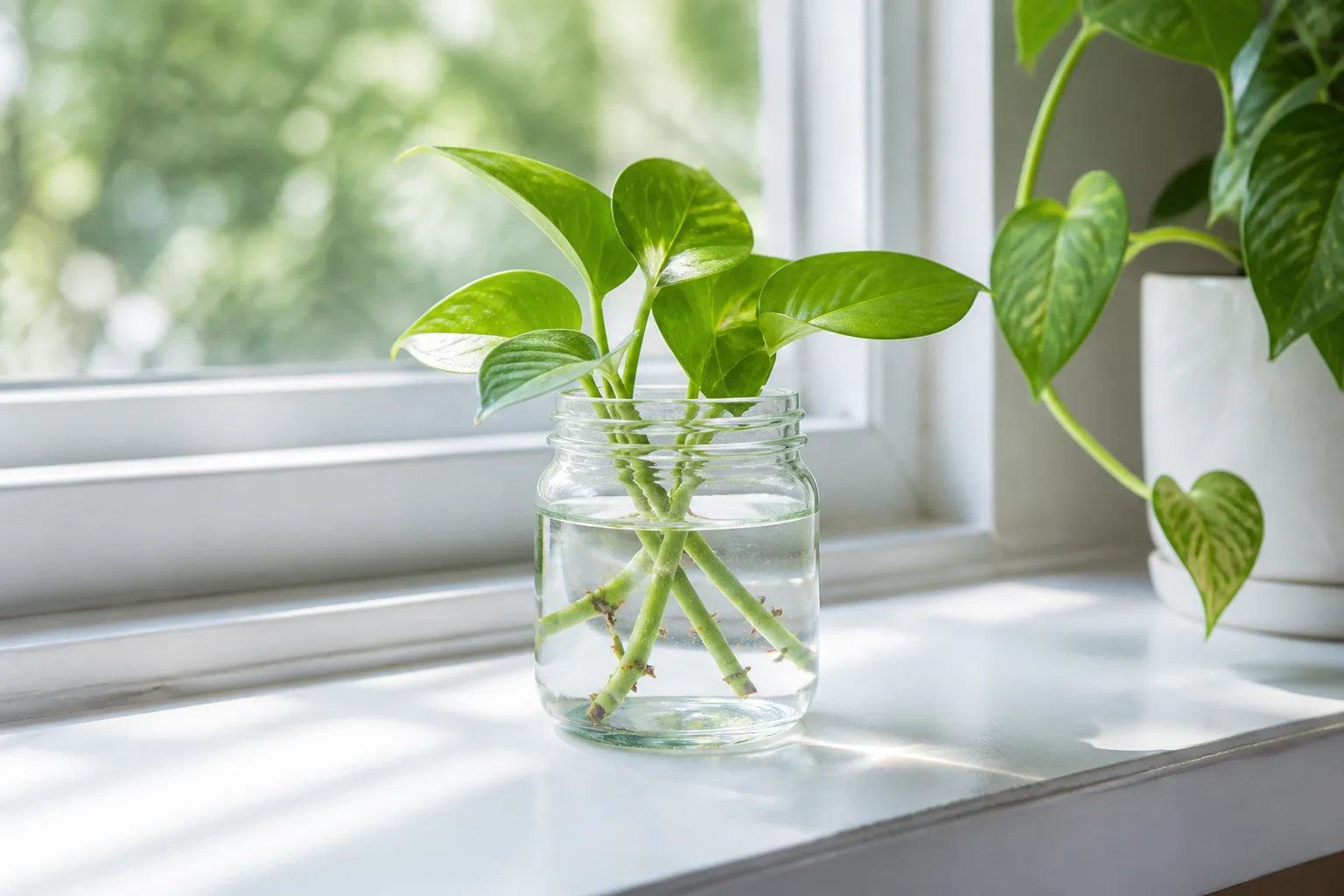
Propagation is straightforward—one reason ivy spread is hard to contain outdoors. Take 4–5 inch cuttings from healthy juvenile stems in spring or early summer. Remove leaves from the lower inch, keep two or three leaves at the top, and root in water or moist potting mix.
Water method: Submerge nodes in a clear jar, change water weekly, and transplant when roots are 1–2 inches long. Soil method: Insert cuttings around the pot edge, keep humidity high with a loose bag or dome, and maintain lightly moist—not wet—medium. Roots typically form in four to eight weeks at warm room temperatures.
Ground cover also self-propagates when stems touch soil and root; you can sever rooted sections and pot them. Label cuttings if you grow multiple cultivars—variegation is genetic, and plain green reversions root faster than gold-edged sports.
Potting, Hanging Baskets, and Repotting
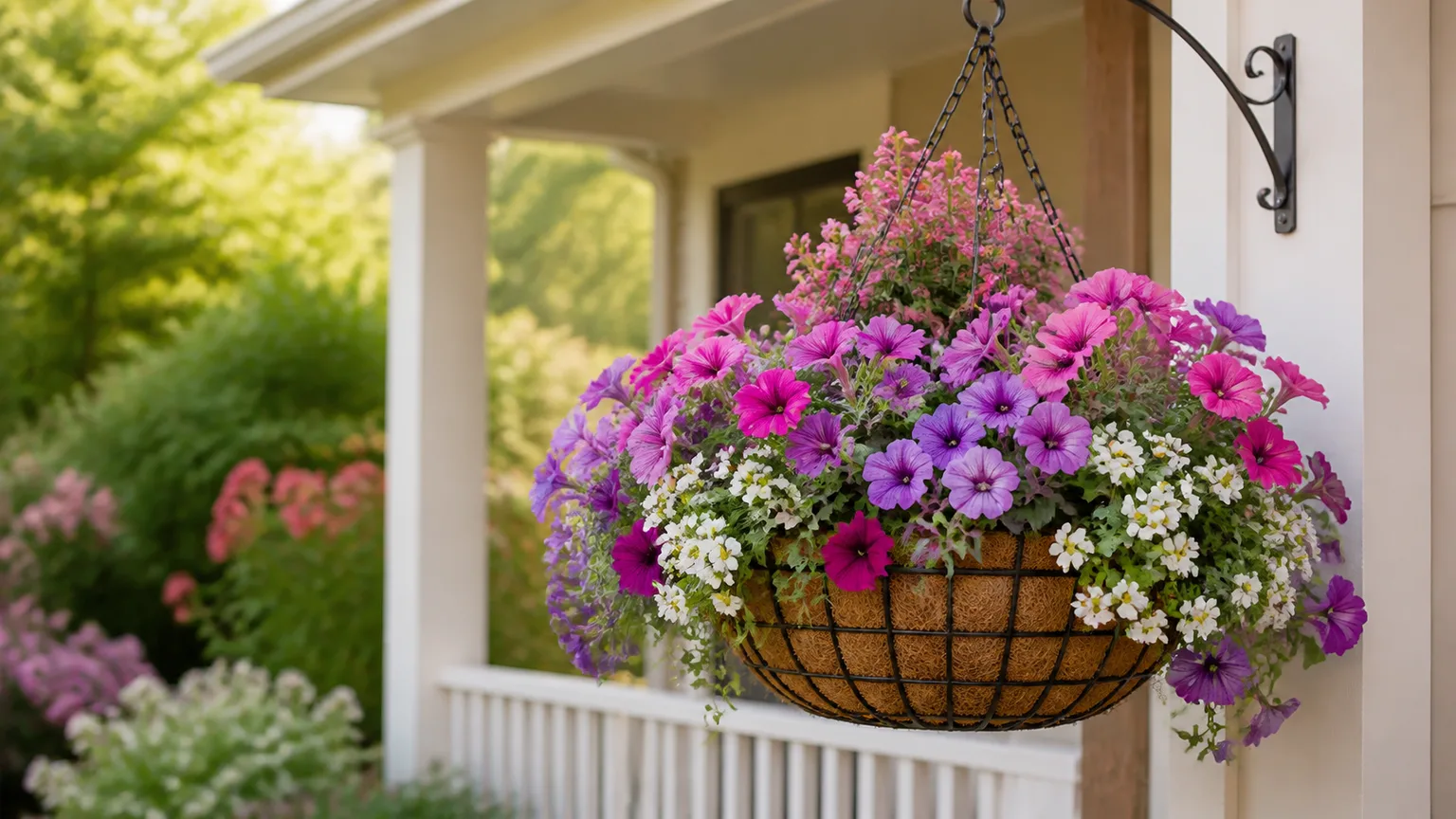
Hanging baskets are the smartest default for invasive regions: you get the cascade look without rhizomes marching into lawn. Choose a pot with drainage holes, use fresh mix, and hang where you can reach it easily for watering—ivy dries faster in hanging air than on a shelf.
Repot young plants yearly in spring; mature baskets every two years, or refresh the top third of soil if the root ball already fills the pot. When repotting, loosen circling roots gently and move up one pot size only—oversized pots stay wet too long and invite root rot.
If a basket looks tired but you do not want a larger pot, slice the root ball vertically, trim back, and repot into the same container with new mix. Water once, then let the plant recover in bright indirect light for two weeks before feeding.
Pests and Common Diseases
English ivy’s waxy leaves hide pests until damage is advanced. Inspect leaf undersides whenever you water.
Spider mites thrive in dry indoor air, forming fine webbing and stippled bronze leaves. Increase humidity, rinse foliage with lukewarm water, and treat with insecticidal soap or horticultural oil on all surfaces; repeat weekly until clear. Epic Gardening notes mites are the most likely cause when an otherwise well-lit, well-watered indoor ivy collapses. (Epic Gardening)
Aphids and mealybugs cluster on new growth; dislodge with water or use the same soap/oil protocol. UF/IFAS Extension documents bacterial leaf spot (Xanthomonas), root rot, anthracnose, and powdery mildew on greenhouse and landscape ivy. Leaf spot shows as dark brown to black lesions; severely affected stems are best removed and discarded, not composted, to limit spread. (UF/IFAS Extension)
Avoid overhead watering indoors and improve airflow with light pruning if gray powdery mildew appears. Root rot follows warm, wet soil—fix drainage before fungicides.
Toxicity and Safer Alternatives
English ivy is toxic to people, cats, dogs, and horses. ASPCA lists triterpenoid saponins (hederagenin) as the toxic principle, with vomiting, abdominal pain, hypersalivation, and diarrhea after ingestion; foliage is more toxic than berries. (ASPCA) NC State adds that sap can cause contact dermatitis in sensitive individuals. (NC State Extension)
Keep pots on wall mounts out of reach of cats that climb shelves. Call ASPCA Poison Control at (888) 426-4435 or your veterinarian if a pet chews leaves.
When ivy is banned or risky outdoors, consider native or non-toxic vines: Virginia creeper (Parthenocissus quinquefolia) for fall color (note: berries toxic to humans), crossvine (Bignonia capreolata) in the Southeast, or indoor-friendly pothos and peperomia for trailing habit without Hedera spread. Match the substitute to your hardiness zone and pet situation—no vine is universally perfect.
Conclusion
English ivy rewards gardeners who respect its dual nature: a beautiful evergreen trailer indoors and a powerful spreader outdoors. Give indoor plants bright indirect light, lightly moist well-drained soil, moderate temperatures, and higher humidity in dry months; pinch and repot on schedule so baskets stay full. Outdoors, confirm invasiveness with extension resources, contain edges aggressively, and cut climbing stems at the base before adult vines flower. Skip outdoor fertilizer where ivy is listed invasive, treat spider mites early, and keep toxic plants away from pets. When the risk outweighs the look, grow ivy in a hanging pot only—or choose a native alternative and save yourself years of cutting back.