How to Grow and Care for Purple Coneflower
Purple coneflower (Echinacea purpurea) thrives in sun and lean soil. Learn planting depth, watering, deadheading, seed stratification, and how to avoid aster yellows.
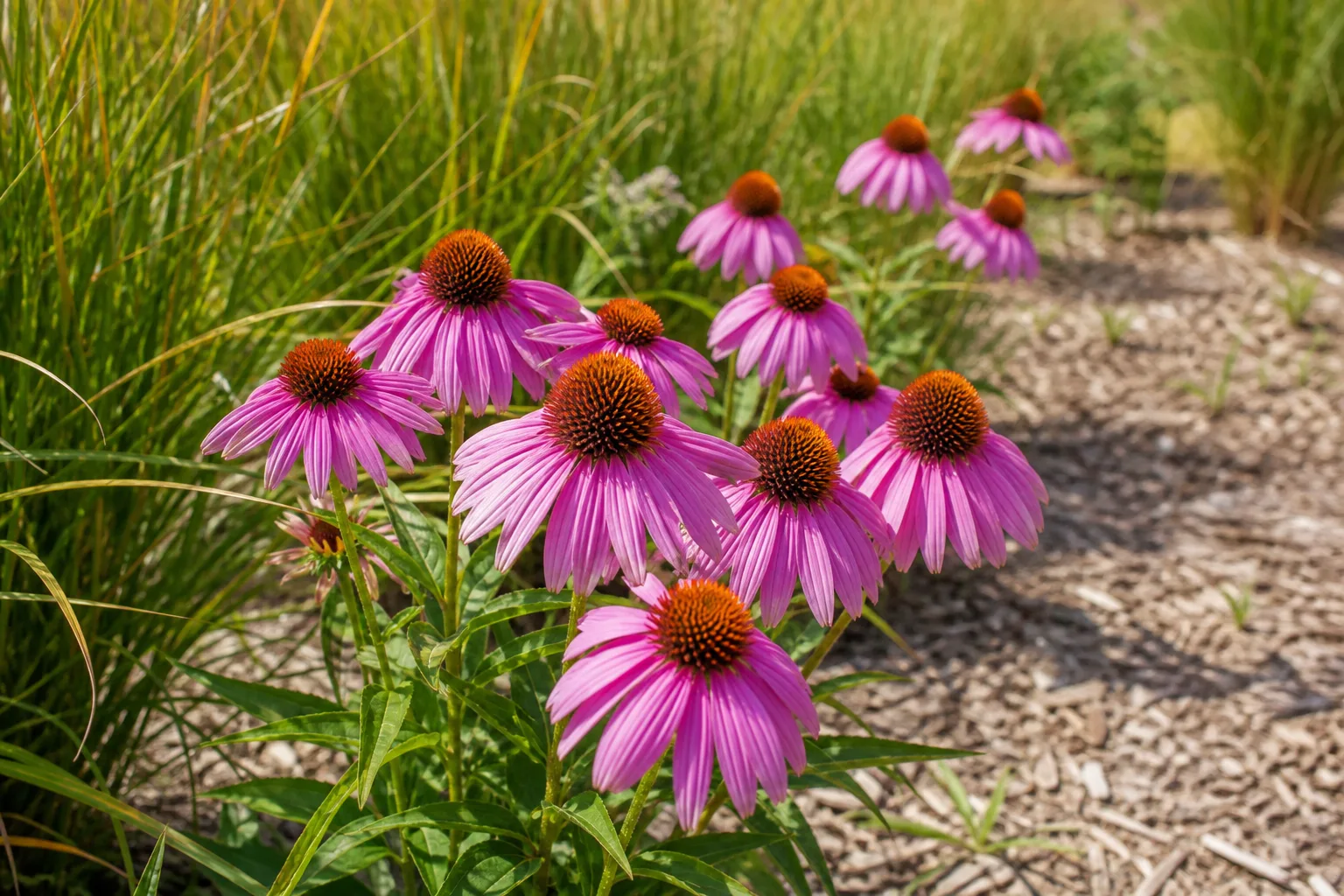
Purple coneflower (Echinacea purpurea) is one of those perennials that looks effortless in a good garden photo and punishes lazy site selection in real life. Give it six hours of sun, drainage that never stays soggy, and a light hand with fertilizer, and it will bloom from early summer into fall, feed butterflies, and stand through winter with seed heads goldfinches actually use. Plant it in heavy shade or a low spot that holds water, and you get leggy stems, fewer flowers, or blackened crowns that never recover.
That gap between reputation and reality is why this guide focuses on decisions — where to plant, how much to water at each life stage, when to deadhead versus leave seed heads, and how to tell aster yellows from a bad week of rain.
Why Purple Coneflower Earns a Permanent Spot in Sunny Borders
Native to moist prairies and open woods across the central and eastern United States, purple coneflower is a coarse-textured herbaceous perennial in the daisy family (Asteraceae). The name Echinacea comes from the Greek word for hedgehog, a reference to the spiny central cone. Purpurea means reddish-purple, though garden plants range from rosy pink to near-white depending on cultivar.
Unlike taprooted prairie species such as Echinacea angustifolia, E. purpurea forms a fibrous root system and a woody crown that tolerates garden division far better. That adaptability — plus decades of breeding — is why it became the backbone of pollinator borders, meadow plantings, and low-maintenance perennial beds in USDA hardiness zones 3 through 8.
Missouri Botanical Garden notes the species typically reaches 2 to 4 feet tall with showy daisy-like flowers up to 5 inches across on stiff stems (Missouri Botanical Garden: Echinacea purpurea). NC State Extension adds that it is deer resistant, salt tolerant, heat and humidity tolerant once established, and a larval host for silvery checkerspot and wavy-lined emerald butterflies (NC State Extension: Echinacea purpurea). Songbirds, especially American goldfinches, eat the seeds from dried cones in late fall and winter.
If you want a plant that works in a native garden, a cottage border, or a cut-flower row without demanding weekly attention, purple coneflower belongs on the short list.
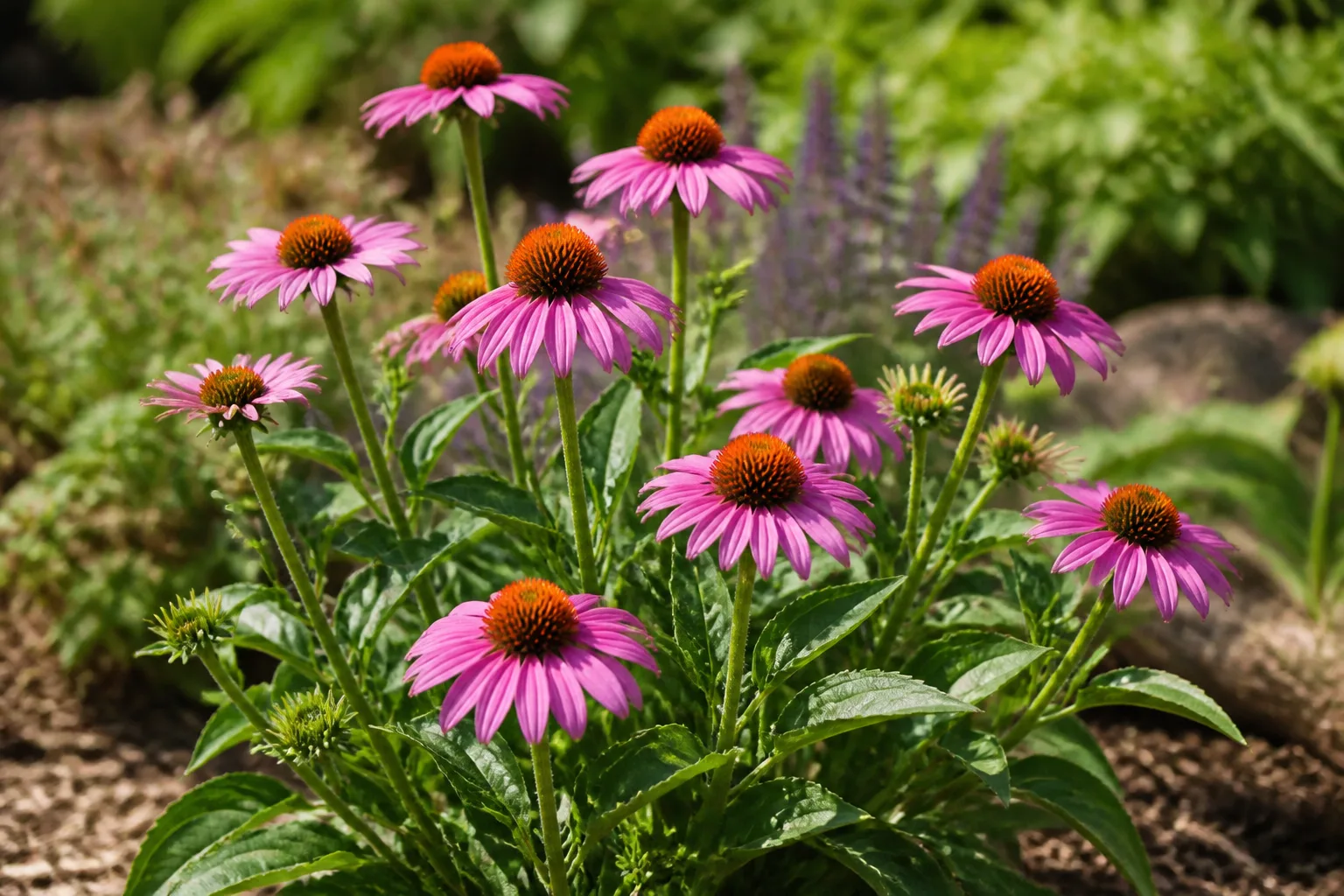
Echinacea purpurea at a Glance
| Feature | Details |
|---|---|
| Common names | Purple coneflower, eastern purple coneflower |
| Type | Herbaceous perennial |
| Mature size | 2–4 ft tall, 1–2 ft wide (cultivars vary) |
| Sun | Full sun to part shade; best bloom in full sun |
| Soil | Average to dry, well-drained; tolerates clay if drainage is good |
| Soil pH | Neutral to slightly acidic (roughly 6.5–7.0) |
| Bloom time | June through August, often repeating until frost |
| Hardiness | USDA zones 3–8 |
| Native range | Central and eastern U.S. |
| Wildlife | Bees, butterflies, goldfinches; stem-nesting native bees use old stems |
Quick field marks: erect stems topped by brown domed cones surrounded by one or two rows of drooping ray petals (usually pink-purple), and rough, lance-shaped basal leaves. Ohio State Plantfacts describes the habit as an upright clump maturing around 3.5 feet tall and 1.5 feet wide in ideal conditions (Ohio State Plantfacts: Echinacea purpurea).
Choosing the Right Site: Light, Soil, and Spacing
Site selection is the single highest-leverage decision for coneflower success. Everything else — watering, bloom count, disease pressure — follows from whether the roots sit in appropriate light and drainage.
Sun, Drainage, and pH
Purple coneflower wants at least six hours of direct sun per day for the strongest stems and heaviest bloom. It will survive partial shade, but stems stretch, flowers decrease, and plants lean toward the brightest light. In hot southern zones, a little afternoon shade can reduce petal bleaching and leaf scorch, but deep shade is a poor fit.
Drainage matters more than perfect soil texture. The species tolerates sandy, rocky, and clay soils as long as water does not pool around the crown. Persistent wet soil invites crown rot, blackened stems, and general decline — the most common reason gardeners conclude coneflowers are “not drought tolerant” when the real problem is overwatering or a low planting site.
A neutral pH near 6.5 to 7.0 is ideal. Coneflowers are not heavy feeders; working compost into the planting hole is usually enough. Excess nitrogen produces leafy plants with fewer flowers. If you are tempted to amend soil based on kitchen remedies, read our guide on whether baking soda helps coneflowers bloom — pH changes should follow a soil test, not guesswork.
Spacing and Good Neighbors
Space plants 12 to 18 inches apart in groups of three or five for a natural drift. Air circulation reduces leaf spot pressure, especially in humid regions. Coneflowers pair well with black-eyed Susans (Rudbeckia), ornamental grasses, catmint, salvia, and other sun-loving perennials that share similar water needs. For border layout ideas that keep tall perennials from flopping into paths, see perennial flower garden layout.
Avoid planting directly against a north-facing foundation or under the drip line of a roof gutter. Both situations keep crowns too wet or too dark.
Planting Purple Coneflower in Spring or Fall
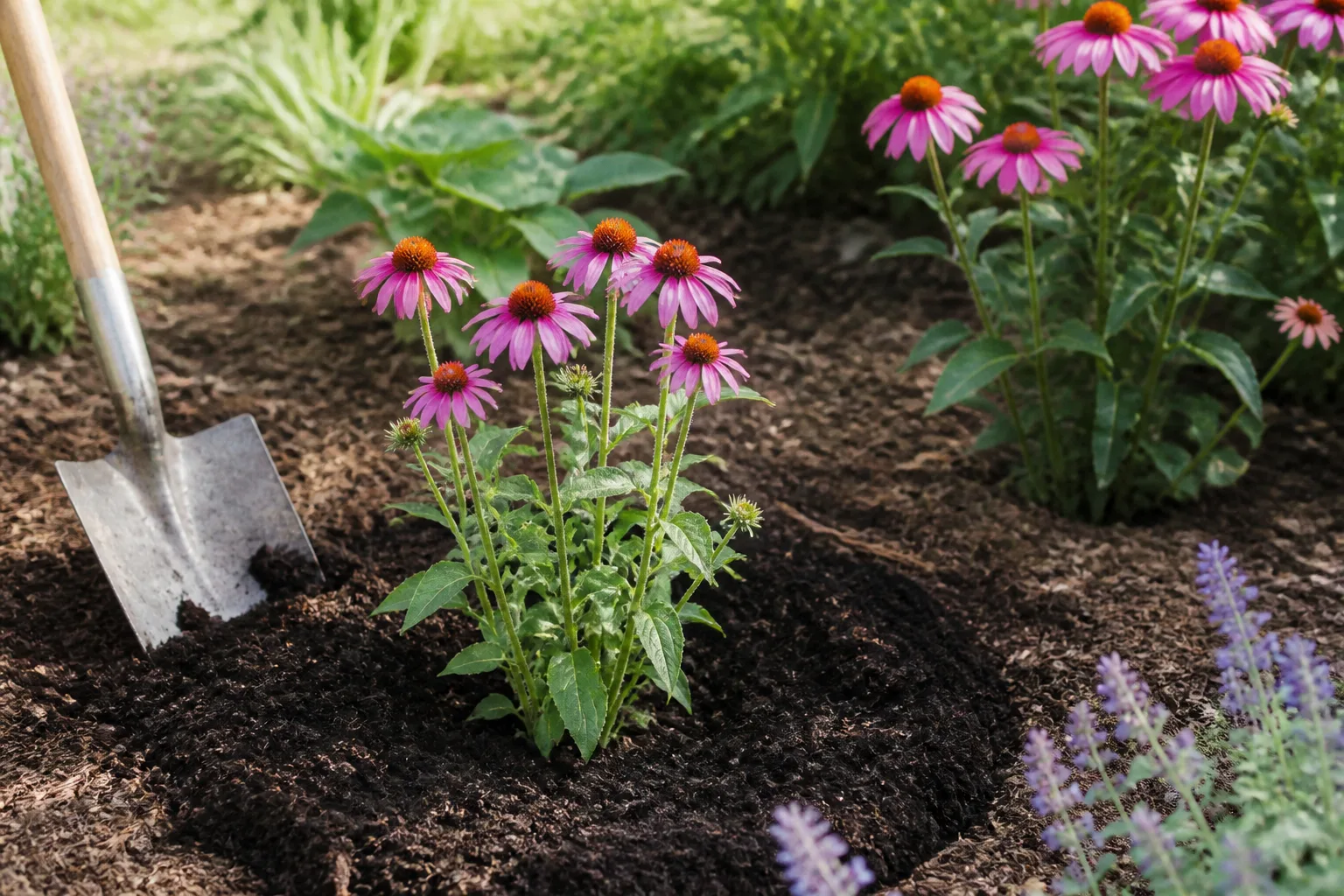
Spring is the most forgiving planting window in cold climates because roots establish through the growing season before winter. Fall planting works in zones 6 and warmer when soil stays workable six weeks before frost, giving roots time to anchor before freeze-thaw cycles.
From Nursery Pots and Bare Roots
For container plants, dig a hole as deep as the root ball and twice as wide. Set the crown at or slightly above grade so it does not sink and collect water after backfilling. Mix compost into the backfill if your soil is lean, but skip synthetic fertilizer in the hole — it can burn young roots.
Water deeply at planting, then mulch with 2 inches of shredded bark or leaf mold, keeping mulch off the crown. First-year plants need consistent moisture: daily watering for the first week, then taper to about 1 inch of water per week through the first growing season if rain is scarce.
Bare-root divisions and mail-order plants should be soaked briefly, trimmed of dead tissue, and planted promptly with roots spread outward. Firm soil around the crown and stake only if the plant is tall and exposed to wind before roots set.
Watering, Mulch, and Fertilizer Without Overdoing It
Coneflowers are often labeled drought tolerant, which is true only after establishment. Young plants in their first year need regular water to build the root system that later carries them through dry spells. Second-year and older plants in most regions need supplemental water only during extended drought, though bloom quality and leaf health improve with occasional deep soaking.
A practical schedule:
- Week 1 after planting: Water daily unless rain exceeds ½ inch.
- Rest of year one: Target 1 inch of water per week from rain plus irrigation.
- Established plants: Water when the top few inches of soil dry out; deep, infrequent soaking beats daily sprinkles.
Organic mulch conserves moisture and moderates soil temperature. Refresh it in spring without burying the crown.
Fertilizer is rarely necessary. A thin layer of compost in spring supplies enough nutrition for healthy foliage and flowers. Heavy supplemental feeding, especially high-nitrogen products, causes leggy growth and fewer blooms. If a soil test shows a specific deficiency, follow the lab recommendation rather than applying general-purpose fertilizer on instinct.
Cultivars Worth Planting (and When to Stick With the Species)
The straight species Echinacea purpurea remains the best choice for maximum pollinator value, reliable hardiness, and natural reseeding. Decades of breeding produced colors from white to orange-red, compact habits, and double flowers — not all of which serve wildlife equally.
Classic Picks vs. Modern Color Series
Magnus — Large flowers with horizontal petals rather than strongly drooping rays; still widely available and sturdy in borders.
Ruby Star — Deeper pink to red rays with a dark cone; slightly shorter than species forms.
PowWow Wild Berry and Cheyenne Spirit — Compact series with strong flower power; NC State notes some lines show excellent resistance to phytophthora root rot (NC State Extension: Echinacea purpurea).
White Swan and Fragrant Angel — White-flowered selections for mixed borders; Fragrant Angel adds noticeable scent.
Kim’s Knee High — Dwarf form for front-of-border placement or smaller beds.
Double and pom-pom types (Hot Papaya, Secret Affair, Greenline) — Showy in catalogs but often produce little or no pollen, nectar, or seed. Missouri Botanical Garden explicitly notes that double blooms are less beneficial to pollinators (Missouri Botanical Garden: Echinacea purpurea). Plant them for color; plant species or single-flower cultivars for bees and butterflies.
Echinacea pallida — Pale purple coneflower with narrower, lighter petals; excellent for native meadows and contrast with E. purpurea.
When buying, check mature height on the tag. A 3-foot cultivar behind a 12-inch edging plant blocks the view within two seasons.
Deadheading, Pruning, and Winter Cleanup
Deadheading — removing spent flowers above a healthy leaf node or side bud — is the main summer maintenance task. It keeps plants producing new buds through the season and reduces unwanted self-seeding in formal beds. Cut the stem just above a set of leaves where you see a new bud forming; blind cuts too far down waste energy the plant could redirect.
You do not have to deadhead every flower. Missouri Botanical Garden notes plants usually rebloom without it, though prompt removal improves appearance (Missouri Botanical Garden: Echinacea purpurea). Stop removing all spent heads by late summer if you want goldfinches to harvest seed or you welcome volunteer seedlings next spring.
In fall and winter, you have two good options:
- Leave stems standing through winter for bird seed and stem-nesting native bees. NC Extension recommends cutting dead stems to 12 to 24 inches in the first winter and leaving them until they break down naturally, rather than cutting flush to the ground (NC Extension: Garden Cleanup for Pollinators).
- Cut back in late winter or early spring before new growth emerges if you prefer a tidy bed and already have other nesting habitat nearby.
Spring cutback to a few inches above the crown encourages bushier regrowth. Avoid heavy fall pruning in cold zones on first-year plants; standing stems provide slight insulation around the crown.
Propagation: Seed, Division, and What Rarely Works
Purple coneflower multiplies by seed, self-sowing, and crown division. Stem cuttings are unreliable; Ohio State Plantfacts recommends clump division, root cuttings from peripheral roots, or seed instead (Ohio State Plantfacts: Echinacea purpurea).
Growing Purple Coneflower from Seed
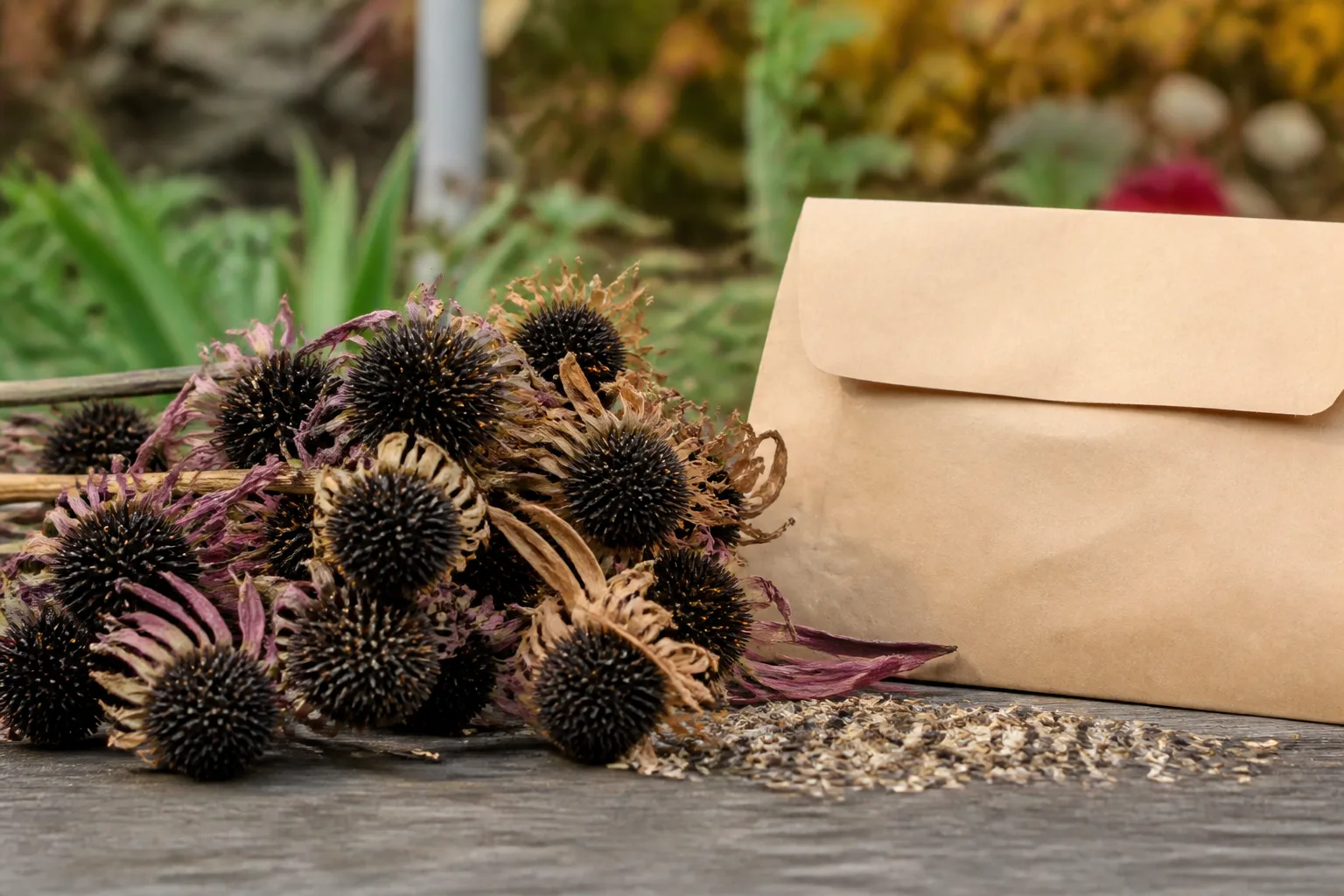
Seed is the cheapest way to fill a meadow or border, but patience is required. Seed-grown plants often need one to two years before their first significant bloom.
Harvest: Wait until cones darken and feel stiff. Wear gloves — cone spines are sharp. Rub seeds free, dry on paper for a week, and store cool and dry.
Stratification: Seeds germinate best after a cold-moist period. Either sow outdoors in fall and let winter stratify naturally, or mix seeds with damp sand in a sealed bag in the refrigerator for 8 to 10 weeks before indoor sowing.
Sow: Plant seeds ¼ to ½ inch deep in seed-starting mix. Indoors, germination typically occurs in 10 to 14 days at 65–70°F after stratification. Grow seedlings under bright light 1 to 2 inches above leaves to prevent stretching.
Timeline: Leaves appear within a few months; first flowers may not arrive until the second or even third year. Mark seedling rows so you do not weed them out in spring.
Winter sowing in milk jugs or direct fall sowing in prepared beds works well in zones 4 and colder because natural freeze-thaw cycles break dormancy without refrigerator space.
Dividing Established Clumps
Divide every three to four years when centers die out or flowering declines. Spring or early fall is ideal — cool weather and moisture help divisions recover.
Dig the entire clump with a spade, shake off excess soil, and split the crown into two or three sections with healthy roots and shoots attached. Replant immediately at the same depth, water well, and mulch lightly. Divisions often bloom the following year if taken from vigorous outer growth rather than woody center tissue.
Pests, Diseases, and Common Problems
Purple coneflower is generally trouble-free, which makes sudden decline alarming. Most issues trace to site problems, aster yellows, or occasional chewing insects.
Aster Yellows and Leaf Spot
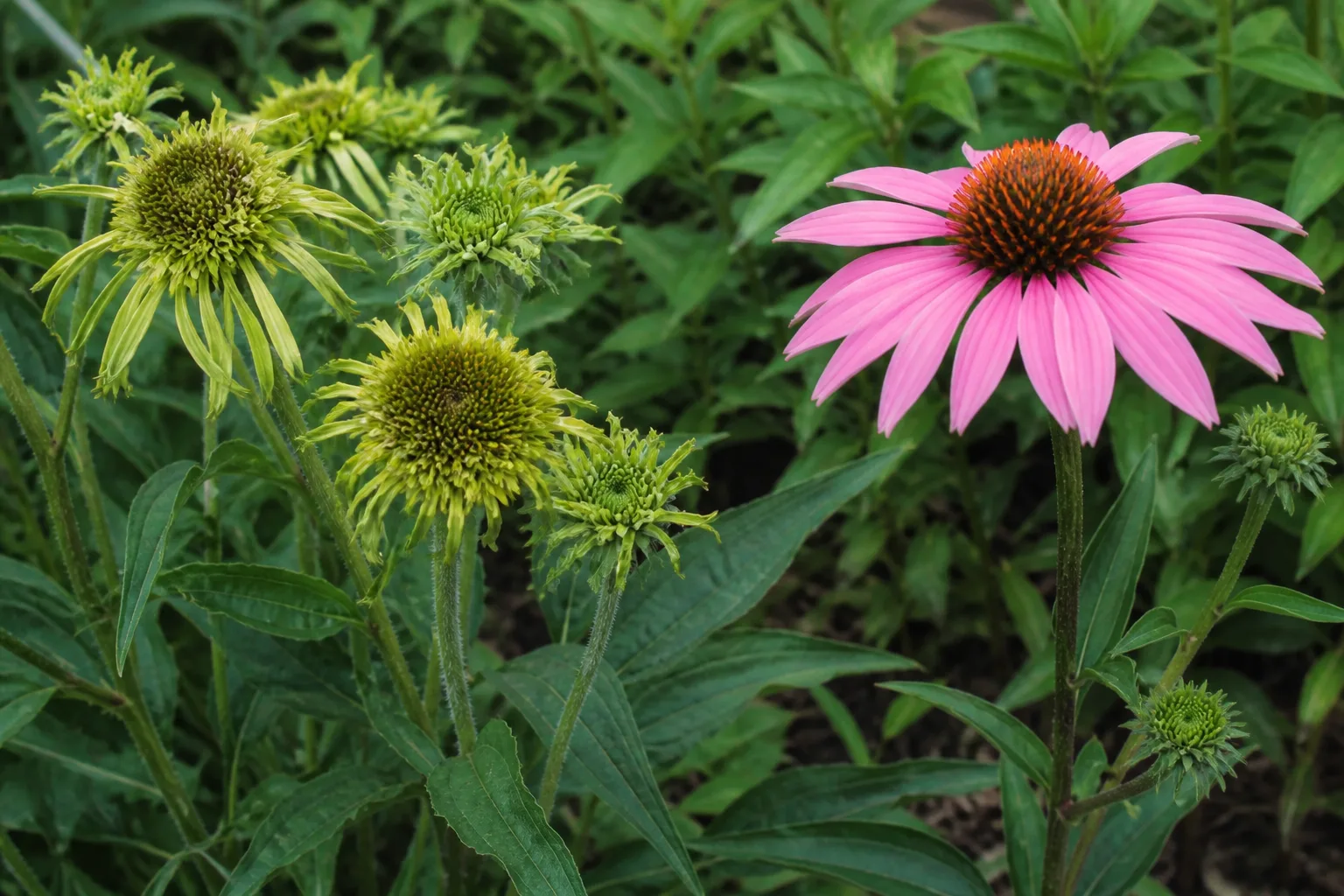
Aster yellows is a phytoplasma disease spread by sap-sucking insects such as leafhoppers. Infected plants produce green, distorted, tufted flowers — sometimes called “witches’ broom” on the cone — and stunted growth. There is no cure. Remove and destroy affected plants immediately (do not compost) to limit spread to nearby asters, coneflowers, and other composites. Missouri Botanical Garden lists coneflower as susceptible (Missouri Botanical Garden: Aster Yellows).
Leaf spot (bacterial or fungal) causes brown or black spots on foliage, often worse in crowded, humid plantings. Improve air flow, avoid overhead watering late in the day, and remove heavily infected leaves. Severe cases may warrant cutting plants back to regenerate clean foliage.
Japanese beetles chew petals and leaves in midsummer. Hand-pick in morning, use row covers on small plantings if legal in your area, or accept cosmetic damage on established clumps — healthy plants usually outgrow light feeding.
Overwatering, Flop, and Poor Flowering
Blackened stems, mushy crowns, and sudden collapse usually mean too much water or poor drainage — not disease. Let soil dry before watering again and consider lifting the plant to a raised berm if the site is chronically wet.
Leggy flop in partial shade is a site problem, not a staking problem. Move divisions to a sunnier spot in spring or fall.
Lots of foliage but few flowers often signals excess nitrogen, insufficient sun, or immaturity in seed-grown plants. Fix culture before reaching for supplements.
Getting More Blooms and Wildlife Value From Every Plant
To maximize flowers on established plants: full sun, lean soil, regular deadheading through midsummer, and division before centers hollow out. A mid-season shearing of spent stems — cutting the whole clump back by one-third after the first flush — can push a second wave of bloom in some gardens, though it delays seed for birds.
For wildlife, plant in groups of at least three so pollinators find targets easily. Include single-flower forms. Leave a portion of seed heads from September onward. Maintain a mosaic of stem heights through winter for nesting bees.
Cut flowers last about a week in a vase if harvested when petals are horizontal and cones are just beginning to show orange pollen. Change water daily and recut stems.
Conclusion
Purple coneflower rewards gardeners who treat it like the prairie perennial it is: sun, drainage, modest fertility, and seasonal attention to deadheading and division. Plant it in spring or fall at the right depth, water consistently through year one, then step back and let established clumps handle dry spells. Choose species or single-flower cultivars for pollinators; enjoy doubles as ornamentals with realistic expectations. Watch for aster yellows and wet-soil decline early, and you will get years of summer color, winter structure, and goldfinches on dried cones — without replacing the bed every few seasons.



