Catnip Care Guide: Light, Water, Soil & Cat Safety
Nepeta cataria
Catnip (Nepeta cataria) grows best in sun and well-drained soil, needs steadier water while establishing, and can spread by rhizomes and seed. ASPCA lists it as toxic to cats.
Catnip Care Guide: Light, Water, Soil & Cat Safety
Start with wateringThe most common care mistake for CatnipWatering guide →Catnip care essentials
Light
Full sun; partial shade is tolerated, especially afternoon shade in hot or humid conditions
Water
Keep young plants evenly moist while they establish; established Catnip tolerates dry spells, so water when prolonged dry weather leaves the root zone dry.
Soil
Average, well-drained soil suits Catnip; it tolerates many soil textures and can thrive in relatively poor soil.
Humidity
Temperature
Fertilizer
Routine fertilizer is usually unnecessary in average garden soil; Catnip grows in poor soils.
About Catnip
Catnip is native to Eurasia (Europe and Asia); naturalized across temperate regions, typically reaches Up to about 90 cm tall and 90 cm wide under good conditions indoors, with fast growth. Catnip has a herbaceous growth habit and part of the Lamiaceae family. It is also known as Catswort and Catmint.
| Detail | Information |
|---|---|
| Also known as | Catswort, Catmint |
| Native region | Eurasia (Europe and Asia); naturalized across temperate regions |
| Mature size | Up to about 90 cm tall and 90 cm wide under good conditions |
| Growth rate | Fast |
| Growth habit | Herbaceous |
| Scientific name | Nepeta cataria |
| Family | Lamiaceae |
Catnip Care Guide: Light, Water, Soil & Cat Safety
What Catnip is
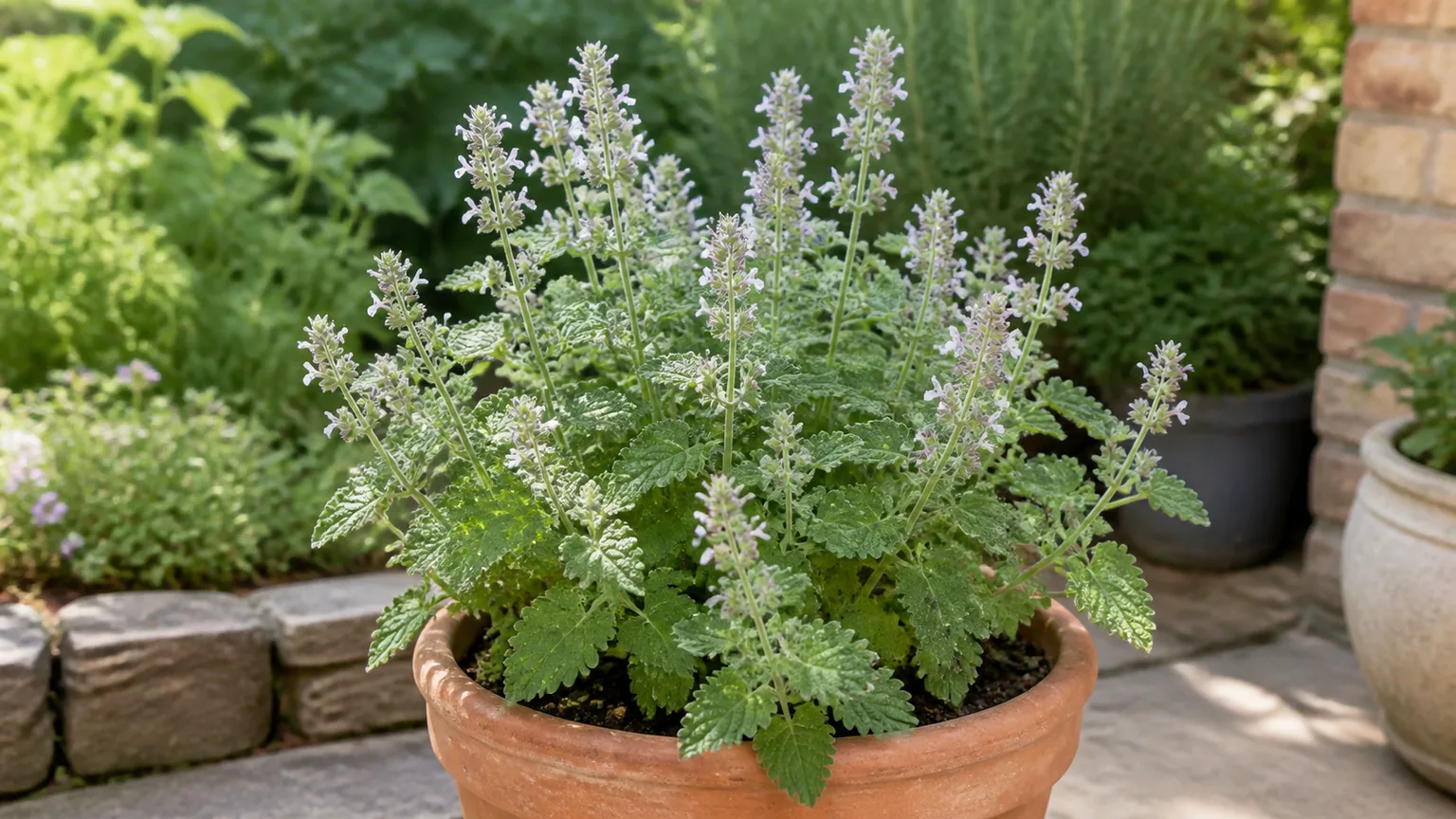
Catnip is Nepeta cataria, a vigorous herb in the mint family, Lamiaceae. It is a herbaceous perennial from Eurasia that has become naturalized in many temperate regions; the square stems and opposite, toothed leaves help distinguish it as a mint-family plant. The word “catmint” is also used for several other Nepeta species, so check the botanical name if you want the aromatic leaves commonly associated with Catnip. The University of Wisconsin–Madison Extension describes Catnip as a vigorous Eurasian perennial.
Grow it as an outdoor herb or in a large, well-drained container rather than treating it like a delicate indoor foliage plant. In a garden bed it can become a loose, branching clump; give it room and expect seedlings unless you remove spent flowers. In a pot, you can position it where it receives good light while making volunteer seedlings and access by cats easier to manage.
How Catnip grows and spreads
Under favorable conditions, Catnip can reach about 90 cm tall and wide. It dies back in cold winters and sends up fresh stems in spring where conditions allow it to persist; in warmer Indian regions, do not rely on cold-winter dieback as a seasonal reset, and monitor the clump through warm and wet periods. Short rhizomes can form colonies, and seed adds a second route of spread. Extension guidance notes its size, short rhizomes, and ready reseeding.
This growth habit explains why a compact-looking seedling can later crowd nearby herbs. Choose a spot where the plant can branch without smothering smaller plants, or start it in a container if you want a clear boundary. Removing flowers before seed capsules mature is the practical control for volunteer plants; a pot alone will not prevent seeds from escaping if flowers are left to set.
Catnip and ornamental catmints are not interchangeable
True Catnip is one member of a larger group of plants sold as catmints. Ornamental Nepeta species such as Nepeta × faassenii are commonly selected for their flower display and garden form, while N. cataria is grown for its leaves and its characteristic appeal to many cats. Their care overlaps, but the common names are not reliable enough to identify the species. Gardening Know How compares Catnip with ornamental catmint.
When buying a plant or seed, look for Nepeta cataria on the label. If your goal is a neat border plant, an ornamental catmint may suit better; if you want true Catnip, plan around its more rangy form and ability to reseed. Avoid assuming that a plant will attract cats just because its tag says “catmint.”
Choosing a Catnip site in India
Start with a bright outdoor position that drains freely after watering or rain. In hot parts of India, give the plant morning sun and some relief from intense late-afternoon heat. During the monsoon, move containers under a bright open shelter if rain keeps the mix saturated; protect the plant from waterlogging rather than keeping it indoors in a dim room. Catnip grows best in full sun and average, well-drained soil, while partial shade is tolerated. NC State Extension notes Catnip’s light and soil tolerances.
Leave enough space for air to move around the stems and enough room to reach the base for watering and trimming. If cats visit the garden, place the plant where rolling or chewing will not damage young growth. A pot near a sunny doorway may be convenient, but it should not sit in a saucer that remains full of water.
Light: give it sun, then protect it from harsh afternoon heat
Catnip grows best in full sun and can tolerate partial shade. In a cooler or mild season, several hours of direct light helps keep stems sturdy and supports flowering. In hot, exposed Indian locations, morning sun with light afternoon shade is a sensible compromise; deep shade can leave the plant stretched and sparse. Gardener’s Path recommends afternoon shade in hot climates.
For a container, observe the plant through the warmest part of the day. If the pot mix dries rapidly and leaves wilt repeatedly despite correct watering, shift it out of the hottest afternoon sun or use a larger pot. If stems become long and lean toward the light, move the plant to a brighter spot and pinch the growing tips once it is actively growing. See the focused Catnip light guide for placement and light-stress signs.
Water: support establishment, then let the root zone dry between drinks
Keep a newly planted Catnip evenly moist while its roots establish, but do not keep the soil constantly wet. Once established in the ground, it tolerates dry spells and usually needs water during prolonged dry weather rather than on a fixed weekly schedule. Check the soil near the roots; water thoroughly when it has dried down, then allow excess water to drain. MyGardenLife’s Catnip watering guidance emphasizes checking soil and adapting to weather.
Pots dry faster than garden beds, particularly in hot weather and wind, so check them more often. During humid monsoon weather, check before watering because the surface can look dry while the lower mix remains wet. If a plant wilts in a wet pot, do not add more water automatically; first check drainage and moisture below the surface. The Catnip watering guide covers these checks in more detail.
Soil and drainage: avoid a persistently wet root zone
Catnip accepts average garden soil and can grow in relatively poor soil, but the root zone should drain well. A heavy, compacted bed that stays soggy after rain is a poorer choice than an ordinary bed that sheds excess water. For containers, use a free-draining potting mix in a pot with unobstructed drainage holes; do not use garden soil alone in a small pot, where it can settle and hold water unevenly. Gardening Know How also recommends well-drained soil for Catnip.
If water sits on the surface or the container remains heavy for days, improve drainage before changing the watering schedule. The Catnip soil guide explains container mix and drainage choices, while the repotting guide is the next step if the root mass has filled its pot.
Containers: a useful way to control spread
A container keeps the main clump in one place and makes it easier to move Catnip away from intense afternoon heat or persistent rain. Choose a stable pot with drainage holes and enough room for branching; a tiny pot dries too quickly and can make a vigorous plant top-heavy. Keep the rim accessible so you can remove spent flowers before seed forms. Epic Gardening recommends a pot as a practical way to contain Catnip’s spread.
Containers reduce rhizome spread into nearby beds, but they do not contain seed if flowers mature and release it. Set the pot on a surface where drainage can escape, and avoid leaving standing water in a tray. If the plant becomes crowded or the mix dries unusually fast because roots fill the container, divide the clump or move it to a slightly larger pot in a mild growing period.
Fertilizer: when less is enough
Routine feeding is usually unnecessary when Catnip is growing in average garden soil. The species can thrive in relatively poor soil, and established plants do not need fertilizer. If growth is weak, check light, drainage, and root crowding before assuming nutrients are the problem. Gardening Know How notes that established Catnip does not need fertilizer.
For a container, refresh the mix when repotting and follow the product label before adding anything else. If growth remains weak despite adequate light and healthy roots, confirm that the roots are not crowded or waterlogged before considering any supplemental feed. The Catnip fertilizer guide is for readers who need to assess a container or depleted mix.
Seasonal care through summer, monsoon, and cooler months
In hot weather, check container moisture more frequently and reduce exposure to intense afternoon sun if the plant wilts repeatedly. Do not use a rigid watering calendar: rainfall, pot size, wind, and the plant’s stage of establishment matter more than the month alone. During the monsoon, shelter a pot from prolonged soaking and empty any water-catching tray after rain.
In cooler regions, Catnip may die back after cold weather and return from its roots in spring. In much of India it may remain leafy longer, but growth can still slow during stress or a dry season. Remove dead stems when new growth resumes and avoid dividing or repotting during peak heat. The Catnip repotting guide covers timing and recovery after a move.
Flowers, pruning, and reseeding
Catnip can flower from late spring into fall in suitable climates, and its small flowers attract bees, wasps, flies, and butterflies. Cutting the plant back after its first flowering can encourage another flush of blooms; removing flower heads before seeds form reduces volunteer seedlings. If you want flowers for pollinators or seed for propagation, leave some stems and remove unwanted seedlings while they are small. UW–Madison Extension describes Catnip’s flowering period, pollinators, and reseeding.
Pinching young growth in spring helps produce a denser shape, but repeated trimming is optional if you prefer a looser herb clump. For seed collection, allow selected capsules to mature and collect them before they scatter. The Catnip propagation guide covers seed and division, while this overview focuses on keeping a mature plant healthy and in bounds.
Cat safety and protecting young plants
Many cats are attracted to Catnip leaves and may chew or roll on the plant, which can break young stems. A small cage or a hanging container can help the plant establish beyond a cat’s reach. Responses vary between individual cats, so the plant’s common name should not be treated as a safety guarantee.
The ASPCA lists Catnip as toxic to cats and notes possible digestive signs as well as sedating or stimulating responses; keep the plant and clippings away from cats that may ingest them, and contact a veterinarian for case-specific advice if ingestion occurs. The listing is specific to cats and should not be read as a classification for other pets. Check the ASPCA Catnip listing for the current pet-safety entry.
Common Catnip care mistakes
The most common mistake is treating Catnip like a thirsty houseplant and keeping its mix continuously damp. Young plants need steadier moisture, but an established plant handles dry spells; water based on the root-zone check and the weather. Another common error is planting it in a low spot or leaving a pot in standing water, particularly during heavy monsoon rain.
The opposite mistake is letting a new transplant dry out before it has rooted in. Check new plants frequently, then ease back as they establish. Finally, allow space for the plant’s loose habit and decide early whether reseeding is welcome: deadheading after flowering is easier than pulling a dense patch of seedlings later.
Troubleshooting: what to check first
If Catnip wilts, check soil moisture before reaching for a watering can. Dry soil around a newly planted clump points to a need for a thorough drink and closer checks while roots establish; wet soil calls for checking drainage and moving a pot out of rain, not adding more water. If the plant is in a dark or hot position, adjust light exposure after checking the root zone.
If stems are tall and floppy, assess whether the plant gets enough light and whether it has become overgrown; pinch or shear it during active growth if a compact shape matters. If seedlings appear outside the clump, remove them while small or cut flower heads before seeds ripen. If growth is weak, correct light, drainage, and root crowding before assuming the plant needs fertilizer.
When to use this page vs other Catnip guides
Use this overview to identify true Catnip, choose a growing setup, and understand its basic growth and spread. For a specific placement question, use the Catnip light guide; for deciding when to water, go to the Catnip watering guide. These pages focus on one care decision at a time, while this guide connects them into a whole-plant routine.
If the problem is a persistently wet mix, compare the Catnip soil guide with the Catnip watering guide before changing fertilizer. Use the Catnip fertilizer guide for feeding questions, the repotting guide for a crowded pot, and the propagation guide to start more plants or divide a clump.
Related Catnip guides
- Catnip light guide: choose a bright position and recognize light stress.
- Catnip watering guide: decide when to water in beds and containers.
- Catnip soil guide: improve drainage and select a container mix.
- Catnip fertilizer guide: decide whether a pot needs supplemental feeding.
- Catnip repotting guide: handle crowded roots and a drying-out container.
- Catnip propagation guide: grow Catnip from seed or divide an established clump.
Conclusion
Catnip is easiest to manage when it has good light, free-draining soil, and enough room to branch. Keep new plants evenly moist while they establish, then water established plants mainly through extended dry spells; use containers, trimming, and seedling removal to manage spread. In hot Indian weather, make afternoon shade and monsoon drainage part of the site choice, and keep cats away from the plant because the ASPCA lists Catnip as toxic to cats.
How to care for Catnip?
How much light does Catnip need?
Full sun; partial shade is tolerated, especially afternoon shade in hot or humid conditions. Partial shade. direct sun
- Full sun - Full sun; partial shade is tolerated, especially afternoon shade in hot or humid conditions.
- partial shade is tolerated - Partial shade.
- especially afternoon shade in hot or humid conditions - Full sun; partial shade is tolerated, especially afternoon shade in hot or humid conditions.
- Partial shade - Partial shade.
- direct sun - direct sun.
When should you water Catnip?
Keep young plants evenly moist while they establish; established Catnip tolerates dry spells, so water when prolonged dry weather leaves the root zone dry.
- Check soil moisture near the root zone - Keep young plants evenly moist while they establish; established Catnip tolerates dry spells, so water when prolonged dry weather leaves the root zone dry.
- water at the base when young plants are drying or established plants face an extended dry spell - Keep young plants evenly moist while they establish; established Catnip tolerates dry spells, so water when prolonged dry weather leaves the root zone dry.
- Drain excess water - Keep young plants evenly moist while they establish; established Catnip tolerates dry spells, so water when prolonged dry weather leaves the root zone dry.
What soil works best for Catnip?
Average, well-drained soil suits Catnip; it tolerates many soil textures and can thrive in relatively poor soil.
- For containers, use a moisture-retentive but well-draining potting mix. - Average, well-drained soil suits Catnip; it tolerates many soil textures and can thrive in relatively poor soil.
How to propagate Catnip?
Sow seed or divide established clumps; stem cuttings are another option for making new plants.
- Seed - Sow seed or divide established clumps; stem cuttings are another option for making new plants.
- Division - Split the root ball into smaller sections, each with stems and roots attached.
- Stem cuttings - Sow seed or divide established clumps; stem cuttings are another option for making new plants.
Grower notes for Catnip
Give it sun, drainage, and room
Catnip grows best in full sun and average, well-drained soil, but it tolerates partial shade and many soil types. In hot or humid conditions, give it some afternoon shade. It can reach about 90 cm tall and wide, so leave room for a loose, branching clump.
Water the young plant, then ease back
Keep a new transplant evenly moist while it develops roots. Once established, Catnip tolerates drought; water during prolonged dry spells rather than keeping the soil constantly wet. Check container plants more often because pots dry faster than garden beds.
Contain a willing spreader
Short rhizomes can form colonies, and Catnip readily reseeds. A container, edging, or a spot where seedlings can be removed makes it easier to keep the herb in bounds. Snip flower heads before seed forms if you want to limit volunteer plants.
Prune for shape and another flush of flowers
Pinch young stems in spring for a denser form. After the first flowering, shear the plant to encourage another bloom; cutting it back after flowering also reduces seed production. Its flowers attract bees, butterflies, and other pollinators.
Keep the species name clear
This hub is for Catnip, Nepeta cataria. The common name “catmint” is also used for other Nepeta species, including ornamental catmints with different garden habits, so check the botanical name when buying a plant.
Pet safety
ASPCA lists Catnip as toxic to cats. Ingestion may cause vomiting or diarrhea, and some cats become sedated while others are stimulated. That Catnip entry is cat-specific; it does not establish safety for dogs or other pets.
ASPCA lists Catnip (Nepeta cataria) as toxic to cats because of nepetalactone; reported signs include vomiting, diarrhea, and either sedation or stimulation. The ASPCA listing does not classify dogs or other pets.
Watering Catnip
For Catnip, check soil moisture near the root zone; water at the base when young plants are drying or established plants face an extended dry spell. and water during establishment, check regularly; once established, water during prolonged dry spells. Containers may need more frequent checks than garden beds. Water more consistently after planting and during dry spells; established garden plants tolerate drought, while pots dry more quickly.
| Detail | Information |
|---|---|
| How often | During establishment, check regularly; once established, water during prolonged dry spells. Containers may need more frequent checks than garden beds. |
| How to check | Check soil moisture near the root zone; water at the base when young plants are drying or established plants face an extended dry spell. |
| Seasonal changes | Water more consistently after planting and during dry spells; established garden plants tolerate drought, while pots dry more quickly. |
Soil & potting for Catnip
Use a mix of For containers, use a moisture-retentive but well-draining potting mix. for Catnip. Good drainage is important. Avoid sites where water pools; container mix should drain freely while retaining some moisture. Repot no fixed schedule; divide or move container plants when the clump becomes crowded., ideally in spring or early fall, before heat or cold stress.
| Detail | Information |
|---|---|
| Recommended mix | For containers, use a moisture-retentive but well-draining potting mix. |
| Drainage | Good drainage is important. Avoid sites where water pools; container mix should drain freely while retaining some moisture. |
| Repotting frequency | No fixed schedule; divide or move container plants when the clump becomes crowded. |
| Best season to repot | Spring or early fall, before heat or cold stress |
Signs it needs repotting
- The clump has outgrown its container
- The container dries unusually quickly as the plant fills it
Humidity & temperature for Catnip
Fertilizer & pruning for Catnip
Use routine fertilizer is usually unnecessary in average garden soil; Catnip grows in poor soils. for Catnip.
| Detail | Information |
|---|---|
| Fertilizer type | Routine fertilizer is usually unnecessary in average garden soil; Catnip grows in poor soils. |
Pruning (optional)
Pinch spring growth for a denser shape; shear after the first flowering to encourage repeat bloom, or cut back after flowering to reduce reseeding.