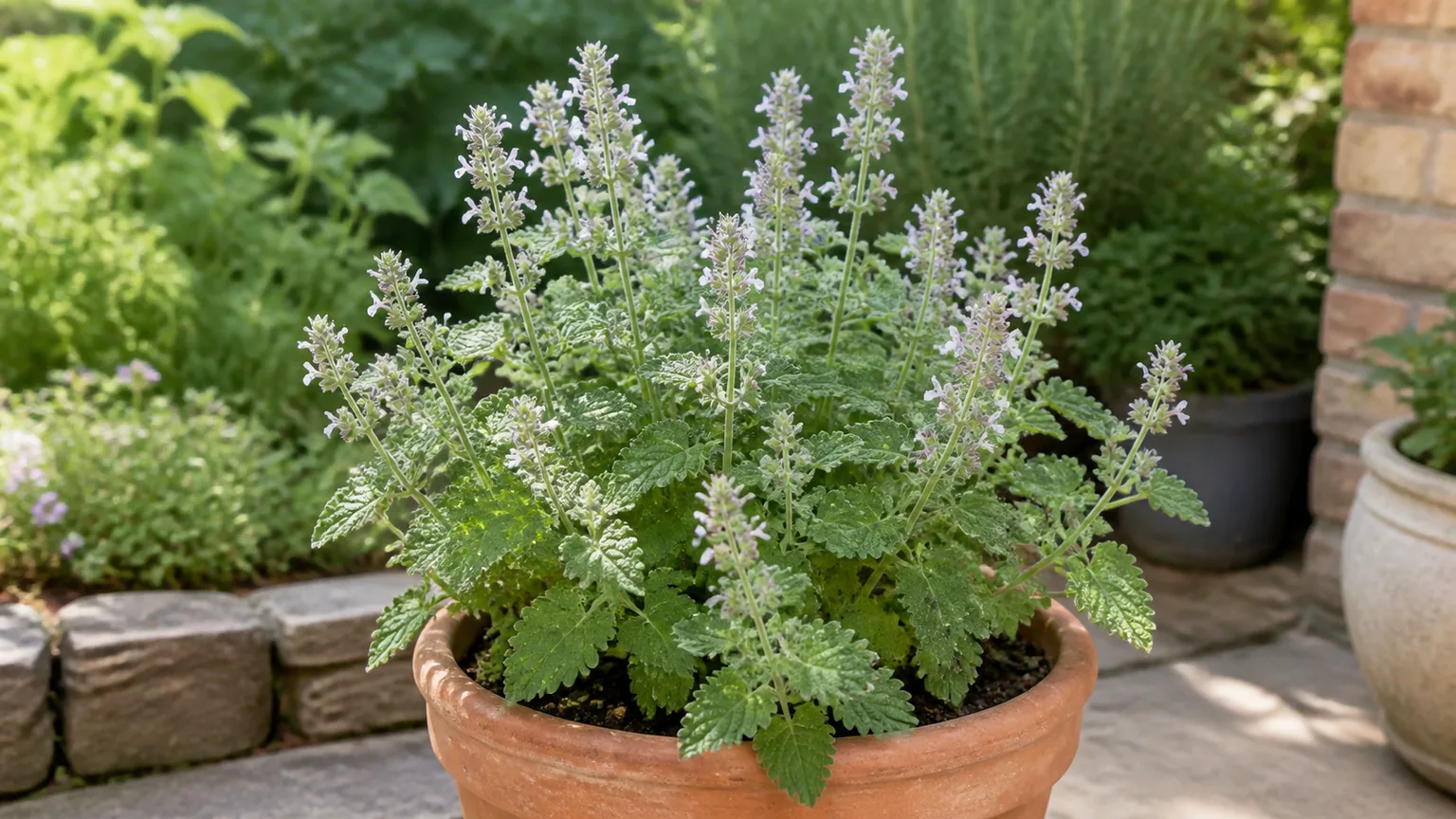
Keep young plants evenly moist while they establish; established Catnip tolerates dry spells, so water when prolonged dry weather leaves the root zone dry. In practice, water during establishment, check regularly; once established, water during prolonged dry spells. Containers may need more frequent checks than garden beds. Check soil moisture near the root zone; water at the base when young plants are drying or established plants face an extended dry spell. Water more consistently after planting and during dry spells; established garden plants tolerate drought, while pots dry more quickly.
What light does Catnip need?
Catnip grows best in full sun; partial shade is tolerated, especially afternoon shade in hot or humid conditions. It also tolerates Partial shade. Avoid deep shade and persistently wet sites.
Is Catnip toxic to pets?
Catnip is toxic to cats. Keep out of reach of curious pets and choose pet-safe alternatives for accessible spots.
How do I propagate Catnip?
Catnip propagates by seed, division, stem cuttings. The easiest method is division. Sow seed or divide established clumps; stem cuttings are another option for making new plants.
What soil is best for Catnip?
Use average, well-drained soil suits Catnip; it tolerates many soil textures and can thrive in relatively poor soil. A good mix includes For containers, use a moisture-retentive but well-draining potting mix. Good drainage is important. Avoid sites where water pools; container mix should drain freely while retaining some moisture.
When should I repot Catnip?
Repot Catnip no fixed schedule; divide or move container plants when the clump becomes crowded., ideally in spring or early fall, before heat or cold stress. Signs it needs a bigger pot: the clump has outgrown its container, the container dries unusually quickly as the plant fills it.
Written by Sai AnanthLead content writer at LeafyPixels. B.Pharmacy graduate from Andhra University with a background in pharmacognosy, turned indoor gardening writer after a long-time plant hobby became a research-led resource for home growers.View Sai Ananth's profile · Reviewed by LeafyPixels Review Board
This Catnip problems problem guide was researched and written by Sai AnanthLead content writer at LeafyPixels. B.Pharmacy graduate from Andhra University with a background in pharmacognosy, turned indoor gardening writer after a long-time plant hobby became a research-led resource for home growers.View Sai Ananth's profile. Problems symptoms on Catnip, lookalike causes, and step-by-step fixes are cross-checked against extension pest, disease, and care references before publication.
We prioritize sources that hold up under scrutiny:
University cooperative extension bulletins and fact sheets (Penn State, Clemson, UMD, NC State, and similar programs)
Botanical garden and horticultural society publications
Peer-reviewed plant science and veterinary toxicology references where pet safety matters (including ASPCA Animal Poison Control)
Established reference works on indoor plant culture
The LeafyPixels editorial team then reviews the draft for clarity, step-by-step usefulness, and fit with real apartment and home conditions-not ideal greenhouse setups. When guidance changes materially, we update the page and note the revision date.
Epic Gardening (n.d.) Practical establishment watering, dry-spell watering, container soil, pruning, and spring or early-fall planting guidance. [Online]. Available at: https://www.epicgardening.com/catnip-2/ (Accessed: 1 March 2024).
NC State Extension Plant Toolbox (n.d.) Scientific name, family, aliases, origin, light and soil tolerances, heat and humidity note, pollinators, spread, and cat response. [Online]. Available at: https://plants.ces.ncsu.edu/plants/nepeta-cataria/ (Accessed: 1 March 2024).
University of Wisconsin–Madison Extension (n.d.) Species identity, Eurasian origin, perennial habit, size, flowering, spreading, light, soil, drought tolerance, pruning, and propagation. [Online]. Available at: https://hort.extension.wisc.edu/articles/catnip-nepeta-cataria/ (Accessed: 1 March 2024).