Best Companion Plants for Roses by Garden Condition
Choose the best companion plants for roses by sun, soil, water, and space. Compare reliable perennials, herbs, bulbs, and annuals without pest-control myths.
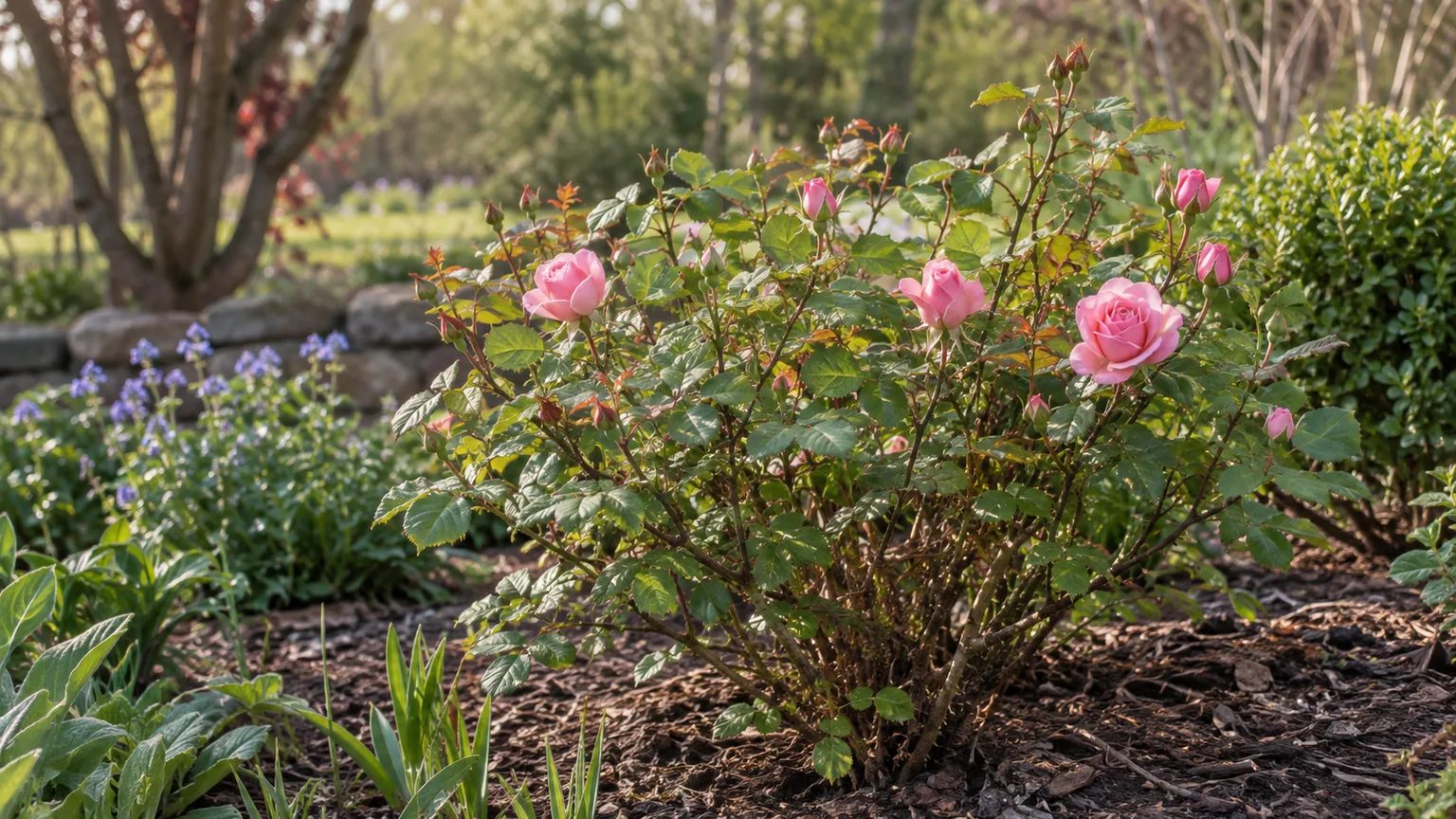
The best companions for roses are not necessarily the plants with the strongest scent or the most dramatic flowers. They are the plants that fit the same light and soil, stay within their allotted space, and give the bed a useful second layer without making it harder to prune or inspect the roses. Catmint, hardy geranium, salvia, sweet alyssum, and alliums are dependable starting points, but each belongs in a different spot.
Choose companions for a clear purpose: soften bare lower canes, add color between rose flushes, provide flowers that pollinators can use, or create a border that still looks finished after the roses fade. Treat any pest benefit as a possible side effect rather than a promise. A well-matched planting can improve a garden’s structure; it cannot replace good rose care or integrated pest management.
Choose a companion by what you need
Start with the rose, not a companion-plant chart. Record whether the bed receives full sun or afternoon shade, how quickly the soil drains, how often you irrigate, and how wide the rose grows at maturity. Roses vary by species and cultivar, but the UC Statewide Integrated Pest Management Program notes that most do well in full sun to light shade and perform better with consistent irrigation. The New York Botanical Garden’s rose-companion guide likewise recommends choosing neighbors with compatible growing conditions and growth habits. Those are better screening rules than a claim that a particular herb will repel insects.
Next, choose one job for each companion. A low mound can frame the rose and soften the bed edge; a taller perennial can add vertical flowers farther back; bulbs can provide a short spring display without occupying much ground through summer. A rose bed does not need all three jobs filled around every shrub. A few repeated plants usually look calmer and are easier to maintain than a dense collection of one-off specimens.
A quick shortlist for common rose beds
Use this as a first pass, then check the label for the specific variety’s hardiness, mature width, and water needs. Common names cover plants with different habits, and named cultivars can be dramatically more compact or more vigorous than the species.
| What your rose bed needs | Start with | Main tradeoff |
|---|---|---|
| Low color at the front edge | Catmint, hardy geranium, sweet alyssum | Keep growth outside the rose’s working space |
| Vertical flowers between rose blooms | Salvia, garden phlox | Match height to the rose and keep air moving |
| A sunny, dry outer edge | Lavender, yarrow | Do not keep them wet to match a thirsty bed |
| A spring accent with little summer bulk | Ornamental alliums | Let foliage yellow before removing it |
| A trial planting you can change next year | Calendula, verbena, angelonia | Annuals still need watering and deadheading |
The New York Botanical Garden’s guide to rose companions emphasizes compatible growing conditions, mature behavior, and visual form. This article uses the same practical filter: treat each selection as a candidate, not a guarantee, and reject it if its water demand or eventual spread conflicts with your site. For a broader bed-planning approach, see our guide to planting companions around roses.
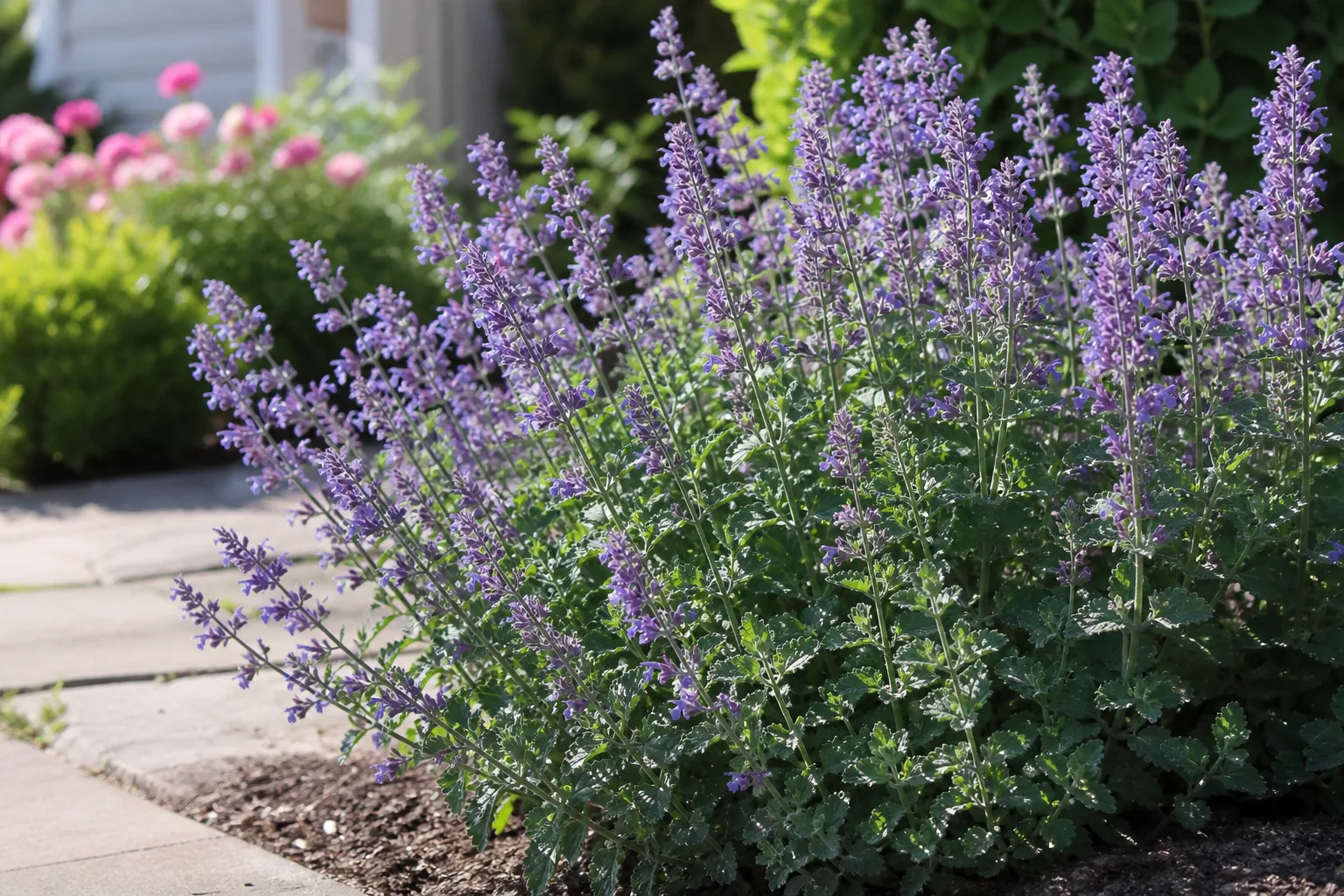
1. Catmint for a soft, repeat-flowering edge
Catmint (Nepeta species and hybrids) is one of the most adaptable companions for a sunny rose border. Its gray-green leaves and loose blue or purple flower spikes make a soft contrast with rounded rose blooms, and the foliage can cover some bare ground without creating a rigid hedge. The New York Botanical Garden highlights catmint as a traditional partner because its form works visually with roses and it can fill the lower layer of a border.
Use it along the outside edge of a shrub rose or between widely spaced plants, not pressed against the crown. Many catmints form broad mounds; the final spread depends on the variety, so leave room for the plant to lean after flowering. If it flops into a walkway or rose canes, shear it back after its main bloom rather than tying it upright.
Catmint is often promoted as a pest repellent. Aromatic foliage may affect insect behavior in some contexts, but scent alone is not reliable rose protection. NYBG explicitly notes that the traditional claims for aromatic herbs are not strongly supported by research. Grow catmint for its appearance and flowers, then scout roses as usual.
2. Hardy geranium for a flexible low layer
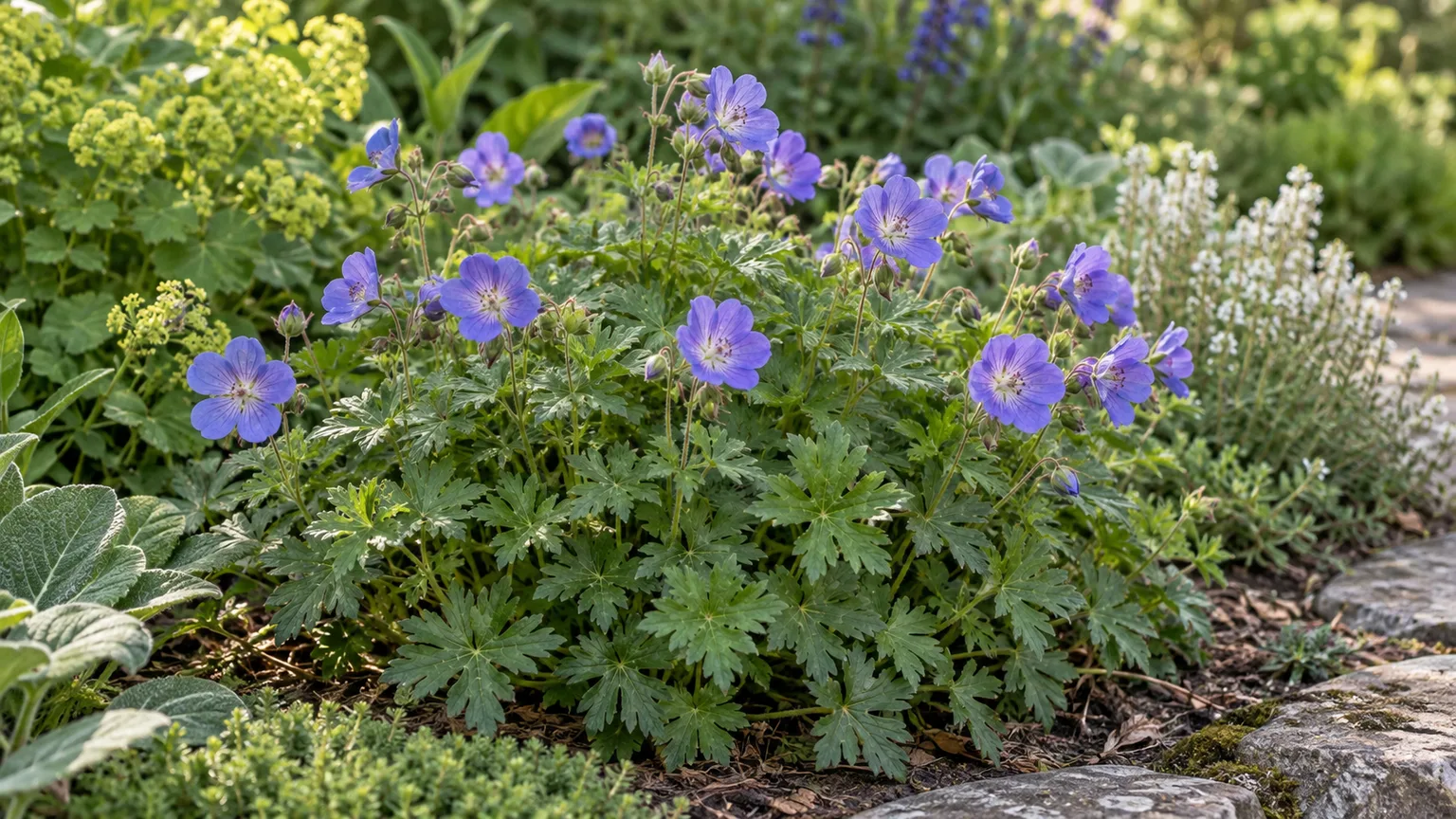
Hardy geraniums (Geranium species and cultivars) can add a low, leafy mound under taller roses without requiring a permanent carpet. Their small flowers and divided or rounded foliage help transition from woody rose stems to the front of a bed. They also tolerate a range of garden conditions, depending on species, so they can be easier to match to a rose border than a strongly drought-adapted herb.
Check the label carefully: hardy Geranium is not the tender florist or bedding geranium (Pelargonium). Some hardy geranium cultivars stay compact; others spread into a wide mat. Choose a form whose mature dimensions fit the space, and avoid a dense groundcover directly against the rose crown. If it begins to cover the lower canes, cut it back or divide it while the soil is workable.
A geranium is especially useful when you want a finished-looking bed but still need to walk up to the shrub for pruning and deadheading. Set it at the path side or in a gap between rose canopies, then leave an open ring near the base. Garden designers often use the rounded foliage as a foil for the rose’s larger blooms; the practical benefit is that it stays easy to see and manage.
3. Salvia for upright flowers and a longer season
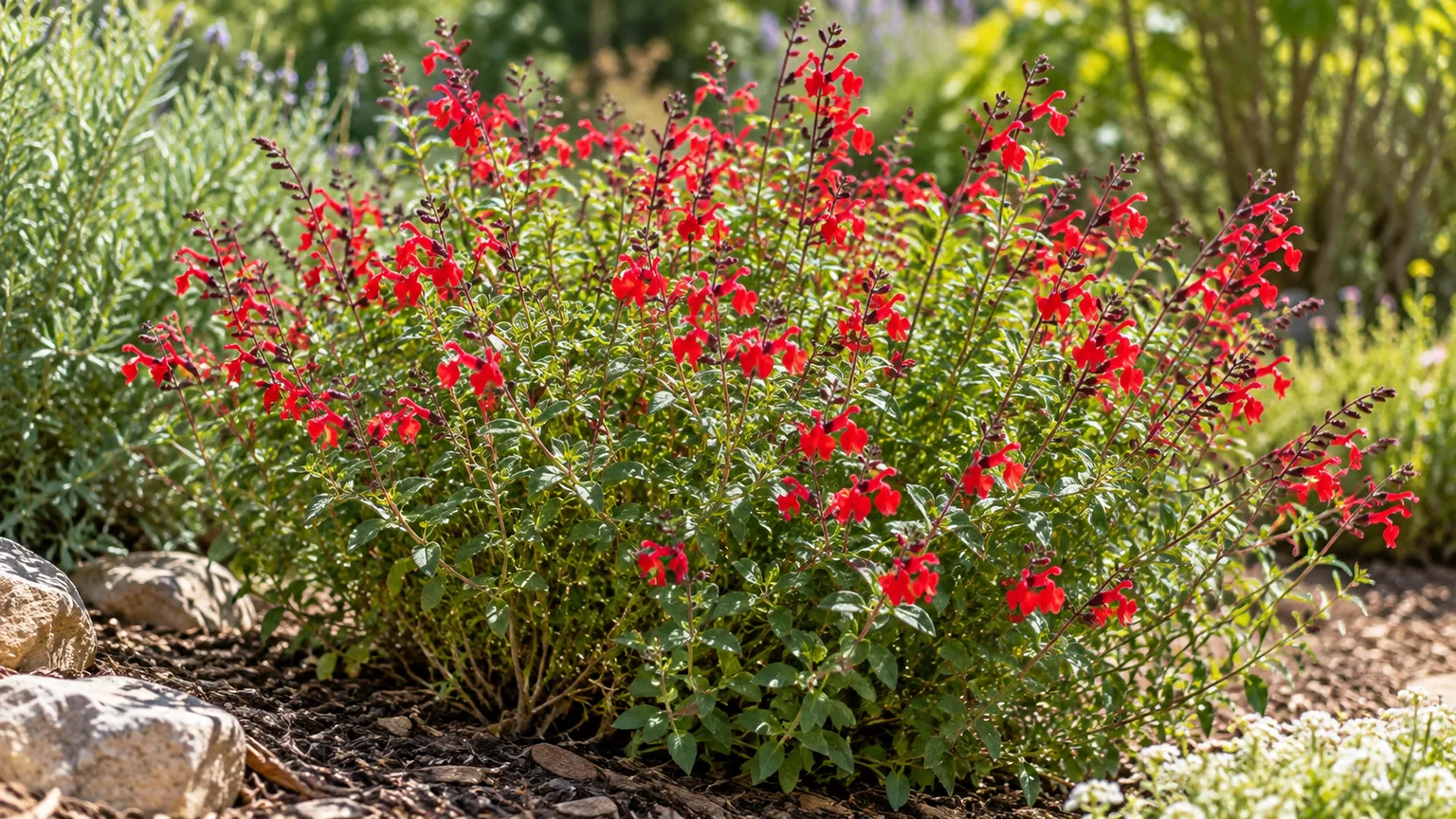
Ornamental salvias add a vertical line that contrasts with the rounded shape of many rose flowers. Meadow sage (Salvia nemorosa and related garden hybrids) is a useful border choice where the cultivar is hardy; other salvias suit warmer regions or behave as annuals. The New York Botanical Garden includes meadow sage among its recommended rose companions, and Garden Design also identifies salvia as a strong visual partner.
Place salvia behind a low rose or between larger shrubs, where its flower spikes can rise above the foliage without shading the rose for most of the day. Avoid tucking it in the center of a compact rose’s mature canopy. After the first flush, many salvias can be trimmed to encourage a tidier mound or another round of flowers, but follow the tag for the particular variety.
Salvia flowers can support pollinators, though the value depends on the flower form, local pollinator community, and what is blooming nearby. The Royal Horticultural Society recommends simple, open flowers when the goal is accessible pollen and nectar. Do not count a salvia as a control for aphids or fungal disease; its strongest, most dependable contribution is structure and additional bloom.
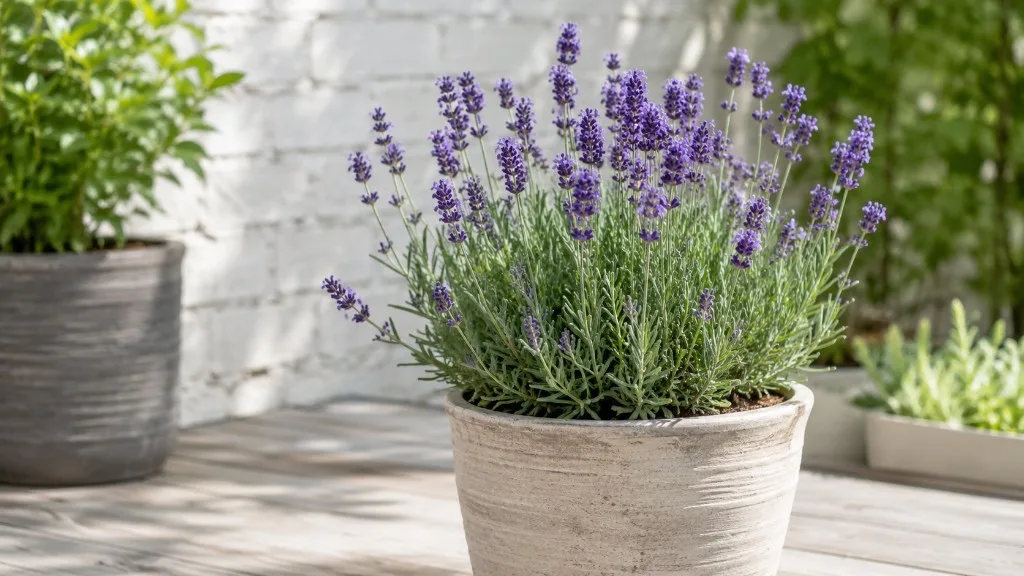
4. Lavender for sunny, sharply drained borders
Lavender pairs beautifully with roses when both plants can share a sunny position and freely draining soil. Silver foliage and narrow purple flower spikes bring a different texture to a rose bed, and the plant’s shape works well as an outer-edge accent. Garden Design and Homes & Gardens both recommend lavender for its color and form; the New York Botanical Garden also lists it among traditional companions.
The important caveat is water. UC IPM says that most roses perform better with consistent irrigation, while many lavenders decline when their roots remain wet. A pairing that looks harmonious in a photograph can fail in heavy soil or a bed watered frequently by overhead sprinklers. Put lavender on a raised or naturally drier edge, or skip it if the whole rose bed stays damp. Do not reduce needed rose irrigation just to accommodate lavender.
Match the lavender type to your climate and check the cultivar’s mature width. English lavender often suits cooler winter regions than tender Spanish or French types, but local climate and cultivar matter. Leave the plant enough room to mature into its natural shape; tight shearing can shorten its useful life. If your garden is humid or poorly drained, a hardy geranium or salvia is usually a more forgiving choice.
5. Sweet alyssum for a temporary flower carpet
Sweet alyssum (Lobularia maritima) is a low, easy-to-remove annual or short-lived perennial in many climates. Its small flowers can soften the front of a rose bed for one season, which makes it useful when a newly planted rose leaves open soil or when you want to test a color combination before committing to another perennial. Garden Design lists it as a low-growing annual option for roses.
Plant alyssum at the edge of the rose’s eventual canopy rather than directly against the canes. Although its foliage is low, a continuous mat can hide fallen leaves, make irrigation harder to inspect, and compete for water as the weather warms. Thin or trim it if it begins to bridge the open space around the rose.
Alyssum’s simple flowers can be part of a pollinator-minded planting. RHS guidance recommends simple, open flowers with a single layer of petals to make pollen and nectar more accessible. That supports a general habitat goal; it does not demonstrate that alyssum will drive aphids away from a particular rose. Treat it as a flower and seasonal ground layer, not a pesticide.
6. Ornamental alliums and chives for spring accents
Ornamental alliums add globe-shaped flowers above the rose foliage in spring or early summer, depending on species and climate. Their narrow leaves take little visual space, and bulbs can remain dormant while roses fill out later in the season. NYBG includes ornamental onions among rose partners, while Garden Design points to chives and other alliums as options for mixed borders.
Plant bulbs in small groups where you can leave them undisturbed for several years. Avoid digging through the dense root zone of an established rose to create a perfect ring. After flowering, let allium leaves yellow naturally before cutting them back; the foliage is replenishing the bulb. A nearby low perennial can soften aging leaves, provided it does not smother them. The New York Botanical Garden includes ornamental alliums among its rose-border suggestions.
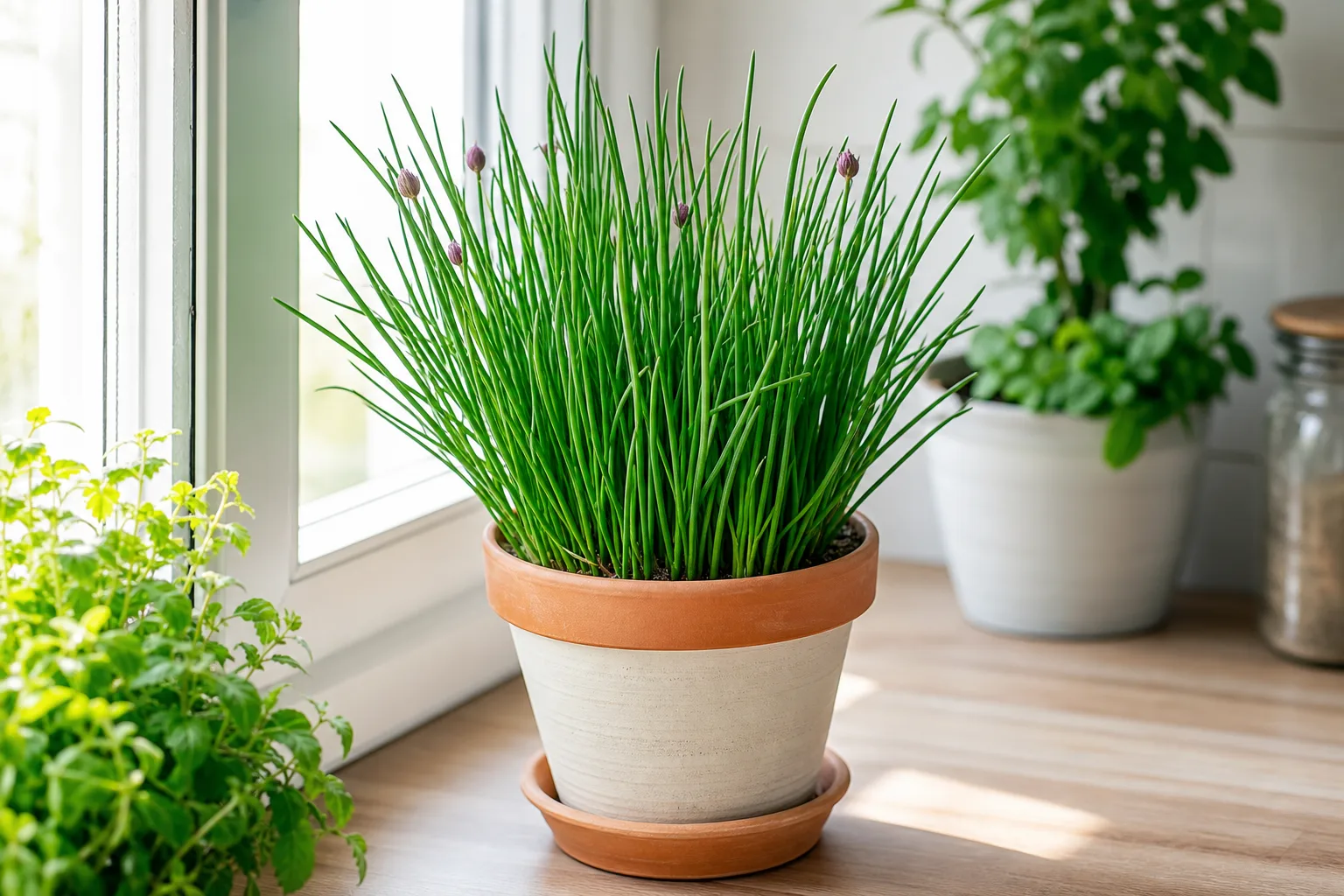
Chives are a smaller, edible allium option for a sunny border edge. Their leaves and purple flower heads work in cottage-style plantings, and you can harvest them when the plant is not being used for flower display. Chives, garlic, and ornamental alliums are often said to repel aphids, but NYBG cautions that aromatic-plant pest claims are not backed by strong research. Choose them for flowers, harvest, and form; continue inspecting new rose growth.
7. Yarrow for a sunny, drier rose border
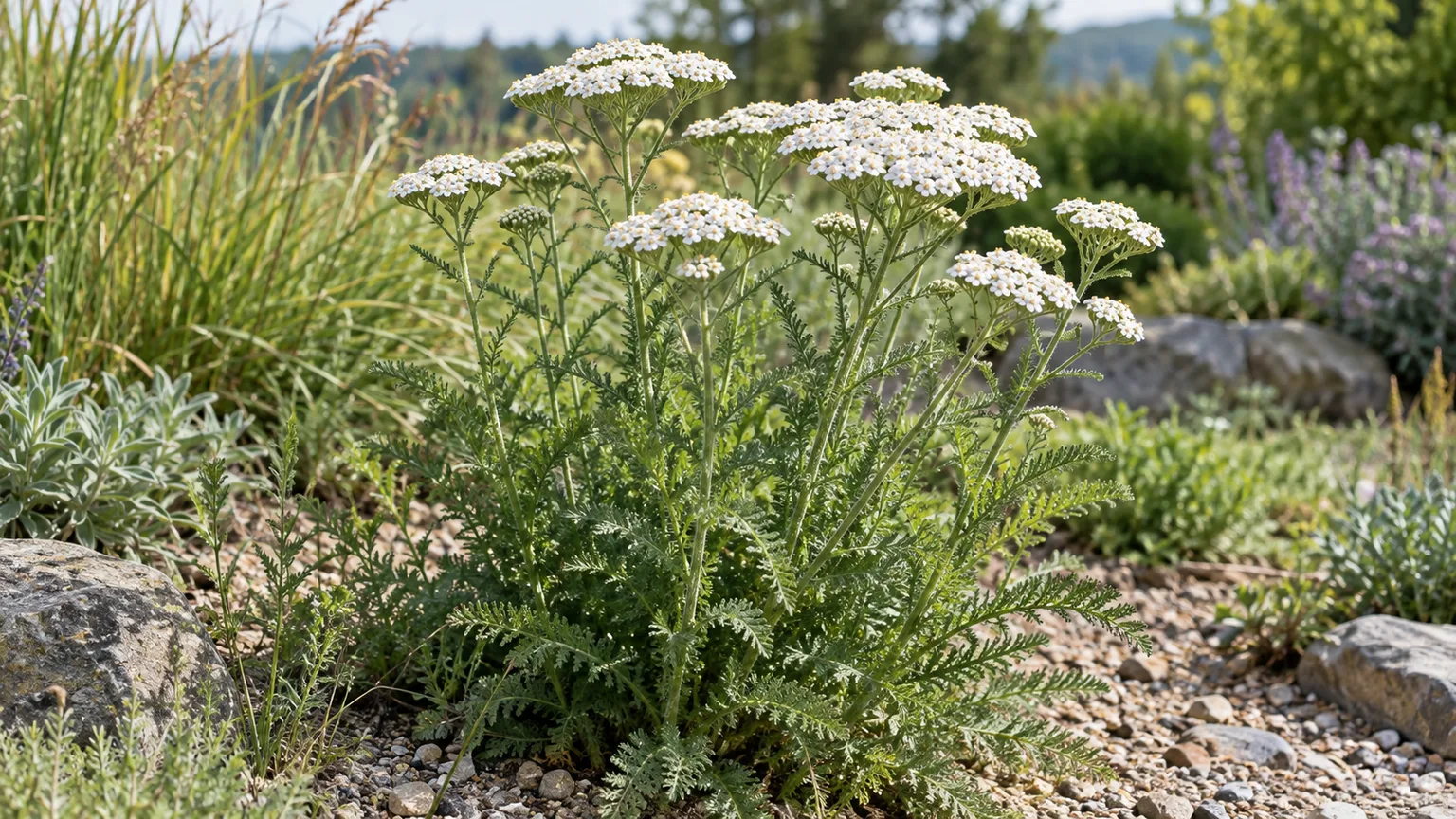
Yarrow (Achillea species and hybrids) is a useful choice for a sunny outer edge where the soil drains well and summer moisture is not constant. Its flat flower clusters contrast with the cup-shaped rose, and cultivars come in more colors than the familiar yellow. The New York Botanical Garden lists yarrow among traditional rose companions, while Garden Design notes the range of flower forms and heights.
Yarrow is not a good reason to let a rose dry out. Roses and yarrow can occupy different moisture zones in one border, but the rose still needs watering appropriate to its roots and weather. Position yarrow at the sunniest, driest edge rather than under the densest part of the rose. If a cultivar spreads by rhizomes or self-seeds in your garden, remove unwanted growth before it weaves through the rose roots. The New York Botanical Garden includes yarrow among its traditional rose companions.
The flat flower clusters may attract visiting insects, but beneficial insect presence does not mean a pest problem is controlled. If you choose yarrow for pollinator value, select open-flowered cultivars and provide bloom across the season with other plants. The RHS pollinator list is a helpful reference for selecting plants that support different insects; local native plants may be a better fit for some regions.
8. Lady’s mantle for soft foliage in mild conditions
Lady’s mantle (Alchemilla mollis) is grown as much for its pleated, scalloped leaves as for its airy chartreuse flowers. Its foliage can make a soft front layer beside pink, red, or burgundy roses, and its flower stems rise just enough to fill the space without competing with a large shrub rose. NYBG and Homes & Gardens both include it among traditional low rose companions.
Use lady’s mantle where the climate and soil suit it. It generally appreciates moisture and may struggle in a hot, dry bed that suits lavender or yarrow. It can also self-seed, so deadhead before seeds mature if you do not want seedlings throughout the border. The foliage may flop after heavy rain or in heat; place it where that relaxed habit looks intentional rather than where it will cover the rose’s working area. Homes & Gardens also includes lady’s mantle in its list of low-growing rose companions.
This is a good example of why “best” depends on the bed. A plant can be an excellent companion in a cool, moisture-retentive garden and a poor choice in a hot, drought-prone one. Choose the location first, then the plant.
9. Garden phlox for a taller summer layer
Garden phlox (Phlox paniculata) adds substantial color in summer and can bridge a visual pause between rose flushes. Choose a cultivar with a height and spread that fit the rose bed, and position it behind or between larger roses rather than in front of a compact plant. Gardeners and landscape designers often pair phlox’s clustered flowers with roses because the forms complement one another; Homes & Gardens cites phlox among perennials used in rose borders.
Phlox needs more room than a small edging plant. Crowded stems and poor air movement can make disease management harder, so do not let a tall clump press against rose canes. Leave enough space to inspect both plants and remove spent stems. Where powdery mildew is common, seek locally recommended, mildew-resistant cultivars and avoid overhead watering late in the day.
Phlox is best for a border with room for a middle layer and reasonably consistent moisture. If your only available spot is directly beneath a low rose canopy, choose a smaller plant such as alyssum or a compact hardy geranium instead.
10. Annuals when you need a reversible choice
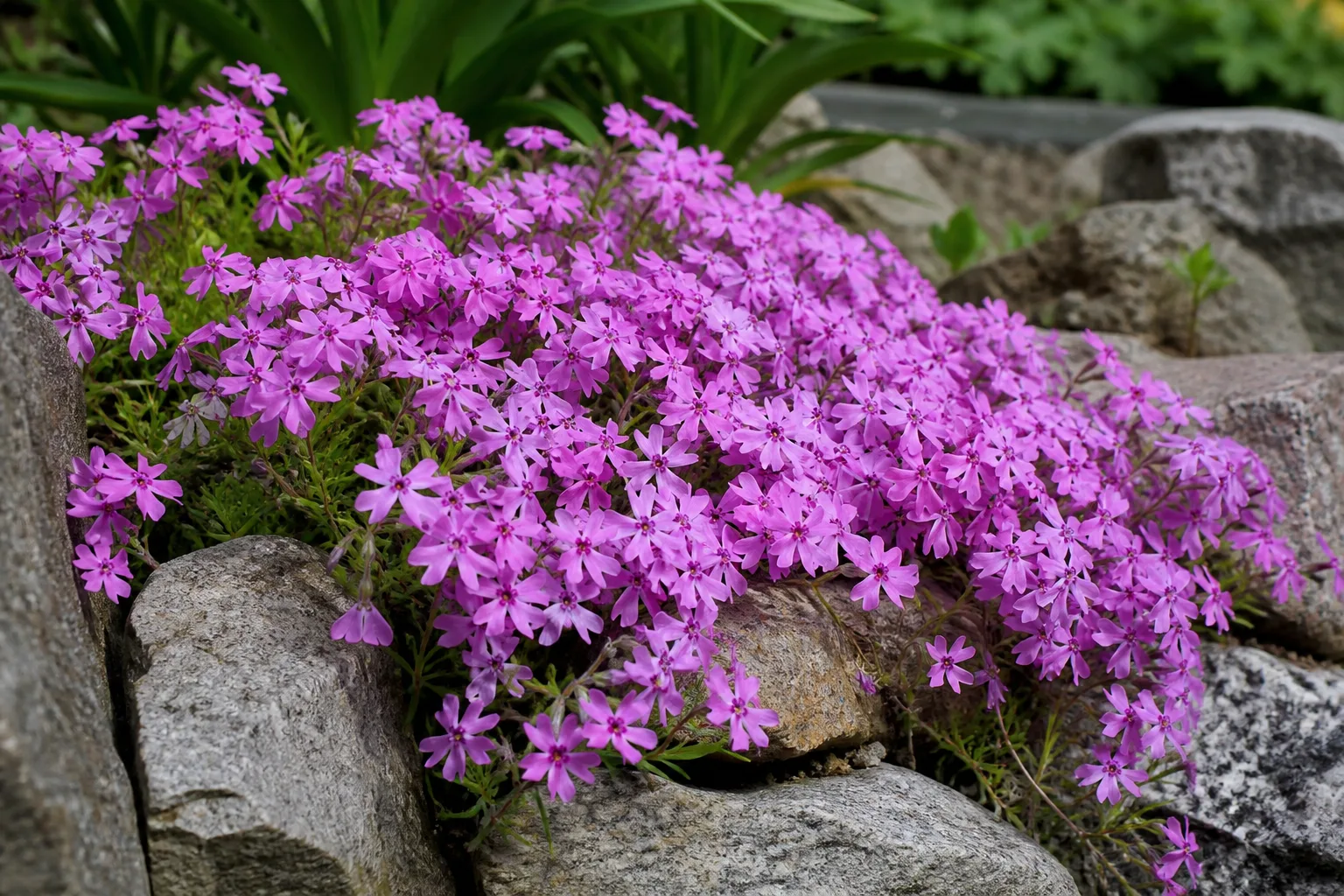
Annuals are practical companions when you are still learning how large a rose will grow, or when you want color without adding a long-lived root system near an established shrub. Calendula, verbena, angelonia, and compact annual phlox can be planted in open pockets at the bed edge and removed at season’s end. Garden Design includes several of these annuals among its rose-border options.
Use annuals to solve a real gap, not to cover every inch of soil. Space each plant according to its mature width, water it as it establishes, and pull it if it shades the rose or crowds the canes. Annuals can be more demanding than perennials because they may need frequent deadheading, replacement, and irrigation through hot weather. They are flexible, not maintenance-free.
Before adding flowering tobacco, nasturtiums, or another plant traditionally used as a trap crop, learn which insects it attracts in your region and be prepared to monitor it. A plant that draws pests can make a good trap only if you inspect and manage it; otherwise it can become a reservoir near the roses. If the goal is simply color, choose an annual for bloom and habit rather than for a promised repellent effect.
Build the pairing around water and climate
Climate zone is only a starting point. A sunny wall, a heavy clay bed, a slope, and a frequently irrigated border can all create different conditions within the same garden. Compare the site to the tags for the rose and companion, then use a small trial planting before buying enough to fill a long bed. This avoids the common mistake of treating every rose as if it has the same canopy, irrigation needs, or winter hardiness.
For hot, dry sites
Begin with the roses’ actual water needs and the hottest part of the bed. Lavender and yarrow may work along the outer edge if the soil drains sharply and the rose’s irrigation is targeted to its root zone. Catmint and many salvias can also fit a sunny border, but check the specific cultivar’s heat tolerance and mature spread. If you cannot keep a dry pocket separate from the rose’s watered zone, skip drought-adapted herbs rather than forcing them to accept wet feet.
Use pale foliage and blue-purple flowers to soften high-contrast rose colors, but let the plants keep their natural forms. A lavender that is clipped into a narrow ball or a yarrow that is repeatedly cut back to avoid the rose may not be a good fit. The right companion should perform with the care routine you can realistically provide.
For humid or frequently watered beds
Prioritize spacing and foliage that does not create a dense, wet thicket around the rose. Hardy geranium, selected salvias, and annual alyssum may be easier to manage than lavender in moist conditions, but the exact cultivar and drainage still matter. Keep tall phlox outside the rose’s canopy and leave a clear route for pruning, deadheading, and removing fallen leaves.
Good air movement does not come from companion planting by itself. Prune roses according to their type, avoid overcrowding, and water the soil rather than repeatedly wetting foliage when practical. UC IPM’s rose pages explain common rose pests and diseases; a mixed border should make inspection easier, not obscure symptoms or block access to the plant.
Give roses room before filling the soil
There is no single companion-plant setback that works for every rose and every neighbor. A miniature rose, a wide shrub rose, and an arching climber have very different footprints. Use the mature width on both plant labels, then allow enough space to reach the rose, remove debris, and keep the companion from growing into the canes. NYBG’s rose-companion guide suggests at least a one-foot interval; treat it as a starting point rather than a universal rule, because larger roses or vigorous companions need more, while compact plants may fit closer if airflow and access remain good.
For an established rose, dig only where you can insert a small plant without cutting major roots. If the soil is crowded, use a pot just outside the bed or plant annuals in the outer margin. For a new rose border, lay pots out at mature spacing before planting, then water each plant according to its needs. Do not place a thirsty plant under a rose and assume the rose’s watering schedule will suit both.
Keep the crown and lower canes visible enough to inspect. A narrow clear ring around the rose is more useful than a continuous carpet pressed against its base. Mulch open soil lightly if needed, keeping it away from stems, and add companions only after the rose is established and you understand how much room it occupies.
You can use a low, nonaggressive groundcover along the outer edge of a wide shrub rose, but do not make a dense mat directly against the crown. If you cannot reach the rose to check the lower leaves or remove debris, the groundcover is too close or too vigorous.
Plants to avoid or use with caution
Avoid companions that will take over the bed or make rose care difficult. Vigorous groundcovers can weave through rose roots, large shrubs can compete for water and nutrients, and aggressive self-seeders can become a maintenance job. Mint is usually safest in a container rather than loose in the rose border. A tall plant on the sunward side may shade a rose; a dense plant against the lower canes can slow drying and hide fallen leaves.
Also avoid matching plants by looks alone. Ferns and shade-loving foliage plants may suffer in a hot, sunny rose bed. Lavender and thyme may fail in wet soil or under frequent irrigation. A large phlox or ornamental grass may be attractive behind a wide shrub rose but overwhelm a compact rose in a narrow bed. “Avoid” is often a matter of location: a plant can be fine several feet away and unsuitable directly under the rose.
Nightshades such as tomatoes, peppers, and potatoes do not need to be treated as universally toxic neighbors, but they are usually a poor layout choice in a small rose bed. Their mature size, watering, feeding, and pest-management needs differ, and interplanting can make inspection harder. Grow edible crops in a separate bed where each plant gets the conditions and access it needs.
What companion planting can and cannot protect
Flowers can provide food and shelter for beneficial insects, and a diverse planting may make a border more useful to pollinators than roses alone. The RHS recommends simple, open flowers when selecting plants for accessible pollen and nectar. That is a sound reason to include flowering companions, especially if you choose blooms across several parts of the season.
Do not translate that habitat benefit into a guarantee of pest control. Claims that garlic, chives, lavender, catmint, marigolds, or salvia automatically repel aphids or prevent black spot are stronger than the evidence supports. NYBG’s guide notes that despite a long tradition of aromatic herbs as deterrents, strong scientific evidence for those pairings is lacking. Homes & Gardens and Garden Design discuss these plants as rose companions, but their aesthetic recommendations should not be read as proof of disease prevention.
If you see aphids, black spot, or another problem, identify it and use an appropriate rose-care response. Companion plants can remain part of the border, but they do not replace inspecting leaves and shoots, removing diseased debris, choosing adapted rose varieties, or following integrated pest-management guidance. For the rose’s core needs, see our rose care guide and black spot management guide.
Conclusion
The best companion plants for roses are the ones that fit your bed’s water, drainage, light, climate, and available space. Catmint and hardy geranium make flexible low layers; salvia and phlox add height; lavender and yarrow suit sunny, drier edges; alyssum and annuals let you test a planting before committing. Alliums add seasonal interest, while lady’s mantle brings soft foliage where moisture and climate suit it.
Pick two or three plants for specific jobs, check their mature widths, and leave enough room to prune and inspect the roses. Grow companions for their appearance, bloom sequence, or pollinator value. Treat pest-repellent and disease-prevention claims as uncertain, and continue normal rose care. A small, well-spaced planting that thrives is more useful than a crowded list of famous pairings.