Rose Care Guide: Light, Watering, Soil and Problems
Rose care for beds and pots: 6+ hours sun, deep base watering, rich draining soil, one clear feed rhythm, and fixes for black spot, mites, and gift miniatures.
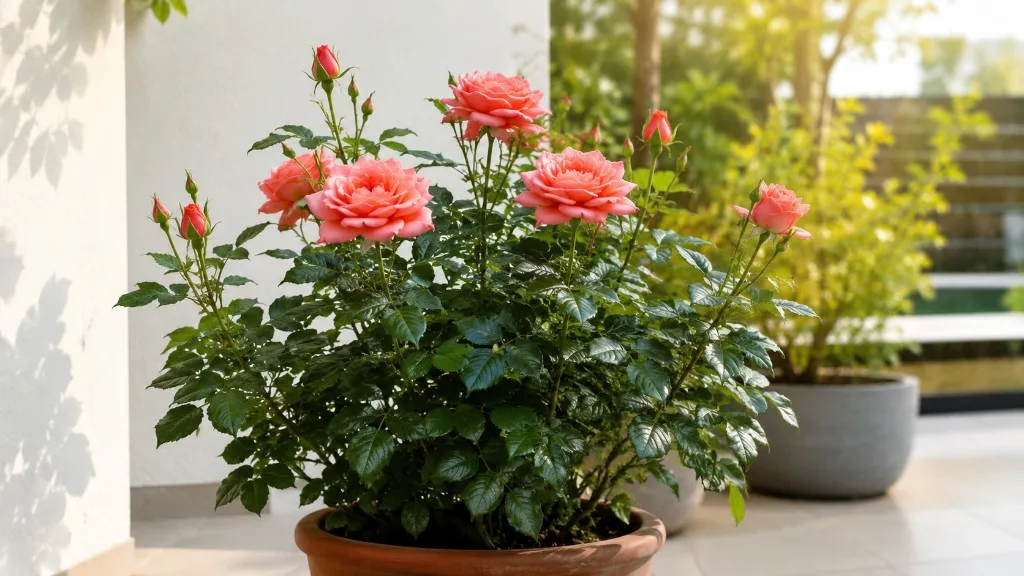
A rose that looks leafy but never blooms is usually missing sun, not fertilizer. A plant that drops spotted leaves in midsummer is often fighting wet foliage and stagnant air, not bad luck. And a grocery-store miniature that collapses on a kitchen counter is almost never dying from a missed mist — it is dying from indoor light levels that cannot run a sun-driven woody shrub.
This guide is for bed, patio-pot, and gift-miniature growers who want flowers first, then a clear path into deeper rose pages when a single symptom takes over. If you already know the problem name, jump straight to the rose care hub and open the matching topic or problem checklist.
Written by Sai Ananth (B.Pharmacy, Andhra University; LeafyPixels lead writer) and reviewed by the LeafyPixels Review Board.
Who Wrote This Guide and How We Reviewed It
This page was researched and written by Sai Ananth, whose pharmacy background shapes how LeafyPixels handles pet-toxicity wording, and whose growing notes focus on balcony and patio constraints rather than greenhouse idealizations. Editorial review sits with the LeafyPixels Review Board, which cross-checks care thresholds against extension and botanical-garden sources. Our editorial policy covers sourcing and corrections.
How this guide was built (rose-specific):
- Compared Clemson HGIC sun, watering, and disease notes with UF/IFAS humid-climate guidance and the RHS roses growing guide.
- Reconciled RHS border/container feed cadences with Clemson’s frost-stop rule and UGA’s 4–6 week granular interval into one decision table below.
- Pulled class heights, Earth-Kind® low-input selections, black spot (Diplocarpon rosae), and aphid/mite triage from Clemson disease and insect factsheets plus RHS black-spot advice.
- Fact-checked pet wording against the ASPCA rose listing (non-toxic to dogs, cats, and horses) and kept thorns and pesticide residue as separate hazards.
- Labeled balcony and gift-rose observations as editorial condition→outcome notes under named pot and exposure conditions — not controlled trials.
Diagnostic photos reuse LeafyPixels rose plant-problem assets for teaching. Your climate, pot material, and cultivar will shift intervals; treat numbers as benchmarks and confirm with soil checks and local frost dates.
Choose the Right Rose Class Before You Buy
Two pots both labeled “rose” can need different pot sizes, pruning intensity, and disease management. Match the class to your space and your tolerance for spraying and deadheading before you fall for the flower photo on the tag.
Hybrid Teas, Floribundas, Shrubs, Climbers, and Miniatures
Hybrid tea roses produce large single blooms on long stems and usually demand the most precise pruning and feeding. Floribunda and grandiflora types carry clusters and often rebloom more generously with slightly less fuss. Shrub and landscape roses — including many modern disease-tolerant lines — tolerate a wider margin of error in garden beds. Miniature and patio roses stay compact for small containers but still need full sun. Climbing types need support and different pruning logic.
Clemson HGIC notes hybrid teas typically grow about 4 to 6 feet tall, floribundas about 3 to 4 feet, miniatures roughly 8 to 24 inches, and popular climbers 8 to 15 feet. Miniatures and polyanthas are called out as good container and patio subjects.
Many hybrid teas and floribundas are grafted. Keep the swollen graft union at or slightly above soil level when you plant or repot so the scion does not root independently and change the plant’s habit. Do not bury the union under a deep mulch volcano.
| Class | Typical height | Best for | Maintenance reality |
|---|---|---|---|
| Hybrid tea | 4–6 ft | Cutting stems, showy singles | High — feed, deadhead, spray tolerance |
| Floribunda | 3–4 ft | Clusters, beds, larger pots | Medium–high |
| Shrub / landscape | Varies | Low-spray gardens | Medium–low when disease-tolerant |
| Miniature / patio | 8–24 in | Balcony pots, railing troughs | Medium — still full sun |
| Climber | 8–15 ft | Fences, arches | Medium — support + class-specific prune |
Tough Cultivars When You Want Fewer Sprays
If you want lower maintenance, look for landscape or trial-proven tough cultivars such as those in the Earth-Kind® rose program, which Clemson summarizes as selections that showed strong heat and drought tolerance and pest resistance with minimal fertilizer and pesticide inputs in multi-year Texas trials (no conventional or organic pesticides and no fertilizer during the trial period after establishment).
Useful shortlist from that Clemson Earth-Kind overview (sizes approximate; confirm tags locally):
- ‘Belinda’s Dream’ — medium shrub (~5 ft); pink repeat bloomer often recommended for humid gardens that punish hybrid teas.
- ‘Knock Out’ — larger shrub (~6 ft); landscape rebloom with less deadheading fuss than hybrid teas.
- ‘Carefree Beauty’ — medium shrub (~5 ft); pink landscape type for growers who want fewer sprays.
- ‘Mutabilis’ — larger shrub (~6 ft); color-changing single flowers; more “garden character” than florist form.
- ‘Cecile Brunner’ — compact (~4 ft in Earth-Kind notes); small pink buds for tighter spaces.
Disease-resistant labels are not forever — RHS black spot advice notes that resistance in newer cultivars often fails as fungal strains shift. Still start with tougher genetics if you hate spraying.
Quick Care Snapshot
Roses are woody, hungry flowering shrubs in the rose family (Rosaceae). Most nursery plants sold as garden roses are hybrids — often labeled Rosa × hybrida — bred for flower form and rebloom, not for passive houseplant life. In containers they commonly reach about 60 cm to 1.5 m (2 to 5 feet) tall depending on class and rootstock, with a moderate growth rate when light, water, and feeding align.
| Care factor | Baseline target | Deeper guide |
|---|---|---|
| Light | 6+ hours direct sun daily (6–8 preferred) | Rose light |
| Water | Deep soak at the base when the top 3–4 cm of mix dries; keep leaves dry | Rose watering |
| Soil | Rich, moisture-retentive but well-drained; pH roughly 6.0–7.0 | Rose soil |
| Feed | Pick one rhythm below (border vs container); stop ~6 weeks before frost | Rose fertilizer |
| Grooming | Deadhead spent blooms; prune for open structure and air flow | Rose pruning |
Clemson HGIC states roses prefer a full day of sun and should receive at least six to eight hours of direct sun, with morning sun especially important because it dries leaves and helps prevent disease. UF/IFAS likewise calls for at least six hours of direct sunlight and well-drained soil amended with organic matter. The RHS growing guide frames roses as plants for a sunny, free-draining site and notes that container roses need much more frequent watering than plants in the ground.
Flowers are the report card. Leaves can look acceptable in mediocre light for a long time. Bud count tells you whether the plant is truly getting what it needs.
Light: Hours That Make Flowers
Give roses full sun for reliable bloom: at least six hours of direct sunlight on the leaves and flowering wood each day, with six to eight hours as the planning target from Clemson and similar extension guidance. More sun generally means more flowers and tighter growth. Weak light produces long internodes, pale leaves, and a bush that looks “healthy” while refusing to bud — the classic not enough light pattern.
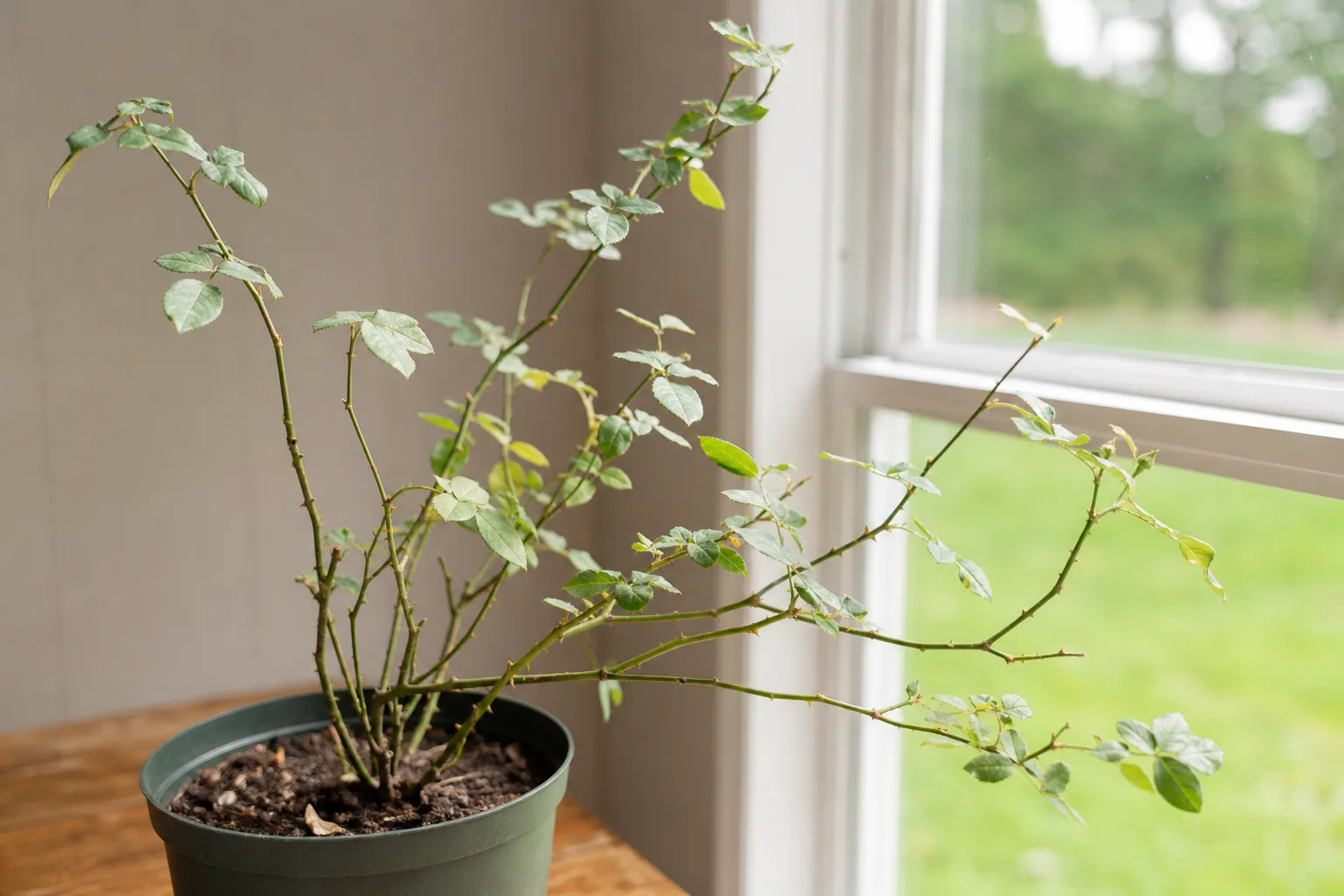
Morning sun matters for disease as much as for photosynthesis. Wet leaves that dry slowly invite black spot and other foliar fungi. Plant open sites with air movement rather than cramped corners where dew and splash linger.
Outdoor Beds and Balcony Placement
East-facing exposures with strong morning light work well for many containers. South- and west-facing sites deliver the intensity repeat-blooming hybrids expect, though you should acclimate nursery plants gradually — shade-grown leaves burn when shoved into harsh midday sun. On balconies, watch reflected heat from glass and dark flooring. Root zones overheat in dark plastic pots even when foliage looks fine. In very hot climates, provide afternoon shade for the container while still giving the canopy direct sun earlier in the day.
Avoid planting where roses sit in morning shade and then only receive a brutal afternoon blast. Climbing roses on a deep north wall rarely bloom well; a south- or west-facing fence is the better default. If buds fail despite green leaves, open the no flowers guide before increasing fertilizer.
Indoor Gift Roses vs Outdoor Reality
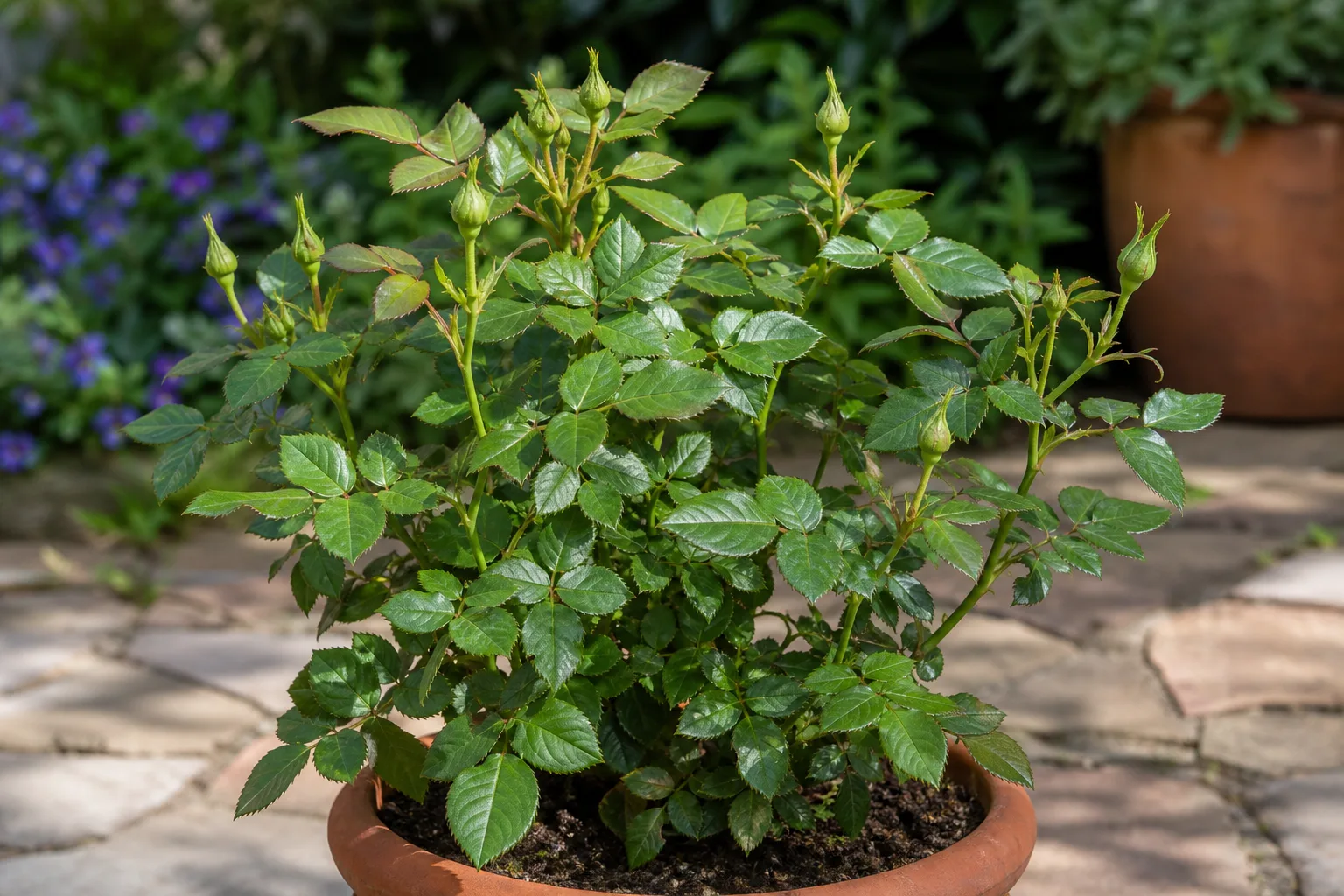
If you keep houseplants, be honest about what a rose is. Roses are not low-light foliage accents. A potted gift rose can look fine for weeks indoors, but long-term rebloom without a very bright south window or strong grow lights is the exception.
The practical strategy for most apartment growers is seasonal outdoor placement — balcony, terrace, or patio during the growing season — with only temporary indoor holding for frost or display. Patio and miniature roses are the realistic container choices. Large hybrid teas need bigger pots, steadier feeding, and winter protection for root zones that sit above ground.
Indoors, a room that feels bright to you can still be too dim for roses. When natural light is insufficient, use a full-spectrum LED on a timer for roughly 14 to 16 hours during low-light months, with a real dark period overnight, and still plan to move the plant outdoors when weather allows. Leggy growth with large internodes usually means the fixture is too far away or the photoperiod is too short — details in the rose light guide.
Watering: Ground vs Containers, Keep Leaves Dry
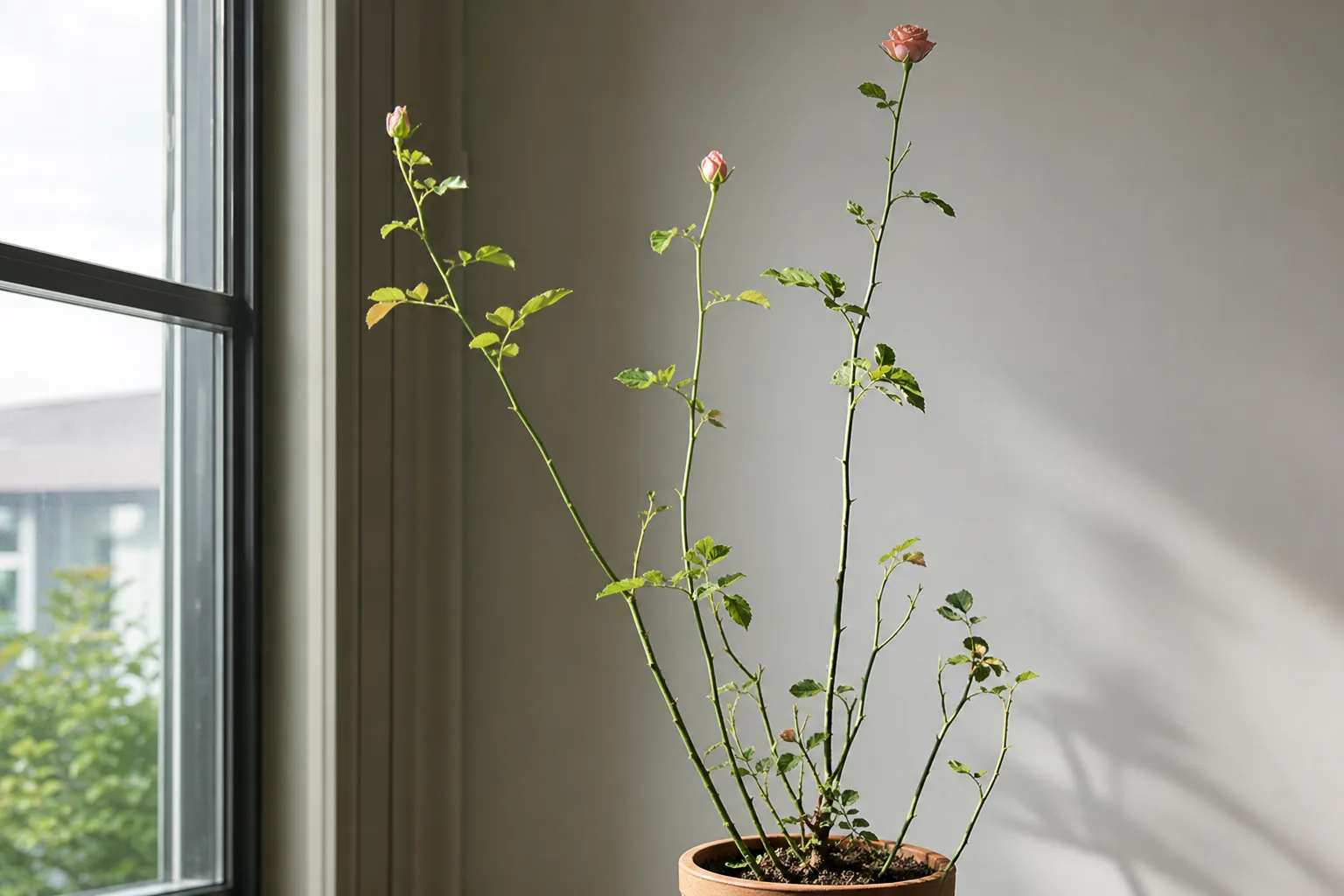
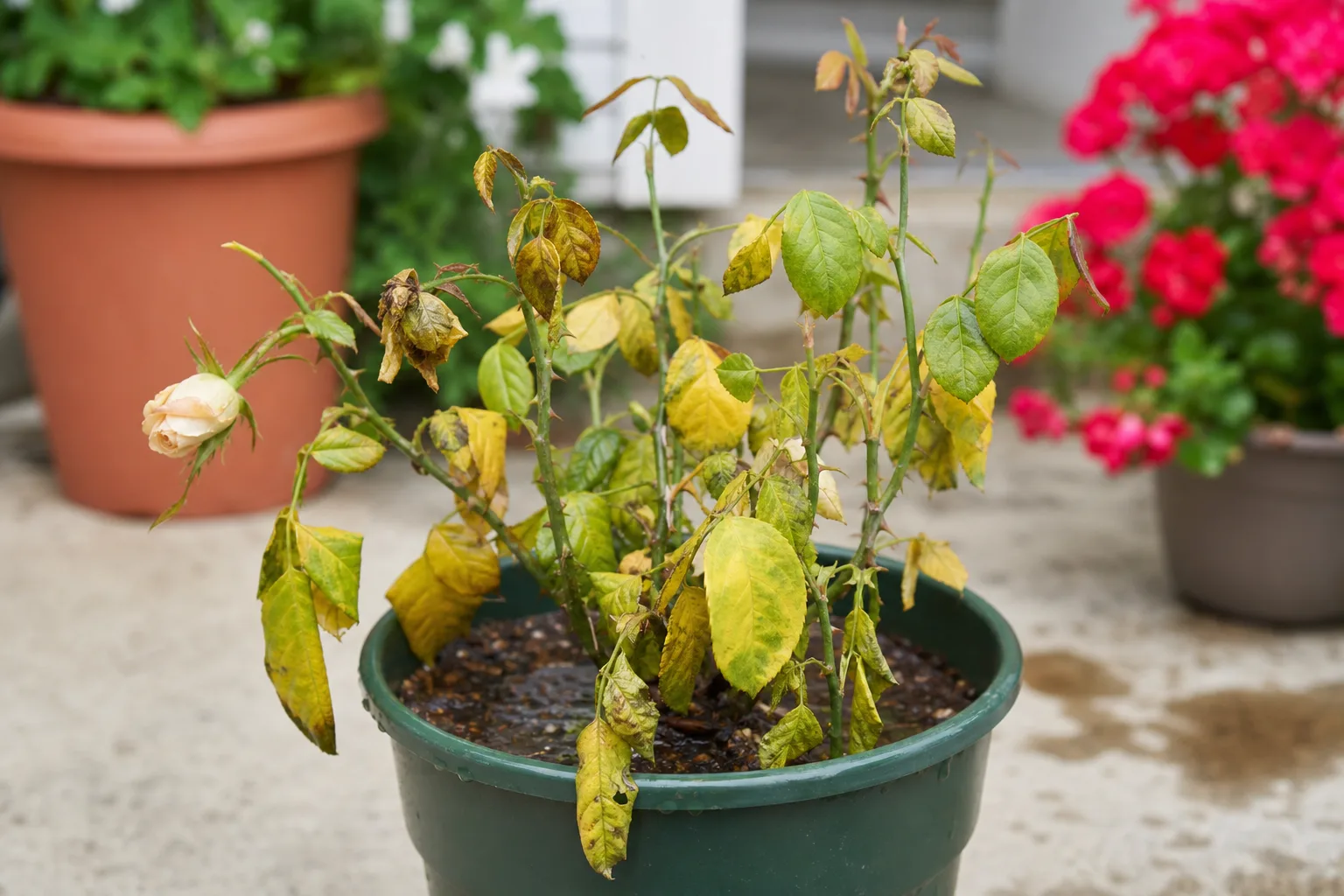
Water roses deeply at the base when the upper soil begins to dry, and keep foliage as dry as practical. Clemson HGIC warns that underwatered roses wilt, drop leaves, grow smaller leaves, or stop blooming, while too much water shows as limp yellow bottom leaves that fall off. Deep watering builds deeper roots; frequent light sprinkles keep roots near the surface and leave the plant vulnerable in heat.
Aim the stream at the soil, not the flowers and leaves. Early morning watering gives any incidental splash time to dry. Soaker hoses and drip lines are ideal for beds because they wet roots without wetting foliage — the same cultural advice UF/IFAS gives for reducing black spot pressure. Empty saucers after container watering so roots never sit in a bog. If the pot stays heavy and sour-smelling, suspect overwatering or root rot before you add more water to a wilting plant.
Established in-ground roses often need only supplemental water in dry spells. The RHS suggests roughly 5–10 litres (about one large watering can) per plant up to once a week in high summer dry weather for border roses, and stresses a good soak rather than light frequent drinks. New plantings need more attentive watering until roots establish.
Container roses are a different plant care problem. The RHS notes they need much more water than ground-planted roses and may need watering daily in hot weather, without letting the compost dry out or become waterlogged. For LeafyPixels container practice, check when the top 3–4 cm (about 1–2 inches) of mix feels dry — often every two to three days in warm summer weather and every four to five days in cooler months for medium pots — then soak until water runs from drainage holes. Pot size, terracotta vs plastic, wind, and sun exposure rewrite that interval completely. Stretch intervals as growth slows toward dormancy. Do not keep a winter-dormant rose in a warm dim room on a summer watering schedule.
Drought Wilt vs Overwater Yellowing
| Signal | Likely cause | First move |
|---|---|---|
| Whole plant soft, pot light, soil pulls from rim | Drought / underwatering | Soak thoroughly; check again in 1–2 days |
| Lower leaves yellow and limp while pot stays heavy | Overwatering / poor drainage | Empty saucer; improve airflow; hold water |
| Afternoon limp that recovers overnight, mix still moist | Heat stress, not thirst | Shade the pot; do not flood wet roots |
| Spots + leaf drop after evening overhead watering | Wet-foliage disease pressure | Switch to morning base-only watering |
Soil, Drainage, Mix Recipes, and Graft Union Height
Roses need loose, well-drained, well-aerated soil with plenty of organic matter. Clemson HGIC is blunt that poor drainage is a common cause of failure — roses do not tolerate soggy root zones. UF/IFAS recommends amending beds with 2 to 4 inches of organic material mixed about 12 inches deep for modern roses.
Never plant a container rose in unamended garden soil alone. It compacts, drains unevenly, and suffocates feeder roots. A workable potting blend is roughly 40% quality potting mix, 30% compost or well-rotted manure, 20% cocopeat or coir, and 10% perlite — or a simpler 2 parts potting mix : 1 part compost : 1 part perlite. Target a slightly acidic to neutral range around pH 6.0–7.0. Alkaline irrigation over years can contribute to iron chlorosis: yellow leaves with green veins.
Every pot needs drainage holes. When planting grafted roses, set the swollen graft union at or slightly above the finished soil line, then mulch beds with compost or shredded bark while keeping mulch a few inches away from the crown and union. Replace or top-dress mulch in spring to reduce disease carryover. Soft crowns, circling roots, and a permanently wet mix point to crown rot or root failure rather than a foliar spray problem — see the rose soil guide before chasing fertilizer.
Feeding and Deadheading — Pick One Rhythm
Roses are hungry, but stacking every extension schedule at once burns roots and wastes product. Pick one rhythm that matches how you grow, then stop feeding about six weeks before your expected first frost so tender late growth does not walk into cold (Clemson HGIC). Wait until after the first blooms before applying chemical fertilizer to newly planted bare-root roses so young roots are not burned.
| How you grow | Feed rhythm to use | Source logic |
|---|---|---|
| Border / in-ground repeat bloomers | Twice a year — early spring before flowering, again midsummer after the first flush; about 70 g per m², then mulch with a gap at stem bases | RHS growing guide border cadence |
| Containers / patio pots | Liquid feed about once a fortnight from mid-spring to late summer; shift toward higher potash once buds form | RHS container note (pots leach faster) |
| Granular general-purpose on beds or large landscape shrubs | Light applications every 4–6 weeks in the growing season only (not a second full system on top of fortnightly liquid) | UGA Extension B1065 |
| Earth-Kind / low-input landscape types | Leaner program — compost mulch and water-as-needed often outperform constant high feed | Earth-Kind trial plants received no fertilizer during evaluation |
Decision rule: If the rose lives in a pot, use the fortnightly liquid path. If it lives in the ground, use the RHS twice-yearly path (or UGA’s light 4–6 week granular path — not both stacked). Stop ~6 weeks before frost either way. Pair feeding with the pruning guide so the center of the bush stays open for air flow.
Deadhead fading flowers weekly on repeat bloomers so the plant does not switch into seed-hip mode. Stop deadheading midsummer on types grown for decorative hips.
First-Hand Notes From Balcony and Gift Roses
These are LeafyPixels editorial observations while reviewing rose care pages — not controlled lab trials. Timings assume roughly 28–34°C / 82–93°F daytime balcony heat unless noted.
| Plant / setup | Conditions | What failed | Change made | Outcome |
|---|---|---|---|---|
| Hybrid tea, dark plastic 12-inch pot, west balcony (warm humid summer, Jul 2025 notes) | Canopy sun + pot baking on dark tile; evening overhead watering | Green leaves, almost no buds; some spotting after wet nights | Moved to morning-sun rail with afternoon shade for the pot; switched to early base soaks; same freer-draining mix (≈2:1:1 potting mix:compost:perlite) | Buds resumed within ~10–14 days of the move; spotting slowed when foliage stayed dry |
| Gift miniature, east windowsill (indoor, Apr–May 2025) | Bright room feel, no direct sun most of day; peat-heavy gift mix | Held green ~6 weeks, then stretched with long internodes and stalled buds | Moved outdoors to morning sun; repotted into richer freer-draining mix; watered when top 3–4 cm dried | Rebloom started ~2 weeks after outdoor placement |
| Same miniature, monsoon week with nightly rain splash (Jun 2025) | Outdoor pot left under open sky | Blackish leaf spots accelerated after wet evenings | Shifted under partial cover; morning base-only water; removed spotted leaves | New flush cleaner; existing spotted leaves did not “heal” |
Treat these as condition-and-outcome notes for similar pots and exposures, not guarantees for every cultivar or climate.
Problems: Black Spot, Mites, Aphids, and Wet Crowns
Diagnose from the roots and light upward. A single blemish matters less than a pattern: repeated spotting, soft crowns, sticky residue, stalled buds, or soil that never dries. Fix the growing condition first; spray second.
Black Spot Cultural Stack
Black spot — caused by the fungus Diplocarpon rosae — is the signature rose disease in humid climates. RHS advice describes purple or black leaf spots, early leaf drop, and reduced vigour from spring onward, and notes that resistance in new cultivars often fails as new fungal strains appear. Clemson HGIC adds that spots can reach about ½ inch, leaves yellow and drop, and severe plants may defoliate by midsummer; cultural controls include resistant varieties, removing infected leaves, avoiding late overhead irrigation, promoting rapid drying with full sun and spacing, and winter sanitation.
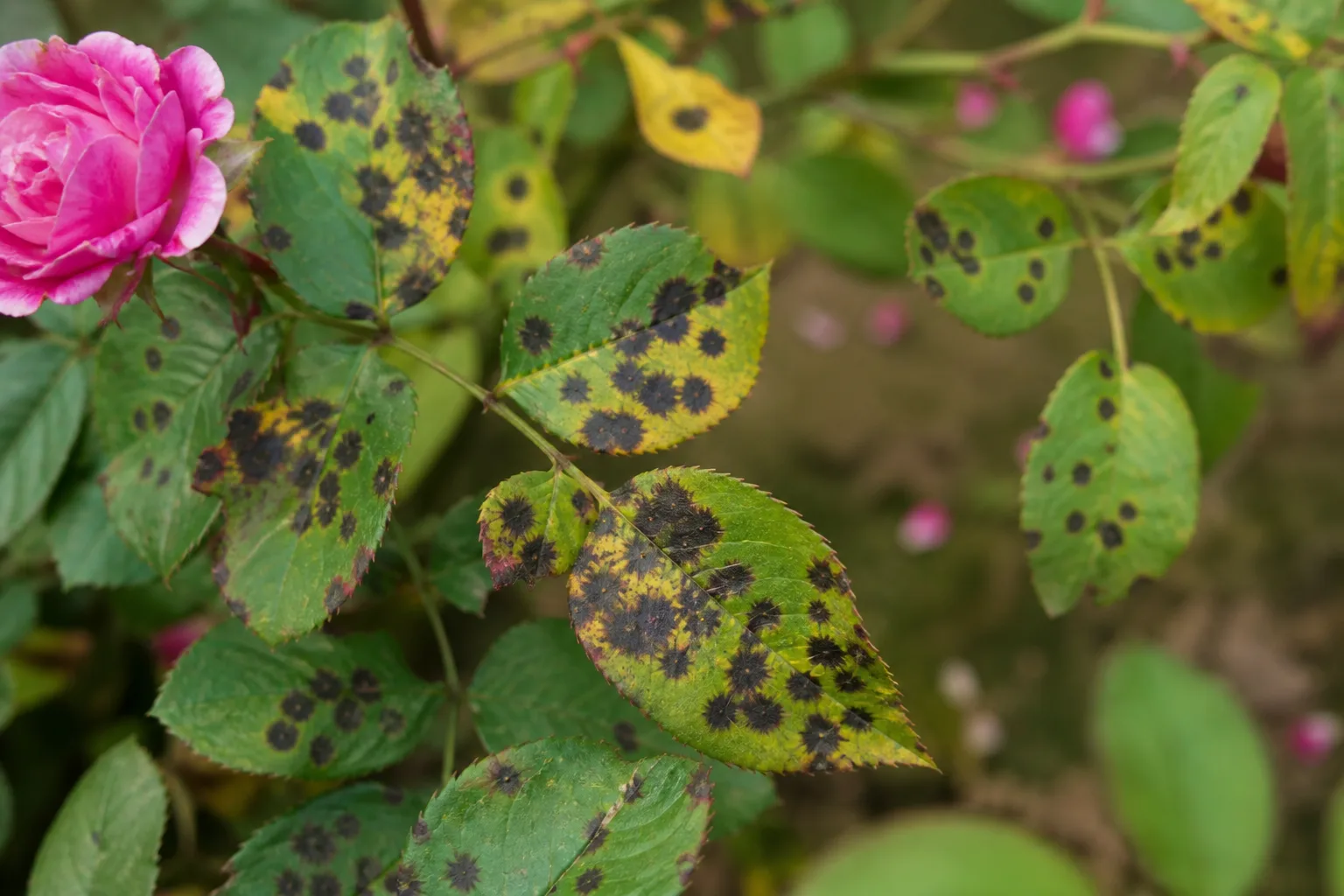
UF/IFAS calls black spot the biggest disease problem for Florida roses in humid wet weather and recommends drip irrigation, winter leaf removal, re-mulching, and choosing low-maintenance resistant types when you want fewer sprays. Powdery mildew produces gray-white coatings on young leaves and buds in mild temperatures with high night humidity; Botrytis can ruin wet buds and blooms. For LeafyPixels symptom detail, start with black spots on roses and yellow leaves.
Aphids and Spider Mites
Aphids cluster on soft new growth and buds, distorting tips and leaving honeydew that grows sooty mold. Clemson HGIC notes rose aphids (Macrosiphum rosae) can be hosed off with a strong water stream and managed with insecticidal soap when needed, while protecting natural enemies.
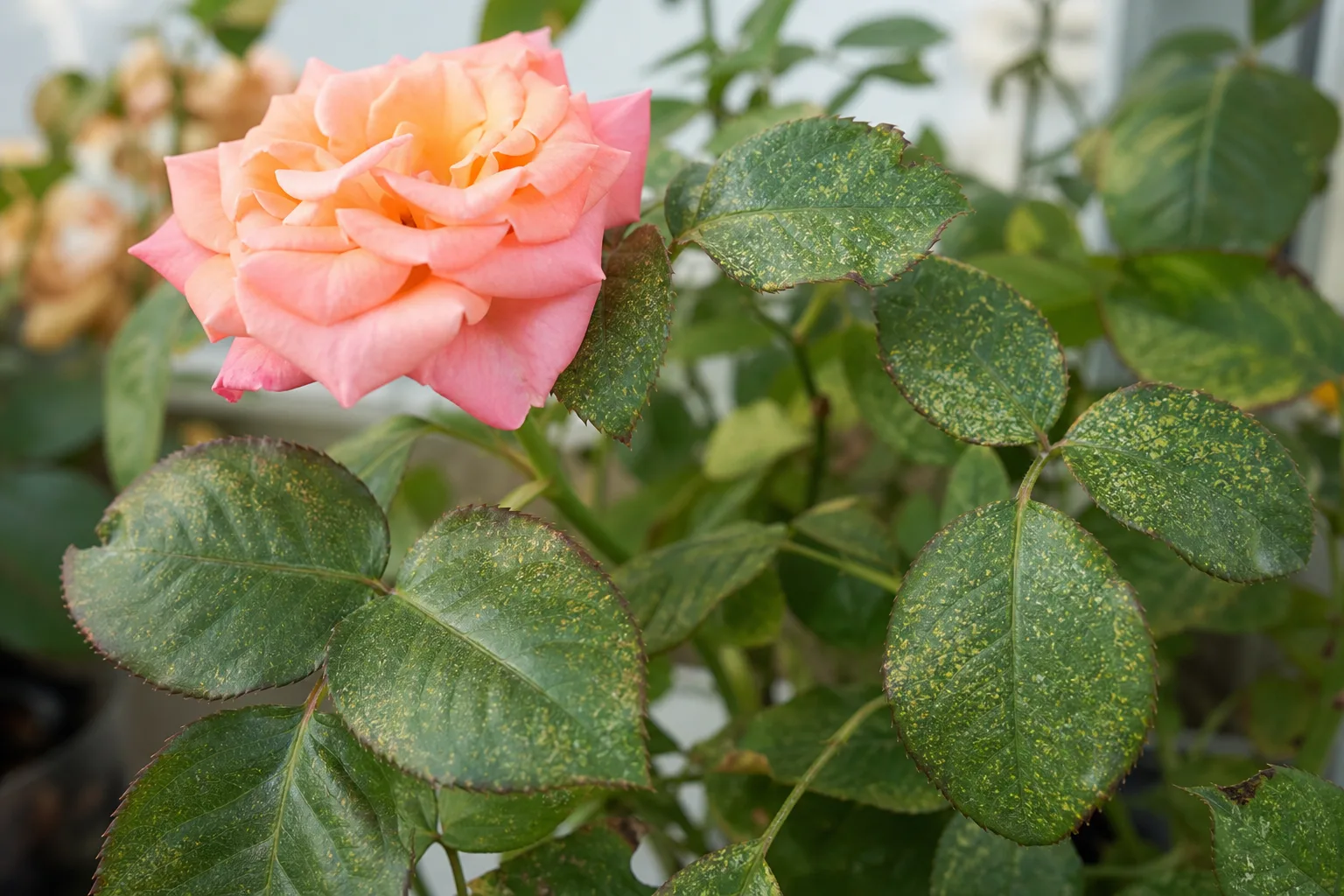
Two-spotted spider mites worsen in hot, dry weather and on drought-stressed plants. Early damage looks like fine yellow or white stippling; fine webbing appears on leaf undersides as populations climb. Clemson recommends strong water sprays on lower leaf surfaces, insecticidal soaps or horticultural oils with thorough coverage, and avoiding broad-spectrum insecticides that kill mite predators. Hot dry balconies are mite factories — see spider mites on roses and aphids on roses.
Soft crowns and a permanently wet mix still point to drainage and watering failures, not another foliar spray.
Pet Safety, Thorns, and Chemical Hazards
True roses (Rosa species) are listed by the ASPCA as non-toxic to dogs, cats, and horses. Pet-safe does not mean chew-proof. Thorns can injure mouths and paws during pruning or play, large amounts of plant material can upset stomachs, and florist preservatives or garden pesticides are separate hazards — especially on gift bouquets and recently sprayed garden plants. Place pots out of digging reach and contact a veterinarian or the ASPCA Animal Poison Control Center at (888) 426-4435 if a pet is injured or shows persistent vomiting after chewing plant material.
Related Guides
Use these in decision order — not as a full sitemap:
- Buds fail / green but mute → No flowers on roses and Rose light
- Spots and midsummer leaf drop → Black spots on roses
- Stippling / webbing on hot dry leaves → Spider mites on roses
- Pot stays heavy / yellow limp bottoms → Rose watering and Overwatering
- Structure, deadhead, winter cuts → Rose pruning
- Full cluster hub → Rose care hub
For general watering technique that still applies to containers, see how to water indoor plants the right way — then return to rose base-only soaks so foliage stays dry. Neighboring flowering shrubs with different bloom rules: bougainvillea care and hibiscus care.
Conclusion
Run this first-week rose checklist, then stop changing every variable at once:
- Confirm class and pot size — miniature/patio for small containers; hybrid tea only if you will feed and deadhead on purpose.
- Count direct sun hours on the leaves — aim for 6–8; move before you fertilize for “no bloom.”
- Water at the base in the morning — top 3–4 cm dry in pots; deep weekly-style soaks for established borders in drought; empty saucers.
- Pick one feed rhythm — fortnightly liquid for pots, twice-yearly (or light 4–6 week granular) for borders; stop ~6 weeks before frost.
- Keep the graft union visible at or above the soil line; mulch away from the crown.
- Sanitation pass — remove spotted leaves, improve spacing, and open the matching problem page if black spot or mites are already active.
Indoors, treat roses as temporary guests unless you can deliver outdoor-level light. When a symptom needs its own checklist, open the rose hub rather than rewriting light, water, and fertilizer on the same day.