No Flowers on Rose: Causes, Checks & Fixes
Quick answer
No flowers on Rose usually means too little direct sun, skipped feeding, or pruning at the wrong time for your rose type. First step: honestly count direct sun hours on the bush-roses need at least six for reliable blooms.
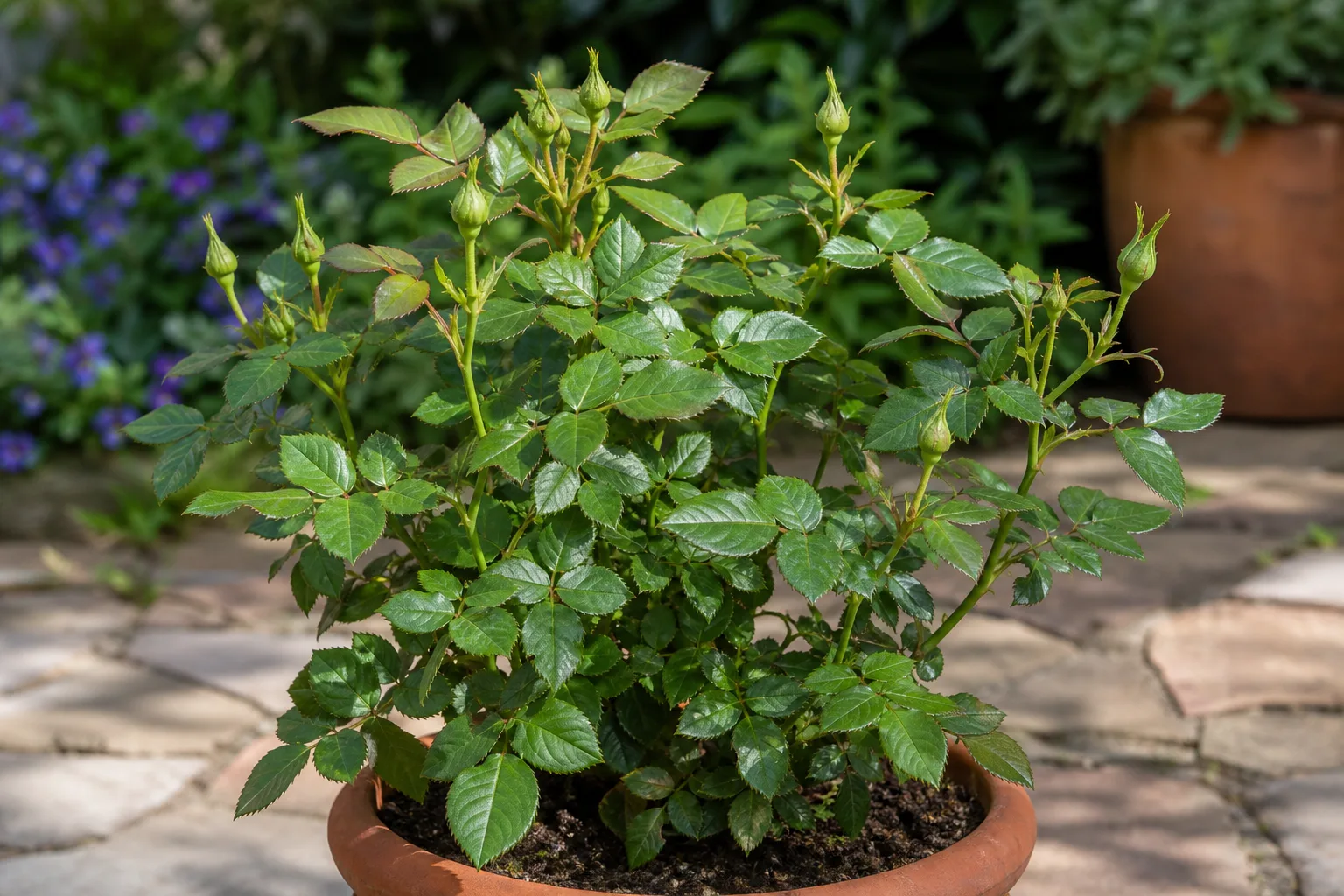
No Flowers on Rose: Causes, Checks & Fixes
This guide covers no flowers on Rose. See also the general No Flowers guide, watering, and light pages for this plant.
No Flowers on Rose: Causes, Checks & Fixes
Quick answer
A rose with healthy green leaves but no buds is usually surviving, not thriving. Roses bloom on strong current-season wood when they receive enough direct sun and nutrients to fuel bud formation. Leaves can look fine in partial shade; flowers tell the truth.
First step: count direct sun hours on the bush for a full day during peak growing season. If the plant gets fewer than six hours of direct sunlight, move the pot or prune competing shade before you change fertilizer or water routines. Sun correction alone often unlocks the next flush on repeat-flowering types.
What no flowers looks like on Rose
No flowers on rose shows up in several distinct patterns, and the pattern points toward the cause.
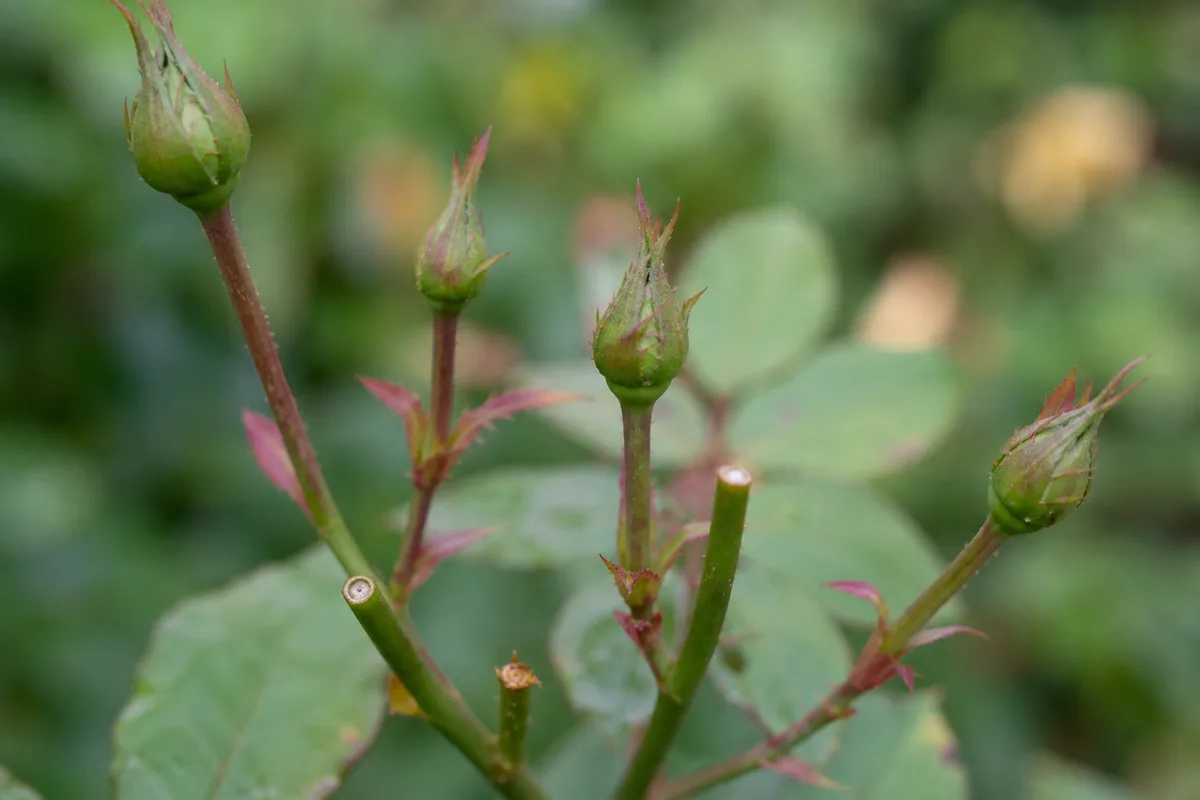
No Flowers symptoms on Rose - compare with healthy tissue on the same plant.
Healthy bush, zero buds through warm weather. Canes lengthen, leaves stay deep green, but no flower cases appear at stem tips for weeks during the normal bloom window (October–March peak in North India; spring through autumn in cooler climates). This pattern usually ties to insufficient light, missed feeding, or excess nitrogen pushing foliage over flowers.
Buds that never swell. Small, tight bud cases sit at cane tips but stay frozen at pea size, then dry up or drop. That can mean drought stress, thrips or mite damage, or rose midge attacking developing buds.
Blind shoots. A cane grows to normal length and ends in a cluster of leaves instead of a terminal flower bud. The stem looks perfectly healthy-no dieback, no spots-yet it will not bloom unless you intervene. Blind shoots often appear after cold snaps, heat waves, or when inner canopy stems compete for light.
One early flush, then silence. Repeat-flowering hybrid teas and floribundas should cycle through the season. If you get a single weak flush in spring and nothing else, deadheading may have stopped and the plant is forming hips, or summer heat paused bloom on varieties that take a mid-season break.
Never bloomed since planting. New bare-root or container roses sometimes skip their first season while roots establish. That is different from a mature bush that bloomed last year and stopped.
Why Rose fails to flower
Roses are heavy feeders bred for display bloom. When flowers disappear, one of these mechanisms is usually responsible-and several can stack together on balcony pots.
Insufficient direct sun
Roses need at least six hours of direct sunlight daily for reliable flowering. Some tolerate light shade, but partial sun on a north-facing balcony or a spot shaded by monsoon cloud cover and neighbouring walls produces leggy canes reaching toward light, pale leaves, and few or no buds. Morning sun helps foliage dry quickly, which also supports overall vigour.
Skipped or imbalanced feeding
Container roses exhaust potting mix faster than garden plants. Without seasonal feeding, the bush grows leaves on stored reserves but stalls bud formation. The opposite problem-high nitrogen fertilizer or lawn feed splashed nearby-pushes soft vegetative growth with weak stems and minimal bloom. Roses need balanced nutrition through active growth, shifting toward higher potassium once buds form.
Pruning at the wrong time for your rose type
This is the most commonly misdiagnosed cause. Improper pruning is a leading reason roses flower poorly. Once-flowering old garden roses and many climbers bloom on wood formed the previous year. Hard pruning that wood in late winter removes the season’s flowers entirely. Repeat-flowering hybrid teas and floribundas bloom on new growth and tolerate harder annual pruning-but cutting too late in spring after buds have already formed on old wood can still cost you the first flush.
Stopped deadheading on repeat bloomers
If spent flowers stay on the bush, many roses redirect energy into hip production and slow new bud formation. Weekly deadheading on repeat types keeps the flowering cycle moving.
Blind shoots and weather stress
Rose blindness is a developmental disorder, not a disease. Shoots grow normally but fail to form a terminal flower bud, often after frost, hail, sudden temperature swings, or when stems grow in dense shade inside the canopy. Cutting the blind shoot back by about half to a strong outward-facing bud typically stimulates flowering later in the season.
Water stress and root problems
Chronic drought aborts buds before they open-often alongside wilting by mid-morning and small pale flowers when bloom does occur. Overwatered pots with sour, waterlogged mix rot fine roots; the top stays green briefly while bud formation stalls. Check soil 3–4 cm deep before assuming the problem is light alone.
Pests and disease weakening the plant
Aphids cluster on tender buds and distort new growth. Thrips scar flower petals and can cause bud drop. Spider mites stipple leaves under hot dry conditions. Black spot and cercospora defoliation reduce the photosynthetic engine that fuels bloom. Rose rosette disease produces witch’s-broom shoots, excessive thorns, and distorted buds-flowering collapses and the plant needs removal, not more fertilizer.
Youth and transplant shock
First-year roses often bloom lightly while building root mass. Recently repotted or relocated plants may pause flowering for several weeks while roots re-establish-especially if Rose repotting guide coincided with bud swell.
How to confirm the cause
Work through these checks in order before stacking treatments.
- Sun audit - Track direct sun on the pot from morning to evening on a clear day. Fewer than six hours strongly implicates light. Note whether a neighbouring tree or building casts new shade since last season.
- Rose type - Confirm whether your variety is repeat-flowering or once-flowering. Check the plant label or nursery listing. Pruning history matters differently for each group.
- Feeding history - List what you applied and when. Heavy nitrogen lawn fertilizer nearby counts. Container roses need fortnightly liquid feed through the growing season, not just one spring sprinkle.
- Bud versus blind shoot - Inspect cane tips. A normal bud case is rounded and swelling. A blind shoot ends in small leaves with no bud case at all.
- Deadheading status - Look for spent blooms or orange rose hips on repeat types. Hips mean the plant may have switched out of flower production.
- Soil moisture - Probe 3–4 cm deep. Bone dry or constantly wet soil both stress bud formation.
- Pest scan - Check bud undersides and leaf backs for aphids, stippling with fine webbing (mites), or thrips scarring on open flowers.
- Pruning date - Note when you last hard-pruned. January hard prune suits many Indian garden roses; spring pruning of once-flowering types after their flush is correct-winter pruning of those types is not.
If sun is adequate, feeding has been regular and balanced, deadheading is current, and buds still will not form on outward-facing canes, blind shoots or a possible virus such as rose rosette deserve closer inspection.
First fix for Rose
Move the plant to the sunniest available spot and verify it receives at least six hours of direct sunlight daily.
Shift balcony pots to the brightest edge, prune back an overhanging neighbour plant that steals afternoon light, or raise the pot above a railing that casts shadow. Do not repot, hard-prune, or fertilize on the same day you move it-let the plant settle in the new light for one to two weeks while you maintain base watering.
If the bush already sits in Rose light guide, your first fix shifts to correcting the dominant secondary cause: resume balanced rose fertilizer during active growth if feeding was skipped, or cut blind shoots back halfway to a strong outward-facing bud if those are present.
Step-by-step recovery
Once light is confirmed or corrected, address remaining causes in this order.
Week 1–2: Stabilize placement and water. Water deeply at the base when the top 3–4 cm of soil dries. Never wet foliage. Do not fertilize a drought-stressed or recently moved rose until new growth looks firm.
Week 2 onward: Feed repeat-flowering types. Apply rose-specific fertilizer per label directions during active growth-typically every two weeks for container plants through the bloom season. Switch toward higher potassium formulas once bud cases appear. Stop feeding after early August in cold-winter climates or when your variety enters dormancy.
Ongoing: Deadhead spent blooms. Snip fading flowers back to the first five-leaf leaflet on repeat types, angling cuts above outward-facing buds. This prevents hip formation and triggers the next cycle.
As needed: Correct blind shoots. Cut affected stems back by about half to a strong outward-facing bud. New flowering growth often appears within four to six weeks during warm weather.
If pests are confirmed: Rinse leaf undersides with a strong water stream early in the morning before spraying anything. Treat aphids or mites only after you see active infestation-not as a default response to no flowers.
Once-flowering types: Mark your calendar to prune only after the single flush finishes. Do not hard-prune in winter if your variety blooms on old wood.
Recovery timeline
Expect different timelines depending on cause and rose type.
- Light correction on repeat bloomers: First new bud cases often appear within four to six weeks during active growing season.
- Resumed feeding after a skipped season: Bud formation may take three to five weeks once roots are healthy and sun is adequate.
- Blind shoot pruning: Late-season flowers commonly follow within four to six weeks after cutting back.
- Deadheading restart: Repeat types may push new buds within two to three weeks.
- Transplant or repot shock: One to two months before normal bloom rhythm returns.
- Once-flowering types pruned at wrong time: You may wait until next year’s flush-no mid-season fix restores those blooms.
Judge improvement by new bud cases swelling at cane tips, not by old leaves changing colour.
Lookalike symptoms
Bud drop is not the same as no buds. If buds form and then fall before opening, investigate thrips, mites, drought, or rose midge-not light alone. True no-flower cases never produce bud cases at all, or produce blind shoots that skip the bud stage entirely.
Leggy growth can look healthy. Long canes with spaced leaves reaching toward a window indicate light hunger even when foliage stays green.
Rose rosette mimics vigorous growth. Clustered red shoots with excessive thorns and distorted buds are not a feeding problem. Remove and destroy affected plants; do not propagate from them.
Summer pause on repeat bloomers. Some varieties rest during peak heat above 38°C and resume in cooler autumn weather. That is normal cycling, not failure-check whether deadheading and feeding continued through the pause.
Mistakes to avoid
- Fertilizing with high-nitrogen feed when the bush is already leafy and budless-this deepens foliage at the expense of flowers.
- Hard-pruning once-flowering roses in winter-you remove the wood that would have bloomed.
- Repotting during bud swell-roots stall and buds abort.
- Spraying blind shoots with fungicide or insecticide-blindness is not a disease.
- Assuming indoor bright indirect light is enough-roses are outdoor full-sun plants; windows rarely deliver six hours of direct sun.
- Stacking repot, prune, move, and feed on one weekend-roses respond better when changes are staged.
How to prevent no flowers on Rose
- Site new roses where they will receive six or more hours of direct sun year-round, accounting for seasonal shade creep from deciduous trees.
- Feed container roses regularly through active growth; top-dress with compost annually.
- Deadhead repeat-flowering types weekly during bloom season.
- Learn your variety’s flowering habit before pruning-mark once-flowering types for after-bloom pruning only.
- Water at the base; keep foliage dry to maintain leaf health that fuels bloom.
- Scout buds and new growth weekly during warm weather for aphids, mites, and distorted shoots.
- Avoid repotting in peak flowering season; schedule for late autumn dormancy or early spring before bud break.
When to worry
Escalate beyond standard care fixes if you see witch’s-broom clustering with excessive thorns and red distorted growth (possible rose rosette), canes blackening and softening at the base, complete defoliation from black spot during bud formation, or buds that blacken and wither on multiple stems despite good sun and feed. Rose rosette has no cure-remove the plant and do not compost the material. For other severe patterns, take cuttings and photos to a local extension office or rose society before applying repeated pesticide sprays.
When to use this page vs other Rose guides
- Rose watering guide - Use for routine moisture checks before assuming no flowers is the main issue.
- Rose problems hub - Browse all 7 common issues on this species.