Rose Problems: Causes & Quick Fixes
Quick answer
Rose is prone to 24 common issues - each link below is a plant-specific fix guide.
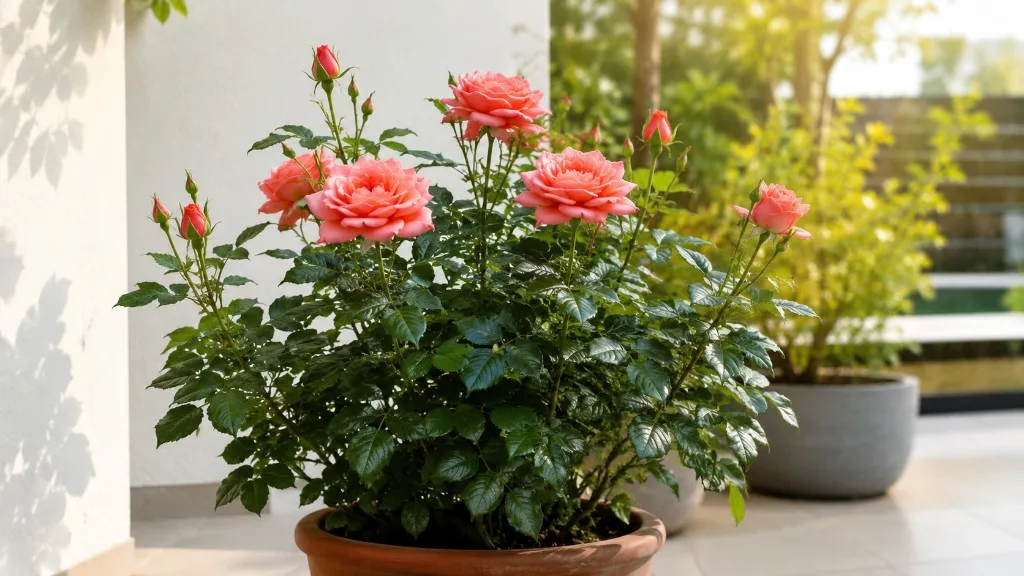
Rose problems
Use the guides below to diagnose and fix common issues on Rose. Each problem page explains why it happens on this species and what to do first.
Or use our problem diagnosis tool to narrow down symptoms.
Common problems on Rose
Black Spots
HighLikely cause: Black spot fungus (Diplocarpon rosae) from wet leaves and poor airflow
Quick fix: Remove all affected leaves; spray with copper fungicide or neem oil; improve airflow
Full fix guide →Crown Rot
HighLikely cause: Paternoster Row is a street in the City of London that was a centre of the London publishing trade, with booksellers operating from the street. Paternoster Row was described as "almost synonymous" with the book trade. It was part of an area
Quick fix: Confirm diagnosis on your Rose, then address the most likely care or pest factor described in current extension guidance.
Full fix guide →Leaf Drop
MediumLikely cause: Rose leaf rosette-associated virus is a +ssRNA closterovirus which causes a unique, unusually dense and small rosette leaf habit on Rosa multiflora Thunb. branches.DNA analyses of rose samples have not previously found closteroviruses, and
Quick fix: Confirm diagnosis on your Rose, then address the most likely care or pest factor described in current extension guidance.
Full fix guide →Leaf Miners
MediumLikely cause: The rose leaf miner (Stigmella anomalella) is a moth of the family Nepticulidae. It is found in all of Europe, east to the eastern part of the Palearctic realm.The moths have shining greenish-bronzy forewings, lighter posteriorly and with t
Quick fix: Confirm diagnosis on your Rose, then address the most likely care or pest factor described in current extension guidance.
Full fix guide →Root Rot
HighLikely cause: Rhodiola rosea (commonly golden root, rose root, roseroot, Aaron's rod, Arctic root, king's crown, lignum rhodium, orpin rose) is a perennial flowering plant in the family Crassulaceae. It grows naturally in wild Arctic regions of Europe (i
Quick fix: Confirm diagnosis on your Rose, then address the most likely care or pest factor described in current extension guidance.
Full fix guide →Spider Mites
HighLikely cause: Hot dry summers attract red spider mites - extremely common on roses
Quick fix: Spray underleaves with strong water; apply neem oil spray every 5 days
Full fix guide →Yellow Leaves
MediumLikely cause: Iron deficiency, magnesium deficiency, or overwatering
Quick fix: Apply iron chelate or Epsom salt (magnesium); check watering frequency
Full fix guide →Aphids
MediumLikely cause: Rose aphids (Macrosiphum rosae) pack tender spring shoots and buds, leaving sticky honeydew that can coat your first flush. First step: blast colonies off new growth with a strong morning water jet ai
Quick fix: See plant-specific guide for step-by-step fixes.
Full fix guide →Brown Tips
MediumLikely cause: Brown tips on Rose usually mean drought at the leaf margin, salt buildup after heavy feeding in a small pot, or reflected heat on a patio. First step: match the margin pattern-dry crispy tips on a lig
Quick fix: See plant-specific guide for step-by-step fixes.
Full fix guide →Bud Drop
MediumLikely cause: Rose bud drop usually means the plant aborted swelling buds under drought, root stress, thrips, or midge damage. First step: probe soil 3–4 cm deep and inspect bud scales for pests before changing any
Quick fix: See plant-specific guide for step-by-step fixes.
Full fix guide →Drooping Leaves
MediumLikely cause: Drooping leaves on Rose usually mean the plant cannot move enough water to the foliage-either because soil is too dry or roots are too damaged to drink. First step: probe soil 3–4 cm deep and lift the
Quick fix: See plant-specific guide for step-by-step fixes.
Full fix guide →Faded Flowers
MediumLikely cause: Faded flowers on Rose are usually normal petal aging over several days - but same-day bleaching on dark cultivars, wilted open blooms, or dull new buds point to heat, drought, missed deadheading, or p
Quick fix: See plant-specific guide for step-by-step fixes.
Full fix guide →Fungus Gnats
MediumLikely cause: Fungus gnats on Rose mean the soil surface stays wet too long-usually from overwatering a compost-rich container mix or leaving saucer water standing. First step: let the top 3–4 cm dry between deep b
Quick fix: See plant-specific guide for step-by-step fixes.
Full fix guide →Leggy Growth
MediumLikely cause: Leggy growth on Rose means long thin canes with wide leaf gaps and weak or missing flowers-usually from too little direct sun or skipped pruning. First step: move the container to the sunniest spot wi
Quick fix: See plant-specific guide for step-by-step fixes.
Full fix guide →Low Humidity
MediumLikely cause: Low humidity on Rose rarely kills the bush but stacks with heat stress and favors spider mites on sunny terrace pots. First step: rinse foliage early in the morning so leaves dry by midday, then water
Quick fix: See plant-specific guide for step-by-step fixes.
Full fix guide →Mealybugs
MediumLikely cause: Mealybugs on Rose appear as white, waxy cottony tufts in leaf axils, thorn bases, and bud clusters. First step: isolate the plant and dab visible clusters with a cotton swab dipped in 70% isopropyl al
Quick fix: See plant-specific guide for step-by-step fixes.
Full fix guide →Mold on Soil
MediumLikely cause: Surface mold on a potted rose usually means the top layer stays wet too long-often from shallow watering or slow drainage in a compost-heavy mix. First step: scrape off the moldy top centimeter and le
Quick fix: See plant-specific guide for step-by-step fixes.
Full fix guide →No Flowers
MediumLikely cause: No flowers on Rose usually means too little direct sun, skipped feeding, or pruning at the wrong time for your rose type. First step: honestly count direct sun hours on the bush-roses need at least si
Quick fix: See plant-specific guide for step-by-step fixes.
Full fix guide →Not Enough Light
MediumLikely cause: Not enough light on Rose causes long pale canes, sparse buds, and weak foliage despite good watering. First step: move the pot to a spot that receives at least six hours of direct sun on the leaves ea
Quick fix: See plant-specific guide for step-by-step fixes.
Full fix guide →Overwatering
MediumLikely cause: Overwatering on Rose keeps the root zone saturated too long-often from summer watering habits applied in cool months or dim placement. First step: pause watering until the top 3–4 cm of mix is dry and
Quick fix: See plant-specific guide for step-by-step fixes.
Full fix guide →Slow Growth
MediumLikely cause: Slow growth on Rose usually means too little direct sun, exhausted container soil, or roots circling the pot-not disease. First step: count honest sun hours at the pot site and check whether the top 3
Quick fix: See plant-specific guide for step-by-step fixes.
Full fix guide →Small Flowers
MediumLikely cause: Small flowers on Rose usually mean the plant lacked sun, water, or nutrients while buds were forming-not that the variety changed. First step: count direct sun hours honestly and check whether soil wa
Quick fix: See plant-specific guide for step-by-step fixes.
Full fix guide →Underwatering
MediumLikely cause: Underwatering on Rose wilts canes in full sun, shrinks blooms, and leaves the pot light with dry mix 3–4 cm down. First step: soak the root zone at the base until water runs from drainage holes, then
Quick fix: See plant-specific guide for step-by-step fixes.
Full fix guide →Wilting
MediumLikely cause: Wilting on Rose can mean drought or failing roots on wet soil. First step: probe soil 3–4 cm deep and lift the pot before adding any water.
Quick fix: See plant-specific guide for step-by-step fixes.
Full fix guide →