Drooping Leaves on Rose: Causes, Checks & Fixes
Quick answer
Drooping leaves on Rose usually mean the plant cannot move enough water to the foliage-either because soil is too dry or roots are too damaged to drink. First step: probe soil 3–4 cm deep and lift the pot before you water.
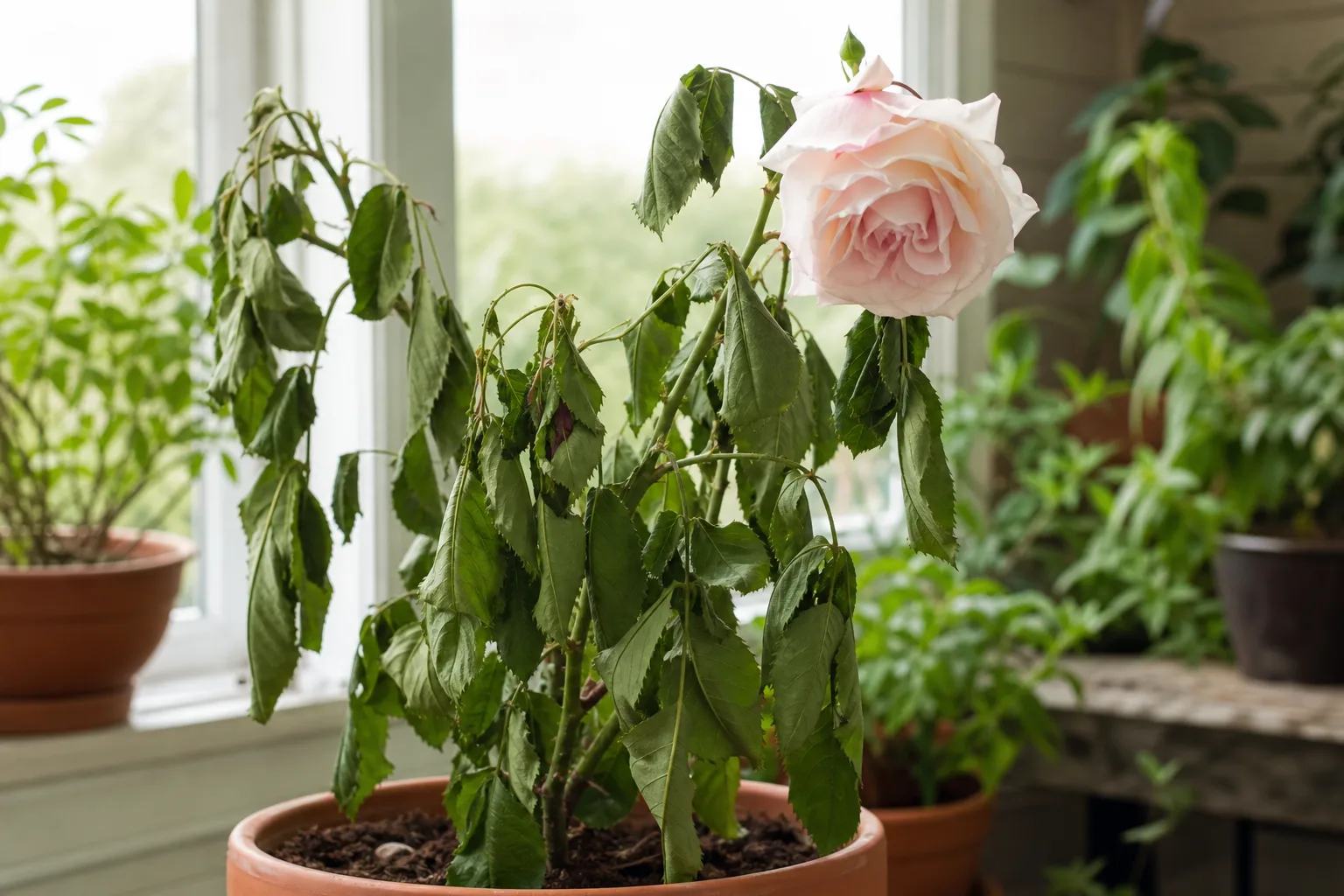
Drooping Leaves on Rose: Causes, Checks & Fixes
This guide covers drooping leaves on Rose. See also the general Drooping Leaves guide, watering, and light pages for this plant.
Drooping Leaves on Rose: Causes, Checks & Fixes
Quick answer
Drooping leaves on Rose look alarming, but the fix depends on whether roots are thirsty or drowning. Container roses in Rose light guide lose moisture fast through large leaves and open blooms; a dry terrace pot can go from firm to floppy by midday. The same limp look on heavy, wet soil means damaged roots cannot transport water upward-even though the mix feels moist.
First step: probe soil 3–4 cm deep and lift the pot before you add water. Dry mix plus a light pot calls for a deep base soak. Wet mix plus a heavy pot means pause watering and inspect drainage and roots. Do not mist leaves to perk them up-that keeps foliage damp and invites black spot without fixing the root zone.
Why Rose leaves droop
Roses are deep-rooted, sun-loving plants that transpire heavily when blooming. In containers, roots are confined to a small volume that dries quickly in heat and wind. Roses in containers need much more water than plants in the ground and may need daily irrigation during hot spells if compost dries between checks.
Midday droop on dry soil is often temporary heat stress. Leaves lose water faster than roots can supply when temperatures spike above the plant’s comfort zone. If soil moisture is adequate 3–4 cm down, many roses recover by evening as transpiration slows. When blooms or leaves start to wilt during dry spells, water immediately-but only after confirming the root zone is actually dry.
Chronic underwatering shows a different pattern. Lower leaves may crisp at edges, buds hang closed, and soil pulls away from the pot rim. Roses are heavy feeders with moisture-retentive soil needs; letting the root ball go bone dry repeatedly weakens fine roots and makes each subsequent wilt harder to reverse.
Overwatering produces the same visual flop with opposite soil conditions. Overwatering or poorly drained soils may lead to root disease and nutritional deficiencies. Saturated mix excludes oxygen; roots die and rot, so leaves droop despite wet soil. This is the most common misread on roses-growers see limp foliage and add more water, deepening the failure.
New and recently repotted roses droop easily. Bare-root plants lose most feeder roots at planting; container roses may carry foliage and blooms before the root system can match water demand. The root system may not be sufficiently large to prevent the top from wilting until roots establish over the first season.
Heavy flower heads on thin stems can nod without any root trouble. Hybrid tea roses especially carry large blooms on relatively soft new growth. Deadheading spent flowers or providing light support prevents mistaking normal flower weight for a watering crisis.
Less common but serious causes include verticillium wilt and rose stem girdler. Verticillium wilt starts on lower leaves, moves upward, and causes cane tips to wilt with purplish-black stem streaks. Rose stem girdler causes clumps of leaves to wilt and brown with swelling on affected stems. These do not respond to a single deep watering.
What drooping leaves look like on Rose
Drought or heat droop:
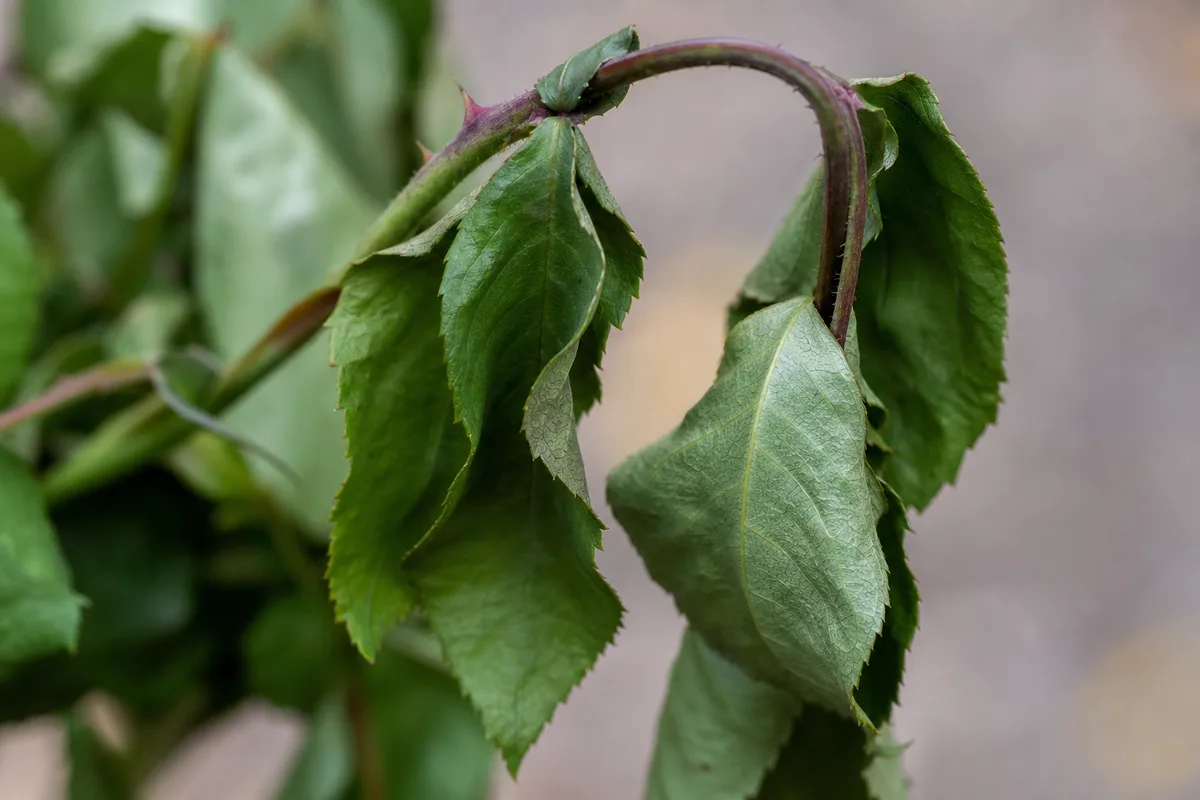
Drooping Leaves symptoms on Rose - compare with healthy tissue on the same plant.
- Leaflets hang downward along the petiole; canes may bow slightly but stay firm
- Often worst on the sun-exposed side or top of the bush by afternoon
- Soil dry 3–4 cm down; pot feels light for its size
- Buds may hang but stems remain green and stiff
- Recovery within hours after a thorough base soak if roots are healthy
Root failure droop:
- Whole bush or lower sections stay limp morning and evening
- Soil wet or heavy days after the last watering; saucer may hold standing water
- Yellow lower leaves, sometimes dropping while upper leaves still look green
- Soft or discolored tissue at the crown; sour smell from the root zone
- Fungus gnats hovering over the soil surface
Transplant or establishment droop:
- Follows recent planting, Rose repotting guide, or moving from nursery to full sun
- Foliage present but roots small relative to top growth
- May improve gradually over one to three weeks with consistent-not excessive-watering
Mechanical droop (not a care failure):
- Only flower heads nod; leaves and stems stay upright
- Occurs on heavy double blooms after rain or wind
- Resolves after deadheading or when petals fall
How to confirm the cause
Work through these checks in order before you treat:
- Time of day - Note whether droop is worst at midday and improves by morning on its own. Heat-only stress often self-corrects overnight when soil moisture is adequate below the surface.
- Soil moisture at depth - Insert a finger or skewer 3–4 cm into the mix near the root ball, not just at the rim. Dry here means drought; constant wetness means hold water.
- Pot weight - Lift the container. A light pot on a drooping rose strongly suggests thirst. A heavy pot that stays wet for four or five days after one watering points to overcare or poor drainage.
- Recovery test after one soak - If soil is dry, direct the flow onto the soil at the base until water runs from drainage holes. Recheck in four to six hours. Firming leaves confirm drought. No change on already-wet soil confirms root trouble.
- Stem and cane inspection - Feel canes from tip to base. Firm green wood with limp leaves suggests water transport failure at roots. Soft mushy bases, localized swelling, or one branch wilting while neighbors look fine warrant closer disease or pest checks.
- Recent care history - New plant, heatwave, missed watering, or saucer left full? Match the pattern to the most recent stress rather than jumping to disease.
If droop persists more than 48 hours after correcting moisture and the soil was appropriately dry or appropriately rested, inspect roots by sliding the plant partly out of the pot.
First fix for Rose
Probe soil 3–4 cm deep. If dry, water deeply at the base until runoff drains freely. If wet, stop watering and empty the saucer.
This single diagnostic step prevents the two most damaging mistakes: drowning a rose that looks wilted on soggy soil, or letting a dry container bake through a heatwave because you assumed overwatering.
For dry pots, water in the morning when possible so foliage dries during the day. Apply enough volume that the entire root ball rewets-often one to two large watering cans for a medium container. Giving plants a good soak once a week rather than light daily sprinkles encourages deeper rooting, but container roses in peak summer may legitimately need more frequent deep drinks when the top 3–4 cm dries quickly.
For wet pots, do not add water hoping leaves will perk up. Move the pot to brighter air if it sits in dim shade where mix never dries. Tilt and drain any trapped water in the saucer. Let the top 3–4 cm dry before the next irrigation. Only repot or trim roots if canes soften, smell sour, or droop continues more than a week on corrected watering.
If heat and reflected light bake a dry pot by noon daily, shift it to afternoon shade or group it with other pots to reduce root-zone temperature-black containers on sunny terraces overheat roots fastest.
Step-by-step recovery
Once the first fix matches the actual cause, follow the path that fits:
After drought correction:
- Water when the top 3–4 cm dries, not on a fixed calendar from winter habits
- Deadhead heavy blooms that weigh down stems
- Resume rose fertilizer only after new leaves look firm for two weeks
- Expect visible firming within six to twenty-four hours if roots are intact
After overwatering correction:
- Hold water until the top 3–4 cm is dry; this may take several days
- Confirm drainage holes are open and saucers stay empty
- Remove any mulch or debris blocking the pot base
- If roots are mostly white and firm when partially exposed, recovery takes one to three weeks
- If more than half the root mass is brown and mushy, treat as root rot on Rose-trim dead roots, repot into fresh well-draining mix, and reduce top growth
After transplant shock:
- Keep soil evenly moist but not soggy for the first four to six weeks
- Provide morning sun with protection from harsh afternoon heat on new plantings
- Avoid repotting again, hard pruning, and heavy feeding in the same month
- Expect gradual improvement as feeder roots grow
If verticillium or stem girdler is suspected:
- Do not rely on watering alone
- Remove and destroy affected canes below the wilt line
- Sterilize pruners between cuts
- Verticillium persists in soil for years; seriously affected plants may not be worth saving in containers
Recovery timeline
Simple drought droop on healthy roots often improves within hours of a deep soak. Heat-only midday flop that self-corrects overnight needs no extra treatment beyond consistent moisture checks.
Root stress from overwatering takes one to three weeks to show new firm growth if damage is moderate. Severe crown rot may not fully reverse; judge success by clean new shoots from healthy wood, not by old limp leaves regaining rigidity.
Transplant droop typically eases over two to six weeks as roots expand. Some roses grow out of transplant shock in one season; weak specimens may stay smaller until the second year.
Drooped leaves that stayed limp for a week or more usually will not return to perfect form. Focus on whether new growth emerges upright and buds open normally.
Lookalike symptoms
Wilting vs. drooping leaves: These terms overlap on roses. True wilting often involves softer tissue and faster collapse. Drooping may describe a gradual hang of leaflets and canes. The diagnostic path is the same-check soil moisture depth first.
Yellow leaves: Yellow lower leaves with wet soil suggest overwatering or root failure. Yellow with dry soil and crispy edges suggests drought stress. See the yellow-leaves guide if color change dominates over simple droop.
Spider mites: Hot, dry conditions invite mites that stipple leaves and add webbing-not just limp hang. Shake a leaf over white paper; specks that move confirm mites. Rinse undersides before assuming the problem is watering alone.
Black spot defoliation: Spotted leaves drop after yellowing; bare lower canes can look like stress wilt. Check for purple-black spots with yellow halos before changing your Rose watering guide.
Mistakes to avoid
- Watering without checking moisture depth - The same limp look means opposite actions on dry vs. wet soil.
- Misting or overhead watering to revive droop - Wet foliage worsens black spot and does not rehydrate roots. Always direct water to the base.
- Keeping saucers full - Standing water keeps roots saturated and oxygen-starved.
- Assuming daily watering is always correct - Cool dormant months and shaded placement need far less than peak summer bloom season.
- Fertilizing a drooping rose immediately - Salt stress on compromised roots can worsen collapse. Wait until turgor returns.
- Repotting on day one - Only necessary when roots are mushy, soil is failing, or the pot has no drainage. Otherwise stabilize watering first.
- Pruning all drooped leaves before diagnosis - Wait to see what recovers; remove only tissue that stays damaged or diseased.
Rose care cross-check
Drooping leaves often expose a mismatch between how you water and how Rose overview actually grows:
- Light: Roses need six or more hours of direct sun for strong growth and predictable drying. Weak light slows water use and keeps pots wet too long.
- Soil: Rich, moisture-retentive but well-draining mix suits roses. Heavy peat with no perlite or a pot too large for the root ball stays wet for days.
- Watering rhythm: Water when the top 3–4 cm dries-typically every two to three days in summer and every four to five days in cooler months for an established container rose, adjusted to your pot and climate.
- Drainage: Every container needs open drainage holes. Drought stress leads to defoliation, but overwatering leads to root disease-both can show as droop.
- Airflow: Crowded balcony placement traps humidity and slows leaf drying after rain or splash. Space pots so air moves between canes.
How to prevent drooping leaves on Rose
- Check container roses daily in peak summer; probe 3–4 cm deep rather than relying on surface appearance
- Water at the base in the morning; never wet foliage on a routine schedule
- Empty saucers after every watering
- Match pot size to the plant-oversized pots stay wet; undersized pots dry too fast
- Mulch the soil surface lightly to reduce evaporation, keeping mulch away from cane bases
- Deadhead heavy blooms before stems bow permanently
- Scout for mites during hot dry spells; rinse undersides weekly if webs appear
- Reduce watering frequency in winter dormancy when growth slows
- Acclimate new roses gradually to full terrace sun over one to two weeks
When to worry
Seek a more aggressive diagnosis if:
- Canes soften or darken at the soil line
- Droop persists more than 48 hours after one correct deep soak on dry soil, or more than a week after correcting overwatering
- One branch wilts while the rest of the bush looks healthy
- Purplish-black streaks appear inside stems when bark is scraped
- Buds drop in clusters without opening, combined with wet soil and crown softness
- Progressive yellowing climbs from lower to upper leaves despite adjusted watering
A rose with firm wood, clean new growth after correction, and upright buds is recovering even if older leaves stay slightly lax. A rose that keeps losing leaves, refuses new shoots, or shows spreading cane dieback may not be saveable in a container without major intervention.
When to use this page vs other Rose guides
- Rose watering guide - Use for routine moisture checks before assuming drooping leaves is the main issue.
- Rose problems hub - Browse all 7 common issues on this species.
- Root Rot on Rose - Different entry point when symptoms overlap with drooping leaves.