Mealybugs on Rose: Causes, Checks & Fixes
Quick answer
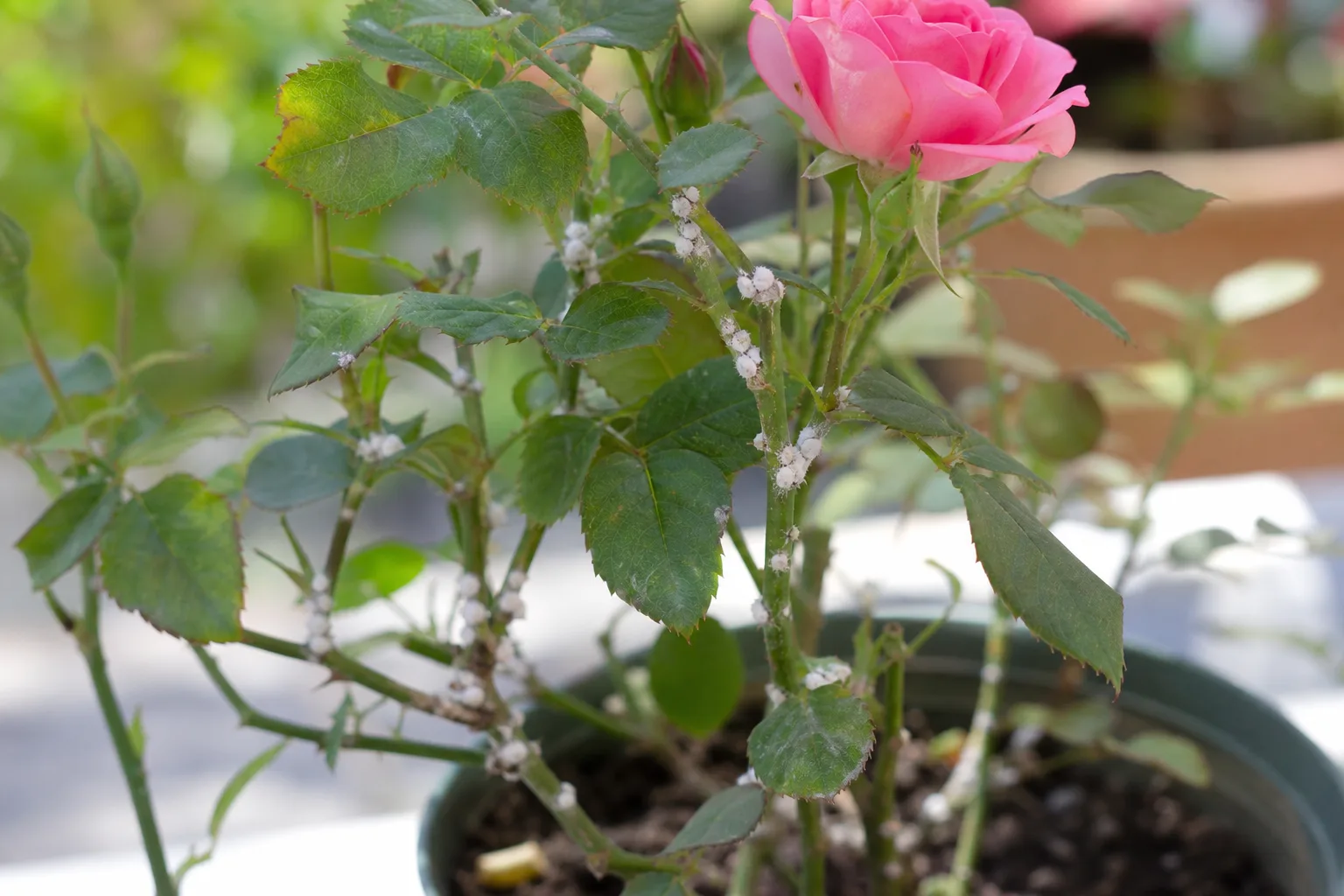
Mealybugs on Rose appear as white, waxy cottony tufts in leaf axils, thorn bases, and bud clusters. First step: isolate the plant and dab visible clusters with a cotton swab dipped in 70% isopropyl alcohol.
Mealybugs on Rose: Causes, Checks & Fixes
This guide covers mealybugs on Rose. See also the general Mealybugs guide, watering, and light pages for this plant.
Mealybugs on Rose: Causes, Checks & Fixes
Quick answer
Mealybugs on Rose show up as white, waxy cottony clusters tucked into the places a rose bush protects best: leaf axils, thorn bases, bud sepals, and the graft union on nursery plants. Unlike aphids, they do not move much once settled, but they suck sap and excrete honeydew that can coat lower leaves and invite sooty mold. Soft new spring shoots and nitrogen-rich growth are their favorite feeding sites.
First step: isolate the affected rose and dab every visible cluster with a cotton swab dipped in 70% isopropyl alcohol. Test alcohol on one leaf first and wait a day to check for burn. After direct removal, you can follow with targeted sprays-but confirm live insects before treating the whole bush.
Why Rose gets mealybugs
Roses are built for mealybugs to hide in. Thorny canes, overlapping leaflets, and tight bud clusters create sheltered crevices that overhead rain and casual rinsing miss-exactly where mealybugs aggregate on ornamentals. Container roses on balconies and terraces often sit in warm, still air between walls, which favors pests that cannot fly far and spread mainly on tools, hands, or new plants.
Roses also push frequent soft growth during the flowering season. Heavy feeding with nitrogen before bloom stimulates tender shoots-and over-application of nitrogen combined with regular irrigation can increase mealybug egg production on susceptible plants. Stressed roses (drought, root-bound pots, or weak light) recover more slowly from sap loss, so damage shows up faster on buds and new leaves even when colony size is modest.
Introduction is the other common route. Mealybugs are often brought in on new plants and can hide at the graft union or under nursery labels where you will not see them during a quick glance. A single infested patio rose can seed mealybugs onto nearby pots because crawlers are mobile for a short time before they settle and build wax.
What mealybugs look like on Rose
Typical mealybug signs:
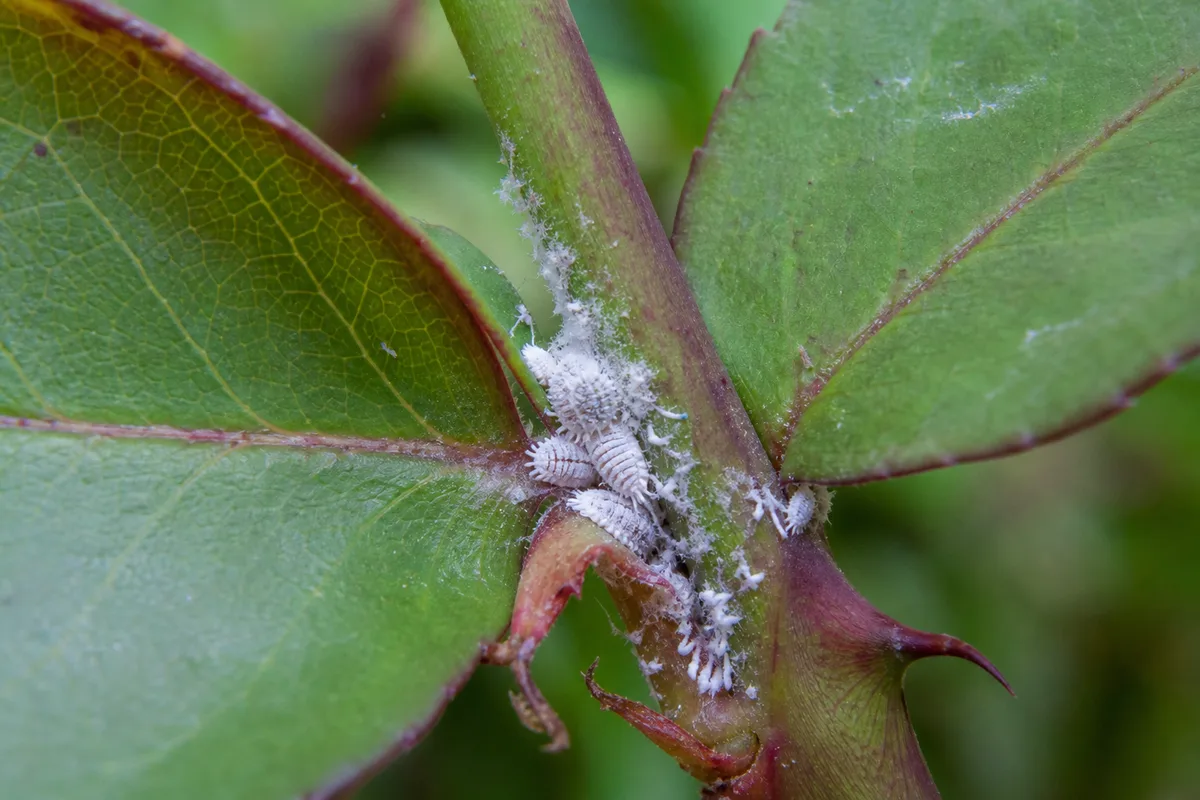
Mealybugs symptoms on Rose - compare with healthy tissue on the same plant.
- Fluffy white wax masses in leaf axils, at thorn bases, and under bud sepals
- Slow-moving or stationary oval insects underneath the wax; pink or orange eggs or crawlers when you pull wax apart
- Shiny, sticky honeydew on upper leaves below feeding sites
- Black sooty mold that wipes off with a damp cloth once honeydew is present
- Stunted or distorted new shoots; buds that brown and fail to open when colonies sit at the crown
- Ant trails on canes or pot rims farming honeydew from protected colonies above
Mealybugs are not one uniform pest. On roses you are most likely dealing with glasshouse-type species such as citrus mealybug or longtailed mealybug on container and greenhouse-grown stock-both produce the classic cottony wax. Root-feeding mealybugs are less visible but matter on potted roses: if stems look clean yet growth stays weak, check roots when Rose repotting guide.
How to confirm the cause
Work through these checks before you spray the entire bush:
- Location pattern - Mealybugs cluster in protected joints. Uniform white powder on leaf surfaces alone is more likely powdery mildew, not insects.
- Movement test - Aphids are soft-bodied and often shift when disturbed; mealybug adults stay put under wax. Crawlers are tiny and pale before wax forms.
- Alcohol dab - Touch one cluster with a swab soaked in 70% isopropyl alcohol. Dead mealybugs turn gray or brown; live wax stays white until the insect beneath dies.
- Sepal inspection - Pull back sepals on unopened buds and inspect the base. Mealybugs often lodge where petals will emerge.
- Graft union check - On nursery roses, peel back wrapping at the union and look for cottony masses at the soil line.
- Honeydew and ants - Sticky leaves with ants but no visible aphids strongly suggest mealybugs or scale in a hidden crevice.
- Stress cross-check - Confirm soil dries 3–4 cm down before watering and that the rose gets six or more hours of direct sun. Chronic wilt from underwatering can mimic pest weakness but will not produce wax clusters.
If you find wax-covered insects in crevices, you have a confirmed mealybug problem-not a nutrient issue or black spot.
First fix for Rose
Isolate the plant and dab every visible mealybug cluster with a cotton swab soaked in 70% isopropyl alcohol.
Move the rose away from other containers until you see no new cottony masses for at least two weeks after treatment. On small infestations, direct alcohol contact kills or removes mealybugs without coating open blooms in soap. Test alcohol on one leaf and wait 24–48 hours before wider use; roses in hot sun can burn if alcohol sits on tender foliage.
Work methodically: axils first, then thorn bases, bud clusters, and the graft union. Crush egg sacs when you find them-they look like small cottony pads. Bag and discard heavily coated buds rather than trying to save every flower; clean new shoots matter more for long-term recovery.
Do not jump to repotting or whole-bush insecticide on day one unless roots are clearly infested or colonies cover most canes.
Step-by-step recovery
After the alcohol dab pass, escalate only as needed:
- Prune out saturated tissue - Remove canes or buds coated in wax you cannot reach with a swab. Sterilize pruners between cuts.
- Targeted rinse - On sturdy outdoor roses, a strong stream of water can dislodge exposed crawlers from canes. Rinse early morning so foliage dries in sun. Avoid daily overhead soaking if black spot is also active; aim water at infested joints only.
- Insecticidal soap or horticultural oil - When colonies persist in unreachable crevices, spray insecticidal soap or horticultural oil with full coverage of axils and stem joints. These work best on younger nymphs with less wax. Repeat every five to seven days for two to three cycles to catch crawlers hatching from eggs.
- Monitor between cycles - Inspect weekly at the same joints. The waxy coating makes contact sprays less effective on adult mealybugs, so persistence matters more than a single heroic treatment.
- Root mealybug follow-up - If stems stay clean but the rose wilts despite proper watering, unpot and inspect roots for pale wax near the root ball. Repot into fresh mix, trim badly infested roots, and isolate until new growth is stable.
Avoid broad-spectrum insecticides on garden roses when possible-they kill lady beetles and lacewings that help suppress mealybugs outdoors. Keep ants off infested canes; ants protect mealybugs from predators.
Recovery timeline
Light infestations on one or two canes often clear within two to three weeks when alcohol dabs and one or two soap cycles hit crawlers as they emerge. Moderate infestations spanning multiple stems may need a full month of weekly monitoring through warm weather.
Old leaves with honeydew staining or sooty mold can be rinsed once insects are gone; the mold stops spreading when the honeydew source dries up. Yellowed or stunted leaves rarely return to perfect form-watch for clean new foliage and firm buds instead. Heavily wax-coated buds that already browned will not open; remove them so the plant redirects energy to clean shoots.
Lookalike symptoms
Powdery mildew - White dusty coating on leaf surfaces that rubs off like flour, without cottony masses in axils or insects beneath.
Woolly aphids - Also produce wax, but aphids often cluster on new tips and move when disturbed; bodies are softer and less segmented under magnification.
Cottony cushion scale - Larger, more uniform white egg masses on woody stems; different insect shape under the wax.
Aphids - Green, pink, or black soft insects on shoot tips without heavy wax tufts; more mobile than mealybugs.
Black spot - Dark leaf spots with yellow halos from fungal infection; unrelated to wax clusters unless sooty mold from honeydew darkens upper leaf surfaces.
Mistakes to avoid
- Spraying the whole bush once and assuming the pest is gone-egg sacs and hidden axil colonies survive single passes.
- Using alcohol or oil on roses in midday heat without a leaf test, risking phytotoxicity on tender new growth.
- Overhead-watering leaves daily to “wash pests off” when black spot is present-wet foliage worsens fungal disease on roses.
- Applying excess nitrogen while fighting an infestation-tender new shoots give mealybugs fresh feeding sites.
- Returning an isolated rose to the main display after one clean inspection; hold quarantine two full weeks with no new wax.
- Ignoring ants-treating mealybugs without disrupting ant trails often means colonies rebound from protected spots.
Rose care cross-check
Mealybug recovery goes faster when the rose is otherwise healthy. Water deeply at the base when the top 3–4 cm of soil dries; do not wet foliage routinely. Confirm six or more hours of direct sun so new growth firms up quickly. Hold fertilizer until new shoots look clean-feeding a stressed, pest-loaded rose pushes soft tissue pests prefer.
Improve airflow between crowded patio pots. When deadheading, inspect the next axil down the cane-mealybugs often hide where leaves meet the stem you just exposed.
How to prevent mealybugs on Rose
Quarantine every new rose for two weeks before it joins other containers. Inspect the graft union, leaf axils, and pot rim at purchase. Scout weekly during warm dry weather, especially on soft spring growth.
Avoid heavy nitrogen feeds right before peak bloom if mealybugs have been a recurring issue. Encourage natural predators by skipping broad-spectrum sprays unless infestation severity demands them. Wipe pruning tools between plants when cutting infested canes.
If a rose fails multiple treatment cycles and colonies keep returning despite good culture, consider replacing it rather than repeatedly treating a reservoir plant-heavily infested specimens can be hard to fully clear.
When to worry
Escalate care when cottony masses coat most canes, buds drop in clusters before opening, or new growth stays stunted for more than one flush despite correct watering and sun. Also act fast if mealybugs spread to multiple pots in the same display-crawlers and hitchhiking on tools move faster than adults crawl.
A mature established rose can tolerate low populations without losing the whole plant, but bloom quality suffers quickly when buds are infested. Container roses with limited root volume have less buffer than in-ground shrubs.
When to use this page vs other Rose guides
- Rose watering guide - Use for routine moisture checks before assuming mealybugs is the main issue.
- Rose problems hub - Browse all 7 common issues on this species.
- Yellow Leaves on Rose - Different entry point when symptoms overlap with mealybugs.
- Spider Mites on Rose - Different entry point when symptoms overlap with mealybugs.
- Leaf Drop on Rose - Different entry point when symptoms overlap with mealybugs.