Low Humidity on Rose: Causes, Checks & Fixes
Quick answer
Low humidity on Rose rarely kills the bush but stacks with heat stress and favors spider mites on sunny terrace pots. First step: rinse foliage early in the morning so leaves dry by midday, then water deeply at the base-not overhead as your daily routine.
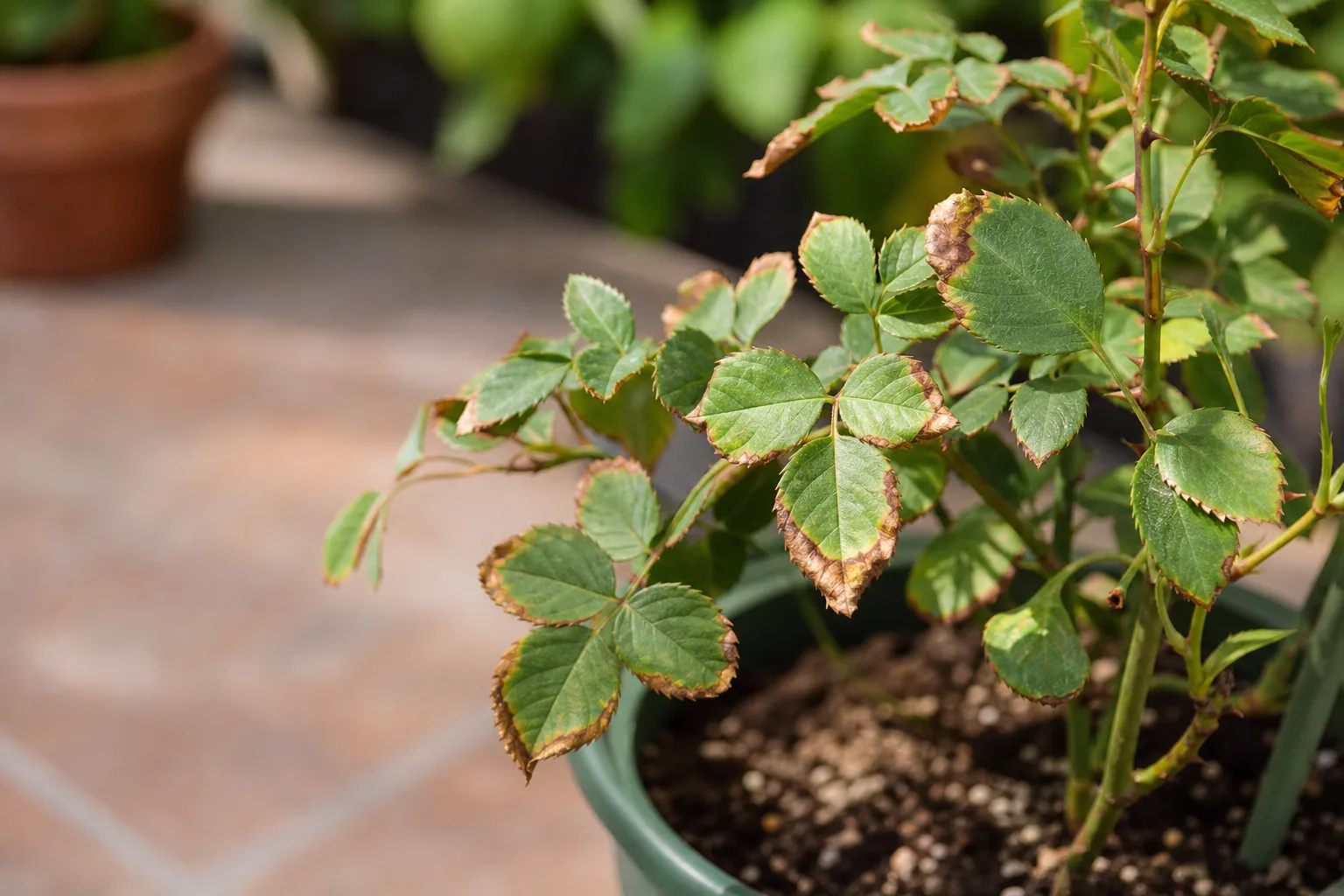
Low Humidity on Rose: Causes, Checks & Fixes
This guide covers low humidity on Rose. See also the general Low Humidity guide, watering, and light pages for this plant.
Low Humidity on Rose: Causes, Checks & Fixes
Quick answer
Roses on sunny terraces and balcony rails transpire heavily in Rose light guide. When summer heat, dry winds, or AC drafts drop humidity around the pot, you often see crisp tan leaf edges, dull foliage, and pots that dry out faster than usual. Dry air alone rarely kills a healthy bush, but it stacks with heat stress and creates perfect conditions for glasshouse red spider mite-one of the most common rose pests in hot weather.
First step: rinse foliage early in the morning with plain water, targeting leaf undersides, so leaves dry completely by midday-then water deeply at the base the same day. This raises local humidity briefly, knocks off early mite colonies, and keeps roots hydrated without replacing your normal base-watering routine. Do not switch to daily overhead watering; RHS rose guidance directs water onto soil around the base, avoiding foliage and flowers, to deter fungal diseases.
Why Rose struggles in dry air
Hybrid tea and garden roses evolved for outdoor beds with deep root runs-not small pots on heat-reflecting walls. In containers they lose moisture quickly. Container plants may need watering more than once daily in hot, dry weather, and roses in full sun on terraces dry faster still.
Roses prefer moderate humidity around 40–60%. They tolerate drier air better than tropical houseplants, but prolonged dry heat during active bloom season forces the plant to pull water through leaves faster than roots can supply-especially if watering slips. That shows up as edge burn on soft new foliage before older leaves.
The bigger rose-specific risk is pest pressure. Glasshouse red spider mite thrives in warm, dry conditions and feeds on garden roses during summer. Hot dry summers on terrace roses attract red spider mites at high rates. Dry air does not cause mites directly, but it accelerates their reproduction once they arrive-mite populations can complete a generation in about 12 days at 21°C.
AC vents, open balcony doors, and wind tunnels between buildings create localized dry zones. A rose that looked fine in spring can show edge burn within days of a heat wave-not because humidity dropped indoors globally, but because the microclimate around that one pot changed.
What low humidity looks like on Rose
Environmental dryness (humidity-related):
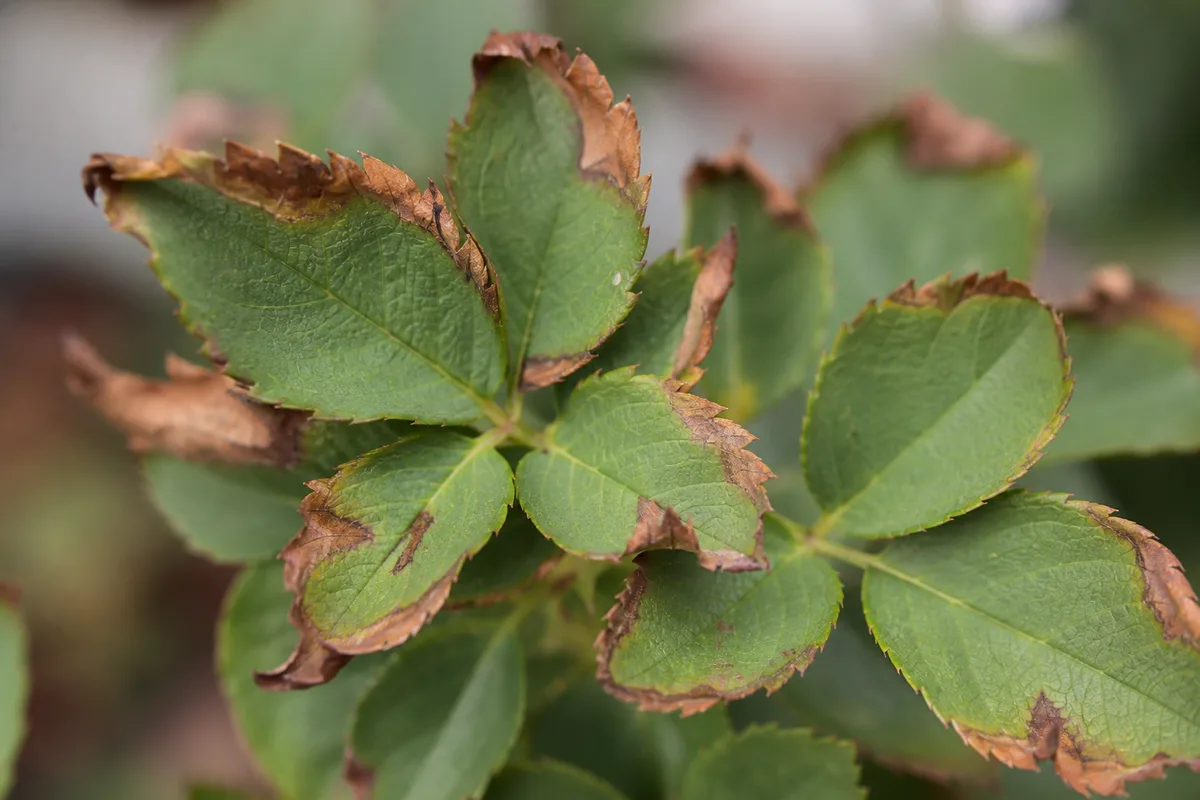
Low Humidity symptoms on Rose - compare with healthy tissue on the same plant.
- Tan or brown crispy edges on leaflets, often starting on outer or upper leaves exposed to sun and wind
- Dull, slightly leathery foliage that perks up briefly after a morning rinse
- Pot weight drops noticeably within a day on hot terraces
- Bud tips may desiccate or fail to open fully during extreme dry heat
- No purple-ring lesions, powdery white coating, or wet black patches on leaves
Spider mite damage that often follows dry air:
- Fine pale mottling or stippling on upper leaf surfaces
- Tiny yellowish-green mites and cast skins on leaf undersides-visible with a hand lens
- Fine silk webbing on stems and leaf axils in heavy infestations
- Premature leaf drop on severely affected shoots
Unlike black spot, low-humidity edge burn shows dry tan tissue without circular purple-fringed spots. Unlike underwatering alone, you may see moist soil at depth while edges still crisp because transpiration outpaces uptake during peak heat.
How to confirm the cause
Work through these checks in order before changing your whole care routine:
- Soil moisture at depth - Insert a finger 3–4 cm into the mix. Dry here points to underwatering contributing; evenly moist soil with crispy edges suggests transpiration or dry air stress.
- Pot weight and drainage - Lift the container. A light pot on a hot day after yesterday’s watering confirms fast drying, not necessarily root failure.
- Microclimate scan - Note proximity to AC vents, radiator exhaust, reflective walls, and wind corridors. Only the plant in the dry pocket shows edge burn.
- Morning rinse test - Rinse one affected shoot early; if foliage looks less limp by afternoon and edge browning stops spreading on new growth within a week, dry air is a factor.
- Underside mite check - Hold a white paper under a leaf and tap. Specks that move, plus stippling above, confirm sap-feeding mites-not humidity alone.
- Disease exclusion - Look for purple-ring spots (black spot), white powder (powdery mildew), or soggy black cane bases (rot). None of these are primary low-humidity patterns.
If soil is waterlogged and leaves yellow while edges brown, fix drainage and watering before chasing humidity.
First fix for Rose
Rinse foliage early in the morning with a steady stream of plain water, focusing on leaf undersides and soft new growth, so all surfaces dry by midday-then water deeply at the base until excess drains from the pot.
This single step addresses the two problems dry air creates on roses: transient leaf stress and early mite colonies. Regular syringing with water reduces spider mite risk, though it will not control a heavy infestation on its own. The rinse raises humidity around the canopy briefly and physically dislodges mites and eggs.
Follow immediately with base watering-direct the hose or watering can onto soil, not flowers. Water at the base to deter fungal diseases and avoid excess runoff on paving. Container roses in heat may need a deep soak daily; check when the top inch of mix feels dry.
Do not mist lightly once a day and walk away-that wets leaves without raising ambient humidity meaningfully and can leave overnight moisture that invites black spot. Do not repot, fertilize, or prune heavily on day one.
Step-by-step recovery
After the initial morning rinse and base watering:
- Repeat morning rinses two to three times weekly through hot dry spells while scouting undersides for mites. Stop if weather turns cool and humid.
- Maintain even root moisture - Water when the top 3–4 cm dries; in peak summer on terraces that may mean daily deep watering. Mulch the pot surface to slow evaporation and keep roots cooler.
- Group pots slightly - Place containers near each other with gaps for airflow. This raises local humidity a few points without crowding stems.
- Treat confirmed mites - If stippling spreads despite rinses, continue water sprays every two to three days and consider horticultural oil or insecticidal soap on undersides per label directions-never during peak bloom bee activity.
- Trim dead edges - Snip fully crisp leaflet tips if they look ragged; partial tan margins can stay until replaced by new growth.
- Move only if obvious - Shift the pot away from AC blasts or heat-reflecting walls. Avoid bouncing it between sun and shade daily.
Hold fertilizer until the bush holds even moisture for two weeks without daily wilting. Stressed roses pushed with nitrogen produce soft mite-friendly shoots.
Recovery timeline
Morning rinses plus corrected base watering show results within three to five days when damage is mild-leaves look less dull and edge browning stops spreading. New clean leaflets typically emerge within one to two weeks during active growth.
Old crispy margins do not revert to green. Judge recovery by unstippled new growth, firm canes, and buds opening normally-not by old damaged tissue.
If mite webbing was present, expect two to three weeks of repeated rinses before stippling on new leaves stays clean. Heavy infestations may need a full season of scouting.
Lookalike symptoms to rule out
Underwatering wilts whole leaflets and canes mid-morning; soil is dry 3–4 cm down. Humidity stress can occur with moist soil when transpiration exceeds uptake.
Heat scorch bleaches or browns sun-exposed leaf surfaces suddenly after a heat spike. Pattern follows direct sun angle, not uniform edge burn.
Black spot shows circular black lesions with yellow halos and purple-fringed edges-not dry tan margins alone. It follows wet foliage and poor airflow, not dry air.
Powdery mildew coats leaves with dry white powder, common in humid stagnant pockets-the opposite microclimate from dry terrace stress.
Salt or fertilizer burn browns leaflet edges after heavy feeding or drought-stressed fertilizing. Flush soil if crusting white salts appear on the pot rim.
Mistakes to avoid
Do not leave rose leaves wet overnight. Evening overhead watering or all-day misting trades spider mite relief for black spot and other fungal problems on roses.
Do not run a humidifier pointed directly at blooms in an attempt to fix outdoor terrace roses-it rarely changes conditions meaningfully outdoors and can trap moisture on petals.
Do not ignore mites because edges look like simple dryness. Stippling and webbing need active control, not just more water.
Do not let containers sit in drip trays that keep roots waterlogged while upper leaves crisp from dry air-that combination weakens the whole bush.
Do not prune the bush back by one-third during an active mite outbreak without disposing of cuttings away from other roses.
How to prevent low humidity stress on Rose
Scout terrace roses weekly from late spring through peak summer heat. Soft new growth and opening buds show stress before older foliage.
Mulch container tops with compost or shredded bark to reduce evaporation and moderate soil temperature. Keep mulch away from the graft union.
Water in the morning when possible. Morning watering lets roots absorb moisture before midday evaporation peaks.
Maintain six or more hours of direct sun-the light roses need for bloom-but accept that full-sun pots dry faster and plan watering accordingly.
Improve airflow between grouped pots without crowding canes. Stagnant humid pockets favor fungus; bare windy ridges favor mites. Aim for moderate spacing.
During heat waves above 35°C, expect daily watering on container roses and plan morning rinses as prevention, not only after damage appears.
When to worry
Treat as urgent when fine webbing covers multiple stems, most upper leaves show heavy stippling, buds abort in clusters during bloom season, or canes soften at the base with sour-smelling soil-those patterns suggest mite explosion, rot, or combined stress beyond simple dry air.
Also escalate if black spot lesions spread through most of the bush while leaves stay wet from misting-that is a disease management problem, not humidity correction.
Mild edge browning on a few upper leaves during a short heat wave, with firm canes and clean new growth emerging, is manageable with the morning rinse and base-watering routine.
Conclusion
Low humidity on roses shows up as crispy edges, fast-drying pots, and-if you miss it-spider mites on terrace containers. Confirm with soil checks, a microclimate scan, and underside inspection before overreacting. Rinse early so leaves dry by midday, water deeply at the base, and scout through hot weather. That path fixes dry-air stress without the black spot risk of wetting rose foliage every evening.
When to use this page vs other Rose guides
- Rose watering guide - Use for routine moisture checks before assuming low humidity is the main issue.
- Rose problems hub - Browse all 7 common issues on this species.
- Leaf Drop on Rose - Different entry point when symptoms overlap with low humidity.