Not Enough Light on Rose: Causes, Checks & Fixes
Quick answer
Not enough light on Rose causes long pale canes, sparse buds, and weak foliage despite good watering. First step: move the pot to a spot that receives at least six hours of direct sun on the leaves each day.
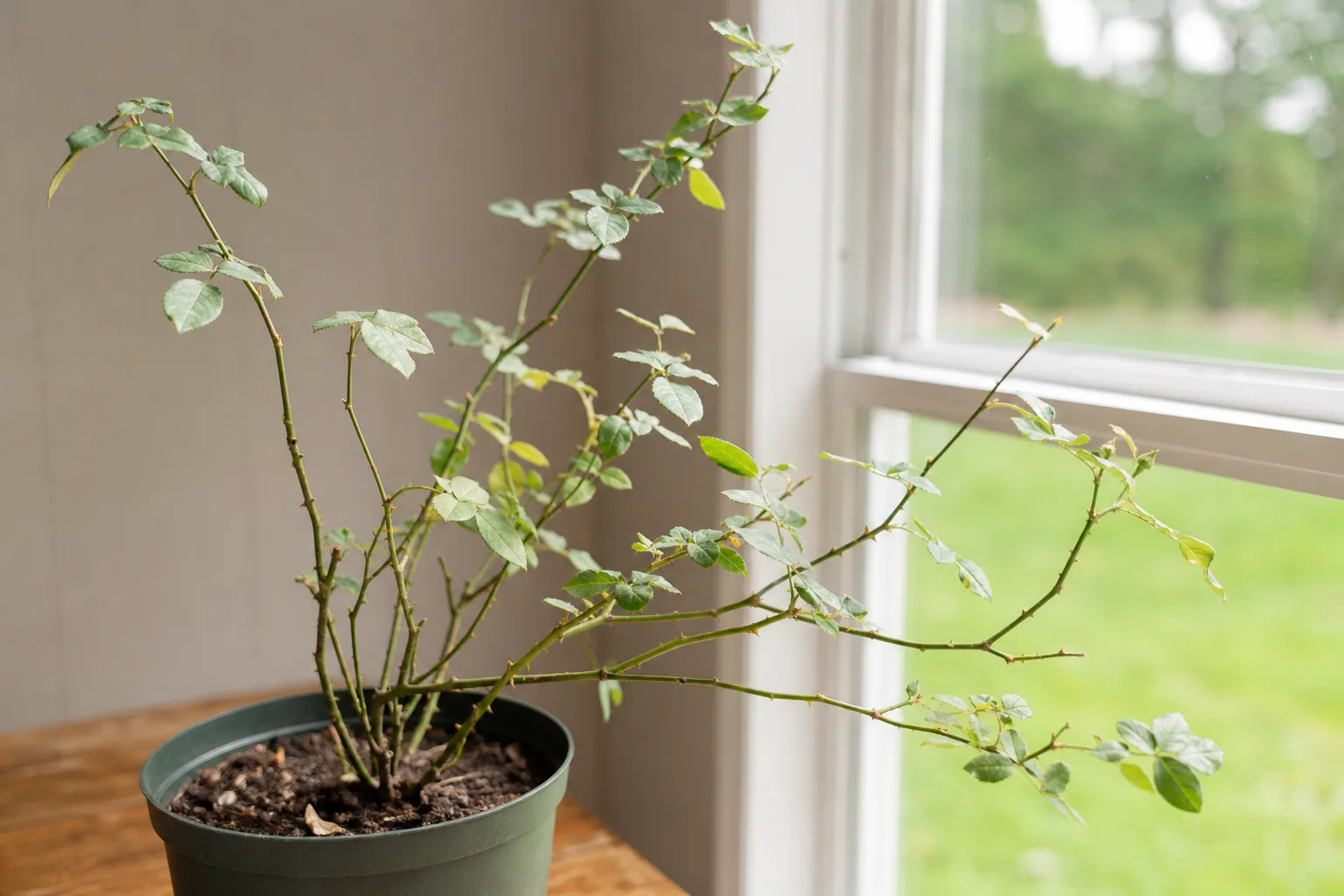
Not Enough Light on Rose: Causes, Checks & Fixes
This guide covers not enough light on Rose. See also the general Not Enough Light guide, watering, and light pages for this plant.
Not Enough Light on Rose: Causes, Checks & Fixes
Quick answer
Not enough light on Rose is the most common reason container hybrid teas and floribundas stay alive but refuse to bloom. Rosa × hybrida needs Rose light guide-at least six hours of direct sunlight on the leaves daily-for strong canes and repeat flowers. A bright living room or shaded balcony corner rarely qualifies.
First step: move the pot to the sunniest available spot and count direct sun hours on the foliage before changing fertilizer or watering. If the plant receives less than six hours of direct sun, relocation is the fix-not more feed.
What insufficient light looks like on Rose
Roses starved for light show a recognizable pattern that differs from a one-time watering mistake:
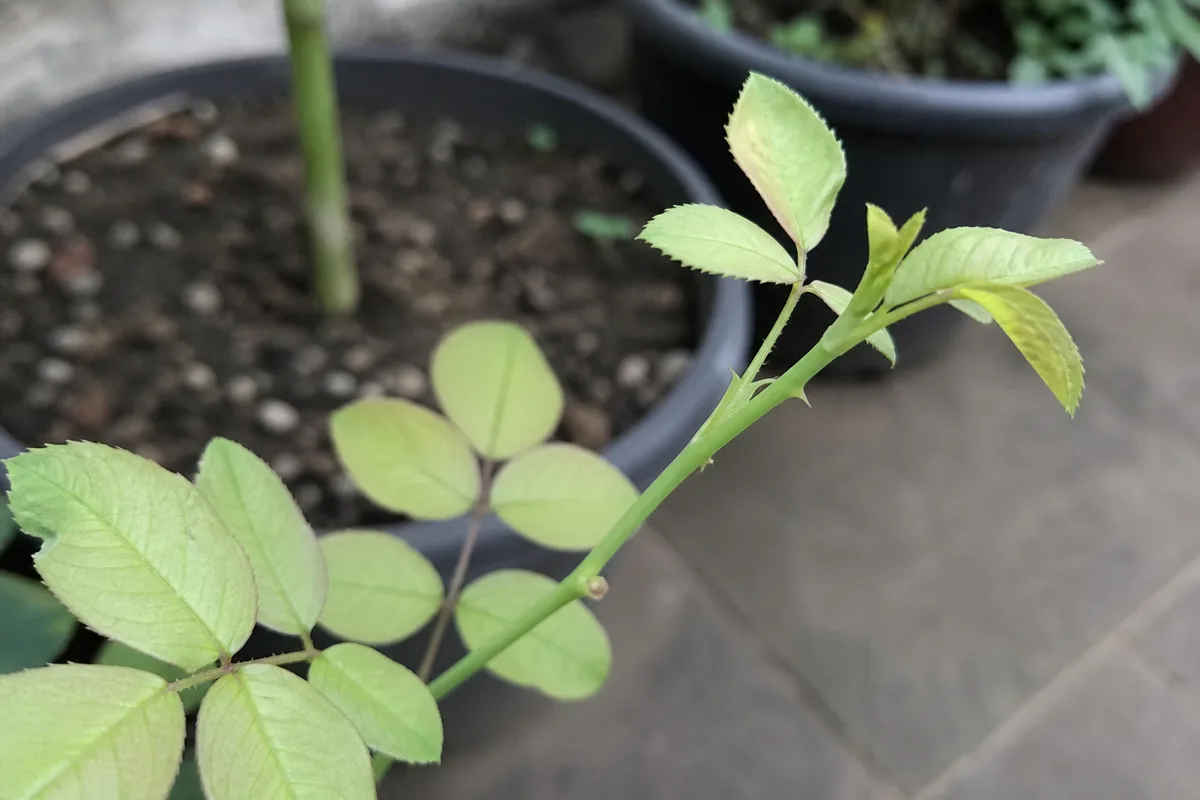
Not Enough Light symptoms on Rose - compare with healthy tissue on the same plant.
- Long, thin canes with wide spacing between leaves (internodes stretch toward the window or open sky)
- Small, pale green leaves on new growth, sometimes yellowing on lower shaded foliage
- Few or no buds, or buds that open as small, washed-out flowers
- Canes leaning toward the brightest direction; one-sided growth on a balcony rail
- Slow recovery after pruning despite adequate water and feed
- Increased fungal pressure in stagnant, shaded corners where leaves stay damp
Hybrid tea roses are especially telling. They are bred for large blooms on upright canes; without strong light they produce weak water shoots instead of flower wood. Indoor roses may keep glossy leaves for months and still never set buds without supplemental grow lights.
Leggy growth and no flowers often share the same root cause here-both improve when direct sun increases.
Why Rose needs more light
Roses are sun plants. Roses need at least six hours of direct sunlight each day and perform best in a full-sun location with well-drained, fertile soil. When grown in too much shade, plants will not bloom as well and become more prone to powdery mildew and other foliage diseases.
That bloom failure is physiological, not cosmetic. Plants grown with insufficient light will not flower very well. Flower formation on repeat-blooming modern roses depends on high light energy. Shade pushes the plant toward survival growth-long stems reaching for photons-rather than the short, sturdy flowering wood you want on a hybrid tea or floribunda.
Container culture makes the problem worse. Balcony overhangs, tinted glass, neighbor walls, and north-facing rails cut direct sun sharply. A spot that feels “bright” indoors often delivers only indirect light, which keeps Rosa × hybrida alive but not productive. Roses need six to eight hours of direct sun each day, with morning sun especially valuable because it dries dew quickly and reduces disease entry on wet foliage.
Low light also slows soil dry-down. Roses in shade use less water, so pots stay wet longer. That combination-weak light plus chronically moist mix-yellows lower leaves and invites black spot on foliage that never dries, mimicking overwatering when placement is the real issue.
How to confirm the cause
Work through these checks in order before Rose repotting guide or feeding:
- Sun-map the pot - Note when direct sun first hits the leaves and when it leaves. Reflected room brightness does not count; the leaf surface must receive unfiltered sunbeams for a cumulative six or more hours.
- Lean direction - Canes and new tips pointing toward the brightest window or rail strongly support low-light diagnosis.
- Bloom test - After several weeks in warm weather with regular base watering and rose fertilizer, a healthy rose in adequate sun should set buds. Persistent absence of buds in good soil points to light first.
- New growth quality - Compare newest leaves at cane tips to older shaded foliage. Small, pale, widely spaced leaves on tips confirm stretch.
- Soil dry speed - If the top 3–4 cm stays wet for days in cool shade, light may be slowing uptake. Fix placement before treating yellow leaves as pure nutrient deficiency.
- Rule out lookalikes - If the plant gets six or more direct sun hours and still fails to bloom, inspect pruning timing, root health, and spider mites on undersides before blaming light alone.
First fix for Rose
Move the container to the sunniest feasible location where leaves receive at least six hours of direct sun daily.
Choose an open terrace edge, south- or west-facing rail without deep overhang, or a sunny bed spot-not a covered patio recess or indoor shelf away from glass. Shift the pot in one step if the plant already receives some direct sun; acclimate over seven to ten days if it came from deep shade to avoid leaf scorch on suddenly exposed foliage.
Do not repot, hard-prune, or increase fertilizer on the same day as the move. Let the plant adjust to the new light level first. Once new growth looks firmer and greener-usually within two weeks-you can remove the weakest water shoots and deadhead any spent blooms to redirect energy.
Step-by-step recovery
- Relocate to six or more hours of direct sun on the foliage.
- Acclimate gradually if moving from heavy shade to full terrace sun-add one to two hours of extra direct exposure per day when scorch risk is high.
- Water at the base only when the top 3–4 cm of mix is dry; recheck cadence after the move because brighter sites dry faster.
- Remove weak, spindly shoots once new growth at cane tips looks healthier-cut back to an outward-facing bud on firm wood.
- Deadhead spent flowers on repeat-blooming types to encourage the next flush once light is adequate.
- Add grow lights for indoor roses-full-spectrum LEDs 30–45 cm above foliage for 12–14 hours daily if windows cannot deliver six direct hours.
- Rotate the pot weekly on rails so all sides receive similar exposure and growth stays balanced.
Recovery timeline
Expect visible improvement in new leaf size and color within two to three weeks after a successful move during active growth (spring through autumn in most climates). Meaningful bud formation often follows within three to six weeks once the plant has settled and been deadheaded or lightly pruned.
Winter relocation may show little until the next spring flush. Stretched canes from months in shade do not shorten without pruning-judge recovery on new wood, not old leggy stems.
Lookalike symptoms
Overwatering in shade - Yellow lower leaves on soil that stays wet for days. Fix light and drainage together; less sun means less water use.
Iron or magnesium deficiency - Interveinal yellowing on new or old leaves with adequate sun. Confirm with soil pH near 6.0–7.0 and targeted micronutrient correction only after light is ruled out.
Spider mites - Fine webbing and stippled leaves in hot dry weather, often on stressed plants. Mites are common on roses but cause speckling and stickiness, not classic stretch toward a window.
Improper pruning - Removing too much flowering wood or pruning at the wrong season can delay blooms even in full sun. Light-stressed plants and badly pruned plants both lack flowers-check sun hours before assuming pruning alone is the issue.
Mistakes to avoid
- Keeping roses where they look decorative rather than where sun is strongest - Hybrid teas on shaded entry tables rarely bloom.
- Increasing nitrogen fertilizer in shade - Soft, disease-prone foliage grows, but flowers do not follow without photons.
- Assuming indoor “bright” light is enough - Most windows supply insufficient direct hours for Rosa × hybrida without grow lights.
- Overwatering shaded pots because leaves look dull-check soil depth, not leaf color alone.
- Moving into harsh afternoon sun instantly from deep shade-scorch can compound stress; acclimate when needed.
Rose care cross-check
Light is the non-negotiable input for roses. Pair full sun with rich, well-drained mix, base watering when the top 3–4 cm dries, and rose-specific feed during active bloom season. Fertilizer and compost cannot replace six or more hours of direct sun on the leaves.
Once light is corrected, maintain moderate humidity with good airflow-stagnant shaded corners still favor black spot even after a move if foliage stays wet overnight.
How to prevent low-light stress next time
- Site before styling - Place new container roses only where six or more direct sun hours are realistic year-round, accounting for monsoon cloud cover or winter short days on your balcony.
- Choose type to match exposure - Some shrub and landscape roses tolerate light shade better than hybrid teas, but all roses bloom more in sun. Match cultivar to your brightest spot.
- Supplement indoors - Run grow lights through winter if the plant lives inside; do not expect fragrance or cut-flower performance from a dark corner.
- Clean windows and remove obstructions - Sheers, tint, and grime cut usable light more than owners expect.
- Scout weekly in warm weather - Stretched new tips appear before bloom failure becomes obvious.
When to worry
Low light alone is a placement problem, not a rescue crisis. Worry more when shade combines with chronic wet soil-inspect roots for softness and sour smell while moving to sun and easing watering.
Act promptly if black spot spreads through damp, shaded foliage, spider mites web multiple canes, or buds abort in clusters while the pot never dries. Those patterns need light correction plus the relevant disease or pest step, not fertilizer alone.
Conclusion
Roses without enough light stretch, pale, and skip blooms even when watering and feeding look correct. Count direct sun hours on the leaves, move the pot to a full-sun site with at least six hours daily, then prune weak shoots and deadhead once new growth responds. Judge success on firm cane tips and bud set-not on whether old stretched wood disappears without pruning.
When to use this page vs other Rose guides
- Rose watering guide - Use for routine moisture checks before assuming not enough light is the main issue.
- Rose problems hub - Browse all 7 common issues on this species.
- Yellow Leaves on Rose - Different entry point when symptoms overlap with not enough light.
- Leaf Drop on Rose - Different entry point when symptoms overlap with not enough light.