Mold on Soil on Rose: Causes, Checks & Fixes
Quick answer
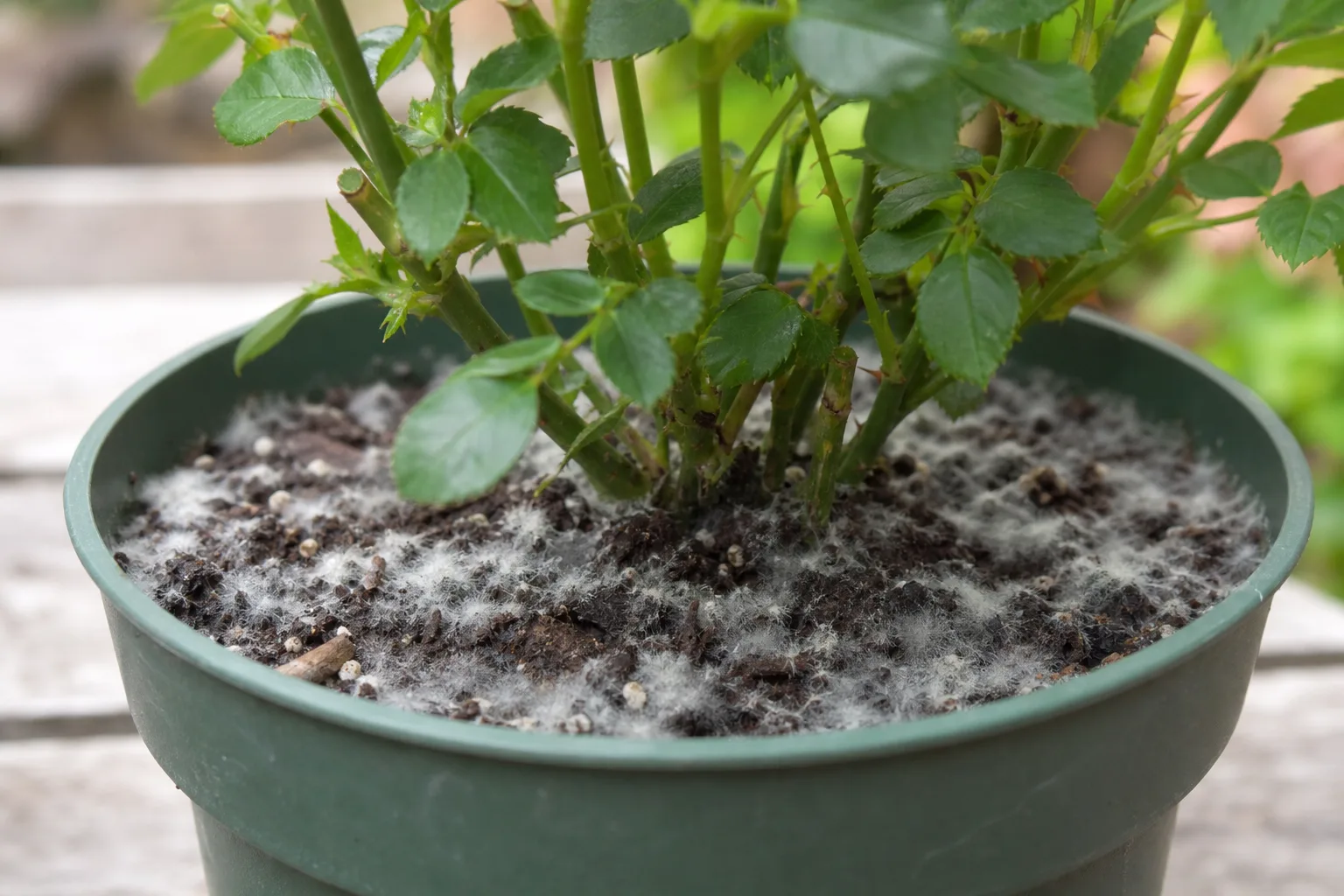
Surface mold on a potted rose usually means the top layer stays wet too long-often from shallow watering or slow drainage in a compost-heavy mix. First step: scrape off the moldy top centimeter and let the surface dry before you water again.
Mold on Soil on Rose: Causes, Checks & Fixes
This guide covers mold on soil on Rose. See also the general Mold on Soil guide, watering, and light pages for this plant.
Mold on Soil on Rose: Causes, Checks & Fixes
Quick answer
White, gray, or green fuzz on the surface of a potted rose is usually saprophytic fungus feeding on organic matter in the mix-not a leaf disease like black spot. It appears when the top layer stays damp too long, which is common on roses grown in rich, compost-heavy container soil that holds moisture near the surface.
First step: scrape off the top 1–2 cm of moldy mix, discard it, and let the surface dry before the next watering. Do not repot on day one unless the whole pot smells sour or roots feel soft when you probe the drainage hole.
Why Rose gets mold on soil
Roses are heavy feeders that perform best in moisture-retentive, organic-rich mix. A typical container blend includes compost, cocopeat, and potting soil-all of which break down on the surface when kept wet. Saprophytic molds live on that decaying organic layer and thrive when drainage is slow or watering keeps the top centimeters saturated.
Container culture makes the problem more likely than in-ground planting. Potted roses dry out faster in summer but can stay wet too long in cool, shaded, or overcast weather when evaporation slows. Many growers water on a schedule rather than checking depth, which often means the surface gets a daily sprinkle while deeper roots alternate between wet and dry.
Rose-specific habits that feed surface mold include:
- Shallow or frequent top watering that wets only the surface without letting it dry between drinks
- Compost top-dressing or mulch left damp in low airflow at the base of dense canes
- Oversized pots where a small root ball sits in a large volume of slow-drying mix
- Fallen petals and leaves decomposing on the soil line after deadheading
- Saucers holding standing water, which keeps the bottom-and eventually the surface-chronically moist through capillary rise
Roses need regular water in containers, especially in Rose light guide. The mistake is not watering roses-it is keeping the surface wet between deep base waterings. Overwatering is the most common cause of container plant loss, and surface mold is often the first visible warning before roots suffocate.
What mold on soil looks like on Rose
Typical surface mold:
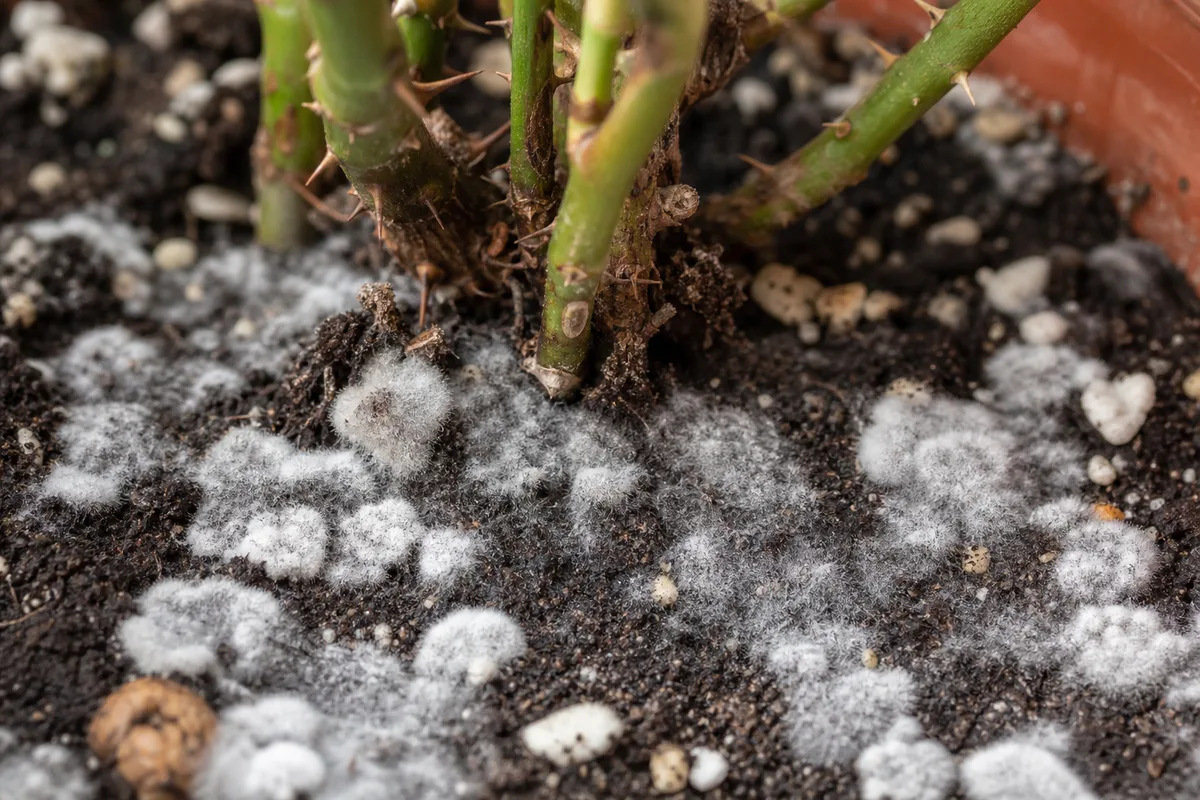
Mold on Soil symptoms on Rose - compare with healthy tissue on the same plant.
- White, gray, or pale green fuzzy film on the top 1–2 cm of mix
- Surface feels cool and damp days after you last watered
- Mold may appear in patches near the stem base or across the whole pot
- Rose leaves and buds may still look healthy in early stages
- Small dark flies may hover near the pot when you water or disturb the soil
Signs the rose is already stressed beyond surface mold:
- Lower leaves yellowing while soil stays wet
- New buds dropping or canes wilting mid-day despite moist mix
- Musty or sour smell from the pot
- Soft, dark tissue at the crown where stems meet the soil
Unlike powdery mildew on rose foliage, soil mold stays on the mix-it does not coat leaves in a dry white powder. Unlike black spot, it is not circular purple-bordered lesions on leaves. If you see fuzzy growth only on soil and clean foliage, you are likely dealing with saprophytic surface fungi rather than a rose-specific leaf pathogen.
How to confirm the cause
Work through these checks before changing your whole care routine:
- Moisture depth - Push a finger 3–4 cm into the mix. If the surface is wet but deeper layers are still saturated, you are overwatering. If only the surface is wet while deeper mix is dry, you may be shallow watering.
- Dry-down speed - Note how many days the top 2 cm stay damp after a deep base watering. Roses in six or more hours of sun should not hold a soggy surface for more than a day or two in warm weather.
- Drainage check - Water until liquid runs from drainage holes, then lift the pot. Is the saucer full? Are holes blocked by roots or compacted mix?
- Organic debris - Look for piled petals, pruned leaf bits, or fresh compost mulch sitting on wet soil.
- Gnat test - Tap the pot rim. Fungus gnats breed in moist organic-rich mix and often share the same wet-surface habitat as mold.
- Root spot-check - If canes feel soft at the base or the mix smells sour, gently probe through a drainage hole with a skewer. Firm white roots suggest surface mold only; mushy brown roots mean deeper rot needs Rose repotting guide.
Confirmed surface mold: fuzzy top layer, firm canes, no sour smell, mold returns only when the surface stays wet. Suspected root stress: wilting with wet soil, sour odor, or soft crown tissue-escalate beyond scraping.
First fix for Rose
Scrape off the top 1–2 cm of moldy mix, discard it, and let the surface dry completely before the next watering.
Use a spoon or fork to remove the visible mold and any loose decomposing debris on top. Do not spray fungicide on the soil as a first response-saprophytic molds are controlled by drying the surface, not by chemicals. Replace the removed layer with a thin topping of dry perlite or fresh mix only if the surface looks bare; the goal is a dry crust, not a fresh organic feast.
After scraping, shift to base watering directed at the soil around the rose, avoiding foliage. Wait until the top 3–4 cm feels dry before watering again-not a calendar interval. Empty the saucer within 30 minutes so water is not drawn back into the mix.
Do not repot immediately unless the skewer probe finds mushy roots or the whole pot smells bad. Most first-time mold flares clear once the surface drying cycle improves.
Step-by-step recovery
After the initial scrape and dry-down:
- Adjust watering depth - When the top 3–4 cm is dry, water slowly at the base until excess runs from drainage holes. Skip the next scheduled drink if the surface is still damp.
- Clear the soil line - Remove fallen petals and pruned bits after deadheading so mold has less food on the surface.
- Improve airflow - Space pots so canes are not packed against walls or other plants. Gentle movement of air helps the surface dry without needing to wet leaves.
- Manage fungus gnats if present - Allow the top 1–2 inches to dry between waterings and set yellow sticky traps near the pot to catch adults. Larvae die when the surface stays dry.
- Refresh degraded top layer - If mold returns within a week despite dry-down, scrape again and replace the top 2–3 cm with chunkier mix containing extra perlite rather than fresh compost alone.
- Repot if chronic - When mix has broken down into dense, always-wet peat or cocopeat, repot in spring or autumn using well-draining rose mix with perlite and firm the root ball into fresh media. Trim any mushy roots first.
Hold fertilizer until Rose watering guide stabilizes and new growth looks normal. Feeding a rose in soggy mix pushes soft tissue without fixing the root environment.
Recovery timeline
Surface mold should stop reappearing within one to two weeks once the top layer dries between waterings. You should see the mix lighten in color at the surface and fewer gnats within several days of consistent dry-down.
Judge recovery by firm canes, clean new leaves, and steady bud development-not by whether old lower leaves remain. Roses that were only surface-affected usually keep blooming through the fix. If wilting persists after two weeks of corrected watering, inspect roots; some crown damage does not reverse.
Lookalike symptoms to rule out
Green algae on the pot rim - Slimy green film in constant shade and moisture, not fuzzy white mold. Fix with more sun on the pot and less surface wetting.
Powdery mildew - White powder on leaves and stems, not confined to soil. Requires foliar disease management and airflow, not just soil scraping.
Sooty mold on leaves - Black coating on upper leaves from aphid or scale honeydew, not fuzzy soil growth. Inspect stems and undersides for sap feeders.
Mineral or fertilizer crust - Hard white or tan salt crust on dry soil surface, usually without fuzz or musty smell. Flush mix and reduce fertilizer rather than scraping for mold.
Mycelium from serious root pathogens - Rare white threads climbing stems from saturated mix with collapsing plant. Soft crown and sour smell distinguish this from harmless surface saprophytes.
Mistakes to avoid
Do not scrape mold repeatedly without changing how the surface dries-that only resets the colony.
Do not cover drainage holes or leave saucers full to “keep the rose hydrated.”
Do not water on a fixed calendar during cool weather when the pot is not drying; container roses need more water in hot sun but far less in dormant winter.
Do not add fresh compost mulch on top of a moldy surface-it adds organic food before moisture is fixed.
Do not mist rose foliage to “cool” the plant; wet leaves raise black spot risk and do nothing for soil mold.
Do not reach for broad fungicide drenches as a first fix when drying the surface addresses saprophytic fungi directly.
How to prevent mold on soil on Rose
Water at the base when the top 3–4 cm dries, with enough volume to wet the root zone once rather than daily light splashes on the surface. Morning base watering keeps foliage dry and limits fungal disease.
Give container roses six or more hours of direct sun so the mix dries predictably. A rose in weak light uses less water but the surface stays damp longer-exactly what mold prefers.
Use pots with drainage holes and elevate them so saucers drain fully. Refresh mix every two to three years, or top-dress annually with thin compost only after confirming the existing surface dries well.
Remove debris from the soil line after deadheading. Keep moderate humidity around the plant (40–60%) with airflow rather than enclosing the pot in decorative covers that trap moisture.
If you bottom-water occasionally to keep the surface dry, leave the top inch dry while roots still get moisture from below-a technique that helps both gnats and mold.
When to worry
Escalate beyond scraping when mold returns within three to four days every time, the mix smells sour, canes soften at the crown, or the rose wilts while soil feels wet. Those patterns suggest root asphyxiation in waterlogged container mix, not harmless surface fungi alone.
Repot promptly if a skewer probe finds brown mushy roots or drainage holes weep foul-smelling water. Trim damaged roots, use fresh chunky mix, and accept that severely rotted roses may not fully recover.
Surface mold on an otherwise blooming rose with firm canes and no odor is low urgency-fix moisture habits calmly rather than panicking.
Conclusion
Mold on rose potting soil is usually a moisture warning, not a death sentence. Scrape the affected surface, let the top layer dry, and water deeply at the base only when the upper 3–4 cm is dry. Roses in rich mix need regular drinks-but the surface should not stay wet between them. Get that cycle right and surface mold typically clears while the plant keeps producing clean new growth and blooms.
When to use this page vs other Rose guides
- Rose watering guide - Use for routine moisture checks before assuming mold on soil is the main issue.
- Rose problems hub - Browse all 7 common issues on this species.
- Root Rot on Rose - Different entry point when symptoms overlap with mold on soil.
- Black Spots on Rose - Different entry point when symptoms overlap with mold on soil.