Overwatering on Rose: Causes, Checks & Fixes
Quick answer
Overwatering on Rose keeps the root zone saturated too long-often from summer watering habits applied in cool months or dim placement. First step: pause watering until the top 3–4 cm of mix is dry and empty the saucer after every drink.
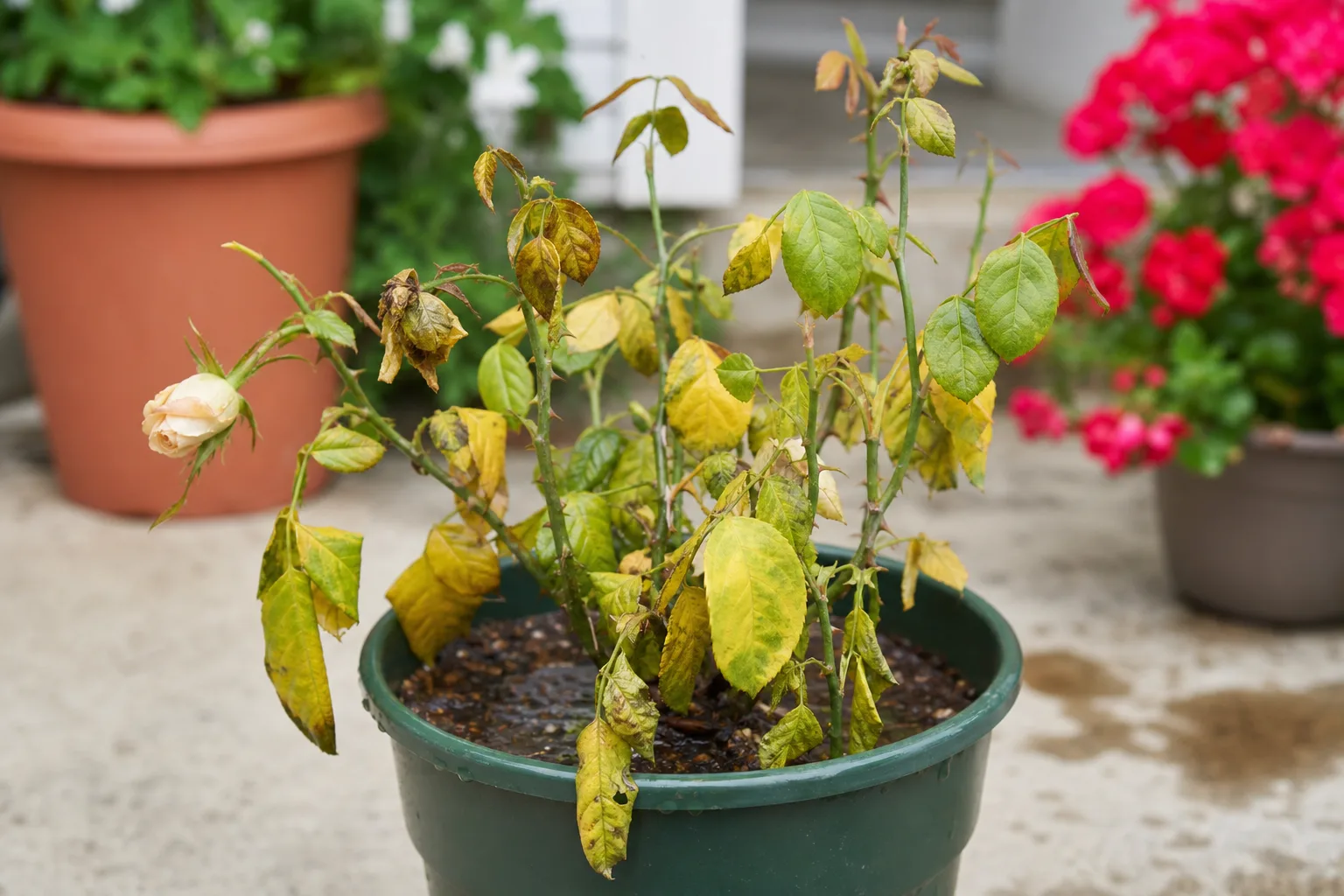
Overwatering on Rose: Causes, Checks & Fixes
This guide covers overwatering on Rose. See also the general Overwatering guide, watering, and light pages for this plant.
Overwatering on Rose: Causes, Checks & Fixes
Quick answer
Overwatering on Rose (Rosa × hybrida) is not about giving too much water in one session-it is about keeping the root zone wet too long. Hybrid tea and container roses need rich, moist but well-drained soil, yet they suffocate when mix stays saturated for days. In cool weather, winter rest, or shaded balconies, the same summer schedule that worked in June becomes excessive.
The telltale mismatch is wilting canes on soil that still feels damp. Damaged roots cannot move water upward, so the plant looks thirsty while sitting in a wet pot. Yellow lower leaves, dropped buds, sour-smelling mix, and worsening black spot often follow.
First step: stop watering until the top 3–4 cm of mix is dry, and empty the saucer after every drink. Do not repot, fertilize, or spray fungicide until you confirm whether roots are firm or mushy.
Why Rose gets overwatered
Roses are marketed as thirsty bloomers, and growers often translate that into daily shallow drinks. That pattern keeps the surface damp while the lower root zone never dries-a setup extension guides link to root rot and oxygen starvation. Roses are deep-rooted once established; RHS guidance notes that mature border roses usually need water only during dry spells-roughly once a week with a deep soak in high summer-not constant moisture.
Container roses are a different rhythm. Pots dry faster in Rose light guide but can also stay wet too long when:
- The plant sits in partial shade or indoors with less than six hours of direct sun
- Cool monsoon or winter weather slows uptake while you keep a summer schedule
- The pot is oversized, so a small root ball sits in a large wet zone
- Mix is heavy peat or garden soil without enough perlite or grit
- Saucers, cache pots, or blocked drainage holes trap runoff
- Overhead watering or wet foliage combines with soggy soil, raising disease pressure
Roses in containers should not become waterlogged-the compost should not dry out completely in hot weather, but it must never stay swampy. Phytophthora root rot, a water-mold disease, thrives in poorly drained substrates. Poorly drained, waterlogged soil favors these pathogens, which attack fine roots first and spread into stems.
On grafted hybrid teas, chronic wetness at the soil line also risks crown rot at the union-often fatal before you notice widespread leaf symptoms.
What overwatering looks like on Rose
Overwatering and underwatering both stress roses, but the soil tells them apart.
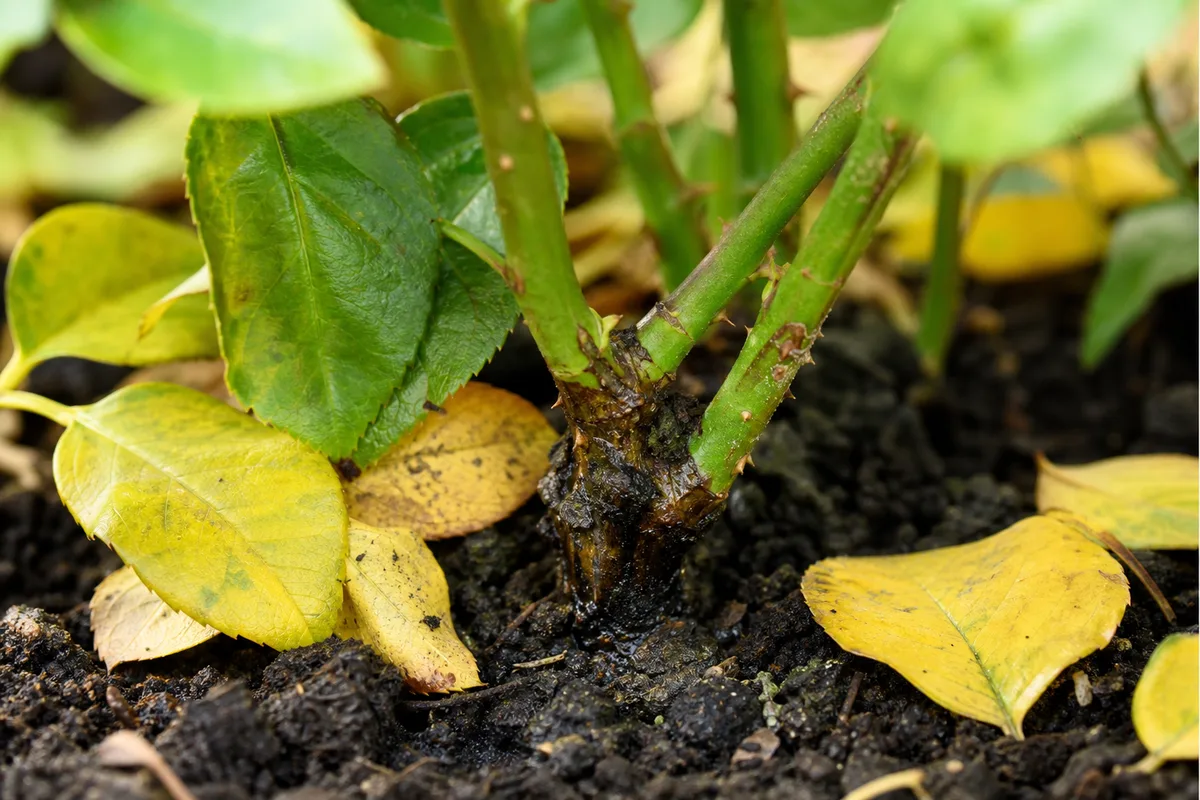
Overwatering symptoms on Rose - compare with healthy tissue on the same plant.
Typical overwatering signs:
- Soil still wet or cold to the touch 3–4 days after watering
- Pot feels unusually heavy when lifted
- Lower leaves turn yellow and drop while upper growth looks limp
- Canes wilt mid-day even though mix is moist-not crispy dry
- Buds drop before opening, or new shoots stall
- White mold, algae, or fungus gnats on the soil surface
- Sour or swampy smell when you slide the plant from the pot
- Black spot spreads faster when leaves stay wet from overhead watering combined with saturated roots
Advanced signs (treat as root or crown rot until proven otherwise):
- Soft, dark tissue at the base of canes near the graft
- Brown, mushy roots that slip apart when rinsed
- Wobbly plant that lifts easily from the pot
- Reddish-green or yellow leaves that curl and do not recover after soil dries
Yellow leaves alone are not proof of overwatering-iron deficiency, black spot, and normal aging also yellow rose foliage. Overwatering fits when yellowing pairs with persistent wetness, not with light, dry mix.
How to confirm the cause
Work through these checks in order before changing anything beyond stopping excess water:
- Soil moisture at depth - Stick your finger 3–4 cm into the mix. If it is wet several days after your last watering, you are overwatering or drainage is failing. Bone-dry at that depth points to underwatering instead.
- Wilting pattern - Wilting on wet soil strongly suggests root damage from saturation. Wilting on dry, light soil suggests drought.
- Pot weight and drainage - Lift the container. Chronic heaviness means water is not leaving. Confirm drainage holes are open and the pot is not sealed inside a decorative outer shell holding water.
- Light and season - Is the rose in full sun during active growth, or in shade/cool weather when water use drops? Winter-dormant roses need far less moisture than peak-bloom summer plants.
- Watering method - Are you wetting leaves and flowers? Direct water to the base to reduce fungal splash; overhead habits do not replace a finger test but can worsen black spot when soil is also wet.
- Root inspection (if symptoms persist after a dry-down) - Gently unpot the rose. Healthy roots are firm and pale tan or white. Brown, mushy, foul-smelling roots confirm rot from chronic overwatering or poor drainage.
If the mix dries normally within a few days, roots are firm, and only a few lower leaves yellow, you may be seeing normal leaf senescence or early black spot-not chronic overwatering.
First fix for Rose
Stop watering until the top 3–4 cm of mix is dry, and empty the saucer every time you do water.
That single pause breaks the cycle of adding moisture to soil that already cannot breathe. Roses recover faster when oxygen returns to the root zone than when you stack Rose repotting guide, fertilizer, and fungicide on day one.
After the dry-down:
- Resume base watering only-enough that a little runs from drainage holes, then discard saucer water within 30 minutes
- Move the pot to a spot with six or more hours of direct sun if it has been in shade; light increases water use and helps mix dry evenly
- Improve airflow around the bush so foliage dries after rain or irrigation
Do not fertilize a stressed, waterlogged rose. Salts on damaged roots slow recovery. Do not prune heavily until you know whether new growth is returning-remove only soft, blackened cane tissue at the base.
Step-by-step recovery
If finger tests confirm chronic wetness but roots are still mostly firm, follow this sequence:
- Let soil dry to the 3–4 cm mark - This may take several days in cool weather. Do not force it with heat; just withhold water.
- Clear drainage - Unblock holes, remove standing water from saucers, and elevate the pot on feet or bricks so runoff is not trapped against the base.
- Adjust Rose watering guide - In active summer growth, many container roses need water every two to three days in full sun; in cooler months, stretch to every four to five days or longer. Established border roses often need only weekly deep soaks in dry summer spells.
- Improve mix if waterlogging repeats - Repot into fresh blend with compost, cocopeat, and perlite-similar to a typical rose container mix-only after soil dries and you have inspected roots. Avoid garden soil alone in pots; it compacts and holds water.
- Remove spent diseased leaves - If black spot is present, pick off heavily spotted yellow leaves and dispose of them; do not compost. Fixing moisture alone will not cure existing spots, but dry foliage and roots slow new infection.
- Hold fertilizer - Wait until new leaves look firm and green for two weeks before feeding with rose fertilizer during active growth season.
If roots are mushy, treat as root rot: trim decay back to firm tissue, repot into fresh airy mix, and follow the recovery path in your root-rot guide. Overwatering is the usual trigger; the rescue steps overlap once rot is confirmed.
Recovery timeline
Mild overwatering (firm roots, no crown softness): Canes should feel stiffer and new leaves should emerge clean within 10–14 days after soil dries and watering resumes on a finger-test schedule.
Moderate stress with some root damage: After trimming rotten roots and repotting, expect three to six weeks before the bush fills out again. Blooms may pause until roots rebuild.
Severe crown softness: Recovery is unlikely if the graft union is hollow or canes collapse at the base. Save healthy upper cane cuttings if tissue is still firm above the rot line.
Old yellow leaves will not turn green again-they drop as replacements appear. Judge progress by new growth and root firmness, not by rehabilitating spotted foliage.
Lookalike symptoms
| What you see | Likely cause | Quick check |
|---|---|---|
| Wilting + dry, light pot | Underwatering | Soil dry 3–4 cm down |
| Wilting + wet soil | Overwatering / root rot | Finger test; inspect roots |
| Yellow lower leaves + wet soil | Overwatering | Pot weight; drainage |
| Yellow new leaves, green veins | Iron deficiency | Dry soil; pH/feed history |
| Yellow with black spots | Black spot disease | Spots on leaves; wet foliage |
| Crisp brown leaf edges | Heat/drought stress | Dry soil; hot exposure |
| Fine stippling + webbing | Spider mites | Underside inspection |
The critical split for roses is wet soil versus dry soil when canes droop. Both extremes wilt the plant; only the soil moisture test tells you which direction to move.
Mistakes to avoid
- Watering because leaves look sad without checking soil first-the classic overwatering loop
- Adding more water when canes wilt on wet mix, which deepens root death
- Keeping a summer daily schedule through winter dormancy when the plant barely drinks
- Using an oversized pot “so I don’t have to water as often”-extra mix stays wet around small root balls
- Letting the pot sit in a full saucer or cache pot without drainage
- Misting leaves instead of fixing soil moisture-roses need dry foliage and balanced root moisture
- Fertilizing or repotting on day one before confirming root condition
- Overhead watering in the evening when leaves and soil both stay damp overnight, favoring black spot and other leaf diseases
How to prevent overwatering on Rose
Build a rhythm around the pot, not the calendar:
- Finger test 3–4 cm deep before every major watering
- Water at the base until a little drains out; skip overhead sprays for routine care
- Empty saucers within 30 minutes of watering
- Match pot size to the plant-repot when roots circle, not preemptively into huge containers
- Use well-draining mix with compost and perlite; refresh tired peat that has collapsed
- Give full sun-six or more hours of direct light helps the bush use water consistently
- Reduce frequency in cool or dormant months when growth slows
- Scout weekly during humid weather; soggy soil plus wet leaves invite black spot faster on roses than on many houseplants
Container roses in hot Indian summers may need water every two to three days when the top layer dries; the same plant on a cool February balcony may need water only once a week or less. The finger test bridges both seasons.
When to worry
Escalate immediately if:
- Canes are soft or black at soil level
- The bush wobbles and lifts with little root resistance
- More than half the root mass is brown and mushy on inspection
- Wilting spreads through the bush while mix remains wet after you have stopped watering for a week
- Bud drop and leaf fall continue without any firm new breaks
At that stage, treat as advanced root or crown rot. Partial root pruning and repot may save the plant if firm tissue remains; a hollow crown on a grafted hybrid tea often means replacing the bush.
For mild soggy soil with firm roots and no crown softness, calm correction-dry-down, drainage fix, adjusted schedule-usually works. Roses are forgiving when oxygen returns before rot reaches the graft.
When to use this page vs other Rose guides
- Rose watering guide - Use for routine moisture checks before assuming overwatering is the main issue.
- Rose problems hub - Browse all 7 common issues on this species.
- Root Rot on Rose - Different entry point when symptoms overlap with overwatering.
- Yellow Leaves on Rose - Different entry point when symptoms overlap with overwatering.