Bud Drop on Rose: Causes, Checks & Fixes
Quick answer
Rose bud drop usually means the plant aborted swelling buds under drought, root stress, thrips, or midge damage. First step: probe soil 3–4 cm deep and inspect bud scales for pests before changing anything else.
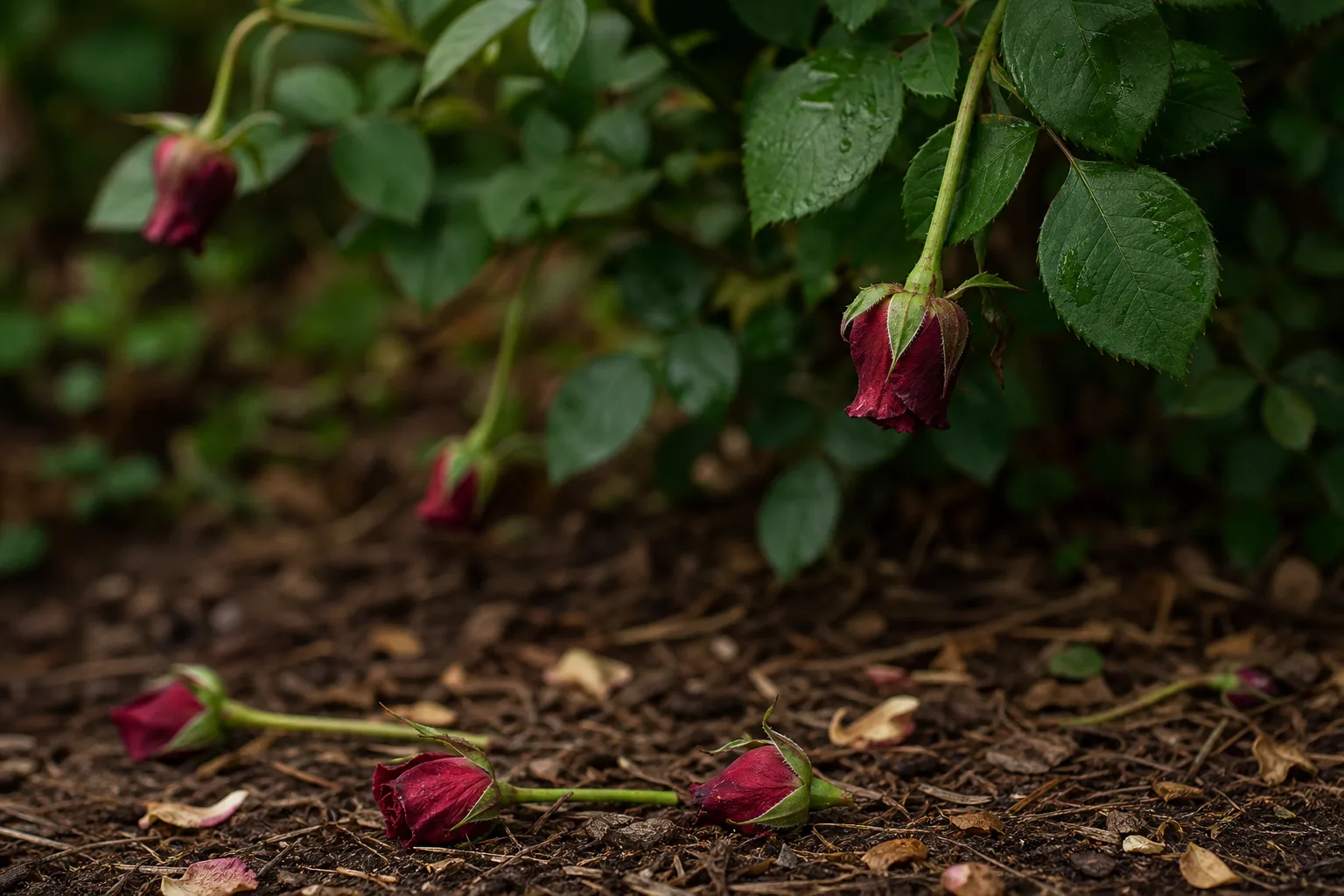
Bud Drop on Rose: Causes, Checks & Fixes
This guide covers bud drop on Rose. See also the general Bud Drop guide, watering, and light pages for this plant.
Bud Drop on Rose: Causes, Checks & Fixes
Quick answer
When rose buds yellow, shrink, and detach before opening, the plant is aborting flowers it cannot finish. Swelling buds demand steady root moisture, Rose light guide, and undamaged tissue at the bud base. Drought during bud swell, soggy roots that cannot deliver water, thrips inside petals, rose midge maggots, and Rose repotting guide shock are the usual culprits on container roses.
First step: probe soil 3–4 cm deep at the base and inspect the outside of one swelling bud for pests. If the mix is dry and canes wilt by midday, deep soak at the base. If soil smells sour or stays wet for days, hold water and check drainage before soaking again. Do not repot, move, or feed heavily while buds are actively swelling.
Why Rose drops buds
Roses are heavy feeders in full sun, and their flowering cycle exposes stress faster than foliage alone. A cane can look green while buds fail because the plant prioritizes survival over bloom when roots or buds are under pressure.
Water stress is the most common trigger on balconies and terraces. Roses in six or more hours of sun dry out quickly in porous containers. When the top 3–4 cm of mix goes dry repeatedly during bud swell, the plant sheds buds rather than open flowers it cannot hydrate. Overwatering causes a different failure: waterlogged roots lose oxygen, cannot pull moisture to buds, and buds drop even though the surface feels wet.
Thrips scrape and suck tender bud tissue. They thrive in hot, dry weather and hide at the base of petals inside unopened buds. Feeding causes streaking, distortion, and buds that fail to open or fall prematurely. Tapping a bud over white paper can reveal tiny moving insects.
Rose midge lays eggs in developing buds. Maggots feed inside, turning tissue brown or black until the bud withers and drops. Damaged buds often look gnarled before they detach. Midge pupae overwinter in soil and mulch, so infestations can repeat on the same plant.
Aphids cluster on soft new shoots and bud stems. Heavy feeding weakens buds and can reduce flower quality. High nitrogen feeding pushes lush tender growth that aphids prefer, which adds bud stress on top of direct feeding damage.
Spider mites build under hot, dry, dusty conditions-common on sun-baked terrace pots. Stippling on upper leaves plus fine webbing often accompanies bud abort when mite pressure is high.
Botrytis gray mold rots buds in cool, wet, humid spells when foliage stays damp overnight. Infected petals spot and brown; buds may collapse before opening.
Cultural shock-repotting, moving to a new light exposure, or pruning heavily while buds swell-can trigger shock drop even when long-term placement would be fine. Roses reveal transplant stress through flowers first.
What bud drop looks like on Rose
Drought-related drop:
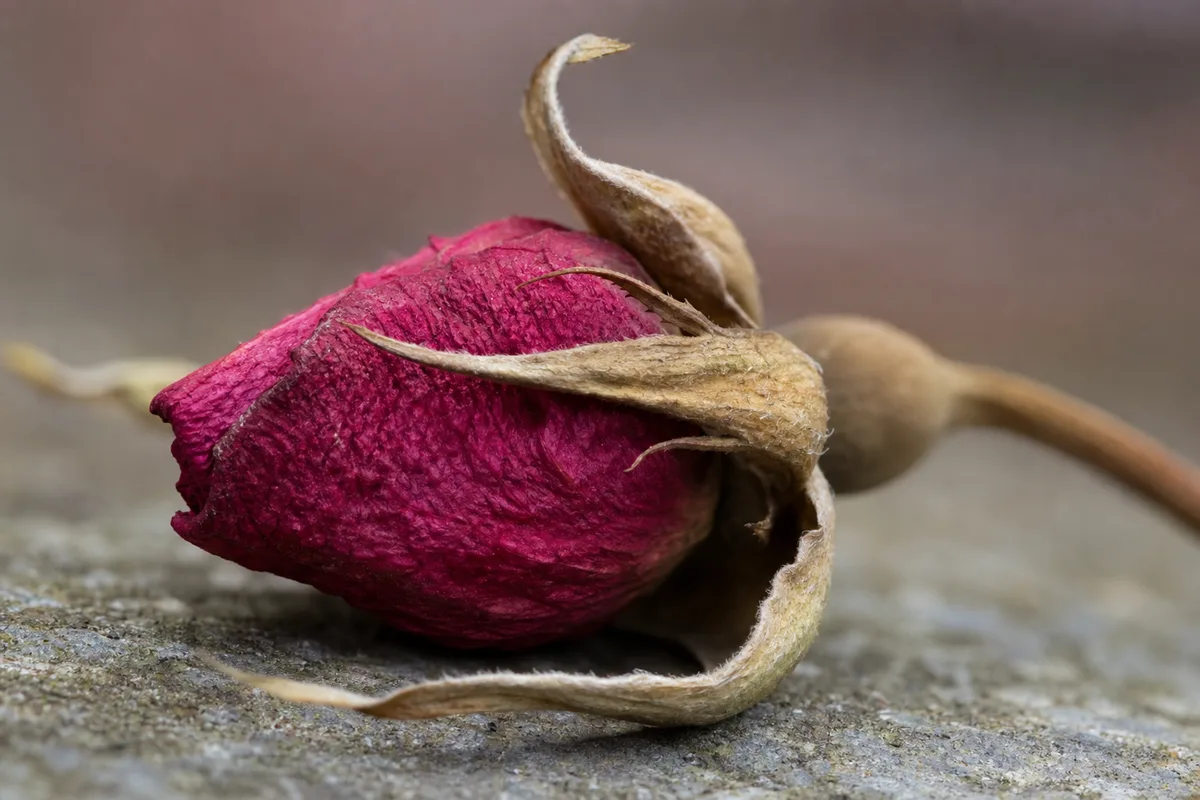
Bud Drop symptoms on Rose - compare with healthy tissue on the same plant.
- Buds hang downward, turn yellow or tan, and fall with a light touch
- Canes and lower leaves may wilt by midday in hot weather
- Soil pulls away from the pot edge; mix feels dry 3–4 cm down
Thrips damage:
- Brown or white streaks on outer petals of partially opened buds
- Buds look bruised, fail to open fully, or drop while still closed
- Tiny insects visible when a bud is cut open or tapped over paper
Rose midge:
- Buds turn brown or black at the tip before falling
- Abnormal, gnarled bud shapes on affected shoots
- Damage concentrated on newest buds after spring flush
Root or overwatering stress:
- Bud drop with yellowing lower leaves and sour-smelling mix
- Pot stays heavy days after watering; no midday wilt relief after soaking
Botrytis:
- Brown, spotted petals on tight buds during cool wet weather
- Gray fuzzy mold visible on spent blooms or damaged buds
Dropped buds do not reopen. Recovery shows up only on the next flush of clean buds and firm canes.
How to confirm the cause
Work through these checks in order:
- Soil moisture at 3–4 cm - Dry and light pot weight with midday wilt points to drought. Wet, compacted, or sour mix with yellow lower leaves suggests root stress from overwatering or poor drainage.
- Recent care changes - Note repotting, moving pots, heat waves above 38°C, or missed watering during bud swell. Timing often explains shock drop without pests.
- Bud tap test - Hold white paper under a suspect bud and tap the stem. Moving specks confirm thrips. No insects after a dry spell supports drought.
- Bud dissection - Cut one fresh dropped or failing bud lengthwise. Thrips run between petal layers; midge maggots appear as tiny white larvae inside damaged tissue.
- Aphid and mite scan - Check bud stems and leaf undersides for soft aphid clusters, stippling, or fine webbing.
- Weather and moisture on foliage - Cool, rainy periods with overhead splash or wet leaves overnight favor botrytis on tight buds.
- Cane health - Softening at the graft or base with widespread bud blackening suggests disease or severe root failure, not a single dry day.
Match one primary cause before stacking treatments. Bud drop from drought needs water, not insecticide. Midge-damaged buds need removal, not deeper soaking.
First fix for Rose
Stabilize watering at the base based on what the soil actually needs-one adjustment, not several at once.
If the mix is dry 3–4 cm down and canes wilt in afternoon sun, water deeply at the base until excess drains freely. Let foliage dry in sun the same day. Resume the rhythm of watering when the top 3–4 cm dries, never wetting leaves overnight.
If soil stays wet and smells sour, stop watering, confirm drainage holes are open, and do not soak again until the top few centimeters begin to dry. Buds may keep dropping briefly while roots recover; avoid repotting during active swell unless roots are clearly rotting.
While water stabilizes, pinch off buds that are already blackened, streaked, or filled with visible larvae and discard them away from the pot-not in compost near other roses. That single sanitation step limits thrips and midge spread without spraying on day one.
Do not apply rose fertilizer the same day buds are dropping. Do not repot or move the container until the next bud cycle unless roots are failing.
Step-by-step recovery
After the initial water correction and removal of ruined buds:
- Hold steady base watering for two weeks. Check 3–4 cm deep before every soak; adjust for heat, not the calendar alone.
- Rinse bud stems and leaf undersides with a strong morning water stream if thrips or aphids are confirmed. Let leaves dry in sun the same day.
- Apply insecticidal soap only after pests are confirmed and water is stable. Cover bud stems and undersides; repeat at label intervals through one pest generation if thrips persist.
- Refresh mulch or top-dress in late winter if rose midge has been a repeat problem-removing old mulch reduces overwintering pupae; fresh mulch in spring buries survivors deeper.
- Improve airflow around crowded terrace pots so foliage dries quickly after watering or rain.
- Scout weekly through warm dry weather when thrips and mites peak. Remove abnormal buds promptly rather than waiting until shoots turn fully black.
- Feed lightly only after new clean buds appear and canes firm up. Use rose-specific fertilizer during active bloom season; avoid excess nitrogen that pushes soft aphid-friendly shoots.
Repeat-flowering types should set new buds once stress lifts. One-time bloomers may not flower again until the next season-patience is normal there.
Recovery timeline
Expect two to four weeks for repeat-flowering roses to show new swelling buds after drought or shock is corrected. Thrips control may take one to two weeks of rinsing plus targeted soap if populations were moderate. Midge-damaged canes often need a full flush cycle before buds stay clean.
Old aborted buds never recover. Judge success by new buds that hold size, open evenly, and show no streaking-not by fixing fallen tissue.
Lookalike symptoms to rule out
Normal spent blooms fade after opening; they do not abort while still tight and green.
Heat pause on repeat bloomers - Some landscape roses rest in peak summer heat and resume in fall. That is reduced flowering, not sudden mass bud drop on every cane.
Powdery mildew coats leaves and buds with dry white powder rather than rotting tight buds brown. It distorts leaves but follows a different pattern from midge blackening.
Rose rosette disease causes witch’s-broom clustering, excessive thorniness, and distorted buds over seasons-not a one-week abort after a dry spell. Suspect rosette when abnormal shoots return after repeated pruning.
Black spot defoliation strips leaves and weakens the plant over time; bud drop may follow severe stress but comes with spotted yellowing leaves, not clean foliage with only bud loss.
Mistakes to avoid
Do not overhead-water roses while buds swell-wet foliage overnight invites botrytis and black spot, which stress buds indirectly.
Do not repot hoping to “give buds more energy” during active swell. Roots need stability, not disturbance.
Do not spray broad insecticides on every dropped bud without confirming thrips, aphids, or midge. Water-stressed roses drop buds with no insects present.
Do not increase nitrogen feeding after bud loss. Soft lush shoots attract aphids and produce weak stems that abort again.
Do not wait until entire shoots turn black to prune midge damage-the larvae may already have dropped to soil by then.
How to prevent bud drop on Rose
Water deeply at the base when the top 3–4 cm of mix dries; never rely on splash from rain alone on sheltered balconies. Probe depth matters because surface wetness can hide dry roots below.
Give six or more hours of direct sun daily. Weak light produces fewer buds and weaker stems that abort easily under minor stress.
Scout buds weekly from spring through fall. Remove streaked, blackened, or distorted buds promptly and discard away from the planting area.
Avoid moving or repotting when buds are pea-sized or larger. Schedule repot and top-dress for late autumn dormancy or early spring before heavy bud set.
Keep moderate humidity with good airflow-stagnant damp pockets around crowded pots favor botrytis on tight buds.
Reduce overwintering midge and thrips pressure by refreshing mulch in late winter and keeping weeds trimmed from pot bases.
Feed during active bloom season with balanced rose fertilizer; stop pushing nitrogen when buds are forming if aphids have been a recurring issue.
When to worry
Treat as urgent when every bud on multiple canes blackens within days, canes soften at the graft, stippling and webbing spread with ongoing bud loss, or gray mold coats most tight buds during a cool wet spell. Those patterns suggest midge, botrytis, severe root failure, or mite explosion-not a single missed watering.
Replace the plant if distorted witch’s-broom shoots and failed blooms return for multiple seasons despite disbudding-virus or rosette disease cannot be cured by watering fixes.
A few buds lost after one hot dry weekend on an otherwise healthy repeat bloomer is manageable. Repeated aborts on every flush signal a fixable care or pest loop that needs the diagnostic path above, not patience alone.
Conclusion
Rose bud drop is the plant telling you it cannot finish flowers under current root, pest, or weather pressure. Probe soil before you panic, inspect bud bases for thrips and midge, stabilize base watering, and remove ruined buds promptly. Repeat-flowering roses usually bounce back within weeks once one stressor is corrected-act on evidence, not a spray-everything reflex.
When to use this page vs other Rose guides
- Rose watering guide - Use for routine moisture checks before assuming bud drop is the main issue.
- Rose problems hub - Browse all 7 common issues on this species.