Brown Tips on Rose: Causes, Checks & Fixes
Quick answer
Brown tips on Rose usually mean drought at the leaf margin, salt buildup after heavy feeding in a small pot, or reflected heat on a patio. First step: match the margin pattern-dry crispy tips on a light pot need a deep base soak; tips that browned right after feed on damp soil need a salt flush.
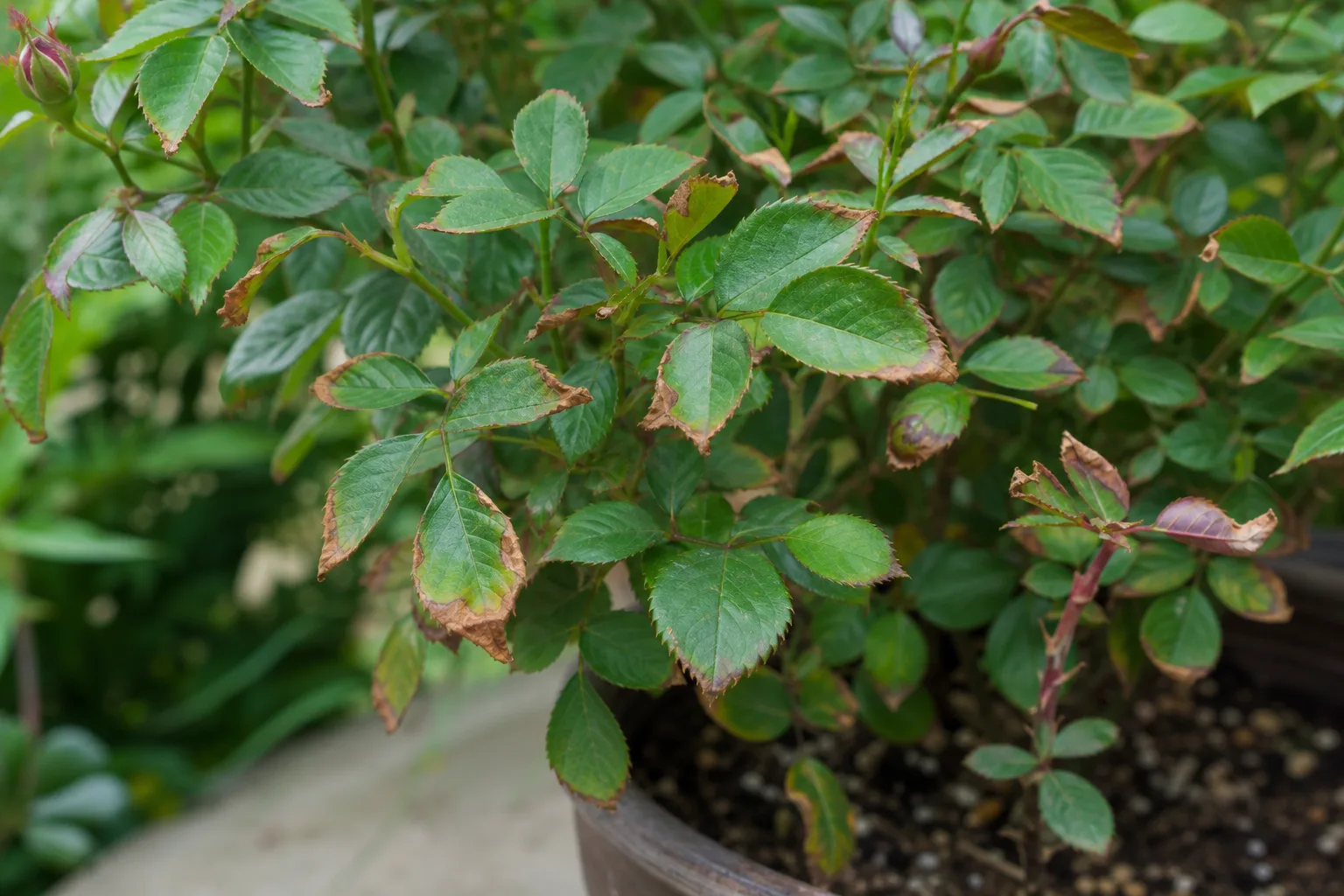
Brown Tips on Rose: Causes, Checks & Fixes
This guide covers brown tips on Rose. See also the general Brown Tips guide, watering, and light pages for this plant.
Brown Tips on Rose: Causes, Checks & Fixes
Quick answer
Brown tips on Rose leaf margins are a pattern problem, not one generic thirst signal. Read the edge before you reach for the watering can.
Dry, crispy tan margins on a noticeably light pot → drought at the leaf edge. Container roses in six or more hours of direct sun transpire heavily through compound leaves; margins dry first when the root zone falls short-even before the whole bush wilts.
Crisp tips appearing within 48 hours of heavy liquid feed on still-damp soil → salt burn. Dissolved fertilizer salts travel with water and concentrate at margins as leaves transpire; small patio pots have no deep buffer to dilute them.
Crispy edges with soil mildly moist at the surface but the pot sitting on hot terrace tiles or dark pavement → reflected heat scorch. Radiated heat dries leaf edges faster than roots can replace water.
First step: Match your pattern, then act once. Dry pot → deep base soak until drainage runs (full soak protocol in our underwatering on Rose guide). Post-feed scorch on damp soil → stop feeding and flush salts. Advancing burn on wet soil → inspect roots-do not soak harder.
This page is your tip-burn entry hub for margin damage on patio and container roses. For whole-bush wilt without crisp edges, start with wilting on Rose instead.
What brown tips look like on Rose
Drought margin burn
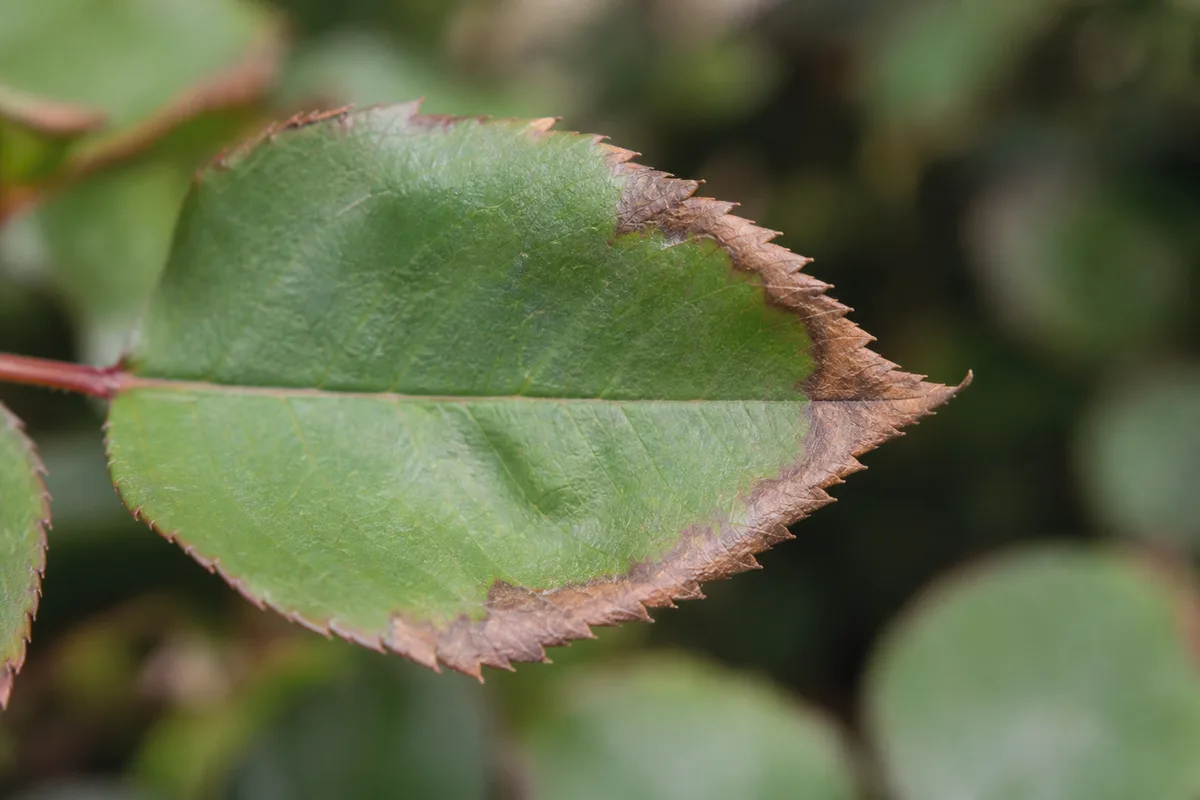
Brown Tips symptoms on Rose - compare with healthy tissue on the same plant.
Roses show drought at the leaf margin first because water exits fastest from thin edge tissue on sun-facing compound leaves. You see crisp, dry tan or brown tips and margins while the mid-leaf may still look green. The pot feels light when lifted. Midday wilt on the afternoon-sun side often pairs with the crisp edges. Repeat-flowering hybrid teas may still hold buds while margins brown-do not assume blooms mean the roots are fine.
Unlike black spot, there are no purple-black circular lesions-only uniform dry discoloration along edges. Lower leaves may show damage before upper ones on a bush that dries unevenly in a windy balcony corner.
Salt and fertilizer edge burn
Salt burn on roses hits margins and tips for the same physiological reason: salts left behind as water transpires kill cells at the thinnest tissue. Clues include tip scorch appearing soon after liquid feed or slow-release application, white or crusty residue on the soil surface, and moist mix with burned edges-opposite of drought.
Container roses accumulate salts faster than in-ground shrubs because irrigation and feed stay in a fixed root volume. Container roses need more frequent but lighter total fertilizer than landscape plants-and always water thoroughly before and after feeding to help prevent burn.
Terrace heat and wind scorch
Dark pots on south-facing terraces, pavement-adjacent placements, and glass-railing balconies radiate heat upward. Soil can read mildly damp at the top 3–4 cm while leaf edges desiccate from reflected heat. Wind on exposed rooftops strips moisture from margins without drying the whole pot evenly.
New tender growth flushed after hard pruning can scorch on the first hot week even when established leaves look fine-sun-facing edges on soft new leaflets brown before the bush shows classic wilt.
Wet-soil mimic (root stress)
Less common but important: advancing brown margins on soil that stays wet with limp canes and yellow lower leaves points to roots failing to move water-not drought. The plant looks thirsty at the tips while sitting in saturated mix. That belongs on our root rot and overwatering guides-not another surface sprinkle.
Why Rose gets brown tips
Full sun and container water demand
Modern garden roses are bred for repeat bloom in full sun-at least six hours of direct light daily. More light means faster transpiration through large leaves and open flowers. A hybrid tea in a 25–30 cm patio pot can exhaust moisture at the root ball within one hot afternoon; margins brown before you notice whole-bush wilt.
David Austin Roses advises checking about 5 cm deep and watering container roses when dry-consistent with the finger test used across LeafyPixels rose guides. Dark-colored containers absorb more heat and may need extra attention in warm weather.
Fear of black spot and skipped deep watering
Many growers cut back watering after a black spot scare. Roses still need moisture at the root zone-NC State Extension recommends soaker delivery to roots while keeping foliage dry-not zero irrigation. Chronic under-watering at the base while old spotted leaves remain on the bush produces margin burn on new growth while you blame disease alone.
The fix is morning base watering, not drought. Disease steps live on our black spots guide; do not starve roots to keep leaves dry.
Salt buildup in small pots
Repeated liquid feed every two weeks through peak summer-normal for repeat-flowering types-leaves salts in the top inches of mix when drainage is weak or saucers hold water. Shallow daily sprinkles without periodic flushing make it worse: salts concentrate where evaporation is highest.
Miniature and patio roses in shallow pots are the most vulnerable. In-ground roses rarely show pure margin salt burn from one season of feed; containers show it within weeks of heavy feeding on an already salt-loaded mix.
Reflected heat and wind on balconies
Terracotta, dark resin, and metal-cachepot setups heat root zones and leaf edges simultaneously. Emptying saucers matters: standing water re-wets roots and does not fix edge desiccation from radiated heat above the rim. Wind accelerates margin drying on the exposed side of the bush while the leeward leaves look untouched-easy to misread as pest or disease.
Lookalike symptoms to rule out
| What you see | Likely cause | Quick check |
|---|---|---|
| Crisp tan margins + light pot + dry 3–4 cm down | Drought margin burn | Perks after deep base soak |
| Crisp tips within 48 h of feed + moist soil + white crust | Salt / fertilizer burn | Flush; hold feed |
| Crisp edges + mildly moist soil + hot terrace/pavement | Heat / reflected scorch | Move pot; remove saucer |
| Purple-black spots with yellow halos on upper leaves | Black spot | Wet-weather lesions; not dry edges only |
| Fine stippling + bronzing + webbing on undersides | Spider mites | Hot dry weather; mites visible |
| Advancing brown margins + wet soil + limp canes | Root failure / overwatering | Inspect roots; stop soaking |
| Bleached scorch on soft new growth after pruning | Sun scorch on tender flush | Shade pot afternoon; acclimate |
The critical split for tip burn is dry light pot versus damp pot with post-feed timing versus wet-soil wilt. Margin pattern plus moisture at depth beats guessing from leaf color alone.
How to confirm the cause
Work through these checks in order:
- Margin pattern - Uniform dry crisp edges without spots support burn (drought, salt, or heat). Discrete dark lesions with halos mean black spot-exit to the black spots guide.
- Pot weight - Lift the container. Feather-light compared with after a thorough soak strongly suggests drought margin burn.
- Moisture at depth - Push a finger or skewer 3–4 cm into mix near the rim. Dry crumbly soil confirms thirst. Damp soil with fresh tip scorch after feeding confirms salt stress. Wet soil several days after watering with limp canes points to root failure.
- Feed timing - Note whether tips browned within one to two days of liquid feed, slow-release top-dress, or foliar spray in heat. Salt burn tracks feed events; drought tracks missed watering in sun.
- Heat context - Is the pot on dark pavement, inside a black cachepot, or against a west-facing wall? Reflected heat scorch keeps soil mildly moist at the surface while edges crisp.
- Underside scan - Fine stippling and webbing on dry-stressed bushes mean spider mites-rehydrate plus pest control, not flush alone.
- Recovery test - For dry soil only: one slow base soak. Partial firming within hours confirms drought. No change on wet soil means stop-inspect roots.
Confirmation decision table
| Check result | Likely diagnosis | Next move |
|---|---|---|
| Dry 3–4 cm + light pot + firm canes | Drought margin burn | Deep base soak |
| Moist soil + post-feed tip scorch + crust | Salt burn | Flush series; hold feed |
| Moist surface + hot terrace + firm canes | Heat scorch | Relocate/shade pot; deep morning soak |
| Wet soil + limp canes + yellow lowers | Root stress | Overwatering / root rot path |
| Spots with halos | Black spot | Black spots guide |
| Stippling + webbing | Spider mites | Spider mites guide |
First fix for Rose
Match the confirmed cause-then one clear action:
-
Drought margins on dry soil: Soak the root zone at the base until water runs freely from drainage holes-then stop until the top 3–4 cm dries. Use our underwatering on Rose guide for litre-based soak volume, hydrophobic mix recovery, and saucer emptying-do not sprinkle the surface daily without reaching the root ball center.
-
Salt burn after feeding on damp soil: Stop all fertilizer immediately. Flush with plain water slowly until excess runs freely from drainage holes; repeat two to three times over the next week for small pots. Empty saucers after each flush. Resume feeding at half strength only after new leaves stay firm for two weeks-see our rose fertilizer guide.
-
Heat scorch on moist soil: Move the pot off hot pavement or out of the afternoon beam temporarily. Remove full saucers and dark outer cachepots that trap heat. One deep morning base soak helps; do not double-soak every evening if depth moisture is already adequate.
Direct water onto the soil surface, not leaves and blooms, for every branch above. Do not mist foliage to fix desiccation-that raises black spot risk without moving water to roots.
Do not fertilize a drought-stressed or wilted rose until turgor returns. Do not repot on day one for simple margin burn unless roots are clearly rotted on wet soil.
Step-by-step recovery by cause
Drought margin burn (firm roots, dry pot)
- Apply one thorough base soak until drainage runs; repeat once after ten minutes if water channelled through hydrophobic dry mix without weight gain.
- Empty the saucer within 30 minutes.
- Resume watering only when the top 3–4 cm dries-expect cleaner new edges within one to two weeks.
- Trim only fully papery necrotic tips if they snag; living crisp margins may firm after rehydration.
Salt burn (moist soil, post-feed scorch)
- Hold all fertilizer-including foliar sprays-until new growth stabilizes.
- Flush slowly three times over seven days in a typical 30 cm pot, letting each flush drain fully.
- Scrape white crust from the soil surface without damaging fine roots if crust is thick.
- If burn repeats after modest feeding, refresh the top third of mix or repot in cooler weather per our repotting guide.
Heat and wind scorch (moist at depth, crispy edges)
- Relocate off radiating surfaces or provide afternoon shade for the container, not permanent shade for the whole bush.
- Mulch the soil surface lightly, keeping material clear of canes.
- Deep morning soak when the top 3–4 cm approaches dry; avoid evening overhead sprays.
- Acclimate new post-pruning flush gradually if soft leaves scorched on the first hot week.
Wet-soil advancing burn (root stress)
- Stop watering until the top 3–4 cm dries.
- Tip the plant carefully and inspect roots-firm pale roots differ from brown mush.
- Follow the overwatering dry-down path if roots are still firm; escalate to root rot rescue if tissue is mushy.
Recovery timeline
Mild drought margins: New leaves with clean edges often emerge within one to two weeks once depth moisture stays steady. Old crispy margins do not re-green.
Salt burn after flush: Tip advance should stop within three to seven days; new growth should look clean within two weeks if roots remained firm. Heavy crust cases may need a full season to fully outgrow damaged foliage.
Heat scorch: Edge damage stabilizes within days after relocation and one correct soak rhythm; new flush after pruning may need two weeks to harden off.
Root-related burn: Recovery depends on root health-weeks to months if rot is involved; margins keep advancing if you keep soaking wet soil.
Judge success by new firm leaves and the next clean bloom flush, not by rehabilitating every old browned edge.
What not to do
- Mist leaves to fix tip burn - wet foliage invites black spot without rehydrating margins
- Feed a drought-stressed rose hoping to green tips - salts worsen margin burn on dry roots
- Double-soak heat-stress droop on moist soil - creates overwatering risk
- Flush salts with a quick surface splash - one pass does not leach a small pot; repeat slowly
- Trim half the leaf while turgor is still returning - wait until tissue is fully necrotic or the plant has firmed
- Ignore stippling and webbing while flushing - mites on dry-stressed roses need the spider mites path
- Assume every brown edge is underwatering on wet soil - that deepens root failure
How to prevent brown tips on Rose
Build prevention around margin-aware checks:
- Probe 3–4 cm deep before watering in active growth-roses need consistent moisture during active growth; details in our rose watering guide
- Water at the base in the morning so foliage dries; never routine overhead sprays
- Flush container salts periodically during heavy feed seasons-especially miniature and patio roses in small pots
- Water thoroughly before and after feeding; skip feed during heat waves and drought stress
- Match pot color and placement - lighten dark containers on blazing terraces; empty saucers
- Six or more hours of direct sun with consistent depth moisture-not chronic fear-driven drought after black spot
- Scout weekly in hot dry weather for mites on drought-stressed bushes
In-ground established roses rarely show isolated margin burn from one missed week; container roses on balconies may need daily checks in July heat. The finger test bridges both-see our rose overview for cultivar and pot-size context.
When to worry
Escalate if:
- Margins keep advancing on wet soil after you stop watering-treat as root failure, not drought
- Fine webbing and stippling spread across multiple stems in a heat wave-mite defoliation accelerates fast
- Salt crust and widespread scorch return within two weeks of a flush-repot or overhaul mix may be needed
- Purple-black spots with halos spread through the canopy-switch to black spot management, not more water
- Canes soften at the graft despite corrective soaks-see crown and root rescue guides
- Every new leaf emerges with burned edges after repeated flushes-test water quality or repot into fresh mix
Mild drought margins on a firm-cane bush in a dry pot are almost always fixable with one proper soak and corrected rhythm.
Rose care cross-check
Brown tips often expose a mismatch between sun, pot size, and watering-not a mysterious leaf disease. Roses want full sun, base watering when the top 3–4 cm dries, rich well-draining mix, and dry foliage whenever possible. A miniature in a soup-sized pot on a blazing terrace will show margin burn before a shrub rose in a garden bed shows any stress.
If margins brown every heat wave despite daily splashes, increase soak volume and mulch-not just frequency of shallow water. If tips scorch after every feed, reduce concentration and flush more often per our fertilizer guide. If spots with halos appear, disease management on our black spots guide takes priority over margin fixes.
Related Rose guides
- Underwatering on Rose - Deep-soak volume, hydrophobic mix, and drought margin rescue
- Rose fertilizer - Salt burn prevention, flush rhythm, and feed-hold during stress
- Rose watering - Base-only rhythm and seasonal dry-down checks
- Black spots on Rose - Purple-black lesions with halos versus dry margins
- Spider mites on Rose - Stippling and webbing in hot dry weather
- Root rot on Rose - Wet-soil advancing burn and mushy root rescue
- Rose overview - Cultivar choice, pot size, and full-sun basics
Conclusion
Brown tips on roses come down to margin pattern plus moisture at depth: dry crispy edges on a light pot mean drought-deep soak at the base; crisp tips right after feed on damp soil mean salt-flush and hold fertilizer; crisp edges with mildly moist soil on a hot terrace mean heat scorch-relocate and soak in the morning. Black spot shows spots and halos, not uniform dry margins; spider mites show stippling and webbing; wet-soil burn with limp canes means roots, not thirst.
Old browned edges rarely re-green-watch new leaves and the next clean flush for proof the bush is recovering. Once rhythm stabilizes, our rose watering and fertilizer guides keep margin burn from returning.