Aphids on Rose: Causes, Checks & Fixes
Quick answer
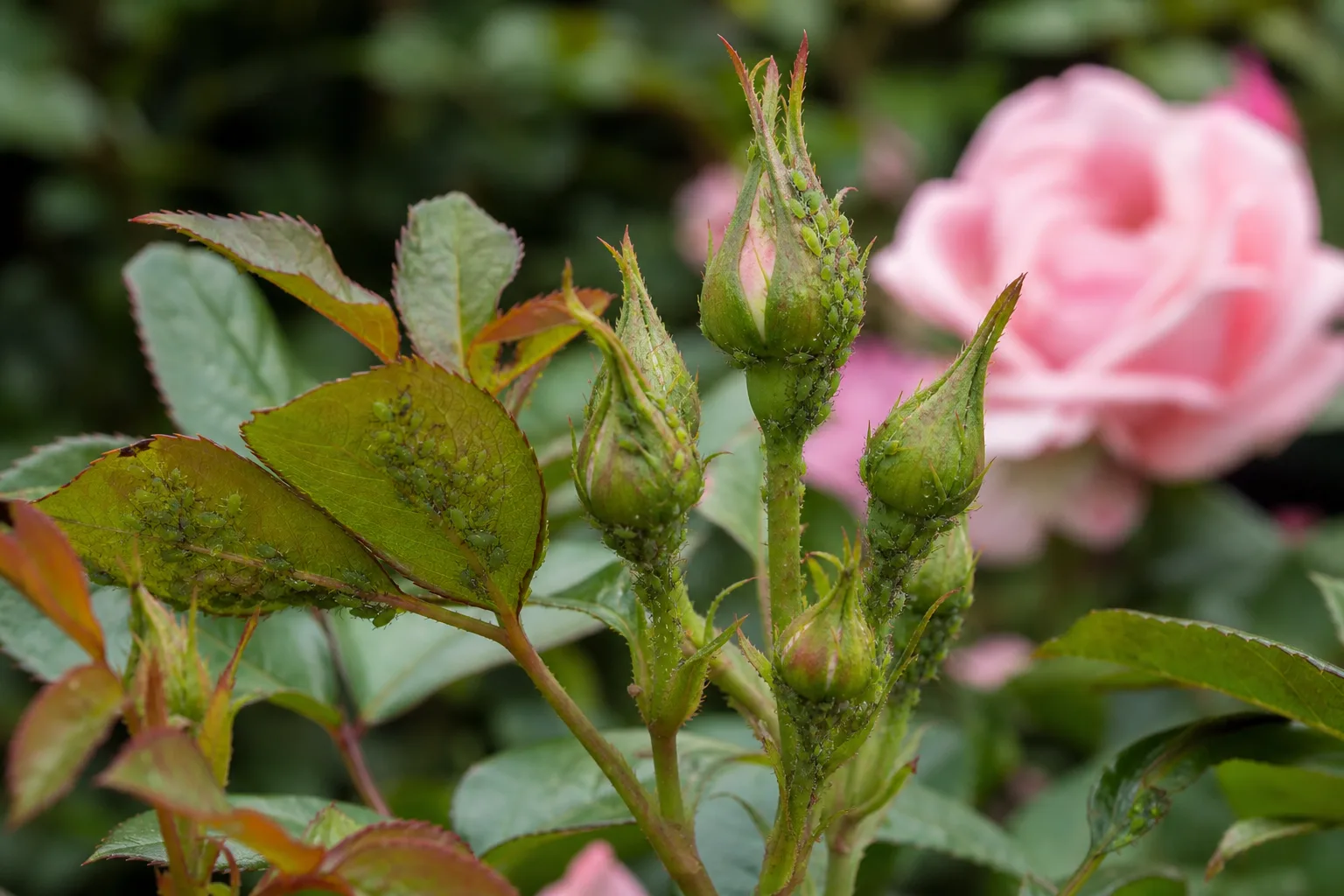
Rose aphids (Macrosiphum rosae) pack tender spring shoots and buds, leaving sticky honeydew that can coat your first flush. First step: blast colonies off new growth with a strong morning water jet aimed at stems, not open blooms you want to keep.
Aphids on Rose: Causes, Checks & Fixes
This guide covers aphids on Rose. See also the general Aphids guide, watering, and light pages for this plant.
Aphids on Rose: Causes, Checks & Fixes
Quick answer
Rose aphids are almost a rite of spring on garden and container roses. The species most gardeners see is Macrosiphum rosae-soft-bodied insects in pink, green, or purplish forms that cluster on the tender shoots and unopened buds roses push during the first warm weeks. They rarely kill a healthy established bush, but heavy colonies can distort buds, reduce flower quality, and leave sticky honeydew that feeds sooty mold.
First step: knock colonies off new growth with a strong stream of water early in the morning, aiming at stems and leaf undersides-not open blooms you want to keep perfect. Repeat every two to three days while colonies are active. Only escalate to insecticidal soap if water alone is not holding numbers down after a week of scouting.
What aphids look like on Rose
Rose aphids are small-roughly 1/8 inch or less-and gather in dense groups rather than scattering across the whole plant. On roses they prefer the softest tissue:
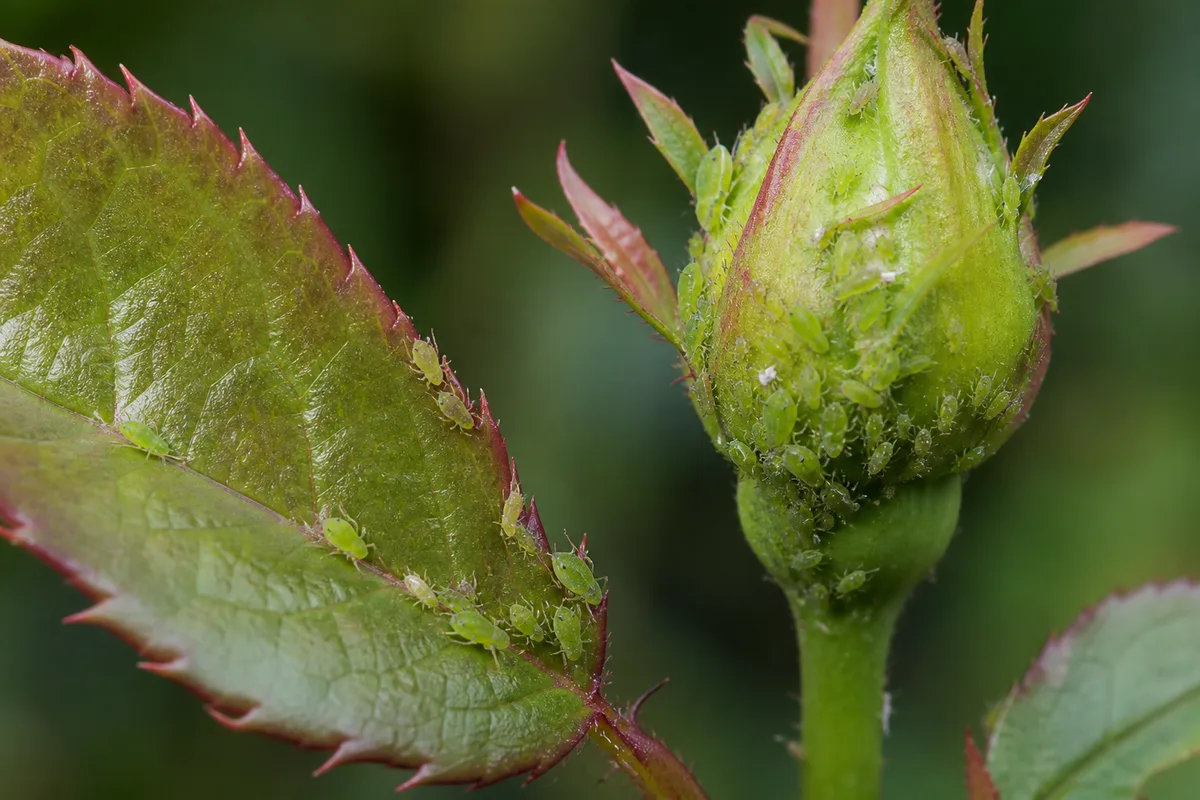
Aphids symptoms on Rose - compare with healthy tissue on the same plant.
- Unopened buds and bud sheaths
- New leaf tips and folded leaflets at stem ends
- Undersides of the uppermost leaves on each cane
Individual aphids may be pink, green, or purplish. Winged adults can appear when colonies get crowded, but most of what you see on spring tips are wingless nymphs and adults clumped together. When populations are heavy, leaves curl downward and buds may fail to open cleanly.
Honeydew is the other hallmark. Aphids excrete excess plant sugar as a shiny, sticky film on leaves below feeding sites. That residue can turn into black sooty mold-a fungus that grows on the sugar, not in rose tissue itself. Ant trails climbing canes or container rims often appear before you notice the aphids, because ants harvest honeydew and defend colonies from predators.
Why Rose gets aphids
Roses are heavy feeders that produce a steady stream of nitrogen-rich soft growth during spring and again after each pruning flush. That tender tissue is exactly what rose aphids need. Unlike spider mites, which prefer hot dry conditions on mature foliage, rose aphids concentrate on the newest shoots-the same ones you watch for your first blooms.
Several rose-specific factors make infestations more likely:
Spring bud break timing. Aphid eggs overwinter on rose canes and hatch as new growth resumes. The first soft shoots of the season arrive before many natural enemies are fully active, so colonies can build quickly on buds you are waiting to open.
Excess nitrogen. Heavy nitrogen fertilizer pushes lush leafy shoots with fewer flowers. High nitrogen levels in plant tissue encourage faster aphid reproduction. Roses in containers that receive frequent soluble feed during spring are especially prone to soft, aphid-friendly growth.
Ant protection. Ants farming honeydew on rose stems actively interfere with lady beetles, lacewings, and parasitic wasps that would otherwise keep aphids in check. A bush with ant highways on the lower canes often holds larger aphid colonies on the tips above.
Stressed or shaded plants. Roses need Rose light guide-six or more hours of direct light daily for best flowering. Bushes in partial shade, drought-stressed containers, or crowded mixed beds with poor airflow can support aphids longer because predators move less freely and plants push weaker shoots.
How to confirm the cause
Work through these checks before you treat:
- Location on the plant - Aphids cluster on newest tips and buds. Spider mites cause fine stippling and webbing on older leaves in hot dry weather. Thrips leave silvery scarring on petals and leaves. Distortion limited to soft spring growth strongly suggests aphids.
- Hand-lens inspection - Lift a folded new leaf or peel back a bud sheath. Soft-bodied insects in groups confirm aphids. Bronze or black swollen “mummy” aphids mean parasitic wasps are already working-often a sign you can wait before spraying.
- Honeydew and sooty mold - Rub a sticky upper leaf. Honeydew feels tacky; sooty mold smears black and wipes off. Neither pattern matches black spot fungus, which shows as circular leaf lesions with yellow halos.
- Ant activity - Ants on canes or pot edges point to honeydew producers above. Controlling ants alone will not cure aphids, but it explains why predators are not keeping numbers down.
- Shake test - Gently tap an infested tip over white paper. Aphids fall as slow-moving specks. Whiteflies fly in a cloud-uncommon on roses but possible on mixed plantings.
- Care cross-check - Confirm you are watering deeply at the base when the top 3–4 cm of soil dries, not wetting foliage. Check that the bush is not sitting in waterlogged mix. Stress alone does not cause aphids, but weak roses recover more slowly from heavy feeding.
If you see only a dozen aphids on one tip and parasitic wasp mummies nearby, confirmation may mean “monitor” rather than “spray immediately.”
The first fix to try
Blast aphid colonies off new shoots with a strong jet of water in the early morning, directing the spray at stems and leaf undersides while shielding open blooms you want to keep.
Hold the nozzle close enough to dislodge insects but avoid shredding tender tissue. Let foliage dry in sun the same day-roses already dislike wet leaves, and lingering moisture invites black spot. Repeat every two to three days while you still find live aphids on inspection.
This single step dislodges most of a moderate colony, washes fresh honeydew before ants arrive, and preserves lady beetles, lacewings, and parasitic wasps that provide free ongoing control. Do not reach for insecticide on day one if colonies are small and predators are visible.
Step-by-step recovery
After the initial water knockdown:
- Scout every three to four days through the first bloom flush. Aphids reproduce quickly on roses; one missed week can repopulate a cleaned tip.
- Squash remaining clusters by hand on isolated buds if water missed tight sheaths. Gloves make this easier on thorny canes.
- Apply insecticidal soap or horticultural oil if colonies persist after several water treatments. Cover upper and lower leaf surfaces and bud sheaths thoroughly. Repeat at label intervals-typically every four to seven days-through one full pest generation.
- Manage ants when trails are heavy. Sticky barriers on container stakes or ant baits away from blooms can let predators reach aphids. Ant control alone is not a substitute for knockdown, but it improves biological control.
- Wash sooty mold off upper leaves with plain water once honeydew production stops. Thick mold blocks light; trim severely coated leaves if they no longer photosynthesize well.
- Hold nitrogen feeds until aphids are under control. Resume balanced rose fertilizer after new growth comes in clean.
Avoid broad-spectrum insecticides unless a severe outbreak threatens the entire season. These products kill pollinators and the predators that normally keep rose aphids manageable through summer.
Recovery timeline
Water knockdown shows results within two to three days on moderate colonies. A full soap or oil course may take one to two weeks with label-interval repeats. Curled leaves from heavy feeding often stay distorted until replaced-expect clean new shoots within one to three weeks once insects stay gone.
Buds that dropped or failed to open from severe spring feeding will not recover; judge success by the next flush after deadheading or light pruning, not by salvaging damaged first-flush blooms.
Lookalike symptoms
Spider mites cause bronze stippling and fine webbing on older leaves during hot dry spells-not soft clusters on spring buds. Confirm with a white-paper tap test showing moving specks and webbing.
Thrips scar petals and leave silvery streaks on leaves. They do not produce heavy honeydew or ant trails.
Rose leafhopper nymphs are white and jump when disturbed on undersides. Damage is pale stippling, not curled tips coated in sticky residue.
Herbicide drift or virus can distort new growth, but you will not find soft-bodied insect colonies or honeydew. Mosaic mottling after heavy aphid seasons may indicate virus transmission-remove suspect canes rather than treating as a simple pest issue.
Black spot produces circular leaf lesions with yellow halos from wet foliage-not sticky tips or insect clusters.
Mistakes to avoid
Do not spray insecticidal soap on open blooms during peak bee activity if you can treat early morning buds instead. Soap can spot delicate petals.
Do not ignore ants while treating aphids only with water. Ant protection keeps colonies rebounding.
Do not apply broad-spectrum insecticides at the first sign of aphids. You will kill the lady beetles and parasitic wasps that control outbreaks for the rest of the season.
Do not increase nitrogen feeding during an active infestation. Soft lush shoots feed the next generation.
Do not wet rose foliage routinely when knocking aphids off. Use a focused stem spray, not overhead lawn sprinklers that soak leaves and worsen black spot risk.
Do not assume one treatment is enough. Rose aphids reproduce continuously through the growing season; follow-up scouting matters more than the first spray.
How to prevent aphids next time
Begin weekly scouting at bud break-before the first flush opens. Early-season control keeps numbers lower all summer.
Use balanced or slow-release rose fertilizer rather than repeated high-nitrogen bursts that push soft aphid-friendly shoots.
Preserve beneficial insects. Tolerate small spring colonies when damage is cosmetic and lady beetles or lacewing larvae are present. Parasitic wasp mummies in a colony mean natural control is working.
Manage ants on container roses and garden beds where trails are chronic. Sticky barriers on stakes or targeted baits improve predator access.
Maintain full sun placement and base watering. Healthy roses in six or more hours of direct light recover faster and produce firmer growth that is less attractive than weak shaded shoots.
Improve airflow between crowded bushes. Stagnant pockets in mixed beds slow predator movement and let honeydew build before you notice it.
When to worry
Small aphid clusters on a few spring tips are normal on roses and rarely threaten an established bush. Escalate when colonies coat most new growth before your first intended bloom, honeydew and sooty mold spread across the canopy within days, or buds abort in clusters.
Act urgently if leaves show virus-like mosaic mottling after heavy aphid pressure-distorted mottled growth may not fully recover and affected canes should be removed to protect neighbors.
Replace severely declining young roses in pots if repeated chemical cycles fail and the plant never produces clean growth. Mature garden bushes almost always outgrow a bad spring flush with consistent knockdown and predator support.
Conclusion
Aphids on roses are common, visible, and usually manageable without harsh chemicals. Confirm soft colonies on spring tips, blast them off with water before you spray, and scout until new growth comes in clean. Protecting natural enemies and avoiding excess nitrogen does more for long-term control than a single insecticide application ever will.
When to use this page vs other Rose guides
- Rose watering guide - Use for routine moisture checks before assuming aphids is the main issue.
- Rose problems hub - Browse all 7 common issues on this species.
- Spider Mites on Rose - Different entry point when symptoms overlap with aphids.
- Yellow Leaves on Rose - Different entry point when symptoms overlap with aphids.
- Leaf Drop on Rose - Different entry point when symptoms overlap with aphids.