Faded Flowers on Rose: Causes, Checks & Fixes
Quick answer
Faded flowers on Rose are usually normal petal aging over several days - but same-day bleaching on dark cultivars, wilted open blooms, or dull new buds point to heat, drought, missed deadheading, or pests. First step: deadhead spent blooms above an outward five-leaflet leaf and soak dry pots at the base.
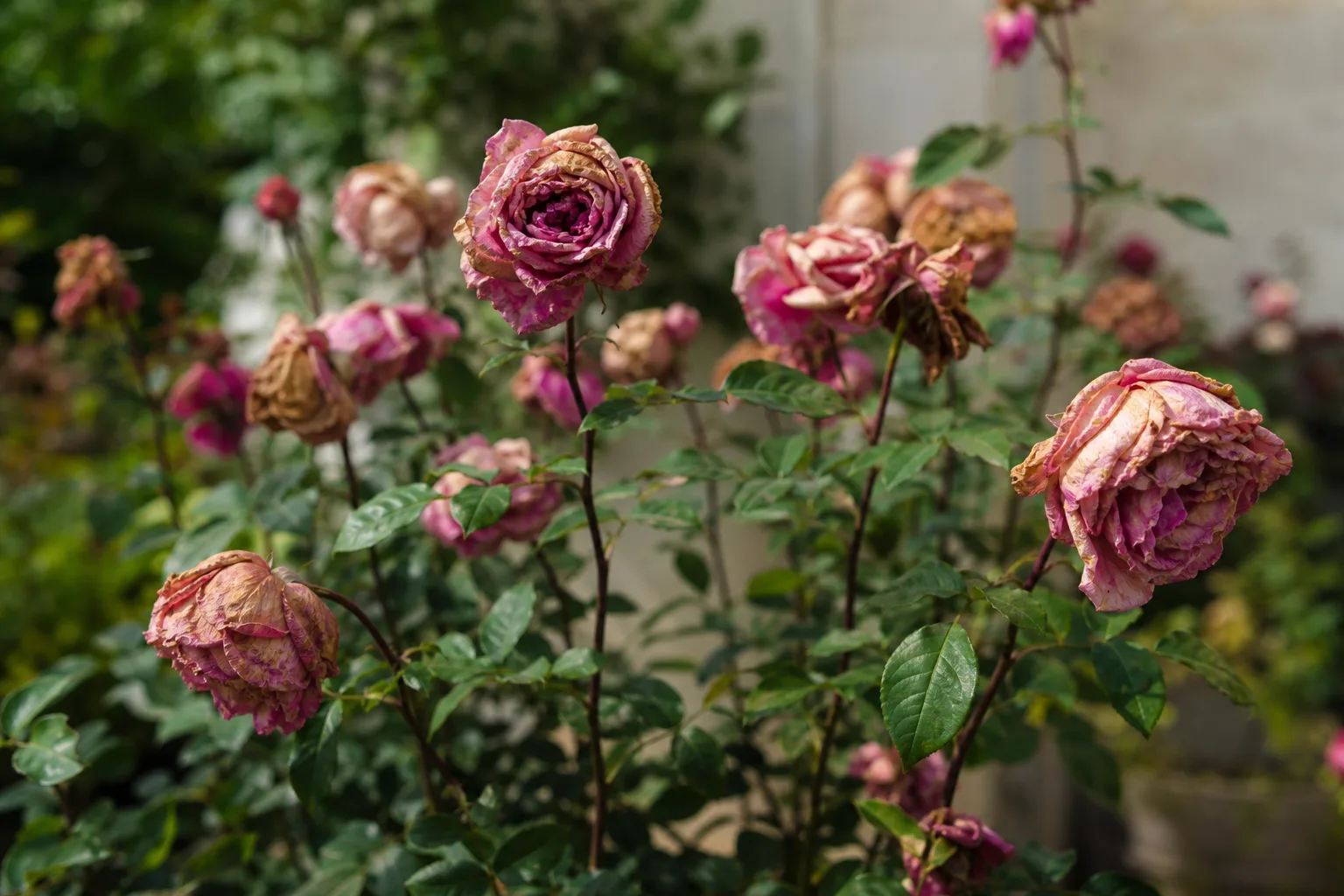
Faded Flowers on Rose: Causes, Checks & Fixes
This guide covers faded flowers on Rose. See also the general Faded Flowers guide, watering, and light pages for this plant.
Faded Flowers on Rose: Causes, Checks & Fixes
Quick answer
Faded flowers on Rose (Rosa spp., primarily repeat-flowering hybrid teas, floribundas, and patio roses) split into two timing patterns. Normal aging moves individual blooms from vivid to pale to brown over several cool days - expected turnover on a bush bred to cycle flowers all season. Problem fade hits all open flowers the same afternoon during heat stress, leaves blooms limp on dry soil, or makes newly opening buds look bleached and short-lived when drought, missed deadheading, pests, or wet-weather rot undercut vigor.
First step: deadhead spent blooms above an outward-facing bud at the first five-leaflet leaf below the flower. That single cut redirects energy from hip formation back into new buds on repeat bloomers. If soil is dry 3–4 cm down and canes wilt with the fade, deep-soak at the base before your next deadheading pass - see our underwatering guide for soak volume and recovery rhythm.
Faded flowers vs. no flowers on Rose: This page is your bloom-quality and petal-fade hub - dull color, fast bleaching, and spent-head maintenance. If buds never open or the bush stopped flowering entirely, start with the no flowers guide for hip redirect, pruning timing, and light checks.
Why Rose flowers fade fast
Repeat-flowering garden roses produce blooms on relatively young wood and cycle flowers from spring through autumn in favorable climates. Each individual bloom is short-lived by design - pigments break down, petal edges brown, and the head completes its display. Iowa State Extension describes deadheading as optional for appearance but valuable for encouraging additional summer blooms on modern roses. Several factors speed visible fading beyond that normal rhythm:
Natural petal senescence. Once pollination finishes, outer petals lose saturation and dry at the margins. In cool weather the shift takes several days; in midsummer heat an open hybrid tea can move from peak color to noticeably faded in just a few days without any underlying disease.
Heat and UV on dark cultivars. Terrace pots against heat-reflecting walls amplify afternoon temperatures. Dark red and deep magenta roses absorb more solar energy than pastel cultivars - open blooms can bleach same-day while stems stay firm. This is cosmetic petal desiccation, not the same as drought wilt across the whole bush.
Missed deadheading and hip redirect. When spent flowers stay on repeat-flowering types, the plant shifts energy toward rose hip development. Hips slow vegetative growth and pause the rebloom cycle - the bush looks like it is “finishing early” even when weather still favors flowers. Illinois Extension treats deadheading as summer pruning that keeps modern roses cycling.
Drought during open bloom. Roses transpire heavily through large leaves and open flowers. When mix dries too far in containers, open blooms wilt, necks bow, and repeat types produce small pale flowers instead of full-sized blooms - often before lower leaves yellow. Our wilting guide helps separate heat droop on moist soil from true drought fade.
Spider mites and thrips on buds. Fine stippling on tight buds, bronzed leaflets, or silvery scarring on bud scales can produce bleached, short-lived blooms that never reach full color. Hot dry balcony weather favors spider mites on rose - inspect before you blame genetics.
Rain spoil and botrytis gray mold. Wet petals after overhead watering or humid rainy weeks collapse faster than dry-age bleaching. UMD Extension notes spotted, withering petals and rotting buds as gray mold symptoms on roses - fluffy gray fuzz may appear on infected tissue under moist conditions. This is disease fade, not routine aging.
Once-flowering old garden roses. Alba, Gallica, Damask, and many species roses bloom once per year on old wood. Fade after that single flush is expected - deadheading does not force a second wave. Illinois Extension is explicit that pruning on once-bloomers should wait until after flowering, not spring.
Weak or recently transplanted bushes. Aggressive deadheading strips photosynthetic tissue from a struggling plant. Iowa State recommends lighter cuts above three-leaflet leaves on first-year roses because removing too much foliage slows establishment - new buds may open dull until vigor returns.
What faded flowers look like on Rose
Normal aging (most common on repeat bloomers):
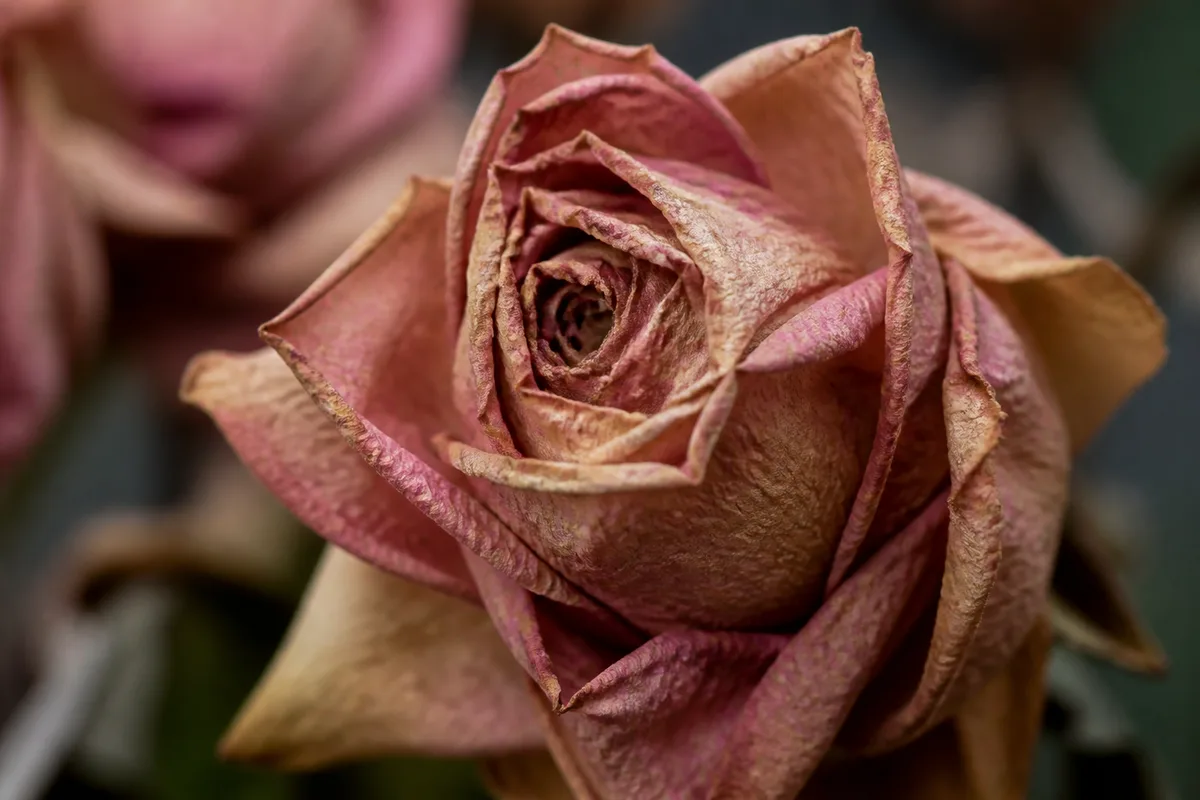
Faded Flowers symptoms on Rose - compare with healthy tissue on the same plant.
- Oldest open blooms lose saturation and brown at petal edges while newer buds on the same cane still show full cultivar color
- Faded heads feel papery or dry; stems remain green and firm at the base
- Fading is gradual over several days in cool weather, not an overnight brown collapse across every open flower
- Plant continues producing new buds along branching canes after each flush
Heat bleach on dark cultivars:
- Deep red or magenta petals turn washed-out or pinkish the same afternoon in strong sun
- Bush stays turgid - no dramatic cane wilt - and soil may still be moist at depth
- Bleaching hits open flowers first; tight buds below often still look normal
Drought-related dulling:
- Open flowers wilt or droop in afternoon heat when soil is dry 3–4 cm down
- New buds open smaller and paler than earlier waves on the same plant
- Container feels light; soil may pull from pot edges on terrace rails
Missed-deadhead slowdown:
- Spent dry heads hang on stems for weeks while new bud production slows
- Orange or red hips swell at former bloom sites on repeat types
- Lower clusters on floribundas stay cluttered with brown tissue
Pest-speckled buds:
- Unopened buds show stippling, webbing, or silvery scars before opening
- Blooms that do open look bleached, distorted, or drop petals within a day or two
- Often paired with bronzed or stippled foliage in hot dry weather
Rain and botrytis spoil:
- Water-soaked tan or brown patches on petals after wet weather
- Grey fuzzy mold on spent or opening heads in humid conditions
- Rot may climb into stems if infected petals sit against wet foliage
Knowing which pattern you see determines whether deadheading alone fixes the display or you need water correction, pest control, or disease sanitation.
Lookalike symptoms to rule out
| What you see | Likely cause | Key difference from normal fade |
|---|---|---|
| Oldest blooms only dull over several days; new buds vivid | Normal petal aging | Gradual; firm stems; no mold |
| Same-day wash-out on dark reds in hot sun; plant turgid | Heat bleach | Cosmetic on open flowers; soil may be moist |
| Open blooms limp; dry soil 3–4 cm down; pot light | Underwatering | Whole-flower wilt; perks after soak |
| Grey fuzzy mold on wet petals after rain | Botrytis gray mold | Spots spread in humid weather; not dry papery aging |
| Purple-black leaf spots with yellow halos; weak new buds | Black spot | Foliage disease weakens bloom; petals may dull secondary |
| Fine stippling + webbing on undersides in dry heat | Spider mites | Insect damage on buds and leaves |
| Buds drop before open in clusters | Heat spike, drought, or disease stress | See bud drop guide |
| No new flowers for weeks; hips forming | Missed deadheading / end of cycle | See no flowers guide |
| Wilting on wet soil with soft base canes | Root or crown rot | See root rot or crown rot |
How to confirm the cause
Work through these checks in order:
- Bloom age pattern - Are only the oldest open flowers faded while newer buds on the same stem still show strong color? That confirms normal senescence. If every open bloom bleached the same afternoon, suspect heat or drought.
- Stem and cane firmness - Firm green canes with active side buds mean the bush is cycling normally. Soft tissue at the graft or base on wet or dry soil points to crown or root failure - not this page’s main focus.
- Soil moisture at depth - Push your finger 3–4 cm into mix at the pot rim. Bone-dry at midday explains wilted, prematurely dull blooms on containers. Wet several days after watering with limp canes suggests rot - see our overwatering guide.
- Sun and heat timing - Did fade accelerate on a west-facing terrace during a heat wave while the plant otherwise looked healthy? Dark cultivars bleach cosmetically in afternoon sun without drought.
- Spent-head clutter - Count how many dry brown heads remain on the bush. Repeat bloomers with weeks of unremoved spent flowers often slow bud production while hips swell.
- Petal surface and weather - Water-soaked spots or grey fuzz after rain point to botrytis - remove those heads immediately. Fine stippling on tight buds before open suggests mites or thrips - scout undersides.
If checks one and two pass and new buds still open bright, treat faded heads as routine maintenance. If new blooms open dull, spotted, or short-lived from the start, look past deadheading to water, light, pests, or disease.
First fix for Rose
Snip each clearly spent bloom back to an outward-facing bud at the first five-leaflet leaf below the flower.
Use clean bypass pruners. Oregon State University Extension recommends cutting above a five-leaflet leaf because nodes associated with three leaflets are less likely to produce strong flowering shoots. Cut about one-quarter inch above the bud at a slight angle sloping away from the growth point - full technique on our rose pruning guide.
Branch by rose type:
- Hybrid tea and grandiflora - Deadhead individual blooms to the first strong five-leaflet node with an outward-facing bud. On weak or first-year plants, remove only the faded flower and uppermost node above a three-leaflet leaf until vigor rebuilds.
- Floribunda and grandiflora clusters - When the entire cluster finishes, remove the whole flowering head above the uppermost five-leaflet leaf - not one bloom at a time.
- Once-flowering old garden and species roses - Deadhead only for appearance if desired; do not expect repeat bloom. Leave hips if ornamental winter interest matters.
- Shrub and landscape roses - Light deadheading improves appearance and may extend bloom; hips on some cultivars are attractive - Iowa State notes shrub roses rarely need deadheading but benefit from it for tidiness.
If soil is dry 3–4 cm down and open blooms wilt with the fade, deep-soak at the base first, then deadhead once canes firm up - drought correction and spent-head removal are separate steps, but both may be needed the same week.
Do not spray fungicide or load fertilizer on day one if you have only confirmed normal aging on a healthy bush.
Step-by-step recovery
After the initial deadheading pass, follow the path that matches your confirmed cause:
Normal aging on a healthy repeat bloomer
- Deadhead weekly through active bloom season - more often during peak summer flushes on terrace pots.
- Water at the base when the top 3–4 cm dries per our rose watering guide.
- Ensure six or more hours of direct sun per our rose light guide for strongest subsequent color.
- Scout buds weekly before they open - catch mites early in hot dry spells.
Heat bleach on dark cultivars
- Remove same-day bleached open blooms to tidy the display - petals will not re-darken.
- Maintain even moisture during bloom; heat fade is cosmetic but drought on top of heat worsens bud size.
- Consider afternoon shade cloth on west-facing terrace rails if bleaching ruins every flush - trade slightly softer color for longer bloom hold.
- Hold heavy feed until the next bud swell on a stressed bush.
Drought fade with wilt
- Slow-soak the root zone at the base until water runs from drainage holes - follow our underwatering guide for volume and saucer emptying.
- Deadhead wilted open blooms once canes perk within two to four hours.
- Resume checks when the top 3–4 cm approaches dry - not on a fixed calendar.
- Mulch pot surfaces to slow evaporation on sunny balconies.
Missed deadheading / hip slowdown
- Clear all spent heads and swelling hips if continuous terrace display is the goal.
- Expect the next bud wave one to two flushes after cleanup on a vigorous repeat bloomer.
- Plan when to stop deadheading for winter hardening - late August through September in many temperate zones per Iowa State guidance.
Botrytis or rain-spoiled petals
- Remove spotted or moldy flower heads immediately - bag and trash, do not compost in humid climates.
- Stop overhead watering; irrigate at the base early in the day per UMD gray mold management.
- Improve airflow through open-centre pruning on bush types - see our pruning guide.
- Scout for spread onto stems; persistent wet rot may need professional disease ID.
Pest-speckled buds (mites / thrips)
- Inspect undersides of leaves and tight buds for stippling, webbing, or scarring.
- Blast undersides with a strong water jet three to four times per week in dry heat before considering spray - full protocol on our spider mites guide.
- Deadhead blooms that opened damaged; focus on stopping pest spread before the next flush.
- Hold nitrogen-heavy feed until new growth stays clean.
Recovery timeline
On a healthy repeat-flowering rose in full sun with even moisture, new buds typically open in full color within one to two flushes after thorough deadheading and any water correction - often two to three weeks during peak summer, faster in cool spring weather.
Heat-bleached petals on dark cultivars do not re-darken; judge recovery by the next generation of blooms, not by tissue already faded.
If you deadhead faithfully but new buds stay small, pale, or sparse for more than two weeks, the limiting factor is usually sun, chronic drought, black spot defoliation, mites, or a weak recently transplanted bush - not incomplete deadheading. Address those conditions before expecting a color rebound.
Once-flowering types fade after their single seasonal flush - recovery means healthy foliage and next year’s bloom wood, not another wave this season.
Causes that speed fading
Container heat. Black plastic pots on south-facing rails heat root zones and amplify petal desiccation on open flowers - even when you water correctly.
Overhead irrigation and evening wetting. Wet open petals age faster and invite botrytis in humid terrace culture. Base watering only is the long-term fix.
Ethylene from ripening fruit. Balcony roses near kitchen windows with bowls of ripening fruit may drop petals faster - ethylene is a known accelerator of rose petal senescence in postharvest and stress contexts.
End-of-season fatigue. Late-autumn flushes on tired bushes fade faster; allow hips and ease feeding as growth slows.
Disease-weakened plants. Black spot defoliation starves the bush - new blooms open dull even when individual petals look structurally fine. Fix foliage health before chasing bloom color alone.
What not to do
Do not leave spent blooms for “decorative hips” on repeat hybrid teas and floribundas if you want continuous terrace display - hips end many mid-season cycles.
Do not hard-prune or heavy-feed heat-stressed roses while correcting fade - rebuild foliage first.
Do not deadhead aggressively on weak or newly transplanted bushes - retain maximum leaf area until vigor returns per Iowa State first-year guidance.
Do not overhead-water during humid summer evenings when botrytis risk is high.
Do not assume faded color means the plant needs bloom-booster fertilizer - excess nitrogen on a stressed bush pushes soft growth with fewer quality flowers. See our fertilizer guide only after water and health checks pass.
Do not compost heavily botrytis-infected flower heads in climates where spores overwinter in debris.
How to prevent faded flowers from slowing your Rose display
Deadhead on a schedule - weekly through active bloom, more often during peak summer on containers - not only when the bush looks tired. Match cut depth to rose type on our pruning guide.
Water at the base when the top 3–4 cm dries. Roses need rich, moist but well-drained soil and at least six hours of direct sun for predictable bloom quality.
Scout buds before open during warm dry weather - mites build fast on terrace roses.
Stop deadheading in late summer to early autumn when hips and wood hardening should take priority in cold climates - or after your local cool-season flush winds down in tropical regions.
Choose cultivars for your microclimate - pastels often hold acceptable color longer than dark reds on blazing afternoon terraces; see our rose overview for patio-type context.
When to worry
Routine fading on the oldest blooms while new buds open bright is not urgent. Deadhead and continue.
Escalate when:
- Canes soften at the graft or base - possible crown rot or advanced root failure
- Grey mold coats multiple wet heads after humid rain
- Buds drop in clusters before open across much of the bush
- Spider mites web multiple stems with bronzing foliage
- Black spot strips most leaves while new blooms stay weak and dull
- Every new flower opens faded despite full sun and steady deadheading for two or more weeks
Those patterns mean disease, placement, root failure, or severe pest pressure - not the normal color cycle of a healthy repeat bloomer.
Related rose problems
- Rose pruning - five-leaflet deadheading, floribunda clusters, when to stop for hips
- Underwatering on Rose - drought fade with dry soil at depth
- Wilting on Rose - heat droop vs drought vs rot diagnostic fork
- No flowers on Rose - hip redirect and bloom-stop causes
- Bud drop on Rose - buds abort before open
- Small flowers on Rose - pale undersized blooms from stress
- Spider mites on Rose - stippling and bud damage in dry heat
- Black spots on Rose - defoliation weakening bloom flush
- Rose watering - base irrigation rhythm
- Rose overview - cultivar types and terrace culture
Conclusion
Faded rose flowers are usually the natural end of each bloom’s short show - not a sign your bush is failing. Scan the plant for timing pattern (oldest only vs all open flowers same-day), confirm new buds still open vivid, then deadhead above outward five-leaflet nodes as your first and most effective move on repeat bloomers. Correct drought at the base, scout pests on tight buds, and remove botrytis-spoiled heads in wet weather. Spent petals never brighten again - judge recovery by the next flush. That rhythm, with weekly deadheading through active season and a planned stop for hips, keeps terrace roses replacing yesterday’s faded head with tomorrow’s fresh color.
When to use this page vs other Rose guides
- Rose watering guide - Use for routine moisture checks before assuming faded flowers is the main issue.
- Rose problems hub - Browse all 7 common issues on this species.