Bougainvillea Care Guide: Light, Water, Soil, Problems
Learn bougainvillea care: full sun for bracts, dry-down watering, fast-draining soil, container vs ground tips, and fixes for no blooms.
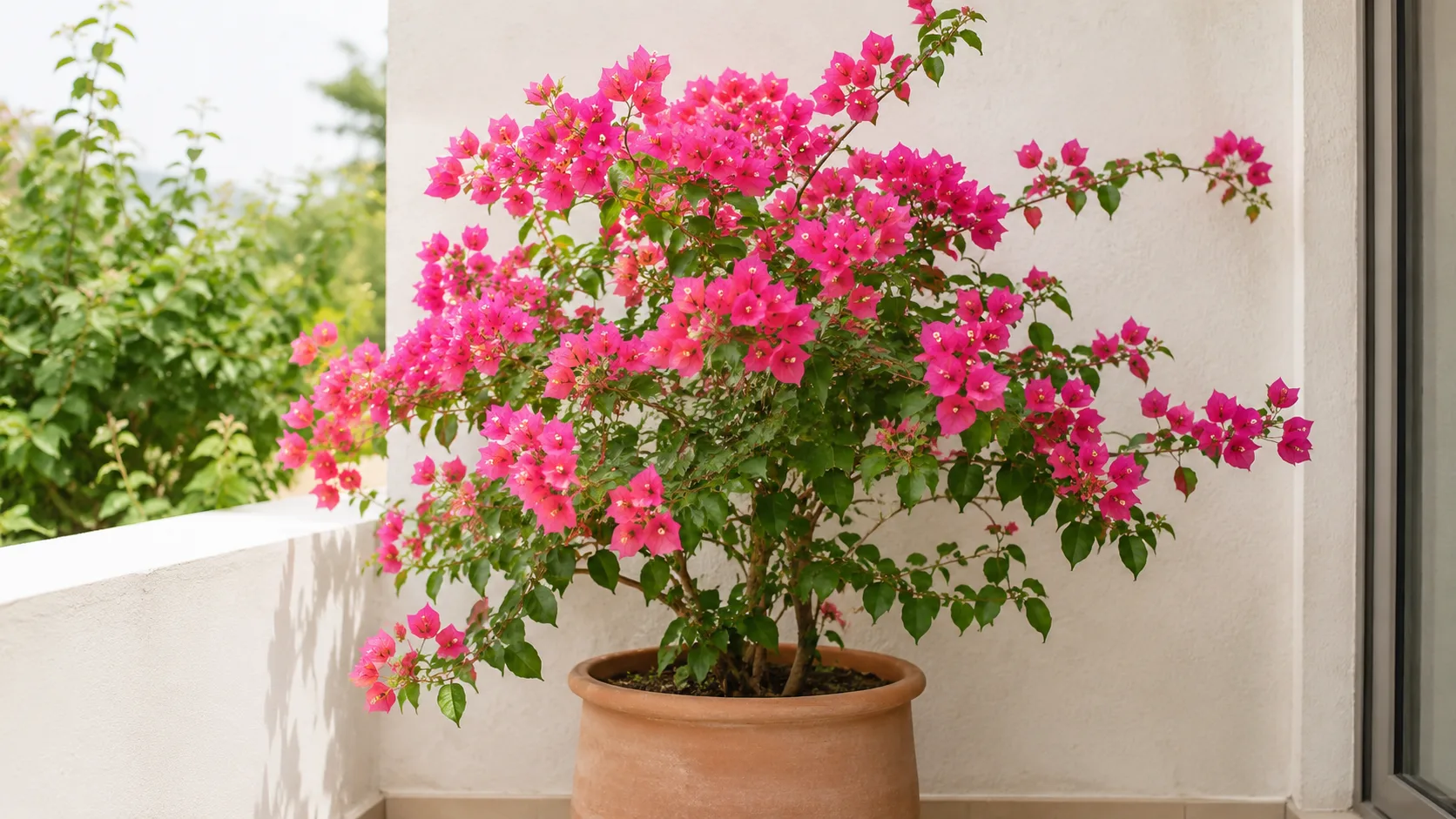
Bougainvillea is not a “keep it evenly moist” houseplant with a colorful bonus. It is a woody, thorny South American climber that turns paper-thin bracts into fluorescent walls of pink, magenta, orange, white, or gold when it gets brutal sun and lean root conditions. Treat it like a soft tropical foliage plant — moderate light, daily sips, rich constantly damp mix — and you usually get a green, leafy vine that refuses to color up.
If your plant is already lush and mute, fix direct sun hours and wet soil before you buy bloom booster. Depth pages for watering drills, pruning cuts, and single symptoms live on the bougainvillea care hub once the basics below are honest.
Written by Sai Ananth (B.Pharmacy, Andhra University; LeafyPixels lead writer) and reviewed by the LeafyPixels Review Board.
Who Wrote This Guide and How We Reviewed It
This page was researched and written by Sai Ananth, whose pharmacy background shapes how LeafyPixels handles pet-toxicity wording, and whose growing practice focuses on real balcony and patio constraints rather than greenhouse idealizations. Editorial review sits with the LeafyPixels Review Board, which cross-checks care thresholds against extension and botanical-garden sources before publication. Our editorial policy covers sourcing and correction standards.
How this guide was built (bougainvillea-specific):
- Compared NC State full-sun and soil notes with UF/IFAS dry-preference and bloom-failure guidance.
- Mapped Clemson pH/fertilizer rates and RHS current-season flowering wood onto container and balcony setups.
- Reconciled “organically rich soil that retains moisture but is not soggy” (establishment language) with bloom-favoring dry-down after roots settle.
- Pulled west-rail dry-down and monsoon drainage patterns from LeafyPixels bougainvillea watering, light, and problem pages, then labeled those notes as editorial synthesis under named conditions.
- Fact-checked pet wording against the ASPCA toxic/non-toxic plants index (no dedicated bougainvillea species entry) and kept thorn/sap as separate physical hazards.
Diagnostic photos below reuse LeafyPixels plant-problem assets for teaching — not claimed as personal garden diary shots. Your climate, pot, and cultivar will differ; treat intervals as benchmarks.
What Bougainvillea Actually Is (Bracts, Species, Thorns)
Bougainvillea belongs to the four-o’clock family (Nyctaginaceae). Garden centers most often sell Bougainvillea spectabilis, Bougainvillea glabra, hybrids, and named cultivars that share the same culture rules. The genus is named for French explorer Louis Antoine de Bougainville; in the wild it evolved as a scrambling shrub of bright, seasonally dry habitats in South America.
The “flowers” people photograph are almost always bracts — modified leaves that surround tiny tubular true flowers, usually cream or white. Those bracts can hold color for weeks after the true flowers fade, which is why a well-sited plant looks like it blooms endlessly. That distinction matters for care: you are managing bract initiation on new wood, not coaxing a soft annual to keep petals open. Leaves can look fine in mediocre light for months. Color tells you whether the plant is truly getting what it needs.
Outdoors in frost-free climates, vigorous climbers can reach roughly 15 to 40 feet with space and support. In a pot with deliberate pruning and root restriction, the same genetics often stay in the 3 to 6 foot working range. Growth is fast in full sun once established, and sluggish and leggy in shade. Stems carry sharp thorns at leaf axils — keep vines off narrow walkways.
Care Decisions at a Glance
| Care factor | Target | Failure signal |
|---|---|---|
| Light | Full sun, 6+ hours direct | Green vine, thin stems, few/no bracts |
| Water | Soak, then let top mix dry | Yellow leaves, soft growth, no bloom, root rot |
| Soil | Fast-draining; slightly acidic preferred | Soggy mix, chlorosis on alkaline sites |
| Temperature | Warm; protect from frost | Leaf drop after cold snaps |
| Fertilizer | Modest; ease off high nitrogen at bloom | Lush leaves, shy color |
| Pruning | After a flush / late winter–early spring | Constant shearing removes flowering wood |
| Culture | Large sunny pot or well-drained ground | Tiny pots overheat; wet ground kills roots |
| Safety | Thorns + sap; ASPCA has no species listing | Handle with gloves; keep out of pet reach |
If you only change one thing this week, move the plant into unfiltered sun before you buy bloom booster. Sun is the non-negotiable input; everything else is secondary support.
Light: Hours That Make Color
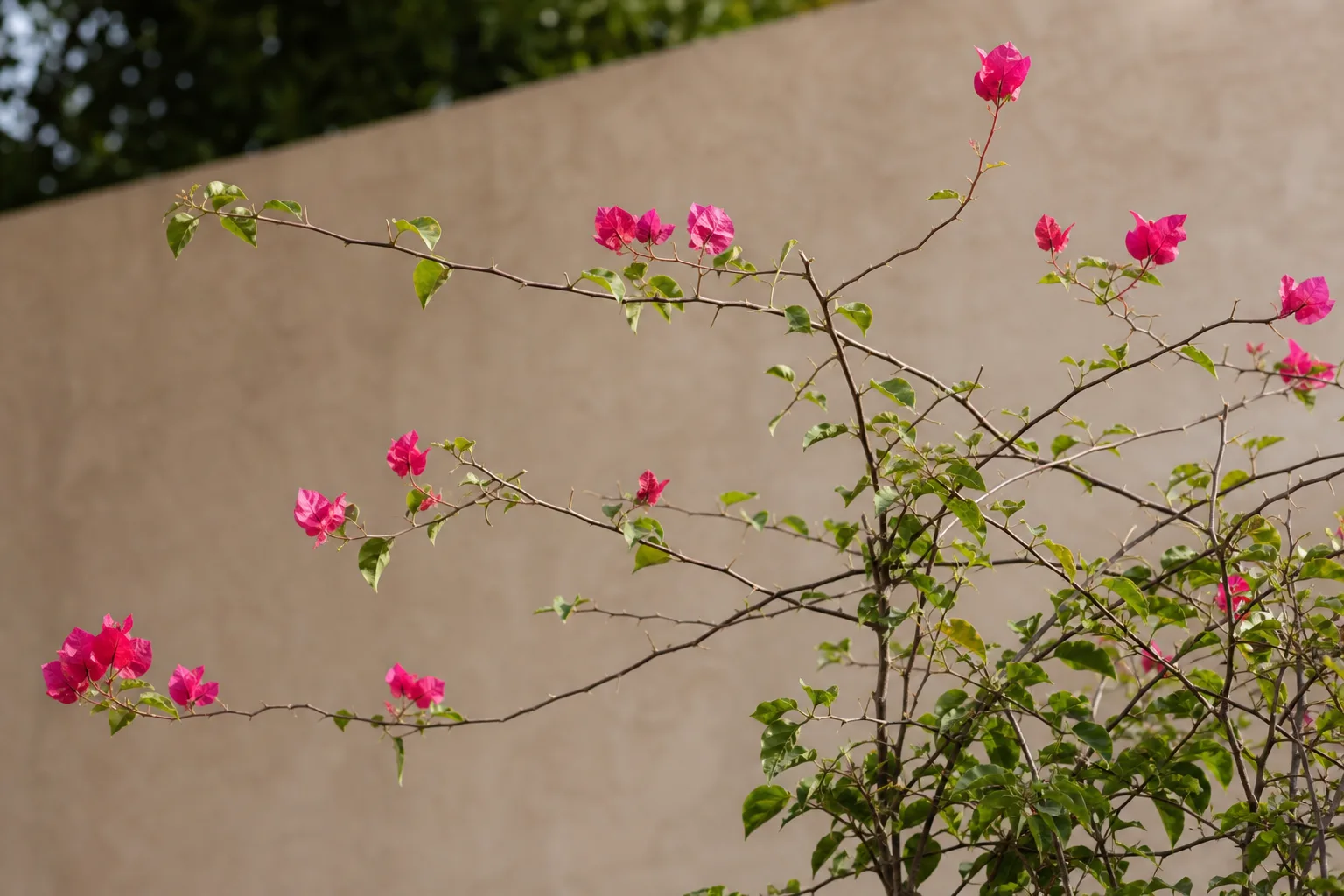
Bougainvillea is a full-sun plant. Extension guidance consistently ties bloom volume to direct light: more sun means more bracts, and without meaningful direct sun the plant will not flower well. Aim for at least six hours of direct sunlight on the canopy daily — see the deeper bougainvillea light guide when you need placement diagrams. Eight or more hours on an open west or south exposure is better when you want dense color, not just survival foliage.
Outdoor Full Sun vs Balcony Reality
Partial shade keeps many specimens alive. It rarely produces the billboard color people bought the plant for. A balcony that is “bright” but under an overhang, behind glass tint, or shaded by a neighboring tower for midday hours often yields long internodes and sparse bracts. If the plant is outdoors, prioritize the rail or terrace edge that gets unfiltered midday and afternoon sun over the prettier shaded corner.
Heat is usually a feature, not a bug. Drought, heat, and salt tolerance are part of why bougainvillea thrives on hot walls, coastal sites, and sun-baked pots. Scorch is less common than bloom failure from shade — unless you suddenly move a soft, shade-grown nursery plant into blasting afternoon sun without a short harden-off.
Indoor Hard Mode and Harden-Off
Long-term indoor culture is the hard mode. A bright south- or west-facing window may hold leaves; reliable heavy bracting usually wants outdoor summer sun or a conservatory with very high light. Under glass, protect from the harshest midsummer burn while still keeping intensity high. If you must keep a plant indoors year-round, plan on a strong full-spectrum grow light for roughly 10–14 hours daily aimed at the tips — and still expect less color than a sun-drenched outdoor pot.
When moving nursery shade stock or overwintered plants into hard afternoon sun, acclimate over 7–14 days: morning sun first, then add hours. Jumping straight from a covered nursery bench to a west rail commonly scorches soft leaves even when the plant later recovers and colors up. For a symptom walkthrough of mute green vines, open bougainvillea not flowering.
Watering: Soak-and-Dry, Containers, Ground, Monsoon
Bougainvillea performs better when soil is left a little dry between waterings. Overwatering is one of the classic bloom killers and a frequent cause of leaf drop. The working mental model is soak thoroughly, then wait. Water when the top several centimeters of mix feel dry (about 3–5 cm / 1–2 inches in containers), soak until water exits drainage holes, then empty saucers. Do not leave the root ball sitting in a cachepot puddle. For cadence drills by season, use the bougainvillea watering guide.
Mild dry stress before and during a bloom window often helps color more than constant moisture. That is not an invitation to bone-dry collapse for weeks. Soft, crispy leaves and shriveled bracts mean you waited too long. Mushy stems, sour soil smell, and yellowing while the pot stays heavy mean you watered too often.
Container Cadence vs Monsoon Pauses
Containers: In full-sun summer on a hot balcony, a large terracotta or fabric pot may need water every 3–5 days. In cooler weather or winter semi-rest, stretch to 7–10 days or longer and confirm with a finger or pot-weight check. Small pots dry faster and also overheat faster — both extremes stress bloom.
In-ground: Established plants are drought-tolerant once roots explore well-drained soil. Irrigate to establish new plantings, then back off. Misdirected sprinklers that keep the root zone constantly wet are a common landscape mistake.
Monsoon / multi-day rain: Pause irrigation entirely. Lift pots onto feet so saucers cannot hold rain, and tip cachepots daily. The goal is oxygen at the roots, not “helping” with more hose time. Midday leaf wilt during monsoon can be heat/transpiration, not a cue to flood an already-wet pot — check pot weight and depth moisture first.
Soil, pH, Chlorosis, and Moisture Reconciliation
NC State describes bougainvillea as preferring moderately fertile, organically rich soil that retains moisture but is not soggy, while also calling for deep watering with dry-down between drinks and noting drought resistance once established. UF/IFAS and Clemson emphasize the other half of that sentence: plants thrive when soil is left a little dry and in soil that does not stay constantly wet.
Practical reconciliation: During the first weeks after planting or repotting, keep the root ball from extreme drought so roots can colonize — moist, never waterlogged. After establishment, switch to the bloom-favoring soak-and-dry rhythm. “Retains moisture” means the mix should not turn hydrophobic dust between drinks; it does not mean keep the pot evenly wet like a fern.
Prefer well-drained ground with a pH near slightly acidic to neutral — roughly around 6.0 or a bit above is a practical outdoor target. Alkaline soils can lock micronutrients and show as chlorotic yellowing between veins; foliar micronutrient sprays formulated for citrus or palms are sometimes used as a bridge, but fixing drainage and pH context matters more than chasing bottles.
In containers, use a peat-free, loam-based, fast-draining mix. A workable home recipe is about 50% quality potting soil, 30% coarse sand or perlite, 20% compost — airy enough to dry between soaks, not a water-holding seed mix. Mix ratios and drainage upgrades live in the bougainvillea soil guide.
Pot Size and Root Restriction
Slight root restriction often supports better flowering than an oversized pot that stays wet for days. Repot every 2–3 years only one size up when growth stalls hard or roots densely circle the base. Jumping from a 20 cm pot into a 45 cm tub without a drainage upgrade is a common way to trade bloom for rot. Choose pots with real drainage holes. Terracotta breathes and forgives overwatering better than glazed ceramic on shady floors; on brutal west rails, larger volumes buffer heat better than tiny nursery pots.
Fertilizer Without Trading Blooms for Leaves
Feed during active growth, then ease off when bracts color. Excess nitrogen pushes leaves at the expense of blooms — a failure mode extension writers call out repeatedly. Clemson’s conservative outdoor pattern is half the recommended rate once a month with a general-purpose fertilizer in early spring and midsummer. Pair that with UF/IFAS advice: when color starts, do not answer a mute vine with more high-nitrogen feed.
A practical pattern: balanced or modest feeding while the plant builds canopy, then shift emphasis toward potassium-forward liquid feed once bracts show color if you are chasing longer displays. Stop or sharply reduce feeding when growth slows in cool weather. If leaves are already lush and buds are shy, check sun and wet soil first — fertilizer is rarely the first missing piece. For schedules and product types, see the bougainvillea fertilizer guide.
Pruning and Training on Current-Season Wood
Bougainvillea flowers on current-season growth. That means constant tip-shearing through a bloom window can remove the wood that would have colored up next. Best major pruning windows are late winter or early spring after flowering, or around the start of the rainy season in warm climates. Waiting until late summer or early fall for a hard cut can reduce the following winter display in climates that bloom then. Step-by-step cuts live in the bougainvillea pruning guide.
Wear heavy gloves and long sleeves. Train long shoots onto a trellis, railing, or pergola; pinch tips of new growth to encourage branching; after a bract flush falls, you can shorten long laterals to stimulate a second round. Dwarf types need far less cutting and suit hanging baskets or wall cascades. Save healthy semi-ripe cuttings from pruning sessions if you want to propagate.
Container Culture vs Landscape Planting
Containers win when you need frost mobility, balcony living, or size control. Use a large, stable pot, a strong stake or trellis, and the dry-down watering rhythm above. Move pots outdoors into full sun for summer in cool climates; overwinter frost-free. Compact and dwarf cultivars are easier in hanging baskets and railing troughs than giant landscape climbers.
Ground planting wins when you have frost-free space, a sunny wall or fence, and drainage you trust. Space for vigor — this is not a polite 60 cm shrub unless you prune hard every year. Espalier, hedge, standard, and pergola training all work when sun and soil oxygen are right. In USDA zones roughly 9 to 11, plants can live outdoors as perennials; colder zones treat them as container specimens or summer annuals.
Dwarf Basket vs Landscape Climber Cultivars
| Goal | Better picks (examples) | Care difference |
|---|---|---|
| Landscape wall / pergola color | ‘Barbara Karst’ (near-constant red bracts), ‘California Gold’, ‘Miami Pink’ | Needs space, support, and hard pruning windows; thorns matter near paths |
| Variegated foliage + color | ‘Raspberry Ice’ (variegated leaves, raspberry-pink bracts), ‘Vicky’ | Same sun/dry rules; protect soft variegation from sudden scorch when harden-off |
| 12-inch railing pot / hanging basket | True dwarfs such as ‘Helen Johnson’, ‘Pink Pixie’, compact ‘Tropical Bouquet’ | Far less pruning; still needs full sun — dwarf ≠ shade-tolerant |
Cultivar names above follow UF/IFAS Charlotte County and Clemson HGIC listings; nursery tags vary. Confirm vigor on the label before stuffing a landscape climber into a shallow trough.
India Balcony and Terrace Notes (West-Rail Observations)
On Indian balconies and terraces, bougainvillea is one of the few flowering climbers that laughs at west-rail heat when the pot is large enough and the mix drains. Prioritize the sunniest rail over a shaded living-room spill.
Editorial west-rail notes (synthesis from LeafyPixels hub care, not a private cultivar trial): Across our bougainvillea watering and problem pages, the patterns that repeat are:
- 35 cm terracotta on a west rail in May–June heat — after a full soak, the top 3–5 cm often dry enough to water again in about 3–4 days when the pot sits in open sun. Glazed pots of the same size stay heavy a day or two longer.
- Oversized wet tub (45 cm+) under a rail overhang — plants stay green for months with almost no bracts; recovery usually starts after moving into unfiltered sun and stretching dry-down, not after another dose of nitrogen.
- Monsoon week with saucer left under the pot — mix stays saturated; tip leaves yellow and droop while the pot still feels heavy. Lifting onto feet and emptying the saucer daily stops the slide faster than fungicide guesses.
- Shade-to-sun jump in one afternoon — soft nursery leaves bleach; harden-off over a week or two prevents that setback even when the eventual goal is full west sun.
Use a 30–45 cm (12–18 inch) pot or larger for standard types; smaller pots cook and swing from drought to flood. After a bloom flush in dry season, prune for shape once color fades rather than cutting hard while bracts are peaking. If you want lower-commitment hot-rail color alongside bougainvillea, pair with portulaca or see balcony plants for Indian summer and west-facing balcony plants in India for placement ideas.
No Blooms, Yellow Leaves, and Pests
Most “mystery” failures are light, water, or nitrogen — not a missing miracle tonic.
No blooms despite green leaves. Work this list in order: (1) hours of direct sun on the canopy, (2) soil that never dries, (3) high-nitrogen feeding, (4) pruning that keeps removing new wood, (5) recent repot into an oversized wet mix. Move to fuller sun, stretch dry-down, cut nitrogen, and stop mid-flush hard pruning. Heuristic (not a lab timeline): after correcting sun from deep shade, expect weeks of new wood before a heavy bract flush — not overnight color. Details: bougainvillea not flowering.
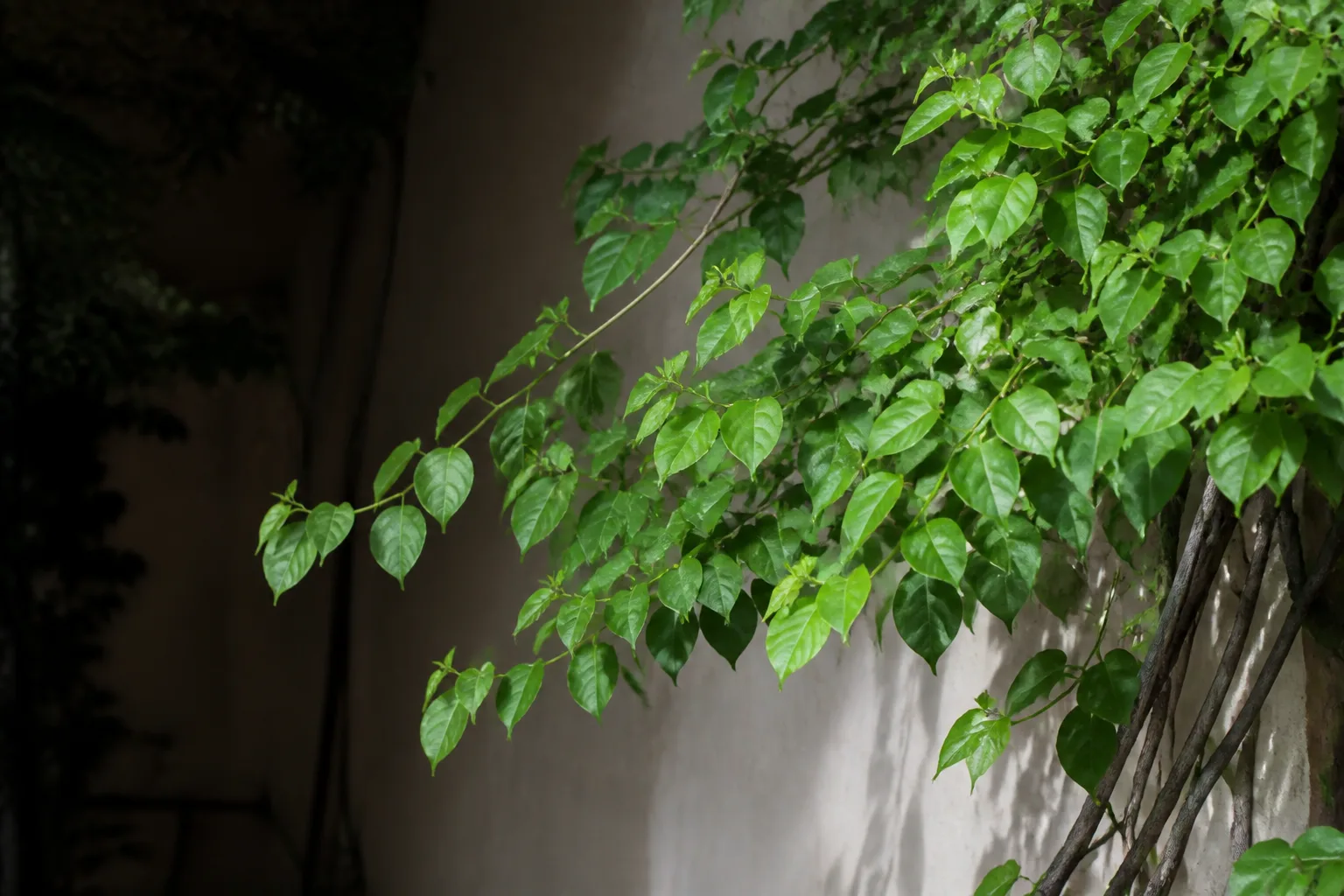
Yellow leaves, leaf drop, and wet roots. Yellowing with a heavy pot usually points to overwatering or poor drainage. Leaf drop can also follow cold snaps, deep shade, or the natural shed after a flowering period — new growth often follows if roots are sound. Do not confuse post-bloom leaf drop with chronic wet rot: check drainage holes, root color (firm white/tan vs brown mush), and whether irrigation or monsoon water keeps the mix saturated. See overwatering and yellow leaves when you need step-by-step recovery. Alkaline-soil chlorosis is a separate pattern: yellowing with greener veins on high-pH ground.
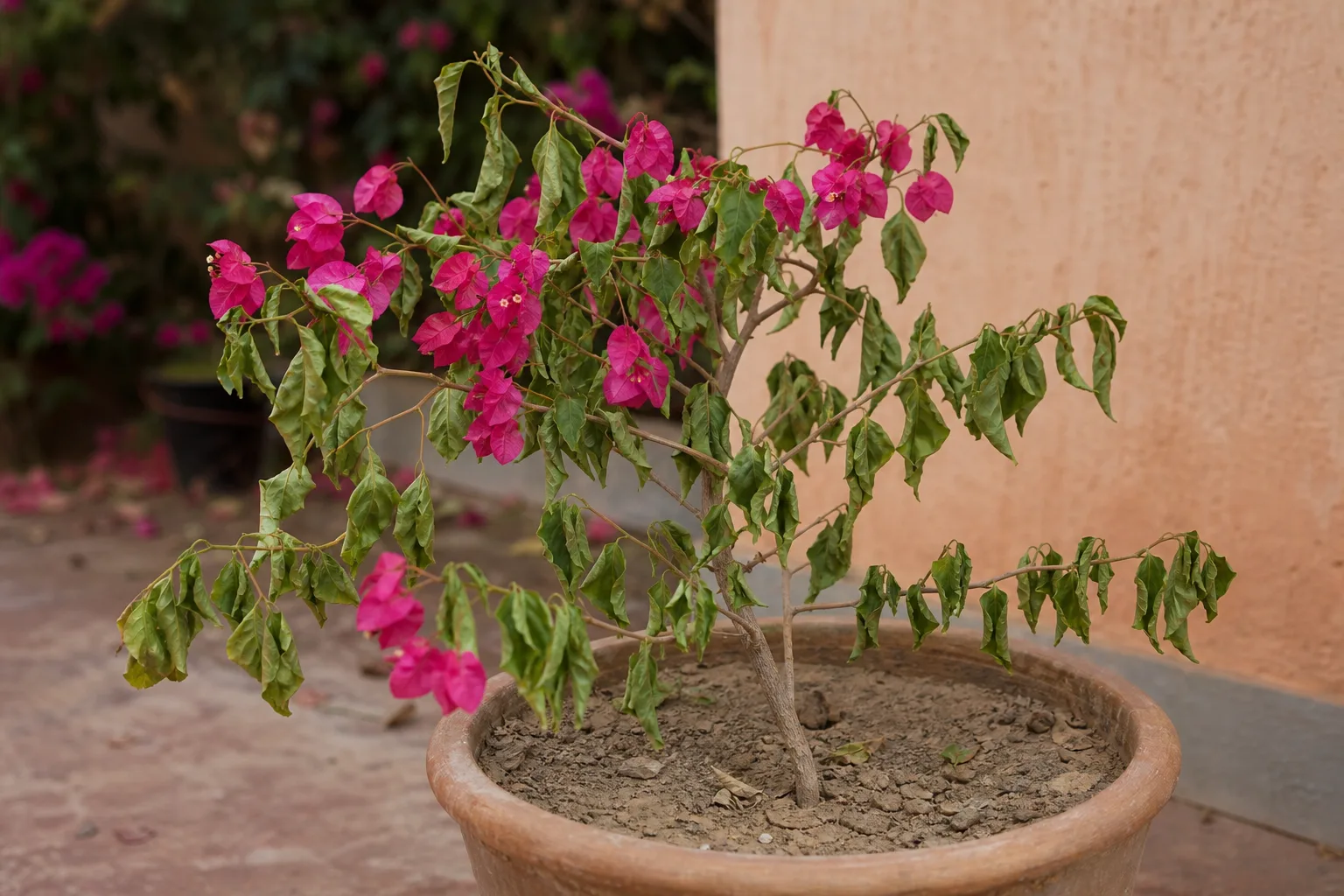
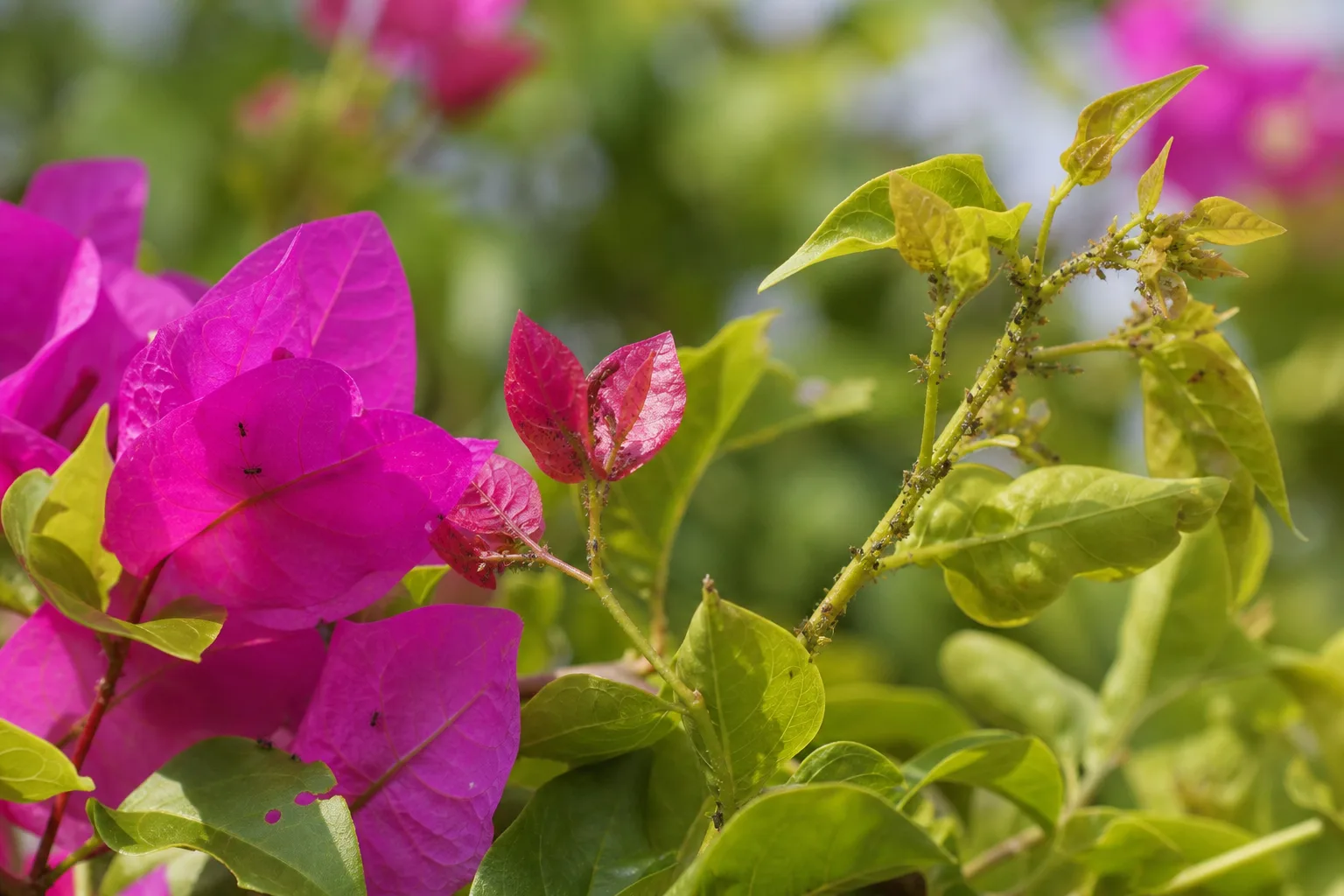
Aphids, mealybugs, spider mites, and scale. Expect soft-bodied pests in greenhouse or sheltered balcony conditions. Balcony triage: sticky new tips and ants under a partly shaded overhang often mean aphids; fine webbing and stippling on hot, dry west-rail foliage more often mean spider mites. Inspect leaf undersides and stem joints weekly during warm dry spells. Start with a strong water rinse, then insecticidal soap or neem as labeled; isolate badly infested pots. Use the plant problem pages for aphids, mealybugs, and spider mites when you need species-specific detail.
Thorns, Sap, and Pet Safety
Handle bougainvillea as a physical hazard first: thorns and sap can irritate skin, and pruning without gloves is how people learn respect for the plant. Keep vines out of narrow walkways where thorns catch arms and pets. Sensitive skin may react to sap — wash exposed skin after pruning.
On chemical toxicity, bougainvillea does not currently appear as a dedicated entry on the ASPCA toxic and non-toxic plants lists. The ASPCA still notes that eating any plant material may cause vomiting or gastrointestinal upset in some dogs and cats. Keep plants out of reach, and contact a veterinarian or ASPCA Animal Poison Control at (888) 426-4435 if a pet chews plant tissue or shows symptoms. Do not confuse physical thorn injury with systemic poisoning.
Related Guides
- Bougainvillea care hub — overview and topic index for this plant
- Bougainvillea watering — soak-and-dry cadence by season
- Bougainvillea light — full-sun placement for bracts
- Bougainvillea soil — drainage mixes for pots and ground
- Bougainvillea pruning — timing cuts on new wood
- Balcony plants for Indian summer — hot-rail companions and placement
- West-facing balcony plants (India) — placement for harsh afternoon sun
- Adenium care guide — another heat-loving balcony bloomer
- Portulaca care guide — low pots for the same full-sun rail
- Monsoon houseplant care (India) — wet-season drainage habits
Conclusion
First-week checklist after you bring home a green nursery bougainvillea:
- Count real direct-sun hours on the leaves — aim for six or more; move the pot before you change fertilizer.
- Confirm drainage holes, lift any cachepot saucer, and water only when the top 3–5 cm are dry.
- Harden off shade-grown stock over 7–14 days if the destination is hard afternoon sun.
- Choose pot size for the cultivar: dwarfs for railing troughs; vigorous climbers for walls with support.
- Wear gloves on day one — thorns are not optional equipment.
- During monsoon or multi-day rain, pause the hose and empty standing water daily.
- When basics are stable, use the bougainvillea hub for watering, soil, pruning, and problem deep-dives.