Best Balcony Plants for Indian Summers: Heat and Sun-Tolerant Picks
Find the best balcony plants for Indian summer heat — west vs east picks, pot sizes, watering tips, pet risks, and monsoon handoff advice.
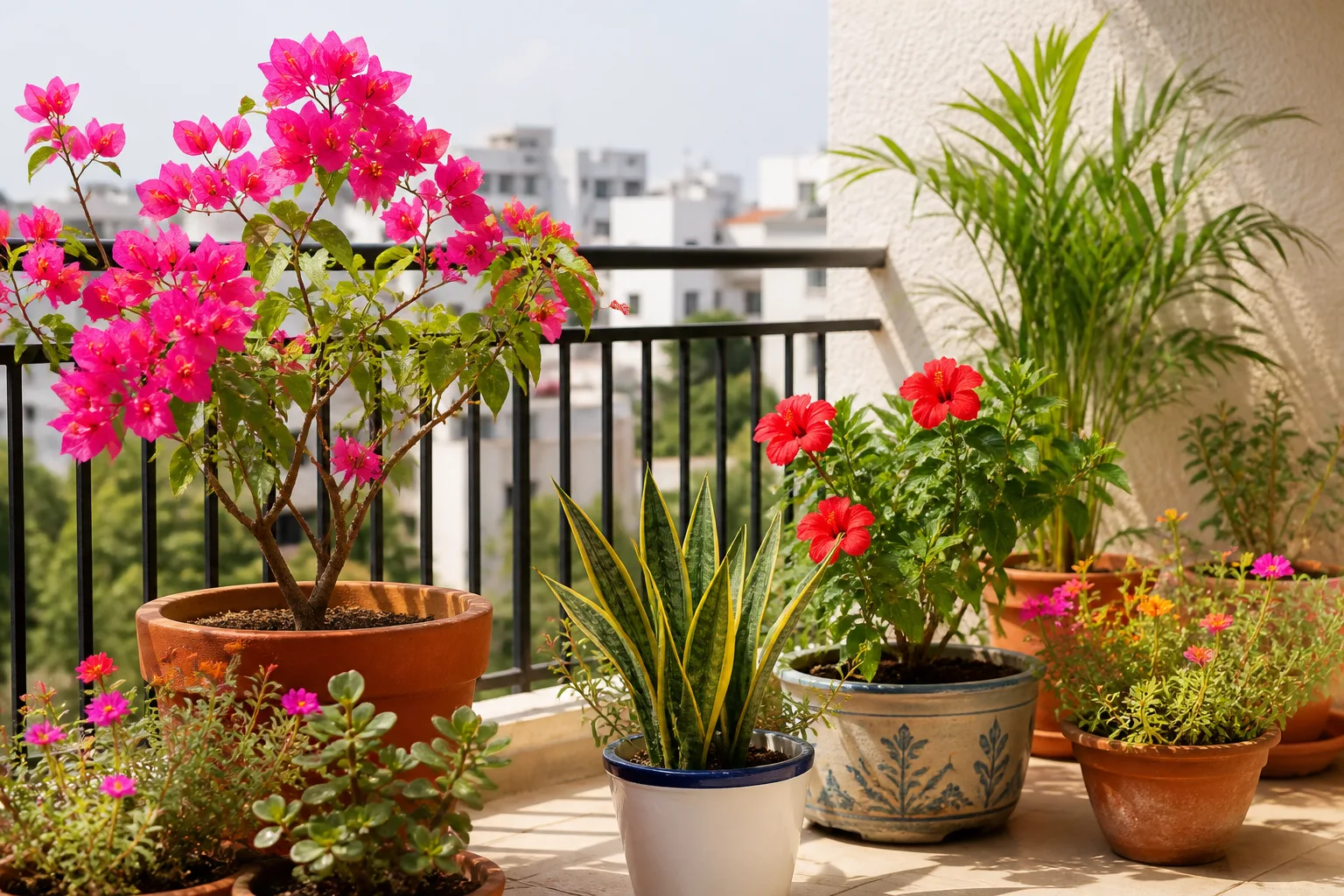
Indian summer on an apartment balcony is a different sport from a shaded living-room windowsill. Black floor tiles radiate heat, west walls cook after 2 p.m., plastic pots bake roots, and a nursery plant that looked fine can crisp in a week. If you want the best balcony plants for Indian summer, start with heat and sun tolerance — then honest watering, pet placement, and a monsoon switch.
This page is for Indian apartment and terrace gardeners in hot, dry pre-monsoon weather. It is a decision guide: west vs east, thirsty flowerer vs dry-tolerant succulent, pet risk, and what to change when humidity arrives. Species biology below cites extension and ASPCA sources. India balcony placement, watering intervals, shade-net choices, and city/region tips are editorial synthesis from Indian balcony growing practice — not claims that US fact sheets are Indian climate authorities.
What Indian Summer Does to Balcony Pots
On a balcony, heat hits from above and below. Containers dry faster than garden beds because roots have less soil volume and pot walls heat up. University of Georgia Extension notes that container plants still need light matched to the species — bright sun lovers and shade-tolerant foliage plants are not interchangeable. (UGA Extension) Clemson Extension stresses that watering should follow soil moisture, not a fixed calendar — in summer pots, that often means more frequent checks, not blind daily flooding. (Clemson HGIC)
Practical Indian-summer pattern (editorial):
- West-facing balconies get harsh afternoon sun and the highest leaf-scorch risk.
- East-facing balconies get gentler morning sun and suit more foliage plants.
- South-facing can work for sun lovers if wind and reflected heat are managed.
- North-facing / deeply shaded balconies need a different plant set than this heat-first list.
- Dry inland / northwest heat (Delhi–Rajasthan–Gujarat band): pots dry faster; plastic often holds moisture longer between waterings than terracotta.
- Humid coastal pre-monsoon (Mumbai–Chennai–Kolkata band): heat plus sticky air; fungal risk starts earlier — empty saucers aggressively even before rains.
Observed balcony notes (editorial, anonymized): On a west-facing mid-rise balcony with dark tiles, an 8-inch black plastic pot of portulaca often needed a midday moisture check on 40°C+ days, while a 14-inch terracotta hibiscus still dried by evening but held overnight moisture better. An east-facing shelf of snake plant and jade in medium terracotta typically waited 5–10 days between deep waterings in peak May heat when mornings were bright and afternoons shaded by the slab.
How These Plants Were Selected
Only plants from the LeafyPixels inventory with live /plants/ pages were considered. Selection criteria:
- Documented full-sun or high-heat tolerance from extension/botanical sources
- Realistic pot culture on apartment balconies
- Distinct summer role (flowering sun plant, dry-tolerant succulent, tough foliage)
- Clear India-summer caveat (water need, afternoon shade, monsoon risk, pet toxicity)
- Availability at typical Indian nurseries
Soft tropicals that demand cool, humid shade all day were left out even when popular indoors. Temperate frost-aware balcony lists live elsewhere — start with plants for balcony only if your constraint is mild sun or cool seasons, not Indian pre-monsoon heat.
Quick Comparison: Sun, Water Workload, Pot Size, Pet Risk
Pet households: confirm every species before floor-level placement. Many heat winners are not pet-safe.
| Plant | Best For | Sunlight | Water workload | Pot size | Pet risk | Difficulty |
|---|---|---|---|---|---|---|
| Bougainvillea | West sun color | Full sun | Moderate; dry slightly | Large | Thorns; keep out of reach | Medium |
| Adenium | Hot dry flowering | Full sun | Low | Medium | Toxic (ASPCA desert rose) | Medium |
| Portulaca | Small sunny pots | Full sun | Low | Small | Generally low concern; still keep pets from chewing | Easy |
| Crown of thorns | Dry sunny corners | Full sun | Low | Small–medium | Spines + toxic latex | Easy–medium |
| Hibiscus | Large flowers | Full sun–bright | High | Large | Not a pet-safe pick; confirm cultivar | Medium |
| Ixora | Compact flowering | Full sun / light PM shade | Medium–high | Medium–large | Keep away from chewers | Medium |
| Plumeria | Fragrance + height | Full sun | Low–moderate | Large | Sap irritation risk; elevate | Medium |
| Snake plant | East / filtered west | Bright; acclimate | Very low | Small–medium | Toxic to cats/dogs (ASPCA) | Easy |
| Jade plant | Dry sunny shelves | Bright / some sun | Low | Small–medium | Toxic (ASPCA) | Easy |
| Aloe vera | Useful + heat-tolerant | Full sun–partial shade | Low | Medium | Toxic if ingested (ASPCA) | Easy |
Start Here by Balcony Situation
- Brutal west rail, want color: bougainvillea + portulaca
- West rail, low water: adenium + crown of thorns
- East morning sun, low fuss foliage: snake plant + jade plant
- You can water daily in large pots: hibiscus or ixora
- Small railing troughs only: portulaca first; skip plumeria and full-size hibiscus
- Pets on the balcony floor: do not start with this heat shortlist — jump to Pet safety and safer heat alternatives
Full-Sun Heat Specialists
These four belong on the hottest, brightest edges. They fail when people treat them like rainforest houseplants — or when monsoon water sits in the pot.
1. Bougainvillea
Best for: West-facing balconies that need big color in hard afternoon sun
Sunlight: Full sun
Water: Thorough soak, then let the mix dry a little
Pot size: Large (12–18+ inch / 30–45+ cm) with sturdy railing support
Difficulty: Medium
If one plant defines a sun-baked Indian balcony, it is bougainvillea. NC State Extension describes it as tolerant of drought, heat, and salt, happiest in full sun with well-drained soil, and trainable in containers. (NC State Extension) UF/IFAS notes it performs better when soil is left a little dry — overwatering is a common bloom killer. (UF/IFAS Gardening Solutions)
Give it the sunniest rail, a heavy pot that will not tip in monsoon wind, and a simple support frame. Flowering (the colorful bracts) is strongest with high light. In peak May–June heat, water deeply when the top of the mix is dry, then drain fully — never leave the pot sitting in a saucer of hot water.
Indian home care tip (editorial): Use a large terracotta or thick plastic pot with multiple drainage holes; train stems along the railing so the root ball stays cooler than a skinny hanging pot.
Common mistake: Daily light sprinkles. Shallow watering keeps the surface wet and the deep roots dry, which stalls flowering.
Avoid if: Your balcony gets only morning shade, or thorns near kids/pets are a hard no.
Deeper care: Bougainvillea watering · Bougainvillea problems
2. Adenium (Desert Rose)
Best for: Hot, dry balconies where you want flowers without daily watering
Sunlight: Full sun
Water: Dry thoroughly between waterings
Pot size: Medium, wide and stable
Difficulty: Medium
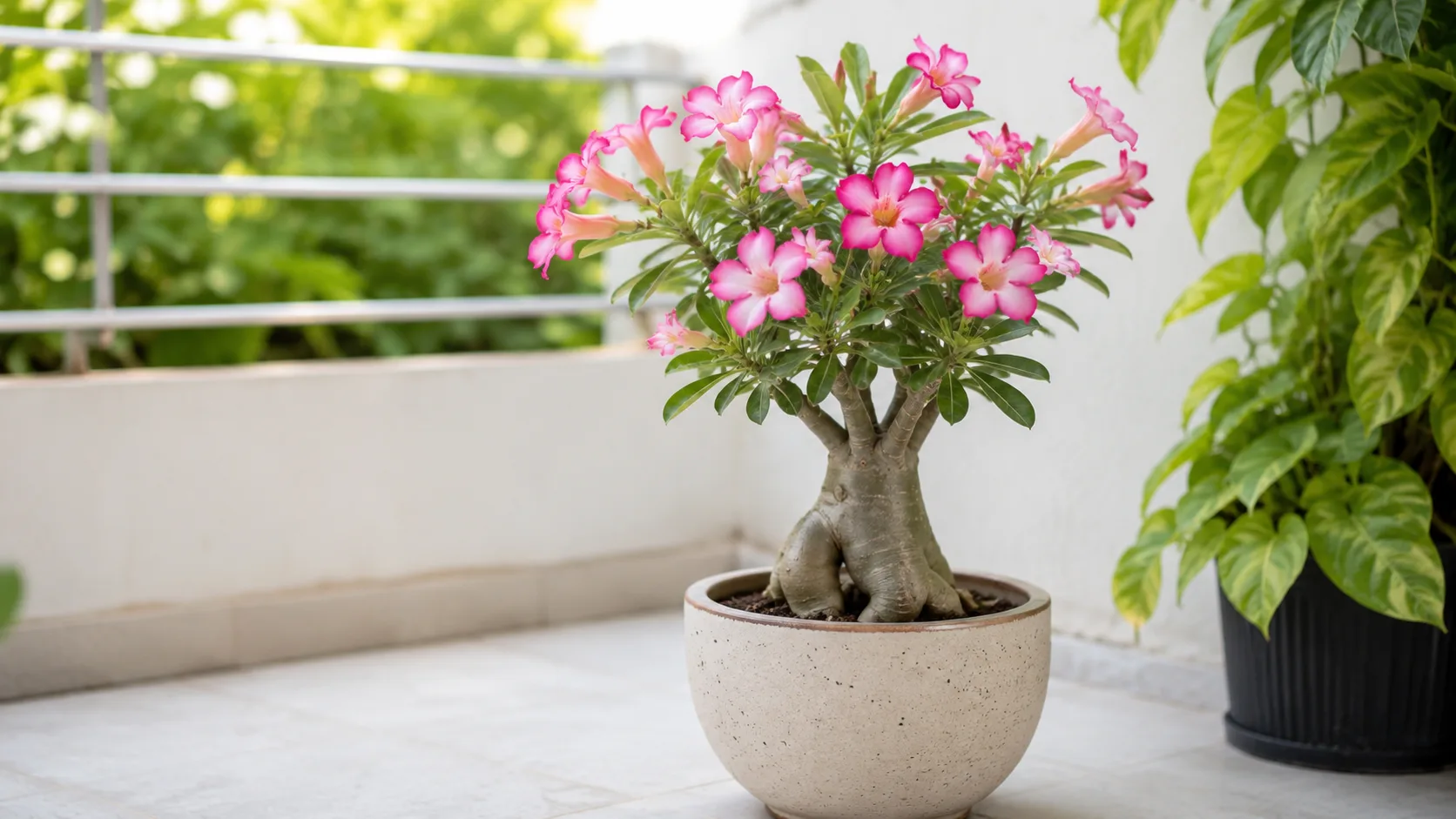
Adenium is built for heat. NC State recommends full sun, cactus/succulent potting mix, multiple drainage holes, and drying between waterings — it is quite drought tolerant and blooms in warm weather. (NC State Extension) ASPCA lists desert rose as toxic to dogs, cats, and horses (cardiac glycosides). (ASPCA)
Place it where it gets several hours of direct sun. On extreme west exposure, a light shade cloth during the hottest hour can prevent leaf scorch on softer new growth, but deep shade collapses flowering. Wear gloves when pruning; keep it away from pets and children.
Indian home care tip (editorial): Gritty mix (cactus mix + coarse sand/perlite). After soaking rain, empty saucers immediately — adenium rot starts in soggy pots, not dry ones.
Common mistake: Treating it like hibiscus and keeping the soil constantly moist.
Avoid if: Curious pets chew plants, or the ledge has no rain cover in monsoon.
Deeper care: Adenium watering · Adenium care guide
3. Portulaca (Moss Rose)
Best for: Small, blazing-hot pots, rail planters, and beginners who forget water
Sunlight: Full sun
Water: Low; sharp drainage essential
Pot size: Small to medium shallow pots
Difficulty: Easy
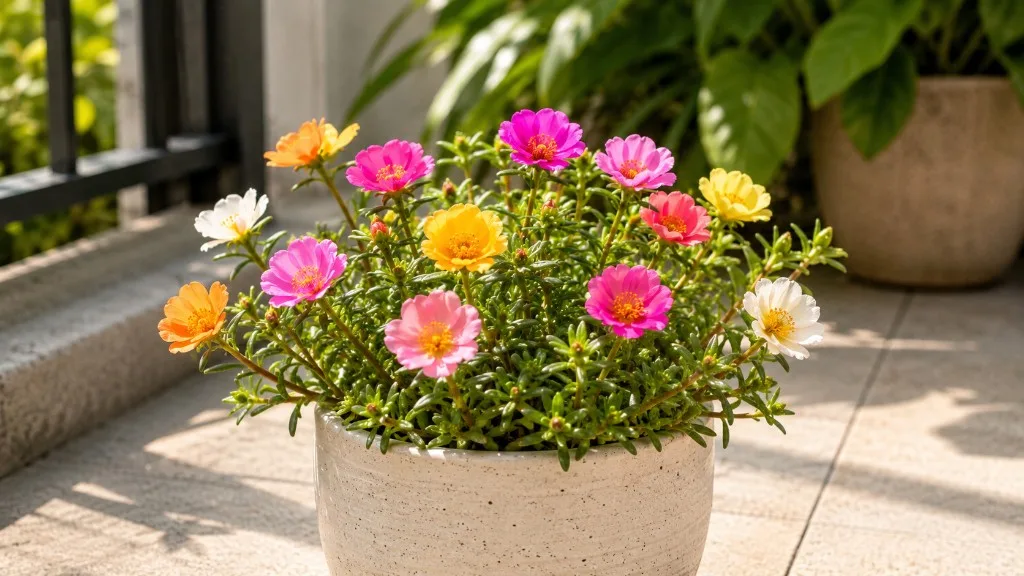
Portulaca is one of the most honest summer annuals for Indian balconies. NC State rates it high for drought and heat tolerance and recommends full sun in well-drained sandy or rocky soils — including pots and hanging planters. (NC State Extension) Flowers often open brightest in strong light and sulk in shade.
Use it where bougainvillea is too big: railing troughs, window boxes, and 6–8 inch pots. Poor drainage leads to crown rot. Treat most types as a summer color crop, not a forever shrub.
Indian home care tip (editorial): Morning water only if the mix is dry. In black plastic pots on west rails, check twice on 40°C+ days — small pots can dry out completely by evening.
Common mistake: Planting portulaca in a shady corner and blaming the plant when blooms stop.
Avoid if: You want a long-lived perennial shrub.
Deeper care: Portulaca light · Portulaca care guide
4. Crown of Thorns
Best for: Dry, sunny spots where you want flowers with low water
Sunlight: Full sun
Water: Low; dry between waterings
Pot size: Small to medium
Difficulty: Easy to medium
Crown of thorns (Euphorbia milii) is a tough flowering succulent for hot ledges. NC State tags it as full-sun tolerant, drought tolerant, and suitable for containers, with spines and toxic milky latex. (NC State Extension)
Use it where hibiscus would wilt: west rail corners and bright stair landings. Keep the mix gritty. Colorful bracts keep coming when light is strong and watering stays restrained.
Indian home care tip (editorial): Wear gloves for any pruning. Rinse sap off skin immediately; never get latex in eyes.
Common mistake: Soft, peat-heavy indoor mix that stays wet after one monsoon shower.
Avoid if: You need a pet-safe or child-safe balcony plant.
Deeper care: Crown of thorns soil · Crown of thorns watering
Thirsty Flowerers That Need Commitment
Sun-tolerant is not the same as drought-tolerant in pots. These three earn the summer show only if you accept the water bill — or light afternoon shade on extreme west walls.
5. Hibiscus
Best for: Large, showy flowers if you can water consistently
Sunlight: Full sun to bright light; light afternoon shade helps on extreme west heat
Water: Keep roots evenly moist
Pot size: Large
Difficulty: Medium
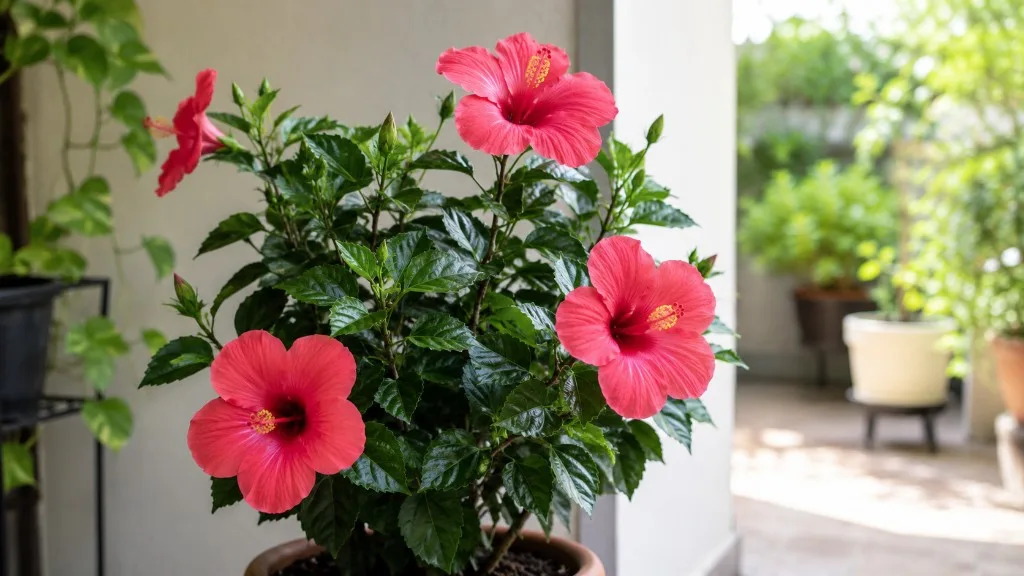
Hibiscus (Hibiscus rosa-sinensis) flowers hard in Indian summers — if moisture stays steady. NC State says plant in full sun to partial shade with rich, moist, well-drained soil; container plants need bright light and a large pot. (NC State Extension)
On a west balcony, a light shade cloth from roughly 1–4 p.m. often prevents flower and leaf scorch better than moving the plant indoors. Mulch the pot surface with coco chips or dry leaves to slow evaporation. Expect bud drop after sudden moves or watering swings.
Indian home care tip (editorial): Water early morning. In peak heat, a large pot may need daily deep watering; a small nursery pot almost always fails.
Common mistake: Buying hibiscus for a “low-water balcony.”
Avoid if: You travel often in May–June with no one to water.
Deeper care: Hibiscus watering · Hibiscus light
6. Ixora
Best for: Compact flowering shrubs for sunny balcony and terrace edges
Sunlight: Full sun; tolerates a little afternoon shade
Water: Moist, well-drained, slightly acidic mix
Pot size: Medium to large
Difficulty: Medium
Ixora adapts well to large pots. NC State notes Ixora coccinea prefers full sun in moist, well-drained, organically rich acidic soils and can tolerate small amounts of afternoon shade; it is commonly grown in containers in warm climates. (NC State Extension)
Ixora sits between hibiscus and bougainvillea in water need: more moisture than desert plants, less drama than a wilting hibiscus if you miss a day. In alkaline municipal water areas, occasional rainwater or acidifying organic matter often keeps foliage greener (editorial observation — confirm with your local water and leaf response). Watch for scale and mealybugs in humid spells.
Indian home care tip (editorial): Pair with morning sun and filtered west sun rather than reflected heat against a white west wall with no airflow.
Common mistake: Dense clay soil that stays soggy after watering.
Avoid if: The balcony is cool and deeply shaded all day.
Deeper care: Ixora soil · Ixora problems
7. Plumeria
Best for: Fragrant summer flowers and taller terrace presence
Sunlight: Full sun
Water: Water in active growth; allow drying between waterings
Pot size: Large and heavy
Difficulty: Medium
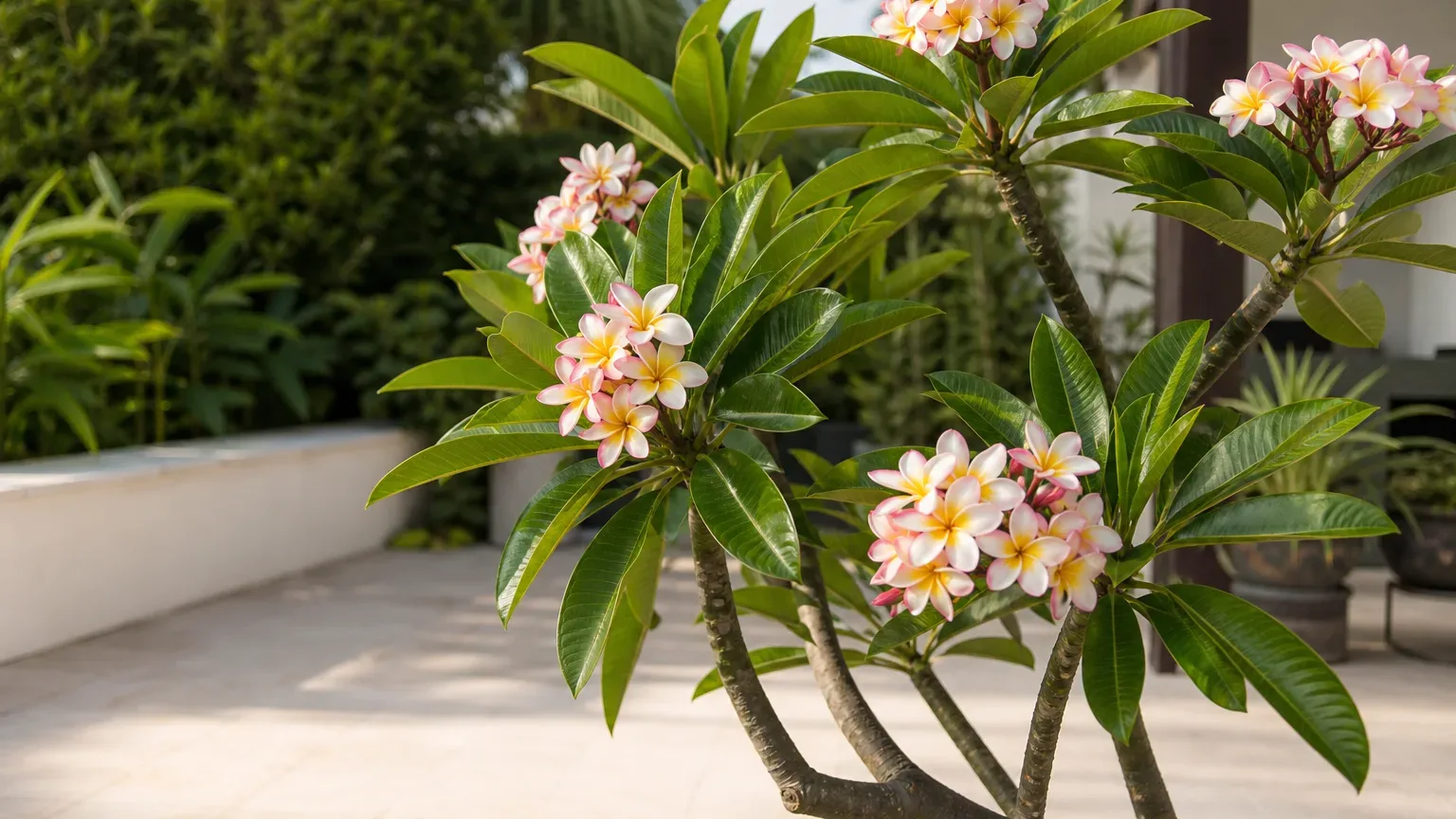
Plumeria loves warmth. NC State guidance for Plumeria rubra places it in full sun with well-drained conditions and container culture in cooler seasons — the warm-season growth habit fits Indian summers when light and heat are abundant. (NC State Extension) Fragrance is the payoff; the cost is space and a sturdy pot.
Give it the open, sunny corner of a terrace or wide balcony. Tip cuttings and mature plants both hate wet feet. In rainy weeks, tilt pots or elevate them so water drains. Stake young stems against monsoon wind on high floors.
Indian home care tip (editorial): Start with a well-rooted plant in a 12–16 inch pot; windbreaks matter more on 8th–15th floor ledges than on ground-floor courtyards.
Common mistake: Daily watering of a newly potted cutting — rot shows up before roots do.
Avoid if: Your balcony is narrow and heavily shaded by the upper floor slab.
Deeper care: Plumeria watering · Plumeria propagation
Heat-Tolerant Low-Water Foliage and Succulents
These are not west-rail flower bombs. They are the east-shelf and filtered-west survivors that keep structure when you cannot babysit bloomers.
8. Snake Plant
Best for: East balconies, bright filtered west spots, and low-water foliage
Sunlight: Bright light; acclimate before hard sun
Water: Very low — dry thoroughly between waterings
Pot size: Small to medium
Difficulty: Easy
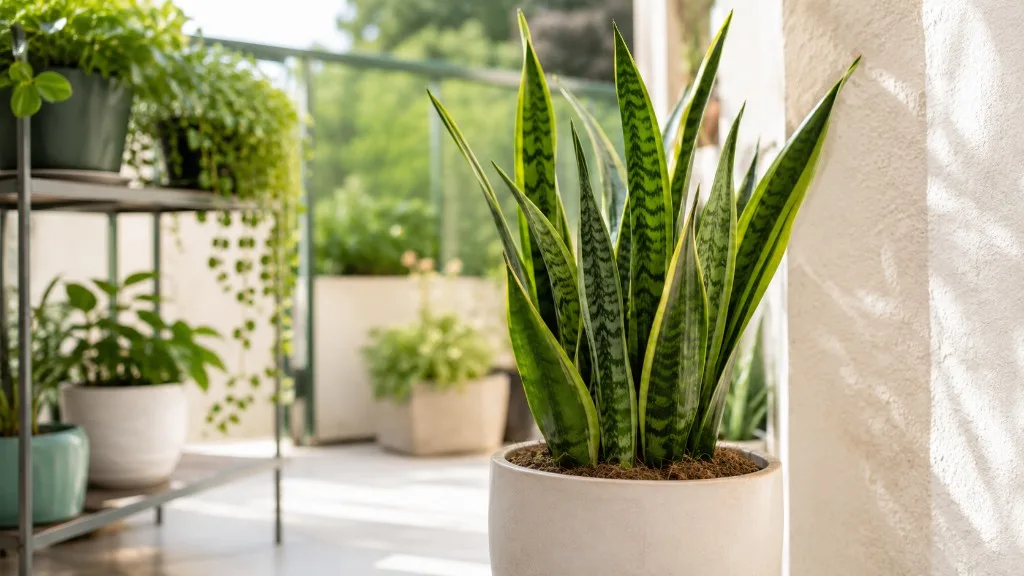
Snake plant is the heat-tolerant foliage workhorse, not a full-west sun flowerer. NC State lists it as an easy, low-maintenance container plant often grown in interiorscapes. (NC State Extension) ASPCA lists snake plant as toxic to dogs and cats if chewed. (ASPCA)
Place it in morning sun or behind a sheer curtain / shade net on west exposure. Sudden transfer from a dim shop to raw 3 p.m. sun causes bleached patches. Water deeply only when the mix is dry most of the way down.
Indian home care tip (editorial): Terracotta helps excess moisture escape in humid coastal cities; in very dry northwest summers, plastic holds moisture longer between waterings.
Common mistake: Assuming “low light plant” means it thrives in a dark stairwell with zero sky view.
Avoid if: You want flowers, or pets freely chew leaves.
Deeper care: Snake plant light · Snake plant toxicity
9. Jade Plant
Best for: Dry-tolerant structure on bright balconies and sunny shelves
Sunlight: Bright light to several hours of direct sun
Water: Low to moderate
Pot size: Small to medium; heavier pot as it ages
Difficulty: Easy
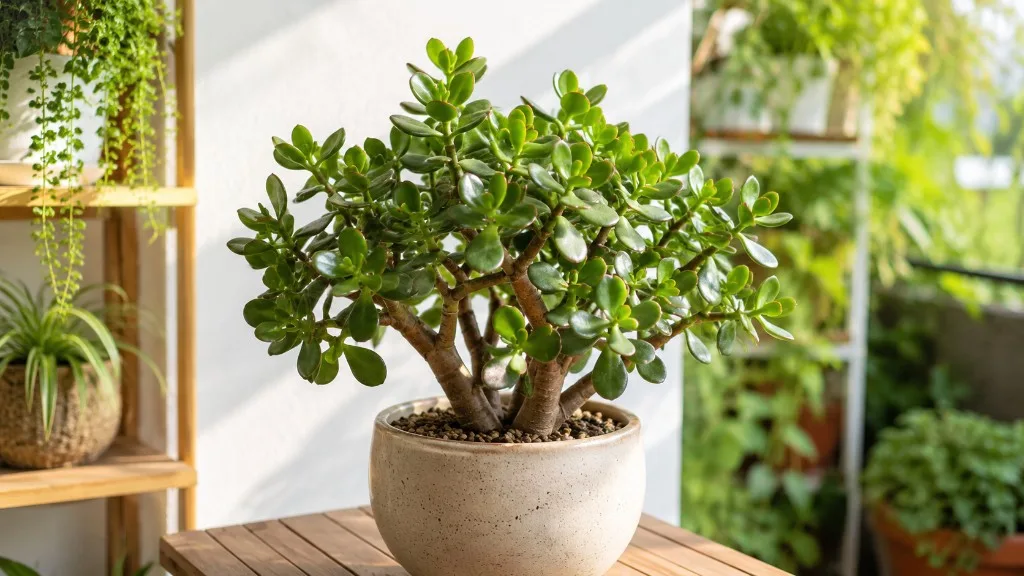
Jade plant (Crassula ovata) likes the warm, dry conditions many Indian homes already have. Clemson Extension says jades prefer full sun or bright filtered light and do best with four or more hours of direct sun; they need well-drained mix, and both overwatering and extreme drought cause problems. (Clemson HGIC) ASPCA lists jade as toxic to dogs, cats, and horses. (ASPCA)
East balconies and bright west spots with light afternoon shade are ideal. In monsoon, cut watering sharply and improve airflow — root rot is the main killer.
Indian home care tip (editorial): Use a cactus mix with extra grit. After repotting, wait to water until the mix dries.
Common mistake: Misting leaves daily “for humidity.”
Avoid if: The balcony stays wet and shaded through monsoon with no rain cover.
Deeper care: Jade plant watering · Jade plant care guide
10. Aloe Vera
Best for: Useful, heat-tolerant succulents in bright pots
Sunlight: Full sun to partial shade
Water: Allow soil to dry completely between waterings
Pot size: Medium; clay pots preferred
Difficulty: Easy
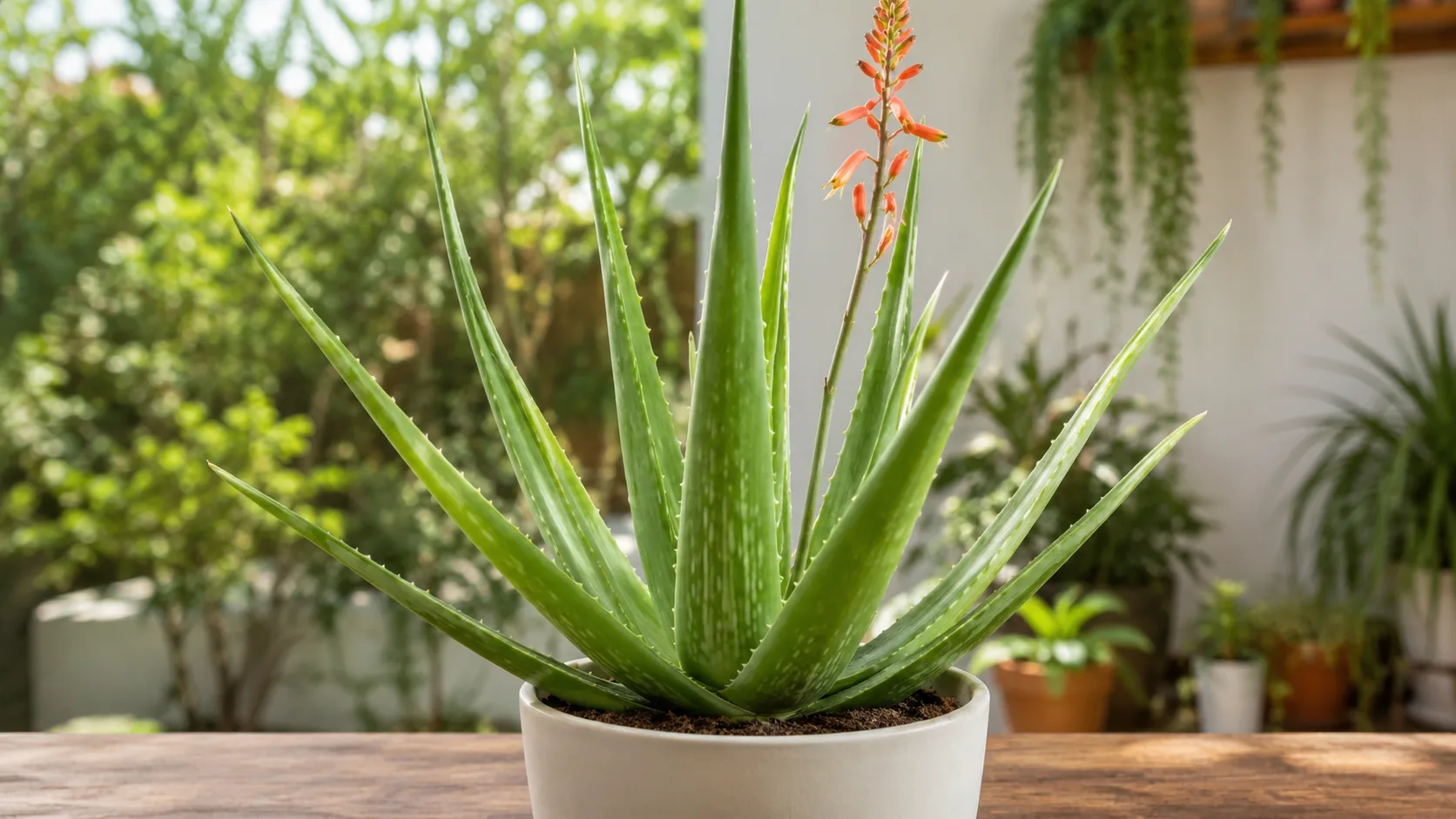
Aloe vera tolerates heat and dry cycles when drainage is excellent. NC State recommends full sun to partial shade, succulent mix, several drainage holes (clay pots best), and complete drying between waterings. (NC State Extension) ASPCA lists aloe as toxic to dogs, cats, and horses if ingested (do not assume pets can eat the plant). (ASPCA)
On west balconies, morning sun plus light afternoon shade keeps leaves from bleaching. Keep it out of monsoon puddles; elevate pots on feet so drainage holes never sit in a water-filled tray after storms.
Indian home care tip (editorial): Offsets fill a pot quickly in warm weather — separate pups before the pot becomes a soggy mass in rains.
Common mistake: Moisture-retentive indoor mix meant for peace lilies.
Avoid if: You need a pet-safe plant at floor level.
Deeper care: Aloe vera soil · Aloe vera watering
Kitchen herbs like tulsi and lemongrass can grow on Indian balconies, but in peak west sun they usually need afternoon shade and more consistent moisture than the desert plants above. See the lemongrass care guide for a culinary clump in a deep pot.
Heat and Sun Stress Prevention (and This Week’s Rescue)
Heat stress on balconies is usually radiant heat + dry roots + sudden light jumps.
- Acclimate new plants over 7–10 days — morning sun first, then longer exposure.
- Water deeply, then drain. Check moisture with a finger or stick; do not follow one daily schedule for every species. (Clemson HGIC)
- Use larger pots for hibiscus, bougainvillea, and plumeria; small pots overheat and dry too fast.
- Shade net: use about 30% when west light is strong but plants are already acclimated and you only need mild buffering; use about 50% during heat waves, for newly moved plants, or when tiles/walls reflect hard glare. Sun lovers still need strong light — the goal is less leaf fry, not deep shade.
- Mulch thirsty plants (hibiscus, ixora) to slow evaporation.
- Group pots so foliage sits behind taller sun plants.
- Never leave pots in hot standing water. Empty saucers; root rot risk rises when heat and wet soil combine. (UMN Extension — root rot overview)
If plants are frying this week (editorial rescue): move scorched pots to east or under the slab overhang for 3–5 days; water deeply once if the mix is bone dry mid-pot (not daily misting); snip only fully crispy tissue; add 30–50% shade net before returning to west sun; do not fertilize heat-stressed plants. For leaf-drop diagnosis, see plants dropping leaves in summer. For watering method fundamentals, see how to water indoor plants the right way.
Pot material trade-offs for hot ledges are covered in terracotta vs plastic pots.
Monsoon Handoff Checklist
Indian summer plant lists fail when they ignore the monsoon switch. When humidity rises and rains become frequent:
- Cut watering for adenium, jade, aloe, crown of thorns, snake plant, and portulaca.
- Improve drainage: elevate pots, clear blocked holes, tip containers after storms.
- Move desert plants under an overhang if your balcony is open to driving rain.
- Increase airflow around ixora and hibiscus to reduce fungal leaf spots.
- Pause heavy feeding during prolonged wet, cloudy stretches.
- Watch for fungus gnats and soft rot in constantly wet mixes — Penn State’s houseplant problem guidance is a useful diagnostic starting point when leaves yellow and soil stays wet. (Penn State Extension)
Keep the sun lovers — just stop treating them like it is still peak dry summer. For a fuller seasonal pass, use monsoon houseplant care in India and root rot in houseplants.
Pet Safety and Safer Heat Alternatives
Honest answer: most of the best west-sun heat plants on this page are poor floor-level choices for chewing pets. ASPCA lists snake plant, jade, and aloe as toxic if ingested; desert rose (adenium) is toxic; crown of thorns adds spines plus latex risk. Confirm every species before low placement.
Safer direction for a bright but not raw-west balcony zone (editorial shortlist using inventory + ASPCA):
- Spider plant — ASPCA lists it as non-toxic to cats and dogs; still keep it out of constant afternoon west glare and prefer hanging or east light. (ASPCA)
- Peperomia — better as a bright indoor/east balcony plant than a 3 p.m. west rail survivor; useful when pets share the space and heat is filtered.
- For a broader non-toxic indoor shortlist, see pet-safe houseplants.
If pets own the balcony floor, prioritize hanging planters, railing height, and species confirmation over “maximum heat color.”
Common Mistakes on Indian Summer Balconies
- Buying shade houseplants (calathea, ferns, peace lily) for unshaded west rails
- Using pots without drainage holes “to keep water longer”
- Watering every plant on the same daily schedule
- Moving nursery plants into full afternoon sun the first day home
- Leaving saucers full through heat waves and first monsoon storms
- Choosing hibiscus for a low-maintenance dry balcony
- Ignoring pet toxicity on floor-level succulents and euphorbias
- Skipping the monsoon handoff until roots are already rotting
Conclusion
For most Indian apartment balconies in summer, start with bougainvillea for west-sun color, portulaca for small hot pots, and snake plant or jade plant for low-water foliage on east or filtered light. Add hibiscus or ixora only if you can keep moisture steady. Use adenium, plumeria, crown of thorns, and aloe vera when you want heat-loving structure and flowers with a drier rhythm.
Match the plant to the balcony aspect first. Check pet risk before floor placement. Size the pot for heat, water to the species, and rewrite the care plan when monsoon arrives. That sequence keeps more plants alive than any generic “top balcony plants” list.
Related Guides
- Monsoon Houseplant Care in India — the seasonal switch this summer list assumes you will make
- Summer Plant Care and Indoor Humidity Tips — watering and humidity adjustments around heat waves
- Terracotta vs Plastic Pots — pot material choices when ledges bake
- Root Rot in Houseplants — what happens when monsoon moisture meets poor drainage
- Pet-Safe Houseplants — safer options if pets share the balcony
- Plants for Balcony — broader balcony shortlist beyond peak Indian summer heat
- Indoor Plants for India — when the “balcony” is really a low-light ledge or AC room



