Plumeria Watering Guide: Summer to Dormancy
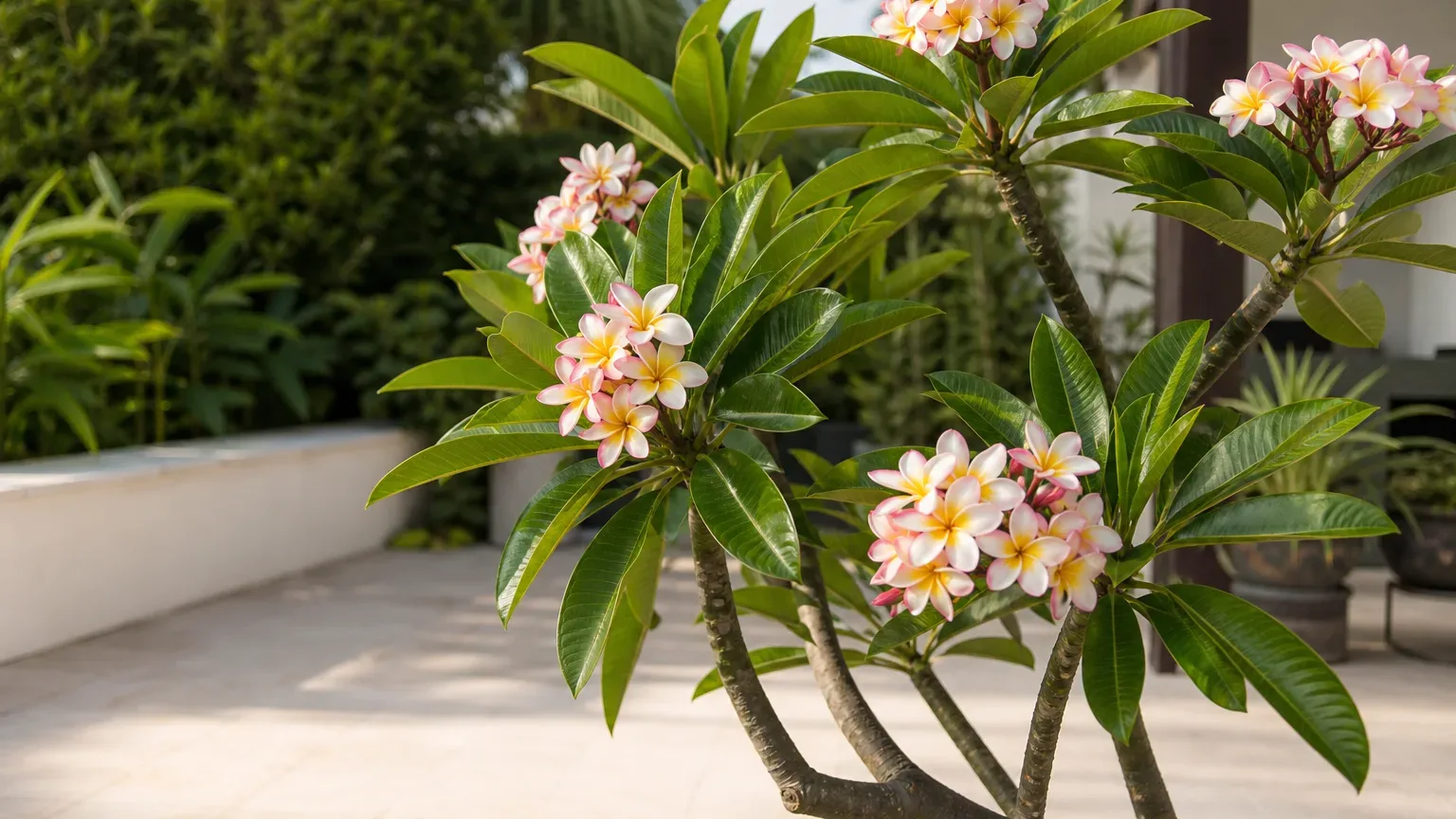
Plumeria Watering Guide: Summer to Dormancy
Plumeria Watering Guide: Summer to Dormancy
Plumeria does not want the same amount of water all year. Plumeria rubra is a seasonally deciduous tropical tree with thick, fleshy branches, and its demand changes sharply between warm leafy growth and a cool leafless rest. The Royal Horticultural Society describes it as deciduous with succulent branches and advises moderate water in growth but an almost dry winter.
That seasonal swing matters more than any calendar. In a sunny Indian terrace pot, a leafy Plumeria may use water quickly during hot, dry weather, then receive more than it can use once monsoon rain arrives. When winter leaf drop follows, repeatedly soaking the same pot can turn normal dormancy into root or stem rot.
Quick answer: When should you water Plumeria?
During active growth, water when the upper 5 cm (about 2 inches) of mix is dry and the pot feels much lighter than it did after the previous soak. Apply enough water to wet the whole root ball, let it flow freely from the drainage holes, and empty the saucer. Do not water again while the pot remains heavy or the mix feels cool and damp at that depth.
For a sunny container in hot, rain-free weather, that test may pass roughly every 5–10 days. It is only a starting range: a small terracotta pot can dry sooner, while a large plastic pot may take much longer. The RHS advises against routine weekly watering because weather, soil, establishment, and plant size all change demand.
After leaves yellow and fall, reduce water sharply. A cool, fully dormant Plumeria may need only a small protective drink every few weeks—or none for a period if the mix stays dry and the stems remain firm. New leaf growth, not a date on the calendar, is the signal to resume deeper watering.
Why Plumeria’s growth rhythm controls watering
The plant’s native biology explains the dry-down rule. Missouri Botanical Garden identifies P. rubra as a tree from dry, hot parts of tropical America, rates its water need “dry to medium,” and warns against wet soil. Its stout branches buffer short dry periods, but those reserves do not make an actively growing container plant independent of water.
When leaves are expanding, sunlight and warm air drive transpiration. Roots take up more moisture, and flowers and new shoots can stall if the root ball stays dry for too long. After leaf fall, that demand collapses: UF/IFAS notes that Plumerias commonly become dormant and lose their leaves in winter while their green stems can continue photosynthesizing.
This is why two popular rules—“Plumeria is drought tolerant” and “keep it watered in summer”—can both be true. Established landscape plants tolerate dry spells; actively growing pots still need complete drinks. The correct goal is moisture during use, drainage after watering, and a pronounced dry-down before the next drink.
Check the root zone before every drink
Do not judge only by the dusty surface. Sun and wind can dry the top centimetre while the lower half remains saturated, especially in a deep decorative pot. Missouri Botanical Garden’s drought guidance recommends a soil probe or hand trowel because surface dryness does not show what is happening near roots.
Use two of these checks until you learn the pot:
- Depth test: Push a finger or wooden skewer about 5 cm into the mix. Wait if it emerges damp, dark, or coated with wet particles.
- Weight test: Lift or gently tilt the pot after watering, then compare it several days later. A clear drop in weight shows that moisture has left the whole container, not just the surface.
- Drain-hole check: Feel the mix through a lower hole or use a dry skewer from below on large pots. Moisture at the base means the most rot-prone zone is not ready.
A meter can be a secondary clue, but coarse mixes and mineral particles can distort readings. If the meter says “dry” while the pot is heavy and the lower skewer is damp, trust the physical evidence and wait.
How to water a potted Plumeria thoroughly
Water in the morning when practical so excess moisture can drain before a cooler night. Pour slowly over several parts of the surface until runoff appears from every open drainage hole. Pause for a minute, water once more if the root ball was extremely dry, then allow the pot to drain completely.
This slow pass matters when old mix becomes hydrophobic and water rushes down a gap beside the pot. If runoff starts immediately but the root ball remains light, set the nursery pot in a shallow basin for 10–15 minutes, then remove it and drain it well. That is a one-time rewetting correction, not permission to leave Plumeria standing in water.
The RHS container guide recommends watering the growing medium rather than the foliage and emphasizes checking need rather than applying small frequent amounts. For Plumeria, small daily sips keep the stem base damp while failing to wet deeper roots. One complete soak followed by a real dry-down is safer and more effective.
Seasonal Plumeria watering in India and other tropical climates
India’s seasons do not map neatly onto a spring-to-autumn houseplant schedule. Watch the plant, rainfall, and overnight temperature together. A Plumeria in Chennai may remain leafy longer than one in Delhi; a pot under a roof behaves differently from one receiving every monsoon shower.
Hot-season and active-growth watering
From leaf-out through flowering, inspect the pot every few days rather than watering automatically. Strong sun, hot wind, a crowded root ball, and porous terracotta can make a container pass the 5 cm and weight tests within a week. Water deeply when it does, and recheck sooner during a heatwave.
Do not let a small pot remain bone-dry for repeated long stretches while covered in leaves. Missouri Botanical Garden’s species-specific care recommends even moisture with some drying between thorough summer waterings; excessive dryness can yellow foliage and trigger leaf loss. A single dry afternoon with temporary droop is less important than whether leaves recover in the cooler evening and whether the root ball is actually dry.
Monsoon watering and rain exposure
During monsoon, rainfall counts as watering. Stop scheduled irrigation and check whether the pot is becoming lighter between showers. If rain arrives daily, move a container under a bright roof edge or transparent cover where it retains full light but the mix can drain and breathe.
Never block drainage to “save” nutrients. Raise the pot on feet, remove saucers, and clear leaves or fine roots from the holes. If the mix stays wet for many days, shift the plant under cover first; do not repot a healthy plant in the middle of saturated weather unless poor drainage is creating an immediate rot risk.
In humid coastal regions, leaves may remain lush while roots sit wet, so foliage alone is a poor guide. Wind exposure, pot material, and the number of rain-free hours determine whether a container can reset between storms.
Cool-season and leafless dormancy
As nights cool and leaves yellow naturally, lengthen the interval and reduce the volume. Once the plant is leafless and resting in a cool dry place, keep the root ball nearly dry. RHS cultivation guidance specifically says to keep Plumeria almost dry in winter, and it notes rot risk in cold conditions.
Do not force a fully dormant plant onto a two-week schedule. Check stems instead: firm branches and a dry pot indicate a stable rest, while rapidly deepening wrinkles may justify a small drink around the outer root zone. If the plant remains warm, sunny, and actively leafy in a tropical climate, it is not fully dormant; continue moisture checks and water when the established threshold is reached.
Resume normal soaking gradually when tips swell and new leaves begin to unfold. The first small leaves use less water than a full summer canopy, so do not jump immediately to peak-season frequency.
Pot, mix, and drainage change the interval
A fast-draining mix does not mean water should vanish down channels without wetting roots. It means the medium takes up a useful drink, releases excess promptly, and regains air spaces as it dries. Plumeria performs well in a coarse blend containing potting mix plus mineral structure such as perlite, pumice, coarse sand, or fine gravel; see the Plumeria soil guide for mixing and pH details.
Terracotta loses water through its walls and suits growers who tend to water too often, but it may need closer hot-season checks. Plastic and glazed pots retain moisture longer. An oversized pot is riskier than either material because unused mix around a small root ball can remain wet after the plant has consumed what it can reach.
Every container needs unobstructed holes. Saturated media displaces air around roots; Missouri Botanical Garden explains how overwatering restricts root oxygen, producing wilting and yellowing that can be mistaken for drought. If a pot takes more than several minutes to stop dripping, inspect the holes and mix before shortening the next interval.
Watering Plumeria in the ground
Newly planted Plumeria needs more attentive watering than an established tree. Deeply wet the original root ball, then wait until the upper soil begins drying before watering again. Shallow sprinkles encourage a narrow surface root zone and leave the deeper planting hole uncertain.
Once established in fast-draining ground, P. rubra is fairly drought tolerant, as UF/IFAS confirms for landscape plants. In a normal rainy tropical season, supplemental water may be unnecessary. Water deeply during prolonged hot drought when early-morning leaves remain limp, but first check below mulch and confirm the soil is dry.
Avoid low sites where rain pools around the trunk. Keep mulch a few centimetres away from the stem base, and redirect roof runoff that repeatedly floods the root zone.
Signs of overwatering and root trouble
Overwatering is a pattern, not one generous soak. The strongest warning is a combination of wet mix and declining tissue: yellow leaves while the pot stays heavy, wilting despite damp soil, a sour smell, a soft dark stem base, or roots that are brown and mushy rather than firm. Missouri Botanical Garden records that root rot can occur in overly moist soil.
A wrinkled stem does not automatically mean “add water.” When roots rot, they cannot supply the branches even though the medium is saturated, so the top can look dehydrated. If the stem wrinkles while the mix is wet, stop watering, move the pot out of rain, and inspect the roots and stem base.
If the plant is otherwise firm and the mix is merely taking too long to dry, increase airflow and wait. If roots are foul or collapsing, remove dead tissue with clean tools and use fresh, sharply draining medium; the Plumeria repotting guide covers the container change. Severe rot that has softened the main stem cannot be corrected by changing the schedule alone.
Signs of underwatering during active growth
During warm leafy growth, genuine drought usually comes with a light pot and dry mix at depth. Leaves become limp, edges may turn crisp, lower leaves can yellow and drop early, and fleshy branches may develop shallow wrinkles. These signs should improve after a thorough soak if roots are healthy.
Rehydrate a dry container slowly. If the first water races through, use the brief basin method once, drain completely, and return to depth-and-weight checks. Do not compensate with several days of small drinks.
Leaf drop in a cool season is not enough to diagnose underwatering. First compare the plant’s growth stage with the Plumeria overview and confirm whether stems are firm. Normal dormancy calls for restraint, not emergency soaking.
Troubleshooting unusual watering situations
The nursery mix stays wet for a week: Keep the plant in strong appropriate light, remove any outer cachepot, and let it drain. If the same pattern repeats in warm active growth, plan a move to a coarser mix rather than watering by the surface.
The pot dries in one or two days: Confirm water is wetting the centre instead of escaping around a shrunken root ball. If roots tightly fill the pot, use the Plumeria repotting guide; if not, shelter the container from desiccating wind and check whether the mix contains too little water-holding material.
The plant was just repotted: If fresh mix was already evenly moist, wait for the usual depth and weight signals. If it was dry, one careful settling soak is reasonable, followed by full drainage. Do not keep disturbed roots continuously damp.
You are rooting a cutting: This page covers established plants. Fresh Plumeria cuttings need a callused base and much less water before roots form; follow the Plumeria propagation guide rather than using the established-plant soak cycle.
Tap water leaves white crust: Mineral residue is secondary to frequency and drainage. Use rainwater or filtered water if convenient, and occasionally apply enough water to carry dissolved salts through the holes during active growth. Do not flush a cold dormant pot.
When to use this page vs other Plumeria guides
- Use the Plumeria overview when leaf drop, placement, or general health makes the watering diagnosis unclear.
- Use the Plumeria light guide when the mix dries slowly because the plant receives too little direct sun.
- Use the Plumeria soil guide when water pools, channels down the edge, or remains in the root zone too long.
- Use the Plumeria repotting guide when a crowded, oversized, or poorly drained container is driving the interval.
- Use the Plumeria propagation guide for unrooted cuttings, which cannot follow an established plant’s watering routine.
Related Plumeria guides
- Plumeria care overview — seasonal growth, sun, soil, feeding, and handling in one place
- Plumeria light requirements — direct-sun needs and acclimation
- Plumeria soil guide — a coarse mix that holds a drink without staying saturated
- Plumeria fertilizer guide — feeding only while roots and shoots are active
- Plumeria repotting guide — timing, pot size, and post-repot watering
- Plumeria propagation guide — callusing and moisture control for cuttings
Conclusion
Successful Plumeria watering follows the plant’s growth, not a fixed weekday. During warm leafy growth, check about 5 cm into the mix and use pot weight to confirm drying, then soak the entire root ball and let every drop of excess escape. In hot dry weather that may mean a drink every 5–10 days; monsoon rain, a large plastic pot, or weaker light can stretch the interval substantially.
Reduce water as leaves yellow, keep a cool dormant plant nearly dry, and resume deeper watering only as new growth returns. When symptoms conflict, check the root zone before acting: dry soil plus a light pot points toward thirst, while wilt or wrinkles over wet soil point toward root trouble. That single pause prevents the most damaging Plumeria watering mistake—adding more water to a plant that can no longer use it.