Plumeria Fertilizer: When, What, and How Much
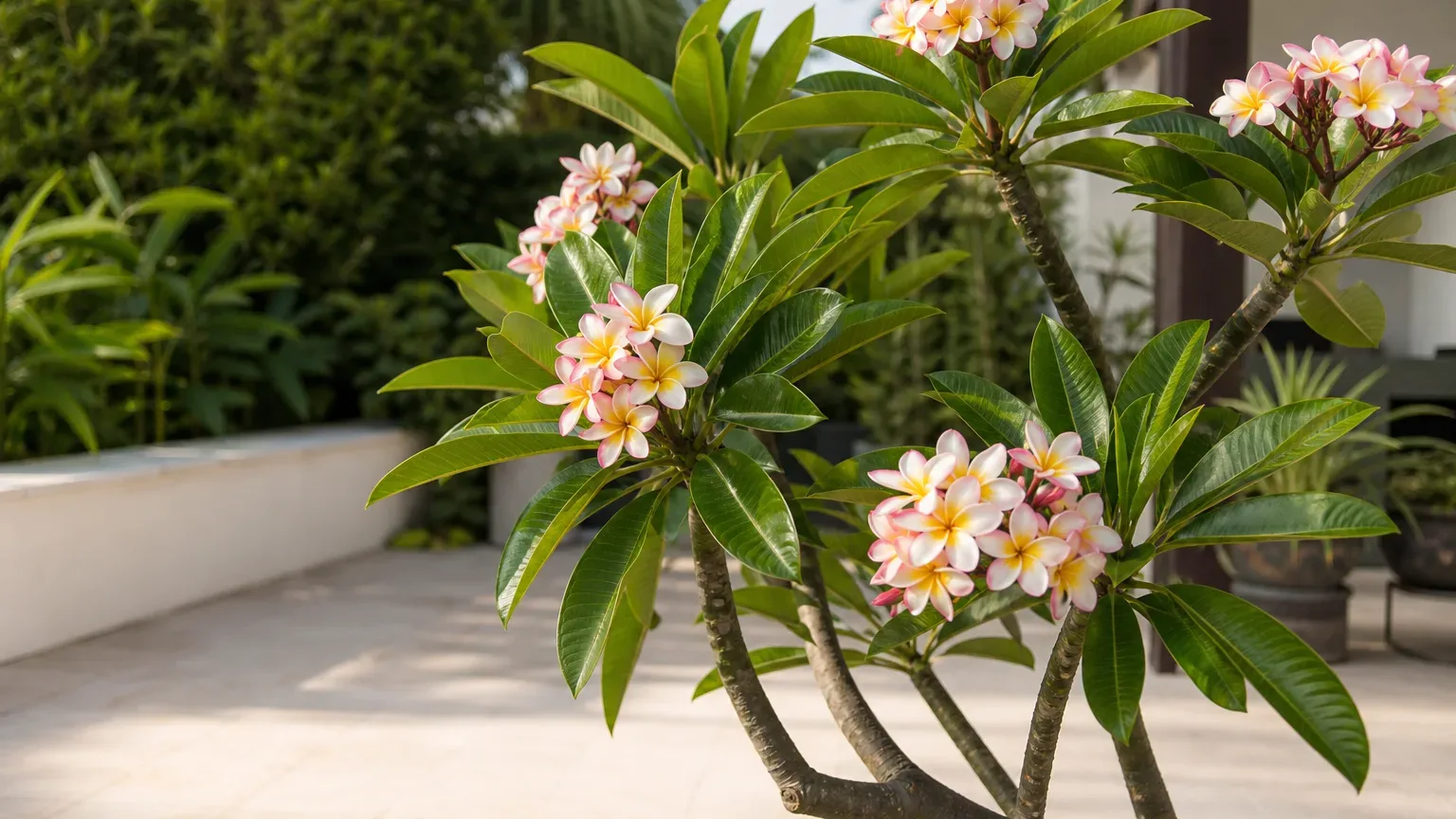
Plumeria Fertilizer: When, What, and How Much
Plumeria Fertilizer: When, What, and How Much
Fertilize Plumeria rubra only when it is actively growing in strong light. For most container plants, a complete, balanced liquid fertilizer mixed at half the label rate every three to four weeks from established spring leaf-out through late summer is a cautious starting point. Stop as growth slows and leaves begin to yellow; a leafless dormant Plumeria should not be fed.
That schedule is intentionally modest. Plumeria is a sun-loving, seasonally deciduous tropical tree, not a plant that needs fertilizer every time it is watered. UF/IFAS describes winter leaf loss and dormancy as normal, while active plants grow vigorously in full sun and well-drained soil. Fertilizer can support that growth, but it cannot replace direct sun, healthy roots, or the correct Plumeria watering routine.
The quick answer
Choose a water-soluble or controlled-release product with nitrogen, phosphorus, potassium, and micronutrients. A balanced analysis such as 10-10-10, 12-12-12, or 20-20-20 is easy to use, but the exact numbers matter less than applying an appropriate diluted dose. The three numbers show the percentages of nitrogen, phosphate, and potash by weight; UF/IFAS explains how to read this guaranteed analysis rather than treating an NPK ratio as a plant-specific prescription.
Feed a healthy potted Plumeria on moist mix, let runoff leave through the drainage holes, and do not leave the pot standing in it. Skip fertilizer when the plant is dormant, newly repotted, unrooted, drought-stressed, waterlogged, or showing a soft stem. If you are unsure whether poor growth comes from nutrition, check Plumeria light needs and roots before increasing the dose.
Why Plumeria feeding must follow growth
Plumeria makes most of its leaves, branch extension, and flower clusters during warm, bright months. Nutrient demand rises with this active growth and falls sharply when cooler conditions or shorter days trigger leaf drop. Clemson Extension’s nutrient-management guidance recommends applying fertilizer when plants are actively growing and able to take it up; that principle fits Plumeria’s pronounced seasonal cycle.
Roots also need air and an appropriate moisture supply to use dissolved nutrients. Fertilizing a cold, saturated root ball adds salts without correcting the lack of oxygen, while feeding a bone-dry pot exposes roots to a concentrated solution. Keep the coarse root zone described in the Plumeria soil guide, and treat fertilizer as the final adjustment after sun, drainage, and watering are stable.
When to fertilize Plumeria
Use visible growth rather than a fixed date. Begin when several leaves have opened and the pot has resumed a predictable wet-to-dry cycle. Continue while branch tips are extending and fresh leaves are expanding, then taper when growth stalls or older leaves yellow naturally.
In much of India, that may mean feeding from February or March in warm southern and coastal areas, or from March or April where winter is cooler. A plant protected indoors may wake later than one on a sunny terrace. Calendar dates are clues; active leaves and roots are the decision.
Start after spring leaf-out
Do not fertilize the first swelling bud on a bare stem. Wait until the plant has opened several leaves, is receiving strong sun, and is using water normally. Give the first application at quarter to half the label rate, especially if the potting mix already contains fertilizer.
A recently purchased plant may carry controlled-release granules from the nursery. Look for small, uniform pellets on or in the mix and check the label or ask the grower before adding liquid feed. Stacking products makes the actual dose impossible to judge.
Adjust through summer and the rainy season
During hot, sunny growth, feed at half the liquid label rate every three to four weeks, or follow one controlled-release product exactly as its label directs. Do not combine both routines. Oklahoma State Extension notes that fertilizer frequency varies with season, light, temperature, species, and potting medium, which is why a shaded plant should not copy the schedule of a fast-growing terrace specimen.
In monsoon climates, protect a potted Plumeria from repeated heavy rain before feeding. A saturated pot does not need more solution, and nutrients applied before a downpour can wash away. Resume only after drainage is normal and the plant is again drying between waterings.
Stop for winter dormancy
Stop feeding as new growth slows and leaves begin their seasonal decline. If the plant becomes leafless, withhold fertilizer until spring growth is established. Green, firm stems are compatible with normal dormancy; fertilizer will not force a safe shortcut back to flowering.
Warm southern gardens may retain some foliage through winter. Even then, reduce or pause feeding if the plant is no longer extending shoots. Continue a very light schedule only where warmth, direct sun, and visible growth genuinely persist.
Best fertilizer for Plumeria
The safest default is a complete balanced fertilizer that supplies the three primary nutrients plus micronutrients. Water-soluble products give container growers precise control and are easy to stop when dormancy approaches. Controlled-release products suit large outdoor pots or landscape beds when their release period matches the warm growing season.
Choose from the guaranteed analysis, not a flower photo on the package. Clemson’s guide to choosing a fertilizer emphasizes matching nutrients to need, while its fertilizer-label guide explains that the label also carries directions and safety information. A product marketed for “blooms” is not automatically better for Plumeria.
Balanced NPK versus bloom boosters
Nitrogen supports leafy and shoot growth, phosphorus participates in energy transfer and rooting, and potassium supports many plant processes. All are necessary, but a very high middle number does not guarantee more flowers. Plumeria flowering also depends on maturity, cultivar, direct sun, warm conditions, and healthy branch tips.
Use a balanced formula unless a soil or media test identifies a specific shortage. This avoids adding phosphorus simply because the plant has not flowered. If a mature Plumeria grows long, thin shoots or fails to bloom, improve sun first; the Plumeria overview explains why this tree is poorly suited to dim indoor rooms.
Liquid, controlled-release, and organic options
Liquid fertilizer is the easiest option for a small collection because you can dilute it, apply it to moist mix, and stop immediately when weather changes. Controlled-release granules can work well in outdoor containers, but warm conditions may release nutrients faster; use only the labeled amount for the pot size. UF/IFAS distinguishes water-soluble and controlled-release fertilizers by how quickly nutrients become available.
Organic products can feed Plumeria, but “organic” does not mean salt-free, odor-free, or impossible to overapply. Compost should be a modest part of a fast-draining mix rather than a thick, wet top layer. Fish-based liquids and similar products are optional; use the label rate conservatively and keep stored concentrate and runoff away from children and pets.
How much and how often
For a rooted container plant in active growth, start with half the label rate every three to four weeks. Use quarter strength if the plant has recently resumed growth, receives less than full outdoor sun, or has shown salt sensitivity. Never convert “half strength” into a universal spoon measurement because products have different concentrations; calculate from that product’s houseplant or ornamental rate.
A slow-growing plant may need only two or three applications in the whole season. A vigorous specimen in a coarse mix that is watered frequently may use more, but increase only one variable at a time: either shorten the interval or raise the concentration, not both. Clemson Extension advises following the label and applying the right amount at the right time.
How to apply fertilizer safely
First confirm that the plant is leafy, actively growing, and free of obvious root or stem rot. Check that the mix is lightly moist rather than dusty dry or saturated. Mix the fertilizer accurately in a separate watering can, apply it evenly across the root zone, and let excess solution drain completely.
Do not pour concentrate against the trunk, sprinkle an unmeasured handful into the pot, or compensate for a missed application with a double dose. Record the date and product so another household member does not feed again. Every few waterings, use plain low-salt water and allow generous drainage to reduce residue in the container.
Containers versus plants in the ground
Container Plumeria needs closer dose control because salts remain within a small root volume. Pots with free drainage can be leached; pots without holes cannot. UF/IFAS warns that excess fertilizer in container media can cause salt buildup, stunting, and leaf browning, so drainage is part of the feeding plan.
Landscape Plumeria may need little or no routine fertilizer where growth and flowering are already strong. Before feeding an established tree, look at shoot growth and consider a soil test. Clemson’s woody-plant guidance recommends basing fertilizer decisions on observed need and soil testing rather than automatic annual applications.
Signs Plumeria may need nutrients
Possible nutrient shortage shows as persistently pale new foliage, progressively smaller leaves, or weak growth despite strong sun, warm roots, correct watering, and no root crowding. The pattern matters: uniform pallor differs from yellow leaves on wet soil, rust spotting, mite damage, or natural lower-leaf aging. Review the whole plant before feeding.
If the roots fill the pot or the mix has collapsed, fertilizer is not the complete fix. Follow the Plumeria repotting guide at the appropriate season, then let disturbed roots recover before resuming feed. When a deficiency remains plausible, make one half-strength application and judge new growth over the next few weeks instead of repeatedly dosing old damaged leaves.
Signs of excess and how to recover
Suspect excess fertilizer when brown leaf tips or margins appear soon after feeding, a white crust forms on the mix or pot rim, growth stalls despite moist soil, or roots decline. These symptoms overlap with drought, root rot, and hard-water deposits, so timing and fertilizer history are important. Oklahoma State Extension connects excess fertilizer salts with root burn and recommends leaching the potting medium when marginal burn follows fertilizing.
Stop feeding immediately. If the pot drains and the roots are not rotten, run plain water slowly through the mix, let it drain, and repeat once; never leave the pot in runoff. Resume the normal dry-down and wait for healthy new growth before considering another, weaker application. If the stem base is soft or the mix smells sour, investigate roots rather than repeatedly flushing a waterlogged plant.
Common Plumeria fertilizer mistakes
The most damaging mistake is trying to buy flowers with a stronger product. High-phosphorus bloom fertilizer cannot correct shade, an immature branch structure, dormant buds, or damaged roots. Another common error is feeding a cutting before it has rooted; new roots are more useful than nutrient-rich wet mix, so use the Plumeria propagation guide for the correct establishment sequence.
Other avoidable mistakes include feeding dry roots, applying liquid fertilizer on top of active controlled-release granules, continuing through leafless dormancy, fertilizing immediately after repotting, and adding more because leaves yellow in saturated soil. Keep fertilizer off paving and out of drains; Clemson notes that unused nitrogen and phosphorus can move into groundwater and surface water through leaching and runoff.
When to use this page vs other Plumeria guides
Use this page to choose a fertilizer, set a seasonal feeding schedule, and respond to salt buildup. Start with the Plumeria care overview if you need whole-plant context. Use the light guide when growth is thin or flowering is poor, the watering guide when leaves yellow in wet mix, and the soil guide when drainage or root-zone structure is the concern.
For a crowded or unstable pot, move to the repotting guide. For cuttings, use the propagation guide and do not apply this mature-plant schedule to unrooted wood. Fertilizer should support a working care system, not disguise a failure elsewhere in it.
Related Plumeria guides
- Plumeria overview — identity, seasonal growth, and complete care priorities
- Plumeria light guide — direct-sun needs and flowering limits
- Plumeria watering guide — active-season watering and dry winter rest
- Plumeria soil guide — coarse mixes, drainage, and root-zone health
- Plumeria repotting guide — timing, pot size, and post-repot recovery
- Plumeria propagation guide — rooting cuttings without premature feeding
- Plumeria pruning guide — shaping branches and handling irritating sap
Conclusion
The best Plumeria fertilizer routine is seasonal and restrained: feed a healthy, well-lit, rooted plant during active growth, use a complete product at a measured reduced rate, and stop as dormancy begins. For most pots, half the liquid label rate every three to four weeks is a practical starting point, not a rule that overrides the plant’s response.
Do not chase flowers with phosphorus or feed through root stress. Strong sun, fast drainage, correct watering, and mature branch tips set the conditions for growth and bloom; fertilizer only supports them. If the plant already grows and flowers well, the right adjustment may be no extra fertilizer at all.