Root Rot on Plumeria: Causes, Checks and Fixes
Quick answer
Root rot on Plumeria usually starts when a coarse fast-draining mix stays wet around thick fleshy roots, then climbs the stem as soft black tissue. First step: stop watering today, squeeze the lower stem, and unpot to inspect the roots before trimming anything.
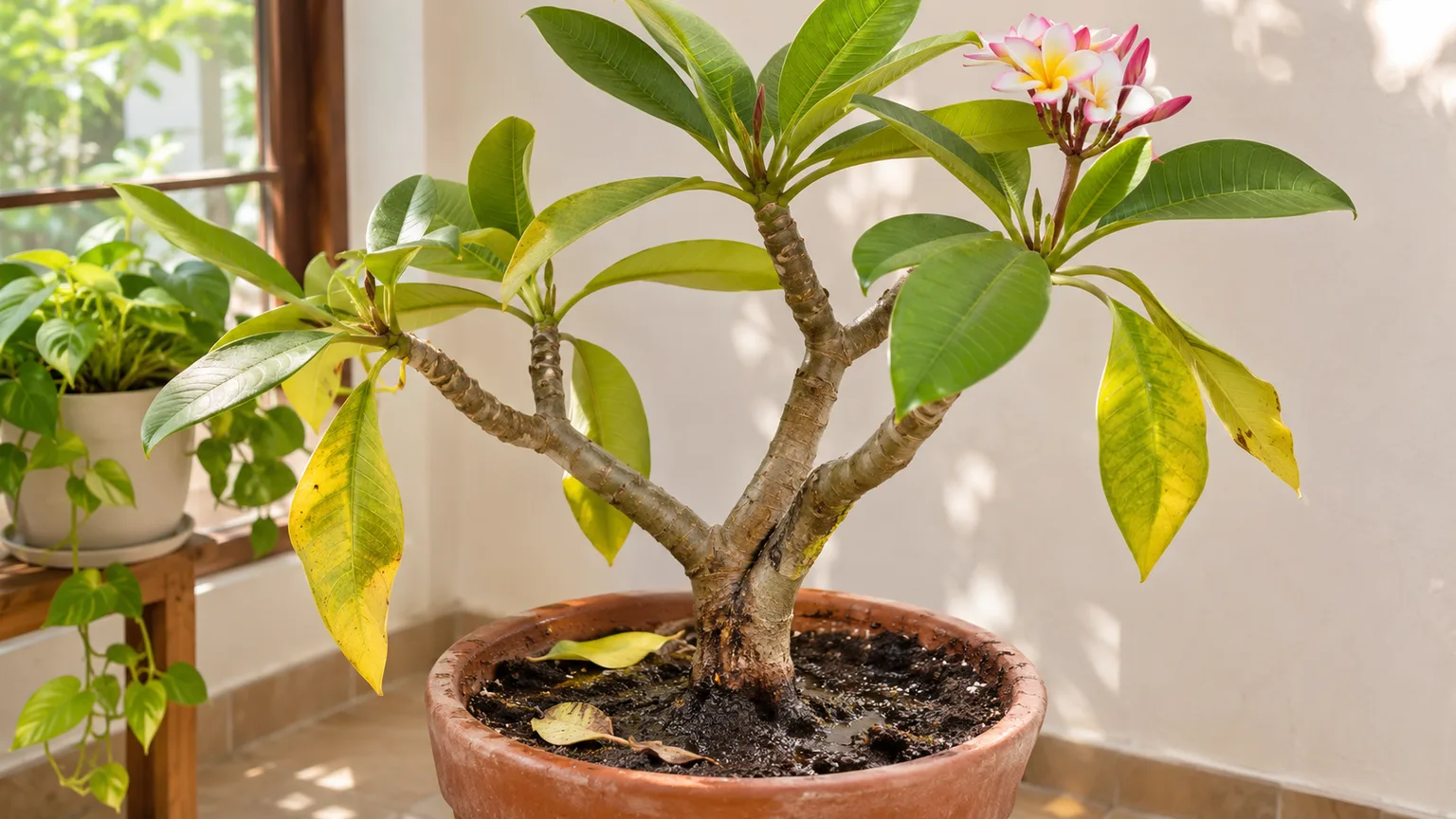
Root Rot on Plumeria: Causes, Checks and Fixes
This guide covers root rot on Plumeria. See also the general Root Rot guide, watering, and light pages for this plant.
Root Rot on Plumeria: Causes, Checks and Fixes
Quick answer
Root rot on Plumeria (Plumeria rubra) means its thick fleshy roots have decayed in mix that stayed wet too long, and the danger is that decay climbs into the water-storing stem where it turns branches soft, black, and hollow. Expect leaf drop and wilting on a pot that still feels heavy, yellowing leaves while the soil stays damp, and in worse cases a soft stem base or a sour smell from the mix. For how chronically wet mix damages roots in general, see our root-rot guide. On Plumeria, the pattern usually shows up as a soft lower stem on a heavy wet pot, not just yellow leaves.
First step: stop watering today, squeeze the lower stem, and unpot to inspect the roots. Do not fertilize, repot into a bigger container, or prune branches on day one. One inspection tells you whether this is a dry-down correction or a trim-and-rescue job.
What root rot looks like on Plumeria
Early trouble looks deceptively like a thirsty plant. Leaves yellow and drop while the mix is still damp, branch tips wilt even though you watered recently, and new growth stalls. Because damaged roots cannot move water upward, the canopy acts dry while the pot sits wet, which tempts owners to water again and deepen the damage.

Compare root firmness as well as color: healthy Plumeria roots stay firm and pale, while rotted sections soften and darken.
As decay advances, Plumeria shows stem symptoms most houseplants never get. Dark spots or stains appear on the lower stem, the stem base feels soft or spongy when squeezed, and badly affected branches turn black with hollow centers. Plumeria growers describe this progression as rot starting in the roots and traveling upward into the stem (Plumerist). A rotten sour odor from the drainage hole or when you slide the plant out of its pot is a strong confirmation, since healthy Plumeria mix smells neutral and earthy.
Check the roots to settle it. Healthy Plumeria roots are firm and pale, while rotted ones are brown or black, soft, and sometimes slimy. Extension guidance on houseplant root rots notes the same signature: plants wilt despite wet soil, growth stalls, and inspection reveals roots that are soft and brown, sometimes with a bad odor (UW-Madison Extension).
Why Plumeria rots so fast
Plumeria is a sun-loving tropical tree that stores water in its thick stems and fleshy roots, so it tolerates drought once established but has almost no tolerance for persistently wet soil. UF/IFAS describes exactly this combination: the plant grows best in full sun and well-drained soil and is fairly drought tolerant once established (UF/IFAS Gardening Solutions). A coarse fast-draining mix is not a preference here, it is the main rot defense, and the Plumeria soil guide gives the gritty ratios this species needs.
Several habits push Plumeria into chronic sogginess:
Calendar watering through the seasons. A container that dried in a week of hot summer sun can stay wet for weeks in cool cloudy weather. Watering on the same summer rhythm keeps the lower root zone saturated long after the surface looks dry.
Dense or collapsed mix. Old peat-heavy potting soil compacts around the fleshy roots and holds water in the center of the pot. Plumeria roots need air pockets as much as moisture, and fine waterlogged mix suffocates them.
Cachepots and full saucers. Decorative outer pots without drainage trap runoff, and saucers left full after watering re-soak the mix from below. The surface can look fine while the bottom of the root ball sits in water.
Cold plus wet. Plumeria kept cool and damp together rots far faster than a plant that is only wet or only cold. Growers flag temperatures below about 40F as the point where stem rot becomes likely, especially for young plants in their first overwintering (Plantophiles).
Uncured cuttings planted wet. Fresh stem cuttings with unhealed cut ends planted straight into damp mix rot from the base upward before they ever root.
The dormancy trap: leafless does not mean thirsty
This is the most Plumeria-specific cause of root rot, and it catches beginners every winter. Plumeria is seasonally deciduous: it drops its leaves in cool weather and rests with bare green-gray stems until spring. UF/IFAS notes that most plants go dormant and lose leaves in the winter months, then bloom prolifically once leaves return (UF/IFAS Gardening Solutions).
A leafless dormant Plumeria uses almost no water. Owners who keep watering a bare plant on its summer schedule soak roots that cannot drink, and rot sets in silently while there are no leaves to show distress. The first spring sign is then a stem that never firms up or buds that never open.
Judge a dormant plant by its stems, never by watering habit. Firm smooth branch tips mean the rest period is working. Soft, wrinkled, or darkening stems on a damp pot mean rot, not dormancy. Keep a leafless plant nearly dry in a cool bright spot, and resume normal watering only when new leaf buds genuinely open. The Plumeria watering guide maps this seasonal rhythm in detail.
How to confirm the cause
Work through these checks in order before cutting or repotting:
- Squeeze test. Gently press the stem base and lower branches. Firm tissue points to a watering correction; soft, spongy, or hollow-feeling areas mean decay has entered the stem. Rot that began underground typically shows just above the soil line first (A Friendly Gardener).
- Pot weight. Lift the pot days after watering. A container that stays heavy and cool long after a drink supports rot over drought.
- Drainage history. Blocked holes, a cachepot holding water, or a saucer left full after every watering? Standing water is the usual accomplice.
- Smell. Sniff the drainage hole. A sour or cabbage-like stink from wet mix is a classic root-rot clue that growers learn to recognize (Plumerist).
- Root inspection. Slide the plant out and look. Firm pale roots with neutral-smelling mix argue for dry-down care only; brown mushy roots confirm rot and set up the rescue below.
- Dormancy check. If the plant is leafless in cool weather with firm stems and dryish mix, you are likely looking at normal rest, not disease. Do not unpot a firm dormant plant just because it looks bare.
If the stem is firm, roots are mostly pale, and the mix smells neutral after a week of drying, treat this as early overwatering stress rather than full rot and correct the watering rhythm first.
The first fix to try
Stop all watering and expose the root zone to air today. Empty the saucer, remove the nursery pot from any cachepot, and move the plant somewhere warm with good airflow. If the stem base is firm, this dry-down plus corrected watering may be the entire fix.
If the squeeze test found soft stem tissue or the roots are brown and slimy, move to the rescue sequence below within a day or two. Decay inside water-storing stems spreads quickly, and Plumeria stem rot starting from root rot is known to move fast once established (Plantophiles).
Step-by-step rescue for rotted roots and stems
- Unpot and rinse. Slide the plant out, shake off wet mix, and rinse roots in room-temperature water so firm versus mushy tissue is easy to see.
- Trim dead roots. Cut all brown, black, or slimy roots back to firm pale tissue with clean sharp scissors. Sterilize the blades with rubbing alcohol between cuts when rot is extensive, since dirty tools spread the same soil fungi that caused the problem. Extension guidance recommends disinfesting tools and work surfaces after handling rotted plants (UW-Madison Extension).
- Discard the old mix. Do not reuse sour-smelling soil. Saturated mix harbors the Pythium, Phytophthora, Rhizoctonia, and Fusarium species behind most root rots, which persist in soil and debris (UW-Madison Extension).
- Cut back rotted stem. If soft dark tissue extends above the soil line, slice into the branch in stages until you reach clean tissue. Practical Plumeria guidance is explicit: keep cutting upward until the outer bark looks green and the inner core is white and healthy (Garden for Indoor). Sterilize the knife between cuts.
- Let cuts dry. Set the trimmed plant or cuttings in warm shade with airflow for several days so cut surfaces callus. Planting fresh wet cuts straight into mix invites a second round of rot.
- Repot into fresh coarse mix. Use a fast-draining blend matched to a smaller trimmed root mass, in a clean pot with open drainage holes. The Plumeria repotting guide covers timing and container sizing for this species.
- Water lightly once, then wait. Settle the mix with one moderate watering, then let the top 5 cm dry before watering again, following the Plumeria watering guide.
- Hold fertilizer. Do not feed damaged roots. Resume feeding only when firm new leaves are expanding normally.
Wear gloves while pruning, because cut Plumeria stems bleed milky latex that irritates skin and eyes. Keep fresh cuts away from pets and children.
Saving the top as a cutting when the base is gone
When rot has hollowed the whole lower stem but an upper branch is still firm, the branch itself is the rescue. Cut well above the damage into clean white-cored tissue, strip the lower leaves, and let the cutting callus in warm shade for one to two weeks until the cut end is fully dry and sealed. Then plant it shallowly in barely moist coarse mix and wait; Plumeria cuttings root on stored stem energy and rot if kept wet before roots form. This callus-first habit is the standard Plumeria cutting rescue for rotted bases (Garden for Indoor).
Do not root the cutting in a glass of water and transplant it into soil later. Water-formed roots are weak in mix, and the transition shock leaves young plants open to the same rot you are escaping.
Recovery timeline
Mild cases with firm stems and mostly intact roots often stabilize within two to four weeks of corrected watering in warm weather. Judge progress by leaves that stop dropping, branch tips that stay firm, and a pot that finally dries on schedule.
After a root trim and repot, expect four to eight weeks before clean new leaves expand steadily. The plant spends that time rebuilding fine roots, so patience matters more than extra water or fertilizer.
Stem cutback rescue runs on a seasonal clock. New shoots from below a clean cut usually appear during warm sunny weather, not in cool winter conditions. A rescued plant that sits firm and leafless through winter is resting, not failing; resume normal care when spring buds open.
What not to do
Do not keep watering because the leaves look wilted when the pot is already heavy. Do not repot into dense garden soil, pure peat, or a pot without drainage holes. Do not reuse sour mix or drainage water from a rotted plant, since both can carry root-rot fungi (UW-Madison Extension). Do not reach for chemical fungicides as the main fix; extension guidance does not recommend them for home root-rot control because suitable products are limited and costly (UW-Madison Extension). Do not fertilize damaged roots, stack repotting plus hard pruning plus sprays on the same day, or water a leafless dormant plant on a summer schedule.
How to prevent it next time
Water by soil check, not by calendar: during leafy growth, water deeply only when the top 5 cm is dry and the pot feels lighter, then let excess drain fully. Shrink watering sharply as autumn leaves yellow, and keep dormant bare plants almost dry until spring. Always use a coarse fast-draining mix with open drainage, as described in the Plumeria soil guide, and empty saucers within half an hour of watering. Give the plant at least six hours of direct sun in the growing season so the mix dries predictably, shelter containers from cold rain, and bring tender plants under cover before cold nights arrive. Start only from cured callused cuttings, never fresh wet cuts, and quarantine new plants for a few weeks before placing them near the collection.
When to worry
Act the same day if the stem base softens or darkens, branches wilt on wet soil, or the mix smells sour. Those patterns mean decay is moving toward branch forks where rescue gets harder with every day.
Lower urgency if only lower leaves yellow while stems stay firm, roots look mostly pale on inspection, and the pot dries normally once you stop watering. Correct the rhythm and recheck in one to two weeks.
Consider starting over when the whole stem is hollow or mushy from base to tip with no firm branch worth cutting. Plumeria stem rot at that stage is usually fatal to the original plant, but any firm tip cutting taken in time can become its replacement.
Conclusion
Root rot on Plumeria is a drainage and timing problem with a stem-rot sting in its tail: wet mix decays the fleshy roots, then decay climbs into water-storing branches. Confirm with the squeeze test and a root inspection, cut back to clean white-cored tissue when stems are involved, and repot into fresh coarse mix. Respect the winter dormancy shutdown afterward, and the plant’s stored-stem vigor does the rest. For an overview of this species and its seasonal rhythm, see the Plumeria hub.
When to use this page vs other Plumeria guides
Use this page when moisture checks show a heavy wet pot plus soft stem tissue, brown mushy roots, or a sour smell. Start from the Plumeria watering guide when the plant only looks off and you have not inspected roots yet. Work from the Plumeria soil guide when the mix itself stays soggy for days after every watering. Browse the full Plumeria problems hub when several symptoms overlap and you are unsure which problem fits.
Related Plumeria guides
- Plumeria hub — sun, dormancy, and drainage basics for the whole tree.
- Plumeria problems hub — entry point when you are unsure which problem page fits.
- Plumeria watering — the seasonal rhythm this page’s dry-down checks plug into.
- Plumeria soil — coarse fast-draining mix ratios for fleshy roots.
- Plumeria repotting — container sizing and timing after a root rescue.
- Plumeria light — sun needs that keep mix drying on schedule.
Related tool
Use the Root Rot Risk Checker to narrow causes for root rot on this plant before changing multiple variables at once.