Brown Tips on Plumeria: Causes, Checks & Fixes
Quick answer
Brown tips on plumeria in the growing season usually mean the coarse mix dried too far between waterings, fertilizer salts built up, or leaves scorched after a sudden move into strong sun. First step: give the pot one deep plain-water soak until water flows freely from the drainage holes, empty the saucer, and change nothing else until new growth responds.
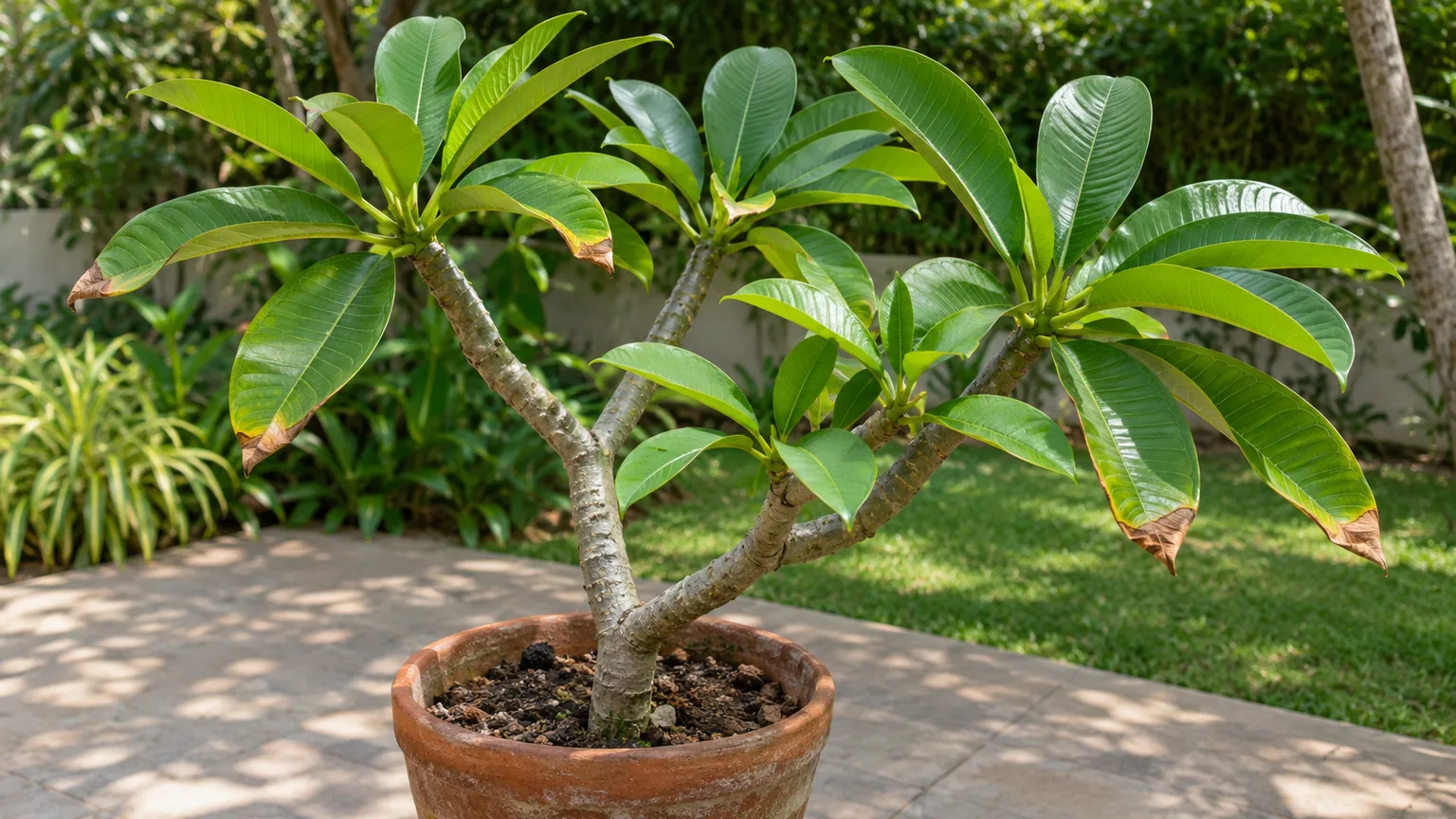
Brown Tips on Plumeria: Causes, Checks & Fixes
This guide covers brown tips on Plumeria. See also the general Brown Tips guide, watering, and light pages for this plant.
Brown Tips on Plumeria: Causes, Checks & Fixes
Quick answer
Brown tips on plumeria during the growing season usually trace to three things: a gritty fast-draining pot that dried too far in hot sun, fertilizer salts left behind by heavy feeding, or scorch after an abrupt move from shade into full sun. For the general mechanics of tip burn across houseplants, see our brown tips guide — on plumeria, the pattern almost always involves this tree’s extreme drainage and seasonal rhythm described below.
First step: give the pot one deep plain-water soak until water flows freely from the drainage holes, then empty the saucer completely. Change nothing else that day. This single soak both rehydrates a dried root ball and leaches accumulated salts, and the plant’s response over the next week tells you which problem you actually had.
What brown tips look like on plumeria
Plumeria carries large, oblong, glossy leaves clustered at the ends of thick succulent branches. Tip burn shows as dry, tan-to-dark-brown crispy margins starting at the very tip of otherwise green leaves, sometimes creeping a few centimeters inward along the edge. The damaged rim feels papery, not soft or wet, and the rest of the leaf stays firm.
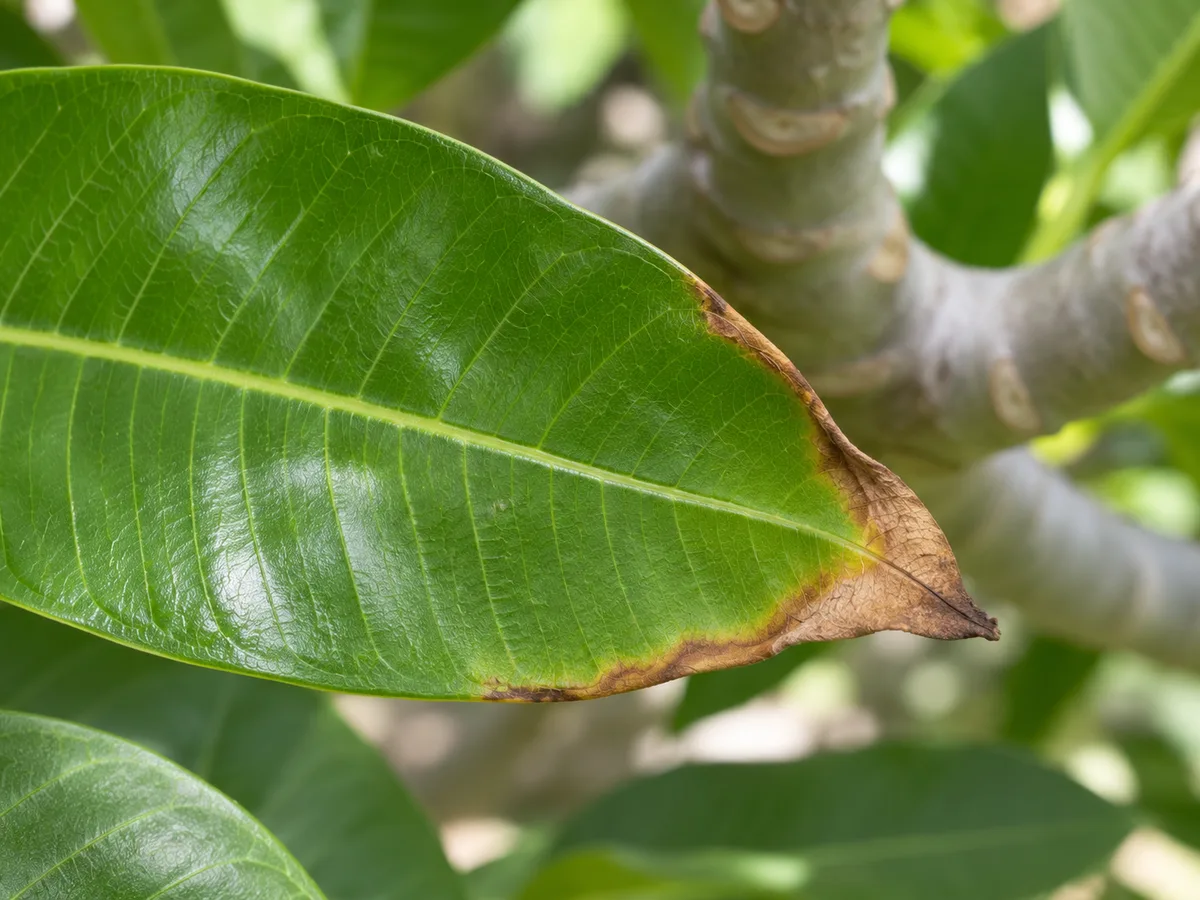
Tip burn is dry and papery at the margin while the remainder of the leaf stays firm and green.
Because new leaves emerge from the branch tips, watch where damage appears. Browning confined to older, lower leaves while fresh tip growth opens clean often means transient stress or natural aging. Browning on every new leaf as it unfurls means an ongoing root-zone problem — usually salts or chronic dryness — that needs the confirmation checks below.
Two normal plumeria behaviors mimic tip burn. In autumn the whole leaf yellows and drops before winter dormancy; that is seasonal shedding, not tip damage. And leaves that went straight from a shaded nursery into blazing afternoon sun can bleach pale patches that later crisp — that is placement shock, covered under scorch below.
Why plumeria gets brown tips
Plumeria is a sun-demanding deciduous tropical tree that wants full sun and well-drained soil and turns sulky in anything else. Its container mix is deliberately coarse — sand, perlite, bark — so it drains in seconds and dries fast in summer heat. That same drainage that protects fleshy roots from rot means a pot in 6-plus hours of direct sun can swing from moist to bone-dry in a day or two, and leaf margins crisp first because they sit farthest from the vascular supply.
Underwatering in hot active growth
A plumeria in full summer leaf with flower clusters transpires heavily. Missing water for even a few hot days browns the leaf tips while stems stay firm and green. This is the most common cause on sunny terraces and balconies, especially in small dark pots that heat up. Gritty mix gives little warning: the surface looks dry hours after watering even when the middle still holds moisture, so owners either water on fear or wait too long.
Fertilizer salt buildup
Plumeria blooms generously on modest feeding, and heavy or frequent fertilizer leaves salts in a mix that is rarely flushed. As water moves toward leaf edges and evaporates, fertilizer salts ride along and pile up at the margins until they scorch the tissue. A white or pale crust on the soil surface or pot rim is the calling card. Feeding a plant that is slowing down toward dormancy is the classic trigger — the roots are not taking up nutrients, so everything applied stays behind as salt.
Sudden sun exposure
Leaves grown in shade have thin cuticles. Moved overnight into full tropical sun, they scorch at tips and margins within days. This looks like tip burn but the timing — damage appearing within a week of relocation, worst on the sun-facing side — gives it away.
Dry air plus hard water
Plumeria tolerates coastal air and is fairly drought- and salt-tolerant once established in the landscape, but a container on a hot windy balcony with very hard tap water can still accumulate minerals at leaf margins. This is a minor contributor compared with dryness and overfeeding, and it matters most where water is heavily mineralized and pots are never flushed.
How to confirm the cause
Work through these checks in order before changing multiple variables:
- Timing — Did tips appear within two weeks of fertilizing? During a heatwave with skipped waterings? Within days of moving the plant? After leaves started yellowing in autumn? Each timing points to a different fix.
- The 5 cm and weight test — Push a finger 5 cm into the mix and lift the pot. Dry and strikingly light in summer leaf means underwatering. Damp and heavy with browning tips points away from thirst toward salts or roots.
- Salt crust — White or chalky film on the soil surface or pot rim strongly implicates fertilizer or hard-water buildup.
- Sun pattern — Damage worst on the sun-facing side after a move means scorch. Even browning all around fits water or salts instead.
- Leaf undersides — Flip several leaves. Dry brown margins with clean undersides mean tip burn; yellow specks above with orange powdery pustules beneath mean rust, a different problem.
- Branch-tip firmness — Squeeze the growing tips. Firm, green, turgid tips support a watering or salt diagnosis. Soft, dark, or shriveled tips with wet soil mean stop and investigate rot instead.
First fix for plumeria
Give the pot one deep plain-water soak until water runs freely from the drainage holes, then empty the saucer.
Water slowly so the coarse mix actually absorbs rather than channeling down the sides, let the pot drain completely, and tip out every drop standing in the saucer or cachepot. Do not fertilize, repot, prune, or move the plant the same day. One variable first — water — tells you whether dryness or salts drove the damage, because the soak corrects both mildly while committing to neither diagnosis.
Step-by-step recovery
After the first soak, act on what you confirmed:
- Flush salt-heavy pots — If crust was visible or you fed recently, run plain water through the pot at two to three times the pot volume, in two passes an hour apart, draining fully each time. This is the same leaching approach used for general salt stress from overfeeding.
- Pause fertilizer — Skip all feeding until new leaves open with clean margins. When you resume, fertilize only a few times during the growing season at modest strength, and stop as growth slows toward autumn.
- Stabilize watering — During active leafy growth, water deeply and less frequently, soaking when the top 5 cm is dry rather than sprinkling daily. See the plumeria watering guide for the seasonal cadence.
- Acclimate sun moves — If scorch is confirmed, give bright filtered light for a week, then add direct sun in stages over 10–14 days. Check the plumeria light guide before parking it in permanent full sun.
- Trim cosmetically only — Snip dead brown rims with clean scissors, following the leaf’s natural curve and leaving a hairline of brown so you never wound green tissue. Trimming changes nothing physiologically.
- Hold repotting — A gritty plumeria mix rarely needs emergency replacement for tip burn alone. Flushing usually clears salts without disturbing roots; save repotting for spring unless the mix smells sour. The plumeria soil guide covers the coarse blend that prevents recurrence.
If the branch tips are soft or the mix smells sour, abandon this path — that is rot, not tip burn, and it needs unpotting and triage.
The dormancy trap: brown edges in autumn are often seasonal
This is the most plumeria-specific section of this guide, and the mistake that ruins more plants than tip burn itself. As days shorten, plumeria yellows its leaves from the bottom up, edges browning as they go, then drops everything and stands bare. Green firm stems through winter are healthy dormancy, not a dying plant.
The trap: owners see browning autumn leaves, assume thirst or hunger, and respond with extra water and fertilizer. A dormant leafless tree uses almost no water, so winter soaking rots the fleshy roots it was meant to save. If leaves are yellowing broadly in cool short-day weather and stems stay firm, do nothing except reduce water sharply — water only infrequently through the winter and let the rest happen. True tip burn affects leaf margins while the plant is actively growing; whole-leaf autumn yellowing is the calendar, not a crisis.
Recovery timeline
Damaged brown tips never re-green — judge everything by new growth:
- Days 1–7 — No further spread after the soak and corrections means the cause is likely handled.
- 2–4 weeks in growing weather — New leaves at the branch tips should open with clean margins. One clean flush of growth is the recovery signal.
- Dormant plants — If browning appeared near leaf drop, you will not see proof until spring leaf-out. Keep the bare plant nearly dry and judge it then.
If every new leaf still browns after a month of correct water and zero fertilizer, re-check for rust on the undersides or an oversized waterlogged pot.
Lookalike symptoms to rule out
Plumeria rust — Yellow flecks on upper leaf surfaces with orange powdery pustules underneath, sometimes with curling and early leaf drop. Rust is a foliar fungal disease that builds on leaf undersides through the humid season; tip burn has clean undersides. For rust, remove fallen leaves from the site and improve airflow rather than flushing salts.
Black tip after cold — Branch tips blacken and die back following cold nights plus humidity, with side shoots later emerging below the dead tip. This starts at the stem tip, not the leaf margin, and follows chilly weather — prune back to healthy wood instead of treating for salts.
Sunburn patches — Pale bleached blotches mid-leaf that later crisp, worst right after relocation. Margin-only browning without pale patches fits water or salts better.
Overwatering and rot — Yellowing leaves with a heavy wet pot, soft stem bases, or sour mix. Tip burn leaves stems firm; rot softens them. When in doubt, trust the squeeze test over the leaf color.
Sap and handling note — Whatever you diagnose, wear gloves when pruning or trimming: plumeria’s milky sap contains harmful irritants, so keep cut material away from pets, children, eyes, and skin.
Mistakes to avoid
Do not water a leafless dormant plumeria on a summer schedule. Bare stems in cool weather need near-dryness, and winter soaking is the fastest route to root rot.
Do not fertilize stressed or dormant plants to “green up” tips. Salts worsen margin burn, and dormant roots cannot use the feed.
Do not mist leaves to fix brown tips. Wet foliage in humid still air favors the rust and leaf-spot problems plumeria already suffers; fix the root zone instead.
Do not stack repotting, heavy pruning, and spraying on the same day. Make the single water correction first and read the response.
Do not cut deep into green tissue when trimming brown rims. Cosmetic snips only, with clean tools.
How to prevent brown tips next time
Water by dryness, not by calendar: soak deeply when the top 5 cm dries in active growth, ease off as leaves yellow, and keep the dormant plant nearly dry. Feed lightly and only while new leaves are forming — a bloom-supporting fertilizer at modest strength a few times across the warm season beats monthly heavy doses, and a plain-water flush each month of feeding prevents the crust that precedes burn. Full details sit in the plumeria fertilizer guide.
Site the pot where it gets long direct sun with airflow around the canopy, acclimate nursery plants in stages, and always empty the saucer. A coarse open mix in a pot only one size up keeps the root zone alternating between moist and airy — the exact rhythm that prevents both tip burn and rot.
When to worry
Crispy margins on an otherwise leafy plumeria with firm branch tips are cosmetic, not an emergency. Treat as urgent when:
- Branch tips turn soft, dark, or mushy rather than just leaf edges browning
- Stems wrinkle while the soil stays wet, or the mix smells sour
- Leaves drop rapidly mid-summer with wet soil instead of gradually in autumn
- Orange pustules spread across undersides with fast defoliation
Those patterns mean rot, cold damage, or rust — not tip burn you can flush away.
Conclusion
Brown tips on plumeria almost always mean the fast-draining pot dried too far, salts accumulated from generous feeding, or leaves scorched after a sudden sun move — with normal autumn shedding as the great impostor. One deep plain-water soak first, then confirm with timing, crust, pot weight, and undersides before doing anything else. With firm stems and corrected water and feeding, the branch tips should push clean new leaves within weeks — and bare winter stems should simply be left dry until spring.
When to use this page vs other plumeria guides
- Plumeria watering guide — Use for routine moisture cadence, especially the summer-to-dormancy transition, before assuming tips are the main issue.
- Plumeria problems hub — Browse all common issues on this species when the pattern does not match tip burn alone.
- Plumeria light guide — Use when browning followed a move or placement change and sun exposure is the suspect.
- Plumeria soil guide — Use when drainage, mix choice, or salt accumulation keeps recurring.
Related plumeria guides
- Plumeria plant hub
- Plumeria watering
- Plumeria light
- Plumeria soil
- Plumeria fertilizer
- Plumeria problems
Related tool
Use the Brown Tips Diagnosis Tool to narrow causes for brown tips on this plant before changing multiple variables at once.