Plumeria Care Guide: Sun, Water, Soil and Dormancy
Plumeria rubra
Learn Plumeria rubra care: full sun, fast-draining soil, deep summer watering, a dry winter dormancy, repotting, and pet-safe handling of its irritating sap.
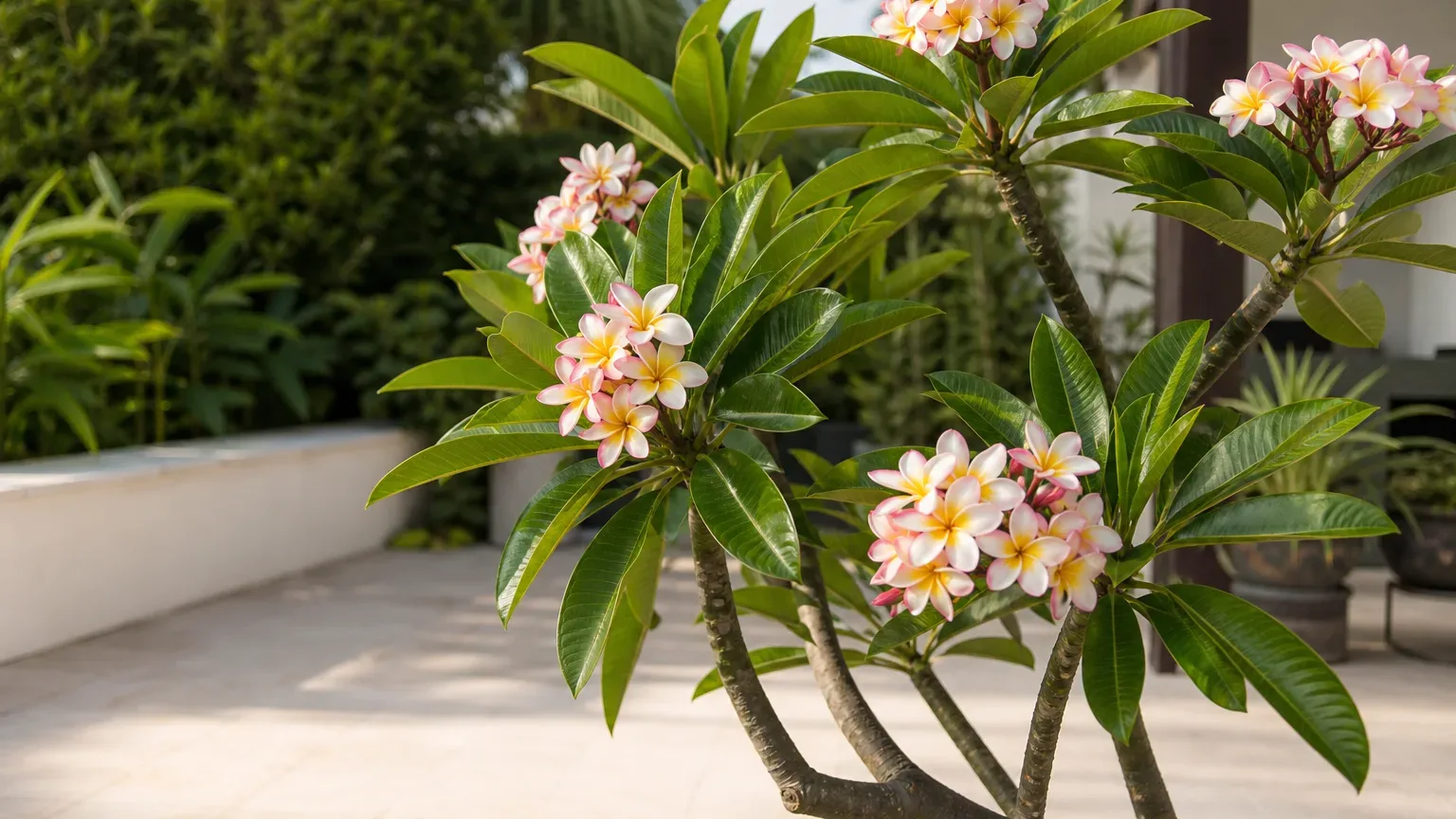
Plumeria Care Guide: Sun, Water, Soil and Dormancy
Start with wateringThe most common care mistake for PlumeriaWatering guide →Plumeria care essentials
Light
Water
Water deeply during active growth when the top 5 cm of mix is dry, then let excess drain. Reduce sharply after leaves fall and keep nearly dry during cool dormancy; never leave the thick, fleshy roots waterlogged.
Soil
A coarse, fast-draining mix that does not collapse around the roots—40% potting mix, 30% coarse sand or fine gravel, 20% perlite or pumice, and 10% compost. Aim for pH 6.0–7.0.
Humidity
Temperature
Fertilizer
A balanced or bloom-supporting fertilizer at half label strength every 3–4 weeks from spring into late summer is sufficient for most pots. High fertilizer rates cannot replace direct sun and may leave salts in a mix that is being kept too dry in winter.
About Plumeria
Plumeria is native to Mexico through Central America to northern South America; widely cultivated across tropical regions, typically reaches 1.5–3 m in containers; 4.5–7.5 m tall and wide outdoors in frost-free climates indoors, with moderate to fast during warm, sunny weather growth. Plumeria has a tree growth habit and part of the Apocynaceae family. It is also known as Frangipani, Red Frangipani, Champa, Temple Tree, and Pagoda Tree.
| Detail | Information |
|---|---|
| Also known as | Frangipani, Red Frangipani, Champa, Temple Tree, Pagoda Tree |
| Native region | Mexico through Central America to northern South America; widely cultivated across tropical regions |
| Mature size | 1.5–3 m in containers; 4.5–7.5 m tall and wide outdoors in frost-free climates |
| Growth rate | Moderate to fast during warm, sunny weather |
| Growth habit | Tree |
| Scientific name | Plumeria rubra |
| Family | Apocynaceae |
Plumeria Care Guide: Sun, Water, Soil and Dormancy
Plumeria care becomes much easier when you stop treating this plant like an evergreen tropical houseplant. Plumeria rubra is a sun-loving tree from a seasonally dry tropical range from Mexico to Venezuela. It grows and drinks actively in warm, bright weather, then can shed every leaf and rest when conditions cool or dry. That leafless phase is often normal; keeping the dormant root ball wet is not.
For most Indian homes, the best setup is an open terrace, balcony or courtyard with direct sun, a pot that drains freely, and protection from prolonged monsoon saturation. A window can keep a plant alive through unsuitable weather, but ordinary indoor light rarely supports the sturdy growth and flowering people expect from champa. The practical formula is strong sun, deep but spaced watering, coarse soil and a pronounced seasonal slowdown.
Plumeria care at a glance
Give Plumeria at least half a day of direct sun, ideally more. Water thoroughly while leaves and shoots are expanding, but wait until the upper root zone has dried before watering again. Use a gritty mix in a pot with open drainage holes, feed modestly only during active growth, and reduce water sharply when leaves fall.
Do not diagnose from one symptom alone. Yellow leaves can reflect natural seasonal decline, drought, saturated roots or rust; the soil condition, stem firmness and season tell you which explanation fits. A firm leafless stem in winter is usually resting, while a soft black stem above wet, sour mix needs urgent attention.
Know the plant before setting a routine
Plumeria rubra belongs to the dogbane family, Apocynaceae, and is also sold as frangipani, champa and temple tree. The USDA profile classifies it as a perennial shrub or tree, while cultivated hybrids and related species are often labeled simply “Plumeria.” Flower colour, leaf shape and mature proportions therefore vary, but the core need for sun, warmth and drainage remains consistent.
Its fleshy, widely spaced branches store reserves and carry clusters of leaves at their tips. This architecture explains two common surprises: the crown can become top-heavy in a pot, and an apparently bare “stick” can still be alive. Check the branch tip; healthy dormant wood should remain firm rather than dark, collapsing or foul-smelling.
Growth habit, size and seasonal rhythm
In frost-free ground, this is not a tabletop plant. Missouri Botanical Garden describes P. rubra as a rounded deciduous tree about 15–25 feet tall and wide, although pruning and restricted roots keep container specimens smaller. Plan space above and around a pot before the branches begin to fork.
Warm-season growth may be vigorous, followed by partial or complete leaf drop as nights cool or a dry season develops. UF/IFAS notes that dormant plants can lose their leaves while green stems continue photosynthesizing. In much of peninsular India, a warm plant may retain leaves longer than one in a cool inland or northern winter, so follow the plant’s growth rather than a date on the calendar.
The best place for Plumeria in an Indian home
Choose the sunniest outdoor site available: an unshaded south- or west-facing terrace, an open balcony, a courtyard or a frost-free garden bed. Ensure air can move through the crown and rainwater cannot collect around the roots. A wheeled stand or movable pot is useful where intense monsoon downpours alternate with very hot, dry months.
An indoor position is a compromise unless it is a greenhouse-like sunroom. The RHS recommends a bright, warm position for container frangipani, and also identifies the plant as frost tender. If cold or relentless rain forces a move indoors, use the brightest available glass, keep foliage away from cold panes, and reduce watering because the pot will dry more slowly.
Give Plumeria enough direct sun
Flowering plants need at least half a day of direct sun and perform best in full sun, according to Missouri Botanical Garden’s Plumeria guidance. Six or more hours is a useful target in an open site. Strong light supports shorter internodes, firm new branches and the energy needed for terminal flower clusters.
Acclimate a nursery plant over seven to ten days if it was displayed under shade cloth. Start with morning sun, then extend exposure; an abrupt move into harsh afternoon heat can scorch existing leaves even though mature Plumeria likes full sun. Leggy, leaning growth and repeated failure to bloom point first to insufficient light, not a fertilizer shortage. The Plumeria light guide covers placement and acclimation in detail.
Water deeply, then respond to the season
During active growth, water the entire root ball until excess runs from the drainage holes, empty the saucer, and wait until roughly the upper 5 cm feels dry before repeating. This is a check method, not a promise that every plant needs water on the same number of days. A small terracotta pot in May heat may dry rapidly; a large plastic pot under humid monsoon skies may remain wet much longer.
Established landscape plants are fairly drought tolerant, but that does not mean a leafy container should be kept bone dry for weeks. Prolonged active-season drought causes limp foliage, crisp edges and premature leaf loss. The opposite pattern—yellowing while the mix stays wet, a wrinkled stem above damp soil, or soft tissue at the base—suggests roots are failing from excess moisture. Use the Plumeria watering guide to distinguish these situations before adding more water.
Dormancy changes the watering rule
As leaves yellow and growth stops, lengthen the interval sharply. The RHS species profile advises watering moderately in growth but keeping Plumeria almost dry during winter. A cool, leafless plant has little canopy demand, so repeated soaking leaves the root zone wet when it is least able to use the moisture.
Warm-climate exceptions matter. If your plant retains leaves and continues making firm new growth through winter, do not force a completely dry dormancy; water after the mix dries and watch the plant. If it is bare and resting, provide only enough moisture to prevent severe stem shrivelling, and resume normal watering gradually after buds swell.
Use coarse soil and uncompromising drainage
Plumeria roots need a mix that wets evenly but releases excess water quickly. A practical container blend is 40% good potting mix, 30% coarse mineral grit or washed coarse sand, 20% pumice or perlite, and 10% mature compost. Ingredient names matter less than performance: water should pass through promptly, and the mix should not remain heavy and saturated for days.
Every container needs unobstructed holes. Do not use a layer of stones to compensate for dense soil or a sealed decorative pot; neither creates root-zone drainage. Set the root crown at its previous depth, choose only the next pot size, and use a stable container for the expanding crown. See the Plumeria soil guide for mix adjustments and the Plumeria repotting guide before disturbing crowded roots.
Feed active growth, not a sleeping plant
Begin feeding only after spring growth is clearly underway. A balanced complete fertilizer, diluted according to its label, every three to four weeks is a reasonable container starting point. Reduce or stop in late summer or as growth slows; never fertilize a dormant, freshly repotted, drought-stressed or root-damaged plant.
Avoid chasing flowers with heavy doses of phosphorus or frequent “bloom booster” applications. Sun, mature branch tips, healthy roots and seasonal warmth set the foundation for bloom. Excess fertilizer can accumulate as salts in pots and soft, nitrogen-heavy growth may be weak. The Plumeria fertilizer guide provides a safer schedule and deficiency checks.
What flowering depends on
Plumeria flowers form in terminal clusters, so a well-lit, established branch system matters more than any single product. The RHS describes P. rubra as producing fragrant flowers in terminal panicles. Young cuttings may need time to establish, and pruning every branch tip can postpone flowering by removing potential flowering points.
When a healthy-looking plant does not bloom, audit conditions in order: direct sun hours, plant maturity, active-season warmth, root health, then feeding. A specimen that receives only bright shade usually needs a better site. One that was recently rooted or heavily pruned may simply need another growth cycle.
Common Plumeria care mistakes
The most damaging mistake is combining low light with frequent watering. Other common failures are leaving pots exposed to days of monsoon rain, assuming winter leaf drop means death, feeding a dormant plant, moving shade-grown leaves straight into fierce sun, and using an oversized pot of peat-heavy mix.
Another mistake is applying generic succulent neglect all year. Plumeria has water-storing stems, but a leafy plant in strong heat still uses substantial water. Let current growth, root-zone dryness and weather work together: drying before watering is sensible; chronic active-season dehydration is not.
Read warning signs as a pattern
Use these combinations to choose the first action:
- Leafless + cool season + firm green stems: likely normal dormancy; reduce water.
- Yellow leaves + wet mix + soft base: suspect root or stem rot; stop watering and inspect.
- Limp leaves + dry mix + firm stems: water deeply and check how quickly the pot dries.
- Long weak shoots + no flowers: increase light gradually.
- Orange powder beneath leaves: isolate and inspect for Plumeria rust. UF/IFAS identifies rust as a persistent foliar problem that builds on leaf undersides; remove fallen infected foliage and improve sanitation.
Do not respond to every yellow leaf with water or fertilizer. First feel the mix several centimetres down, test the stem for firmness, inspect both leaf surfaces, and note whether growth is active. Those four checks prevent most wrong-way treatments.
Handle irritating sap safely
Cut leaves and branches release milky latex. University of Wisconsin Extension notes that Plumeria sap can irritate eyes and cause dermatitis in susceptible people, while UF/IFAS advises considering pets and children because the sap contains harmful irritants. Wear gloves when pruning or taking cuttings, keep hands away from your face, wash tools and skin, and prevent animals from chewing any plant part.
This is a handling precaution, not a reason for panic. Do not use Plumeria as pet forage, and place fresh cuts and discarded branches out of reach. The Plumeria propagation guide explains how to let cut ends callus before rooting, while the Plumeria pruning guide covers safe cuts and timing.
When to use this page vs other Plumeria guides
- Start here for whole-plant setup, seasonal rhythm and a first-pass diagnosis.
- Use the light guide when growth is weak, leaning or flowerless.
- Use the watering guide when leaves yellow, wilt or drop and you are unsure whether the root ball is too wet or too dry.
- Use the soil guide or repotting guide when drainage is slow, the plant is unstable or roots crowd the pot.
- Use the fertilizer guide for feeding amounts, timing and salt buildup.
Related Plumeria guides
- Plumeria light — direct-sun targets, acclimation and low-light signs.
- Plumeria watering — active growth, monsoon rain and dormancy.
- Plumeria soil — fast-draining mixes and pot performance.
- Plumeria fertilizer — feeding without forcing soft growth.
- Plumeria repotting — timing, pot size and root checks.
- Plumeria propagation — callused cuttings and aftercare.
- Plumeria pruning — branch structure and sap-safe handling.
Conclusion
Successful Plumeria care follows the plant’s seasonal rhythm. Put Plumeria rubra in direct outdoor sun, use a coarse mix and a draining pot, water deeply during active growth only after the upper root zone dries, and reduce water sharply when leaves fall. In India, the main adjustments are protecting containers from prolonged monsoon saturation and recognizing that dormancy may be shorter in warm coastal climates.
When the plant changes, check season, soil moisture, stem firmness and leaf surfaces before acting. A bare but firm tree may simply be resting; a wet pot with soft tissue is an emergency. Get those distinctions right and Plumeria becomes a resilient, sculptural flowering tree rather than a confusing “houseplant” that seems to change its rules each winter.
How to care for Plumeria?
When should you water Plumeria?
Water deeply during active growth when the top 5 cm of mix is dry, then let excess drain. Reduce sharply after leaves fall and keep nearly dry during cool dormancy; never leave the thick, fleshy roots waterlogged.
- Test 5 cm below the surface and lift the pot - Water deeply during active growth when the top 5 cm of mix is dry, then let excess drain.
- water only when that layer is dry and the container feels noticeably lighter - Water deeply during active growth when the top 5 cm of mix is dry, then let excess drain.
- Drain excess water - Water deeply during active growth when the top 5 cm of mix is dry, then let excess drain.
What soil works best for Plumeria?
A coarse, fast-draining mix that does not collapse around the roots—40% potting mix, 30% coarse sand or fine gravel, 20% perlite or pumice, and 10% compost. Aim for pH 6.0–7.0.
- 40% potting mix - A coarse, fast-draining mix that does not collapse around the roots—40% potting mix, 30% coarse sand or fine gravel, 20% perlite or pumice, and 10% compost.
- 30% coarse sand or fine gravel - A coarse, fast-draining mix that does not collapse around the roots—40% potting mix, 30% coarse sand or fine gravel, 20% perlite or pumice, and 10% compost.
- 20% perlite or pumice - A coarse, fast-draining mix that does not collapse around the roots—40% potting mix, 30% coarse sand or fine gravel, 20% perlite or pumice, and 10% compost.
Grower notes for Plumeria
What matters most with Plumeria
Plumeria rubra is a sun-loving, seasonally deciduous tropical tree with water-storing stems—not a permanently leafy indoor plant. Give it at least 6 hours of direct sun, a coarse mix that drains immediately, and a clear dry rest after autumn leaf drop. UF/IFAS notes that established plants are drought tolerant, while prolonged wetness invites stem and root rot.
Best placement in a real home
Use the sunniest open balcony, terrace, courtyard, or south-facing outdoor position available. Strong light supports sturdy branches and fragrant flower clusters; a warm window is mainly an overwintering compromise. Protect the pot from frost and cold rain. In cooler regions, move containers under cover before nights approach 10°C, but expect natural leaf drop rather than trying to force winter growth.
Before you buy this plant
Choose a plant with firm, unwrinkled branch tips, a dry-to-lightly-moist root ball, and no black lesions at branch forks. Inspect leaf undersides for orange Plumeria rust pustules and stems for scale or mealybugs. Confirm the label says Plumeria rubra if flower color, mature size, or identity matters; many hybrids and related Plumeria species are sold simply as frangipani.
First month after bringing it home
Quarantine the plant, place it in bright filtered sun for several days, then increase direct exposure if it came from shade. Do not repot or feed immediately unless the nursery mix stays wet for days. Learn how quickly the pot becomes light, and water only after the upper 5 cm dries. A few dropped leaves after relocation are less concerning than a soft stem or wet, sour mix.
Pet-aware note for Plumeria
All parts exude milky latex when cut. UF/IFAS describes the sap as containing harmful irritants, so keep the plant away from pets and children who chew plants and wear gloves when pruning. Sap can irritate skin and eyes; swallowed plant material may cause mouth or digestive upset. Keep fresh cuts and discarded branches securely out of reach.
How to tell Plumeria is settling in
Look for firm expanding tips, full-size leaves, and new flower stalks in strong summer light. A healthy plant may become completely leafless in winter while its green stems remain firm. Soft black tissue is not dormancy. Plumeria is readily propagated from cured stem cuttings, but fresh cuts must callus before planting because wet, uncured cuttings rot easily.
Is Plumeria safe for pets?
Plumeria rubra is not pet-safe for chewing. Its milky sap contains irritants that can affect the mouth, digestive tract, skin, and eyes; keep it beyond the reach of cats, dogs, and other pets.
Plumeria rubra belongs to the dogbane family and releases irritating milky latex from damaged tissue. UF/IFAS advises considering pets and children because the sap contains harmful irritants, though it describes Plumeria as less poisonous than oleander and reports no recorded deaths from exposure or ingestion. Avoid chewing and sap contact, rinse exposed skin or eyes, and contact a veterinarian if an animal develops symptoms.
Watering Plumeria
For Plumeria, test 5 cm below the surface and lift the pot; water only when that layer is dry and the container feels noticeably lighter and water about every 5–10 days for a sunny container in hot active growth; every 2–4 weeks or less during leafless winter dormancy. Water regularly from spring leaf-out through flowering, ease back as leaves yellow in autumn, and keep dormant plants almost dry until new growth resumes.
| Detail | Information |
|---|---|
| How often | About every 5–10 days for a sunny container in hot active growth; every 2–4 weeks or less during leafless winter dormancy |
| How to check | Test 5 cm below the surface and lift the pot; water only when that layer is dry and the container feels noticeably lighter |
| Seasonal changes | Water regularly from spring leaf-out through flowering, ease back as leaves yellow in autumn, and keep dormant plants almost dry until new growth resumes |
Signs of overwatering
- yellow leaves while the soil remains wet
- soft or blackened stem base
- wrinkled stem despite damp soil
- sour-smelling mix or root rot
Signs of underwatering
- limp leaves during active growth
- crisp brown leaf edges
- premature leaf drop in hot weather
- deeply wrinkled stems in the growing season
Soil & potting for Plumeria
Use a mix of 40% potting mix, 30% coarse sand or fine gravel, 20% perlite or pumice, 10% compost for Plumeria. Excellent drainage is essential; Plumeria rubra tolerates drought after establishment but is vulnerable to rot in persistently wet soil. Target soil pH around 6.0–7.0. Repot every 2–3 years, or when roots crowd the pot; mature specimens can be root-pruned and returned to the same container, ideally in late winter or early spring, just before leaf buds open.
| Detail | Information |
|---|---|
| Recommended mix | 40% potting mix, 30% coarse sand or fine gravel, 20% perlite or pumice, 10% compost |
| Drainage | Excellent drainage is essential; Plumeria rubra tolerates drought after establishment but is vulnerable to rot in persistently wet soil |
| Soil pH | 6.0–7.0 |
| Repotting frequency | Every 2–3 years, or when roots crowd the pot; mature specimens can be root-pruned and returned to the same container |
| Best season to repot | Late winter or early spring, just before leaf buds open |
Signs it needs repotting
- roots circling tightly or emerging from drainage holes
- pot becoming top-heavy as branches enlarge
- mix drying within a day during active growth
- stalled spring growth despite strong sun
Humidity & temperature for Plumeria
Fertilizer & pruning for Plumeria
Use a balanced or bloom-supporting fertilizer at half label strength every 3–4 weeks from spring into late summer is sufficient for most pots. High fertilizer rates cannot replace direct sun and may leave salts in a mix that is being kept too dry in winter. for Plumeria.
| Detail | Information |
|---|---|
| Fertilizer type | A balanced or bloom-supporting fertilizer at half label strength every 3–4 weeks from spring into late summer is sufficient for most pots. High fertilizer rates cannot replace direct sun and may leave salts in a mix that is being kept too dry in winter. |
Common problems on Plumeria
Yellow Leaves
MediumLikely cause: Common on this plant type; confirm with recent watering, light, and root checks.
Quick fix: Inspect the plant and correct the most likely care stressor before stacking treatments.
Full fix guide →Brown Tips
MediumLikely cause: Common on this plant type; confirm with recent watering, light, and root checks.
Quick fix: Inspect the plant and correct the most likely care stressor before stacking treatments.
Full fix guide →Root Rot
MediumLikely cause: Common on this plant type; confirm with recent watering, light, and root checks.
Quick fix: Inspect the plant and correct the most likely care stressor before stacking treatments.
Full fix guide →Overwatering
MediumLikely cause: Common on this plant type; confirm with recent watering, light, and root checks.
Quick fix: Inspect the plant and correct the most likely care stressor before stacking treatments.
Full fix guide →Underwatering
MediumLikely cause: Common on this plant type; confirm with recent watering, light, and root checks.
Quick fix: Inspect the plant and correct the most likely care stressor before stacking treatments.
Full fix guide →Spider Mites
MediumLikely cause: Common on this plant type; confirm with recent watering, light, and root checks.
Quick fix: Inspect the plant and correct the most likely care stressor before stacking treatments.
Full fix guide →Mealybugs
MediumLikely cause: Common on this plant type; confirm with recent watering, light, and root checks.
Quick fix: Inspect the plant and correct the most likely care stressor before stacking treatments.
Full fix guide →Aphids
MediumLikely cause: Common on this plant type; confirm with recent watering, light, and root checks.
Quick fix: Inspect the plant and correct the most likely care stressor before stacking treatments.
Full fix guide →Leggy Growth
MediumLikely cause: Common on this plant type; confirm with recent watering, light, and root checks.
Quick fix: Inspect the plant and correct the most likely care stressor before stacking treatments.
Full fix guide →Slow Growth
MediumLikely cause: Common on this plant type; confirm with recent watering, light, and root checks.
Quick fix: Inspect the plant and correct the most likely care stressor before stacking treatments.
Full fix guide →Wilting
MediumLikely cause: Common on this plant type; confirm with recent watering, light, and root checks.
Quick fix: Inspect the plant and correct the most likely care stressor before stacking treatments.
Full fix guide →Drooping Leaves
MediumLikely cause: Common on this plant type; confirm with recent watering, light, and root checks.
Quick fix: Inspect the plant and correct the most likely care stressor before stacking treatments.
Full fix guide →Low Humidity
MediumLikely cause: Common on this plant type; confirm with recent watering, light, and root checks.
Quick fix: Inspect the plant and correct the most likely care stressor before stacking treatments.
Full fix guide →Not Enough Light
MediumLikely cause: Common on this plant type; confirm with recent watering, light, and root checks.
Quick fix: Inspect the plant and correct the most likely care stressor before stacking treatments.
Full fix guide →Fungus Gnats
MediumLikely cause: Common on this plant type; confirm with recent watering, light, and root checks.
Quick fix: Inspect the plant and correct the most likely care stressor before stacking treatments.
Full fix guide →Mold on Soil
MediumLikely cause: Common on this plant type; confirm with recent watering, light, and root checks.
Quick fix: Inspect the plant and correct the most likely care stressor before stacking treatments.
Full fix guide →