Plumeria Care: Sun, Water, Flowers, and Winter Care
Grow plumeria in pots or warm-climate gardens with seasonal advice on light, water, soil, blooms, propagation, pests, and a frost-safe winter plan for dormancy.
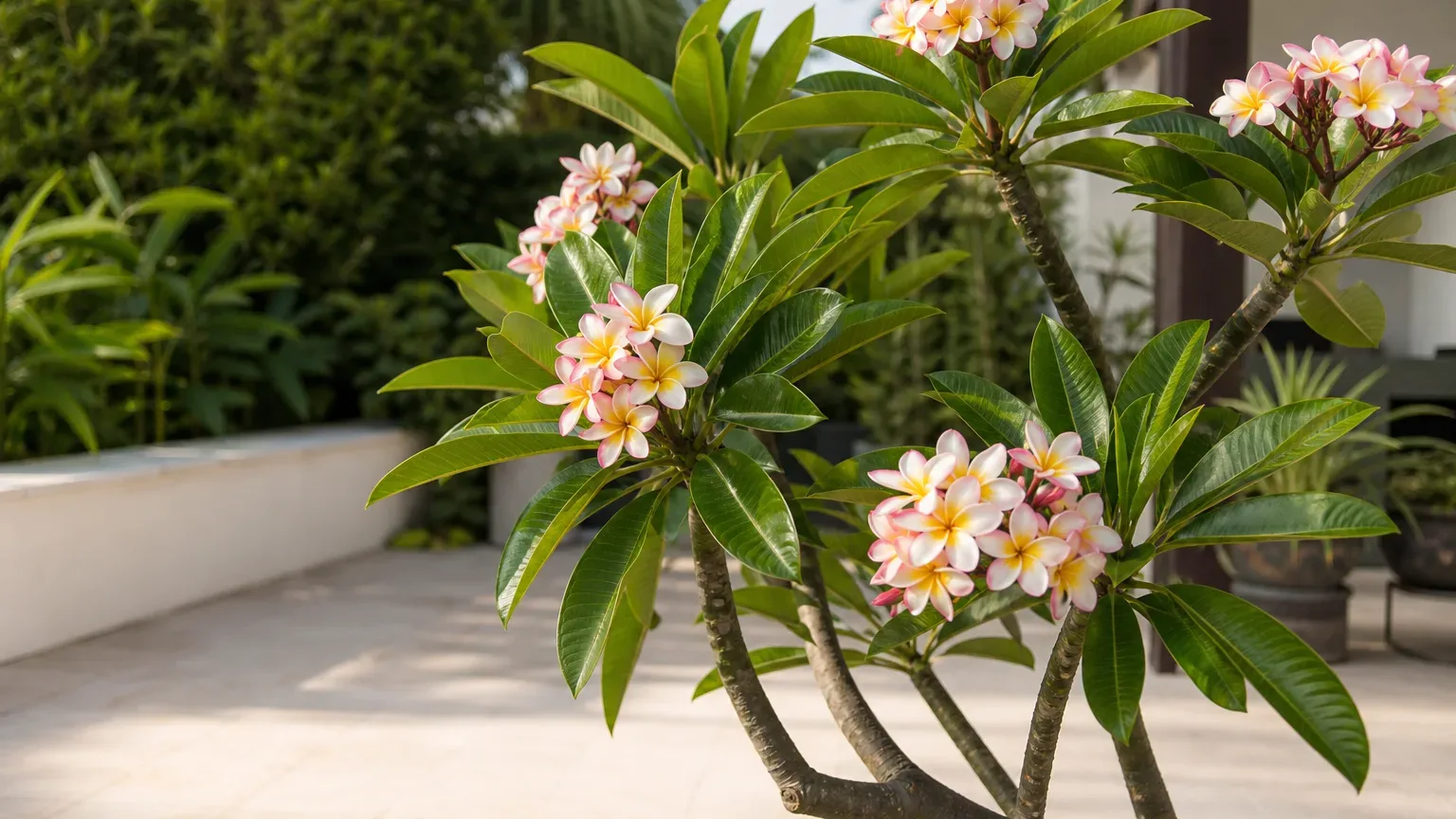
Plumeria grows best when its care follows the seasons: plenty of direct light and steady, but not soggy, moisture while it is actively growing; much less water once cool weather slows it down. The plant’s thick branches can look bare in winter without being dead, while a wet, soft stem can signal trouble. Watching the plant’s growth and the weather is more reliable than following a weekly watering rule.
In warm, frost-free regions, plumeria can become a small landscape tree. In colder places, it is usually grown in a pot that can move to shelter. Either way, the essentials are the same: sun, warmth, drainage, and restraint when growth pauses. (UF/IFAS Extension; University of Wisconsin–Madison Extension)
Plumeria care at a glance
| Need | Practical starting point |
|---|---|
| Light | A sunny outdoor position; aim for about 6–8 hours of direct light during active growth. |
| Soil | A loose, coarse mix that drains freely; never let a pot stand in a full saucer. |
| Water | Water thoroughly in warm active growth, then let the mix dry noticeably before watering again. |
| Winter | Protect from frost and cold, wet conditions; reduce or stop watering if the plant is dormant. |
| Flowers | Preserve healthy branch tips, provide strong light, and allow the plant time to mature. |
Treat those as starting points, not a rigid recipe. A small terracotta pot in summer sun can dry quickly; a large plastic container in a cool room can stay wet for days. The same plant may need frequent checks in July and almost no irrigation in a dark, cool winter storage area.
What plumeria needs to grow well
Plumeria, also called frangipani, is a tropical shrub or small tree in the dogbane family, Apocynaceae. Its thick, somewhat brittle branches store water, and its leaves cluster near the branch tips. Flowers also form at those tips, so a plant’s shape, pruning history, and age affect how many places it has to bloom. (University of Wisconsin–Madison Extension)
Species and cultivars do not all behave alike. Many Plumeria rubra types drop leaves in cool weather, while P. obtusa and P. pudica may keep more foliage in warm conditions; the spoon-shaped foliage of P. pudica is a useful visual clue. A seller’s cultivar label matters more than a broad rule about every plumeria being deciduous or evergreen. (University of Wisconsin–Madison Extension)
The differences matter most when you are choosing where to grow the plant and what to expect in winter. A named cultivar grown from a cutting is also more likely to retain the parent plant’s flower characteristics than a seedling. Seeds can be interesting to grow, but they are not a reliable shortcut to an exact flower color or form. (University of Wisconsin–Madison Extension)
Choose a site for your climate
Plumeria is frost-tender. UF/IFAS lists it as best suited to tropical and subtropical landscapes around USDA Zones 10B–11 and notes that plants farther north can be grown in containers and brought indoors when cold weather arrives. A protected microclimate may help a plant in a marginal area, but it cannot make a tender cultivar reliably hardy where hard freezes are common. (UF/IFAS Extension)
Give an in-ground plant enough space for its eventual canopy and for air to circulate around the branches. Plumeria can grow much larger in a warm landscape than it will in a pot, so look up the species or cultivar rather than assuming the nursery specimen’s current size is its mature size. Avoid low pockets where cold air and water collect.
Container or in-ground plumeria?
Choose a container if winter temperatures threaten frost, if you rent or garden on a patio, or if you want to control the plant’s size. Choose the ground only if your climate is consistently warm enough for the cultivar and the site drains well. Containers make winter care possible, but they also dry faster in summer and can become top-heavy as the plant grows.
Do not use a very large pot “for room to grow.” A container that holds far more mix than the roots can use dries slowly, especially in a cool or dim spot, which raises the risk of root and stem rot. Move up only when roots have filled the existing pot or the plant repeatedly dries out too quickly despite proper watering. (RHS)
Give it bright, direct sun
A sunny position is one of the most important conditions for strong growth and flowers. Aim for at least six hours of direct sun, with roughly eight hours often a useful target in a bright summer climate. Wisconsin Extension notes that plumeria needs bright sun and warm temperatures; Gardenia likewise identifies full sun as a key condition for flowering. (University of Wisconsin–Madison Extension; Gardenia)
If a plant has spent winter indoors, acclimate it to outdoor sun over several days rather than moving it from a dim room into all-day exposure at once. Start in bright shade or gentle morning sun, then increase exposure. This transition reduces the chance of scorched leaves and gives you a chance to notice whether the outdoor site is too windy or dries the pot too quickly.
Hotter is not always better. In a very hot, dry climate, a plant may appreciate protection from the harshest late-afternoon sun, particularly while newly moved outdoors or while a cutting is rooting. If it has healthy leaves but does not flower, first check how much direct sun it actually receives before changing fertilizer.
Use a pot and mix that drain quickly
Choose a sturdy pot with generous drainage holes. Plumeria has a relatively shallow root system and can become top-heavy, so a broad, stable container is often more useful than a tall, narrow one. Empty any cachepot or saucer after watering; drainage holes cannot protect roots if the pot sits in collected water.
Use an open, fast-draining container medium. A cactus or palm mix can work, or you can improve a standard potting mix with coarse components such as pumice, perlite, or bark. The goal is a mix that wets evenly when watered but does not remain dense and saturated afterward. Wisconsin Extension describes coarse, well-draining media for container plumeria, and the RHS recommends an open medium with added grit. (University of Wisconsin–Madison Extension; RHS)
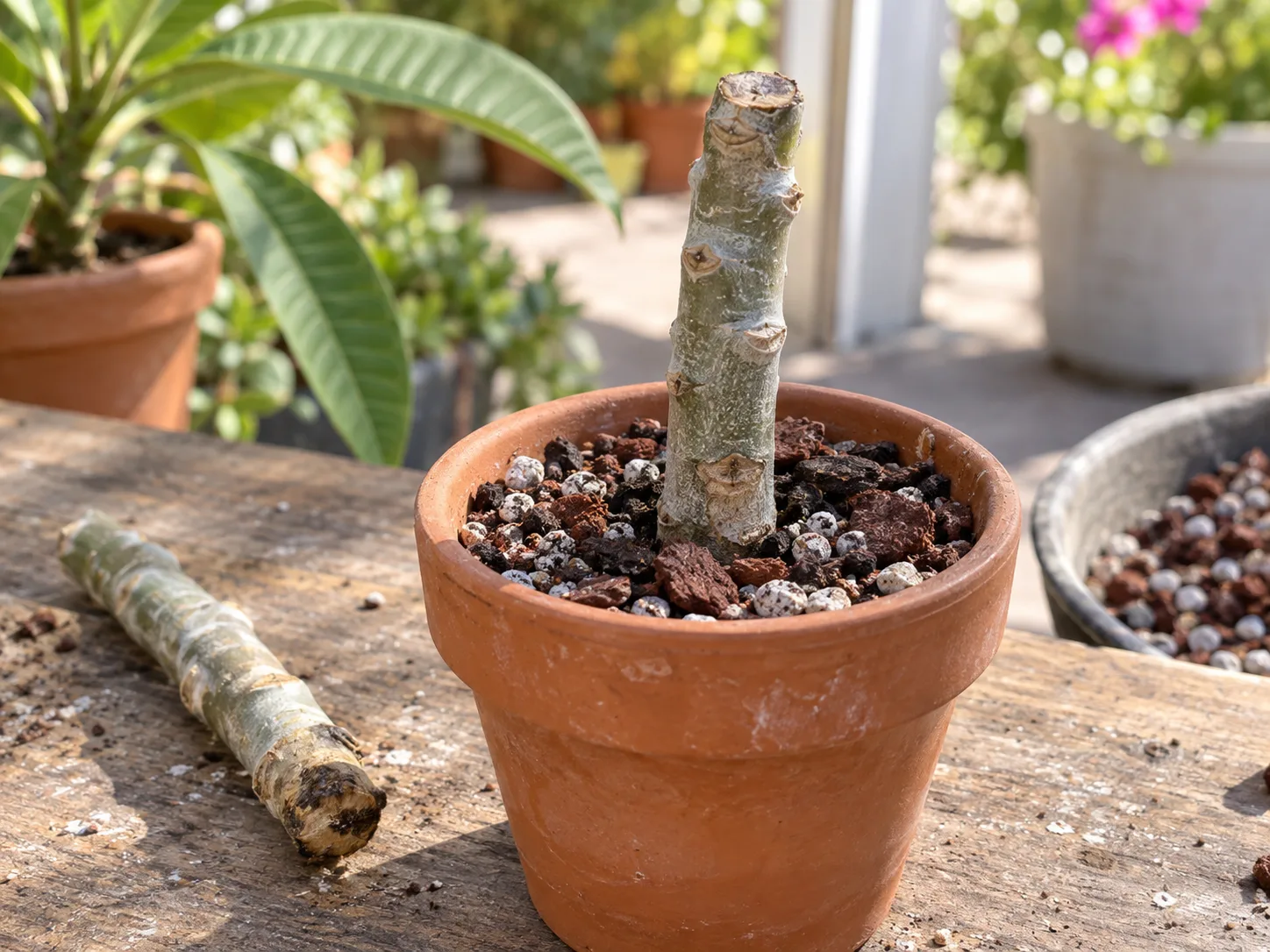
Do not line the bottom of the pot with gravel as a substitute for drainage. A clear drainage hole and a suitable mix matter more than a layer of stones, and heavy garden soil is usually too compact for a container. If water takes a long time to drain or the mix stays wet well after the weather cools, repot into a more open medium rather than watering by the calendar.
Water to match active growth
During warm, bright weather, water a potted plumeria deeply enough that excess runs from the drainage holes. Then let the mix dry noticeably before watering again. Do not leave the plant permanently bone-dry during active growth, but do not keep it continuously moist either; the plant’s water use rises with heat, sunlight, leaf area, and pot size. (University of Wisconsin–Madison Extension; Gardenia)
Check the mix itself rather than counting days. Push a finger or wooden skewer a few inches into the pot, lift the container to gauge its weight, and compare the result after watering. A hot, windy patio may call for more frequent checks than a sheltered porch. In the ground, established plants tolerate some drought, but a long dry spell during active growth can still reduce growth and bloom.
Reduce watering as temperatures and daylight decline. A dormant, leafless plumeria in a cool, frost-free place uses little water; keeping its medium damp is a common path to rot. If your plant stays warm and continues growing in a bright room, water sparingly only after the mix has dried, and do not treat a leafless plant as if it were producing a full canopy.
Fertilize for steady growth, not a magic bloom
Feed only while the plant is actively growing. University of Wisconsin–Madison Extension describes frequent feeding during the growing season with a fertilizer high in phosphorus, while the RHS recommends a general-purpose liquid pot-plant feed on a regular schedule in its UK growing guidance. Those recommendations differ in formulation and timing, so follow the label for the product and growing conditions you actually have instead of copying a dose from another climate. (University of Wisconsin–Madison Extension; RHS)
A modest, label-directed feed can support growth in a container where nutrients wash out with watering. Avoid excessive nitrogen, which can favor leafy growth over flowers, and do not fertilize a dormant plant or one with roots recovering from rot. If the plant is in the ground, use a soil test before repeatedly adding nutrients; extra fertilizer cannot fix shade, cold, poor drainage, immature wood, or a cultivar that blooms later.
Plan winter care before nights turn cold
Move potted plumeria to shelter before frost and before a run of chilly, wet nights. Guidance on minimum winter temperature varies: Wisconsin Extension advises moving containers indoors as nights drop into the 40s, while the RHS recommends a warmer winter minimum for its conservatory culture. The differences reflect growing environment and plant material; the safe shared principle is to prevent freezing and avoid leaving a cold, wet plant outside. If you know your cultivar’s needs, follow that guidance, and use forecast lows rather than a fixed month to decide when to move it. (University of Wisconsin–Madison Extension; RHS)
A plant that enters dormancy can be kept in a cool, dry, frost-free place without strong light once it has shed its leaves. Stop fertilizer and sharply reduce or suspend watering while it is inactive. If you keep it warm enough to remain leafy and growing, it needs a bright position and occasional water after the mix dries; a warm, dim room often produces weak growth and still does not guarantee flowers. (Missouri Botanical Garden; RHS)
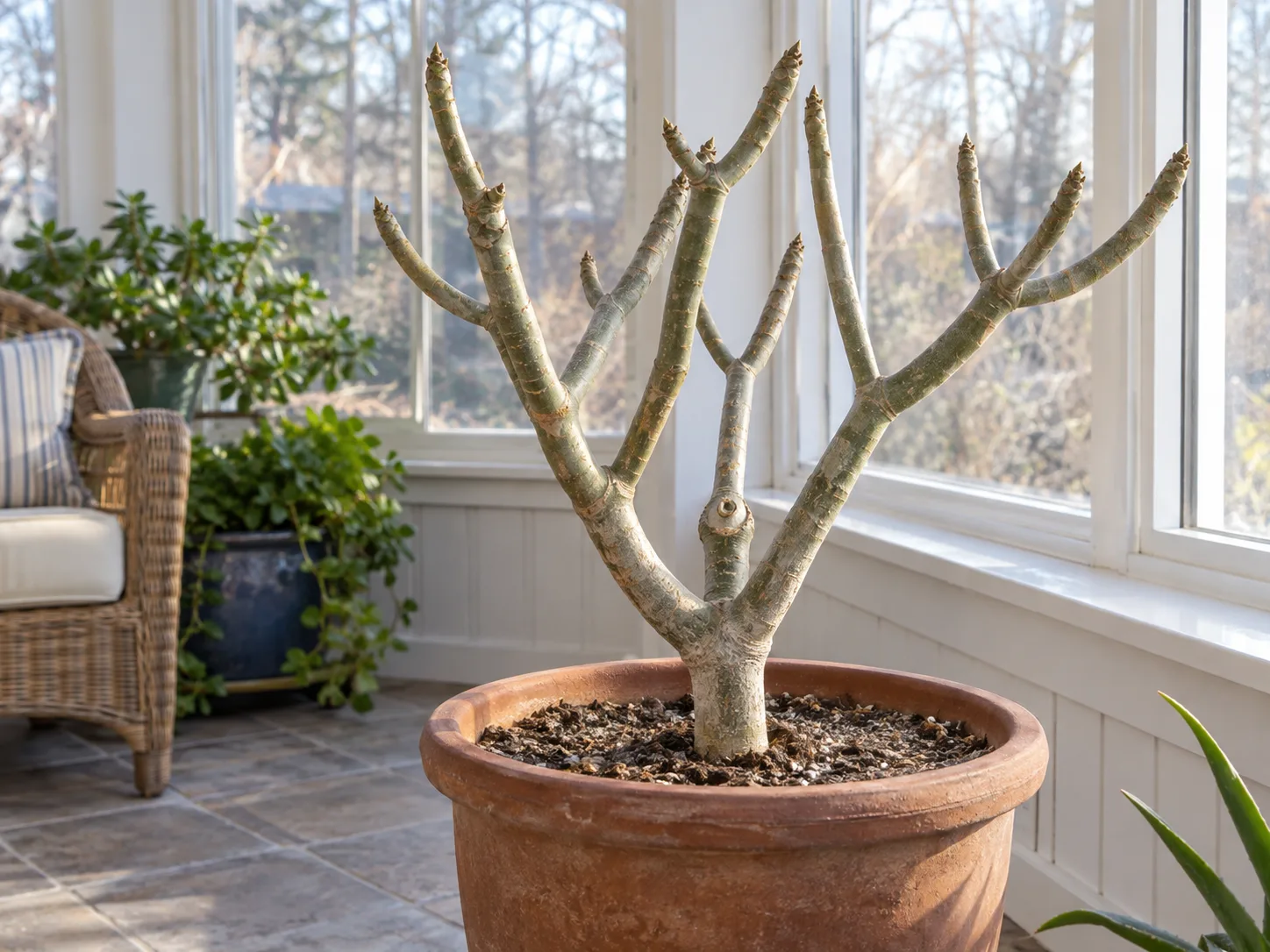
Bring the plant back outdoors gradually after cold nights have passed and temperatures are steadily warm. Resume watering as new growth appears, then restart feeding after growth is underway. Do not force the plant into full summer watering just because the calendar says spring; a bare branch with no new leaves is still using far less water than a leafy, sunlit plant.
Tell normal dormancy from damage
Seasonal leaf drop is usually gradual and coincides with shorter days and cooling weather. A firm branch that remains green beneath a light scratch is often still alive even if it has no leaves; P. rubra is commonly deciduous, while evergreen types can also shed leaves in response to cold or a change in conditions. UF/IFAS describes winter dormancy and leaf loss as common in Florida-grown plumeria, and Get Busy Gardening also notes that fall yellowing and leaf drop can be normal. (UF/IFAS Extension; Get Busy Gardening)
Act when the pattern points to injury rather than dormancy. A branch that turns black, soft, or progressively mushy, especially at the base or at a cut tip, suggests rot or cold damage; a branch that is slightly wrinkled but firm may simply be losing stored water. Stop irrigation, inspect the roots and drainage, and cut out clearly dead tissue with clean tools if rot is advancing. If the base of the main stem is soft, save healthy sections as cuttings rather than repeatedly soaking the pot in hope of recovery.
Encourage flowers by fixing the right bottleneck
Plumeria flowers are produced in clusters at branch ends, and bloom timing varies by species, cultivar, and climate. UF/IFAS gives a broad May-to-November window for Florida, while Wisconsin Extension notes that the share of branch tips that bloom differs substantially among cultivars. A mature plant can therefore look healthy without producing a flower cluster on every tip. (UF/IFAS Extension; University of Wisconsin–Madison Extension)
Give the plant a complete growing season of bright light and warmth before judging bloom performance. Keep the root zone draining, feed moderately while growth is active, and leave healthy tips intact. A cutting may need time to mature before it flowers; a seedling can take longer and may not match the flower color or form of its parent. (University of Wisconsin–Madison Extension)
Why isn’t my plumeria blooming?
Check likely causes in this order. First, count direct-sun hours at the plant rather than judging by how bright the area feels; several hours of shade can limit flowering. Second, consider age and growing-season length: a recently rooted cutting or a plant coming out of a cool, dark winter may need more time to build mature stems.
Next, look at pruning and fertilizer history. Heavy pruning removes the terminal ends where flowers form, while high-nitrogen feeding can encourage leafy growth; neither should be “fixed” with an even stronger fertilizer dose. Finally, verify that the roots are healthy and the plant is warm enough to grow. If it has ample sun, mature branches, and good drainage but still fails to flower over multiple active seasons, ask a local extension office or experienced plumeria grower to assess the cultivar and regional conditions.
Propagate plumeria from cuttings
Stem cuttings preserve the traits of a named plant better than seed. Take a healthy branch tip during warm weather or as active growth is beginning, using a clean, sharp pruner. Recommendations for cutting length differ: the RHS gives short tip cuttings for container culture, while Wisconsin Extension describes longer, leafless stem tips. Use a firm piece large enough to remain stable in the pot, and label it so you remember which way is up. (RHS; University of Wisconsin–Madison Extension)
Let the cut end dry and callus before planting; the time depends on cutting thickness, humidity, and airflow, so judge the wound rather than the calendar alone. Set the callused base a few inches into a small pot of coarse, lightly moistened mix, then stake the cutting if it wobbles. Keep it warm in bright, indirect light while it roots. Rooting hormone is optional; warmth, a callused cut, and a medium that is not soggy matter more than adding extra products.
Water cautiously. Unlike a leafy cutting that needs a constantly damp propagation medium, a thick plumeria stem can rot if the mix stays wet before roots form. Let the upper mix dry between small waterings and avoid a sealed humidity tent that traps condensation around the stem. Once the cutting has rooted and begins making sustained new leaves, move it into brighter sun gradually and begin routine care. (RHS; Get Busy Gardening)
If a cutting is not rooting
Do not pull up a firm cutting every few weeks to check for roots. A cutting may stay unchanged above the soil while it forms roots below, and the time varies with warmth and cutting condition. Keep it warm, stable, and only lightly moist; give it several more weeks if the stem remains firm.
If the base becomes soft or dark, unpot it and inspect for rot. Remove damaged tissue with a clean cut, allow the fresh end to callus again, and restart in clean, fast-draining mix. If the cutting shrivels deeply while remaining firm, it may be using stored water; correct temperature and rooting conditions before increasing irrigation. Do not expect an exact bloom date: extension guidance notes that cuttings may take one to three years to flower, with cultivar and care affecting the timing. (University of Wisconsin–Madison Extension)
Prune and repot only when needed
Plumeria needs little routine pruning. Remove dead or diseased growth, or prune selectively to manage size and shape, preferably as growth resumes in spring. Use clean tools and make deliberate cuts; repeated tip pruning can delay or reduce flowering because the plant’s flowers emerge at branch ends. Pruning may encourage branching, but the new branches still need time to mature before they flower. (University of Wisconsin–Madison Extension; RHS)
Repot when roots fill the pot, the mix has broken down, or drainage has become unreliable. Move up only one modest pot size, preserve the root ball where possible, and use a fresh open mix. After repotting, wait before feeding while the plant settles; the RHS advises withholding fertilizer for several weeks after potting on. If size is the problem, root-pruning and reusing the same pot is an option for experienced growers, but it stresses the plant and is not necessary for a healthy, manageable specimen. (RHS)
Wear gloves and avoid splashing sap into your eyes when pruning or taking cuttings. The milky sap can irritate skin and eyes, and the branches are brittle enough to snap if handled roughly. Wash exposed skin and tools promptly; keep fresh cuts away from children and pets. (UF/IFAS Extension; University of Wisconsin–Madison Extension)
Spot pests, rust, and rot early
Check leaf undersides, new growth, and flower buds when you water. Spider mites may cause fine stippling or webbing, while mealybugs and whiteflies can gather around tender growth, especially on plants kept indoors. Isolate an infested container, rinse pests away where practical, and reassess before treating; if you use an insecticidal soap or other product, confirm the label lists the plant and target pest and follow its directions. Wisconsin Extension notes these common greenhouse pests and the susceptibility of plumeria to spider mites. (University of Wisconsin–Madison Extension)
Plumeria rust often appears as orange or rust-colored pustules on the undersides of leaves. Remove fallen or badly affected leaves and discard them rather than leaving infected debris under the plant. UF/IFAS identifies rust as a persistent issue in some landscapes and recommends removing dead leaves to reduce carryover; if the disease continues, seek regional extension advice before choosing a fungicide. (UF/IFAS Extension)
Root or stem rot is more urgent than ordinary seasonal leaf loss. Check whether the mix is staying wet, whether the pot drains, and whether softness is confined to a leafless tip or spreading toward the trunk. A firm green branch is a better sign than leaves alone; a soft, dark, advancing lesion calls for prompt removal of affected tissue and correction of the wet conditions that allowed it to develop.
Handle sap carefully
Wear gloves when pruning or handling a damaged stem, and avoid touching your face until you have washed. Extension guidance warns that plumeria sap can irritate skin and eyes. If sap gets in your eyes, rinse promptly with clean water; if someone or a pet chews the plant, contact a medical professional or veterinarian for situation-specific advice rather than guessing from a general plant list. (UF/IFAS Extension; University of Wisconsin–Madison Extension)
Conclusion
The most dependable plumeria routine is straightforward: give it strong light, use a mix that drains, water more during warm growth and much less in dormancy, and protect it before frost. A bare plant in winter can be resting, but a soft stem or cold, wet root zone needs attention. Choose a container if your winters are cold, preserve healthy branch tips if you want flowers, and let the plant’s actual growth—not a calendar or a bottle label—tell you when to water, feed, prune, or move it.