Slow Growth on Plumeria: Dormancy, Sun & Feeding Stall
Quick answer
A leafless Plumeria in cool months is usually dormant, not dying — hold water and wait. In the warm growing season, stalled tip growth usually means too little sun, cool roots, or missed feeding. First step: check whether branch tips are firm and green (dormant or paused) versus soft or shriveled (rot or severe stress), then match sun and warmth before you water or fertilize.
Slow Growth on Plumeria: Dormancy, Sun & Feeding Stall
This guide covers slow growth on Plumeria. See also the general Slow Growth guide, watering, and light pages for this plant.
Slow Growth on Plumeria: Dormancy, Sun & Feeding Stall
Quick answer
Plumeria (frangipani) runs on a boom-and-rest cycle: explosive leaf and flower growth in heat, then a full stop in cool months. A bare plant from fall through early spring is usually dormant, and the correct treatment is near-neglect, not rescue.
For how stalled growth works across species in general, see our slow growth hub. On Plumeria, the story is almost always one of two things: normal winter dormancy with leafless but firm branch tips, or a warm-season stall where the tips stop pushing new leaves for lack of sun, warmth, water, or food.
First fix: squeeze-test the branch tips and check the season. Firm tips + cool season means dormancy — hold water and wait. Firm tips + warm season with no new leaves means a care stall — confirm at least six hours of direct sun and warm nights first, then correct watering or feeding. Soft or blackened tips mean rot, which outranks everything else.
Dormant or truly stalled: the one distinction that matters
No other diagnosis matters until you answer this. Plumeria is deciduous by nature in seasonal climates: UF/IFAS notes that in Florida most plumeria go dormant and lose their leaves in the winter months, with the bare green stems able to keep photosynthesizing while leafless. Practical growers describe the trigger plainly — leaf drop and shutdown begin as it cools below about 50°F, at which point you stop fertilizing and water very sparingly, if at all.
Use this quick sort:
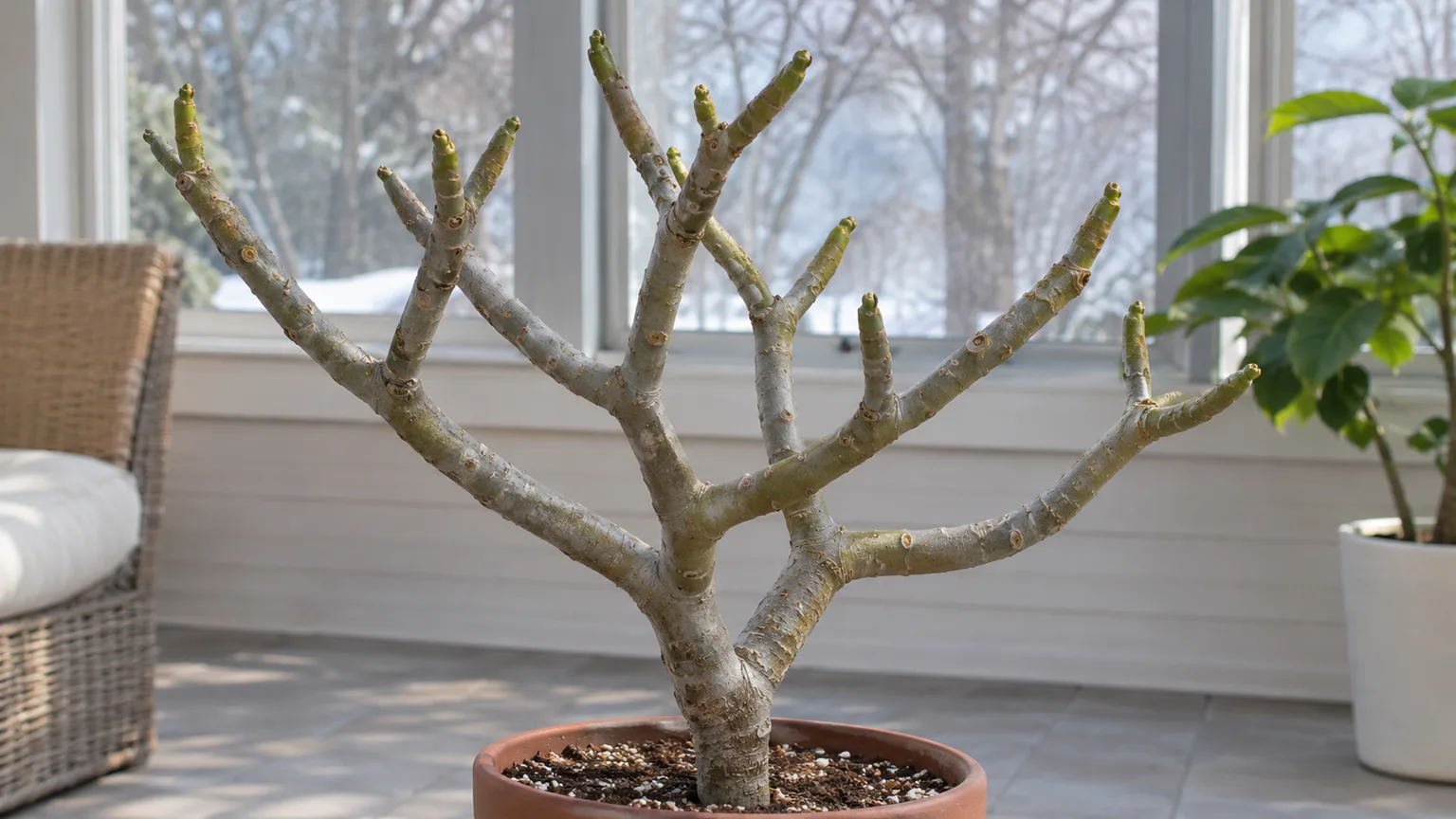
- Dormancy: leaves yellowed and dropped (or dropping) as nights cooled; branch tips firm and plump; bark green-gray; no foul smell. This plant needs nothing except dryness and frost protection.
- Warm-season stall: mid-spring through early fall, nights warm, yet branch tips sit frozen for weeks with no new leaves unfurling. This plant needs a care correction.
- Rot or cold damage: tips soft, wrinkled, blackened, or weeping; base of the trunk soft; sour smell from the mix. This is triage, not patience — dry the plant immediately and inspect.
What normal dormancy looks like on Plumeria
Expect your plant to look alarming. A dormant Plumeria is a cluster of thick, bare, finger-like branches with blunt growing tips — what growers affectionately call sticks. Leaves yellow and fall, sometimes all of them. Growth does not creep along slowly; it stops entirely for months.
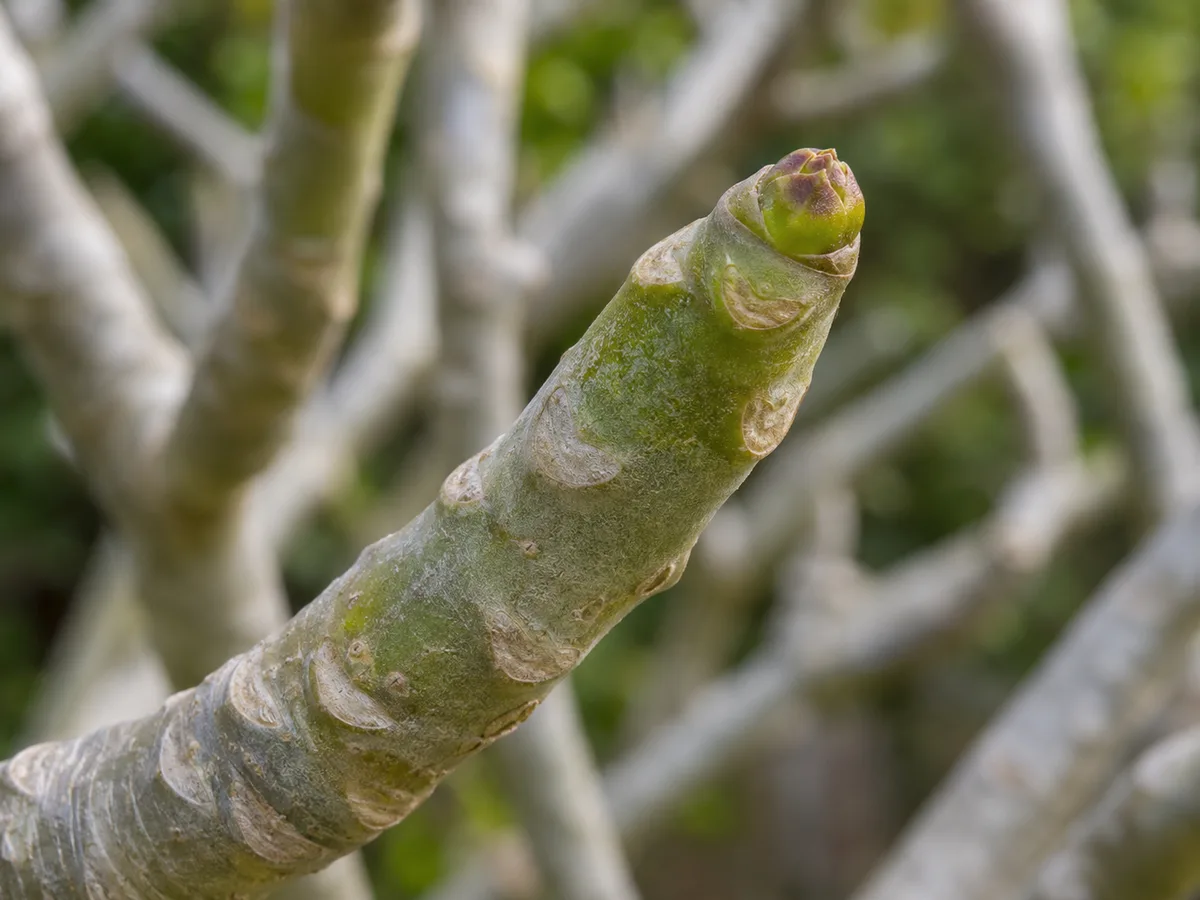
Leafless branches with firm, plump tips are usually healthy dormancy; soft or blackened tips signal a different problem.
Three Plumeria-only details separate healthy dormancy from death:
- Firm, blunt tips. Healthy dormant tips feel solid and look sealed, often with a slightly silvery-green growing point. Dead or rotted tips feel hollow, rubbery, or mushy.
- Green under the gray. Lightly scratch an inconspicuous spot on a branch (not the tip): living tissue shows green just under the surface. Uniform brown and papery through the whole branch means that branch is gone.
- No water needed. A leafless Plumeria in cool storage uses almost no water, and growers overwinter dormant plants with no watering at all until wake-up. Watering a leafless plant on a schedule is the fastest way to convert dormancy into stem rot.
Waking is slow and cannot be rushed. New leaves emerge from the branch tips only after sustained warmth, and growers warn it can take a month or more before you see any signs of life — do not try to force it faster with heavy water or fertilizer.
Why Plumeria stalls in the growing season
When nights are warm and the plant should be pushing leaves but isn’t, work through these causes in order. They are ranked by how often they explain a Plumeria stall.
Not enough sun
Plumeria is a full-sun tropical: it wants open sky, not a bright windowsill. Plants getting under about six hours of direct sun push small leaves slowly, bloom poorly, and stay soft. Flowering references put the bar plainly — Plumeria blooms best with at least six hours of sunlight daily. If your plant sits under an overhang, behind sheer curtains all day, or in the shadow of a fence, light is the prime suspect. Confirm placement against the Plumeria light guide before changing anything else.
Cool roots and a late spring
Plumeria metabolism follows heat. A plant dragged outside too early, sitting on cold concrete, or enduring nights in the 50s will sit motionless even in May. UF/IFAS places Plumeria in Zones 10B–11 and warns of cold damage farther north, which is why container culture with indoor winter storage is standard in marginal climates. Warmth returning into the 70s is what revives new leaves — until then, stillness is physiology, not hunger.
Water mismatch in fast-draining mix
Plumeria demands sharp drainage but still drinks deeply in summer heat. The classic stall pattern: a coarse, sandy mix in a hot patio pot that dries within a day or two, watered on a cautious houseplant schedule, so the plant rations new growth. The care rule is simple — grow in full sun and well-draining soil, water when dry, and never water in winter. Check moisture against the Plumeria watering guide, and remember a plant pushing new leaves in 90°F heat drinks far more than the same plant in April.
Missed feeding on a heavy feeder
Plumeria builds big leaves and heavy flower clusters fast, and it eats accordingly. Growers call them very heavy feeders, applying liquid bloom food every one to three weeks through spring and summer. A plant in its third summer in the same depleted mix, or one that never gets fed because “tropicals don’t need much,” stalls with small pale leaves and short branch extension. Feed only in the warm growing season per the Plumeria fertilizer guide — fertilizer in dormancy cannot restart a sleeping plant and only salts the mix.
Root-bound pot or exhausted mix
Container Plumeria can fill a pot with thick fleshy roots in a season or two. A root-bound plant dries within hours, starves between feeds, and stalls even when everything else looks right. If water runs straight through, roots circle the drain holes, or the plant wobbles loose with a solid root brick, plan a spring repot into fresh coarse mix following the Plumeria soil and Plumeria repotting guides.
Rust-defoliated canopy
Plumeria rust is a persistent foliar fungus that builds orange pustules on leaf undersides through the growing season and can defoliate plants early, costing them the late-season growth they would otherwise make. UF/IFAS advises collecting fallen leaves and removing them from the site in fall to cut next season’s rust levels. A plant that stalls from midsummer onward with spotted, dropping leaves likely lost its solar panels to rust rather than to hunger.
How to confirm the cause before you act
Run this sequence on a warm-season stalled plant. Stop at the first failure and fix it before moving on.
- Tips and season. Firm tips with no new leaves while nights stay above the mid-50s means a care stall. Soft or blackened tips mean rot — dry the plant and inspect before anything else.
- Sun audit. Count hours of direct sun striking the branch tips, not ambient brightness around the pot. Under six hours means light first.
- Warmth check. Feel the pot at dawn and note night temperatures. A plant on cold tile or out too early in spring waits for heat; hold fertilizer until warmth is steady.
- Water reality. Probe the mix 5–8 cm down an hour after watering and again the next day. Bone-dry within a day in heat means underwatering; soggy for days means drainage failure — cross-check the Plumeria watering guide.
- Feed history. No fertilizer at all this growing season, or none in six-plus weeks on a big container plant, points to hunger once sun, warmth, and water check out.
- Root check. Lift the nursery pot: roots packed solid, circling, or pushing out of drainage holes means the stall is mechanical — repot in spring, not mid-dormancy.
Wear gloves for any cutting or close handling: plumeria’s milky sap causes skin irritation in some people.
First fix: give it sun and warmth, then feed the push
Do one primary correction based on the checks above.
- If light is short: move the plant into full sun and acclimate over 7–14 days (a shade-softened Plumeria sunburns if slammed into August sun). Expect new tip activity within two to three weeks once light and heat align.
- If cool is the limiter: hold the plant warm and bright, water sparingly, and give zero fertilizer until nights are reliably warm and tips show swelling buds. Feeding a cold plant fixes nothing.
- If warmth and sun are good but the plant is hungry and dry: soak thoroughly until water drains freely, then begin light, frequent feeding with a bloom-type fertilizer through the warm months. Keep the mix draining sharply — wet feet stall Plumeria as surely as hunger.
- If root-bound: wait for spring, then step up one pot size into fresh coarse mix rather than feeding harder into a brick of roots.
Secondary steps only after the first fix holds: refresh tired mix, stake a top-heavy plant so wind-rock stops shearing new roots, and rake up fallen rust-spotted leaves.
Recovery timeline
| Time after the right fix | What you should see |
|---|---|
| 1–2 weeks | Tips swell; tiny leaf claws emerge at branch ends |
| 2–4 weeks | New leaves unfurl and enlarge; branch extension resumes |
| 6–10 weeks | Full canopy rebuild; flower buds possible on mature branches in high sun |
| Cool-season hold | No new leaves until sustained warmth — patience, not panic |
Judge recovery by new leaves at the branch tips, never by old dropped leaves returning. Already-small pale leaves will not resize; fresh growth should emerge full-size and green.
Mistakes that keep Plumeria stalled
- Watering a leafless dormant plant on a schedule — the single most common killer; cool wet mix rots thick stems fast.
- Fertilizing dormancy away — no feed restarts a sleeping Plumeria; it only accumulates salts until spring.
- Declaring it dead in January — bare sticks with firm tips are the normal winter look; the scratch test beats the eye test.
- Keeping it in permanent part-shade — nursery shade is temporary; mature plants need open sun to grow and bloom.
- Repotting or hard-pruning at dormancy — root and wound healing need heat; do structural work in spring.
- Stacking repot, hard prune, and full-strength feed in one day — fix the primary limiter first so you can read the plant’s response.
When to use this page vs other Plumeria guides
Use this page when the main question is pace: a plant that will not start in spring, a mid-summer freeze in new leaves, or confusion between dormancy and death.
- Stretch with long bare stem gaps and leaning belongs with shade diagnosis, not this page.
- Wilt with wet mix, soft trunk base, or sour smell is a water and rot problem first.
- Yellow dropping leaves in cool fall weather is usually dormancy beginning.
- Orange powdery spots under leaves with early defoliation is rust season, not hunger.
- If no single symptom dominates and you want the full symptom map, open the Plumeria problems hub and pick the closest match.
Related Plumeria guides
- Plumeria light — full-sun hours and placement for leaf push and bloom
- Plumeria watering — summer deep watering vs dry winter rest
- Plumeria fertilizer — growing-season feeding detail
- Plumeria soil — sharp drainage for thick fleshy roots
- Plumeria repotting — when a root-bound pot chokes growth
- Plumeria problems hub — full symptom index
Related tool
Track whether your plant is actually stalled or just resting with the Plant Growth Rate Calculator before changing sun, water, or feeding all at once.