Plumeria Light Requirements for Growth and Flowers
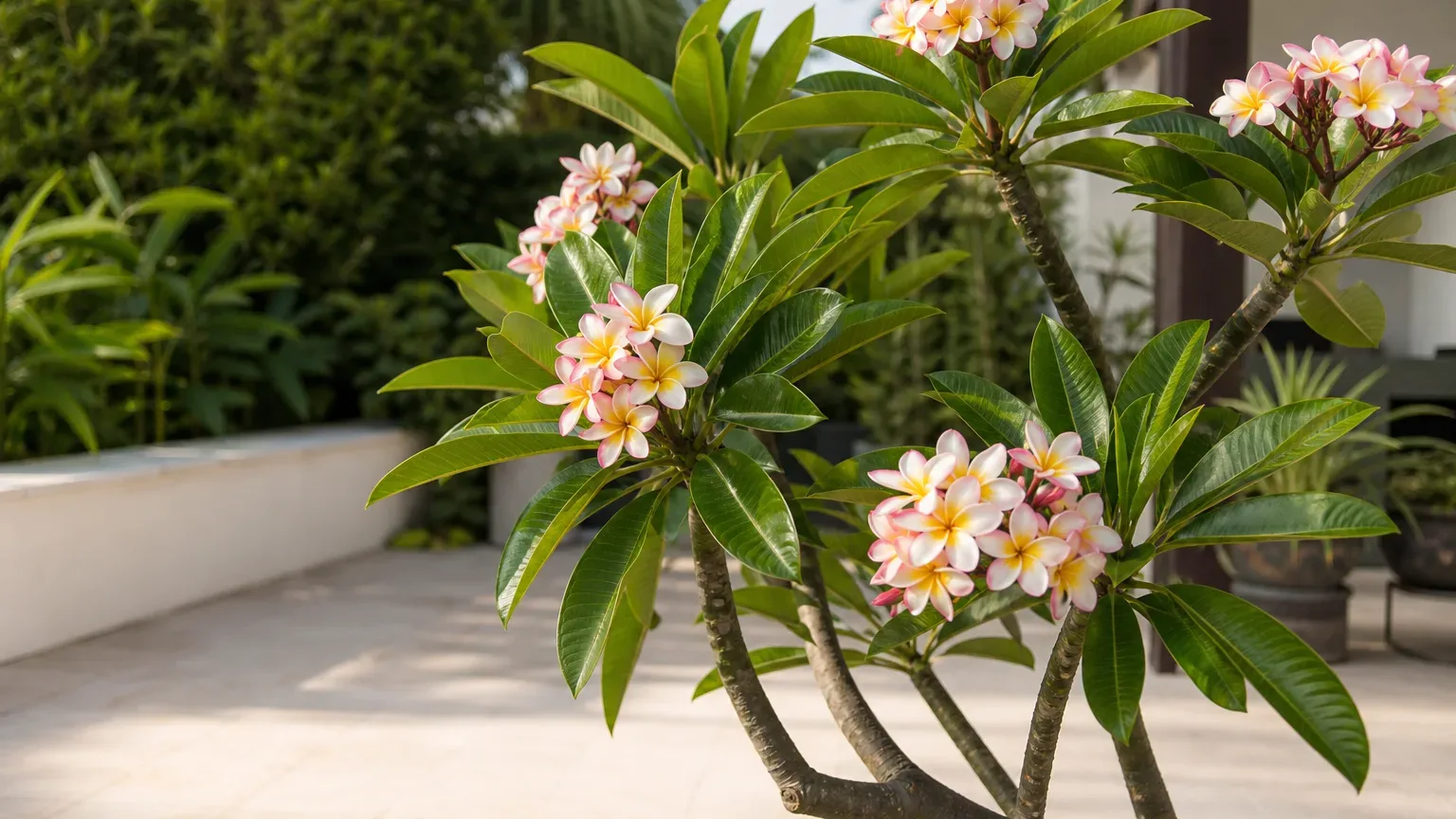
Plumeria Light Requirements for Growth and Flowers
Plumeria Light Requirements for Growth and Flowers
Plumeria rubra is not a foliage plant that merely tolerates a bright room. It is a seasonally deciduous tropical tree built for open, sunny conditions, and its light level affects branch strength, leaf size, dry-down speed, and whether mature tips initiate flower clusters. The reliable starting point is at least six hours of direct outdoor sun during active growth, with gradual acclimation after shade.
For most homes in India, the best position is an open terrace, sunny balcony, courtyard, or frost-free garden. A window can keep a compact plant alive, but glass, roof overhangs, nearby buildings, and distance from the pane often reduce useful light enough to suppress flowering. Make placement decisions from the light that reaches the leaves, not from how bright the room looks.
How much light Plumeria actually needs
Give actively growing Plumeria full sun, meaning direct sunlight for much of the day. UF/IFAS says plumeria grows best in full sun, and the Missouri Botanical Garden also lists full sun for Plumeria rubra. Those recommendations describe a flowering tree, not a low-light houseplant.
Direct morning sun plus several brighter midday hours is often enough for steady container growth. An established plant in a frost-free garden can take sun from morning to late afternoon, provided its root zone does not become dangerously dry. More light increases water use, a relationship also emphasized in the Wisconsin Extension plumeria profile, so check the Plumeria watering guide after moving a pot into stronger sun.
Why six hours of direct sun is a useful target
Six hours is a practical placement target rather than a rigid biological threshold. It filters out spots that receive only bright sky light or a brief sunbeam while recognizing that season, latitude, cloud, cultivar, and canopy temperature change the plant’s response. The University of Arkansas Extension describes plumeria as loving full sun, which supports choosing the sunniest workable outdoor position.
Flowering needs more than light alone: plant maturity, healthy branch tips, warmth, nutrition, and seasonal rhythm also matter. Still, if a healthy, mature plumeria produces long weak shoots but no inflorescences, light is the first variable to examine. Do not add extra fertilizer before fixing shade; use the Plumeria fertilizer guide once the placement is sound.
Best placement for Plumeria
Start outdoors whenever climate permits. Plumeria rubra is native to tropical America and widely cultivated through warm regions, according to Kew’s Plants of the World Online. An open site fits that growth habit better than a permanently shaded indoor corner.
Observe the candidate spot on a clear day. Record when direct sun first touches the leaves and when it leaves; do not count brightness reflected from the sky as direct sun. Recheck after the monsoon, when neighboring trees flush, or when seasonal sun angle changes.
Balconies, terraces, courtyards, and gardens
An east-to-south-facing terrace or balcony usually gives the longest useful exposure in the Northern Hemisphere, though local obstructions matter more than compass labels. On an exposed rooftop, protect the container from toppling and monitor water loss. In a courtyard, watch whether walls block midday sun even when the space feels bright.
In hot inland cities, a plant can receive enough photons but still overheat beside reflective white walls, metal railings, or dark stone. Move it back from the heat-radiating surface while preserving direct sky exposure. In humid coastal areas, strong sun and airflow also help foliage dry, but light does not compensate for dense, waterlogged soil; review the Plumeria soil guide if the pot stays wet.
Windows and indoor compromises
If Plumeria must remain indoors during active growth, use the least obstructed south- or west-facing window available and keep foliage close enough to receive direct rays without touching hot glass. A sunny room several metres from the window is usually dim at leaf level. The University of Minnesota Extension explains that light intensity drops with distance from a window, which is why room brightness is an unreliable test.
An indoor plant may make leaves without flowering. Treat the window as an overwintering or temporary placement unless measurements and growth show otherwise. Rotate the pot a quarter turn weekly if shoots lean, but do not use rotation to disguise a location that is fundamentally too dark.
Can Plumeria take strong direct sun?
Yes. An established Plumeria rubra belongs in strong direct sun, and healthy outdoor leaves normally tolerate tropical intensity. The caveat is acclimation: leaves formed under nursery shade, monsoon cloud, or indoor glass can scorch when moved abruptly into a full afternoon exposure.
Sun and heat are not identical. A well-watered, acclimated garden plant may handle all-day light, while a root-bound black nursery pot on hot concrete can overheat and wilt despite adequate soil moisture. Shade the container or insulate it before reducing light to the canopy.
Acclimating a nursery plant without scorching it
Begin with bright shade and gentle morning sun for three or four days. Then add roughly one to two hours of direct exposure every few days, shifting toward the final position over about two weeks. Slow the process if a heat wave arrives or if the plant came from a covered retail display.
Existing pale or brown patches will not repair themselves. Judge the new position by leaves that expand after the move. If fresh leaves emerge normally and stems stay firm, continue; if new tissue bleaches, step back to the last safe exposure before trying again.
What low light does to growth and flowering
Low light first appears as reduced performance, not sudden collapse. New shoots lengthen between leaf scars, branch tips lean toward the opening, leaves may become larger and thinner, and the pot remains wet longer. A mature plant can stay green in those conditions while losing the compact framework and flowering expected outdoors.
Plumeria rubra is partly deciduous and can lose leaves during a dry or cool rest; the National Tropical Botanical Garden describes seasonal leaf loss. Do not diagnose every bare winter stem as low-light damage. Dormant stems should remain firm, while active-season shade produces weak new extension and little progress even in warm weather.
Using grow lights for Plumeria
A grow light can support a compact plumeria where outdoor sun is unavailable, but a decorative bulb across the room is not enough. Choose a full-spectrum LED panel that covers the whole canopy, place it according to the manufacturer’s plant-light distance, and run it on a timer for about 12 to 14 hours during active growth. Begin at the greater recommended distance, then adjust from the plant’s response.
Measure at leaf height with a light meter if possible. For a sun-loving tree, target a genuinely high-output setup rather than borrowing low-light foliage-plant settings. Watch temperature and dry-down after installation; stronger artificial light can increase water demand, while excess lamp heat can crisp the uppermost leaves.
Artificial light is optional during a deliberate cool, leafless rest. If stems are dormant, reduce watering and keep the plant frost-free rather than forcing pale winter growth. If warmth triggers new leaves, restore strong light immediately.
Seasonal light in India and similar climates
Summer sun can be intense, but monsoon cloud and building shade may cut daily exposure for weeks. Keep the plant in the most open position and avoid compensating with extra water or fertilizer. Growth may slow temporarily; constantly relocating the pot between rain shelter and harsh sun can create more stress than a stable, well-drained site.
In north India, cool winter weather can trigger leaf fall and dormancy. UF/IFAS notes that plumerias commonly lose leaves during winter dormancy, while warm southern and coastal sites may retain longer active seasons. Let actual leaf and bud activity guide watering, but keep the bare plant in a bright, sheltered place rather than a damp, dark room.
Reading light-stress symptoms
Light symptoms overlap with root, water, and nutrient problems, so use timing and location. Damage that appears only on the sun-facing surface soon after a move points toward scorch. Weak new growth throughout the canopy, slow dry-down, and persistent leaning point toward insufficient light.
Change one variable first: placement. Give the plant two to four weeks of suitable warmth and stable light, then evaluate new tissue. Do not remove healthy leaves merely because they record old damage.
Signs of too little light
Look for long, thin new shoots; wide spacing between leaves; a canopy leaning toward one opening; unusually slow soil dry-down; and a mature plant that repeatedly fails to flower despite otherwise healthy roots. If warm-season growth is weak, move the pot outdoors through the acclimation sequence or add an appropriately powerful lamp.
Leaf yellowing alone is not a reliable low-light diagnosis. Check the root zone and watering pattern first, especially if the mix smells sour or the stem base softens. Use the Plumeria repotting guide when compacted mix or crowded roots, rather than placement, explains poor growth.
Signs of excess sun or heat
Recent scorch appears as bleached tan areas, crisp margins, or papery patches concentrated on the side suddenly exposed to direct rays. Heat stress may also cause midday drooping even when the root ball is moist. Provide temporary light shade during peak afternoon heat, cool the container, and resume acclimation more slowly.
Do not move an acclimated plant into deep shade because one old leaf burned. Correct the abrupt transition or reflected heat source, then preserve enough direct light for future growth. The goal is a sun-adapted canopy, not permanent protection from sun.
When to use this page vs other Plumeria guides
Use this page when choosing a balcony, terrace, garden position, window, or grow light, or when weak growth suggests poor exposure. Start at the Plumeria overview for whole-plant context. Use Plumeria watering when dry-down or dormancy changes the watering decision, and Plumeria soil when the root zone remains wet despite adequate sun.
Use Plumeria fertilizer for feeding after light is corrected, Plumeria repotting for root crowding or unstable containers, and Plumeria propagation when rooting cuttings. Light supports each process, but it does not replace the topic-specific steps.
Related Plumeria guides
- Plumeria overview — identity, seasonal growth, and complete care context.
- Plumeria watering — match irrigation to sun, heat, and dormancy.
- Plumeria soil — build a fast-draining root zone for a sunny pot.
- Plumeria fertilizer — feed active growth without trying to fertilize away shade.
- Plumeria repotting — handle crowded roots and top-heavy plants.
- Plumeria propagation — give cuttings enough light after callusing and rooting.
Conclusion
Plumeria light requirements are straightforward: give Plumeria rubra an open outdoor position with at least six hours of direct sun during active growth, then adjust for local heat, monsoon cloud, and winter dormancy. A sunny terrace or balcony usually beats an indoor window; a strong grow light is a workable substitute only when it delivers useful intensity across the canopy.
Move shade-grown plants gradually, read new growth rather than old scars, and separate scorch from container overheating. When a mature plumeria stretches, leans, dries slowly, or stops flowering, correct light before reaching for more fertilizer. Firm, compact new shoots are the clearest sign that the placement now works.