33 Stunning Tropical Flowers to Grow Inside or Outside
Grow tropical flowers indoors or outside with a practical guide to 33 choices, including easy picks, climbers, bulbs, fragrance, pet cautions, and winter limits.
“Tropical flower” is a useful visual description, not a promise that a plant will survive every winter. Some choices on this list are true frost-tender plants; others are subtropical shrubs, tender bulbs, or houseplants that spend summer outside. The right one depends on the conditions you can provide, not just on the color of the bloom.
The most reliable approach is to choose the growing setup first. A warm, sunny garden can support plants that would sulk indoors, while an east-facing window may be perfect for a moth orchid but far too dim for a bougainvillea. The 33 flowers below are grouped by where they are most likely to succeed, with the trade-off that matters before you buy.
Pick by climate, light, and space
Start with your lowest winter temperature, then count direct sun where the plant will actually sit. A bright room with no direct sun is not equivalent to a sunny patio, and a sheltered balcony may be warmer than an exposed garden bed but still too cold for a frost-sensitive root ball.
Missouri Botanical Garden describes many tropical and tender plants as summer annuals for beds or patio containers in regions with hot, humid summers. That distinction is the key to growing tropical flowers “anywhere”: a plant can be a spectacular seasonal accent even when it cannot live outdoors year-round. (Missouri Botanical Garden)
| Your conditions | Start with | Do not assume |
|---|---|---|
| Bright east or west window | Phalaenopsis orchid, African violet, anthurium, bromeliad | Every sun-loving flower will bloom there |
| Bright south or west patio | Hibiscus, bougainvillea, pentas, plumeria, mandevilla | A recently indoor plant can take full sun immediately |
| Filtered shade and high humidity | Ginger, heliconia, urn plant, bat flower, medinilla | Shade means the soil should stay waterlogged |
| Small home or apartment | African violet, clivia, hoya, compact bromeliad | Indoor means small; vines and shrubs still outgrow pots |
| Frost-free garden | Hibiscus, bird-of-paradise, plumbago, protea, torch ginger | A zone number alone predicts performance in every microclimate |
| Cold winter with a sunny window or grow light | Canna, amaryllis, mandevilla, plumeria, tender hibiscus | “Overwinterable” means it will keep flowering all winter |
Five ways to grow tropical flowers beyond the tropics
- Grow them as permanent outdoor plants. In a frost-free or nearly frost-free climate, shrubs, vines, and rhizomatous plants can stay in the ground. Protect plants in an exposed site even when the regional hardiness range looks suitable; a cold wind, wet root zone, or unusual freeze can be more damaging than the average winter suggests.
- Use them as warm-season container plants. This is the most flexible option for hibiscus, mandevilla, bougainvillea, plumeria, pentas, and many gingers. The pot warms quickly and can move under cover, but it also dries faster and gives roots less insulation than garden soil.
- Treat them as summer bedding plants. Cannas, pentas, some lilies, and other tender plants can provide one excellent season, then be discarded, divided, or stored as bulbs or rhizomes. This is not a failure; it is often the simplest choice when indoor space is limited.
- Choose a true flowering houseplant. African violets, moth orchids, bromeliads, clivia, and anthuriums are bred or selected to perform in a home. They still need more light than a dark corner provides, but their size and temperature needs are more realistic indoors.
- Use a greenhouse, conservatory, or protected porch. This middle ground makes demanding plants such as stephanotis, heliconia, medinilla, and black bat flower more manageable. Stable warmth, bright filtered light, airflow, and room for mature growth matter more than simply raising humidity.
33 tropical flowers that can work indoors, outdoors, or both
The profiles below describe the plant’s best role, not a guarantee. Cultivars vary widely, so use the botanical name on the tag when a common name covers several different plants.
Bright indoor rooms: reliable container flowers
1. Bromeliads (Guzmania spp.). Guzmania bromeliads make colorful indoor accents because the showy part can hold its color for weeks or months while the plant stays compact. Give them bright filtered light, an airy mix, and good ventilation; if the plant forms a central cup, use clean, low-mineral water and refresh it rather than keeping the potting mix constantly wet.
2. Clivia (Clivia miniata). Clivia is a patient, low-light-tolerant houseplant with orange, yellow, or salmon flower clusters, but “low light” means it can survive—not that it will bloom reliably in a dim room. Keep it in a snug pot, water less during its cool rest, and remember that the plant is toxic to dogs and cats according to the ASPCA. (ASPCA: Clivia Lily)
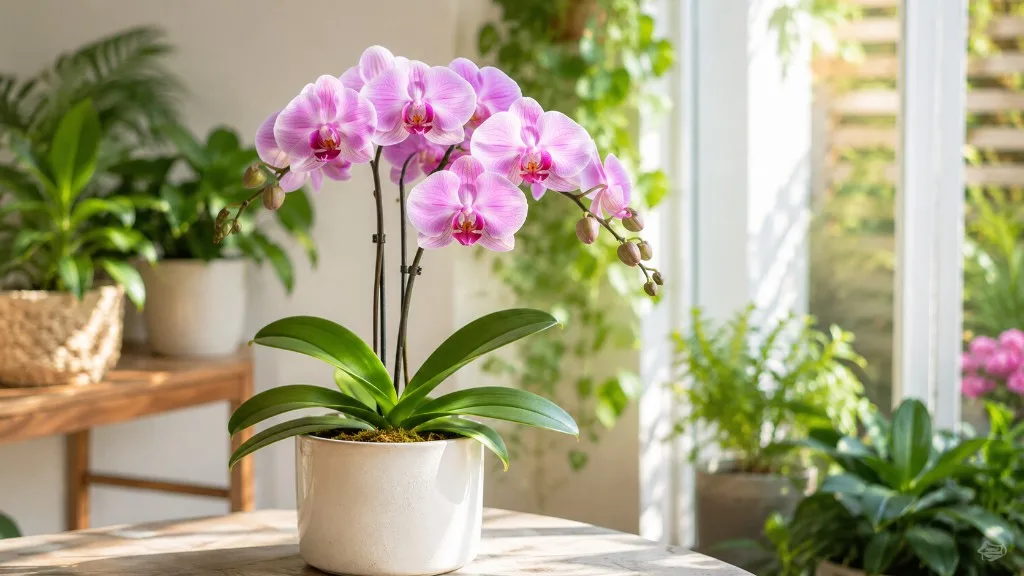
3. Moth orchid (Phalaenopsis hybrids). This is one of the best bets for long-lasting indoor flowers. Use bright indirect light, a bark-based orchid mix, and a pot that drains completely; the RHS advises keeping moth orchids above about 60°F and avoiding both waterlogged roots and a completely dry root system. (RHS: How to grow Phalaenopsis)
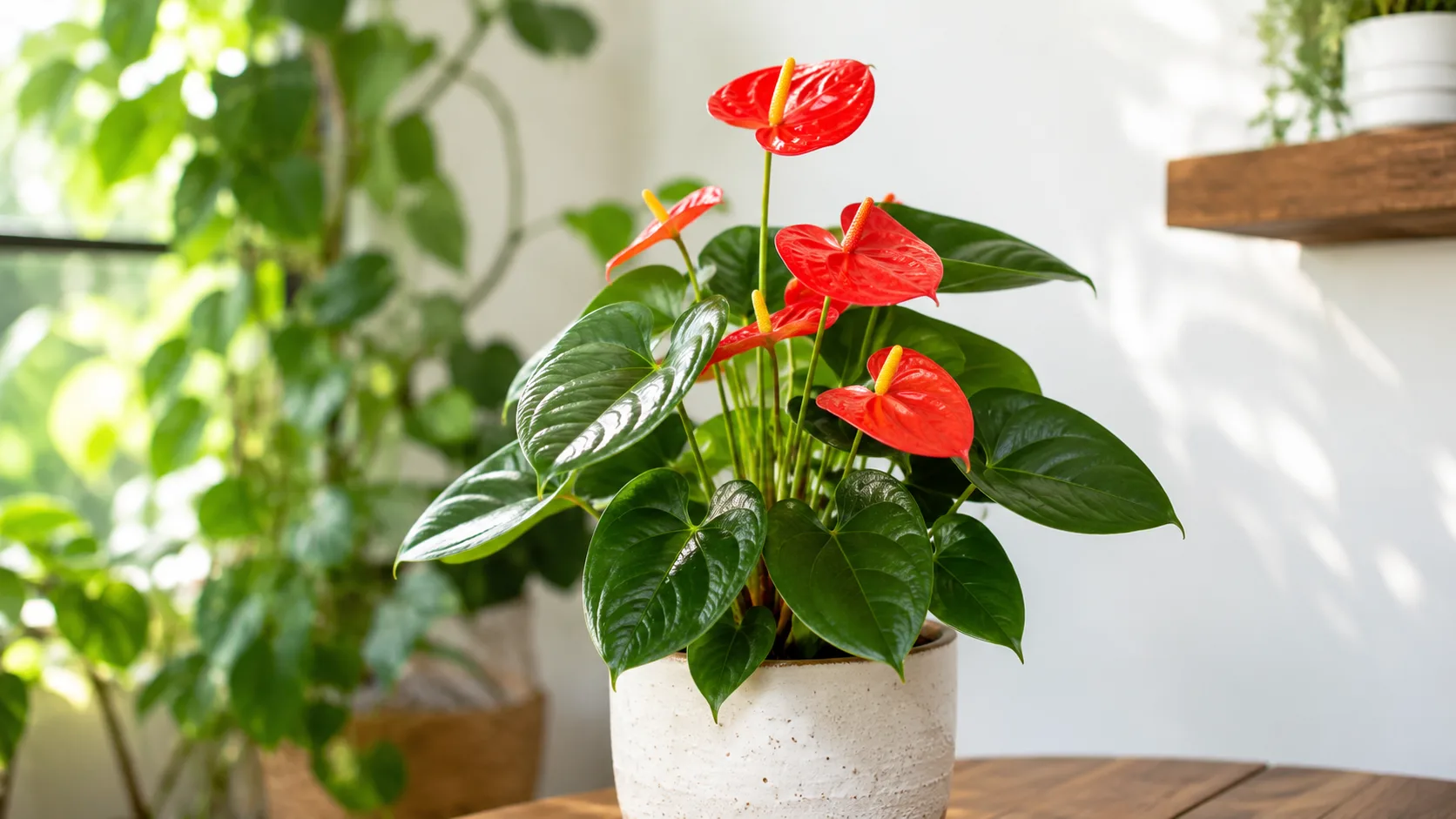
4. Anthurium (Anthurium spp.). Glossy leaves and waxy red, pink, white, or burgundy spathes give anthurium year-round tropical character. NC State Extension recommends bright indirect light, moist but well-drained soil, warm temperatures, and high humidity; too little light reduces flowering, while overwatering invites root rot. The plant is toxic if chewed, so keep it away from pets and small children. (NC State Extension: Anthurium)
5. Medinilla (Medinilla magnifica). Pink pendant flower clusters make medinilla a dramatic specimen for a warm, humid conservatory or bright indoor room. It is better for an experienced grower than a casual windowsill: it dislikes abrupt changes, needs space around its arching stems, and can fail to flower when light, warmth, or humidity swings too sharply.
6. Urn plant (Aechmea fasciata). This bromeliad’s silver banded leaves and pink flower spike suit an indoor shelf or shaded patio. It usually flowers once from the central rosette, then produces offsets; keep the mother plant after bloom so those pups can mature, and do not bury the crown in a dense, wet mix.
7. African violet (Streptocarpus ionanthus). For a small home, few tropical-looking flowers are as dependable as an African violet. Bright filtered light, a small pot, airy soil, and careful watering produce repeated blooms, while wet leaves, cold water, or a huge pot lead to spots, weak growth, and root problems.
8. Ti plant (Cordyline fruticosa). Ti is primarily grown for colorful leaves, but mature outdoor plants can produce fragrant sprays of small flowers. NC State Extension notes that it prefers bright indirect light, moist well-drained soil, humidity, and temperatures above roughly 50°F; indoors it may remain a foliage plant, so choose it for color rather than guaranteed blooms. It is toxic to pets. (NC State Extension: Ti plant)
Outdoor sun: big bloomers and pollinator magnets
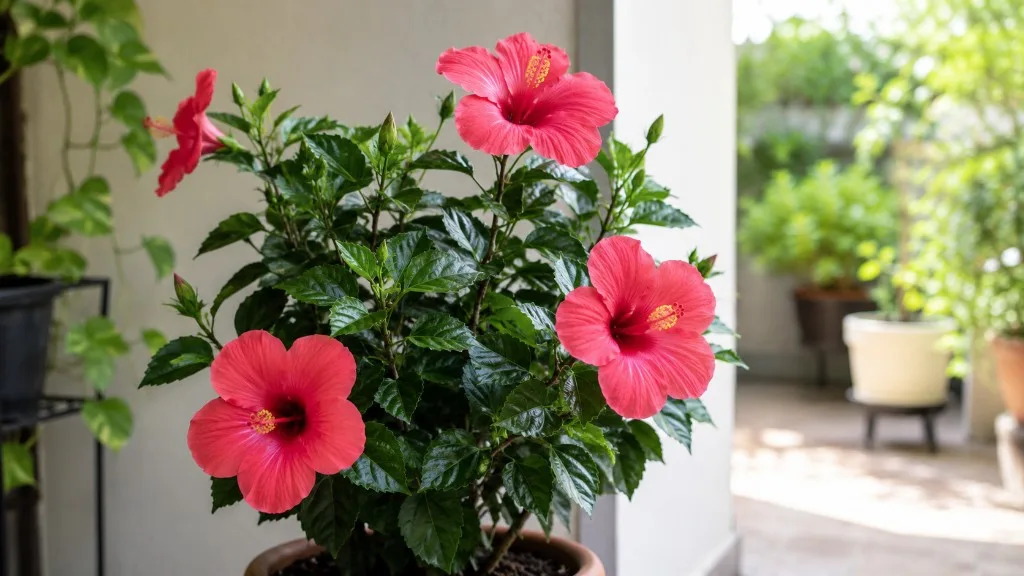
9. Tropical hibiscus (Hibiscus rosa-sinensis). Hibiscus is the classic sunny patio flower, with dinner-plate-sized blooms in intense colors. It needs strong light, regular moisture, warm roots, and feeding during active growth; in a cool climate, a pot is more practical than planting in the ground because it can move indoors before cold weather.
10. Protea (Protea cynaroides). Protea flowers look sculptural in a vase and on the plant, but this is not a high-humidity houseplant. Give it sun, sharp drainage, excellent air movement, and restrained watering after establishment; wet, rich soil is a greater risk than a little dryness, and the mature plant may need more space than its nursery pot suggests.
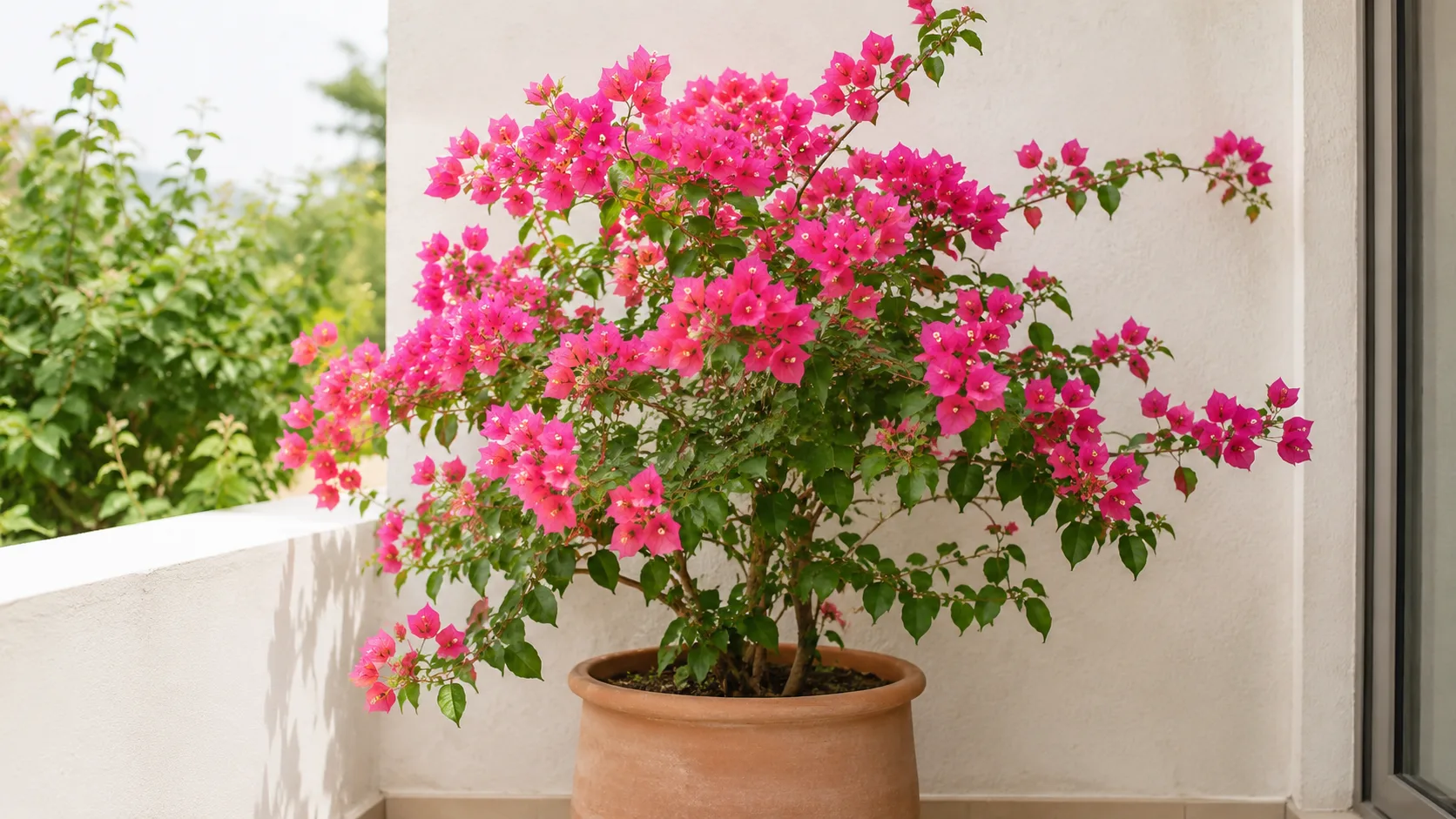
11. Bougainvillea (Bougainvillea spp.). The brilliant color comes mainly from papery bracts around small true flowers. Fine Gardening describes bougainvillea as a heat-loving plant that flowers best in strong sun and prefers an occasional deep soak with drying between drinks once established; container plants need more routine watering and feeding, and the thorns make pruning a long-sleeve job. (Fine Gardening: Tips and Tricks for Growing Bougainvillea)
12. Pentas (Pentas lanceolata). Dense clusters of small star-shaped flowers bring butterflies and hummingbirds to a sunny pot or border. Pentas is a useful warm-season annual where winters are cold, while in frost-free climates it can become a perennial shrub; keep it compact by trimming after a flush instead of allowing a container plant to become woody and sparse.
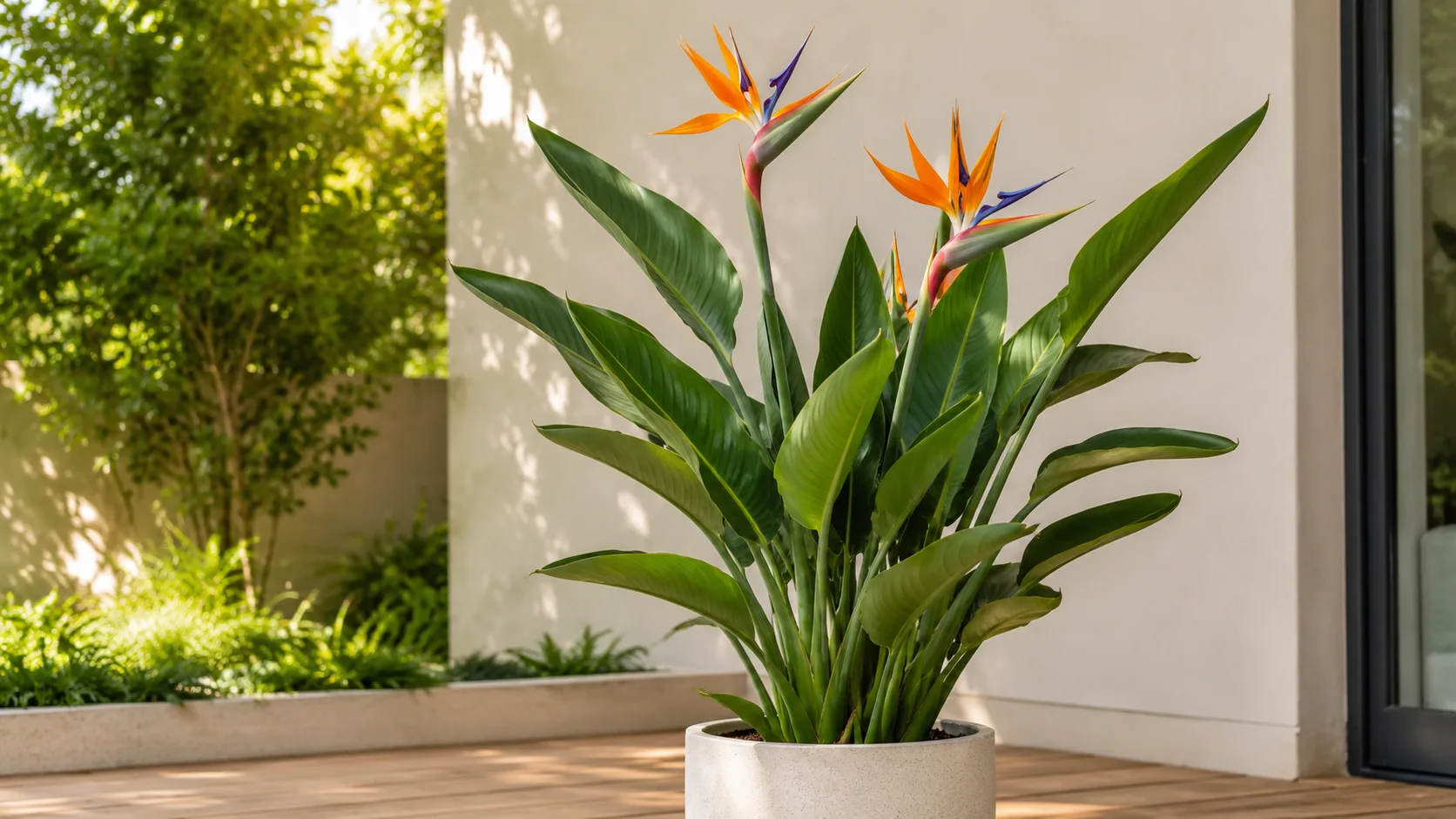
13. Bird-of-paradise (Strelitzia reginae). The orange and blue flower resembles a bird’s head, but the plant needs time, bright light, and substantial space before it becomes a dependable bloomer. Treat it as a large patio or conservatory plant in cool climates, and check pet access: the ASPCA lists Strelitzia reginae as toxic to dogs, cats, and horses. (ASPCA: Bird of Paradise Flower)
14. Plumeria (Plumeria spp.). Plumeria combines waxy five-petaled flowers with a fragrance associated with leis and warm coastal gardens. It wants strong sun, fast-draining soil, warmth, and a drier dormant period; in a cold climate, let the plant rest rather than trying to keep it wet in a dim winter room.
15. Cape plumbago (Plumbago auriculata). The soft blue flowers and arching habit make cape plumbago useful beside a patio, over a low wall, or in a large container. Full sun produces the most flowers, but afternoon protection can help in extremely hot sites; prune after the main flush so the plant does not occupy more space than the bed allows.
Filtered shade and humidity: rainforest character
16. Chenille plant (Acalypha hispida). Long red flower tassels hang from a fast-growing shrub that looks especially good in a basket or warm patio container. Give it bright light to partial shade, consistent moisture, and enough humidity to prevent crispy growth; it is usually a seasonal plant outside frost-free regions and can become awkwardly large indoors.
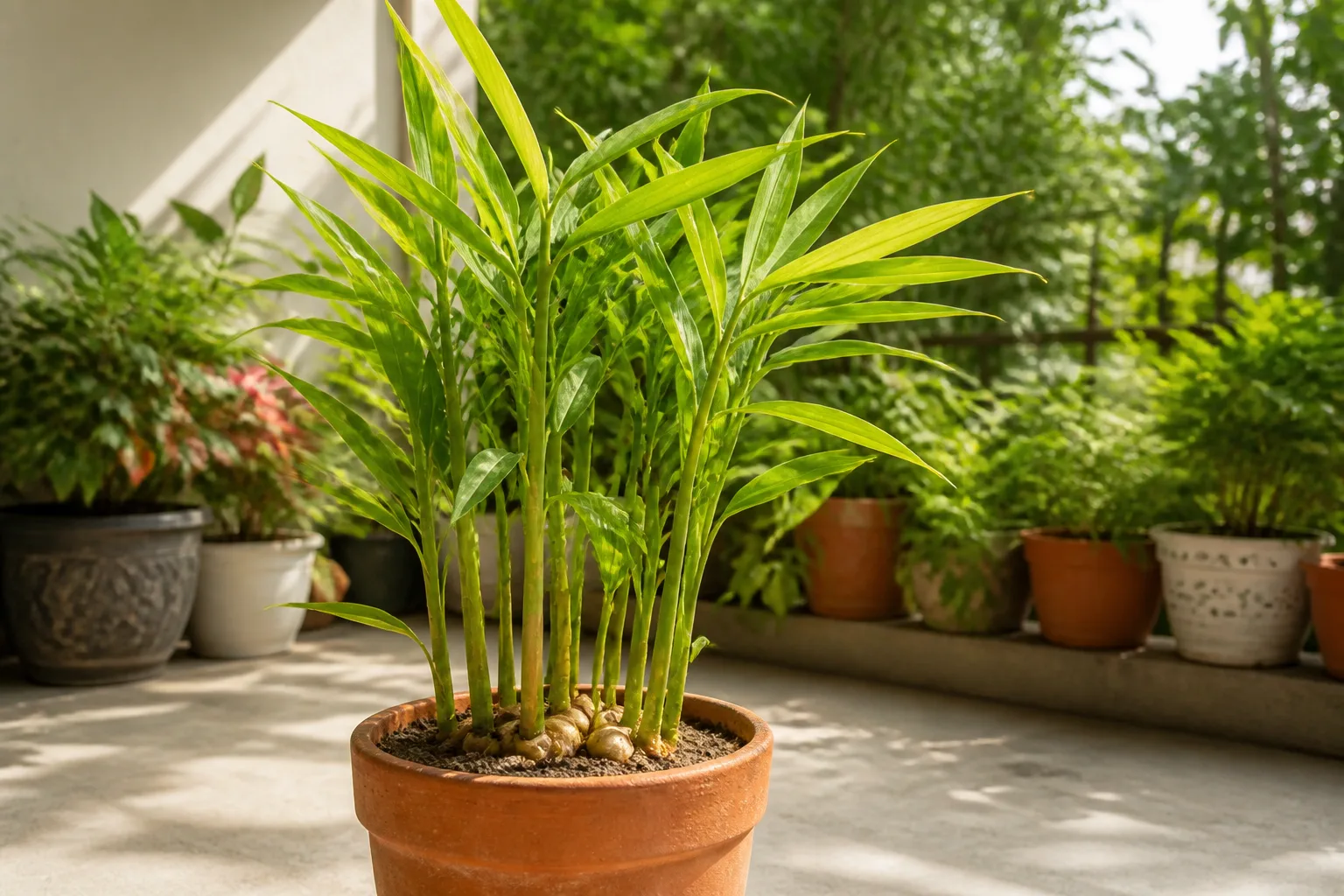
17. Flowering ginger (Zingiber spp.). Flowering gingers add architectural cones or bracts and often tolerate bright shade better than sun-baked patio plants. They need warmth, moisture, organic soil, and room for spreading rhizomes; if you move one indoors, reduce water when light and growth slow rather than keeping the summer schedule.
18. Parrot heliconia (Heliconia psittacorum). Red, orange, or yellow bracts have a strong tropical silhouette and last well on the plant. Heliconia is best in a warm outdoor bed, large container, or greenhouse with filtered sun, abundant moisture, and good drainage; an ordinary living room rarely offers enough light or ceiling height.
19. Hanging lobster claw (Heliconia rostrata). The pendulous red and yellow flower clusters are a statement for humid, frost-free gardens. It needs more space, heat, and moisture than most houseplants, and indoor culture is difficult unless the plant has greenhouse-like light, airflow, and room to spread.
20. Black bat flower (Tacca chantrieri). This unusual dark flower with long whisker-like bracts is a conversation piece for a warm shade garden or humid plant room. It is a challenge rather than a beginner’s flower: use a fertile but airy mix, protect it from harsh sun and cold drafts, and expect slow recovery after root disturbance.
21. Princess flower (Tibouchina urvilleana). Large purple flowers and velvety foliage suit a warm border or container in bright sun to part shade. It can be pruned into a shrub, but do not mistake pruning for a size solution—an outdoor plant can become several feet tall, while an indoor specimen needs strong light and regular shaping.
22. Torch ginger (Etlingera elatior). Torch ginger produces large cone-shaped flower heads on bare stalks above broad leaves, making it one of the boldest choices here. It belongs in a humid, frost-free bed or spacious greenhouse with rich, moist, well-drained soil; most homes cannot provide the warmth, light, and room this plant eventually demands.
Fragrant vines and night-blooming flowers
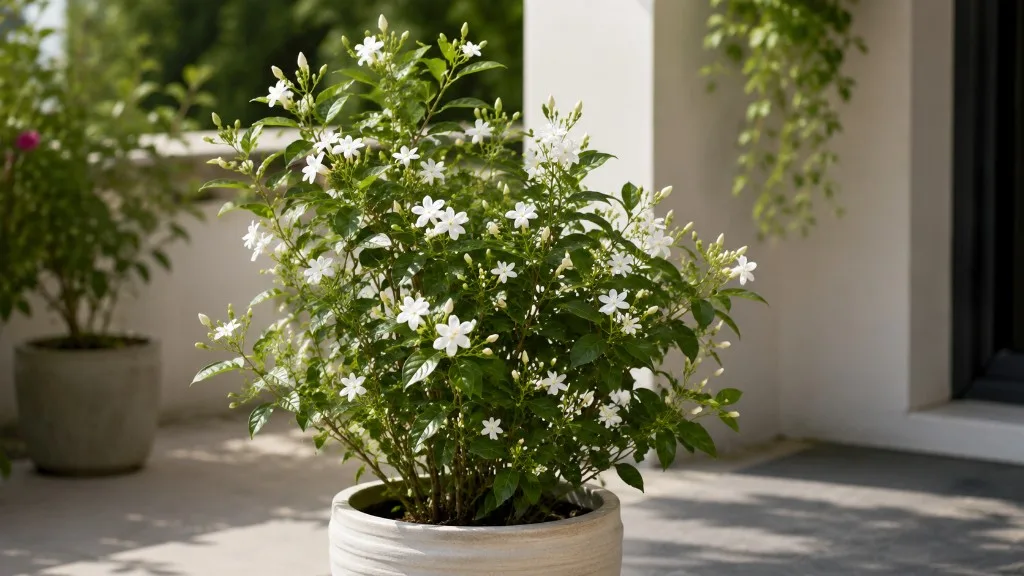
23. Jasmine (Jasminum spp.). Jasmine brings fragrance and climbing height, but it is not automatically an easy indoor flower. Give it bright light, a trellis, humidity without stagnant air, and regular pruning; a dim room produces a long vine with few flowers, while an outdoor plant may need more support than a small pot can provide.
24. Stephanotis, or Madagascar jasmine (Stephanotis floribunda). The white flowers are intensely fragrant and well suited to a sheltered trellis, conservatory, or warm patio. Stephanotis dislikes cold swings and root disturbance, so choose a permanent support and move it only when necessary; it is a rewarding plant for stable conditions, not a casual plant to shuttle weekly.
25. Blue passionflower (Passiflora caerulea). The intricate blue-and-white flowers look exotic, and the tendrils can cover a fence or arbor quickly. Provide sun, a strong support, moisture, and airflow; vigorous vines need pruning, and the planting site should not be so enclosed that humid foliage stays wet for hours.
26. Moonflower (Ipomoea alba). Moonflower is a fast annual vine in climates with frost, with white trumpets that open near dusk and close the next morning. Start it after cold weather, give it full sun and a sturdy trellis, and be cautious around pets because morning-glory relatives can be toxic if ingested; do not treat it as an indoor houseplant.
27. Hoya (Hoya carnosa). Hoya’s waxy leaves and porcelain-like flower clusters make it one of the best long-term indoor vines, although a young plant may take years to bloom. Bright indirect light, a snug pot, an airy mix, and a drying interval between waterings are more useful than constant misting; leave old flowering spurs in place because new clusters can emerge there.
28. Mandevilla (Mandevilla spp.). Mandevilla is a generous warm-season climber for a sunny patio, producing trumpet flowers in pink, red, or white. It can be overwintered in a bright protected space, but expect leaf drop or slower growth after the move; cut back only after checking for live stems and keep winter watering modest in lower light.
Bulbs, rhizomes, and seasonal tender plants
29. Canna (Canna spp.). Cannas give height, broad foliage, and warm-colored flowers in a sunny bed or large pot. BBC Gardeners’ World recommends rich, moisture-retentive soil in full sun or light shade; in a cold climate, lift or store the rhizomes after frost or grow them in a container that can be protected. (BBC Gardeners’ World: How to grow canna lilies)
30. Angel’s trumpet (Brugmansia spp.). Huge, hanging trumpets can perfume a warm evening and make a dramatic container specimen. The plant becomes large and needs regular water, bright filtered light, and frost-free winter protection; every part is poisonous, so use gloves, keep prunings away from children and pets, and never place it where fallen flowers or leaves are likely to be handled.
31. Amaryllis (Hippeastrum spp.). Amaryllis is a bulb rather than a permanent tropical shrub, which makes it unusually useful for indoor color. Keep the bulb in bright light while growing, water sparingly until growth is established, and allow a deliberate rest when the foliage naturally declines; a wet dormant bulb is more likely to rot than rebloom.
32. Poinsettia (Euphorbia pulcherrima). The bright red, pink, cream, or white display is made by bracts around small yellow flowers. Poinsettia can live outdoors year-round only where winters stay warm, and it needs long uninterrupted nights in autumn to color; if you keep one indoors, bright light by day and darkness at night matter more than heavy feeding.
33. Calla lily (Zantedeschia spp.). Callas bring clean, funnel-shaped flowers to moist but well-drained soil and work in containers, borders, or as seasonal bulbs. Protect them from cold according to the species and cultivar, keep the soil from swinging between drought and swamp, and remember that a plant can like moisture at the roots without tolerating a pot that never drains.
Indoor care that leads to flowers, not just foliage
Indoor tropical flowers often fail for a counterintuitive reason: the room is warm enough for leaves but not bright enough for buds. A plant can remain green for months while using stored energy, then stop flowering when light, humidity, or root health cannot support the cost of reproduction.
Give flowering plants more light than foliage plants
Place the plant according to the species. Bright indirect light is a good starting point for anthurium, moth orchids, bromeliads, medinilla, and African violets; a sunny window or grow light is more appropriate for hibiscus, bougainvillea, plumeria, and mandevilla. Filter direct summer sun through glass with a sheer curtain if leaves bleach or scorch.
Turn the pot a quarter turn every week or two so growth stays balanced, but do not move a plant from deep shade into afternoon sun in one step. If new stems stretch, leaf spacing widens, or a normally flowering plant produces leaves without buds, increase light before adding fertilizer. A timer-controlled grow light is often the cleanest fix for winter flowering plants.
RHS guidance for moth orchids places them in bright light without harsh summer sun and suggests an east- or west-facing windowsill. That is a useful model: “bright” means enough usable light for the plant’s job, not simply a room that looks bright to a person. (RHS: How to grow Phalaenopsis)
Water the root zone without keeping it soggy
Check the mix before watering. Push a finger into the top inch or two, lift the pot to feel its weight, and learn how quickly that specific container dries. Water thoroughly until excess leaves the drainage holes, then empty the saucer; do not give repeated sips that wet only the surface while the lower roots remain dry.
Let the plant’s ecology set the interval. An anthurium or ginger generally wants a more even moisture supply than a bougainvillea, plumeria, hoya, or dormant amaryllis. A bark-based orchid mix may look dry on top while still holding moisture around the roots, so transparent orchid pots and a full drain are more useful than a fixed weekly schedule.
Humidity helps leaves lose water at a manageable rate, but misting is not a substitute for healthy roots or light. Group compatible plants, use a properly sized humidifier if the room is genuinely dry, and keep the pot above—not sitting in—the water of any pebble tray. The RHS specifically warns against letting indoor plants stand in excess water. (RHS: Palms indoors)
Use air movement, warmth, and a breathable mix
Most tropical flowers prefer stable warmth, but warm and stagnant is not the same as healthy. Keep foliage away from heating vents and cold glass, provide gentle air circulation, and leave space between plants so leaves dry after watering. High humidity without airflow raises the risk of fungal problems and soft, weak growth.
Use a mix that fits the roots. Orchids and many bromeliads need a chunky, airy medium; African violets need a light mix; anthuriums and gingers need moisture retention with drainage; protea and bougainvillea need much sharper drainage. Do not solve every plant problem with more perlite or more water—match the mix to how the plant naturally receives water.
Feed only when light and temperature support active growth. If a plant has just moved indoors, is dormant, has damaged roots, or sits in low winter light, fertilizer can accumulate or push weak growth. Resume a dilute, balanced feed when new growth and stronger light return, following the label rather than assuming a bloom booster can replace missing sun.
Outdoor planting and acclimation
Outdoor light is much stronger than indoor light, even on an overcast day. A tropical flower that has spent winter behind glass has leaves adapted to lower light and can scorch within hours if placed in full afternoon sun.
Plant after cold risk and harden off in stages
Wait until nights are reliably warm for the plant, not merely until the calendar says spring has arrived. Put the plant outside in bright shade or gentle morning sun for a few days, then extend its exposure gradually over one to two weeks. Keep the root ball evenly moist during this transition, but do not fertilize a stressed plant.
Choose the final site by the plant’s limiting factor. Bougainvillea and plumeria need sun and drainage; anthurium and bromeliads need filtered light; cannas and gingers appreciate moisture but still need a root zone that drains; vines need a support installed before they become tangled. A container is not automatically safer: it is easier to move, but it dries and heats faster than ground soil.
Mulch outdoor beds to moderate root temperature, keep water off foliage when diseases are common, and inspect plants before bringing them back indoors. Check leaf undersides, stems, pot rims, and drainage holes for pests or eggs, then isolate the plant for a short observation period instead of placing it directly beside a prized houseplant.
Overwintering: decide what to save before autumn
The best winter plan is made while the plant is still manageable. Decide whether you are keeping the entire pot, storing a bulb or rhizome, taking cuttings, or enjoying the plant as a seasonal annual. A large shrub that barely fits through the door is not a practical houseplant just because it technically survives pruning.
Before the first frost or cold night:
- Inspect and clean the plant, removing dead leaves and checking for pests.
- Move it to bright shade outdoors for several days so the change to indoor light is less abrupt.
- Bring it into a warm, bright, draft-free space before temperatures fall sharply.
- Reduce watering to match slower growth and lower light; never keep a dormant bulb or leafless plumeria wet.
- Stop routine fertilizer until active growth resumes, unless a crop-specific label says otherwise.
- Re-acclimate it to outdoor light in spring using the same gradual process in reverse.
Fine Gardening’s cool-climate guidance makes the important distinction that overwintering is often about survival, not peak growth: plants may be kept under lights in a cool basement and watered sparingly, then moved into shade outdoors before returning to their summer position. (Fine Gardening: How to Effectively Use Tropical Plants in Cool Climates)
Pet safety, invasiveness, and handling cautions
Flower color and tropical appearance tell you nothing about pet safety. Clivia, anthurium, bird-of-paradise, ti plant, moonflower relatives, angel’s trumpet, amaryllis, and other plants in this list need an exact botanical-name check before they enter a home with pets or children. The ASPCA database is useful for individual plant entries, but it is not a substitute for a veterinarian or poison-control service after suspected ingestion.
Wear gloves when pruning plants with irritating sap or thorns, especially bougainvillea, poinsettia, and angel’s trumpet. Keep fallen leaves, bulbs, seeds, and pruning debris out of reach; “the plant is on a high shelf” is not a safety plan if a cat can climb to it or a child can reach dropped material.
Also check local guidance before planting vigorous vines or self-seeding ornamentals outdoors. A tropical plant that is well behaved in one climate can spread in another, and a container that prevents escape may be the responsible choice. If pollinators are the goal, favor flowers suited to your local wildlife and avoid treating a tropical label as proof that a plant benefits every ecosystem.
Common problems and the first fix to try
Leaves but no flowers: Check light first, then maturity and pruning. Hibiscus, bougainvillea, bird-of-paradise, hoya, and jasmine may need much stronger light or more time than a new plant has had; extra fertilizer is rarely the first answer.
Yellow leaves and wet soil: Stop watering on a calendar and inspect the roots, pot, and drainage holes. If the mix remains wet for many days, move to a smaller or more porous setup and remove rotting roots only when you can do so cleanly; do not keep adding water because the leaves look wilted.
Crispy edges after bringing a plant indoors: Check humidity, drafts, heater airflow, and root moisture together. A humidifier can help a dry room, but moving the plant away from hot air and keeping watering consistent usually matters more than repeated misting.
Bleached patches or brown scorch: The plant likely changed light too quickly or sat against hot glass. Move it to filtered light, remove only dead tissue, and harden it off gradually before increasing exposure again.
Bud drop: Sudden temperature changes, dry roots, low light, transplant shock, and pests can all contribute. Stabilize the environment, inspect buds and leaf undersides, and change one variable at a time so you can tell whether the plant responds.
A vine or shrub outgrows its space: Prune after flowering or during the plant’s active growth window, then decide whether a smaller cultivar or a seasonal container makes more sense. Do not keep cutting a plant back to a size that its root system and light cannot support.
Conclusion: match the flower to the conditions
The easiest tropical flower is not the one with the most dramatic photograph; it is the one whose light, moisture, temperature, mature size, and safety profile fit your actual space. For bright indoor color, start with a moth orchid, African violet, bromeliad, clivia, or anthurium. For a sunny patio, consider hibiscus, bougainvillea, pentas, plumeria, or mandevilla. For a warm outdoor bed, the list expands to gingers, heliconias, bird-of-paradise, protea, plumbago, and canna.
If winter is cold, choose the container strategy before you buy. A movable pot, a stored rhizome, a dormant bulb, a cutting, or a deliberate seasonal planting can all be successful; the mistake is expecting a frost-tender flower to behave like a hardy perennial. Match the plant to the conditions, change light gradually, keep the roots oxygenated, and the tropical look becomes much easier to sustain.