Mold on Soil on Plumeria: Causes, Checks and Fixes
Quick answer
White or gray mold on plumeria soil is usually harmless saprophytic fungus on damp organic mix, not disease on the tree itself. First step: scrape off the top 1 to 2 cm of fuzzy mix, discard it, and withhold water until the top 5 cm are dry and the pot feels light.
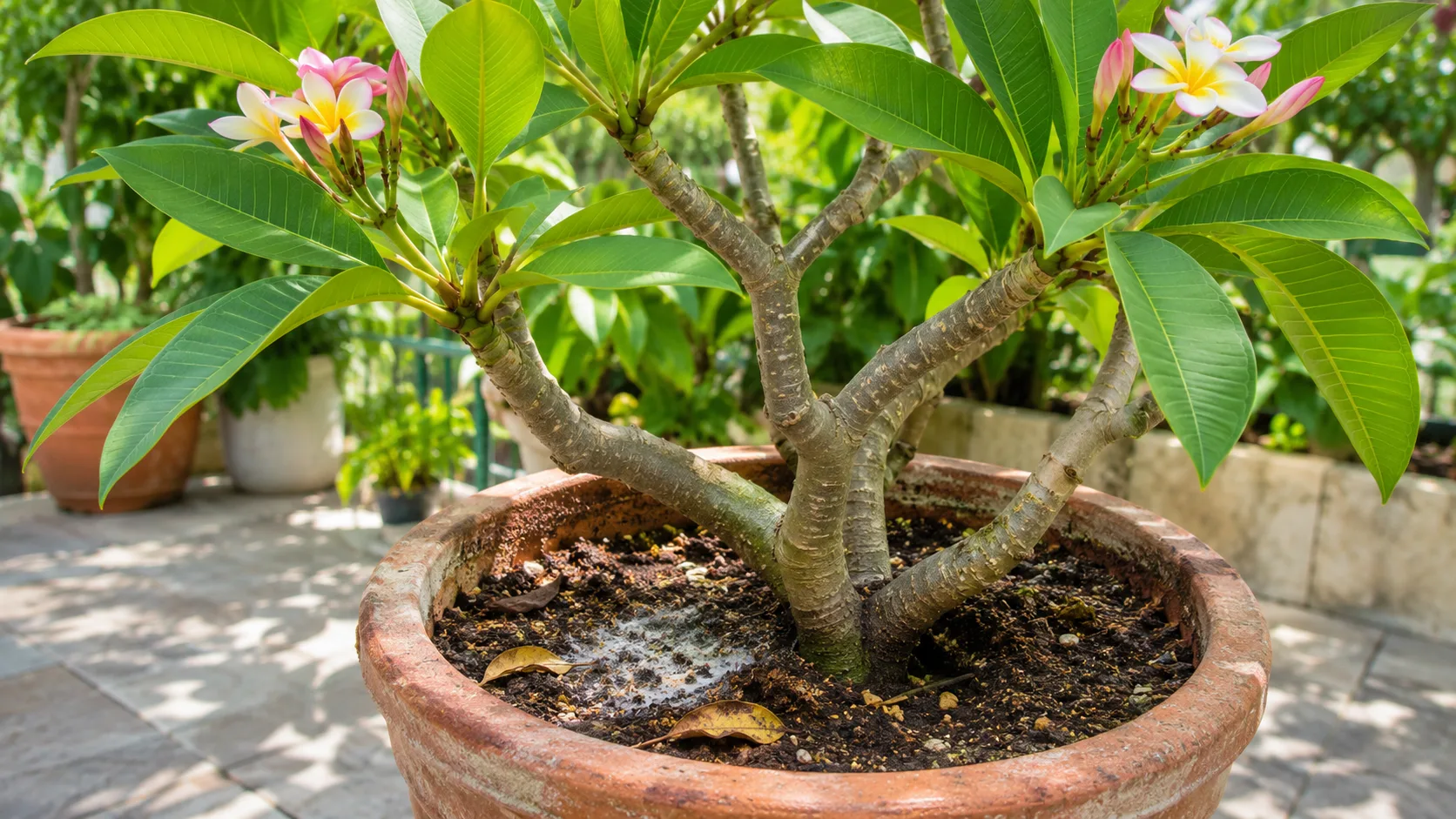
Mold on Soil on Plumeria: Causes, Checks and Fixes
This guide covers mold on soil on Plumeria. See also the general Mold on Soil guide, watering, and light pages for this plant.
Mold on Soil on Plumeria: Causes, Checks and Fixes
Quick answer
White or gray fuzz across your plumeria pot is usually saprophytic fungus feeding on damp organic mix, not a disease eating the tree. Plumeria grows a thick fleshy trunk precisely so it can ride out dry spells, which means a constantly damp surface is the opposite of what its roots expect. For how surface mold behaves on container plants in general, see our mold on soil guide. On plumeria, the pattern almost always traces to the same setup: compost-heavy mix, calendar watering, a saucer that never empties, or monsoon rain refilling the pot while the tree sits in weak light.
First step: scrape off the top 1 to 2 cm of fuzzy mix with a spoon, discard it in the trash, and do not water again until the top 5 cm feel dry and the pot feels clearly lighter. Move the pot into the brightest sun available so the surface can dry. Do not repot, drench fungicide, or pile fresh compost on day one unless the stem base is soft or the mix smells sour.
When to use this page vs other Plumeria guides
Use this page when the soil surface looks wrong but you are unsure whether the tree itself is in trouble.
| Pattern | Meaning | Where to go next |
|---|---|---|
| Fuzzy threads on the mix only, firm stems, normal leaves | Harmless surface mold on wet mix | Stay on this guide |
| Heavy pot, sour smell, soft dark stem base, wilt in wet soil | Root-zone decay from chronic wetness | See root and watering entries in the Plumeria problems hub |
| Tiny dark flies rising whenever you water | Fungus gnats sharing the same wet surface | See gnat and moisture entries in the Plumeria problems hub |
| Mix stays wet for a week despite sparse watering | Compacted or water-retentive medium | Follow the Plumeria soil guide |
| Surface dries but the tree wilts every afternoon | Genuine thirst during hot active growth | Follow the Plumeria watering guide |
What mold on soil looks like on Plumeria
On a healthy plumeria in full sun, the pot surface should look dry and gritty between drinks. Mold breaks that pattern:
- White, gray, or faintly tan fuzzy patches spreading over the top of the mix, often starting where fallen leaves or bark fines collect
- Thread-like mycelium creeping from the stem base outward, or a pale film hugging the pot rim
- A surface that stays dark, cool, and slightly tacky days after the last watering while stems above still look fine
- Return of the same fuzz within days of scraping when the deeper mix never dried
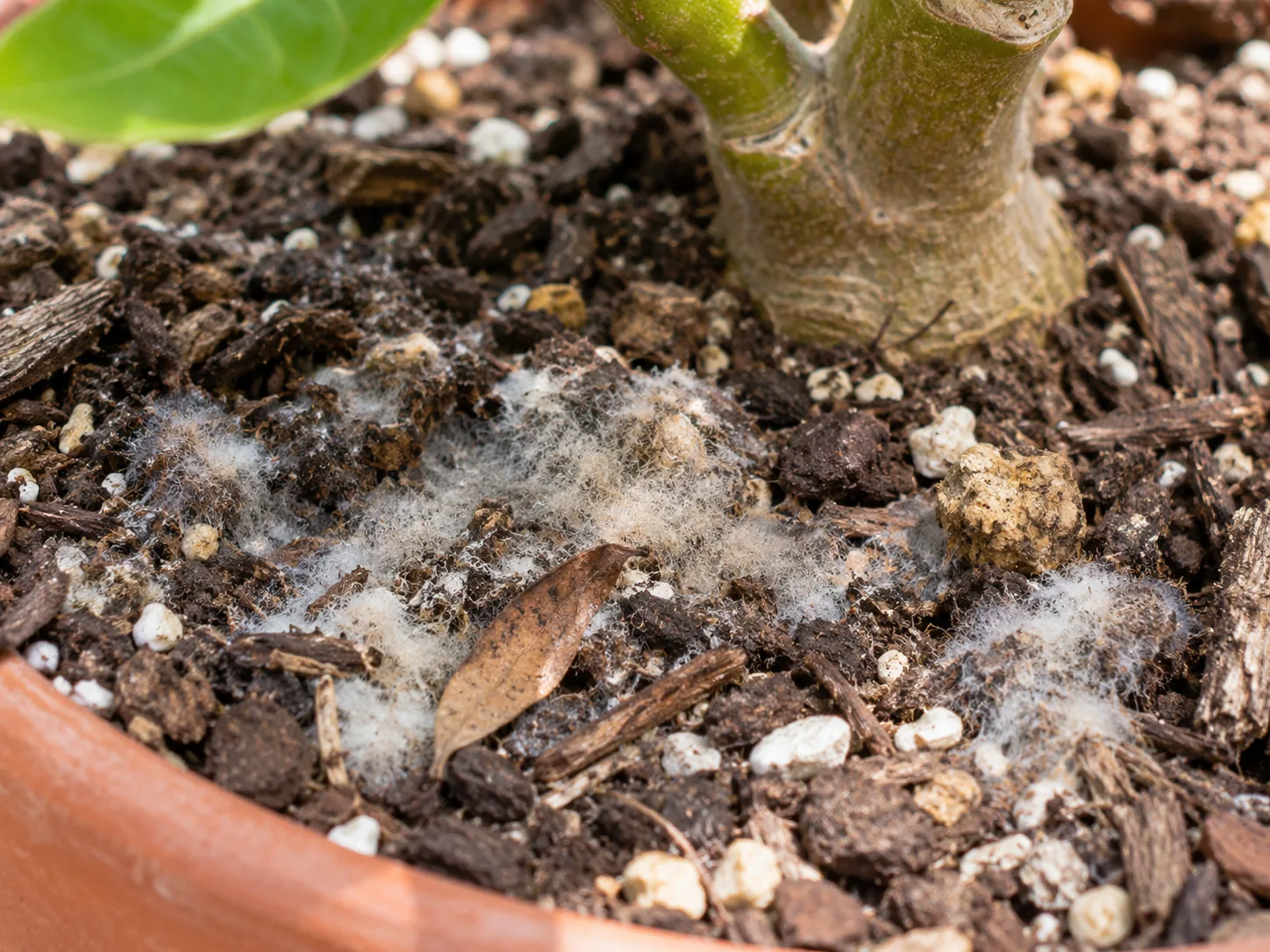
Surface fungus appears as soft, pale fuzz where organic mix stays damp.
Before treating, rule out the two classic lookalikes. Mineral salts from hard water or fertilizer form a hard whitish crust rather than fuzzy threads: gritty and crystalline when rubbed between your fingers, while mold feels soft and cottony. Green slimy film is algae from constant surface wetness in dim placement, and it answers to the same drying fix. White cotton tucked into leaf joints with sticky residue is a pest, not soil fungus, and needs a different response.
Why plumeria succulent stems hide wet-soil stress
Plumeria carries its drought insurance above ground in swollen, water-storing branches, so the canopy can look perfectly firm while the root zone below the mold is already oxygen-starved. Wisconsin extension guidance captures the whole balancing act: plumeria needs well-drained soil that never stays soggy, with the planting medium allowed to dry between waterings and less frequent drinks when temperatures cool. The same source warns that overwatering can end in root rot and plant death.
That biology explains the signature plumeria mold scenario. An owner waters every few days out of habit, the fleshy stems show no complaint for weeks, and the only early signal is fuzz on a surface that never dries. By the time lower leaves yellow during warm growth or the stem base softens, the wet spell has already lasted far longer than the mold suggests. Read the pot, not the branches: a heavy container with a damp surface days after watering means stop, whatever the canopy looks like.
The dormancy trap: mold on a leafless plumeria
Few houseplants mislead their owners in winter the way plumeria does. Most plumerias lose their leaves and go dormant in the cool months, standing as bare sculptural sticks for weeks. Beginners read the bare silhouette as a plant in trouble and keep watering the same summer rhythm, sometimes more, to help it. The resting tree uses almost nothing, the coarse mix stays wet to the bottom, and saprophytic spores colonize the idle surface.
Mold on a dormant plumeria is therefore a stronger warning than the same patch in July. A leafless tree in a cool spot should be nearly dry, with only an occasional small drink if branches wrinkle deeply. If you see fuzz on that pot, the correction is straightforward: scrape the surface, shelter the container from further rain, and let the whole profile dry until spring growth resumes. Never repot a stable dormant tree just to change moldy surface mix; wait for late winter unless the stem base is actively softening.
Terrace sun, monsoon rain, and pot placement
Plumeria is a full-sun tree, and sunlight is the engine that empties its pot. UF IFAS notes plumeria grows best in full sun and well-drained soil, which on a terrace translates into a simple equation: bright position plus gritty mix equals a surface that dries between soaks. Move the same pot into a shaded balcony corner and water use collapses while evaporation stalls, so mold appears even though you changed nothing about the watering can.
Monsoon adds the second half of the trap. Daily showers count as irrigation, yet many growers keep hand-watering through overcast weeks, and saucers or decorative outer pots hold the excess against the roots. Practical fixes come from placement first: set the container where it keeps full light but sheds repeated downpours, such as a bright roof edge, raise it on feet, and remove the saucer during rainy spells. Trusted how-to coverage of surface mold likewise stresses ventilation and letting the surface dry rather than chemical treatment, which suits a sun-driven tree perfectly.
Mix choice seals the outcome. A standard peat-heavy indoor blend can stay damp at the surface for ten days in humid weather even when you water sparingly. Plumeria wants the opposite structure: potting medium cut with pumice, perlite, or grit so water exits freely and air returns, as detailed in the Plumeria soil guide. If mold returns within a week of every scrape despite sunny placement, the medium itself is holding the surface wet and needs rebuilding, not another spoon session.
How to confirm the cause
Work through these checks in order before changing anything big:
- Depth test at 5 cm. Push a finger or wooden skewer about 5 cm into the mix near the pot wall. Cool, dark, clinging material days after watering confirms a mold-friendly profile. The Plumeria watering guide uses this same checkpoint to time each soak.
- Pot weight. Lift the container and compare it against its just-watered heaviness. A pot that stays heavy for a week holds water at depth where rot starts, whatever the surface shows.
- Drainage audit. Confirm every hole runs freely, tip out saucer water, and check whether monsoon rain has been refilling the pot between your visits.
- Stem-base feel. Press the trunk gently right at the soil line. Firm and green-gray means surface mold only; soft, darkened, or wrinkled-over-wet-soil means root trouble is already underway.
- Smell check. Earthy is normal. Sour, swampy, or rotten odor from a drainage hole points to anaerobic decay below the fuzz.
- Light and season context. Mold appearing in a dim corner, during cloudy monsoon weeks, or on a leafless winter tree strongly implicates low water use plus excess supply rather than a pathogen.
If the top 5 cm dry within a reasonable spell, stems are rigid, and the fuzz was a one-time patch after a rainy week, a single scrape-and-dry cycle is usually enough.
First fix for Plumeria
Stop watering, scrape the moldy top 1 to 2 cm with a clean spoon, and set the pot in the strongest direct sun you have.
Discard the scrapings in household trash rather than compost, clear fallen plumeria leaves off the surface, and empty any saucer or cachepot. Surface-mold coverage from trusted garden references describes exactly this sequence: the fungus is saprophytic on dead organic matter rather than living tissue, so removing the colonized layer plus correcting moisture and airflow resolves most cases without sprays. Leave the tree in place and let the remaining mix dry on the depth test, not the calendar. Wash hands after handling moldy media if you are sensitive to spores.
Step-by-step recovery
After the scrape, let the pot tell you what comes next:
- Dry to the checkpoint. Wait until a finger at 5 cm comes out dry and the pot weight has clearly dropped. In hot sunny growth this may take a week; in monsoon humidity or cool dormancy it can take several.
- Soak once, drain completely. Water slowly until runoff leaves every hole, then empty the saucer within half an hour. One full drink followed by a real dry-down beats daily sips that rewet only the surface.
- Refresh the surface if fuzz returns. Replace the scraped inch with dry gritty mix matched to the Plumeria soil guide instead of wet compost. Do not bury the stem any deeper than before.
- Reset the light position. Keep at least six hours of direct sun; see the Plumeria light guide if the pot lives in shade. Faster water use is the most durable mold prevention this species has.
- Repot only on evidence. Chronic recurrence with compacted sour mix, blocked holes, or an oversized pot holding water at the center justifies fresh medium in warm active growth. Trim only mushy roots and leave firm ones intact.
Hold fertilizer until new leaves expand normally for a couple of weeks. A stressed root system cannot use extra salts, and feeding does nothing against surface fungus.
Recovery timeline
A single mold flare after one heavy watering or a rainy week usually clears within one to two weeks once the surface dries reliably between soaks. Expect the fuzz to collapse and stop spreading within days of the scrape, pot weight to fall before the next drink, and no new film after the first proper dry-down cycle.
If mold reappears within three to five days, the underlying moisture problem is still active. Give the adjusted rhythm another one to two weeks in brighter placement before judging. Judge success by a clean dry surface, firm stem base, and steady leaf growth in season, not by older lower leaves that yellowed during the wet spell. Saturated mix displaces air around roots long before leaves report it, so persistent heaviness matters more than any single leaf.
Mistakes to avoid
- Scraping mold and soaking the same day because the surface looks dry. Check 5 cm deep first; the fungus dies back long before the root zone recovers.
- Spraying cinnamon, peroxide, or fungicide as the opening move. Surface treatments hide the symptom without fixing drainage, light, or rhythm.
- Watering on a fixed weekday through monsoon or dormancy. Count rainfall and leaf cover, not the calendar.
- Topping moldy mix with fresh compost or mulch. You feed the fungus and trap moisture against the stem.
- Upsizing the pot to fix mold. Extra wet soil around a small root ball makes recurrence more likely, not less.
- Ignoring sour smell or a soft stem base. Surface mold plus those signs means root inspection today, not another scrape next week.
How to prevent mold next time
Build the routine around plumeria thirst, not generic houseplant advice:
- Water during leafy growth only when the top 5 cm are dry, per the Plumeria watering guide. Let the pot lighten every cycle.
- Use coarse fast-draining mix in a pot just larger than the root ball, per the Plumeria soil guide. Keep every drainage hole open.
- Hold full sun so each drink gets used; dim corners grow mold even on careful watering.
- Empty saucers after every soak and after storms. Count monsoon rain as the watering for that stretch.
- Clear fallen leaves and spent flowers off the surface weekly so spores lose their food base.
- Reduce hand-watering sharply as leaves yellow and fall, and keep a dormant tree nearly dry until spring tips swell.
When to worry
Treat mold as urgent when any of these stack with the fuzz:
- Sour or swampy odor from the drainage holes
- Stem base turning soft, dark, or wrinkled while the mix stays wet
- Rapid yellowing or wilting across multiple leaves in warm growth with a heavy pot
- Mold plus gnat swarms returning twice despite corrected watering
Those combinations signal root-zone failure rather than a surface issue, and they deserve same-week unpotting and inspection. A one-time white patch on an otherwise firm, sunny, actively growing plumeria after a single overwater is low urgency and usually resolves with one scrape-and-dry cycle.
FAQs
Is white mold on plumeria soil dangerous to the tree?
The surface fungus itself rarely attacks living plumeria tissue, since it feeds on dead organic matter in wet mix. The real danger is the chronically wet root zone behind it, which can rot the fleshy stem base and roots of a tree built for fast drainage. Treat mold as a moisture alarm, not a cosmetic patch.
How can I confirm mold on plumeria soil is not stem or root rot?
Surface mold sits on the mix as soft fuzzy threads while stems stay firm and green above the soil line. Rot brings a sour smell, a soft or darkened stem base, and wilting or yellowing during active growth while the pot stays heavy. Probe the stem base gently: firm means surface issue, soft means inspect roots promptly.
What should I check first when I see mold on plumeria soil?
Check moisture 5 cm deep, pot weight, open drainage holes, and whether rain is adding to your watering. Most cases trace to daily watering on a calendar, a saucer that never empties, or monsoon showers refilling the pot before roots use the last drink. Start with the depth test before repotting or spraying anything.
Should I water a leafless dormant plumeria that has mold on its soil?
No. A cool leafless plumeria is resting and uses almost no water, so any mold means the pot is far too wet for dormancy. Scrape the surface, move the pot under bright rain shelter, and keep the mix nearly dry until new leaf tips swell. Watering a dormant tree to fix surface mold only deepens the problem.
How do I prevent mold on plumeria soil long term?
Pot in coarse fast-draining mix, keep the drainage holes open, water only when the top 5 cm are dry during leafy growth, and give full sun so the plant actually uses each drink. Empty saucers after every soak, count monsoon rain as watering, and clear fallen leaves off the surface before they decay into mold food.
Related Plumeria guides
- Plumeria watering guide — depth test and seasonal rhythm from active growth to dormancy
- Plumeria soil guide — coarse gritty mix that drains freely around fleshy roots
- Plumeria light guide — full-sun placement that drives water use and surface drying
- Plumeria problems hub — full index when symptoms stack beyond surface fuzz
Related tool
Use the Plant Problem Diagnosis Tool to narrow causes for mold on soil on this plant before changing multiple variables at once.