17 Fast-Growing Privacy Trees for Every Yard, Big or Small
Compare 17 fast-growing privacy trees by mature size, evergreen cover, climate and upkeep to choose a living screen that fits your yard before you plant.
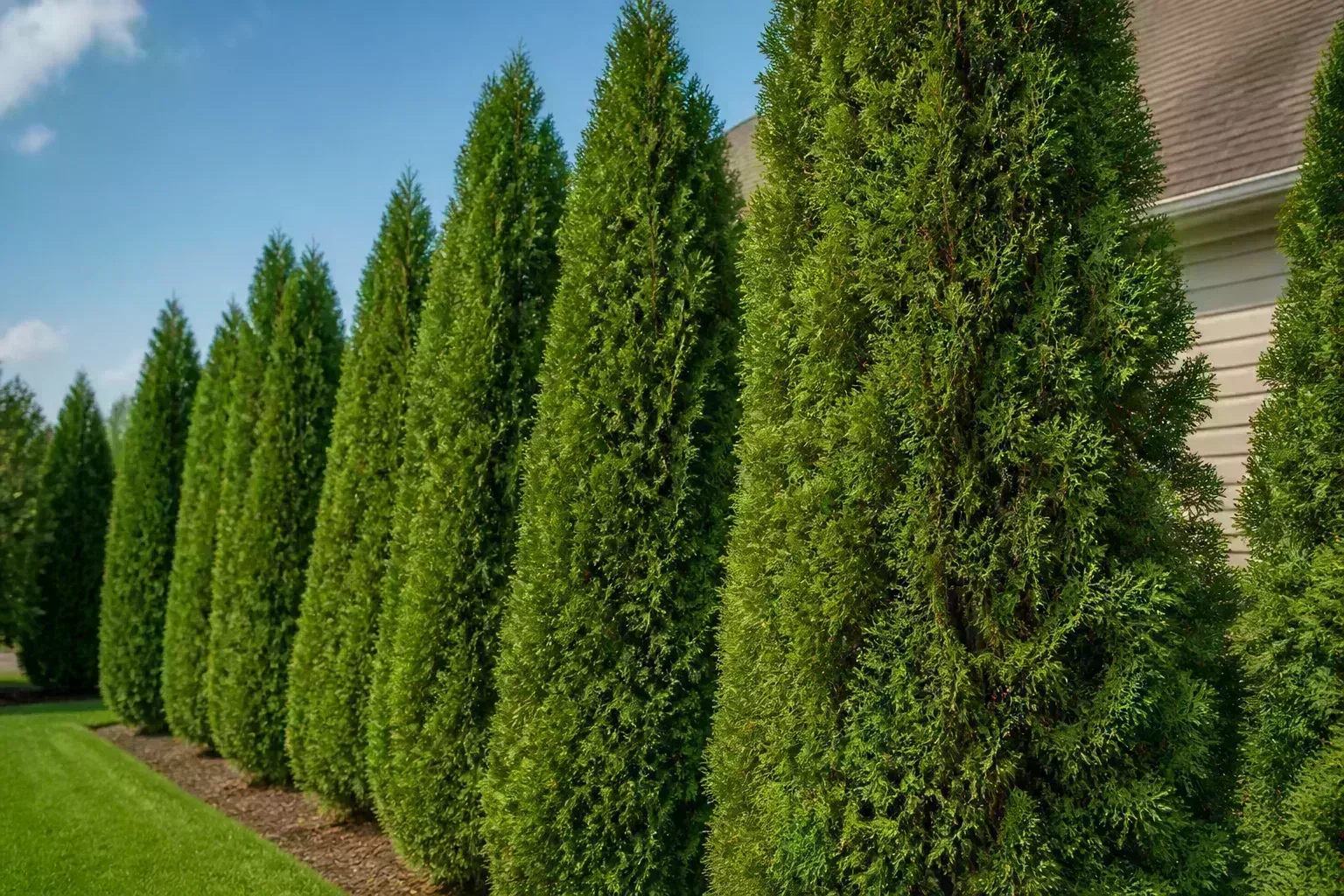
The fastest tree is not automatically the best privacy tree. A screen only works if its mature crown can block the view you care about, its roots have room, and it keeps enough foliage in the season when you need privacy. Those factors often matter more than a nursery tag promising several feet of growth each year.
This guide compares 17 trees and tree-like evergreens by their real job in a yard: tall evergreen walls, narrow screens, regional choices, and deciduous trees for large properties. Some are genuinely rapid under good conditions; others grow at a moderate pace but fit a site where the fastest option would become too wide, too thirsty, or too difficult to manage.
How Fast-Growing Privacy Trees Work
Growth rates are not guarantees. Extension references may describe a species as rapid or report a rate under optimal conditions, but a newly planted tree first has to rebuild roots, and its pace changes with cultivar, soil, drainage, light, water, climate, and stress. For example, North Carolina Extension reports that Thuja ‘Green Giant’ can add 3 to 4 feet per year in ideal conditions; that is a useful upper-end reference, not a schedule to plan around. NC State Extension’s plant profile also warns that this tree can reach 40 to 60 feet tall and 12 to 18 feet wide.
Use growth rate as a tie-breaker after checking fit. A 2-foot plant that eventually spreads 18 feet can be a poor choice for a 7-foot planting strip, even if it grows quickly, while a narrower cultivar may take longer to knit together but need less pruning and replacement. A useful screen should stay healthy at the distance you can actually give it.
Screen the Sightline, Not Just the Property Line
Stand where you want privacy and identify the view to block: a ground-floor window, a second-story room, a patio, or a street. A low hedge may screen a seated person but do little against an upstairs window; a single tall tree can block one angle while leaving a broad gap beside it. Measure the screening height and length you need before choosing a species.
Trees soften views and can reduce exposure to wind, but they do not make a yard soundproof. If the immediate problem is a direct view into a patio, a fence, trellis, or screen panel can provide coverage while trees establish. A layered planting can then soften that structure rather than forcing one row of saplings to act like an instant wall.
Evergreen Cover Versus Summer Privacy
Evergreens are the straightforward choice when you want foliage in winter. Needled conifers generally hold their leaves or needles year-round, while broadleaf evergreens such as holly and magnolia can provide a denser, leafy look in mild climates. Some broadleaf evergreens become semi-evergreen in colder parts of their range, and all evergreens can suffer winter browning from wind, sun, drought, or unsuitable climate.
Deciduous trees can still be useful if the view matters mainly from spring through fall or if branching and a layered planting are enough in winter. Dawn redwood, bald cypress, poplar, and tulip tree all lose their foliage; they should not be sold to yourself as year-round screens. Savvy Gardening’s overview of privacy trees similarly treats evergreen cover, mature height, and site size as separate selection traits rather than assuming that one tree solves every screen.
17 Trees for Privacy, Matched to Space and Climate
The trees below are grouped by the conditions where they make the most sense, not by a universal speed ranking. Mature dimensions are approximate reference figures, and cultivars can differ substantially; verify the specific plant label and local extension recommendations before buying a row.
Tall Evergreens for Substantial Screens
1. Green Giant arborvitae (Thuja ‘Green Giant’). This is one of the most convincing fast evergreen screens where you have a wide, sunny planting bed and moist, well-drained soil. In ideal conditions it may grow 3 to 4 feet a year and mature at roughly 40 to 60 feet high by 12 to 18 feet wide, so give it real space instead of trimming it into a permanently undersized column; it also dislikes salt exposure and poorly drained ground. NC State Extension
2. Eastern red cedar (Juniperus virginiana). Choose this native evergreen for a sunny, dry or exposed site where a broad, irregular screen is acceptable. It commonly reaches about 30 to 40 feet high and 10 to 20 feet wide, tolerates drought and poor soils once established, and offers blue berry-like cones for wildlife; its full size, high flammability, and potential to seed into open areas make it a poor tight-house foundation plant. NC State Extension’s eastern red cedar profile
3. Leyland cypress (× Hesperotropsis leylandii). This evergreen can close a view quickly, but treat it as a high-commitment choice, not a low-maintenance shortcut. UGA Extension reports common canker, dieback, needle blight, bagworms, and spider mites, with drought stress adding risk; its guidance for the South is to plant at least 12 to 15 feet apart and 15 feet from structures, in full sun and well-drained soil. UGA Extension on Leyland cypress problems and UGA Extension’s Leyland cypress spacing advice
4. Japanese cedar (Cryptomeria japonica). Use this graceful conifer as a Leyland alternative when your site has rich, moist, well-drained soil and full sun to partial shade. The species can become a 50- to 70-foot tree with a 20- to 30-foot spread, but narrower cultivars are available; choose a named cultivar with a size that matches the screen, because the species form is too broad for many small lots. NC State Extension’s Japanese cedar profile
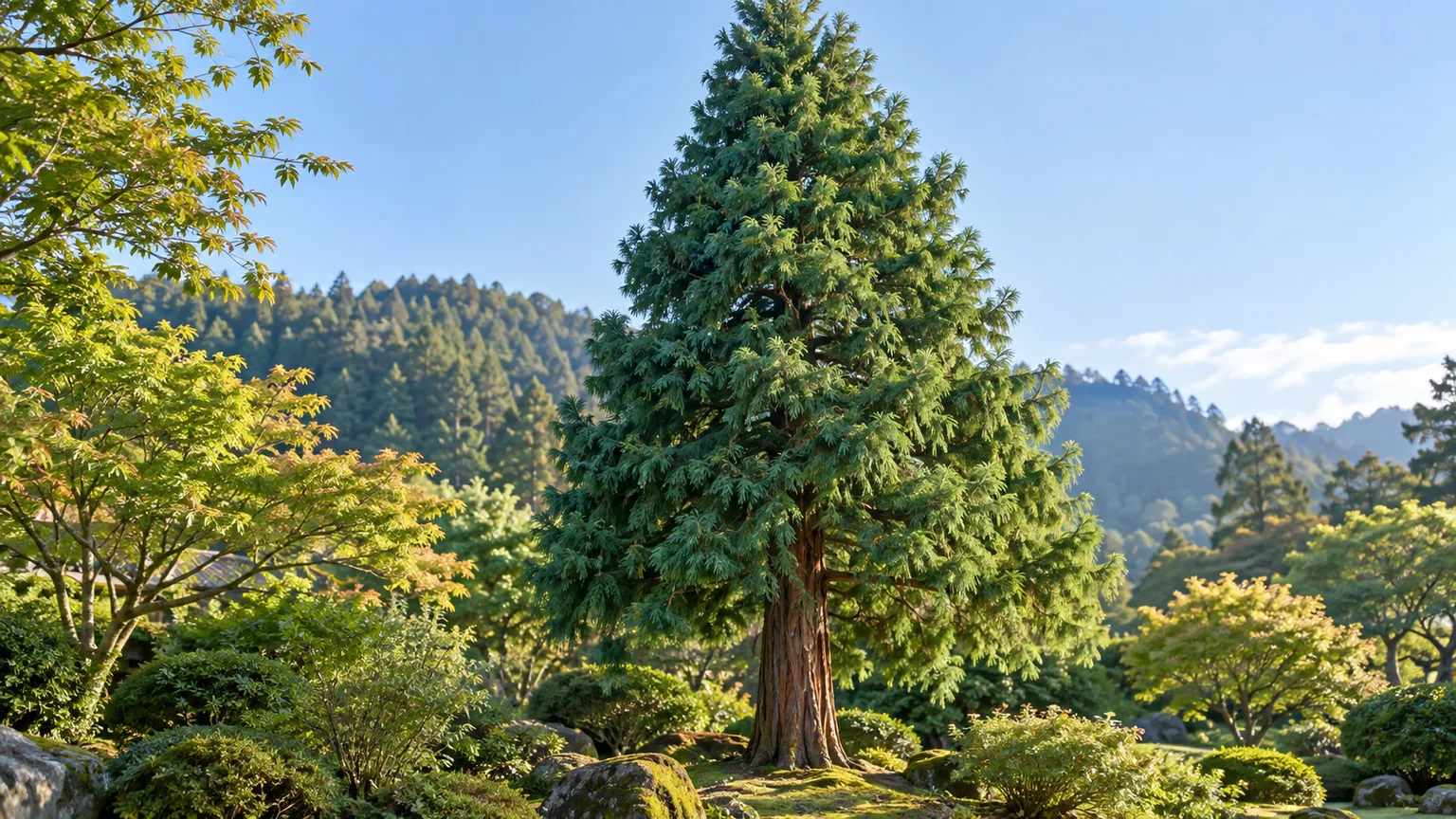
5. Eastern white pine (Pinus strobus). In cooler regions with room for a tall, broad tree, this fast-growing native evergreen can form a soft, year-round screen and windbreak. Allow for a mature spread around 20 to 40 feet, moist but well-drained acidic soil, and possible wind or pest damage; NC State Extension also gives it a high flammability rating, so do not plant it inside a wildfire defensible-space zone. NC State Extension’s eastern white pine profile
6. Nellie R. Stevens holly (Ilex ‘Nellie R. Stevens’). This broadleaf evergreen works well in warm regions where a dense, pyramidal tree with red berries is more attractive than a wall of conifers. It can reach about 15 to 30 feet high and 8 to 25 feet wide, needs room for its spread, and has prickly leaves; a male holly nearby improves fruiting, though this female cultivar may produce some berries without one. NC State Extension’s Nellie R. Stevens holly profile
7. Southern magnolia cultivars (Magnolia grandiflora). A compact selection such as ‘Hasse’ gives warm-climate yards glossy evergreen foliage and fragrant flowers without the footprint of the full species. ‘Hasse’ is listed around 25 to 40 feet tall and 6 to 12 feet wide, while the species can reach 60 to 80 feet with a 20- to 40-foot spread; magnolias establish best with moisture and are not a quick hedge you can shear hard into shape. NC State Extension on ‘Hasse’ and NC State Extension’s Southern magnolia profile
8. Wax myrtle (Morella cerifera). In the Southeast and coastal areas, this fast-growing native broadleaf evergreen or small tree is a flexible screen for salt, wind, and varied moisture. It can reach roughly 20 to 25 feet tall and 8 to 10 feet wide, though it is often smaller; it may be semi-evergreen in colder parts of its range, can sucker into a thicket, and has flammable aromatic foliage, so check local fire guidance before using it near structures. NC State Extension’s wax myrtle profile
Narrow and Regional Evergreen Choices
9. Emerald Green arborvitae (Thuja occidentalis ‘Smaragd’). This familiar upright cultivar is a better fit than ‘Green Giant’ when a yard needs a tidier, narrower column, but its slower pace means you should not expect a full screen immediately. It still needs regular moisture and protection from deer browsing, and its mature dimensions vary among nursery stock and growing conditions; use the dimensions on the cultivar tag, not a generic arborvitae estimate. NC State Extension’s northern white cedar profile lists ‘Emerald Green’ among the narrow, columnar cultivars.
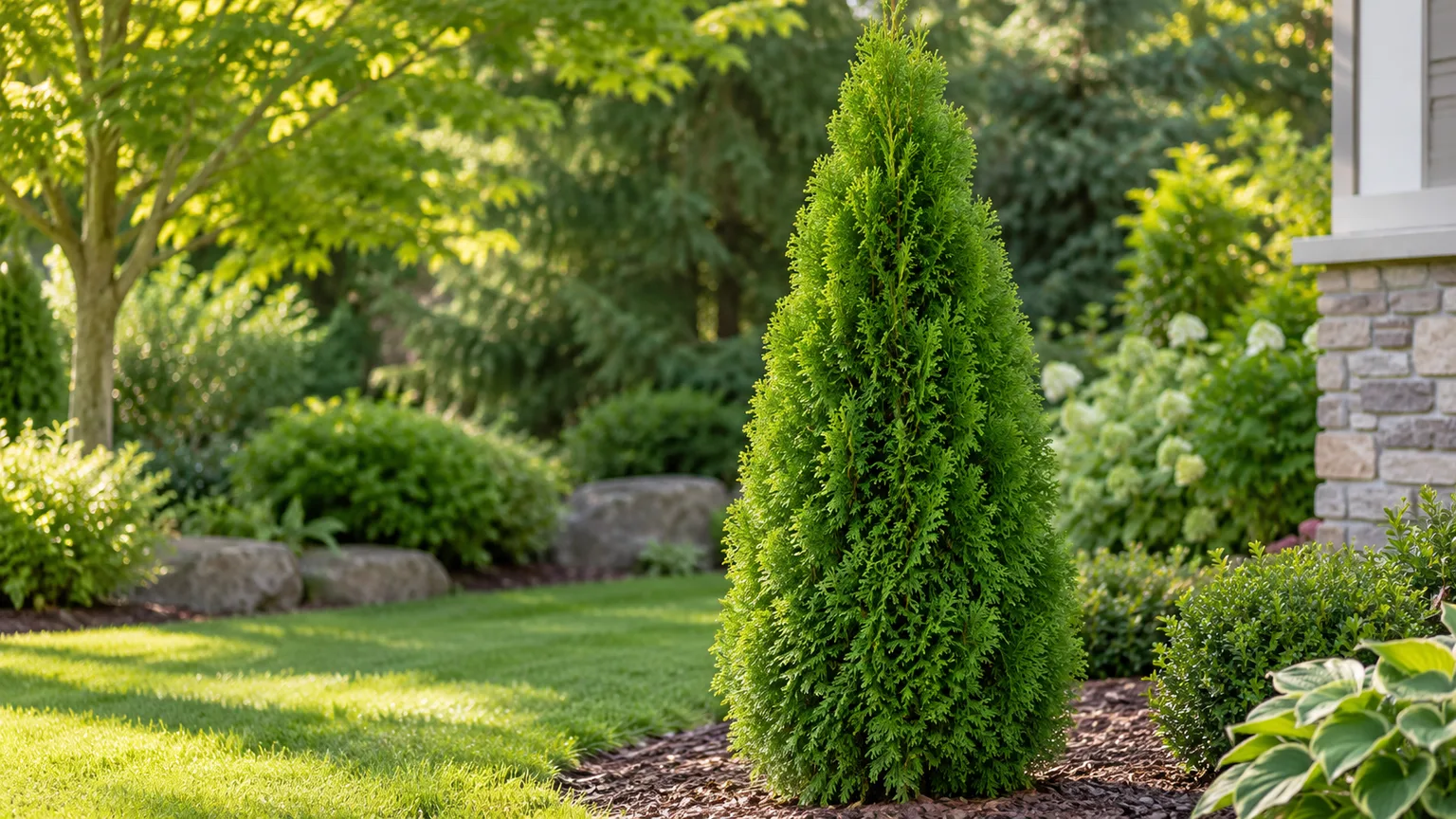
10. ‘Taylor’ eastern red cedar (Juniperus virginiana ‘Taylor’). For a very narrow evergreen accent or a slim screen, this cultivar grows about 20 to 25 feet tall but only 3 to 4 feet wide. It is a more measured grower than broad red cedar, prefers sun and well-drained soil, and is notably drought- and deer-resistant; its male flowers mean it does not produce the blue cones seen on female Eastern red cedars. NC State Extension’s ‘Taylor’ eastern red cedar profile
11. Arizona cypress (Hesperocyparis arizonica). Consider this southwestern native for a hot, sunny, dry site with fast drainage, where a thirsty arborvitae would struggle. The tree can reach 40 to 60 feet tall and 15 to 20 feet wide, but NC State notes that it may add only 4 to 8 inches per year; it is a better regional fit than a speed record, and its width still rules it out for narrow strips. NC State Extension’s Arizona cypress profile
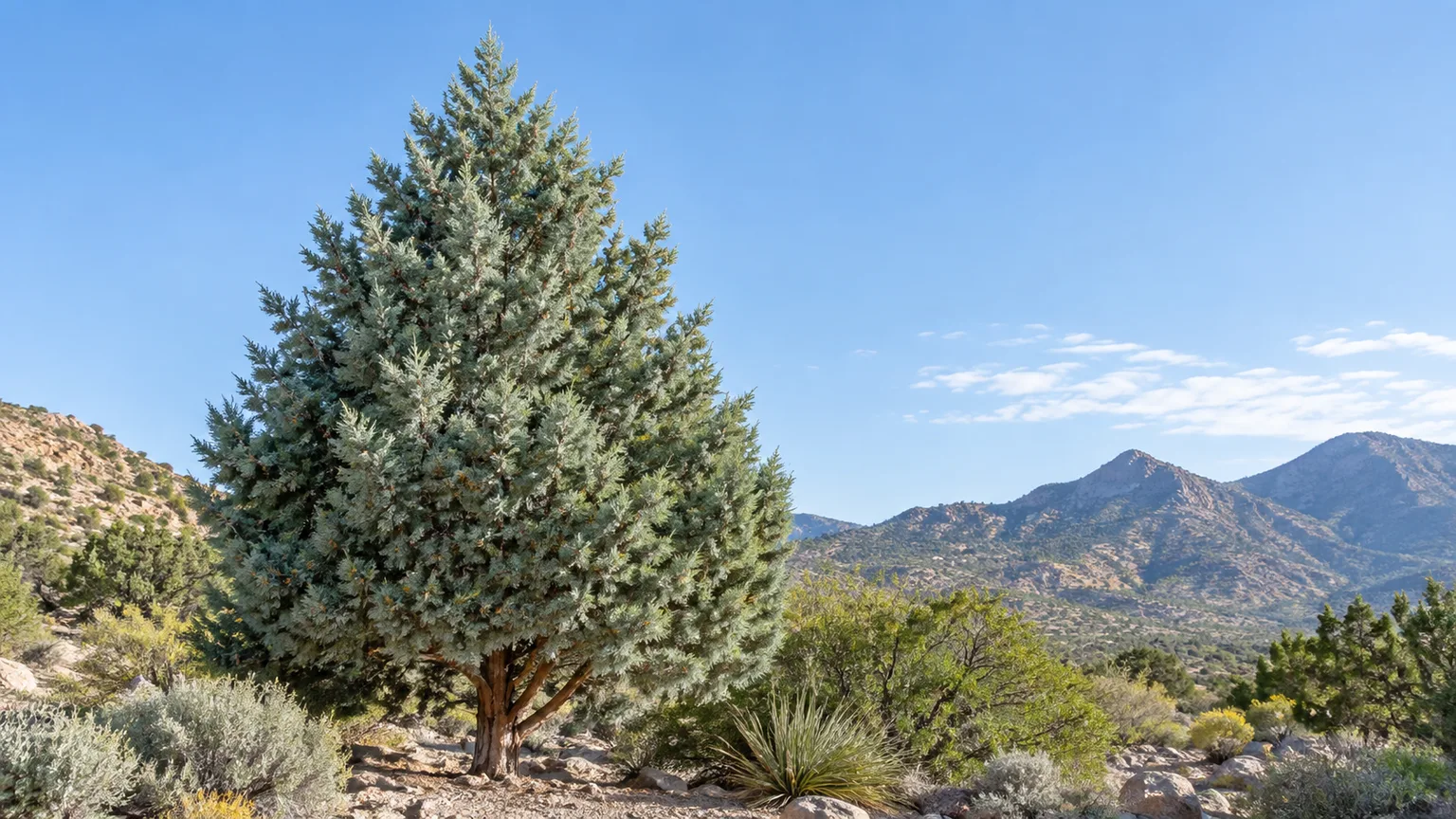
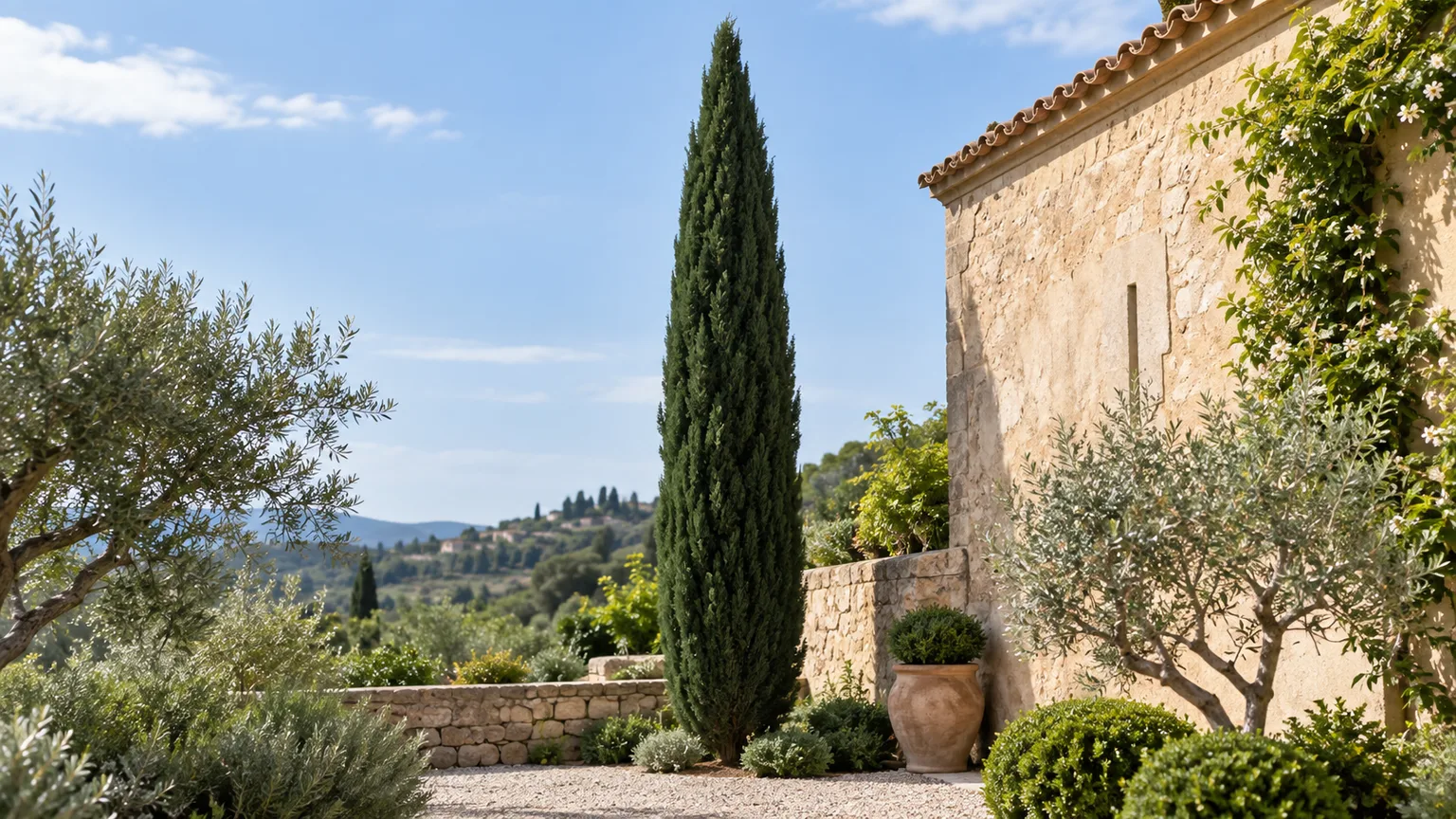
12. Italian cypress (Cupressus sempervirens). This columnar evergreen is useful when you need vertical cover in a warm, dry climate and have little horizontal room. Young trees grow more rapidly, then slow considerably as they mature; full-size forms can reach 40 to 70 feet tall but only 3 to 6 feet wide, so check the cultivar and local hardiness before treating it as a fast-growing screen. NC State Extension’s Italian cypress profile
13. Carolina cherry laurel (Prunus caroliniana). In the warm Southeast, this fast-growing broadleaf evergreen can make a dense screen that tolerates pruning and established drought. It may reach 35 feet tall and 15 to 20 feet wide, suckers and self-seeds, and its leaves, stems, and seeds contain cyanogenic compounds; avoid it where children, pets, or livestock may chew the plant, and use local extension advice before planting. NC State Extension’s Carolina cherry laurel profile
Deciduous Trees for Large Sites
14. Dawn redwood (Metasequoia glyptostroboides). This fast-growing deciduous conifer is a strong choice for a large, moist site where summer screening and fall color matter more than winter foliage. It can reach 60 to 100 feet tall and 15 to 25 feet wide, likes deep, well-drained soil, and tolerates occasional wetness; its bare winter outline means it cannot replace an evergreen hedge for year-round privacy. NC State Extension
15. Bald cypress (Taxodium distichum). Choose this native tree for a sunny yard with wet soil, seasonal flooding, or a pond edge where many screening trees would struggle. It commonly matures around 50 to 70 feet high and 20 to 30 feet wide, but sheds its fine foliage each fall and is too large for a narrow residential border; the “knees” are most associated with trees growing in or near water. NC State Extension
16. Hybrid poplar (Populus hybrids). A named, regionally tested hybrid can create shade and a temporary screen very quickly on a large property. The University of Minnesota’s InnovaTree, for example, is reported to grow up to 10 feet per year in good conditions and mature above 75 feet tall by about 40 feet wide, but the university warns against planting it near buildings, roads, or power lines because of its aggressive roots. Do not assume that rate or performance applies to every unnamed poplar hybrid. University of Minnesota’s InnovaTree guidance
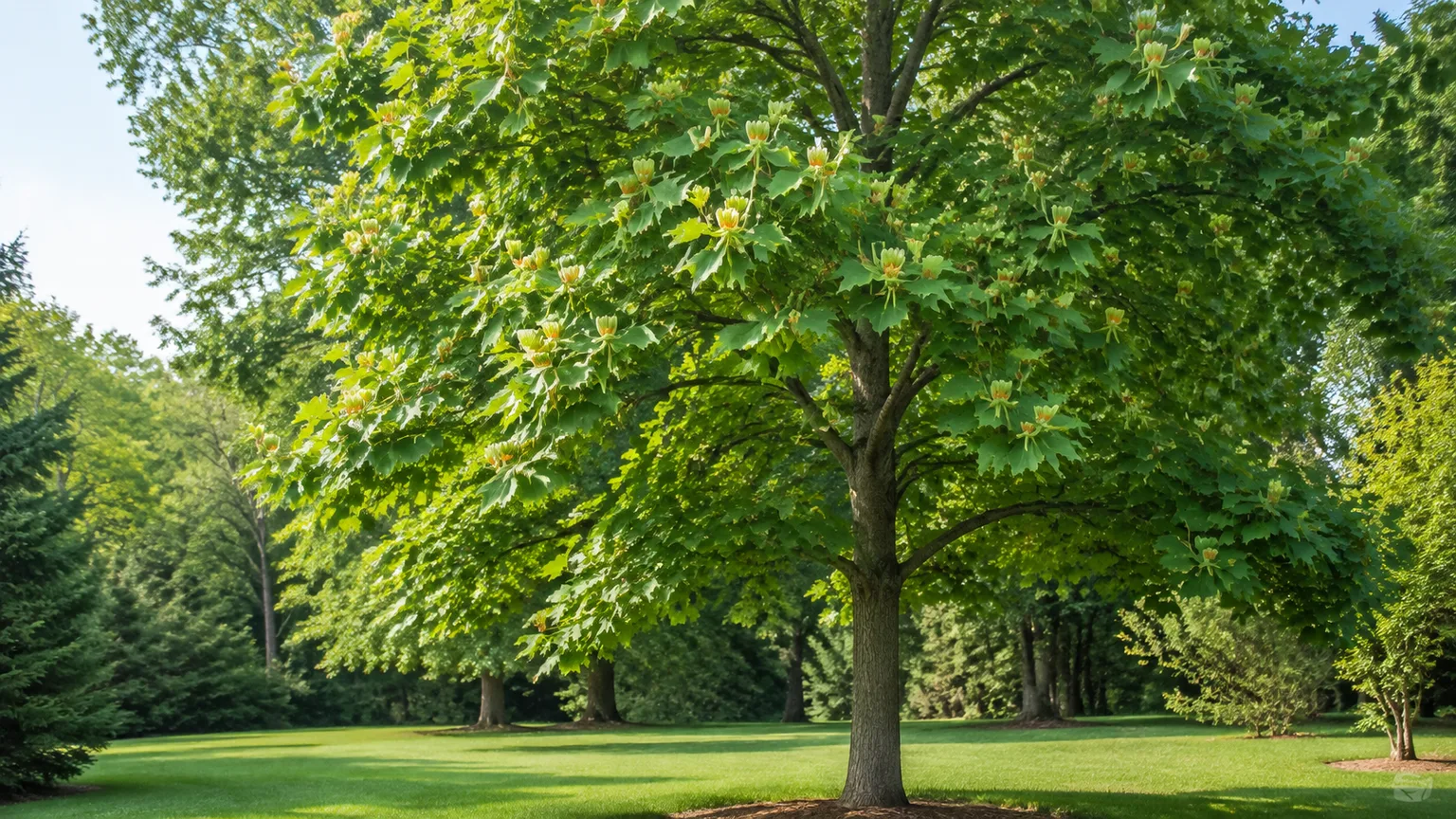
17. Tulip tree (Liriodendron tulipifera). This fast-growing native deciduous tree can screen a broad view on acreage, but it needs more room than most suburban yards have. It may mature 80 to 120 feet tall and 30 to 60 feet wide, loses its leaves in winter, and produces flowers high in the canopy; plant it for a large landscape’s summer cover and shade, not as a narrow evergreen hedge. NC State Extension
Fast-growing lists often include plants that do not make sound privacy choices. Lombardy poplar can form a narrow, rapid screen but is prone to disease, pests, weak wood, and short life; Southern catalpa and Japanese pagoda tree lose their leaves and need broad space, so they are better shade trees than year-round screens. Chinese tallowtree is invasive across much of the Southeast and can invade high-quality natural areas, so choose a locally appropriate native instead; confirm invasive status with your state or county extension before buying any unfamiliar tree. NC State Extension on Lombardy poplar and the Southeast Exotic Pest Plant Council’s invasive plant manual
Choose a Tree Size Before You Order
The most common design mistake is to plan for the plant in its nursery pot rather than the adult tree. A two-foot-wide sapling looks harmless beside a fence, but a tree that matures at 15 feet wide needs space on both sides of its trunk for branches, access, airflow, and future maintenance. In UGA Extension’s screening guidance, planting trees close together may close gaps faster at first, but crowding can shade plants, worsen disease, thin lower branches, and force removal later. UGA Extension’s guide to hedge spacing
Plan From Mature Width
Measure the planting strip from the center of the proposed trunk to the house, fence, walkway, pavement, septic features, and property line. Compare those distances with the tree’s mature spread and the clearance needed to mow, prune, inspect siding, and keep branches from rubbing; allow more room for species with aggressive or shallow roots. Trees do not read property surveys, so keep the mature canopy inside your lot unless neighbors have agreed to shared maintenance.
For a continuous screen, place trees according to the mature width and the spacing guidance for the named cultivar. “Plant closer for faster privacy” is not a free shortcut: it means more competition for water and light and often more pruning or later thinning. If you need a particularly narrow border, choose a genuinely columnar cultivar rather than squeezing a broad tree into a narrow gap.
Check Climate, Soil, Utilities, and Rules
Use the USDA hardiness zone as a starting point, then account for summer heat, wind, winter sun, drainage, and salt exposure. A tree may tolerate the minimum winter temperature but struggle in hot, humid summers; another may endure drought after establishment yet fail in waterlogged clay. Check a local extension profile for the species and cultivar, and inspect the planting area after a heavy rain to see whether water drains or stands.
Before digging, find underground utilities and ask your local one-call service for line marking; in the United States, dial 811 or check your state’s Call Before You Dig program. Also check overhead wires, septic and sewer locations, HOA rules, city tree ordinances, and any local invasive-plant restrictions. UGA Extension recommends accounting for mature size and utilities during site selection, and Call 811 explains the state-by-state process for requesting utility marks.
Plant a Screen That Stays Healthy
Planting depth, spacing, and first-year water influence whether the trees establish at all. It is worth buying fewer well-matched trees and maintaining them than planting a dense, inexpensive row that competes, browns, and needs replacement. For a long boundary, consider a staggered or mixed planting rather than a single solid wall of one vulnerable species.
Space Trees for Mature Growth
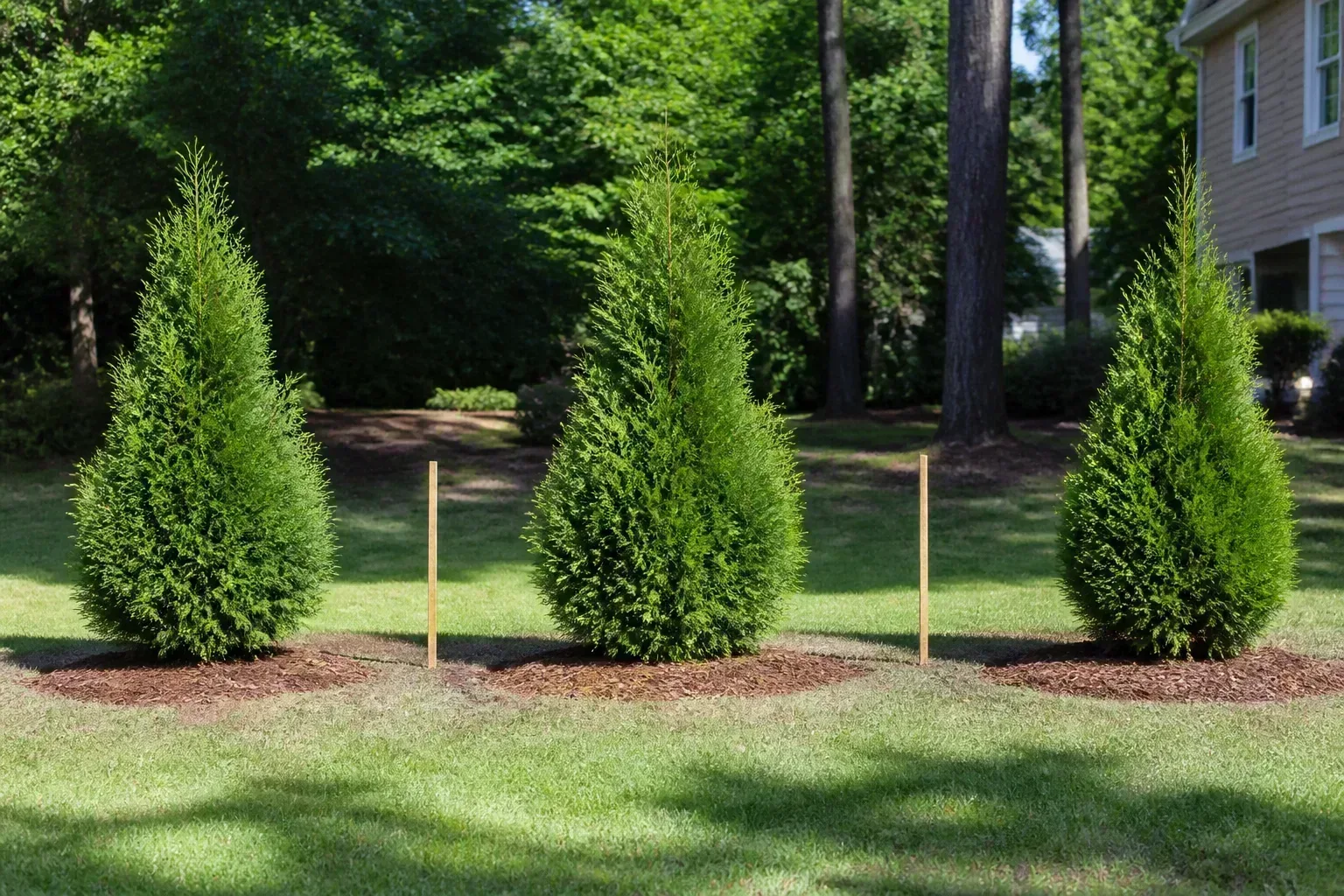
Mark the row before you dig and measure from the center of one trunk to the next. Follow the cultivar’s eventual spread and regional extension advice; there is no one correct distance for all 17 trees. Leyland cypress is a particularly clear example: UGA advises wide spacing because tightly packed trees lose air circulation and become more vulnerable to disease, even though close planting seems to create a screen sooner.
If you want a dense visual layer, use a staggered double row only when the bed is wide enough for both mature crowns. Two narrow rows can fill gaps more evenly than a single line, but putting them too close together creates the same shade, root competition, and access problems as cramming one row. For a narrow lot, one well-spaced row of the correct columnar cultivar is often the healthier design.
Establish Roots With Correct Planting and Watering
Set the tree so the root flare—the point where the trunk widens into its main roots—rests at or just above finished soil level. Dig a broad hole no deeper than the root ball, loosen circling roots when appropriate, and backfill with the soil you removed rather than a pocket of rich compost; a deeply planted tree can struggle even when watered. The International Society of Arboriculture’s planting guide and Penn State Extension’s planting advice both emphasize visible root flare and careful aftercare.
Water slowly through the full root ball and surrounding soil, adjusting for rainfall, temperature, wind, soil type, and container size. Newly planted trees need regular moisture while they establish, but saturated soil deprives roots of oxygen, so do not keep watering on a fixed calendar if the ground is still wet. Apply a broad 2- to 3-inch mulch ring to moderate moisture, keep mulch several inches away from the trunk, and avoid piling it into a volcano. Penn State Extension’s watering guidance explains why both drought and overwatering can set a young tree back.
Keep Privacy Without Creating a Maintenance Problem
A planted screen is a living landscape, not a fence that can be installed once and forgotten. Check the row in dry spells, inspect for pest or disease problems before they spread, and preserve enough access to prune or replace a tree without damaging its neighbors. If the site changes or one species fails repeatedly, diversify the planting instead of repeating the same mistake along the whole boundary.
Prune to Preserve Lower Foliage
Start with the tree’s natural shape and prune lightly for damaged, crossing, or awkward growth. Many needled evergreens, including arborvitae, do not grow new foliage from old bare wood; cutting a branch back to brown interior stems can leave a permanent hole. If you want a clipped screen, make small cuts while foliage is green, keep the base slightly wider than the top so lower branches receive light, and choose a cultivar that can stay within the height you want. Penn State Extension’s guide to pruning needled evergreens
Avoid planting a tall species with the plan to top it whenever it reaches the roofline. Repeated topping can leave an unnatural form, expose the screen to gaps, and create a maintenance cycle; instead, select a shorter cultivar or reserve a tall tree for a place where its mature height is welcome. The initial plant label is not the final height you can safely maintain.
Mix Species and Bridge the Wait
A mixed screen reduces the chance that one pest, disease, or extreme-weather event will damage the whole row. Group several plants of one type together, then alternate to another species that shares the same light, drainage, and climate needs; a random mix of incompatible trees is not more resilient simply because it contains different names. UGA Extension recommends mixed groupings and notes that a diverse screen can add wildlife and seasonal interest.
If privacy is urgent, pair young trees with a temporary fence panel, trellis, or lower shrub layer instead of overplanting the trees. Let the permanent trees reach their intended size; remove the temporary layer only after the view is actually screened from the places you use. This approach gives you privacy sooner without forcing a permanent row to grow too close together.
Avoid Common Fast-Growth Mistakes
Do not choose from a growth-rate number alone, plant at the spacing for the first few years, or assume a green tree in summer will block the same view in January. Avoid putting large species under power lines or beside a small patio, and do not plant thirsty trees where you cannot water during establishment. If the site is narrow, exposed to fire, poorly drained, or close to utilities, cross off trees that conflict with those conditions before comparing appearance.
The best privacy tree is the one that screens the right angle and still fits after it matures. If that leaves you with a slower but narrower cultivar, a mixed hedge, or a fence-and-tree combination, that can be a more durable answer than a fast tree you will later need to top, thin, or remove.
Conclusion
Fast-growing privacy trees can make a yard feel more secluded, but only when speed, mature size, and seasonal cover line up with the site. Green Giant arborvitae, Leyland cypress, and selected poplars can grow quickly under favorable conditions; Arizona cypress, wax myrtle, and narrower cultivars make more sense in particular climates or footprints, while deciduous trees give summer screening rather than a solid winter wall.
Measure the view, check the full-grown width, confirm the tree fits your climate and utility clearances, and plan its spacing before you buy. Plant at the correct depth, water through establishment, and prune before the screen grows beyond the shape you can maintain; that is how a fast start becomes useful privacy instead of future removal work.



