Houseplant Bacterial Wilt vs Overwatering: Diagnosis Guide
Diagnose houseplant bacterial wilt vs overwatering and fungal wilt, run a careful ooze check, and know when discard and sanitation beat sprays.
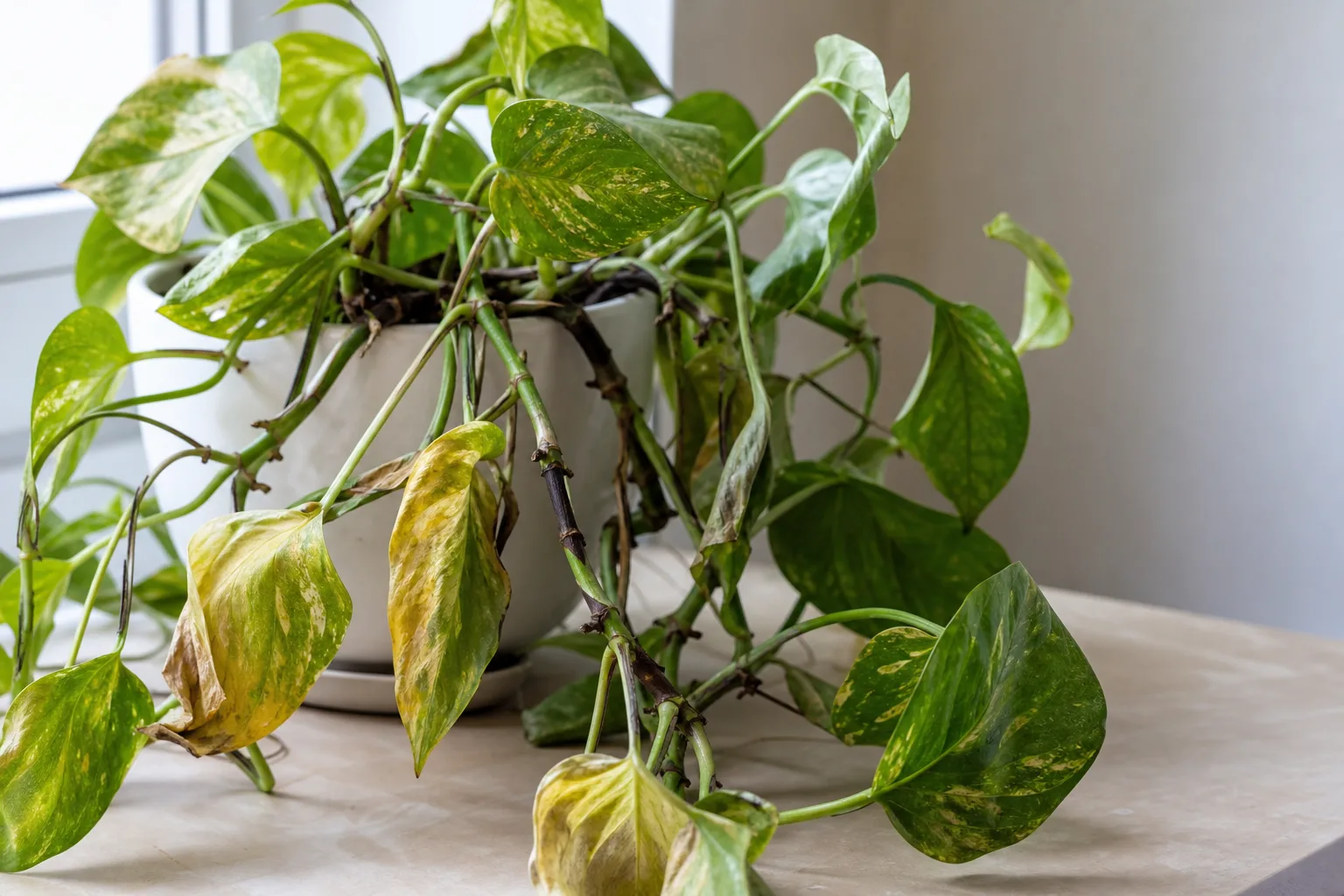
A limp houseplant in moist soil is usually not bacterial wilt. Far more often the roots are drowning, the mix is compacted, the pot has no drainage, or a fungal root rot has already killed the fine roots that pull water upward. Bacterial wilt becomes a serious working diagnosis only when wilting persists after you correct moisture, stems show internal browning or soft foul tissue, sticky ooze appears, or a known high-risk host arrived recently from a nursery.
Start with the pot, not the disease name. Feel the mix two knuckles deep, tip the root ball if needed, and only then decide whether you are looking at wet-soil wilt, soft stem rot, or a contagious systemic bacterial problem. Written by Sai Ananth and reviewed by Dr. Ananya Rao (Ph.D. Horticulture; LeafyPixels Editorial Review Board) against extension, UC IPM, and APHIS guidance for indoor differentials, discard criteria, and regulated-host escalation.
What Bacterial Wilt Means on Houseplants
Bacterial wilt is a symptom name for diseases in which pathogenic bacteria invade the plant’s water pathway or rapidly dissolve soft tissue until leaves cannot stay turgid. The plant looks thirsty because hydraulic flow fails, not because the pot is empty. Adding water to already damp mix often makes things worse by favoring soft-rot organisms and spreading contaminated drainage.
Indoors, the label covers more than one biology. Classic vascular wilt bacteria such as Ralstonia solanacearum colonize xylem vessels. Soft-rot bacteria such as Erwinia (now often Pectobacterium / Dickeya groups in modern naming) turn stems and crowns mushy and foul-smelling; once infection becomes systemic, aboveground parts yellow, droop, wilt, and die. UC IPM notes that pathogens causing spots, blights, and soft rots can also cause vascular wilt when bacteria become systemic.
Vascular Bacteria vs Soft-Rot Bacteria
Penn State Extension describes Ralstonia solanacearum as a cause of vascular wilting on many herbaceous ornamentals, including geraniums, with leaf wilt, vascular discoloration, yellowing, and plant death. Unlike many foliar bacteria, Ralstonia survives well in soil, and once a greenhouse is contaminated it is hard to eliminate. USDA APHIS tracks regulated Ralstonia solanacearum strains — including race 3 biovar 2 — because certain strains threaten potato and other crops and have been associated with infected geranium stock.
In typical apartment collections, you are more likely to meet soft-rot and stem-rot bacteria on fleshy plants than a textbook field Ralstonia outbreak. University of Florida plant pathologists add that bacterial disease in houseplants is relatively rare and often arrives already present when you buy the plant, with fleshy hosts such as orchids and succulents especially prone to soft rot (UF Emerging Pathogens Institute).
Hosts That Raise Suspicion Indoors
UC IPM lists systemic bacterial soft stem rot on Aglaonema, Dracaena, Kalanchoe, and Syngonium, and bacterial stem rot, leaf spot, and wilt on Aglaonema, Dieffenbachia, Philodendron, and Syngonium. Those systemic infections cause wilting and general yellowing; cankers or rots are soft and mushy and may smell unpleasant. Penn State also notes Xanthomonas blight or wilt on geraniums and attacks on Dieffenbachia, Philodendron, Syngonium, Aglaonema, and related foliage plants.
Use the host list as a suspicion booster, not a conviction. A jade with a foul soft stem, a philodendron crown that liquefies at the soil line, or a newly purchased geranium tray with progressive wilt deserves faster isolation than a drought-stressed spider plant. For species-specific recovery notes after you confirm the pattern, use the related guides list at the end of this page.
Why Overwatering Still Comes First Indoors
Wilting is usually caused by underwatering or excessive light, but it may also come from root decay tied to overwatering or poor drainage — so inspect roots whenever wilt appears (UC IPM). Soft stem bases usually point to overwatering. Clemson HGIC likewise lists lack of water, excess water, root rot, fertilizer excess, and salt buildup among common wilt causes, and notes that overwatering kills roots by oxygen starvation.
Treat bacterial wilt as the uncommon, high-stakes explanation after you rule out wet-soil wilt and simple drought. If the plant firms up after a measured rehydration, or recovers after you dry the mix and trim mushy roots, you were dealing with water stress or root rot, not a vascular bacterial epidemic. UF specialists put it bluntly: overwatering is the number one way houseplants die (UF Emerging Pathogens Institute).
Symptoms That Raise Real Suspicion
Bacterial wilt does not give you a single Instagram-ready leaf pattern. Suspicion rises when several clues stack: persistent limp leaves despite correctly moist mix, uneven collapse on one side of a plant or leaf, yellowing that races ahead of ordinary aging, soft foul stem tissue, creamy exudate, or a nursery host with a known bacterial history.
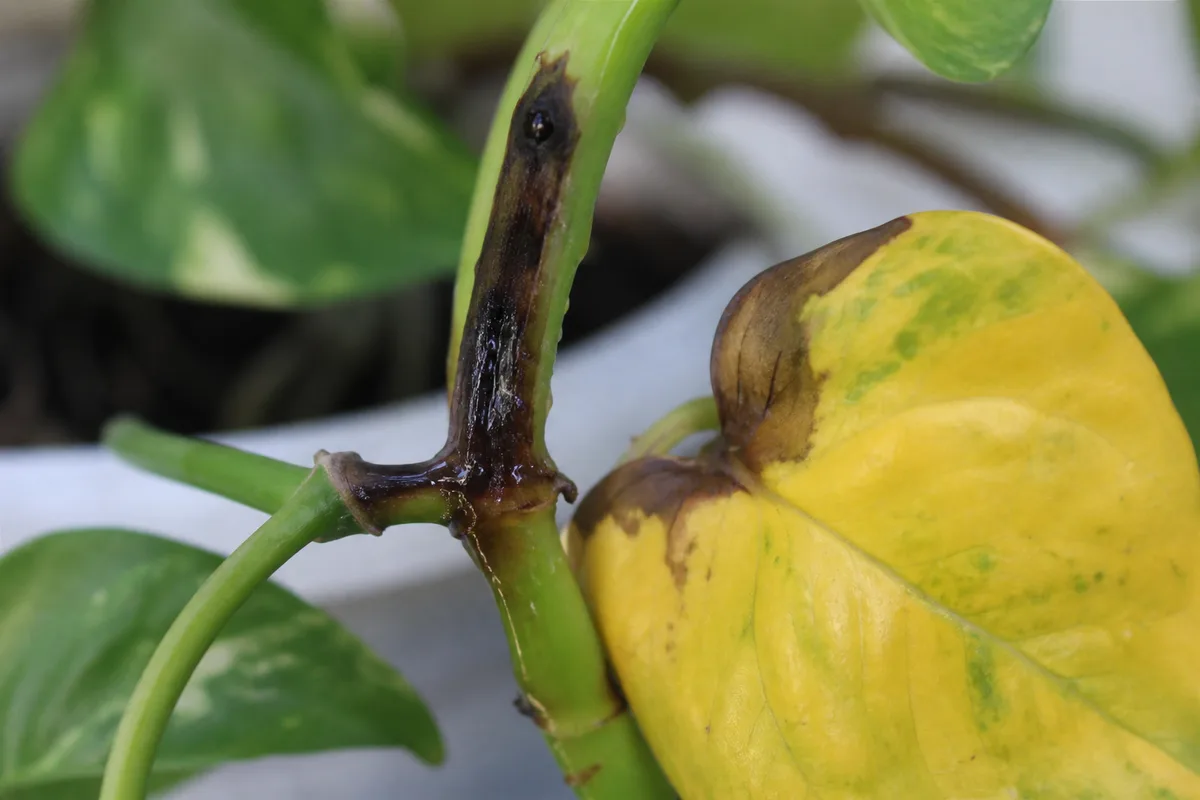
Do not wait for laboratory certainty before isolating. Contagion risk comes from shared water, tools, hands, and splash long before you know the species name.
Uneven Wilt, Yellowing, and Soft Collapse
Early vascular wilt can look oddly selective. One branch or one side of the canopy may wilt while neighboring stems still look decent. Leaves may yellow between veins or at the margins as water transport fails. In warm rooms, collapse can look sudden once enough vessels are plugged or soft tissue liquifies.
APHIS symptom galleries for Ralstonia on geranium emphasize progressive wilting, chlorosis, and necrosis that can kill plants in a shared tray — a reminder that nursery stock can move bacteria before retail shelves (USDA APHIS). On houseplant aroids and dracaenas, watch for a soft mushy stem section that travels upward from the soil line while upper leaves hang limp.
Vascular Browning, Foul Crowns, and Sticky Ooze
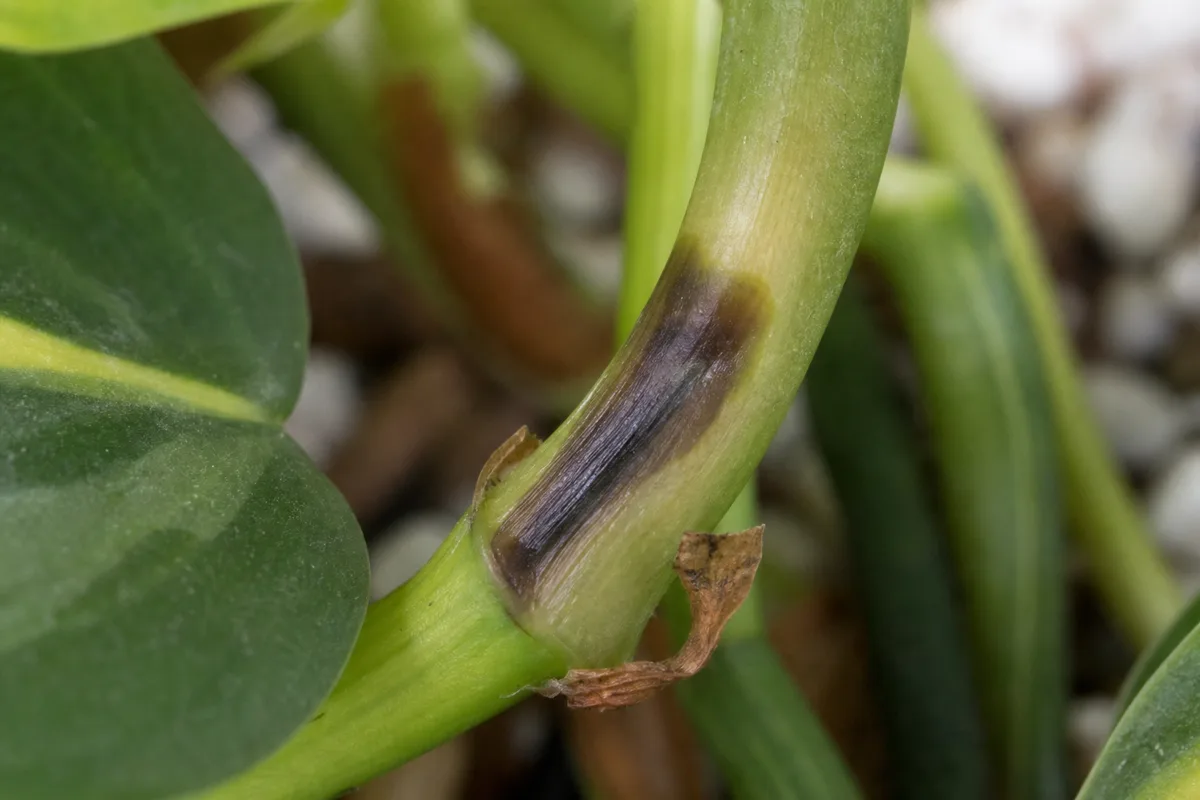
Slice a lower stem lengthwise with a disposable blade. Tan, yellow-brown, or dark streaking in the vascular ring supports a vascular disease hypothesis, whether bacterial or fungal. Soft, water-soaked, cream-to-black mush with a rotten odor favors bacterial soft rot. Clemson describes bacterial leaf spots as water-soaked, sometimes with a yellow halo and sticky ooze that enlarge and run together under wet conditions (Clemson HGIC). UC IPM notes that under wet conditions infected tissue may exude brownish masses of bacteria (UC IPM). Floriculture guidance likewise describes cream to yellow exudates collecting on the surface of diseased tissue (UC IPM).
Missouri Botanical Garden adds that progressive rotting typically leads to offensive odors that help flag bacterial infection, and that systemic infection can follow root damage as bacteria travel up conducting tissue.
If the problem is mainly discrete greasy leaf lesions without stem collapse, switch lanes to the leaf spot disease workflow. If the crown or cane is liquefying at the soil line, open the stem rot guide in parallel — soft bacterial stem rot and bacterial wilt often overlap in home practice.
Bacterial Wilt vs Fungal Wilt vs Overwatering
Wrong category wastes time. Overwatering and root-infecting water molds respond to drainage and root surgery. Fungal vascular wilts (Fusarium, sometimes others in ornamentals) may also brown vessels but usually lack milky bacterial streaming and foul soft-rot odor. Bacterial systemic disease rarely answers to fungicide schedules because the pathogen is inside living tissue (UC IPM).
Use this lookalike table before you commit to a disease name:
| Clue | Overwatering / root rot | Fungal vascular wilt | Bacterial wilt / soft-rot wilt |
|---|---|---|---|
| Mix moisture | Often wet, heavy, sour | Variable; may be normal | Often moist; watering does not restore turgor |
| Roots | Brown, soft, slip off | May be partly intact early | Can look fair early in pure vascular cases; soft rot may climb from crown |
| Stem interior | Basal darkening possible | Brown vascular streaks possible | Vascular streaking and/or mushy foul tissue; possible ooze |
| Leaf pattern | Overall limp yellowing | Often progressive yellow wilt | Uneven wilt; water-soaked soft tissue; sticky exudate |
| Contagion feel | Cultural; pathogens can spread in wet media | Soil/spores | High via splash, tools, shared saucers, cuttings |
| First move | Dry-down, drain, root trim | Culture + sanitation | Isolate; plan discard if systemic |
Clemson’s root and stem rot section notes leaves and stems wilt while stems may be girdled near soil level by a ring of brown or black tissue, with brown soft roots — a fungal/water-mold picture that mimics bacterial collapse until you smell and feel the tissue (Clemson HGIC). UF specialists recommend checking how much of the plant is affected: pathogens often start on one leaf or stem, while whole-plant mushiness is frequently abiotic (UF Emerging Pathogens Institute). Use that heuristic, then verify with a root and stem check rather than guessing from a photo alone.
Root Check Before You Blame Disease
Slide the root ball out. Healthy roots are firm and usually pale under their outer covering; off-color brownish to blackish tips often indicate root rot (UC IPM).
If most roots are already soft and the crown is firm and odor-free, prioritize root-rot rescue. If the crown or main stem is spongy and foul while some roots still look decent, bacterial soft rot or systemic bacterial disease moves up the list. Photograph both roots and a fresh stem cut before you bag anything — records help if you later ask an extension clinic for ID. For the broader limp-leaf moisture path before any disease label, use the wilting houseplants guide.
The Ooze and Stem-Streaming Test
The classic field check for bacterial vascular wilt is the stem-streaming or ooze test: bacteria forced from cut vascular tissue into clean water as a milky thread or cloudy plume. Home growers also notice sticky cream, yellow, or brown exudate on wet lesions without suspending a stem. Both are suggestive field signs, not species confirmation. Outdoor tomato and vegetable pages popularize this test; indoors it still helps only when you pair it with root and crown checks and sealed disposal.
How to Run a Careful Home Check
Work away from healthy plants. Wear gloves if you can. Use a clean disposable blade. Ventilate the area if you later use bleach on tools or pots.
- Cut a short section from the lower symptomatic stem or petiole.
- Rinse surface soil so debris does not muddy the water.
- Suspend the fresh cut end in a clear glass of clean water without crushing the stem.
- Watch for a milky, creamy, or cloudy stream leaving the vascular tissue over several minutes.
- Bag the plant piece and the water for trash disposal — do not pour test water into houseplant sinks, shared trays, or outdoor beds.
Separately, press a water-soaked lesion: sticky bacterial ooze that smears supports a bacterial field call, especially with a foul odor (Clemson HGIC; UC IPM). Disinfect the blade and your hands before touching another plant.
What Positive and Negative Results Mean
A positive stream or obvious ooze strengthens the bacterial hypothesis and should trigger containment and likely discard. It does not identify Ralstonia versus Xanthomonas versus soft-rot Erwinia, and it does not tell you whether a strain is regulated. APHIS materials note that geranium wilt from Xanthomonas bacterial blight can look indistinguishable from Ralstonia wilt in the greenhouse (USDA APHIS).
A negative test does not clear the plant. Low bacterial populations, wrong tissue, or a fungal wilt can all fail to stream. If wilt persists with vascular browning after cultural correction, treat the plant as contagious until proven otherwise.
Immediate Containment: Day-0 Checklist
Move the suspect plant off shared trays the same day. Stop misting and overhead watering. Pause cuttings, trades, and gifts. Keep a note of purchase date, seller, and which plants shared water or tools.
Do not compost infected material. Missouri Botanical Garden advises against composting infested plant debris for bacterial diseases and recommends discarding or burying debris away from production areas (Missouri Botanical Garden). Household compost piles are not validated kill steps for vascular bacteria.
Bacteria hitch rides on splash, contaminated hands, and pruning tools (Penn State Extension; UC IPM). Remove organic debris from tools first, then disinfect. Practical home options include 70% alcohol on blades after diseased-tissue removal (UC IPM) or a bleach dip — Missouri Botanical Garden suggests rubbing alcohol or about 1 part bleach to 4 parts water between cuts, then cleaning and oiling tools to limit rust (Missouri Botanical Garden). Use bleach in a ventilated space, wear gloves, avoid mixing with other cleaners, and rinse/oil metal tools after dips so they do not pit. Clemson recommends scrubbing reused pots and rinsing them in one part bleach to nine parts water before reuse (Clemson HGIC).
Give each plant its own saucer. Empty runoff promptly. Avoid ebb-and-flow style shared reservoirs for any suspect shelf — Penn State notes some bacteria can spread in recirculating systems (Penn State Extension).
Day-0 field card
- Isolate off shared trays; stop overhead water and misting
- Photograph roots + a fresh stem cut before bagging
- Bag soft tissue and test water for trash (no compost, no sink pour)
- Disinfect blades (70% alcohol) and scrub/bleach pots if reused
- List every plant that shared saucers, tools, or shelf splash
- Start a two-week neighbor watch for new soft tissue or unexplained wilt
Why Discard Is Usually the Honest Fix
Once bacteria colonize vascular tissue or turn a stem into mush, sprays cannot chase them through the plant. UC IPM states that control strategies for systemic bacterial houseplant diseases are very limited and discarding infected plants is often best; pesticide sprays are not effective because pathogens sit deep within tissues (UC IPM). Penn State’s ornamental bacteria management list starts with culture-indexed clean stock and “discard infected plants,” then dry foliage culture (Penn State Extension). UF specialists likewise advise discarding plants with soft rot rather than nursing liquefied tissue (UF Emerging Pathogens Institute).
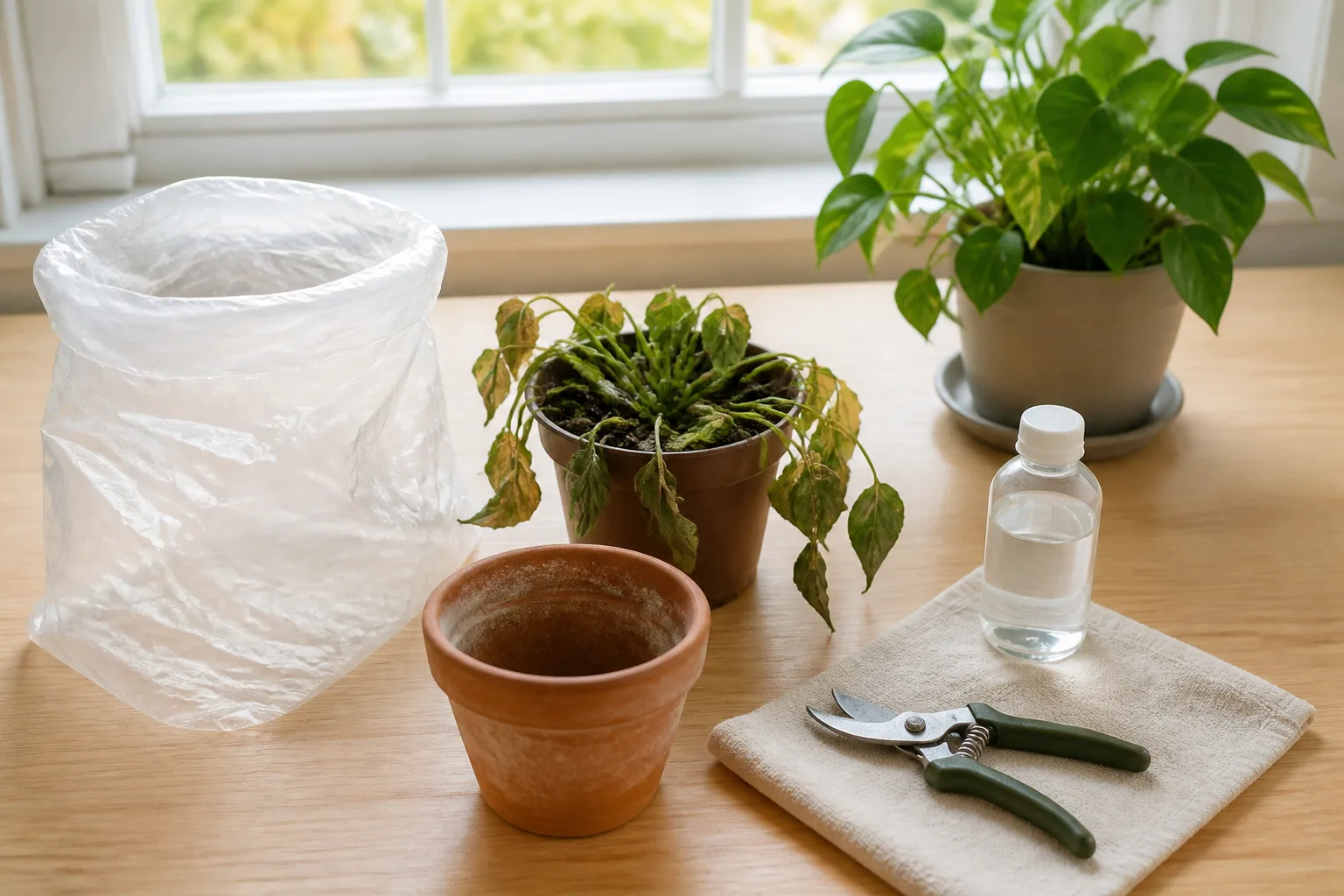
Bag the plant and its potting mix. Wipe the shelf. Quarantine neighbors that shared water for at least two weeks and watch for new soft tissue or unexplained wilt. Two weeks is a practical home window for soft tissue collapse and unexplained limp to show on plants that shared splash or tools — not a lab incubation certificate, but long enough to catch most fast indoor soft-rot progressions before you restock the shelf.
Why Rescue Pruning and Sprays Fail
Cutting above a wilted section feels productive, but bacteria may already sit above the visible stain. Propagating a “clean” tip from a soft-rotted jade, philodendron, or geranium can move the pathogen into a new pot. Copper products may act as limited protectants on some foliar bacterial diseases in nursery settings, but they are not a cure for systemic wilt and can injure sensitive ornamentals (UC IPM; Missouri Botanical Garden). Household antibiotics, essential-oil drenches, and bleach poured into soil are not evidence-based cures and can damage roots or violate pesticide rules.
If only one clearly firm side shoot remains on an otherwise soft plant, the statistical play is still discard. Save energy for protecting the collection.
Prevention for the Rest of Your Collection
Buy healthy, preferably culture-indexed stock when you can, especially for geraniums and commercial foliage lines (Penn State Extension). Quarantine new plants for one to two weeks before they join dense shelves. Water at the soil line. Keep foliage dry overnight. Space plants so leaves are not constantly overlapping in stagnant air. Avoid wounding stems when staking or cleaning, because bacteria commonly need wounds or natural openings to enter (Missouri Botanical Garden; UC IPM).
Sparse watering and modest fertility reduce soft, lush tissue that soft-rot bacteria love (UC IPM). Keep saucers separate year-round so one soggy pot cannot feed the next. For general limp-leaf triage that is not yet a disease call, stay with the moisture-first wilting path before you escalate to a disease label.
When to Contact Extension, Seller, or APHIS
Most apartment soft-rot cases end with trash bags and bleach, not paperwork. Escalate when a recently purchased geranium or other regulated-risk host collapses with vascular wilt symptoms in a shared tray, when several plants from one nursery shipment wilt together, or when you need a lab ID before discarding a valuable stock plant.
Contact the seller first with purchase dates and photos of wilt, vascular cuts, and any streaming result. Your local cooperative extension diagnostic clinic can advise on sample submission rules — bag suspect tissue separately and ask before mailing anything wet or foul. For regulated Ralstonia concerns tied to geranium and related hosts, follow current USDA APHIS guidance rather than dumping material outdoors where it could reach gardens or waterways. Do not gift cuttings from a wilted plant while you wait for answers.
First-Hand Notes From Diagnosing Wilt Indoors
These are LeafyPixels editorial shelf notes, not lab confirmations. They show how the moisture-first order plays out at home.
False alarm — golden pothos, March 2026. A trailing pothos stayed limp for three days in mix that felt wet at the surface. Roots were brown and slipped their outer layer; the crown smelled earthy, not putrid, and a petiole cut showed no milky stream. After a dry-down, root trim, and fresh airy mix, new growth resumed in about ten days. Working label: overwatering / root decline, not bacterial wilt.
Soft-crown discard — Philodendron Brasil, January 2026. One vine went limp while the soil was still evenly moist. The crown at the soil line was cream-brown mush with a sour smell; sticky ooze smeared from a water-soaked petiole. Neighboring plants on the same tray were moved the same evening. The plant and mix went in a sealed bag; tools got 70% alcohol; the tray was wiped. No neighbor showed soft tissue over the next two weeks. Working label: systemic soft-rot wilt — discard was the fix.
Nursery escalation — zonal geranium, spring 2025. A newly purchased geranium developed progressive wilt and chlorosis within a week of arriving, while the potting mix stayed moist. Vascular browning was visible on a lower cut. Because geraniums are a documented Ralstonia / Xanthomonas lookalike host in greenhouse trade, we contacted the seller, isolated the pot, and disposed of plant and mix in sealed trash rather than outdoor compost, following the APHIS caution to treat unexplained nursery wilt seriously (USDA APHIS).
Related Guides (Open When…)
- Wilting houseplants — open when limp leaves need a moisture-first differential before any disease label
- Stem rot on houseplants — open when the cane or crown is soft, dark, or collapsing at the soil line
- Leaf spot disease on houseplants — open when greasy or haloed spots stay foliar without systemic wilt
- Root rot on houseplants — open when wet mix and mushy roots explain the wilt
- Bacterial wilt symptom hub — open for a short symptom overview and species-indexed starting points
- Jade plant bacterial wilt — open for Erwinia soft-rot style collapse on succulent stems
- Philodendron Brasil bacterial wilt — open for aroid stem and petiole soft bacterial patterns
- Pothos bacterial wilt — open when trailing vines wilt with soft nodes despite moist mix
Conclusion
Use this Day-0 → Day-14 router instead of re-reading disease names:
Day 0. Check mix moisture and roots first. Isolate any plant with persistent limp leaves in correctly moist soil plus soft foul tissue, vascular browning, or ooze. Stop shared saucers and overhead water. Bag soft tissue and streaming-test water for trash.
Day 0–2. Finish sanitation: 70% alcohol on blades, scrub and bleach-rinse pots you plan to reuse (1:9 bleach:water per Clemson), wipe shelves, list exposed neighbors. Decide discard as soon as the crown or main stem is systemic mush — do not wait for a miracle spray.
Day 3–7. Watch quarantined neighbors daily for new soft nodes, uneven wilt, or sticky exudate. Do not take cuttings or restock the shelf yet.
Day 8–14. If neighbors stay firm and odor-free, return to normal spacing with separate saucers and soil-line watering. If a second plant collapses with the same stacked clues, repeat isolate-and-discard and review whether tools or trays were shared.
Houseplant bacterial wilt is uncommon compared with ordinary wet-soil wilt, but it is expensive when you guess wrong. Accurate category beats a dramatic disease name — use the related guides above when the pattern sits on a border between wilt, stem rot, leaf spot, or root decline.