Houseplant Leaf Spot Disease: Causes, Diagnosis and Fixes
Diagnose houseplant leaf spot: fungal vs bacterial vs edema, then isolate, prune, dry leaves, and stop reinfection with better watering and sanitation.
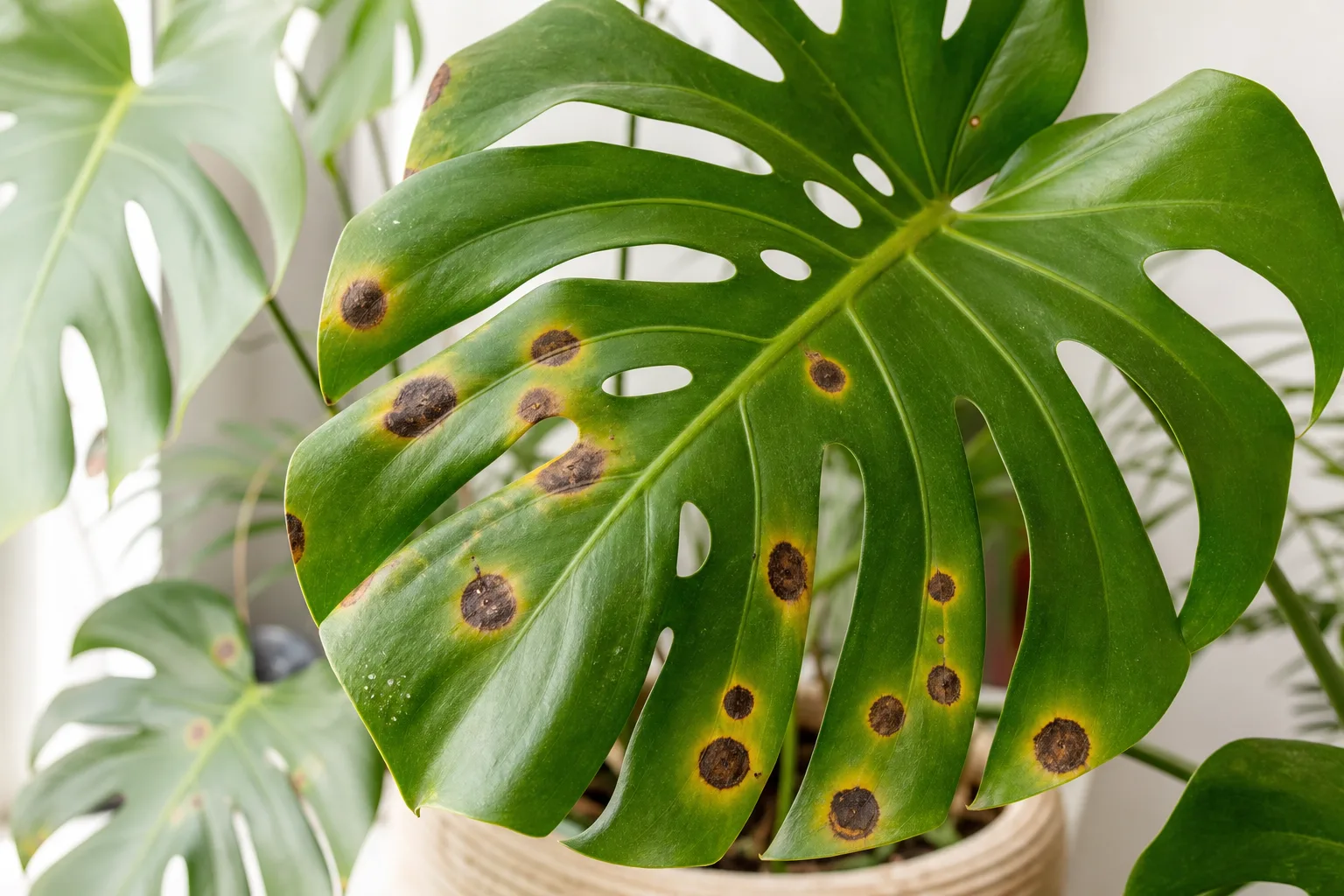
Brown circles with yellow edges. Greasy water-soaked patches. Corky blisters that look like scabs. All of these get labeled “leaf spot,” and only some of them are infectious disease. If you treat edema like a fungus — or mist a bacterial infection hoping humidity will help — you make the plant worse while the real driver keeps running.
This guide is a diagnostic and fix path for houseplant leaf spot disease: how to tell fungal spots from bacterial spots from lookalikes, what actually spreads them indoors, and the sanitation-first steps that stop new lesions. Spotted tissue does not heal into clean leaf again. Recovery means new leaves unfurl clean and existing lesions stop enlarging.
What Leaf Spot Disease Actually Is (and What Recovery Looks Like)
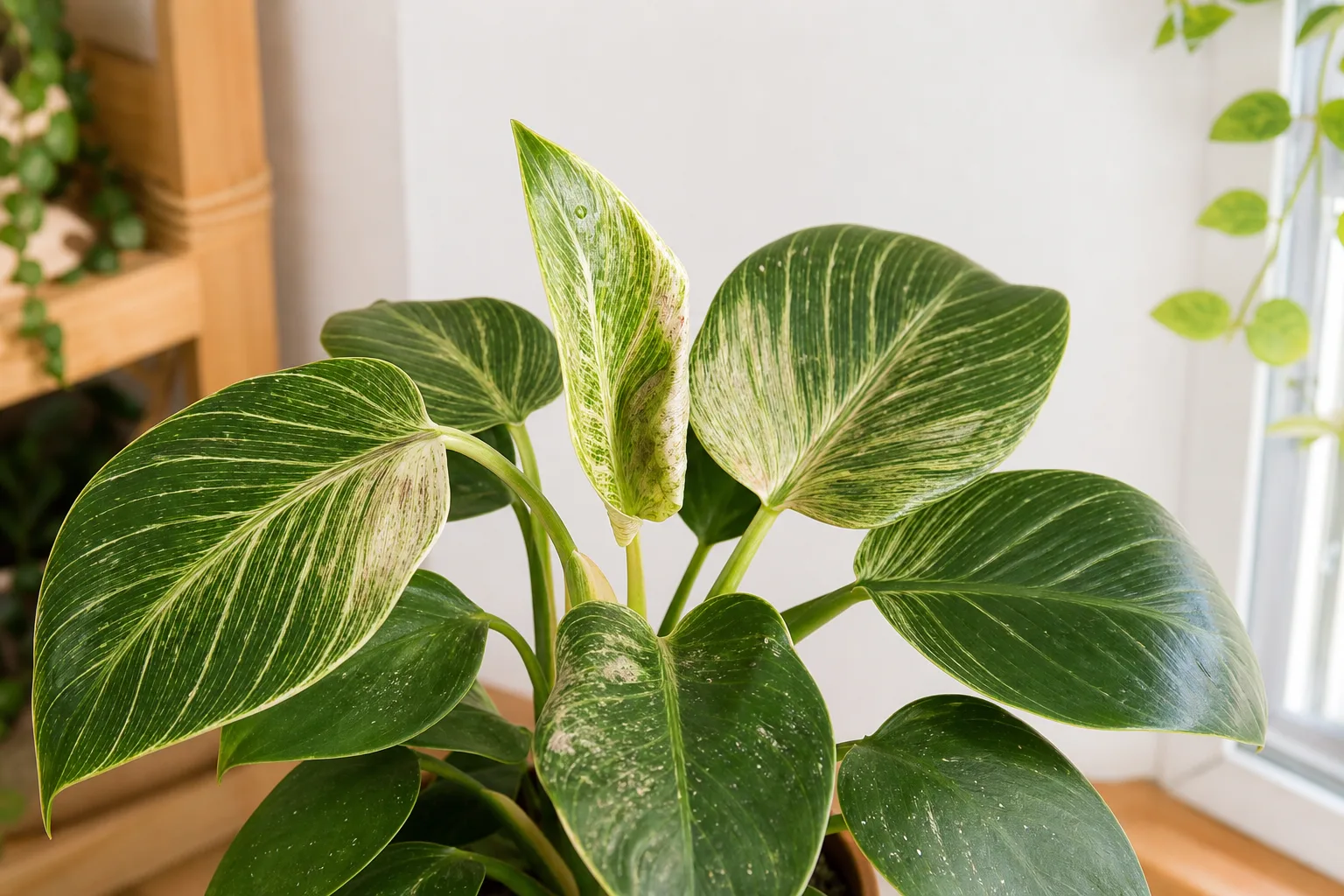
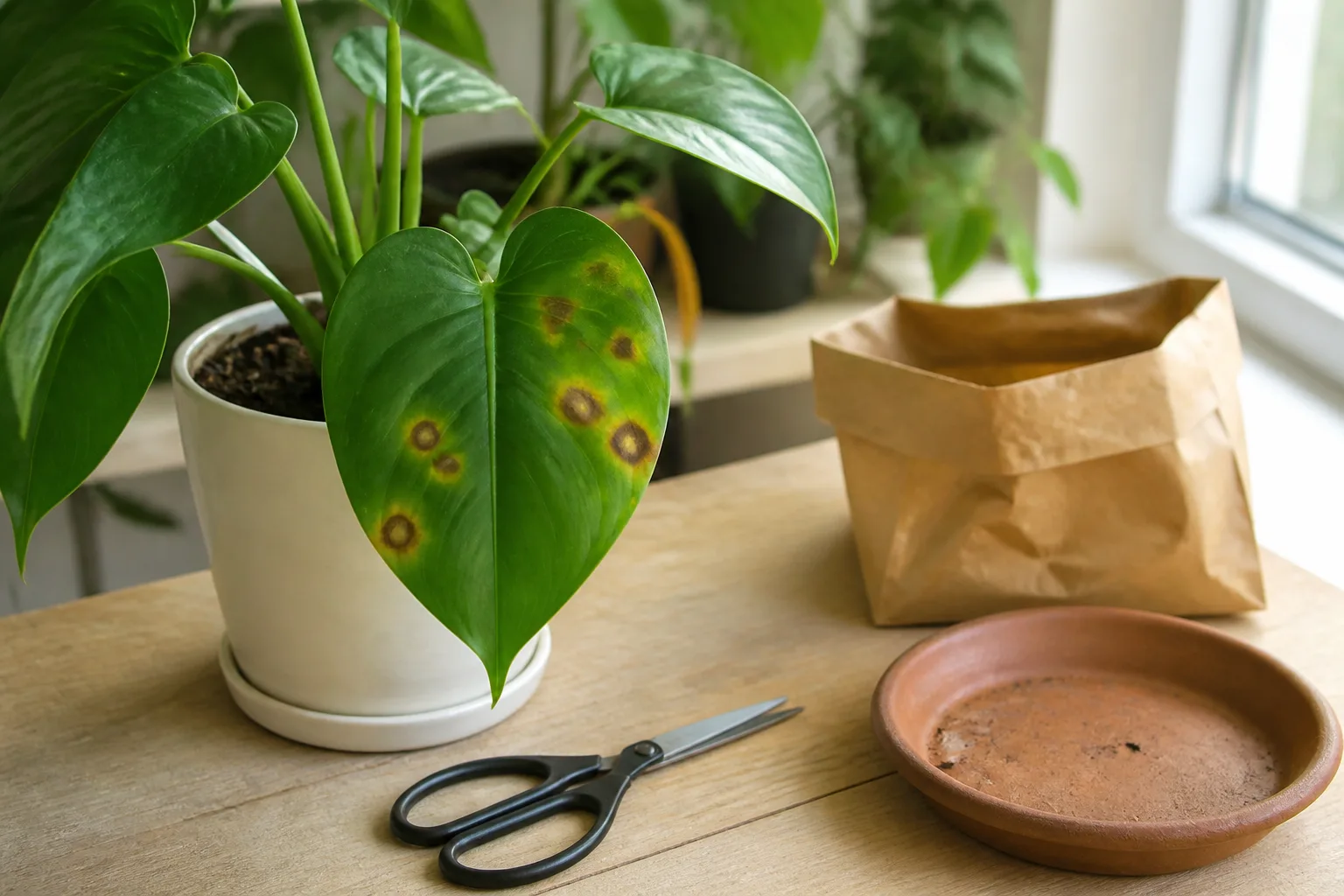
Leaf spot disease is a pattern of localized lesions on leaf blades or petioles caused by pathogens — most often fungi, sometimes bacteria — that colonize tissue after moisture sits on the surface long enough for infection. Clemson HGIC describes fungal leaf spots as small brown spots with yellowish margins that may form concentric rings or target patterns, with tiny black fruiting bodies sometimes visible in dead tissue (Clemson HGIC). Bacterial spots more often start water-soaked, sometimes with a yellow halo, and can run together when foliage stays wet.
Indoors, true infectious leaf spot is less common than people assume. UC IPM notes that foliar leaf spots and blights that thrive outdoors are usually uncommon in homes and offices because humidity is lower and there is less splashing water (UC IPM). That does not mean spots are imaginary. It means many “spots” are cultural injuries, cold-water marks, salt burn, or edema — and the infectious cases almost always ride on wet leaves, poor airflow, or a plant that arrived already infected.
If you only watch old spots hoping they fade, you will misread progress. Measure success by whether previously clean leaves stay clean after you stop wetting the canopy, and by whether new growth emerges without lesions.
Fungal vs Bacterial vs Edema: Quick Comparison Table
Getting the category right changes what you do next. Fungal spots may respond to dry foliage plus a labeled fungicide after you remove infected leaves. Bacterial spots need dry foliage, sanitation, and often discarding when stems soften. Edema needs watering and airflow changes, not a spray schedule.
| Feature | Fungal leaf spot | Bacterial leaf spot | Edema (lookalike) |
|---|---|---|---|
| Typical look | Circular tan/brown/black; yellow halo; sometimes target rings or tiny black dots in dead tissue | Water-soaked/greasy at first; may turn tan/black with yellow border; often angular between veins | Translucent blisters → raised corky tan scars, often undersides |
| Spread feel | Enlarges or multiplies after wet events | Can run together fast on wet leaves; soft stem smell is a red flag | Scars stay put; new blisters only if moisture imbalance continues |
| Contagious? | Often yes via splash, tools, debris | Often yes via splash, hands, tools | No — physiological disorder |
| First fix | Isolate, prune infected leaves, dry foliage, improve airflow | Isolate, prune, keep dry; discard if soft/systemic | Water less in low light; empty saucers; improve airflow |
| Spray role | Labeled protectant fungicides may reduce new lesions after cleanup | Copper soap / labeled bio products are limited protectants; not a stem-rot cure | None — fungicides will not remove cork scars |
| Discard when | Canopy mostly ruined and still spreading after cultural fix | Soft petioles/stems, foul odor, systemic wilt pattern | Rarely for scars alone — save the plant if roots firm |
Fungal Leaf Spots
Fungal lesions are often roughly circular, tan to reddish-brown to black, and may merge into irregular blotches. UC IPM lists genera such as Cercospora, Colletotrichum, Alternaria, and related fungi among common leaf-spot and blight causes, and notes they generally spread by splashing water carrying spores (UC IPM). A dry, dark spot with concentric rings that look like a target is a classic fungal clue highlighted by University of Florida plant pathologists when contrasting fungal and bacterial patterns (UF Emerging Pathogens Institute).
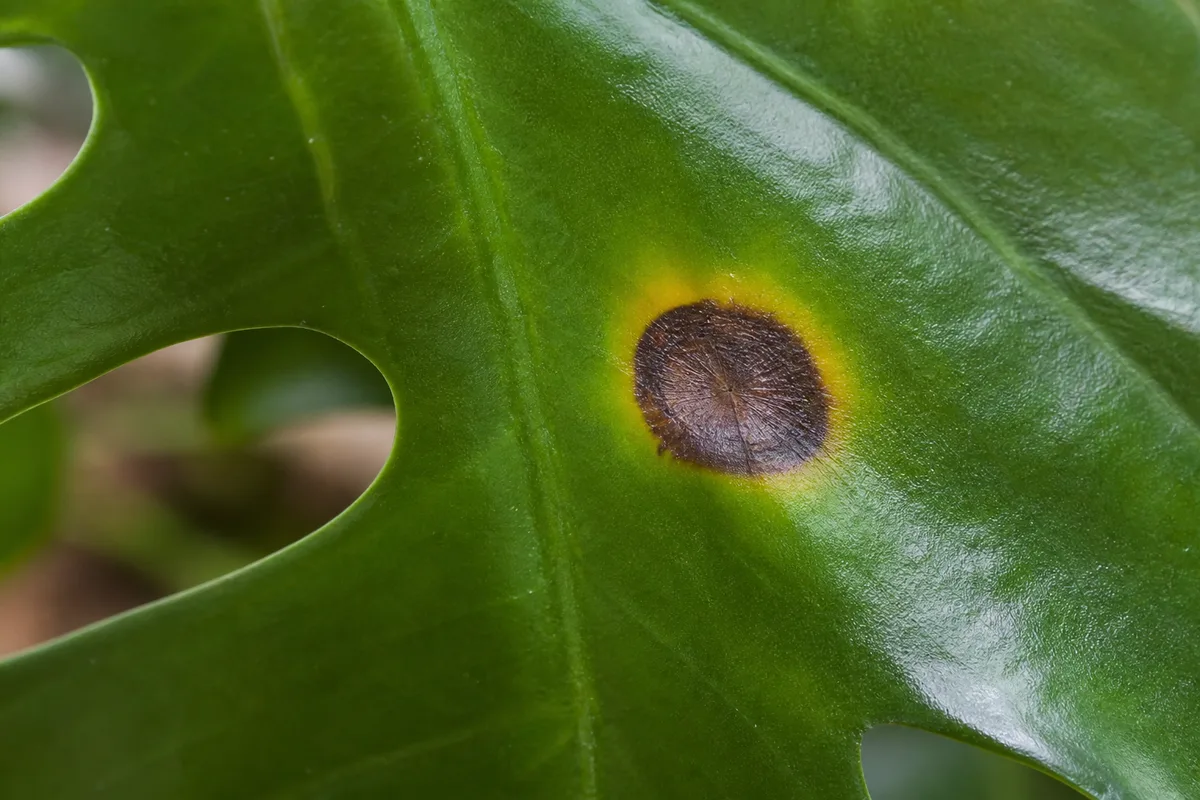
Anthracnose, caused by Colletotrichum and related fungi, can brown leaf tips and margins until tissue dies around the edge (Clemson HGIC). Many of these fungi need hours of continuous leaf wetness to infect, which is why evening misting and overhead watering are such reliable triggers indoors. Host tendency indoors: aroids and other tropical foliage that sit wet overnight after misting or crowded-shelf condensation show fungal patterns more often than arid-house collections kept dry at the leaf surface.
Bacterial Leaf Spots
Bacterial leaf spots often look oily, greasy, or water-soaked at first, especially when you view the underside. Clemson describes water-soaked spots that may show a yellow halo, sometimes with sticky ooze, enlarging and running together under wet conditions (Clemson HGIC). UC IPM adds that localized bacterial diseases from Xanthomonas and Pseudomonas produce dark green water-soaked spots that may turn tan, dark brown, or black with a yellow border, and can enlarge until the blade is ruined (UC IPM).
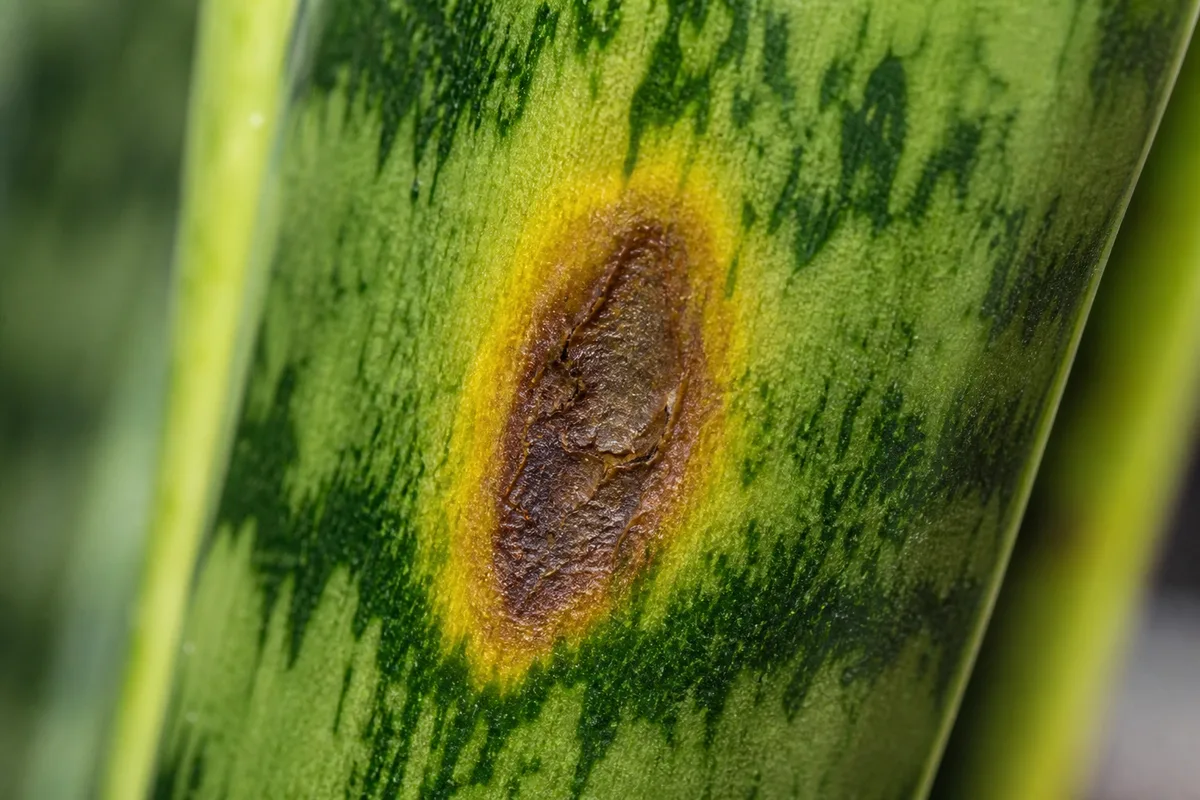
Bacteria struggle to punch through major veins, so angular borders are a useful field clue (UF Emerging Pathogens Institute). Soft, mushy petioles or a rotten smell moving into the stem is a red flag that the problem is no longer a surface spot. Systemic bacterial infections are hard to spray away because the pathogen is inside the plant; discarding is often the honest option (UC IPM). UF specialists note bacterial disease in houseplants is relatively rare and often arrives already present when you bring the plant home (UF Emerging Pathogens Institute).
Edema and Other Abiotic Lookalikes
Edema (also spelled oedema) is a physiological disorder, not an infection. Wisconsin Horticulture describes small translucent, fluid-filled blisters on the undersides of mostly older leaves that later scar into tan, corky tissue (Wisconsin Horticulture). It happens when roots take up water faster than leaves can release it — warm moist soil paired with cool, humid, low-light air is a classic setup. Clemson notes rough corky swellings on petioles and lower leaf surfaces, especially on succulent plants in winter when soil stays too wet and light is poor (Clemson HGIC).
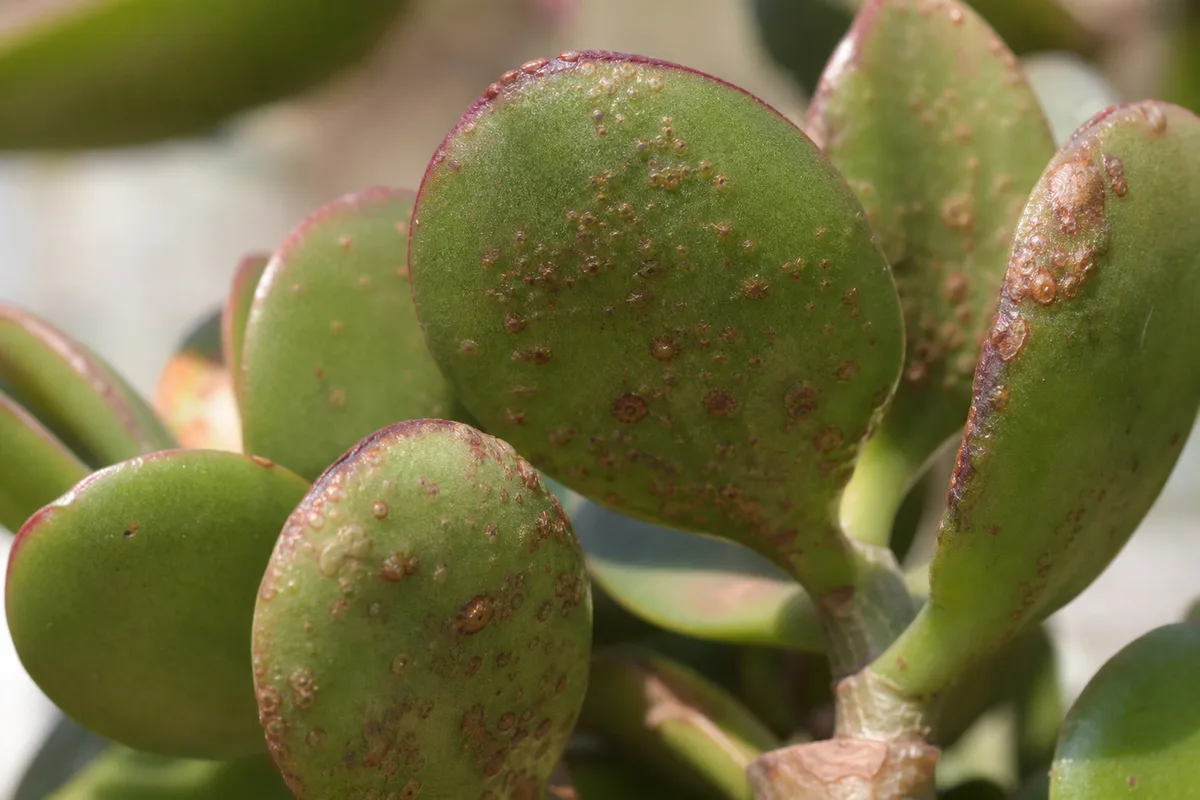
Purdue Extension warns that gardeners often blame insects or disease when houseplant spots are actually oedema from moisture extremes, and that cold-water splash on African violet leaves can mark tissue without any pathogen (Purdue Extension). RHS likewise separates dark spots with yellow margins (possible fungal leaf spot) from white or straw-coloured splash marks from cold water or aerosols, and describes raised corky patches on leaf undersides as late-stage oedema (RHS).
Edema does not spread from plant to plant. Corky scars stay, but the disorder slows when you water less in low light, improve airflow, and empty saucers. For a deeper lookalike walkthrough, see the edema symptom page and the overwatered plant guide.
How to Diagnose Leaf Spot on Houseplants
Start with context, not a product. Stick a finger into the mix, check whether leaves were wet overnight, and ask whether one leaf or the whole plant is involved. UF pathologists advise that a problem isolated to a single leaf or stem is more likely infectious, while whole-plant wilt or mushiness points to abiotic stress such as overwatering (UF Emerging Pathogens Institute).
Lab confirmation is the only certainty for species-level pathogen ID. For most home collections, field category (fungal vs bacterial vs lookalike) is enough to choose isolate/prune/dry versus discard versus change watering. If spots keep spreading after two weeks of dry-canopy culture, or a valuable plant shows ambiguous greasy lesions, contact your local cooperative extension or a plant diagnostic clinic for sample submission guidance rather than stacking random sprays — Penn State Extension’s diagnosing framework starts with gathering site history before jumping to a product (Penn State Extension).
The Wet-Leaf and Airflow Checklist
Ask these questions before you cut or spray:
- Did you mist, shower, or water from above in the last 48 hours?
- Do leaves stay wet into the evening in a crowded shelf or cabinet?
- Are neighboring plants touching the spotted plant?
- Does the soil stay heavy for days after watering?
- Do spots look water-soaked and greasy, or dry and papery with rings?
Wet foliage plus stagnant air is the infection window most indoor leaf-spot fungi and bacteria need (UC IPM). If the mix is chronically soggy and lower leaves yellow while spots appear, inspect roots — overlapping root rot can stress the plant while splash spreads foliar pathogens. Fix watering habits with the how to water indoor plants method rather than adding more mist for “humidity.”
When Spots Spread vs When They Stay Put
Infectious spots usually enlarge or multiply over several days on new tissue, especially after wet events. Edema scars and cold-water marks tend to stay put once the tissue scars; new blisters only appear if the moisture imbalance continues (Wisconsin Horticulture; Purdue Extension).
Photograph one marked leaf and one clean leaf on day zero, then check again in three to five days. New lesions on previously clean leaves after misting or crowding is strong evidence of disease pressure. Static corky scars with no new activity after you dry the canopy point to a lookalike.
What Causes Leaf Spot Indoors
Pathogens need a susceptible leaf, a way in, and enough moisture. Indoors you usually supply that moisture yourself through misting, overhead watering, crowded shelves, or dirty tools. UC IPM emphasizes buying healthy plants and notes many houseplant diseases are introduced from the nursery (UC IPM). Avoiding overhead irrigation and keeping surfaces dry is standard management for bacterial leaf diseases (UC IPM). Clemson’s fungal leaf-spot guidance is equally direct: remove infected material, improve air circulation, and avoid splashing water on foliage (Clemson HGIC).
Misting feels helpful in dry apartments, but wet leaves overnight are a gift to leaf-spot organisms. Raise ambient humidity with spacing, pebble trays used correctly, or a humidifier aimed at the room — not at leaf surfaces. See the indoor humidity and pebble trays guide if brown tips from dry air are the separate problem you were trying to solve.
Crowded plants trap humid air between leaves so surfaces dry slowly after any splash. Dirty shears, shared drip trays, and handling a sick plant then a healthy one move bacteria and spores plant to plant. UC IPM recommends isolating affected plants, washing hands after contact, and disinfecting pruning tools in 70% alcohol after removing diseased parts (UC IPM). Stressed plants — low light, salt buildup, recent overwatering — take longer to push clean growth even after you correct moisture. Yellowing that pairs with spots needs its own triage via the indoor plant yellow leaves guide so you do not fertilize a plant that is still fighting infection.
How to Treat Leaf Spot Step by Step
Treatment order matters more than product brand. Dry the environment first, remove inoculum, then decide whether a labeled spray is justified.
Isolate, Prune, and Dry the Canopy
Move the plant away from neighbors the same day you confirm spreading spots. Cut off leaves with active lesions using clean scissors, bag the debris, and put it in the trash — not indoor compost. Water at the soil line only so foliage stays dry. Space remaining plants so air can move between leaves, and run a small fan on low if the room is stagnant.
Wisconsin’s edema guidance also applies as a cultural reset when lookalikes overlap: water less under low light, water in the morning so mix drains before night humidity rises, and empty saucers about 30 minutes after watering (Wisconsin Horticulture). For fungal cases, UF specialists recommend pinching off fungus-infected leaves before fungicide so you reduce the pathogen load (UF Emerging Pathogens Institute).
Species-specific recovery pages help once you know the pattern: Monstera leaf spot disease, snake plant leaf spot disease, African violet leaf spot disease, and ZZ plant leaf spot disease.
When Fungicides Help and When They Do Not
Buy a spray only if lesions look fungal (dry/papery or target-ring), you have already removed infected leaves, foliage will stay dry going forward, and stems are still firm. Skip the spray if spots are corky underside scars (edema), the plant has soft foul-smelling petioles, or the whole plant is wilted from wet roots — fix culture or discard instead.
After infected leaves are removed, Clemson lists copper soap, chlorothalonil, myclobutanil, tebuconazole, or Bacillus amyloliquefaciens among options that can reduce future fungal leaf-spot incidence when used as labeled, preferably outdoors for houseplants (Clemson HGIC). Copper soap or Bacillus amyloliquefaciens may also be listed for bacterial leaf spots after diseased tissue is removed, but sprays are protectants — they do not resurrect dead tissue and they will not cure systemic bacterial infections inside stems (Clemson HGIC; UC IPM).
Read the label for your plant type. Prefer treating outdoors or in a well-ventilated area, keep pets and children away until sprays dry, and wear the PPE the label names. Chlorothalonil and other synthetic actives are not “indoor room sprays” — if you cannot ventilate or move the plant outside briefly, lean harder on cultural control instead of forcing a chemical pass. Never treat a lookalike like edema with fungicide hoping the corky scars will vanish. Pair any spray decision with the inspect-before-treat discipline in the integrated pest management indoors guide.
Sanitation That Stops Reinfection
Sanitation is the difference between a one-time flare and a shelf-wide problem. Wipe benches and cachepots, empty and scrub drip trays, and avoid reusing splash water that ran over diseased leaves. Disinfect tools between plants with 70% isopropyl alcohol after cutting infected tissue (UC IPM).
When you repot after root issues or severe foliar disease, use fresh mix and clean containers. Clemson’s bleach rinse for reused pots (one part household bleach to nine parts water) is a practical home standard (Clemson HGIC). Quarantine new purchases for a couple of weeks and inspect undersides weekly before they join a dense collection (UC IPM). Do not leave fallen spotted leaves on the soil surface. Debris shelters spores and bacteria next to healthy petioles, and the next watering splash restarts the cycle.
Prevention Habits That Matter Most
Prevention is mostly boring, which is why it works. Water at the soil line. Let foliage dry the same day if you rinse dust off leaves. Space plants so leaves are not pressed together. Match light and watering so soil does not stay cold and wet for days in winter.
Buy plants that look clean under the leaves and at the crown — do not negotiate with nursery spots hoping they are “just cosmetic” (UF Emerging Pathogens Institute; UC IPM). Keep humidity solutions from wetting leaf surfaces. If brown tips still appear from dry air after you stop misting, diagnose that separately with the indoor plant brown leaves guide instead of returning to nightly sprays.
Healthy culture beats product stacks. Clemson’s overarching point still holds: most houseplant problems are environmental, and diseases are uncommon when indoor conditions are not favorable for pathogens (Clemson HGIC).
Common Mistakes That Make Spots Worse
Misting diseased leaves to “raise humidity” keeps the infection window open. Treating bacterial soft rot with fungicide alone wastes time while the stem collapses. Composting infected indoor leaves recirculates inoculum. Leaving the plant in a decorative cachepot full of runoff recreates the wet-soil stress that invites both root decline and edema lookalikes.
Another frequent error is removing every slightly marked leaf on an edema-prone plant. RHS advises not removing oedema-affected leaves just for cosmetics when the priority is correcting watering and airflow (RHS). Strip actively infectious tissue; do not defoliate a plant for corky scars that will not spread.
Finally, do not fertilize hard while lesions are still spreading. Soft, lush growth under high fertility is more vulnerable under warm, damp conditions for some bacterial problems (UC IPM). Stabilize moisture and canopy dryness first.
When to Discard vs Save the Plant
Save the plant when spots are mostly foliar, stems stay firm, and new growth is clean after two to three weeks of isolation, pruning, and dry-leaf culture. Discard when petioles or stems turn soft and foul-smelling, lesions race through most of the canopy, or a systemic bacterial pattern keeps returning no matter how carefully you water (UC IPM; UF Emerging Pathogens Institute).
Bag the plant before disposal so you do not shed spores in shared trash rooms, and clean the shelf afterward. If the plant is rare or expensive, you can try cutting clean tip cuttings from firm, spot-free nodes — but only after a quarantine period, and only if stems show no soft rot. When decline is mixed with root failure or general collapse, use the save dying houseplant triage before you invest weeks in a lost cause.
First-Hand Notes From Diagnosing Leaf Spots Indoors
These are LeafyPixels editorial observations from indoor setups reviewed while drafting species problem pages — single-setup notes, not controlled trials.
Misting-triggered Monstera (March 2026): A Monstera deliciosa on a crowded east shelf was misted nightly for “humidity.” Day 0 photos showed two circular lesions with yellow halos on one mature leaf. By day 5, three previously clean leaves each had a new discrete spot after another wet overnight. We stopped misting, isolated the plant, removed the three worst leaves, and watered at the soil line only. By day 14, no new lesions appeared on remaining foliage; old spots stayed as scars. Outcome: fungal-pattern pressure stopped when the wet-leaf window closed — no fungicide needed after cultural cleanup.
Jade edema misread as fungus (January 2026): A Crassula ovata wintered in low light with a saucer that stayed full after watering showed raised tan corky scars on lower leaf undersides. The grower had already bought a multi-purpose fungicide. We emptied the saucer ~30 minutes after each watering, stretched the dry-down interval, and left the scarred leaves on. Four weeks later: no new blisters; cork scars unchanged. Outcome: classic edema — spray would never have cleared the scars (Wisconsin Horticulture).
Discard after soft petiole odor (May 2026): A nursery Philodendron arrived with greasy, angular leaf patches. Isolation and dry culture held foliar spots for a week, then a petiole went soft with a sour smell. We bagged and discarded the plant, wiped the shelf, and alcohol-wiped tools. Neighbor aroids stayed clean over the next month. Outcome: once soft stem tissue appears, sanitation beats heroic spraying (UC IPM; UF Emerging Pathogens Institute).
Related Guides (Open When…)
- Leaf spot disease symptom hub — open when you need a species-indexed starting point for circular spots with halos or water-soaked margins
- Houseplant diseases identification and treatment — open when spots are only one of several disease patterns (root, stem, powdery mildew)
- Root rot on houseplants — open when wet soil and yellowing overlap with foliar spotting
- Overwatered plant — open when corky scars or wet-mix stress may be mimicking infectious spots
- How to water indoor plants the right way — open when you need a soil-line watering method that keeps foliage dry
- Integrated pest management indoors — open when you are about to reach for any spray and need inspect-before-treat order
- Monstera leaf spot disease — open for aroid-specific fungal spot recovery on Monstera deliciosa
- Philodendron Brasil leaf spot disease — open for climber leaf-spot checks after misting and crowding
Conclusion
Use this 14-day path instead of resting on hope:
- Day 0: Photograph one spotted leaf and one clean leaf; isolate the plant; stop misting and overhead watering.
- Day 0–1: Prune actively spotted leaves into the trash; disinfect shears with 70% alcohol; empty saucers within ~30 minutes of watering.
- Day 1–5: Keep foliage dry and spaced; check photos — new lesions on previously clean leaves favor infectious disease; static cork scars favor edema.
- Day 5–7: Decide spray only for firm-stem fungal patterns after cleanup; skip sprays for edema and soft-stem bacterial cases.
- Day 7–14: Expect recovery as new clean leaves, not fading old spots. Discard if petioles soften or foul odor appears; save if stems stay firm and new growth is clean.
Houseplant leaf spot is usually a moisture problem wearing a pathogen costume. Separate fungal spots, bacterial spots, and edema first. Isolate, remove infected leaves, keep foliage dry, fix splash and crowding, then sanitize so the next watering does not restart the outbreak.