How to Get Rid of Carpet Beetles at the Source
Learn where carpet beetles breed, how to identify larvae and shed skins, and how to remove their food source with a careful cleaning and monitoring plan.

If you keep finding tiny hairy larvae, bristly shed skins, or fresh holes in wool, cleaning the visible spot is only half the job. Carpet beetle larvae can feed in one quiet corner and wander elsewhere, so the damaged sweater, rug, or upholstered chair may not be where the infestation began. A room spray aimed at the adult beetle on a windowsill will not remove the lint, pet hair, dead insects, or animal-fiber item that is feeding the next generation.
The reliable sequence is simple: confirm the insect, follow the strongest clues to a food source, remove or treat that source, vacuum nearby hiding places, then monitor for fresh larvae. Carpet beetles are common scavengers, but a single adult near a window is weaker evidence than repeated larvae, cast skins, and new damage. The distinction helps you spend your effort where it matters.
The First-Response Plan: Confirm, Map, Remove, Monitor
Start by taking a clear photo of any larva or beetle you find. If possible, put a specimen in a small sealed container for identification rather than pinching it; the bristles on larvae may irritate skin or airways in some people. Note the exact room, surface, date, and whether you found a live larva, a shed skin, or only an adult.
Then inspect outward from that clue. Check the item with damage, its storage area, and the nearest places where lint or hair settles: rug edges, the underside of furniture, closet corners, and upholstery seams. Keep suspect textiles together in closed bags while you decide whether to wash, dry-clean, freeze, or discard them. Vacuum the source area and its edges, then empty the vacuum outdoors into a sealed trash bag.
This order matters because carpet beetle control depends on finding where immature beetles can feed. Colorado State University Extension describes removing development sites, treating infested items, and storing vulnerable materials in insect-proof containers as the core approach. Pesticide sprays may supplement that cleanup in some cases, but they do not replace it. (Colorado State University Extension)
Confirm Carpet Beetles Before Treating
Carpet beetles are dermestid beetles. Adults are small, oval to round, and may have mottled white, yellow, brown, or black scales; some are plain dark brown or black. They are often noticed crawling on a wall or gathering near a bright window in spring. Outdoors, many adults feed on pollen, so an adult’s presence alone does not prove that larvae are breeding in that room. (Illinois Department of Public Health)
What Larvae, Adults, and Shed Skins Look Like
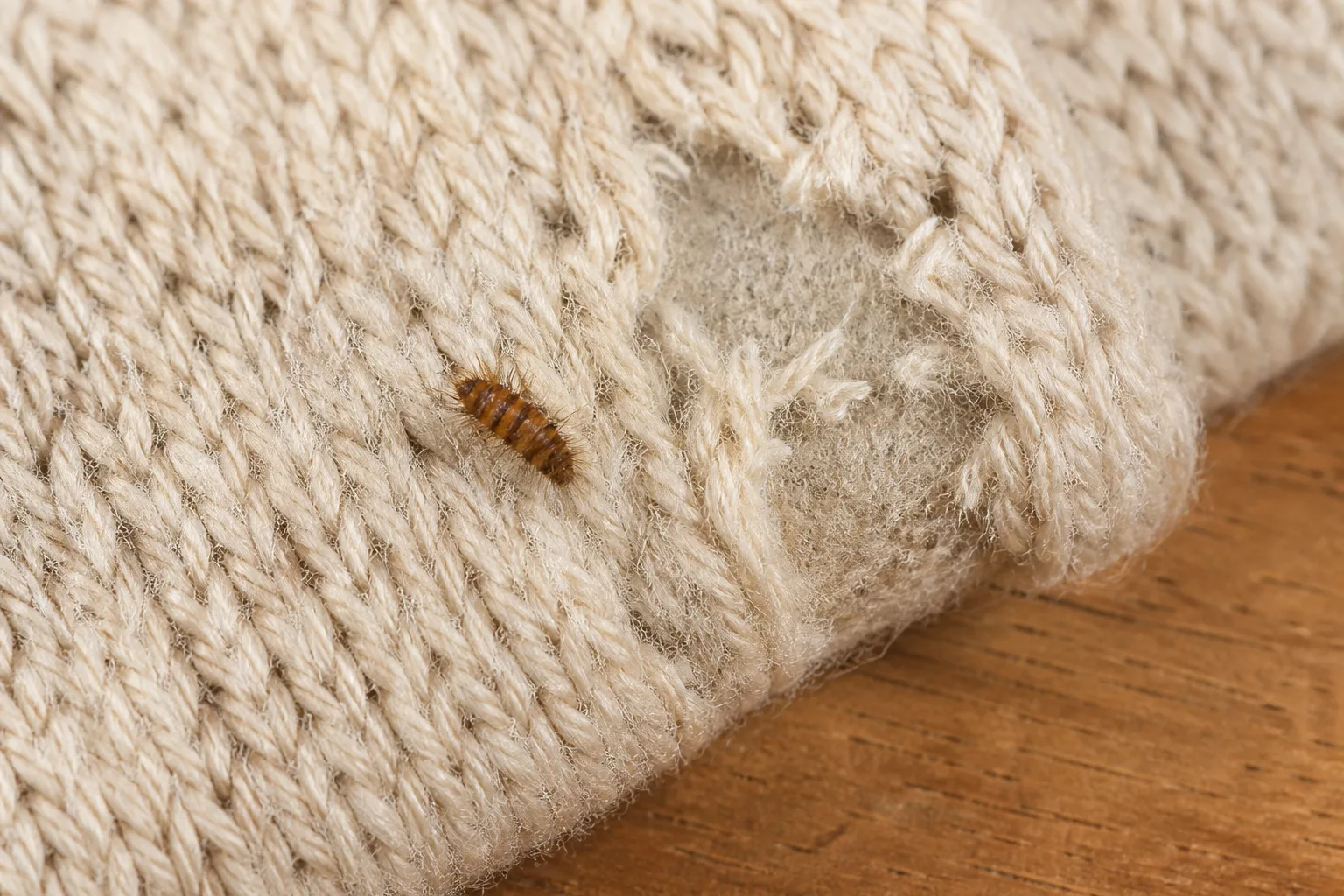
The damaging stage is usually the larva. Carpet beetle larvae are small, elongated, brownish or tan, and covered in bristles; some have a tuft of hairs at the tail. Depending on the species, a larva may be no more than one-quarter inch long. As it grows, it sheds its outer skin repeatedly. The dry cast skins retain the larva’s shape and bristles, so a closet can look infested even when a particular skin is not a live insect. Check for movement before treating it as a living larva.
Look for a pattern rather than one clue: a live hairy larva near irregularly grazed wool, several cast skins in a drawer, or new damage alongside pet hair and lint is more persuasive than one adult beetle at a window. Carpet beetle larvae eat animal materials such as wool, feathers, fur, leather, hair, and dead insects; some species can also use grain, seeds, nuts, or pet food. They may also feed on plant-based debris, depending on species and food availability. (Illinois Department of Public Health)
Carpet beetles do not feed on people, and larvae do not bite. Their bristly hairs can irritate skin on contact; Illinois public-health guidance also warns that inhaled hairs may irritate airways. The CDC journal has documented a small, uncommon cluster of skin reactions caused by larval hairs, so do not treat every unexplained rash as a carpet beetle symptom or use a rash alone to identify the insect. Avoid bare-handed handling; if a rash or breathing symptoms persist, ask a health professional about other possible causes. (Illinois Department of Public Health; CDC Emerging Infectious Diseases)
How Carpet Beetles Differ From Clothes Moths
Carpet beetle larvae are bristly and do not make the characteristic silk tubes of webbing clothes moths. Clothes moth caterpillars may leave silk webbing or a small portable case built from silk and fibers. Carpet beetle cast skins are a useful clue; moth larvae leave their own feeding signs, but not the same bristly shed shells. If holes are appearing in wool and you cannot find a larva, photograph any debris and ask a local cooperative extension office or pest professional to identify it before choosing a treatment. The Oregon Department of Agriculture, for example, provides a state insect-identification service that accepts clear photos or preserved specimens. (Oregon Department of Agriculture)
For damage that could have more than one cause, use our guide to identifying insects that eat holes in clothes. If the evidence points to clothes moths rather than beetles, the treatment sequence differs; see how to stop clothes moths from damaging sweaters.
Follow the Evidence to the Breeding Source
Do not start by emptying every closet in the house. Begin at the strongest clue and search a small radius carefully. Mark the locations on a room sketch or note them in your phone: live larvae, cast skins, fresh damage, and adult beetles. A cluster of larval signs is a better guide than the location of a single adult, which may have flown from outdoors or wandered away from its food.
| What you found | What it suggests | Where to check next |
|---|---|---|
| One adult beetle at a bright window; no larvae or damaged fibers | Possible outdoor visitor; not proof of a room infestation | Window track, screen, and the nearest closet or rug edge |
| Hairy live larva or several cast skins beside fresh wool damage | A nearby animal-fiber food source is likely | Seams and folds of adjacent textiles, rug backing, and under nearby furniture |
| Larvae or shed skins near a floor vent, attic access, or several rooms | A hidden or spread-out source may be involved | Lint and dead insects at accessible edges; arrange a professional inspection if the reservoir is inaccessible |
| Dark, elongated beetle or larvae near grains, seeds, or pet food | A stored-food dermestid may be involved | Open packages, spill zones, and the dry-food storage area |
This is a prioritization tool, not a species key. If the insect itself does not match the signs, save a clear photo or specimen and get an identification before applying a product.
Start at Damaged or Infested Items
Inspect the damaged object on a light-colored sheet or in a bright, contained area so loose debris is visible. Turn rugs and inspect the backing, bound edges, fringe, and the carpet beneath them. Check wool coats, scarves, felt, silk blends, leather, feathers, taxidermy, stored blankets, and natural-fiber upholstery, especially pieces that have sat undisturbed. Look in seams, folds, cuffs, drawer corners, and under cushions, where larvae and their shed skins may be missed during a quick glance. Martha Stewart’s interviews with pest professionals likewise emphasize checking clothing seams and folds, upholstery, dark storage areas, and pantry boxes rather than stopping at the damaged garment. (Martha Stewart)
Do not assume the insect must be eating the carpet itself. Many modern carpets are synthetic and do not provide the animal protein carpet beetles prefer, but debris in the carpet can still be a food source. Wool and animal-fiber rugs are more vulnerable, and dust, hair, crumbs, dead insects, or a natural-fiber rug pad can sustain pests at the edge of an otherwise synthetic floor covering. The composition of the pile and what has accumulated beneath it both matter. (Illinois Department of Public Health)
If you find live larvae or several cast skins inside one textile, seal that item before carrying it through the home. This contains loose larvae and makes it easier to treat each item in a deliberate batch. Do not shake an infested garment indoors or put it back into a clean drawer before treatment.
Check Quiet Places That Collect Hair, Lint, and Insects
Carpet beetle larvae can leave their food and wander. That is why the next pass should cover the room’s undisturbed edges, not just the closet. Use a flashlight and a crevice tool to inspect along baseboards, under beds and dressers, beneath heavy furniture, in carpet seams and rug edges, inside upholstered-furniture folds, and around floor registers where lint gathers. Check the bottoms of storage boxes and the floor beneath stored shoes or luggage.
Pet hair and dander are important clues because they can collect where a vacuum rarely reaches. Move light furniture, clean beneath pet beds, and look behind radiators or under the edge of a sofa. Dead insects can be another food source, especially around window tracks, light fixtures, attic openings, and behind screens. Colorado State Extension recommends concentrating inspection where lint and hair collect, including carpet edges, floor cracks, ducts, upholstered folds, and stored woolens. (Colorado State University Extension)
Do not dismantle electrical fixtures or HVAC equipment to search for beetles. Vacuum accessible grilles and nearby dust, and have a building or pest professional inspect deeper spaces if evidence repeatedly appears near a vent or inaccessible wall cavity. A recurring source inside a void cannot be solved by spraying the room surface.
Inspect Nests, Cut Flowers, and Incoming Items
When larvae recur despite careful textile cleaning, check for less obvious reservoirs: old bird or rodent nests in an attic, soffit, chimney, or garage; a dead animal in a wall void; dried flowers; a natural-bristle brush; or a collection of dead insects. Carpet beetles are part of outdoor ecosystems, where larvae feed on animal remains and adults may visit flowers. Adults can enter through unscreened windows or doors, and infested secondhand furniture, rugs, clothing, or stored goods can carry eggs or larvae indoors. (Colorado State University Extension)
An active nest is not a routine cleaning task. Do not disturb occupied wildlife nests or reach into an unknown attic or wall cavity; local wildlife rules, electrical hazards, and contamination can make that unsafe. If you suspect a nest or carcass is the source, ask a licensed wildlife or pest professional to inspect it and plan removal or exclusion. For dry goods, inspect open grain, seeds, nuts, and pet food, particularly if the beetle is dark and elongated or larvae appear near pantry storage.
Remove the Source Without Spreading Larvae
Once you find a likely source, separate two questions: can the item be cleaned safely, and is it worth saving? Bag a badly infested, low-value item before carrying it to an outdoor trash container. For an heirloom rug, taxidermy, feather item, or valuable garment, use a textile conservator or specialist cleaner rather than risking damage with an improvised pesticide or heat treatment.
For items you keep, treat them before returning them to a cleaned room. Follow the garment or care label. Wash and dry washable items at the hottest temperature the fabric allows; dry-clean structured or delicate textiles when the label calls for it. Heat can kill insects, but a hot cycle that shrinks wool or damages trim turns pest control into permanent textile damage. When washing is not appropriate, ask a professional cleaner about treatment options.
Clean or Treat Salvageable Textiles Carefully
Freezing can disinfest small items that cannot be washed, provided the freezer reaches a sufficiently low temperature throughout the item. Colorado State Extension says a deep freezer below 0°F held consistently for three or more days can usually kill dermestid beetles at all stages. Dense blankets and bundles cool more slowly than a single thin scarf, so do not count time while an item is still cooling. Seal the item in a plastic bag to limit moisture and frost damage, avoid overloading the freezer, and allow it to warm while still sealed before opening. (Colorado State University Extension)
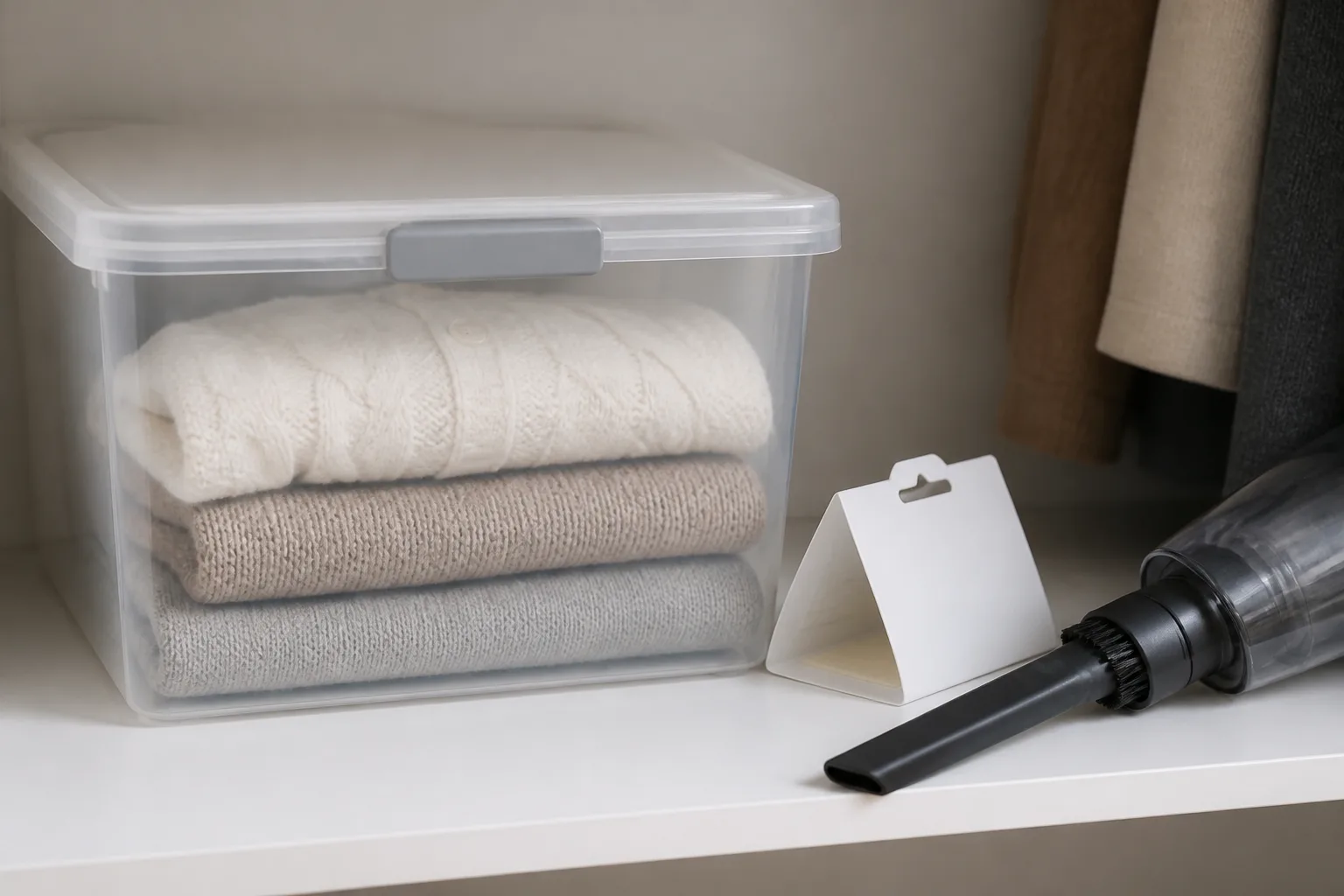
Freezing one sweater does not clear the drawer, closet, rug edge, or pet-hair reservoir that produced the larvae. Treat every exposed item in the same storage zone, clean the storage space, and return only clean, fully dry items. Place seasonal woolens and other vulnerable materials in a tightly closing container; a loose fabric cover or open closet does not exclude newly hatched larvae.
Vacuum the Room and Dispose of Debris
Vacuum slowly, not just across the visible floor. Use a crevice attachment on baseboards, carpet edges, the underside of rugs, closet corners, furniture joints, under cushions, and the space beneath beds. Pull out drawers and vacuum their tracks and undersides if accessible. Move pet bedding, vacuum beneath it, and launder the bedding according to its care instructions. Wipe hard shelves and ledges after vacuuming so loose lint and cast skins do not remain in corners.
Empty a bagless canister outdoors as soon as you finish, or seal and discard the vacuum bag. If insects remain inside collected lint, a forgotten vacuum bag can become a small protected reservoir. Clean the canister and washable filters according to the vacuum manufacturer’s instructions; do not rinse filters that are marked non-washable. A HEPA filter can help contain fine dust, but the essential steps are reaching the harborages and disposing of the collected debris promptly.

Repeat a focused vacuum of the affected room weekly during the initial cleanout, especially if you found larvae along carpet edges or under furniture. This is a practical monitoring rhythm, not a guaranteed lifecycle cure; carpet beetle development varies widely with species, temperature, and food. Colorado State Extension reports that common household species may spend several months to nearly two years as larvae, so one quick clean followed by no checks can miss a slow, hidden population. (Colorado State University Extension)
Choose Monitoring and Treatment Based on Evidence
Record what you find on each follow-up: live larvae, new cast skins, new holes, adult beetles, and the exact location. Adult beetles at a bright window during spring may be entering from outside, but new larvae or fresh textile damage near the same room suggest an indoor food source worth tracing. If you collect an adult in a sticky trap, identify it before assuming it is the same species as larvae found in a closet.
Use a short, repeatable schedule instead of waiting for a dramatic sign: revisit the exact source and nearby harborages about a week after cleanup, repeat the inspection weekly during the first month, then check monthly and whenever you rotate stored clothing. This is a monitoring routine, not a promise that every life stage will disappear on a fixed date. The larval period differs by species and conditions; Colorado State Extension notes that common household dermestids can remain larvae for months and, in some cases, close to two years. If you see no live larvae or new damage at these checks, keep the routine prevention habits and reduce inspection frequency; fresh larvae or fresh damage mean the source search is not finished. (Colorado State University Extension)
Species-specific pheromone traps can help monitor some carpet beetles or clothes moths, but they are not a substitute for removing the source. A trap may catch adults and still leave larvae feeding in an undisturbed rug or wall void. If using one, select a trap labeled for the suspected insect, place it where the directions specify, and note dates and catches. The Illinois Department of Public Health distinguishes pheromone traps from plain sticky monitors, which may not catch these fabric pests reliably. A declining count is encouraging; the clearest practical sign of improvement is no new larvae, cast skins, or damage after the food source and nearby debris have been dealt with. (Illinois Department of Public Health)
When Pesticides Are and Aren’t Necessary
For a small, localized problem, removing the infested item, cleaning the room, and sealing vulnerable textiles may be enough. Pesticide application is not the first step and should not be used to avoid searching for the source. If beetles persist in inaccessible cracks or a broad area, a licensed pest professional can confirm the species and decide whether a targeted treatment is appropriate after cleanup.
Never spray clothing, bedding, or a textile simply because it has holes. Use a product only when its label permits the exact indoor site and target pest, and follow every direction for people, pets, ventilation, and re-entry. Avoid total-release foggers: they do not reliably reach larvae hidden in fibers, carpet edges, voids, or stored goods, and Colorado State Extension says foggers are not effective for managing dermestid beetles. A broad room treatment can leave the actual food source untouched. (Colorado State University Extension)
Mothballs and crystals are pesticides, not open-closet repellents. They work only when used in a tightly sealed space and exactly as the product label directs; vapors escaping into a room can expose people and pets without treating the hidden source. Do not place them in open drawers, under rugs, or where children or animals can reach them. If the label does not match the intended site or use, choose a different control method or consult a professional. (New Mexico State University Extension; Illinois Department of Public Health)
Keep Carpet Beetles From Returning
Prevention is a combination of blocking entry and denying larvae an easy food source. Repair torn window screens, keep doors closed when practical, and inspect cut flowers before bringing them indoors. Look over secondhand wool rugs, coats, upholstered furniture, and stored goods before they enter the house; if an item shows larvae or cast skins, isolate it in a closed bag until it can be treated.
Before long-term storage, launder or dry-clean wool, silk, blankets, and other animal-fiber textiles and let them dry completely. Store them in tightly sealed containers or bags, not in a damp basement or an open cardboard box. Vacuum pet hair from floor edges and under furniture on a regular schedule. Remove dead insects from window tracks and light fixtures, and have roofline openings screened or sealed after confirming there is no active nest inside.
Cedar, lavender, and scented sachets may make a closet smell fresh, but scent is not source removal. Do not rely on fragrance to kill larvae, and do not confuse “natural” with proven or risk-free. The durable habits are simple: keep susceptible items clean, seal them between seasons, vacuum the quiet corners, and inspect periodically instead of leaving the same woolens undisturbed for years. (Illinois Department of Public Health)
Know When to Call a Pest Professional
Bring in a qualified pest management professional when you keep finding live larvae after treating the textiles and vacuuming the room, when damage is appearing in several rooms, or when the likely source is inside a wall, attic, duct, or inaccessible furniture. Professional identification is useful when the insect could be a different dermestid or a clothes moth, because different feeding habits point to different source locations. Ask the technician to identify the likely food source and explain how the proposed treatment reaches it—not simply to spray all rooms.
Also seek help for a valuable rug, taxidermy, heirloom garment, or large upholstered piece that you cannot safely heat, freeze, wash, or discard. A conservator or textile specialist can reduce the risk of shrinkage, dye bleeding, or structural damage. If an active bird or animal nest may be involved, use an appropriate wildlife professional rather than disturbing it yourself.
Mistakes That Make Infestations Seem to Return
The first common mistake is treating adults instead of larvae. An adult on glass is easy to see and easy to remove, but larvae hidden in lint or a rug edge may still be feeding. The second is cleaning only the damaged item. If the same storage space contains other woolens, pet hair, dead insects, or a neglected rug, the next larva can move onto another object.
Another mistake is vacuuming the open floor while skipping edges, undersides, cushion seams, and closet corners. Those are the places debris collects. Emptying the vacuum indoors or storing a full bag leaves the material you collected inside the home. Work from the source outward and remove the debris promptly.
Avoid spraying before identifying the pest and the site. A general surface spray or fogger cannot be assumed to penetrate a thick rug or sealed box, and pesticide residue on a garment is not a substitute for laundering or professional cleaning. Do not use a hot wash or dryer cycle that the textile cannot tolerate, and do not place mothballs in an open closet expecting them to repel beetles. Every treatment should match both the pest’s hiding place and the item’s safety limits.
Finally, do not treat every adult beetle by a window as proof of a large infestation—or dismiss repeated larvae as outdoor strays. Use the combined evidence: species identification, living larvae, cast skins, new damage, and whether a plausible food source is nearby. That keeps your response proportional and tells you whether to continue routine cleaning or call for targeted help.
Conclusion
To get rid of carpet beetles, trace larvae and shed skins to the material feeding them, then clean or treat that source and the quiet places around it. Inspect woolens, rug edges, upholstery, pet-hair deposits, dead insects, stored goods, and possible nests; vacuum carefully and empty debris outdoors. Protect clean textiles in sealed storage, monitor for new larvae or damage, and bring in a professional when the source is inaccessible or the evidence keeps returning. A source-first cleanup is more precise than spraying the room and gives you a practical way to tell whether the problem is actually fading.