How to Stop Moths From Eating Your Wool Sweaters
Clothes moth larvae—not adults—chew holes in wool and cashmere. Learn how to kill larvae, clean closets, freeze sweaters, store wool safely, and monitor with traps.

You pull a wool sweater from the back of the closet and find a peppering of tiny holes along the shoulder—or worse, a thumb-sized bare patch where the knit has been grazed away. Clothes moth larvae, not the fluttering adults, are the ones chewing through wool, cashmere, mohair, and other animal fibers. Adults only set the problem in motion by laying adhesive-coated eggs on fabric. If you treat the flying moths and ignore the larvae already inside the cuffs, you will keep finding damage all season.
The fix is not one magic sachet. It is a short integrated plan: confirm you have clothes moths, kill larvae on every affected textile, vacuum the closet, store only clean wool in the right containers, and monitor with pheromone traps. Do that thoroughly once and your sweaters can survive storage intact for years.
The Short Answer: Kill Larvae, Seal Clean Wool, and Monitor
If you want the fastest path to stop new holes: (1) set a clothes-moth pheromone trap in the affected closet to confirm activity; (2) dry-clean, hot-wash, or freeze every wool and animal-fiber item in that space—even pieces that look fine; (3) vacuum baseboards, shelf cracks, and carpet edges, then discard the vacuum bag or empty the canister outside; (4) store only clean, dry sweaters in breathable cotton bags or airtight bins in a low-humidity spot; (5) leave traps in place for months and repeat cleaning if catches rise again.
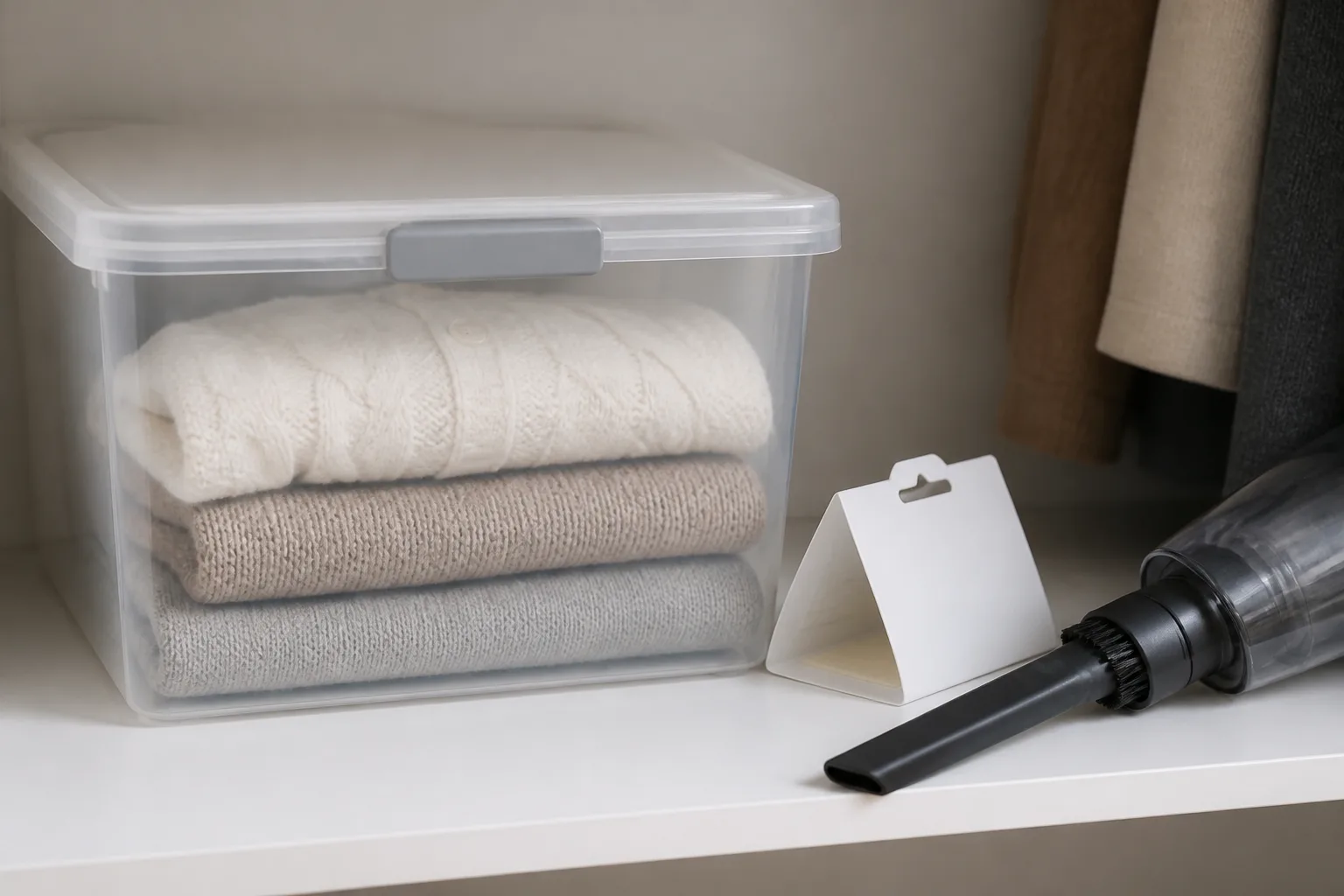
Scents like cedar and lavender can help in tightly closed storage, but they do not kill larvae already feeding inside a collar. Mothballs work only when fumes build in an airtight container—and they carry real health risks. For deeper scent strategies and trap reviews, see our guides on smells that moths hate and Moth Prevention pheromone traps.
Why Sweaters Get Holes (And It Is Not the Adult Moth)
Clothes moths are weak fliers that avoid bright light. They are not the large moths circling your ceiling fixture. The two species that damage wardrobes—the webbing clothes moth (Tineola bisselliella) and the casemaking clothes moth (Tinea pellionella)—prefer dark, quiet closets, storage bins, and the undersides of rugs.
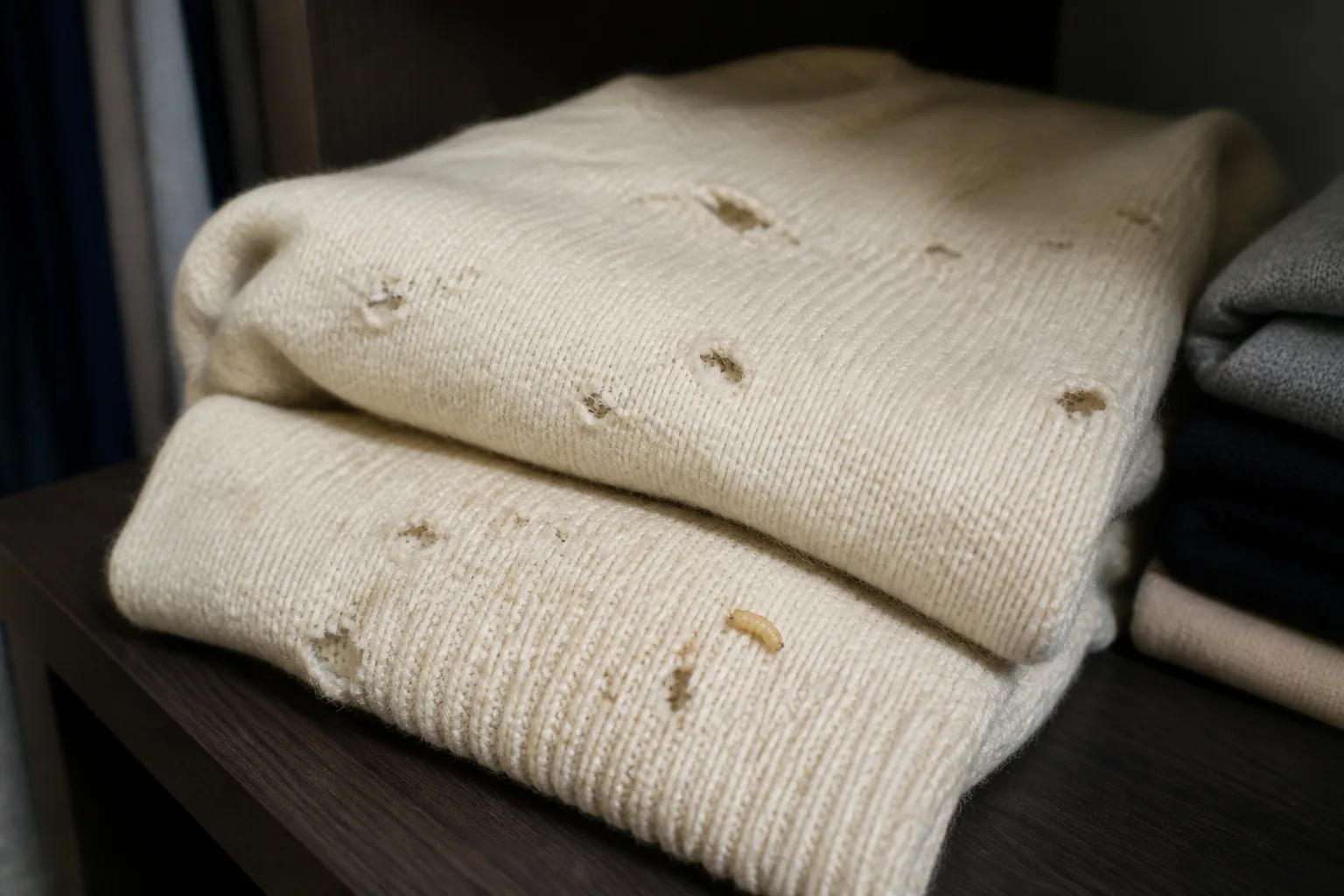
According to the UC Statewide IPM Program, females lay roughly 40 to 50 eggs over two to three weeks, glued to fabric threads. Eggs hatch in four to ten days in warm conditions. Larvae then feed for weeks to more than two years depending on temperature and food quality—yes, years in an undisturbed cedar chest. That is why a single missed scarf can restart an entire closet infestation.
Larvae seek keratin, the protein in wool, fur, feathers, and silk. They will also attack wool blends and sometimes use cotton fibers for pupal cases. Sweaters with lingering body oils, food spots, or perspiration are more attractive than freshly cleaned ones, which is why “I only wore it once” is not a defense.
Webbing Clothes Moth vs Casemaking Clothes Moth
Both species look similar as adults—small, golden or buff-colored moths about a quarter-inch long—but their larvae behave differently. Webbing clothes moth larvae spin silken patches or temporary feeding tubes on fabric, often leaving webbing mixed with frass and clipped fibers. Casemaking clothes moth larvae carry a cigar-shaped silken case that they never abandon; the case takes on the color of the yarn they are eating, making them easy to miss on patterned knitwear.
Control methods are the same for both, but inspection differs. Search webbing moths under collars, along cuffs, and inside folds. For casemaking moths, look for tiny tubular cases attached to the garment or dangling from a shelf.
Clothes Moths vs Pantry Moths and Carpet Beetles
Misidentification wastes time. Pantry moths—most often the Indian meal moth—infest dry food in kitchens, not wool closets. If moths flutter near cereal or flour, follow a pantry plan instead; see our guide on how to get rid of pantry moths.
Carpet beetles also eat animal fibers and cause similar holes, but they are beetles, not moths. Their larvae are hairy or carrot-shaped grubs, and adults are small oval beetles that may be spotted near windows. The Illinois Department of Public Health groups clothes moths and carpet beetles as common fabric pests because treatment overlaps: deep cleaning, heat or cold treatment of textiles, and vacuuming lint-filled cracks.
| Trait | Clothes moth | Pantry moth | Carpet beetle |
|---|---|---|---|
| Primary target | Wool, fur, silk, feathers | Dry food, pet food, birdseed | Wool, fur, silk, plus pollen/debris |
| Typical location | Closets, drawers, rugs | Kitchen, pantry | Closets, rugs, window sills |
| Larva appearance | Cream grub, often with webbing or case | Worms in food packages | Hairy or tapered grub |
| Best first fix | Launder/freeze wool; vacuum closet | Discard infested food; clean shelves | Vacuum + textile treatment |
Signs You Have Clothes Moths in Your Closet
Do not wait for a flying moth to prove the problem. Damage often appears months after eggs hatch. Inspect for:
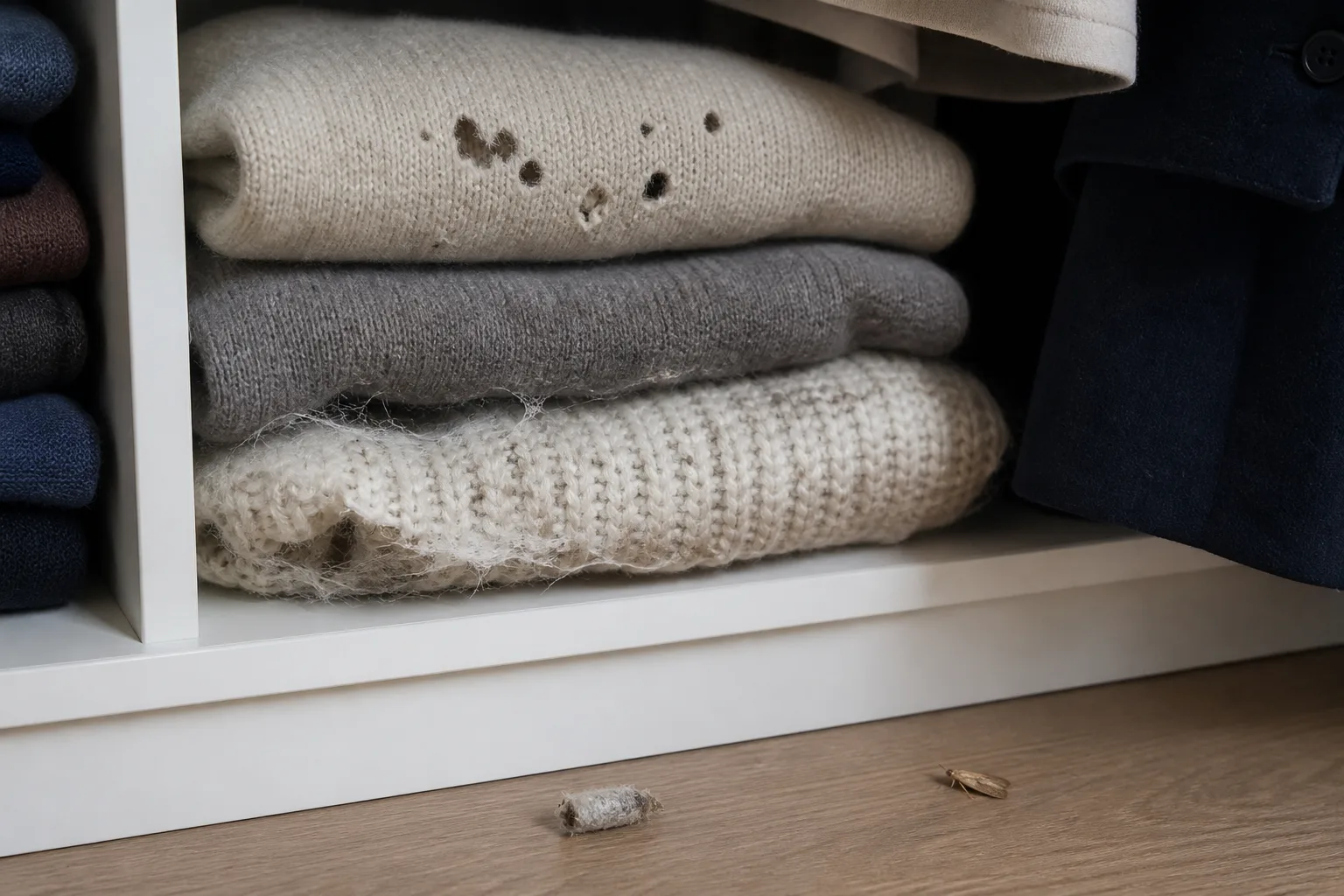
- Irregular holes or surface grazing in wool, cashmere, or silk—especially in hidden areas
- Silken webbing or tubes under arms, along hems, or on closet shelves
- Cigar-shaped cases about three-eighths of an inch long on fabric (casemaking moth)
- Clipped fur or loose pile on wool coats and hats
- Small tan moths fluttering near the closet floor—not ceiling lights
- Rising catches on a pheromone trap hung at shoulder height
One stray moth in the living room does not confirm a closet infestation. Multiple trap catches plus fabric signs do.
Step 1 — Inspect, Triage, and Set Pheromone Traps
Start with detection, not repellents. Clothes-moth pheromone traps use synthetic female scent to lure male moths onto a sticky board. The UC IPM Program notes that trapping both reveals activity and provides some control by removing males from the mating pool—but traps do not catch eggs, larvae, or females already laying eggs.
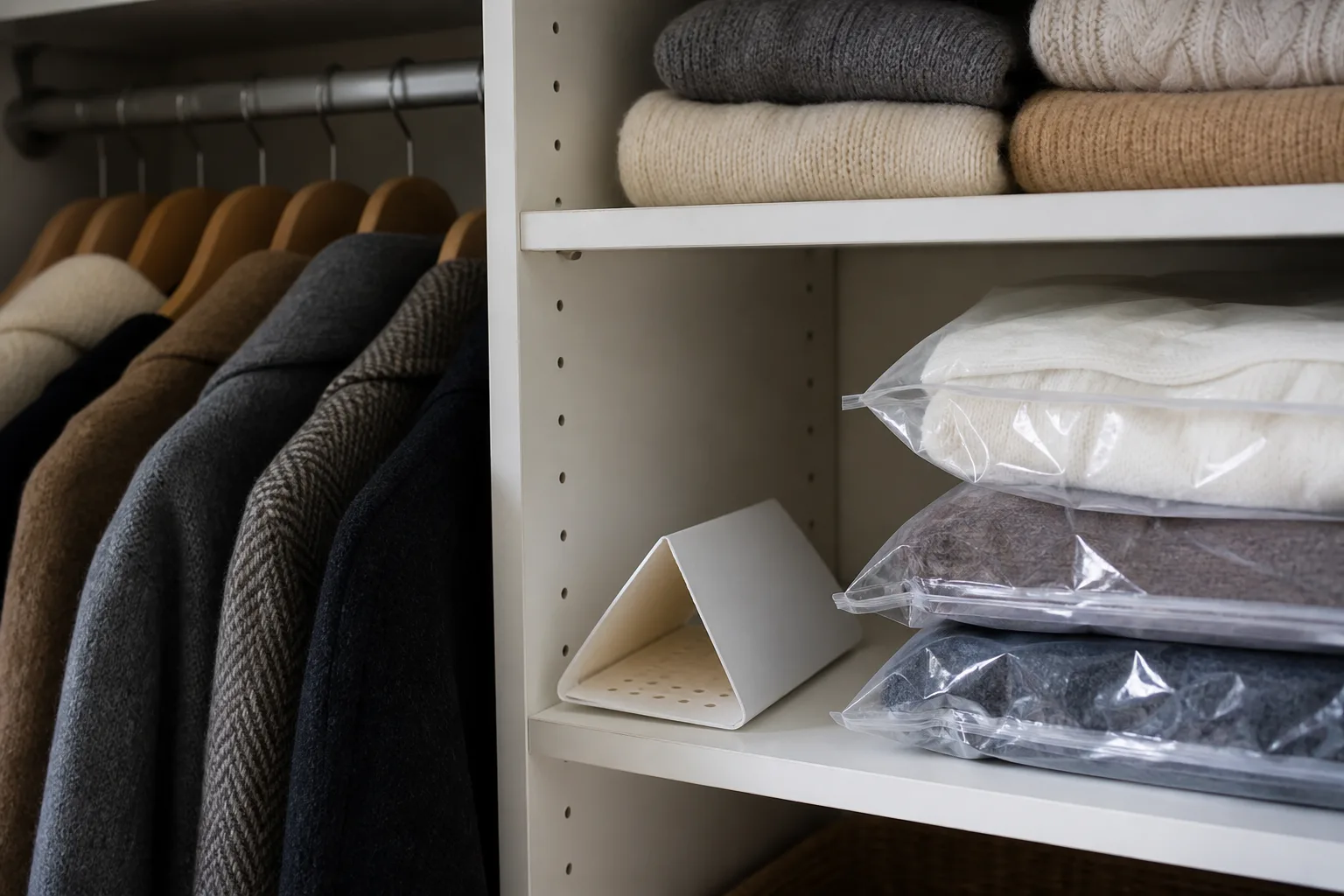
Hang one trap per affected closet at shoulder to eye level, near wool storage but not inside a sealed bin. Keep the closet door closed as much as possible while monitoring. Replace traps every three months or sooner if the glue fills up.
Triage garments while you inspect:
- Heavy damage or active larvae: isolate in sealed bags until you can dry-clean, freeze, or discard
- Light surface grazing: prioritize treatment this week
- No visible damage but trap catches present: treat anyway—eggs are microscopic
Traps tell you where breeding is active. They are not a stand-alone cure. For a detailed trap comparison, read our Moth Prevention traps review.
Step 2 — Clean Every Item and Kill Hidden Larvae
Killing larvae on fabric is the non-negotiable step. Adults can be swatted; larvae keep eating while you debate sachets.
Work category by category—sweaters, scarves, coats, wool socks, stored blankets—and do not return any item to the closet until it has been through one of the kill methods below. Shake items outdoors or over a tub before bagging so you do not scatter eggs through the hallway.
Hot Water, Dry Cleaning, and When Heat Is Safe on Wool
The most reliable wash method is 20 to 30 minutes in water at least 120°F, per UC IPM guidance. That temperature kills all life stages in washable articles. The catch: many wool and cashmere labels forbid hot water and agitation because felting and shrinkage are real risks.
When hot water is appropriate: machine-washable wool socks, sturdy blankets labeled for warm wash, and items you would sacrifice before keeping them infested.
When dry cleaning is the right call: structured blazers, suits, delicate cashmere, anything labeled dry-clean only, or heirlooms where shrinkage would ruin the garment. Tell your cleaner you suspect moth damage so they can inspect lining and padding too.
If your machine has a sanitize or high-heat rack cycle without tumbling, that can be gentler on wool than a hot wash—still verify the internal temperature reaches at least 120°F before trusting it.
Rinse thoroughly. Detergent residue can attract pests almost as much as body soil.
The Freezer Method for Delicate Wool and Cashmere
Freezing is the best chemical-free option for sweaters that cannot take heat. UC IPM recommends enclosing the item in a plastic bag, placing it in a freezer at 0°F (-18°C) or colder, and holding it for at least 72 hours once fully frozen. Some extension guides extend that to several days for dense knits or uncertain freezer performance.
Critical details most quick articles skip:
- Seal the bag completely so condensation does not soak fibers when you thaw
- Do not crowd the freezer; air must circulate for rapid temperature drop
- Label and date bags so nothing returns to the closet half-treated
- After removal, let the sweater come to room temperature still sealed, then air out and inspect seams before storage
Freezing kills eggs and larvae on the garment you treat. It does not fumigate the closet itself. Pair freezer treatment with vacuuming and traps.
Step 3 — Vacuum and Scrub Storage Zones
Textiles are only half the battlefield. Larvae and pupae hide in lint, hair, and dust along baseboards, under dresser drawers, behind closet shoe racks, and in carpet edges beneath furniture.
Vacuum every crack in the affected closet and adjoining bedroom carpet edge. Use a crevice tool on shelving joints and floor trim. Immediately dispose of the vacuum bag or empty the canister into an outdoor trash bin—otherwise you reseed eggs indoors.
Wipe shelves with a damp cloth and mild cleaner; avoid leaving pooled moisture that raises humidity. If you have wool area rugs in the same room, vacuum both sides of edges and consider professional cleaning for heavy infestations.
Illinois public-health guidance emphasizes regular cleaning of seldom-disturbed spots because fabric pests establish in debris long before you notice holes in a sweater.
Step 4 — Store Sweaters So Moths Cannot Return
Storage is where prevention actually lives. Moths need food (soiled keratin), darkness, and quiet to thrive. Remove those advantages.
Before anything goes back on the shelf:
- Sweater is clean—no invisible perspiration or food trace
- Sweater is dry—damp wool mildews and still attracts pests
- Closet is vacuumed and traps are active
Cotton Bags, Airtight Bins, and Humidity Mistakes
Choose storage based on humidity and wear frequency, not Instagram aesthetics.
Breathable cotton canvas bags with zippers work well for wool you rotate during cool months. Cotton lets fibers breathe, reducing mildew risk compared with non-breathable plastic dry-cleaning covers—which you should remove promptly because they trap moisture.
Airtight plastic bins excel for seasonal off-site storage of clean, fully dried sweaters. They block adult entry and contain any scent you add inside. Avoid storing in damp basements or hot attics; moths breed faster in warm, humid pockets even inside a bin.
Do not rely on cardboard boxes in humid climates; they absorb moisture and offer hiding crevices.
Hang structured coats on sealed garment bags with taped seams if moths have been a problem. Avoid fabric garment bags moths can penetrate unless you are also using tight weave and frequent inspection.
Natural Deterrents: Cedar, Lavender, and Scent Limits
Cedar blocks, lavender sachets, and other herbal scents belong after cleaning, as a supplemental layer—not as your only defense. UC IPM notes that aromatic eastern red cedar oil can kill small larvae in enclosed spaces but does not affect larger larvae, and cedar loses potency after several years. A tight chest matters more than the wood species alone.
For placement schedules, refresh timing, and six common scents ranked by use case, see our full guide on smells that moths hate. The short version: tuck refreshed sachets beside clean wool inside a closed bin or drawer, replace scents every four to eight weeks in active closets, and sand cedar yearly to expose fresh oils.
What scents cannot do: kill an established larval population, protect food-stained sweaters, or work across a large open walk-in closet with one bowl of potpourri on the floor.
Mothballs and Chemical Repellents: When and How to Use Them Safely
Mothballs and crystals containing paradichlorobenzene (PDB) or naphthalene release vapors that can kill clothes moths—but only when concentrations build in an airtight container, according to UC IPM and the National Pesticide Information Center. In an open closet, they mainly smell terrible while larvae keep eating.
Use chemical fumigants only when:
- You are storing clean wool long term in a sealed bin you will not open frequently
- You have read the label dose for the container volume—more is not safer
- Children and pets cannot access the container
- You accept possible odor transfer and plastic damage (PDB can soften hangers and bin lids)
Never toss mothballs under the bed, in the attic, or in the yard—they are pesticides, not air fresheners. For a full pest-by-pest reality check, read what bugs mothballs actually keep away.
If you want zero fumigant odor, prioritize dry cleaning, freezing, airtight storage, and traps instead.
What To Do If Holes Keep Appearing After Treatment
Persistent damage usually means one of three things: an untreated item reintroduced larvae, a hidden reservoir (under a rug pad, inside upholstered furniture, or in a thrifted wool throw), or carpet beetles misidentified as moths.
Work through this escalation ladder:
- Re-inspect every wool item, including guest-room closets and stored Halloween costumes with fur trim
- Increase trap density temporarily to map which closet wall sees the most males
- Freeze or dry-clean any item added to storage since your first cleanup—even gifts and new thrift finds
- Move seasonal bins to a cooler, drier room; heat accelerates moth generations indoors
- Call a pest professional if damage continues in wall-to-wall carpet, built-in cabinetry, or multiple rooms—whole-structure fumigation or targeted insecticide may be required for reservoirs you cannot wash
Do not alternate random essential oils while skipping vacuuming. That cycles expense without touching larvae.
Seasonal Sweater Storage Checklist
Use this at the end of each cold-weather season—or before you pack away summer wool blends.
- Launder or dry-clean every sweater you will not wear for 60+ days
- Repair small holes now; open damage invites wider feeding
- Freeze delicate pieces if dry cleaning is impractical
- Vacuum closet floors, shelves, and baseboards
- Install or refresh pheromone traps; note the date on the package
- Bag or bin clean wool in cotton or airtight plastic; add cedar or lavender only inside sealed spaces
- Store off the floor and away from exterior damp walls
- Calendar a mid-season check—open bins briefly in light, shake garments, inspect traps
Two minutes of inspection in July prevents a heartbreaking surprise in October.
Conclusion
Sweater moths win when wool sits dirty, dark, and undisturbed for months. You stop them by killing larvae on every animal-fiber textile, vacuuming the lint they hide in, and storing only clean knitwear in dry, sealed or breathable containers—with traps telling you if males return.
Adults are a warning sign. Larvae are the problem. Treat the fabric, not just the flutter.