Moth Prevention Moth Traps Review: Odorless and Effective
Moth Prevention traps use four pheromones to catch male clothes moths without odor or insecticides. Learn setup, placement, limits, and when cheaper traps work.

A fluttering moth near a wool sweater is unnerving because the real damage happens long before you notice it. Moth Prevention Powerful Clothes Moth Traps are pheromone monitors designed to catch adult male textile moths in closets and storage areas without mothball odor, insecticide sprays, or messy liquid baits. After comparing manufacturer specs with extension guidance and real-world trap behavior, my verdict is straightforward: yes, they work well for detection and breeding disruption—but only if you treat them as one tool inside a larger clothes-moth plan, not as a stand-alone exterminator.
The Short Answer: Worth Buying When You Need Reliable Monitoring
Buy Moth Prevention traps if you want a low-odor, kid- and pet-friendly way to confirm whether clothes moths are active in a wool closet, confirm which floor or room is hottest, and reduce future egg laying by removing males from the mating cycle. The cardboard box looks plain, but the combination of four species-specific pheromones, a large sticky capture surface, and a three-month active life makes this kit more useful than many budget multi-packs that use a single lure blend.
Skip them—or buy fewer and spend the savings on dry cleaning—if you already see heavy larval damage, if your problem is pantry moths in the kitchen, or if you only need a one-time check before seasonal storage. Traps excel at answering “Are moths here right now?” They do not kill larvae chewing inside a collar, carpet edge, or upholstered chair.
| Situation | Moth Prevention traps? |
|---|---|
| First suspicious moth near wool storage | Yes — start monitoring immediately |
| Holes, webbing, or cigar-shaped larval cases already present | Yes, but only alongside laundering, vacuuming, and item removal |
| Pantry moths near dry food | No — use an Indian meal moth lure instead |
| Seasonal prevention in a clean, sealed closet | Optional — scents and airtight storage may be enough; see our guide on smells that moths hate |
| Heavy, multi-room damage | Use traps for mapping, then consider professional help |
How Clothes-Moth Pheromone Traps Work
Clothes-moth pheromone traps are sex-lure monitors. Inside the trap, a glue board releases synthetic female moth pheromones into the air. Male moths follow the scent plume, enter the cardboard housing through side slots, and stick to the adhesive. Because the lure is species-specific, it should not attract random pantry moths or larger light-loving moths that bounce around ceiling fixtures.
The UC Statewide IPM Program explains that trapping both detects clothes-moth activity and provides some control, because males removed from the environment cannot mate. That is valuable, but it is not the whole job. Larvae—not flying adults—eat wool, fur, silk, and feathers.
Why Traps Target Males Only
Female clothes moths lay eggs on suitable fabric. After mating, a webbing clothes moth female typically deposits 40 to 50 eggs over about two to three weeks before she dies, according to UC IPM life-cycle data. Males can continue mating if they survive, which is why sustained trapping matters across months, not just a single weekend.
Traps do not catch:
- Eggs glued to fabric threads
- Larvae feeding under collars, in carpet backing, or inside upholstery
- Pupae in wall cracks or beneath heavy furniture
- Females already present and laying eggs before males reach the trap
That limitation does not make traps useless. It defines their role. A rising male catch tells you breeding is active nearby. A falling catch after cleaning and textile treatment suggests your wider plan is working. Zero catch after weeks in a high-risk closet is reassuring—but only if you have also inspected for larval signs.
What Moth Prevention Adds to a Standard Glue Trap
Moth Prevention’s kit differs from basic sticky cards in three practical ways:
- Four pheromone blends aimed at common textile pests: webbing clothes moth (Tineola bisselliella), casemaking clothes moth (Tinea pellionella), white-shouldered house moth (Endrosis sarcitrella), and brown house moth (Hofmannophila pseudospretella). Many discount traps focus primarily on the first two species.
- A folded cardboard enclosure that protects the glue from dust and clothing contact while increasing the usable trapping surface compared with flat tent traps.
- A hangable design with a removable hook, so the trap can sit on a shelf or suspend at moth flight height along a closet wall.
The traps contain no insecticides—only pheromone and adhesive. Replacement lure sheets are sold separately and should be swapped on a three-month schedule once opened, which matches how volatile pheromones fade indoors.
If you are comparing brands on paper, look past trap count and check which species the lure targets. A closet with vintage fur, stored taxidermy, or feather pillows can harbor house-moth species that a basic two-species lure misses. That does not mean every home needs four lures, but the broader blend reduces false negatives when you are trying to decide whether moths are present at all.
Who Should Buy Moth Prevention Traps
Best Fit: Wool Closets and Suspected New Activity
Moth Prevention traps earn their price when wool, cashmere, fur, silk, or feather-filled items live in an area you do not inspect daily. Typical high-value zones include:
- Bedroom closets with seasonal wool rotation
- Hall linen closets holding wool blankets
- Attic or under-bed boxes of stored textiles
- Carpeted rooms with wool rugs along seldom-moved furniture
If you have seen a single small moth fluttering near fabric—not the larger copper-banded Indian meal moth in the kitchen—a trap is the fastest way to confirm you are dealing with clothes moths rather than a one-off stray. The Illinois Department of Public Health notes that pheromone traps alert residents to new infestations, help pinpoint sources, and monitor ongoing activity. That is exactly how this product performs best.
When Budget Traps or Other Tools Make More Sense
Budget kits such as Greener Mindset or Dr. Killigan’s Premium Clothing Moth Traps can be sensible when you need volume—six or more traps across a large home—or when price is the deciding factor and you accept more mixed customer feedback on lure strength.
Choose other tools first when:
- Pantry moths are the issue. They need a different pheromone. Our pantry moth cleanup guide covers the correct lure and food-source removal.
- Carpet beetles are suspected. Standard clothes-moth lures will not monitor beetle larvae that also damage wool.
- Damage is already severe across multiple rooms. Traps map activity, but heat treatment, dry ice fumigation of furniture, or professional service may be faster than waiting for males alone to decline.
Setup and Placement for Maximum Catch
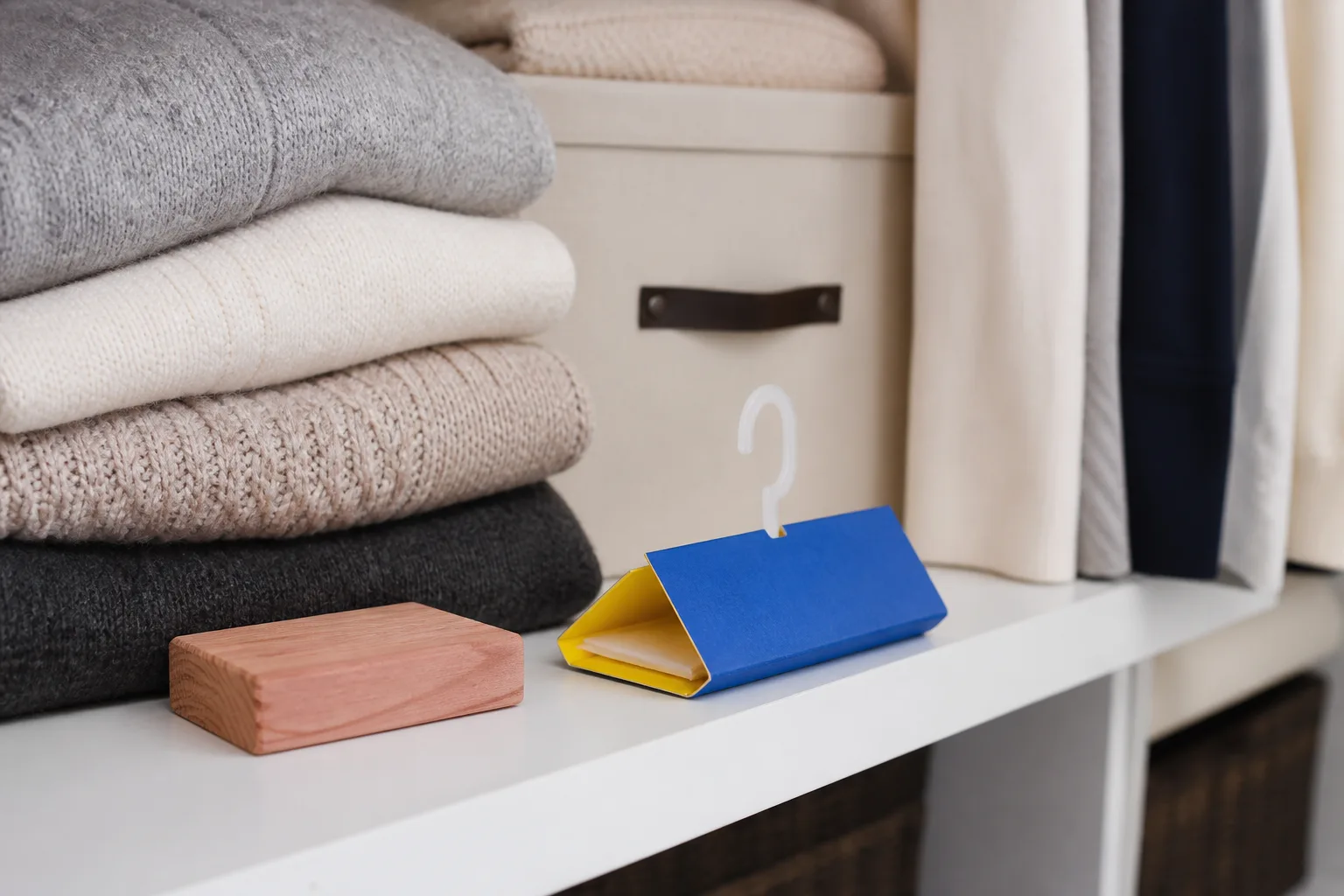
Moth Prevention traps are genuinely simple: peel the protective film from the glue board, insert it into the cardboard sleeve, fold the housing closed, and place or hang it where moths travel, not where you wish they would go.
Height, Distance, and Trap Density Rules
Male clothes moths are weak fliers that tend to stay within the infested area. UC IPM describes their flight as a fluttering pattern close to fabric rather than a direct line across the room. Use that behavior when placing traps:
- Hang at shoulder to eye level along the closet back wall or on a shelf one to two feet from wool items.
- Keep traps at least three feet apart in large walk-ins so each lure creates its own capture zone without competing plumes.
- Avoid laundry detergent, strong cedar oil, or perfume-heavy sachets directly beside an open trap. Heavy competing odors can reduce catch. If you use natural moth scents, place sachets with fabric, not on top of the trap box.
- Start with one trap per affected closet or room. Add a second trap only after a catch confirms activity or if the space is longer than about eight feet with poor air mixing.
- Do not put traps inside sealed bins. Pheromones need air movement to travel; a closed container traps scent and limits male entry.
How Long Traps Last and When to Replace the Lure
Once activated, Moth Prevention advertises roughly three months of lure life. Mark the opening date on the cardboard flap. Replace the entire glue board when:
- The three-month window ends, even if few moths appear
- The sticky surface is full—a saturated board cannot hold more males
- Dust or fabric lint coats the glue and reduces adhesion
Running traps year-round in high-risk closets is reasonable in heated homes where clothes moths can continue developing through winter, as UC IPM notes for indoor heated buildings.
What to Expect From Real-World Performance
Detection Speed and Catch Patterns
Do not panic if the trap is empty for the first three to seven days. Pheromone plumes take time to establish, and male emergence may be sporadic. In light or newly established infestations, catches often start small—a few moths over the first month—then climb if breeding continues unchecked.
Temperature and housekeeping shape what you see. Heated indoor closets can keep clothes moths developing through winter, so a trap that stays active for a full quarter is more informative than a weekend test. Conversely, if you just deep-cleaned, froze off-season wool, and sealed storage bins, a sudden drop in catch may reflect your work rather than a failed lure.
Interpreting results matters more than counting insects:
- Steady catches in one closet point to a nearby wool, fur, or lint source. Inspect seams, cuffs, carpet edges, and stored items on that level first.
- Catches on an upper floor but not below suggest localized activity; expand inspection before assuming the whole house is infested.
- Declining catches after hot-water laundering, dry cleaning, vacuuming, and discarding infested items suggest your IPM steps are working. Keep the trap in place another full cycle to verify.
- Zero catch for weeks in a high-risk closet is encouraging, but only if you have brushed seams, checked for cigar-shaped larval cases, and looked beneath heavy furniture on that level.
Take a phone photo of each trap on the same date each month. A visual log beats trying to remember whether last April’s catch was two moths or twelve.
Handling Full Sticky Panels Without a Mess
The adhesive is deliberately dry-touch compared with older liquid moth baits, which makes disposal easier. When a panel fills:
- Fold the cardboard shut so the glue faces inward.
- Slip the trap into a small bag before carrying it through the house.
- Replace with a fresh lure board rather than trying to scrape moths off and reuse glue.
This matters in closets full of clean wool. A well-designed trap should not smear sticky residue on hanging clothes when hung correctly.
Safety Around Kids, Pets, and Stored Clothing
Moth Prevention markets these traps as natural, odorless, and free of insecticides, which matches what is inside: pheromone plus glue. That is a meaningful upgrade over mothballs containing paradichlorobenzene or naphthalene, which require airtight containment and pose exposure risks if mishandled.
Still, apply common sense:
- Sticky boards are not food, but curious pets or toddlers can contact glue. Place traps on upper closet shelves or use the hook to keep them above reach.
- Do not lean delicate silk directly against an open trap face. The enclosure minimizes contact, but crowded closets can still brush the outer cardboard.
- No spray pesticide is needed around the trap. Adding pyrethrin dust to the same closet is sometimes warranted in cracks—but only according to label directions and usually after cleaning, not as a substitute for textile treatment.
If anyone in the home has severe adhesive allergies or asthma triggered by dust, handle replacement boards gently and bag them promptly.
Price and Value Compared With Other Trap Kits
Moth Prevention’s three-trap kit typically retails around $38, or roughly $12–13 per trap. That is premium pricing. Greener Mindset packs often include seven traps for about $8–12, and Dr. Killigan’s six-trap kits frequently land near $20.
| Feature | Moth Prevention (3-pack) | Typical budget 6–7 pack |
|---|---|---|
| Price per trap | Higher | Lower |
| Species lures | Four listed textile moths | Usually 1–2 primary clothes moths |
| Enclosure | Folded cardboard with hook | Often flat tent design |
| Odor | Odorless pheromone | Usually odorless |
| Guarantee | 90-day satisfaction refund (manufacturer) | Varies by brand |
| Best for | Focused monitoring where confidence matters | Whole-house blitz on a budget |
The value calculation is not “how many cardboard boxes you get.” It is how quickly you get a trustworthy answer and whether the lure still pulls males at month two and three. When wool storage is valuable—or when you are deciding whether to call a pro—paying more for a longer-lived, multi-species lure can be cheaper than replacing damaged coats.
Moth Prevention vs. Greener Mindset and Dr. Killigan’s
All three brands sell pheromone glue traps without insecticides, so the core mechanism is the same. Differences show up in lure breadth, build quality, and consistency.
Greener Mindset wins on unit cost and trap count. Reviews are more mixed on catch rate and lure longevity, which makes it a fair trial product if budget is tight and you can redeploy traps quickly after a catch. In a large home with several wool closets, buying seven inexpensive traps for a first mapping pass can be smarter than placing one premium trap and guessing which room is active.
Dr. Killigan’s sits in the middle on price and enjoys strong brand recognition for non-toxic pest products. Many households find it effective for webbing clothes moths; verify whether your kit lists casemaking or carpet moths if you need broader coverage. The flat tent design exposes glue more directly to closet dust, so check panels during monthly inspections if your storage area is not pristine.
Moth Prevention is the kit I recommend when someone wants one clear answer in a wool closet and prefers a sturdier enclosure with four named species on the label. I would still pair it with cleaning—not choose it because the box looks more “professional.” The manufacturer’s 90-day satisfaction guarantee also lowers the risk of trying a premium kit when you are unsure whether moths are actually breeding nearby.
What Traps Cannot Fix on Their Own
The most expensive trap on the market will not stop larvae already feeding inside a stored coat. Illinois DPH is blunt: control means identify the pest, find infested items, then discard or treat them. Traps assist that process; they do not replace it.
Traps also cannot:
- Kill eggs waiting to hatch on untouched wool
- Remove food stains, sweat, or urine residues that make fabric more attractive to larvae
- Reach larvae inside piano felt, mattress stuffing, or upholstered furniture without additional fumigation or professional treatment
- Differentiate carpet beetle damage from clothes-moth damage without a close inspection of skins, holes, and insect identity
If traps keep filling while holes spread, assume hidden breeding sites remain. Expand vacuuming to baseboards, beneath heavy furniture, and closet corners; bag and dispose of vacuum contents promptly, as UC IPM recommends because eggs and larvae can ride inside.
The IPM Routine to Pair With Any Trap
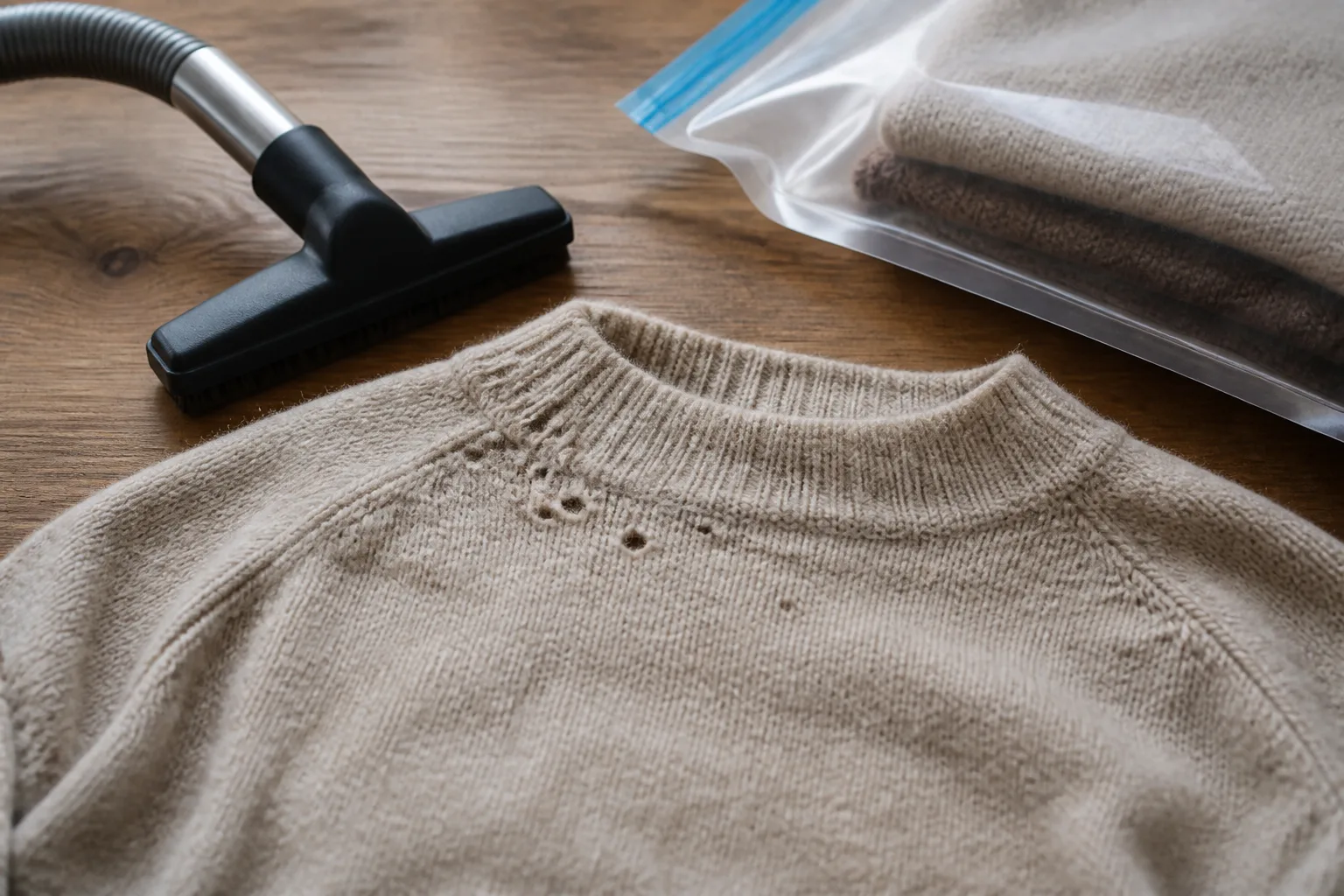
Use this sequence the week you open a Moth Prevention trap—or any clothes-moth lure:
- Activate one trap per suspect closet at proper height. Note the date on the box.
- Inspect wool, fur, silk, and feather items for holes, surface grazing, silken tubes, or casemaking larval cases.
- Launder washable items at or above 120°F for 20–30 minutes, or dry-clean items that cannot tolerate heat, per UC IPM guidance.
- Freeze small items at 0°F or below for 48–72 hours in a sealed bag if dry cleaning is not immediate.
- Vacuum closet floors, baseboards, shelf lips, and carpet edges. Discard or freeze the vacuum bag contents if infestation is confirmed.
- Bag clean seasonal wool in airtight containers. Add cedar or lavender only as a secondary layer, not as the primary fix.
- Recheck traps weekly for four to six weeks. Rising counts mean more sources remain. Falling counts support your cleanup.
- Replace lure boards every three months while risk remains, or after a saturated catch.
This is the difference between “I bought traps” and “I controlled moths.” Traps tell you whether males are still present. Heat, cold, vacuuming, and discarding infested textiles stop the larvae that actually eat your clothes.
Conclusion
Moth Prevention Powerful Clothes Moth Traps are a strong yes for odorless, non-toxic monitoring in wool closets—especially when you need a clear signal fast and want a four-species lure in a tidy enclosure. They are not a magic box that ends an infestation while you ignore the sweaters inside it. Use them to detect activity, interrupt male mating over a full three-month window, and measure whether your cleaning and storage changes are working.
If budget is the only constraint, a cheaper multi-pack may suffice for a short trial. If fabric damage is already widespread, start traps for mapping, but prioritize laundering, freezing, and professional inspection over buying more glue boards. Match the tool to the pest: clothes-moth lures for closets, pantry-moth lures for the kitchen, and a full IPM routine for either. That combination—not the cardboard design alone—is what makes these traps worth the investment.



