How to Get Rid of Pantry Moths: A Safe Plan
Learn how to identify pantry moths, decide what to discard or freeze, clean every hiding place, and monitor the pantry until the moths are gone.
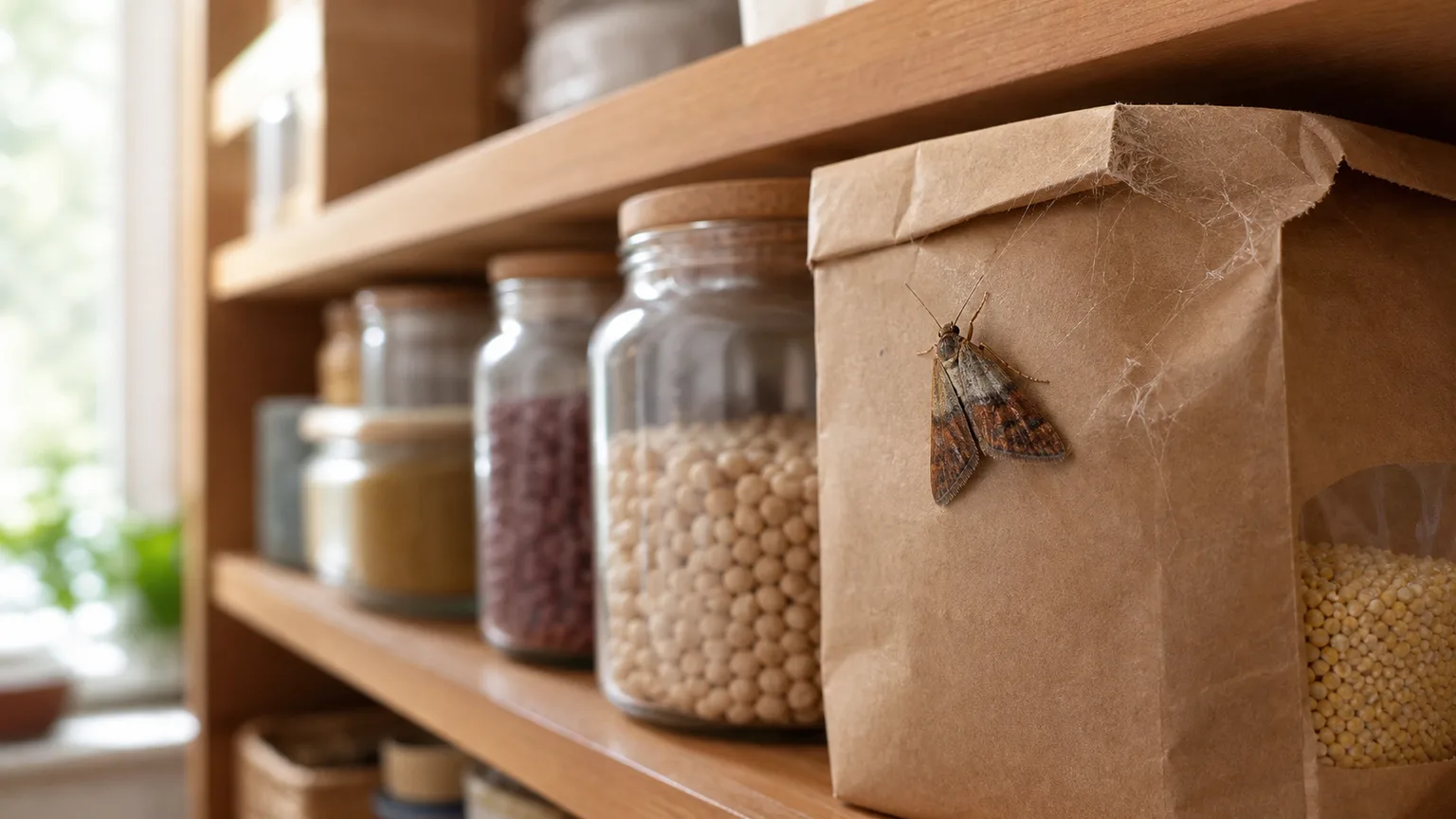
Pantry moths are usually brought home inside a dry food package, not through a mysterious nest in the wall. The most reliable fix is therefore a source-removal routine: find the infested product, take it outside, clean the places larvae and cocoons can hide, move the remaining food into truly sealed containers, and monitor for new adults.
Seeing a few moths does not mean every item in your kitchen is ruined. It does mean you should inspect broadly. A missed bag of birdseed, pet food, flour, or an old box on a high shelf can keep the cycle going after the visible pantry looks spotless.
Start with this eight-step pantry moth plan
Work in this order so you do not clean around a food source that is still producing larvae:
- Empty the affected cabinet or pantry. Put every food package, jar, can, liner, and removable shelf on a table or other surface you can inspect.
- Inspect dry goods across the home. Check human food, pet food, birdseed, baking ingredients, spices, tea, dried flowers, and stored craft or seed materials.
- Bag and remove anything showing infestation. Seal it before carrying it through the house, then place it in an outside bin.
- Quarantine uncertain food. If an item looks clean but is a high-risk dry good, freeze it or move it into a sealed tote while you investigate.
- Vacuum cracks and corners. Focus on shelf-pin holes, hinges, drawer joints, trim, the underside of shelves, and the wall-ceiling edge.
- Wash and dry the storage area. Soap and water remove food dust, eggs, and cocoons that remain after vacuuming.
- Set a pantry-moth pheromone trap for monitoring. It can show whether adults remain, but it cannot replace source removal.
- Recheck weekly and keep food sealed. Treat a new catch as a reason to inspect packages again, not as proof that the trap failed.
This order follows the core stored-product pest guidance from the UC Statewide Integrated Pest Management Program and the National Pesticide Information Center. The details below explain where each step succeeds or fails.
What pantry moths look like
The most common pantry moth is the Indian meal moth, Plodia interpunctella. An adult is small, with a wingspan around three-fifths of an inch and forewings that look gray or pale near the body and reddish-brown or coppery toward the outer portion. It often flies in a loose zigzag around a kitchen rather than staying inside one package.
The damaging stage is the larva, a small pale caterpillar with a darker head. As it feeds, it spins silk through flour, cereal, rice, nuts, dried fruit, pet food, and similar products. Mature larvae may crawl away from the food and up walls or across ceilings to find a place to pupate, which is why the source is not always beneath the first moth you see.
The signs that confirm an infestation
Look for more than adult moths. The clearest evidence is a combination of one or more of these signs:
- Fine webbing or clumped food inside a bag, box, jar rim, or container corner
- Small cream-colored larvae with a brown head
- Silken cocoons tucked in shelf holes, hinges, drawer joints, or the ceiling edge
- Tiny grains of frass, which look like sand or pepper among dry food
- Small holes or loosened seams in thin cardboard and plastic packaging
- Adults repeatedly appearing near food-storage areas, even after one is swatted
Eggs are difficult to see without magnification, so a package can look normal and still deserve quarantine if it has been open for a long time or sits beside an infested item. The National Pesticide Information Center recommends inspecting not only cereal and grains but also beans, nuts, flour, dried fruit, spices, tea, chocolate, candy, birdseed, and dry animal food.
Pantry moths versus clothes moths
Pantry moths belong in the food-storage conversation; clothes moths belong in the textile conversation. Pantry moth adults commonly show the coppery two-tone wing pattern, and their larvae leave silk in dry foods. Clothes moths are smaller, more uniformly buff or golden, and their larvae damage animal-based textiles such as wool, fur, and feathers.
If you see moths in a bedroom but no holes in clothing, do not assume the bedroom is the source. Pantry moth larvae may have travelled there to pupate, or a forgotten snack, pet treat, birdseed bag, or dried botanical material may be nearby. Follow the food trail before treating fabrics.
Find the source beyond the obvious shelf
Pantry moth infestations usually begin with a product that already contains eggs or very young larvae. Packaging can be intact when you buy it, and the problem may not become visible until the larvae grow. The practical question is not “Where is the moth nest?”—Bob Vila’s pantry-moth guidance makes the same useful distinction—but “Which stored product is feeding the next generation?”
Inspect high-risk foods first
Start with packages that are grain-based, oily, sweet, or rarely used. Empty the pantry completely so no box remains hidden behind another box. Check the seams, folds, underside, and inside bag of each package; look at jar threads and lids too.
Prioritize:
- Flour, cornmeal, pancake and baking mixes, cereal, rice, pasta, and grains
- Nuts, seeds, dried fruit, chocolate, candy, spices, and tea
- Dry dog and cat food, treats, birdseed, rodent bait, and livestock feed
- Bulk-bin purchases and foods stored for emergency supplies or seasonal baking
- Dried flowers, potpourri, craft grains, and other plant material stored indoors
Inspect closed cans and bottles only for cocoons on the outside, around lids, and under labels; pantry moths do not feed on the metal or glass. The food inside can remain safe if its seal is sound and there are no signs of insects, but wash the outside before returning it to clean storage.
Then expand the search. Check a second pantry, the garage, a basement freezer, a pet-food station, and the cabinet where you keep treats or birdseed. A single overlooked bag can make an otherwise careful cleanup look ineffective.
Remove contaminated food without spreading it
Treat food with webbing, larvae, cocoons inside the package, frass, or unexplained insect holes as contaminated. Do not sift it, rinse it, or pour it into another container to save part of the package; those actions can spread eggs and larvae through the kitchen.
Seal the package or its contents inside a sturdy trash bag before carrying it out. Put the bag in an outdoor bin promptly. An indoor kitchen trash can gives wandering larvae another warm, food-rich stop and makes it easier for adults to emerge inside the home.
When to discard and when freezing is reasonable
Discard food when you can see webbing, larvae, cocoons, frass, a damaged package, or any other sign of active infestation. Food may also be worth discarding when you cannot confidently identify whether it is clean, especially if it is inexpensive or has been open for months.
Freezing is a reasonable salvage option for a clean-looking, high-value dry good when the package has no signs of contamination and the food quality will tolerate it. Place it in a sealed freezer bag or container and keep it frozen for one week; both NPIC and Planet Natural’s stored-food pest guide describe a week-long freeze as a way to kill pantry-moth eggs or larvae that may be present. Thaw it while still sealed, then transfer it to a clean airtight container.
Freezing does not make visibly webbed or contaminated food appetizing or reliably clean. It also does not clean the shelf, kill cocoons elsewhere in the room, or protect the next purchase. Consider it a narrow tool for uncertain but otherwise clean food, not a substitute for inspection.
Clean the food-storage area from ceiling to floor
Cleaning matters because pantry moth larvae can leave the food, crawl into cracks, and pupate away from the package. Empty shelves, drawers, and adjacent cabinets before you start. Remove shelf paper if it is loose or hiding debris, and wash containers that sat near an infested package.
Vacuum crevices before wiping
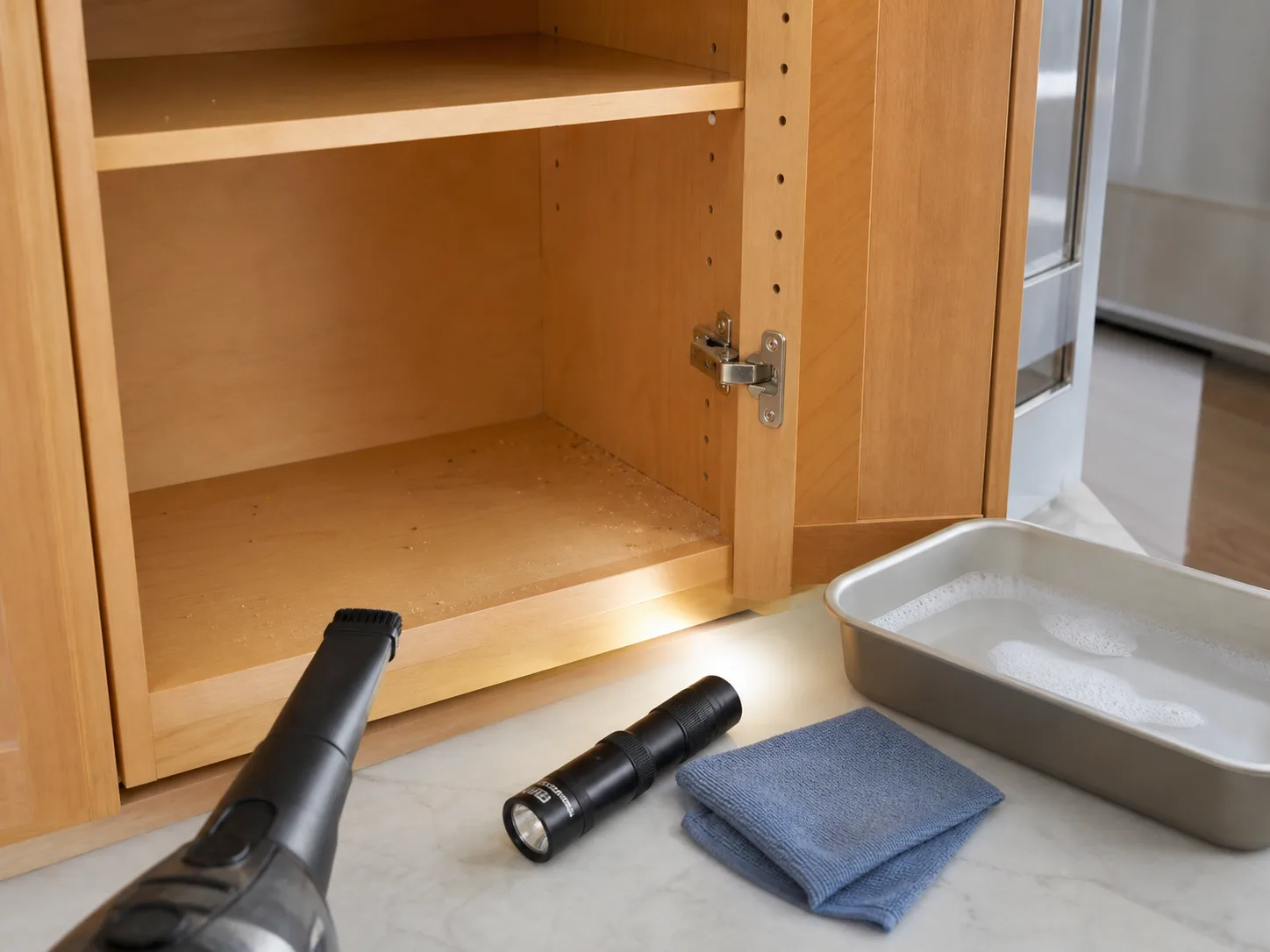
Use the crevice attachment to vacuum shelf-pin holes, corners, drawer tracks, hinge plates, the underside of shelves, baseboards, and the seam where the cabinet meets the wall. Also check the top of the pantry, ceiling edge, and the floor beneath the lowest shelf.
Move slowly with a flashlight. A quick pass across the flat shelf surface can leave the exact crack where a cocoon is attached. Empty the vacuum outdoors immediately; if the vacuum is bagless, wash and dry the dust cup so captured larvae cannot crawl back out.
Wash, dry, and remove cocoons
After vacuuming, wash hard surfaces with warm water and soap, reaching shelf brackets, door edges, handles, and container bottoms. Wipe up flour and sugar dust rather than pushing it into a corner. Let the area dry completely before restocking because damp, food-coated crevices remain attractive to stored-product pests.
Vinegar can be used as an optional household cleaner if you like its smell, but do not rely on vinegar, peppermint, lavender, or cedar as the treatment. Cleaning removes residue; it does not replace the inspection and source removal that break the life cycle. Do not use mothballs in a pantry or around food. NPIC explains that mothballs are intended for use only in airtight containers and that their vapors can harm people or pets when used improperly.
Use pantry moth traps as a monitoring dashboard
A pantry-moth pheromone trap is useful after the food search and cleanup. The lure targets adult male Indian meal moths, so a trap can reduce some mating and, more importantly for a homeowner, reveal whether adults are still present. It will not attract every female, remove eggs, kill larvae inside food, or find the package you missed.
Place one trap in or near the affected storage zone according to its label. Avoid scattering many traps through the kitchen; a single well-placed monitor gives you a clearer signal about one area. Check it weekly and write down the date and count. A fresh catch means you should inspect food and nearby storage again, especially if the catch appears after a previously quiet period.
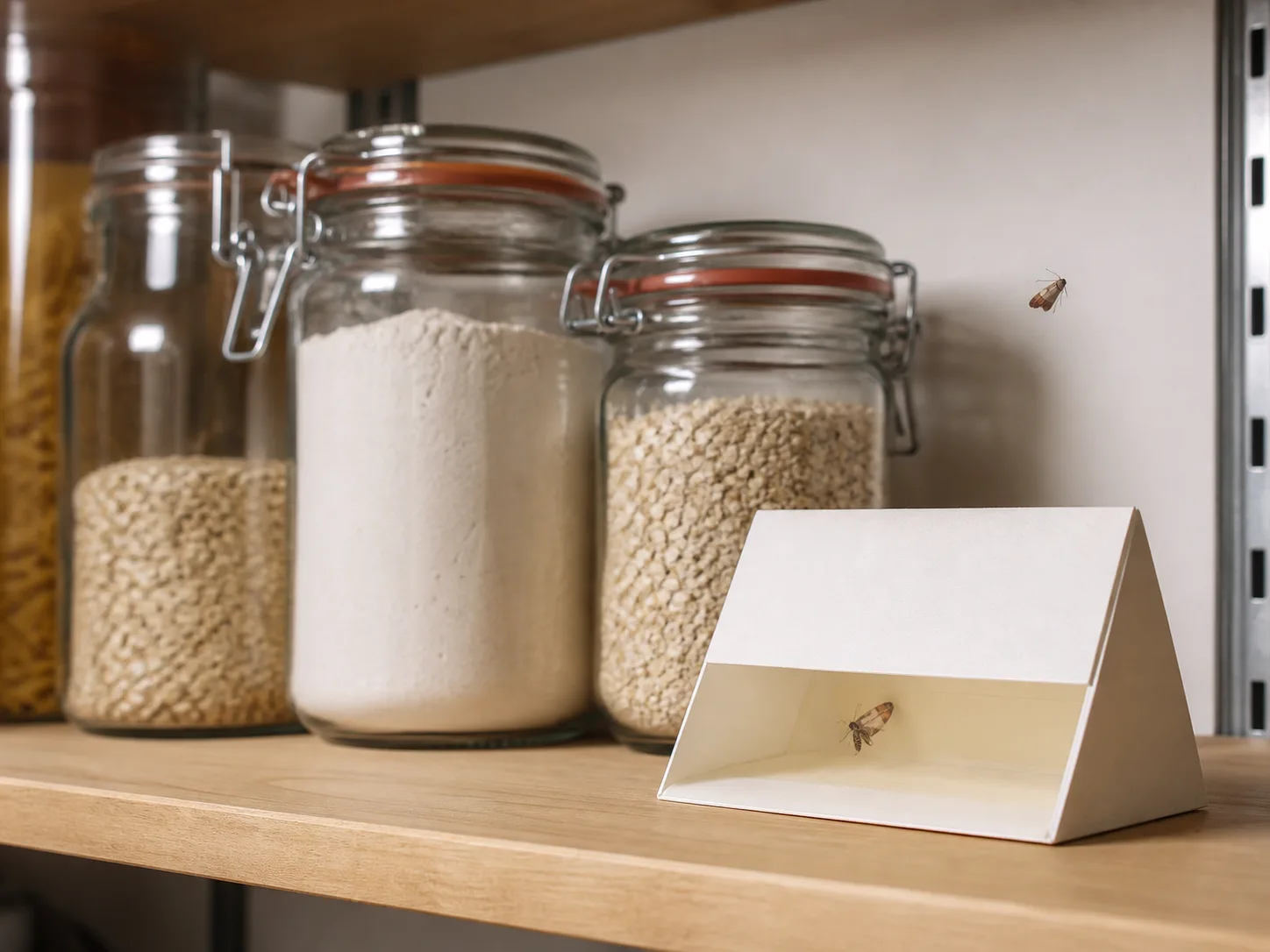
Trap counts should trend down after source removal. If they stay steady or increase, widen the search to pet food, birdseed, garage storage, forgotten bulk ingredients, and adjacent cabinets. The UC IPM pantry-pest guide notes that pheromone traps are for monitoring and that they are species-specific; a trap for pantry moths will not necessarily identify or catch pantry beetles.
Repack dry goods so larvae cannot spread
Once a product is inspected and cleared, transfer it from thin bags, folded cardboard, and ordinary zip-top plastic into a rigid container with a tight-fitting lid. Glass, thick food-grade plastic, and metal can all work when the seal is sound and the container is clean. A decorative lid that sits loosely is not an airtight barrier.
Wash and dry old containers before refilling them. If you pour new flour or rice over an old remainder, any eggs or food dust left in the bottom can contaminate the new batch. Label the container with the product name and purchase or opening date so you can use older food first.

Sealed containers are not merely an organization upgrade. They limit movement from one package to another and contain a problem to one vessel if a hidden egg hatches. They also make the next inspection faster because you can see the food and clean the container’s exterior without wrestling with open bags.
How long pantry moth eradication takes
Do not judge the cleanup by the next morning. Indian meal moth development depends on temperature and food access, and larvae may already be pupating outside the original package when you begin. UC IPM reports that the egg, larval, and pupal stages can take about six to eight weeks in warm weather; Planet Natural describes a typical full life cycle of roughly four to six weeks under favorable conditions.
Those figures are not a promise that every home will take six weeks, but they explain why an adult moth can appear after the pantry has been emptied. A few late adults do not automatically prove that the cleanup failed. The pattern matters: occasional catches that decline are different from repeated catches that stay level or rise.
Keep susceptible food sealed and traps in place for several weeks after the last sign. Reinspect the high-risk foods weekly. You can consider the active infestation under control when you have removed the source and then had repeated inspections with no live larvae, no new webbing, no new cocoons, and no continuing trap catches.
Build a prevention routine that lasts
Pantry moth prevention is mostly a storage and inspection habit, not a repellent. Keep shelves dry and crumb-free, use older products first, and make it easy to see what you own. A crowded pantry hides the one package that matters.
Grocery checks, FIFO, and freezer storage
Before buying flour, grains, cereal, nuts, seeds, pet food, or bulk goods, check seams and folds for holes, webbing, or clumping. If a package looks damaged or you see moth activity near a bulk display, choose another package or store.
At home, date opened packages and use first in, first out: move older containers to the front and put new purchases behind them. Keep rarely used flour, grains, nuts, spices, and pet foods in the freezer or refrigerator when that is practical for your household. Freeze new high-risk goods for a week if you have had a confirmed infestation and the food’s quality allows it.
Clean spills as soon as they happen, especially flour and sugar beneath drawers or appliances. Inspect pet food and birdseed on a schedule rather than only when you see a moth. A quick monthly check is easier than a full pantry evacuation, and a weekly check is worthwhile during the months after an infestation.
Common mistakes that keep pantry moths alive
Killing only the adults. Swatting flying moths feels productive, but the larvae and food source are the real target. Remove the infested package and search the nearby storage before relying on traps.
Checking only the pantry. Pet food, birdseed, rodent bait, and garage storage can sustain the infestation. Expand the search whenever the pantry is clean but moths continue to appear.
Trusting thin plastic or cardboard. Larvae can chew through thin packaging. Use rigid containers with tight lids, especially for food that will sit for months.
Wiping flat shelves but skipping edges. Cocoons and spilled food hide in holes, hinges, shelf supports, and cabinet joints. Vacuum first, then wash.
Using a trap as an exterminator. A pheromone trap is a monitor for adult males. It cannot sterilize food or remove the next generation.
Spraying a pantry indiscriminately. UC IPM does not recommend insecticides for pantry pests, and NPIC warns that pesticide use around food requires label-based care. Never spray food or a food container, never use an outdoor product indoors, and never use mothballs as a pantry treatment.
Restocking immediately. Keep cleared food sealed in containers or a temporary tote while you watch for new activity. Restocking every bag into the original cabinet makes the next inspection harder.
When to call a pest professional
Most home pantry-moth problems are solved without a routine pesticide treatment when the food source can be found and removed. Contact a licensed pest professional or your local cooperative extension office when moths continue for several weeks despite a full inspection, when several rooms or storage areas are involved, or when you cannot tell whether the insect is a pantry moth, a beetle, or a clothes moth.
Ask what inspection and exclusion work is included. A useful visit should help locate the source and explain safe food-handling steps; spraying around stored food is not a substitute for finding the package. If a pesticide is proposed, read the product label and confirm that the site and pest are listed before use.
Conclusion
The lasting fix for pantry moths is not a stronger smell or a bigger trap. It is a sequence: remove contaminated food, clean every crevice, seal the food that remains, monitor adult activity, and repeat the inspection until the evidence stays quiet.
Expect a few late moths if larvae were already pupating, but do not ignore a steady stream. When trap counts fail to decline, return to the source search—especially pet food, birdseed, bulk goods, and forgotten packages. That disciplined loop breaks the cycle while keeping pesticides away from the food-storage area.