How to Get Rid of Garden Ants Without Harming Plants
Learn how to get rid of garden ants without harming vegetables, flowers, or healthy soil. Identify aphids, choose targeted controls, and avoid risky DIY sprays.
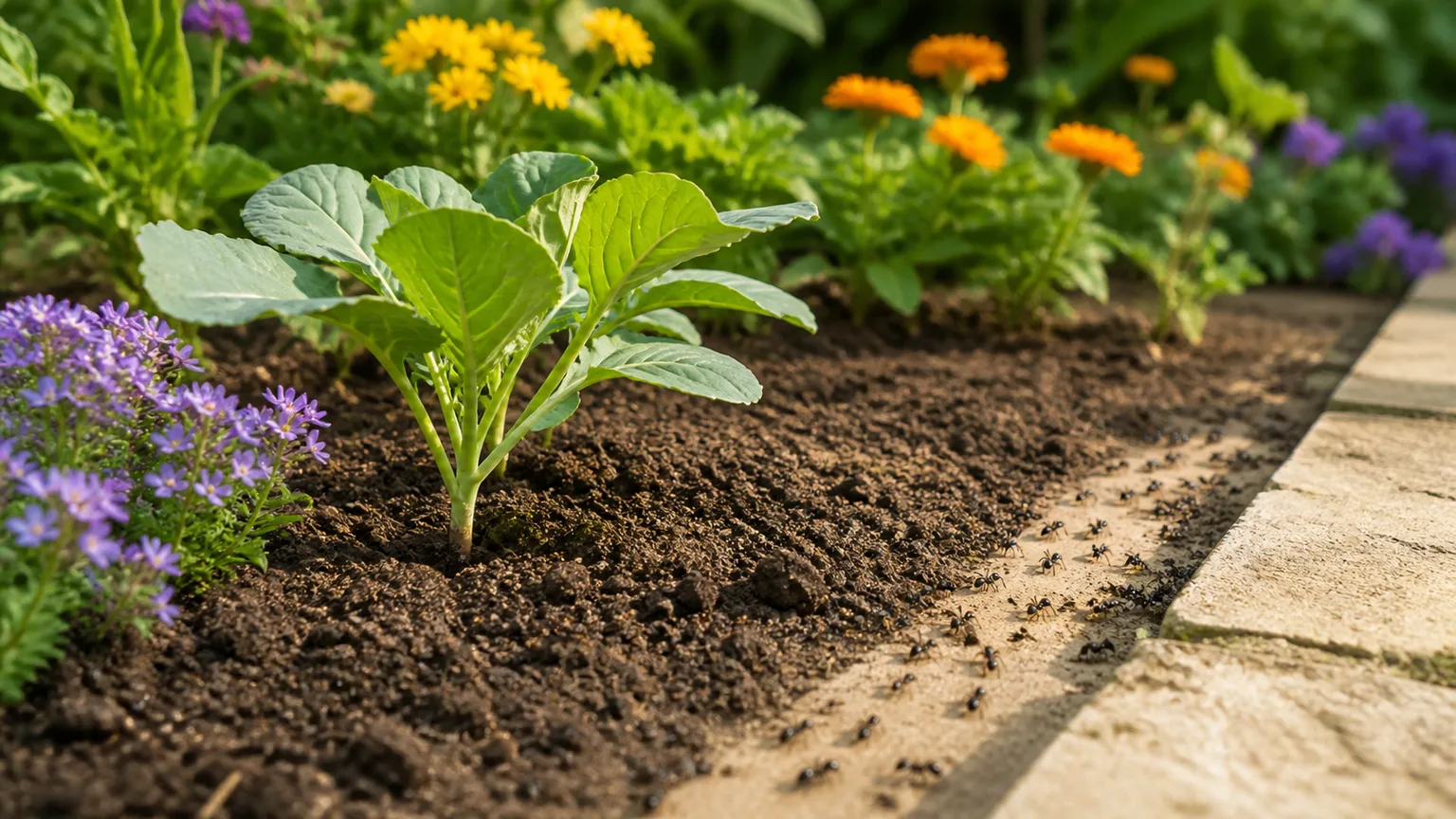
A garden with ants does not automatically have an ant problem. Most outdoor ants are passing through, hunting small insects, recycling organic matter, or nesting where the soil is dry and undisturbed. The right goal is not a sterile, ant-free bed; it is to stop the behavior that threatens your plants while keeping soil, roots, pollinators, and other useful insects intact.
Start by looking at the plants, not just the trail. If leaves are healthy and the ants are not stinging anyone, leave the colony alone for now. If ants are climbing stems to tend aphids, building a nest in a pot, disturbing roots, or girdling young transplants, treat that specific situation with the least disruptive option that can actually reach the colony.
The safest answer is to control the cause, not every ant
Use this quick triage before reaching for a spray:
| What you see | First move | Why it matters |
|---|---|---|
| A few ants crossing soil or flowers with no plant damage | Monitor and leave them alone | Ants often provide ecological services and are not feeding on the plant. |
| Ants repeatedly climbing stems, with sticky leaves or clusters of tiny insects | Inspect for aphids; knock aphids off with water and protect natural enemies | Ants may be collecting honeydew and shielding aphids from predators. |
| A mound at the base of a wilted or collapsing seedling | Photograph the damage, identify the ant if possible, and contact local Extension if it continues | Some species can injure young transplants; a blanket soil treatment can make the problem worse. |
| Large mounds, painful stings, or ants swarming when disturbed | Keep people and pets away and get local identification or professional help | Fire ants and other stinging species require a different safety plan. |
The Royal Horticultural Society’s guidance on ants recommends tolerating garden ants wherever possible because they are important predators and part of garden biodiversity. That does not mean ignoring genuine damage. It means reserving control for a measurable problem rather than treating every worker ant as the enemy.
Why ants show up in vegetable and flower beds
Ants need food, water, and shelter, all of which a garden supplies. They nest under mulch, stones, boards, pots, paving, and loose soil, then follow chemical trails to food and back to the colony. Dry pockets beneath containers and undisturbed edges are especially attractive, but the exact nesting preference depends on species and weather.
The most important plant-related attractant is often not the ant itself. Aphids, scale insects, and some other sap-feeding insects excrete honeydew, a sugary liquid ants collect. Ants may protect those insects from lady beetles, lacewings, and other predators, allowing the infestation to spread. RHS and UC Statewide Integrated Pest Management both describe this ant–aphid relationship and the way it can increase plant damage.
Check the undersides of leaves for aphids and honeydew
Follow a busy trail up the plant and inspect tender shoots, flower buds, leaf axils, and the undersides of leaves. Aphids are small and may be green, black, yellow, brown, pink, or covered in white wax; the most useful clues are clusters that sit still, distorted new growth, sticky leaves, and black sooty mold.
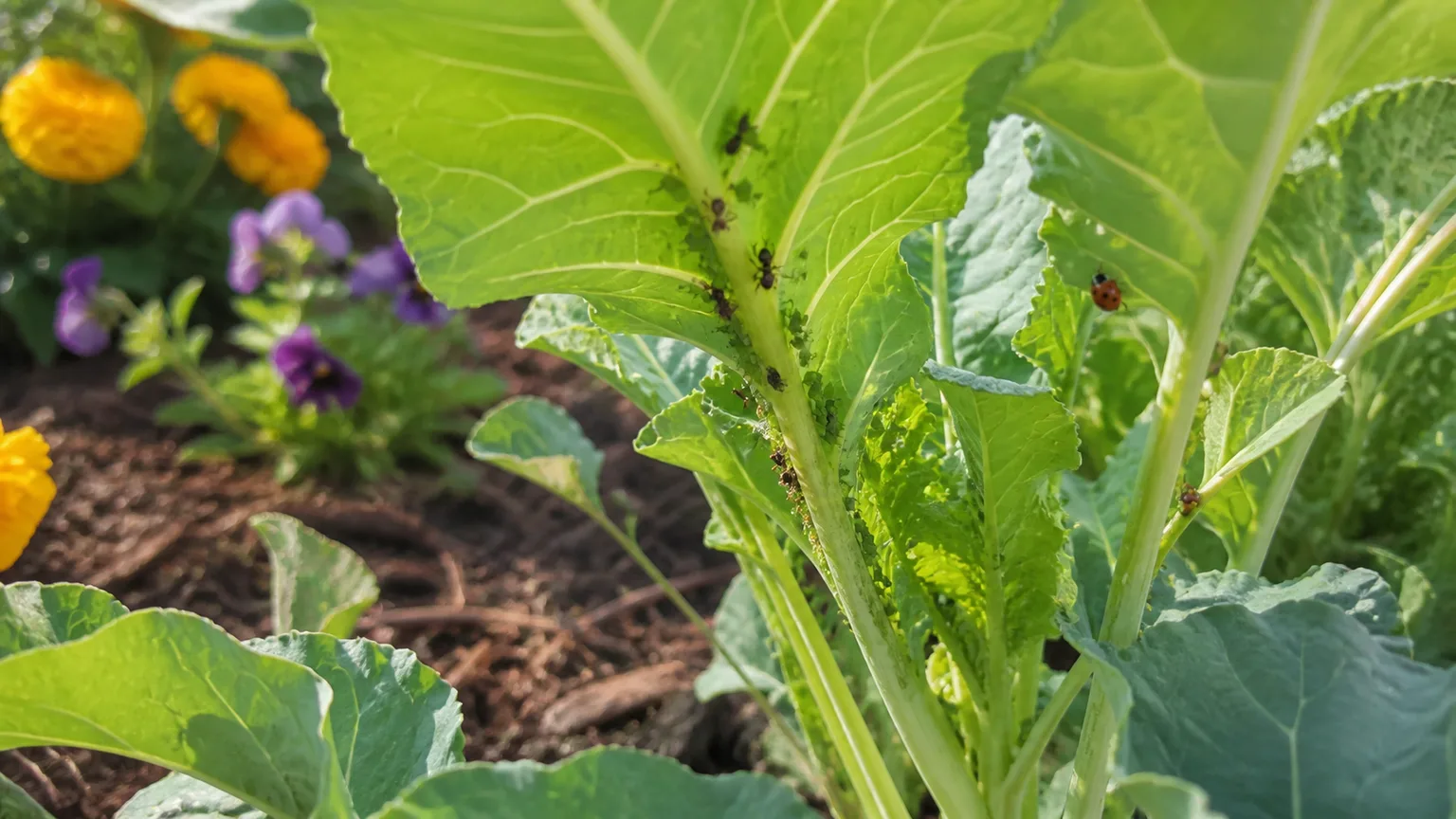
Do not assume every ant-covered plant has aphids. Check with a hand lens, and look for natural enemies before spraying. Lady beetle larvae, lacewing larvae, and tiny parasitic wasps are allies, not pests. NPIC’s aphid guidance recommends regular monitoring, avoiding excess nitrogen, and using a strong stream of water on sturdy plants; those steps usually protect the garden better than a broad-spectrum insecticide.
Diagnose the problem before choosing a treatment
A trail is evidence of movement, not proof of plant injury. Digging into a healthy bed to find a colony can damage more roots than the ants have. First note where the trail begins and ends, whether workers are entering a mound or container, and whether the plant itself shows symptoms.
When ants are mostly harmless
Leave ants alone when they are scattered through the bed, hunting small insects, visiting flowers, or using a path that does not lead to damaged plants. Fine soil heaps near a lawn edge or compost bin can be a nuisance without being a plant-health emergency. On established plants, modest ant activity usually does not justify pesticide use.
Tolerance also protects the rest of the food web. Killing ants with a contact spray can expose pollinators, predatory insects, spiders, and soil organisms to the same treatment. A colony may return after the spray residue fades, while the beneficial insects you removed may take much longer to recover.
When ants are damaging plants or include fire ants
Take action when you see girdled stems, tunneling into a transplant, roots repeatedly exposed by nest excavation, seedlings pulled loose, or a plant wilting because its root zone is being disturbed. In a December 2025 fact sheet, University of Delaware Cooperative Extension documented pavement ants girdling young watermelon, cabbage, and broccoli transplants. That is a real exception to the usual “ants are harmless” rule, not a reason to treat every garden ant colony the same way.
Species matters for safety, too. Fire ants build conspicuous mounds and can sting repeatedly; leafcutter ants can remove plant tissue; other ants may simply be foragers. Never kneel into an unknown mound, and do not ask children to investigate it. If stings, spreading mounds, or repeated crop injury are involved, local Extension can help with identification and regionally legal options.
A plant-safe ant-control plan, in order
The sequence below is more reliable than scattering several homemade repellents at once. Each step removes a source of confusion before you escalate.
Step 1: Map the trail and inspect the root zone
Watch the trail for a few minutes during the part of the day when activity is highest. Trace it in both directions without disturbing the ants. Look under nearby stones, boards, mulch, pot rims, and edging, then gently check whether the plant stem is being chewed, girdled, or buried. Photograph the ant and the damage; a local Extension office can often identify a problem more accurately from a clear image than from the phrase “small black ants.”
If the only evidence is a line of ants on the soil surface, start with observation. If the line goes to aphids, the aphids are the first treatment target. If it goes into a plant-damaging mound, use a control that is labeled for that ant and location rather than trying to flood the whole bed.
Step 2: Remove the food source without wrecking the garden
Rinse sticky honeydew from sturdy foliage with a firm, directed stream of water, and repeat every few days while you monitor the aphids. Prune a heavily infested shoot if the plant can spare it, and remove the cut material from the garden. Avoid high-nitrogen feeding while aphids are active; lush, soft new growth is especially attractive to them.
Keep ripe fruit, spilled birdseed, pet food, and sugary drinks out of the bed. Repair leaks and empty containers that hold standing water, but do not let “remove moisture” turn into drought stress. Plants with consistently dry root balls can become more vulnerable to wilting and root disturbance, especially in containers.
The goal is not to sterilize the garden or remove every fallen leaf. Keep enough mulch and organic matter to protect soil, but pull mulch away from stems, clear hiding places that touch seedlings, and keep the immediate crown and root collar visible. This reduces convenient nesting without stripping the bed of habitat.
Step 3: Choose the least-disruptive control that fits
For ants that are only tending aphids, treat the aphids and use a physical barrier or careful monitoring rather than poisoning the soil. For a colony that is directly injuring transplants, a targeted bait whose label specifically covers the ant, site, and crop situation is usually more defensible than a broadcast spray. Products and crop registrations vary by country and change over time, so the label is the deciding document—not a blog recipe or a product’s “natural” marketing.
Place bait where the label says, keep it out of reach of children and pets, and do not apply it to edible plant parts unless the label explicitly allows that use. Baits are often slow because workers must carry food back to the colony; killing the first ants you see with a contact spray can reduce bait pickup without solving the nest.
Repellents and baits solve different problems. A strong scent, a wet spray, or a line of powder may redirect workers for a few hours, but it can also push them toward another plant or make them stop visiting the bait. If you need colony reduction, keep the treatment area quiet and follow the product’s placement and watering instructions instead of layering a repellent over it.
Avoid placing bait directly against a flowering stem, fruit, or a plant’s crown unless the label specifically directs that placement. A bait station or protected placement can reduce accidental contact with pets and non-target insects, but only use a station that the product label permits. The label also tells you whether rain, irrigation, or harvest timing changes the application.
Do not mix a homemade borax-and-sugar bait into vegetable soil. A kitchen formula does not tell you whether the concentration is suitable for the species, whether the crop is covered, how to protect pets and wildlife, or how to handle the spent material. If a pet may have contacted an unknown bait or pesticide, contact a veterinarian or ASPCA Poison Control promptly and keep the product container available.
Step 4: Recheck plants and colony activity
Give a targeted control time to work. Depending on the bait and ant species, a colony may decline over days or weeks rather than overnight. Reinspect the plant for new aphids, fresh stem injury, and recovering foliage; do not judge success only by whether you see a worker ant cross the path.
If activity stops but plant damage continues, you may have treated the wrong problem. If workers avoid bait, the food formulation may not suit that species, the bait may be stale or wet, or a competing food source may be more attractive. Stop and reassess instead of adding more products. A short written log of dates, weather, plant symptoms, and treatments makes the next decision much safer.
The methods that make sense around plants
No single method is safe and effective for every ant. Use the method that matches the behavior you observed.
Targeted, label-approved bait
Bait is the most useful option when you need colony-level control but want to avoid coating an entire bed. Workers collect the food and distribute it inside the nest, so the treatment can reach ants you cannot see. It is still an insecticide, however, and “bait” does not automatically mean safe for vegetables, pets, or beneficial insects.
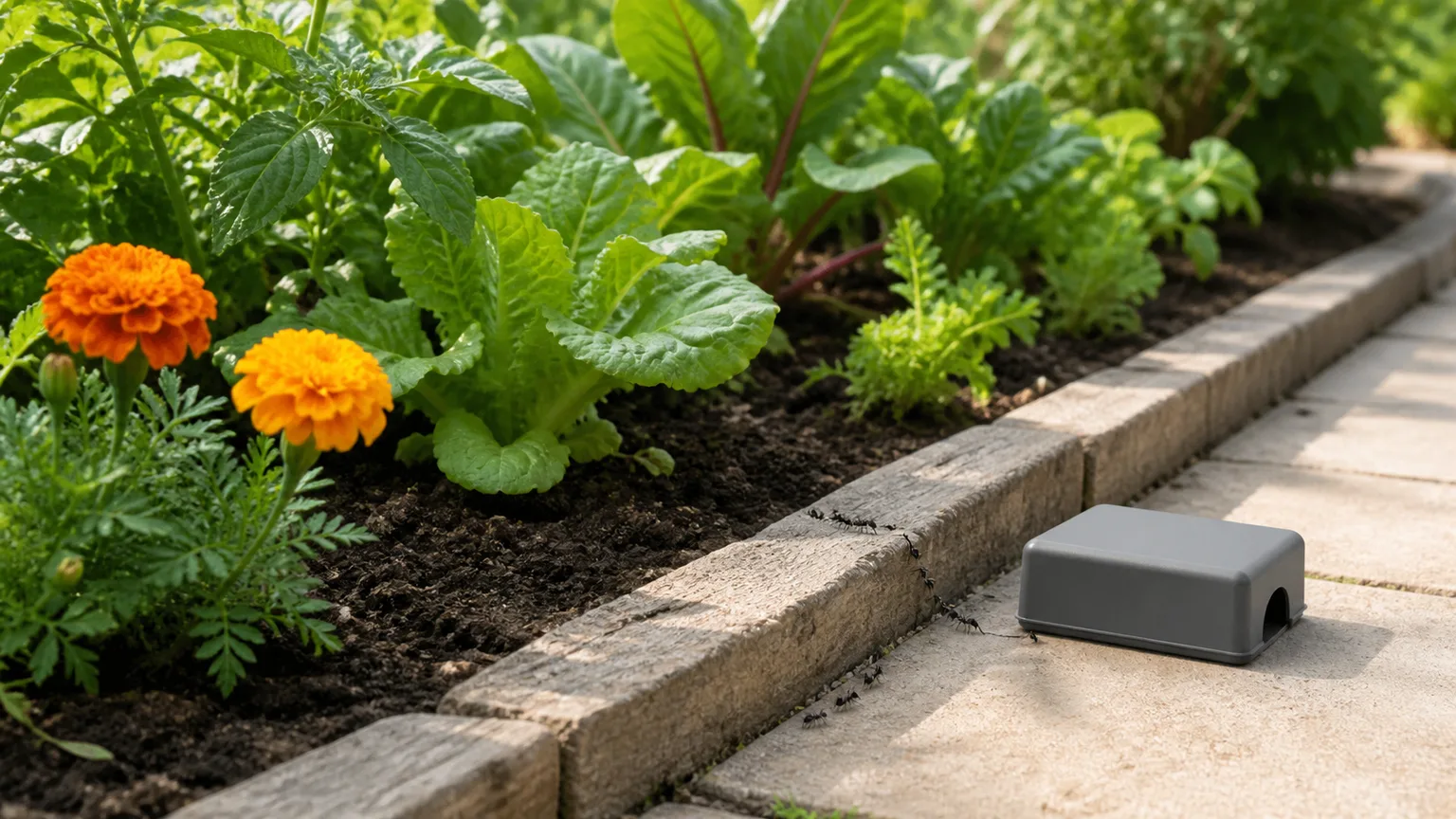
Read the entire label before purchase and again before use. Confirm the ant species or group, the application site, the crop or ornamental setting, weather restrictions, protective equipment, and harvest or re-entry directions. University of Delaware Extension notes that ants appear on labels for specific bait formulations, while many insecticides labeled for vegetables do not list ants at all. That distinction is exactly why a general “vegetable-safe insecticide” is not automatically an ant treatment.
For fire ants, Texas A&M AgriLife’s integrated pest-management guidance separates broadcast baits, individual mound treatments, and contact insecticides. It also notes that doing nothing is a valid option where fire ants are not causing a problem, and that individual mound treatments can preserve native ants better than treating a whole area. Use local guidance for your region; fire-ant products and legal uses differ across jurisdictions.
Physical cleanup and dry barriers
Physical changes are worthwhile when the colony is in a path, under a pot, or beside a bed rather than inside the root zone. Remove boards, stones, and debris that touch the bed edge; brush loose ant soil off lawn surfaces on a dry day; and close gaps beneath edging or paving where practical. If a small nest is in an empty section of soil, moving the loose mound away from plant crowns may solve the immediate disturbance without treating the entire bed.
Diatomaceous earth can act as a dry abrasive barrier, but it is not a magic soil amendment or a guaranteed colony killer. NPIC’s diatomaceous earth fact sheet explains that it works only while dry and undisturbed, and that the dust can irritate the nose, lungs, skin, and eyes. Use only a product labeled for the intended site, apply it exactly as directed, avoid creating airborne dust, and expect rain or irrigation to end its useful life. Never assume “food grade” means every garden-pest use is approved.
Water, moisture, and soil management
A directed stream of water is excellent for knocking aphids from sturdy foliage and rinsing honeydew. It is not a dependable way to drown a deep colony, and flooding around roots can suffocate them or spread the disturbance to a wider area. Water the plant’s root zone according to its needs, not according to the ant trail.
For a container with an ant nest, moving the pot away from the bed and carefully replacing the potting mix may be practical if the plant is healthy and the infestation is inside the container. Do not pour boiling water through a planted bed. University of Delaware Extension reports that boiling water and several other organic controls did not effectively eliminate plant-damaging ant colonies, and the heat can injure roots and soil life before it reaches the colony.
After heavy rain, repeat the inspection before reapplying anything. Water can wash a dry dust away, dilute bait, expose roots, or create a new sheltered space beneath mulch. A treatment that worked in a dry path may be a poor choice beside a wet vegetable row. The safest plan is responsive: protect the plant first, let the bed return to normal moisture, and then decide whether the remaining colony still exceeds your action threshold.
Popular ant remedies to skip in planted beds
Several kitchen remedies are popular because they are cheap and easy to describe. Cheap is not the same as selective, and a short-lived scent barrier is not the same as colony control.
- Vinegar: Do not spray it on foliage or drench the root zone. NPIC explains that acetic acid is a non-selective contact herbicide at weed-control concentrations and can irritate or burn skin and eyes. Household vinegar is weaker, but that does not make it a registered, selective ant treatment for a food bed.
- Salt: Salt is a poor choice for a planted bed because adding sodium to soil can injure roots and create a problem that lasts longer than the ant trail. It is not a colony-level solution.
- Coffee grounds and cinnamon: A smell or texture may briefly alter where workers walk, but neither should be treated as a reliable way to eliminate a nest. Keep them out of the root zone rather than layering repeated applications onto already stressed soil.
- Essential oils and citrus peels: Concentrated oils can irritate skin and may injure foliage; peels and scents do not tell you where the queen or brood are. Skip them when the goal is dependable control.
- Dish soap, bleach, and random garden sprays: These are not interchangeable with a labeled ant pesticide. They can burn plants, harm soil organisms, or expose non-target insects while leaving the colony intact.
The same rule applies to “natural” products: identify the active ingredient, read the label, and use only the crop and site listed. A product’s origin does not remove its exposure, drift, residue, or pollinator considerations.
How to keep ants from becoming a recurring plant problem
Prevention is mostly about removing the conditions that make a colony useful to the ants. Inspect new growth weekly during aphid season, especially after a flush of nitrogen-fed growth. Knock aphids off sturdy plants early, prune isolated infestations, and leave flowering plants that supply nectar for beneficial insects. Avoid broad-spectrum insecticides when a more selective option or a water spray will solve the immediate issue.
Keep irrigation equipment from leaking, harvest fallen fruit, clean up spilled feed, and store sweet foods away from the bed. Maintain mulch at a modest depth and keep it off plant stems. Check pots, saucers, lumber, and paving edges for nests before they become a bridge into a seedling row.
Seedlings deserve a closer watch than mature plants. Walk the row after transplanting and again after a warm spell, gently brushing soil away from the lower stem only when necessary. If one plant is repeatedly attacked while its neighbors are untouched, mark it and photograph the damage rather than treating every row. That pattern may help an Extension specialist distinguish a species-specific injury from a watering, cutworm, disease, or transplant-shock problem that merely happens to coincide with ants.
Do not promise yourself a permanently ant-free garden. Outdoor colonies move, winged queens disperse, and new workers can follow old trails. Success means healthy plants, no active aphid-tending problem, no repeated root or stem injury, and a tolerable level of ordinary garden biodiversity.
When to call an extension office or pest professional
Get help when the ants sting, the mound is large or spreading, several seedlings are collapsing, or you cannot distinguish ants from termites or another insect. Take photos of the worker, mound, plant damage, and surrounding conditions. A county or university Extension office can often tell you whether the behavior is typical for your region before you buy a product.
For fire ants or repeated plant girdling, keep children and pets away from the area and follow local advice rather than importing a treatment from another climate. Texas A&M’s fire-ant program emphasizes integrated control and environmentally sound decisions; a licensed professional may be appropriate where the colony is near play areas, paths, structures, livestock, or a large crop planting. If a pesticide has already been misapplied and a person or pet feels unwell, use the product label’s first-aid instructions and contact the relevant poison-control or veterinary service.
Conclusion: protect the garden, not an arbitrary zero-ant count
The safest way to get rid of garden ants is to ask what they are doing before deciding what to kill. Leave incidental ants alone, interrupt the aphid–honeydew relationship when it is driving the trail, and reserve targeted, label-approved bait or professional help for colonies that sting or demonstrably injure plants.
Skip vinegar, salt, boiling water, and homemade bait recipes in planted beds. Inspect weekly, protect beneficial insects, keep products out of the root zone and away from pets, and let evidence—not disgust at a busy trail—set the action threshold. That approach gives vegetables and flowers a better chance to recover while preserving the healthy soil you were trying to protect.



