How to Safely Remove Mold From Clothing
Learn how to remove mold from clothes safely: protect yourself, choose the right wash treatment, lift lingering stains, and prevent musty odors from returning.
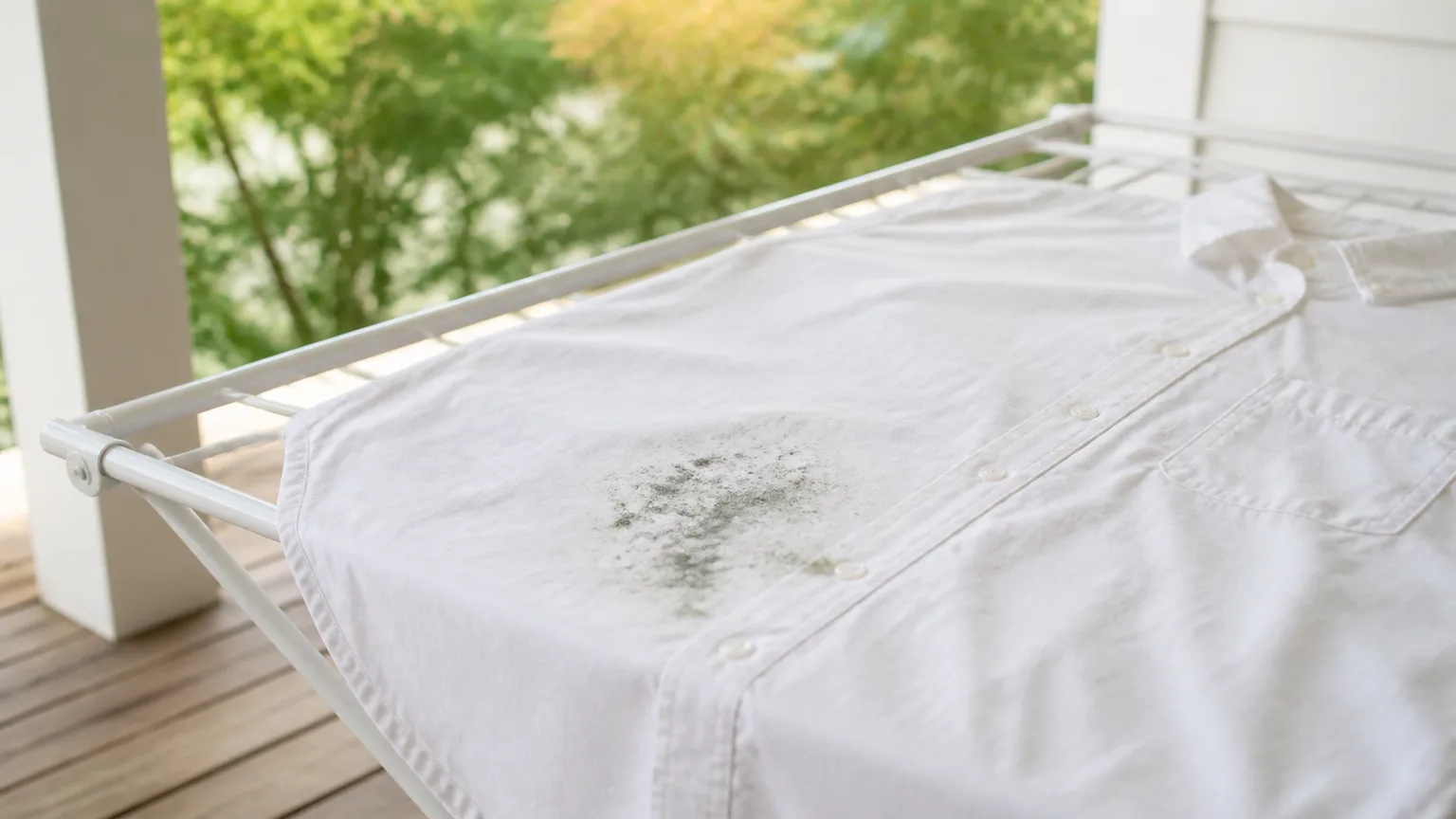
Mold on clothing is a laundry problem with a safety step in front of it. Do not carry a visibly moldy garment through the house, shake it over the hamper, or toss it straight into a mixed load. First contain the item, check whether the fabric can be washed, and move loose growth outdoors so you do not spread spores indoors.
For a small amount of growth on a washable garment that is still strong and odor-free after cleaning, the usual rescue plan is: brush off loose growth outdoors, pretreat with heavy-duty detergent, wash at the warmest temperature the care label permits, use one label-approved treatment, inspect before drying, and dry completely. That sequence follows fabric-care guidance from the University of Georgia Extension Textiles program while adding the safety and triage steps that determine whether the item should be saved at all.
The Quick Answer: When Can You Save Moldy Clothes?
You can often save a washable cotton, linen, or synthetic garment when the mold is limited to a small area, the fabric is not weakened or saturated, and the care label allows laundering. Washing can remove growth and odor-causing residue, but it does not guarantee that every dark stain will disappear or that a badly damaged fiber will become wearable again.
Do not treat “killed” and “clean” as the same result. A laundry additive may reduce or kill fungal growth under the conditions on its label, while detergent and washing physically remove soil, spores, and residue. A stubborn stain can remain after the growth is gone, and a garment that still smells musty after repeated washing and complete drying may be permanently affected.
If the garment was soaked with sewage, floodwater, or another contaminated source, if mold covers a large portion of it, or if the cloth tears, sheds, or feels unusually weak, stop trying to rescue it at home. The CDC’s mold-cleanup guidance emphasizes protective equipment, ventilation, not mixing cleaners, and discarding materials that cannot be cleaned and dried completely.
Check the Garment and Protect Yourself First
Read the care label before choosing a temperature, bleach, soak, or solvent. Look for the fiber, the highest safe wash temperature, and the bleach symbol: an empty triangle permits bleach, a triangle with two lines allows non-chlorine bleach only, and a crossed-out triangle means do not bleach. When the label is missing or unreadable, treat the item as a delicate or color-sensitive garment rather than guessing.
Separate the item from clean laundry and place it in a washable bin or a loosely closed bag while you decide what to do. Avoid shaking, snapping, or brushing it inside; those actions can send settled spores into the air and onto nearby fabric. For visible growth, work outdoors if weather and privacy allow, and wear gloves and eye protection. A well-fitting N95 respirator is especially prudent if you have respiratory sensitivity or are disturbing a larger amount of visible growth; CDC guidance for mold-damaged buildings also calls for eye protection, gloves, and an N95 respirator.
The CDC notes that people with asthma or weakened immune systems should not enter mold-damaged buildings and that children should stay out. A small garment outdoors is not the same exposure as entering a mold-damaged structure, but the principle is useful: if mold reliably worsens your breathing, skin, or allergy symptoms, ask someone else to handle the item or use a professional cleaner.
When to Discard the Item or Use a Professional
Consider discarding a garment when the mold is widespread, the fabric has rotted or weakened, the item remains strongly musty after two complete clean-and-dry cycles, or the source was sewage or heavily contaminated floodwater. Do not make the decision based only on color. Dark spots may be removable stains, while a pale colony can still damage fibers; coverage, moisture history, odor, and fabric condition are more useful clues.
Use a professional cleaner for dry-clean-only garments, wool, silk, leather, structured tailoring, vintage clothing, wedding clothes, uniforms with special finishes, and anything expensive or irreplaceable. Keep the garment contained during transport, tell the cleaner that it has mold or mildew, and ask whether the item is suitable for treatment before approving a process. Professional cleaning can protect a valuable fabric, but it cannot reverse fiber damage or guarantee that a deeply embedded odor will disappear.
How to Remove Mold From Washable Clothes
The safest DIY method is deliberately boring: remove loose growth without spreading it, use the care label to set the wash limits, choose one compatible treatment, and check the result before heat. Do not add every remedy you have to the same load; more chemicals do not make the process more reliable.
1. Isolate the Garment and Move It Outdoors
Carry the garment by the least affected part, keeping it away from your face and clean textiles. If it is damp, do not seal it wet for hours; set it in a protected, ventilated outdoor location or a dry utility area until you can handle it safely. Keep pets and children away from the work area.
If the garment came from a damp closet, basement, gym bag, or washing machine, check nearby items before starting. Mold spores can settle on neighboring fabric, but that does not mean every item needs the same chemical treatment. Sort by care label and condition, and launder only the items that can share the same safe temperature and treatment.
2. Brush Off Loose Growth Without Shaking It
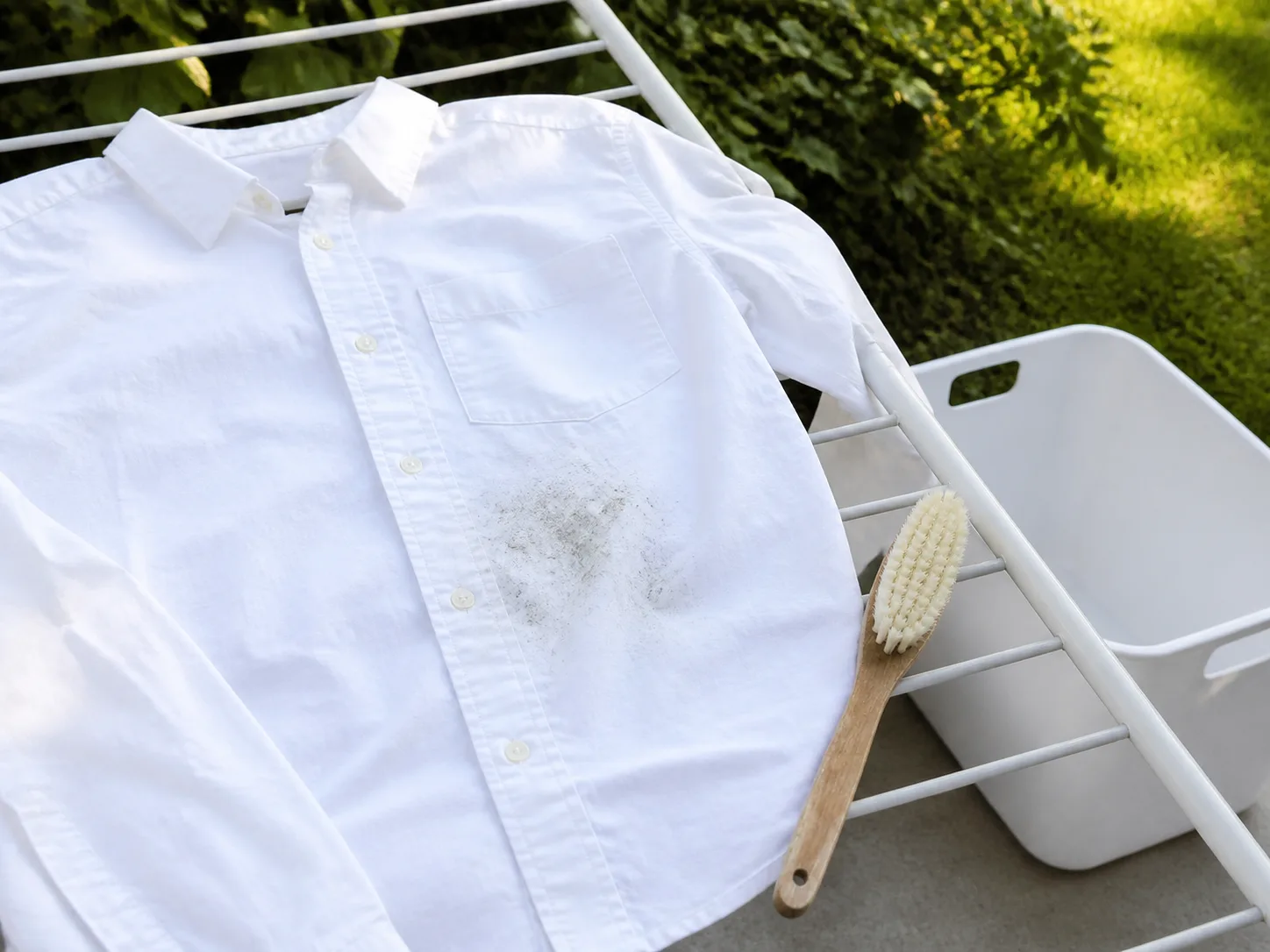
Use a soft or medium laundry brush outdoors and work gently from the clean edge toward the affected area. The goal is to lift loose surface growth into the open air, not grind it deeper into the weave. Do not use a household vacuum indoors unless it is specifically designed and filtered for the task.
Clean or dispose of the brush after use, and keep the garment away from the outdoor area where you will fold clean laundry. The University of Georgia Extension recommends brushing mildew from apparel outdoors before applying detergent and laundering. Sun and moving air can help the fabric dry, but exposure is not a substitute for washing or a guarantee that growth has been removed.
3. Pretreat the Visible Stain
Apply a small amount of heavy-duty liquid laundry detergent directly to each visible spot, following the product label. Let it sit for about 15 minutes unless the detergent label gives different instructions, then gently work it into the surface with a soft brush or clean cloth. Do not scrub aggressively: mold can weaken fibers, and a harsh brush can turn a small spot into a fuzzy, permanently damaged patch.
Test the detergent on an inside seam first, especially on dark, bright, or loosely dyed fabric. A pretest is not optional just because the garment is already stained; cleaning can still cause color loss or a visible ring. The UGA Extension cautions readers to follow the care label, pretest cleaning agents for colorfastness, and provide ventilation when using stronger products.
4. Wash at the Warmest Safe Setting
Wash the garment separately or with items that have the same care requirements. Use the hottest water the label allows, a full dose of heavy-duty detergent for the load size, and a normal cycle that gives the detergent time to work. “Hotter is always better” is bad fabric care: high heat can shrink wool, damage elastic, fade dyes, and set some stains if the item was not cleaned first.
For washable cotton towels, white tees, and sturdy linens, a hot cycle may be appropriate when the label permits it. For polyester, dark cotton, stretch fabric, and technical clothing, the correct choice may be warm or cool water plus a longer wash and thorough drying. If the garment still smells after one wash, do not automatically raise the temperature beyond the label; diagnose the washer and treatment instead.
5. Choose One Laundry Treatment
Pick the option that matches the fabric, color, and product label. Never combine chlorine bleach with vinegar, ammonia, acids, oxygen bleach, or another cleaner in the same solution. The CDC’s cleaning tips specifically warn against mixing cleaning products, and BHG’s laundry guidance explains that bleach should be used only with products the label allows.
| Garment situation | Reasonable first choice | Important limit |
|---|---|---|
| White, bleach-safe cotton or linen | Detergent plus chlorine bleach according to the bleach label | Never use it on a crossed-out or non-chlorine-bleach label; measure rather than guessing |
| Colored or bleach-prohibited washable fabric | Detergent, then oxygen bleach if the product and care label permit it | Oxygen bleach is a stain treatment, not a universal promise of disinfection; pretest colors |
| Synthetic fabric with lingering odor | Detergent plus a laundry sanitizer labeled for that fabric and washer | Follow the product’s dose, cycle, and rinse directions; do not improvise a concentration |
| Delicate, wool, silk, vintage, or dry-clean-only | Stop after containment and brushing; ask a cleaner | Vinegar, bleach, borax, and hot water can damage fibers or finishes |
Distilled white vinegar may help reduce an odor in some laundry routines, but it is not a universal replacement for detergent or a label-approved laundry sanitizer. If you use it for odor, add it only where the clothing-care instructions and your washer’s instructions permit it, and keep it completely separate from bleach. Do not mix vinegar and baking soda expecting a stronger mold treatment; the fizz is a chemical reaction, not proof of disinfection.
6. Check the Stain Before Drying
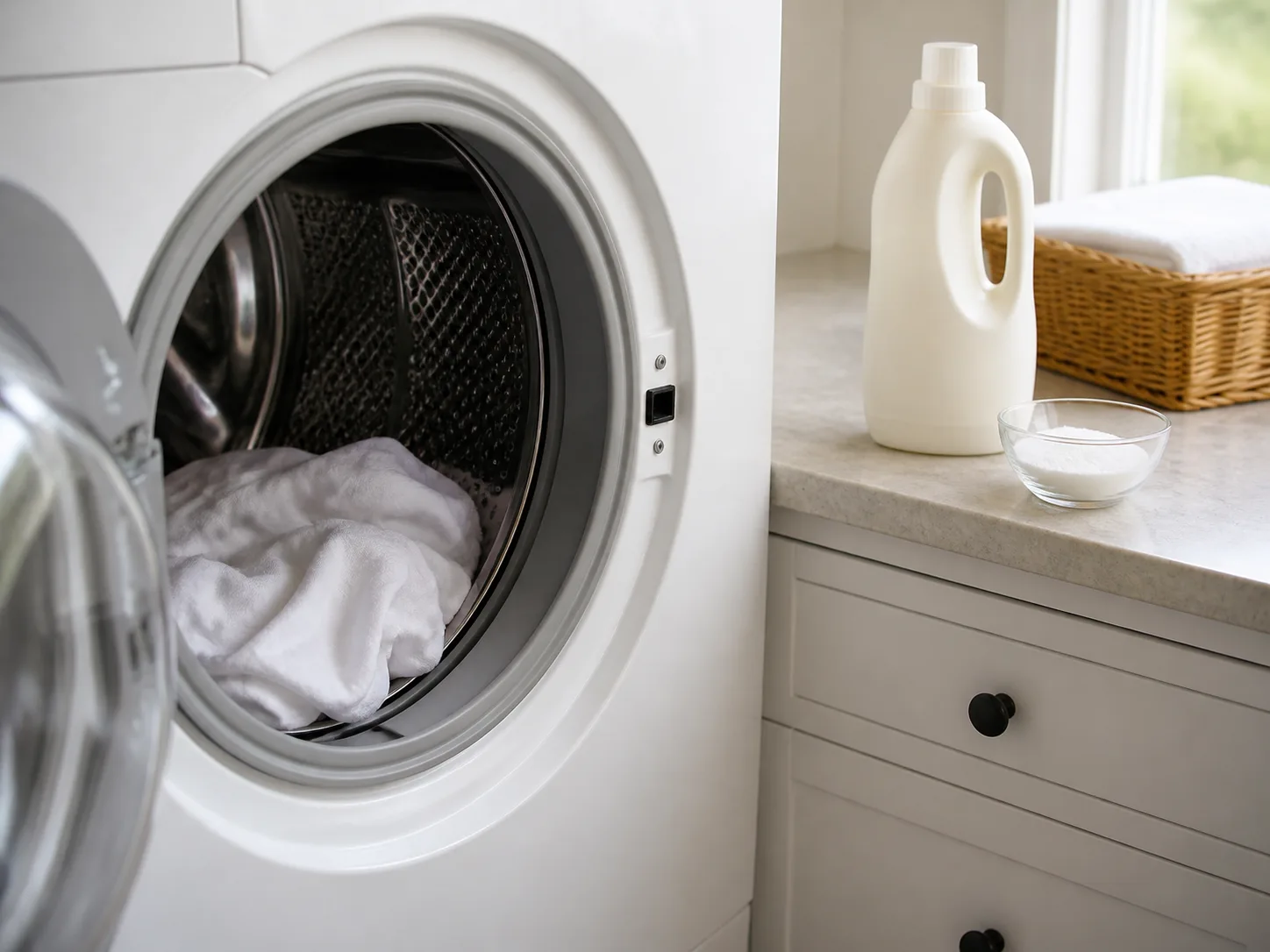
When the wash finishes, inspect the garment in good light before using a dryer. Look for remaining discoloration, fuzzy growth, weak or thinning fabric, and any odor that is still distinctly damp or musty. If a stain remains, air-dry the item or lay it flat according to the care label rather than applying high heat immediately; heat can set residual stains and make the next treatment less effective.
If the garment looks clean and smells neutral, dry it completely using the safest method the label allows. A clothesline, drying rack, or dryer can all work; the important result is a fully dry garment, not a particular drying method. Do not fold or store it while it feels cool and damp at seams, waistbands, cuffs, pockets, or thick hems.
How to Remove Mold Stains That Remain
Visible discoloration can outlast the mold itself because fungal growth may have altered the dye or weakened the fiber. Treat stain removal as a separate phase after the first wash, and remember that repeated aggressive treatments can destroy a garment that might otherwise be wearable.
Oxygen Bleach for Most Washable Colors
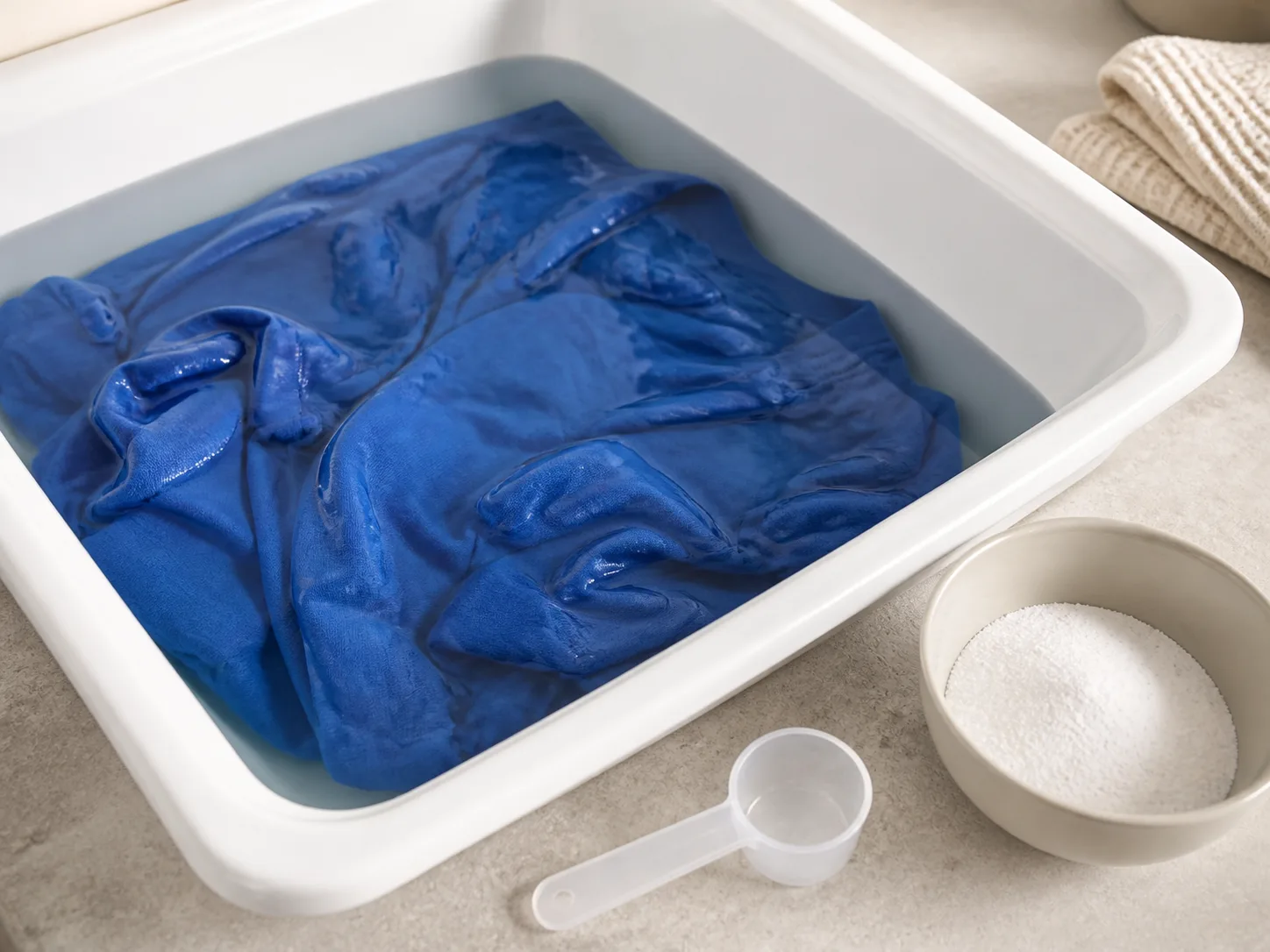
For a washable garment that still has a stain and whose label allows oxygen or non-chlorine bleach, dissolve the powdered product in warm water according to the package directions. Use a clean tub or sink, fully submerge the garment, and soak for the time on the label; many oxygen-bleach products call for several hours or overnight, but the package instructions control.
Rinse thoroughly, then wash again with detergent. If the stain remains, make a fresh solution rather than extending an old bath indefinitely. The University of Georgia Extension and Real Simple both treat oxygen bleach as a separate stain-removal step, not something to mix casually with other laundry chemistry.
Chlorine Bleach Only for Label-Safe Whites
Use chlorine bleach only when the garment is white or otherwise explicitly labeled as bleach-safe. Follow the bleach product’s directions for the load size, concentration, and dispenser; do not pour concentrated bleach directly onto fabric or increase the dose because a stain looks dark. Rinse or wash as directed, and stop if the fabric develops a yellow cast, holes, or a weakened texture.
For colored fabrics, bleach-prohibited labels, wool, silk, elastane, and many specialty finishes, choose oxygen bleach only when allowed or ask a professional. A product marketed as “color-safe” still needs a label check and an inconspicuous-area test. No home treatment can restore dye that has been permanently stripped.
How to Get the Musty Smell Out of Clothes
A musty smell without visible spots often comes from a damp pile, a closed gym bag, a humid storage area, or residue inside a washer. Wash the item with heavy-duty detergent at the warmest label-approved temperature, then dry it completely before deciding the odor treatment failed. Washing a clean but smelly item with a measured amount of distilled white vinegar in the rinse may help reduce odor, but do not use vinegar with bleach.
If the smell returns as soon as the garment is washed, inspect the washing machine rather than repeating stronger garment treatments. Check the door gasket, detergent drawer, drum, drain area, and the space around the machine for residue or standing water. Follow the washer manufacturer’s cleaning cycle and leave the door or lid open between loads when safe; BHG also recommends regular washer cleaning, ventilation, and drying clothes fully before storage.
If the odor remains after two complete wash-and-dry cycles, or if it returns in a dry closet, treat that as evidence of fiber damage or a moisture problem. Do not mask it with fabric softener or fragrance and assume the item is restored.
Dry-Clean-Only, Delicate, and Vintage Clothing
Do not put dry-clean-only clothes in a home washer because they have mold on them. Wool, silk, rayon, leather, structured garments, and vintage textiles can shrink, bleed, distort, or lose their finish when exposed to water, agitation, bleach, vinegar, or long soaks.
Keep the affected item contained, take it to a cleaner that accepts mold-affected textiles, and identify the growth when you drop it off. Ask whether the garment can be treated safely before paying for a full service. If the item has widespread growth, a strong odor, or visible fiber breakdown, the cleaner may recommend disposal; that is a condition assessment, not a failure of the cleaning process.
Prevent Mold From Coming Back
Cleaning the garment handles the symptom. Preventing another outbreak means removing the moisture that allowed spores to grow in the first place. Dry sweaty clothes, towels, swimsuits, and washcloths promptly instead of leaving them compressed in a hamper, bag, washer, or dark closet.
Store clean clothes only when they are completely dry, including seams and thick areas. Use open shelving or breathable storage where possible, leave air space between garments, and keep closets, basements, and laundry rooms ventilated. If the room is persistently damp, use air conditioning or a dehumidifier and fix plumbing, roof, window, or appliance leaks; NIOSH reports that dampness and mold are associated with respiratory and other health problems and emphasizes correcting moisture promptly.
Fix the Washer and Laundry-Room Moisture
Front-loading machines can hold water and residue around the door seal, dispenser, or drain. Clean those areas according to the manufacturer’s instructions, run the recommended maintenance cycle, remove finished laundry promptly, and leave the door ajar between loads if the machine design and household safety allow it.
Check that the dryer vents outdoors and that the exhaust path is not blocked. A dryer that leaves clothes hot but damp, a washer that smells sour, or a laundry room with condensation can keep reintroducing the conditions mold needs. Drying clothes faster helps, but it cannot compensate for a hidden leak or a washer that needs maintenance.
Common Mistakes That Make Moldy Clothes Worse
- Shaking the item indoors: This spreads loose growth to the hamper, floor, and nearby laundry. Move the garment outdoors before brushing it.
- Using bleach on every fabric: Chlorine bleach can fade color and damage fibers. Read the bleach symbol and pretest when the label permits treatment.
- Mixing cleaners: Never mix bleach with vinegar, ammonia, acids, or another laundry additive. Use one treatment at a time and rinse before changing methods.
- Drying before inspecting: Dryer heat can set remaining stains. Check the garment after washing and air-dry if you need another treatment.
- Treating odor as proof of active mold: A smell can come from washer residue or a damp storage space. Diagnose the machine and moisture source before escalating chemicals.
- Keeping a weak or heavily affected garment at any cost: Mold can damage fibers, and repeated wet treatments can make the garment unsafe or unwearable. Saving money is not a reason to ignore structural damage or persistent odor.
Conclusion
To remove mold from clothes safely, start with the garment—not the strongest product in the cabinet. Contain the item, move it outdoors, brush off loose growth, follow the care label, pretreat with detergent, wash at the warmest safe setting, choose one compatible treatment, and inspect before drying.
Use chlorine bleach only on label-safe whites, oxygen bleach only when the fabric and product allow it, and professional cleaning for delicate, valuable, or non-washable clothing. If the fabric is weakened, heavily covered, contaminated by floodwater or sewage, or still musty after complete cleaning and drying, discard it or follow a professional’s recommendation. The lasting fix is moisture control: clean and dry the washer, ventilate the laundry area, and never store clothing while it is damp.



